Key takeaways
- GJ 3378b is a rocky super-Earth 2.3 times the mass of Earth, orbiting a red dwarf star 25 light-years away in the constellation Camelopardalis
- New measurements published on 30 June shrank its estimated mass from 5.26 to 2.3 Earth masses, turning a likely mini-Neptune into a rocky world
- It sits in its star's habitable zone and receives about 90% of the energy Earth gets from the Sun, so liquid water is possible if it has an atmosphere
- Nobody knows yet whether it has an atmosphere: red dwarfs can strip them away, and this planet sits right on the edge of the danger zone
- Because GJ 3378b doesn't pass in front of its star, we'll probably have to wait for NASA's Habitable Worlds Observatory in the 2040s to find out
Jump to section 7 sections
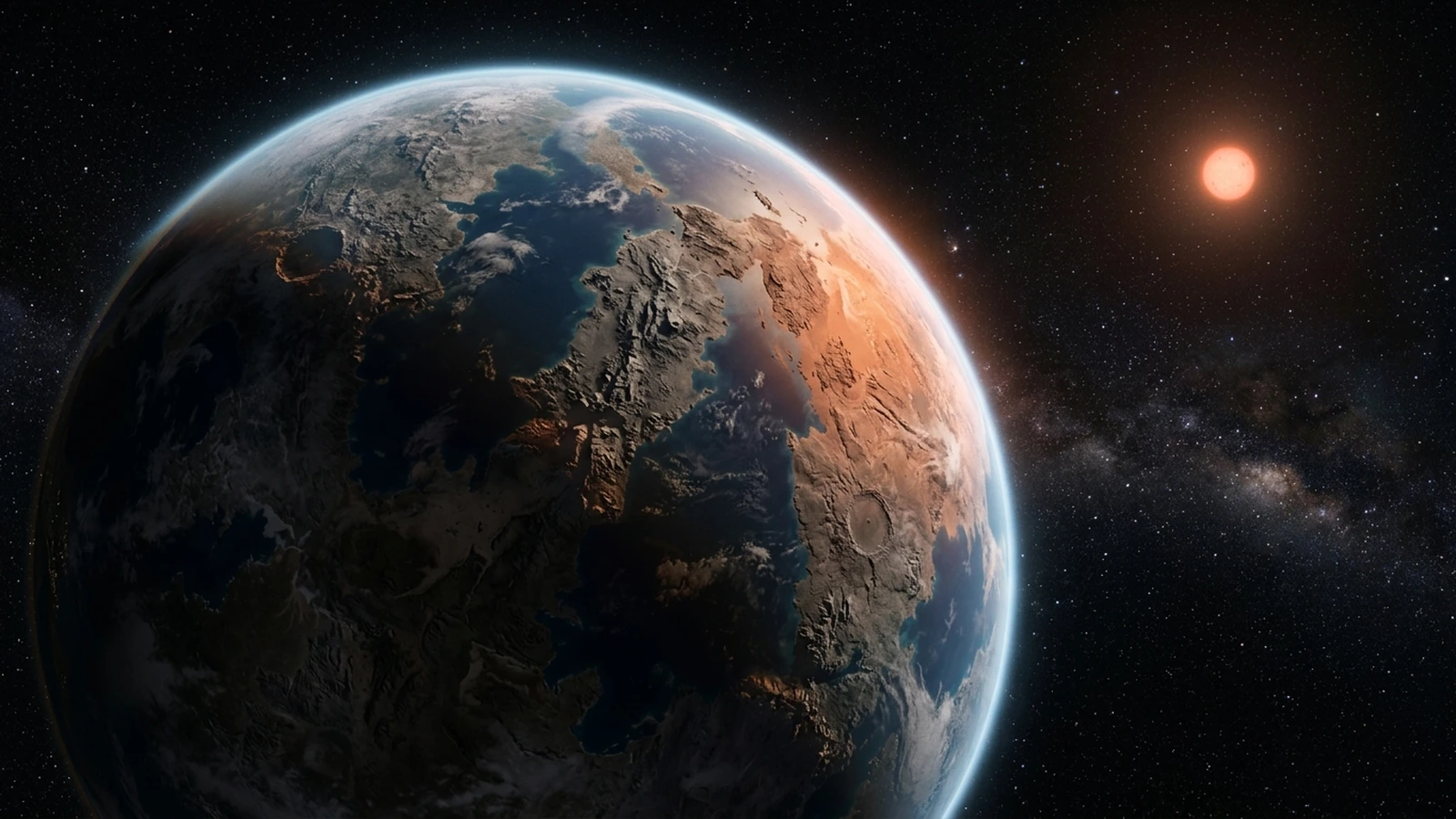
Astronomers have found a potentially habitable planet 25 light-years from Earth. It's called GJ 3378b, it orbits a small red star in the constellation Camelopardalis, and new measurements published on 30 June show it's very likely a rocky world sitting in the zone where liquid water can exist.
Twenty-five light-years sounds a long way. In galactic terms, it isn't. "It's one of our closest cosmic neighbours," said Paul Robertson of the University of California, Irvine, who led the new study. "The Milky Way is about 100,000 light years across, so in that respect it's our next-door neighbour."
GJ 3378b: The New Potentially Habitable Planet Next Door
The planet itself isn't brand new. French astronomers first spotted it in 2024 using the Canada-France-Hawaii Telescope on Mauna Kea. What's new is our understanding of what it actually is.
Those first measurements suggested a world 5.26 times the mass of Earth on a 25-day orbit. That put it in mini-Neptune territory: probably a small gas world with a thick, crushing atmosphere and no solid surface to stand on. Interesting, but not somewhere you'd look for life as we know it.
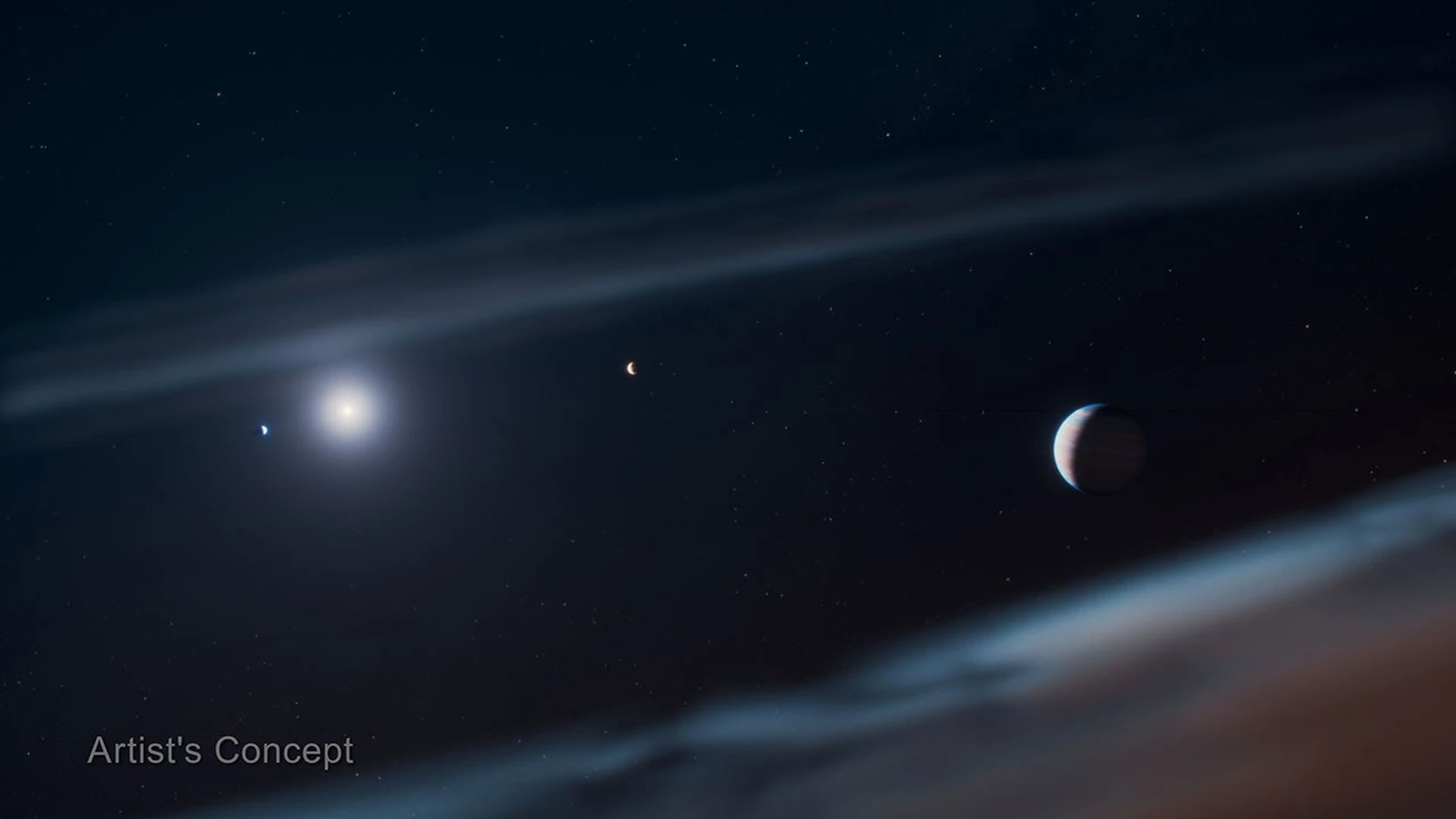
Robertson's team took a second look with two different instruments, and the picture changed completely. The planet came out at 2.3 Earth masses, less than half the original figure, on a 21.45-day orbit. That mass makes it far more likely to be a rocky super-Earth, a bigger cousin of our own planet. And the shorter orbit moves it closer to its star, into a much more comfortable spot for liquid water.
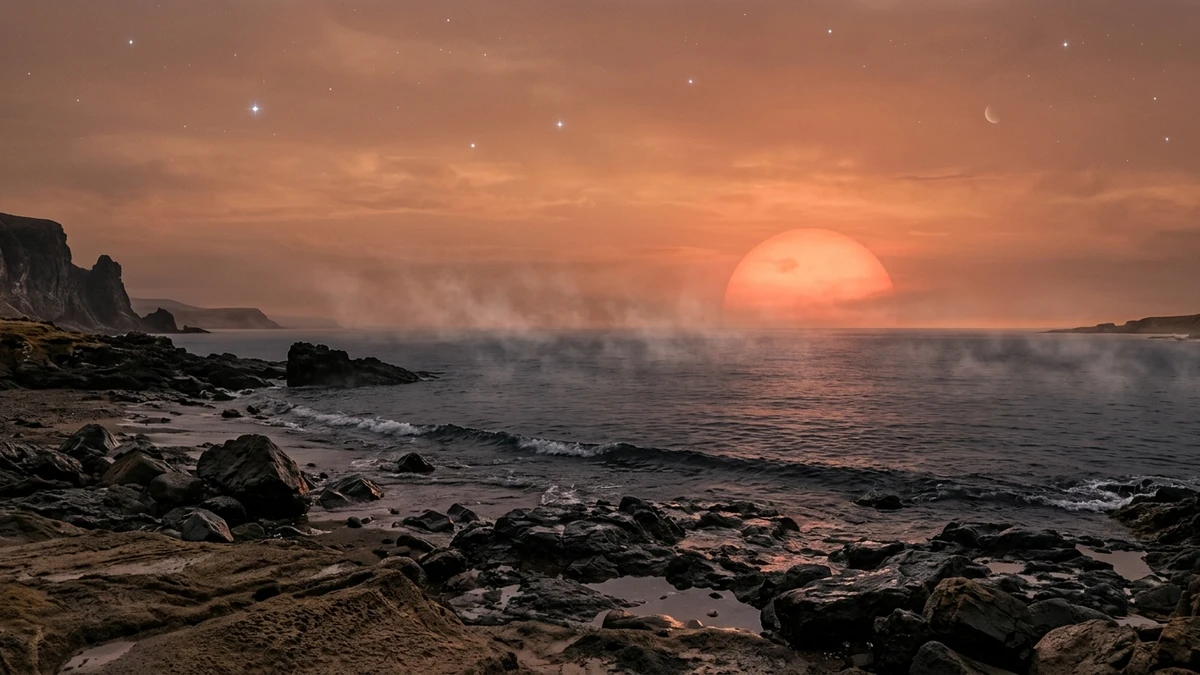
How Big Is GJ 3378b? A Mini-Neptune Becomes a Super-Earth
GJ 3378b has never been photographed. Like most nearby exoplanets, it was found by watching its star wobble.
A planet doesn't just orbit its star; the two of them orbit a shared centre of gravity. That makes the star sway back and forth by a tiny amount, and the sway shows up as a shift in the colour of the star's light. Measure the shift precisely enough and you can work out the planet's mass and orbit. Astronomers call this the radial velocity method, and it's how GJ 3378b was both discovered and re-measured.
The re-measurement used two of the best planet-hunting instruments in the world: the Habitable-zone Planet Finder on the Hobby-Eberly Telescope at McDonald Observatory in Texas, and the NEID spectrometer on the WIYN telescope at Kitt Peak in Arizona. Both were built specifically to detect the faint wobbles caused by small planets around small stars. With two independent instruments agreeing, the team could pin down the planet's true mass and orbit with real confidence. The results were published in The Astrophysical Journal on 30 June.
It's worth being clear about what we know and what we don't. The mass and the orbit are solid. Everything else, from oceans to clouds to bare rock, is still an open question.
Is GJ 3378b Habitable? Inside the Goldilocks Zone
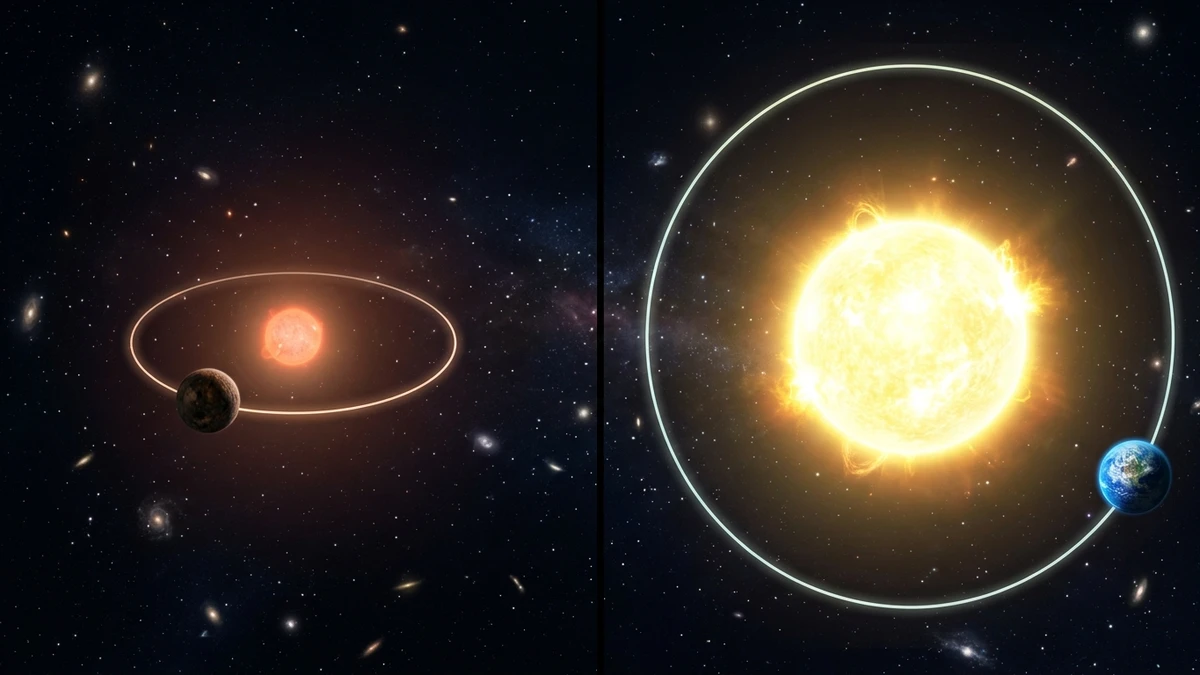
The habitable zone, sometimes called the Goldilocks zone, is the region around a star where a planet gets enough warmth for liquid water to survive on its surface. Too close and water boils away. Too far and it freezes solid.
GJ 3378b sits comfortably inside its star's habitable zone. Because its star is a red dwarf, far smaller and cooler than our Sun, that zone hugs the star closely, which is why a 21-day orbit works out just right. "This super-Earth gets about 90% of the radiation from its host star that Earth gets from its sun," said Robertson. "It's right in the sweet spot."
That matters more than it might sound. Plenty of "habitable zone" planets sit at the chilly outer edge or the scorched inner edge of their zones. Getting 90% of Earth's energy budget puts GJ 3378b in properly Earth-like territory for temperature, provided it has an atmosphere to trap and spread that warmth.
Red dwarfs are also worth taking seriously as places to look for life, for one simple reason: there are so many of them. "About 70% of stars in our galaxy are red dwarfs, so they represent the standard," said Michael Endl of the University of Texas at Austin, a co-author of the study. "It's really important that we understand the planet population around these stars."
Red Dwarf Stars and the Atmosphere Problem
There's a catch, and it's a big one. Red dwarfs may be small, but they're bad-tempered. They throw out flares and fierce stellar winds, and over billions of years that radiation can strip a nearby planet's atmosphere away entirely.
Astronomers describe this with an idea called the cosmic shoreline: an invisible boundary around every star. Planets on the safe side of it can hold on to their atmospheres. Planets on the wrong side get them sandblasted away. Mars is a sobering local example. It likely once had a thick atmosphere and surface water, and the solar wind removed most of it.
GJ 3378b sits right on that shoreline. It could have kept its air, or lost it long ago. There's simply no way to tell yet.
"If you scale the Earth down to the size of an apple, its atmosphere would be about as thick as the skin of the apple," said Robertson. "That's just enough to maintain the kinds of surface pressures where you can have liquid water." A thin skin of air is all that separates a living world from a dead one, and GJ 3378b's skin, if it exists, has been weathering a red dwarf's temper for a very long time.
Can You See GJ 3378 From the UK?
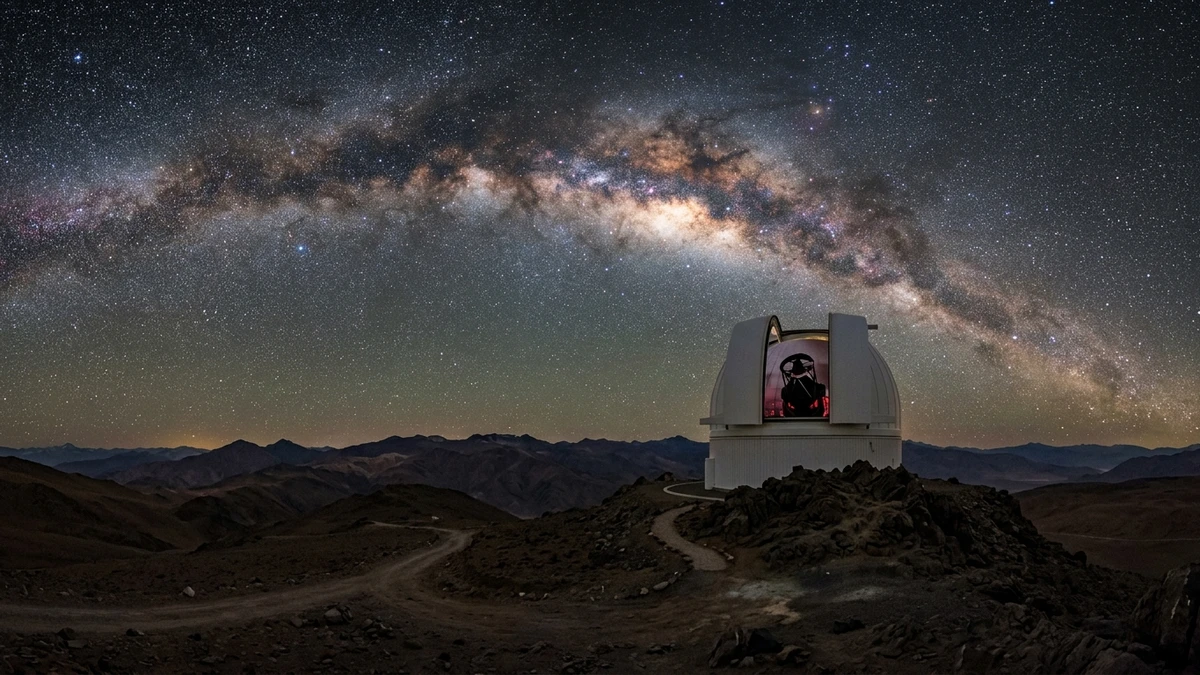
You can't see the planet, but you can find its home. GJ 3378 lives in Camelopardalis, the Giraffe, a large but faint constellation tucked between the Plough, Cassiopeia and the Pole Star. From the UK it's circumpolar, meaning it never sets, so it's on show every clear night of the year.
Be honest with yourself about the target, though. The star itself is a dim red dwarf shining at around magnitude 11.7. That's far beyond the naked eye and ordinary binoculars; you'd need a telescope of roughly 150mm aperture and a dark sky to pick it up as a faint red point. Most of us will settle for sweeping the area with binoculars and knowing that somewhere in that patch of sky, 25 light-years away, there's a world that might have oceans.
There's something quite nice about that. The next time you're out under a clear northern sky, look up between Cassiopeia and the Plough. One of the nearest possibly habitable planets we've ever found is right there.
Want to explore Camelopardalis yourself?
Kit we've tested and reviewed in full
GJ 3378 is a tough catch, but the far north of the sky is full of easier treasures, including Kemble's Cascade, a lovely chain of stars in the same constellation. Here's what we'd use.

Perfect for sweeping Camelopardalis and finding Kemble's Cascade, which is a binocular showpiece.
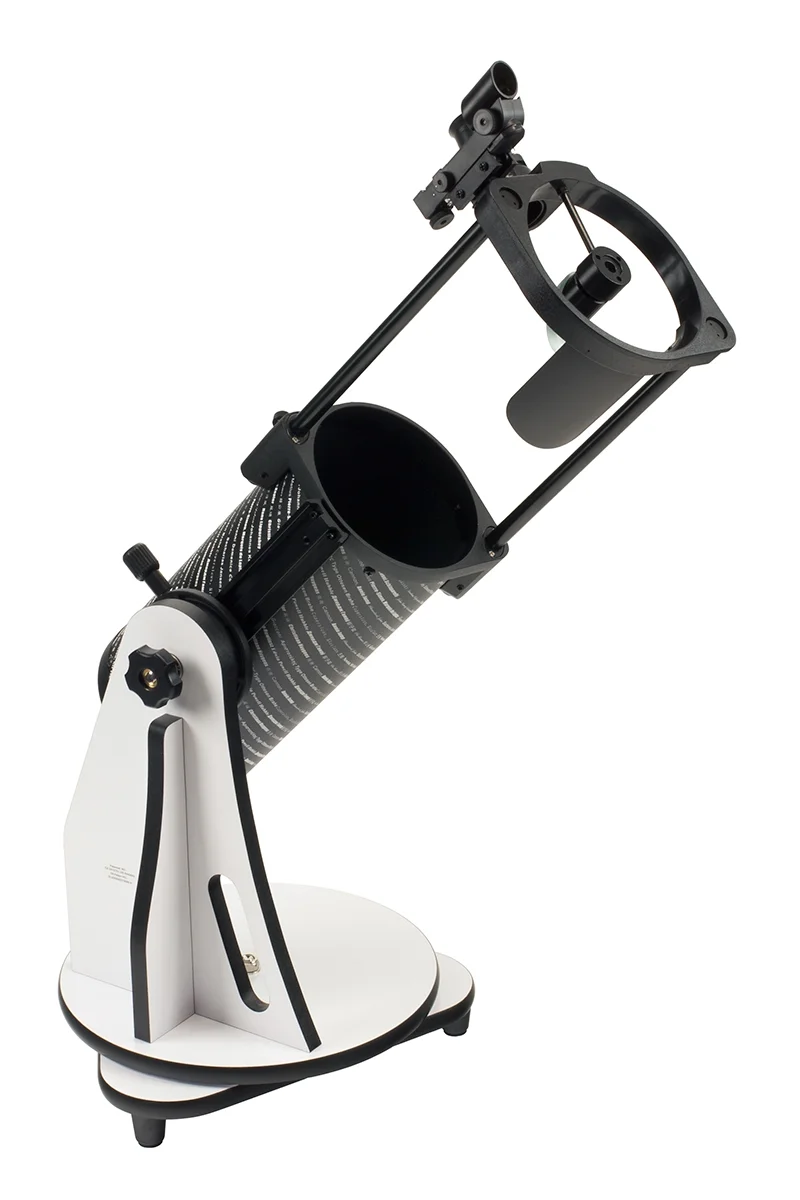
A 130mm reflector gets you close to GJ 3378 territory under a dark sky, and it's our favourite first telescope by a mile.
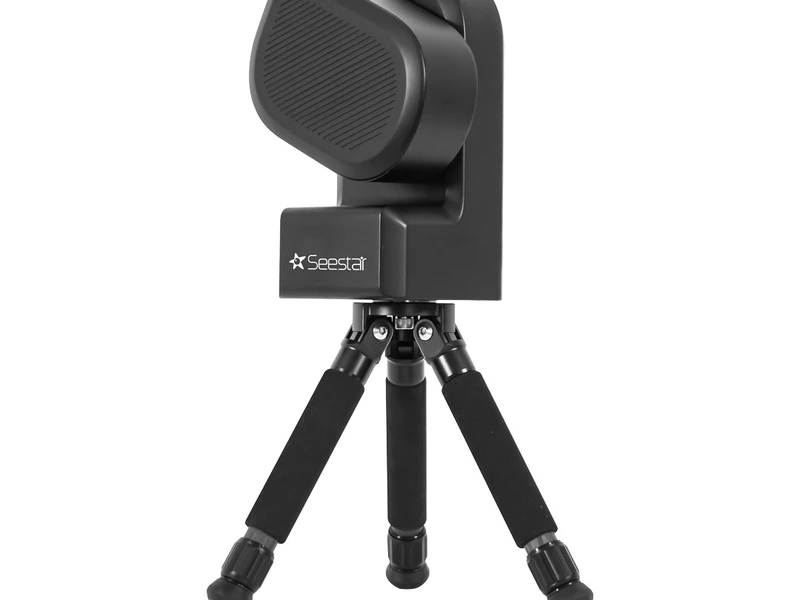
Point it at Camelopardalis and it will stack faint stars and clusters automatically while you watch on your phone. Magnitude 11.7 is well within its reach.
Affiliate links: you pay the same price, we earn a small commission that helps keep WatchTheStars free.
When Will We Know If GJ 3378b Has Life?
Here's the frustrating part. From our point of view, GJ 3378b never passes in front of its star. That rules out the trick the James Webb Space Telescope uses to sniff out atmospheres, where starlight filters through a planet's air during a transit and picks up the chemical fingerprints of whatever gases are there.
No transit means no shortcut. The answer will most likely have to wait for NASA's Habitable Worlds Observatory, a space telescope planned for the 2040s that's being designed to photograph nearby planets directly and analyse their light for signs of water, oxygen and life.
That might sound like a long wait, but this is exactly why finding worlds like GJ 3378b now matters. "The ultimate goal is biosignatures," said Endl. "We really want to know, are we alone in the universe? We are still in the reconnaissance phase of our solar neighbourhood, trying to find the planets around the nearest stars because those will be the easiest ones to detect a biosignature on. This planet brings us one step closer to knowing all of our neighbours and, ultimately, which might be hospitable for life."
The Bottom Line
GJ 3378b is a rocky super-Earth, 2.3 times the mass of our planet, orbiting a red dwarf 25 light-years away in a spot where liquid water is possible. It was hiding in plain sight as a probable mini-Neptune until better measurements revealed what it really was.
Whether it's a living world or an airless rock comes down to a question nobody can answer yet: did it keep its atmosphere? We'll probably find out in the 2040s. Until then, it joins the shortlist of nearby worlds where the biggest question of all, whether we're alone, might one day be answered. Not bad for a faint red star you can find between Cassiopeia and the Plough. Clear skies.
Sources:
- Astronomers discover a potentially habitable planet just 25 light-years away · Space.com
- UC Irvine astronomers discover a new Earth-like exoplanet · UC Irvine News
- Nearby 'Super Earth' may be a better candidate for life than previously thought · McDonald Observatory
- A Revised Mass and Period for the Habitable Zone super-Earth GJ 3378b · The Astrophysical Journal
- Astronomers Find Potentially Habitable Super-Earth Just 25 Light-Years Away · Sci.News
Frequently Asked Questions
Equipment guides
Related topics
Ian ClaytonAmateur astronomer and founder of WatchTheStars.co.uk, dedicated to helping others explore the wonders of our universe. Full profile →