Key takeaways
- Astronomers have detected an atmosphere on LHS 1140 b, a rocky super-Earth 48 light-years away: the first ever found on a rocky planet in a star's habitable zone
- The planet is leaking helium into space at hundreds of thousands of kilograms per second, yet has held onto its atmosphere for more than three billion years
- The discovery confirms a newly predicted class of planet called a 'helium world', which loses its hydrogen but keeps its helium
- It was made with a ground-based telescope in Chile, not the James Webb Space Telescope: proof that observatories on Earth can find alien atmospheres
- Earlier Webb observations hint that LHS 1140 b may also be a water world with a possible ocean, making it one of the best places to look for life
Jump to section 7 sections
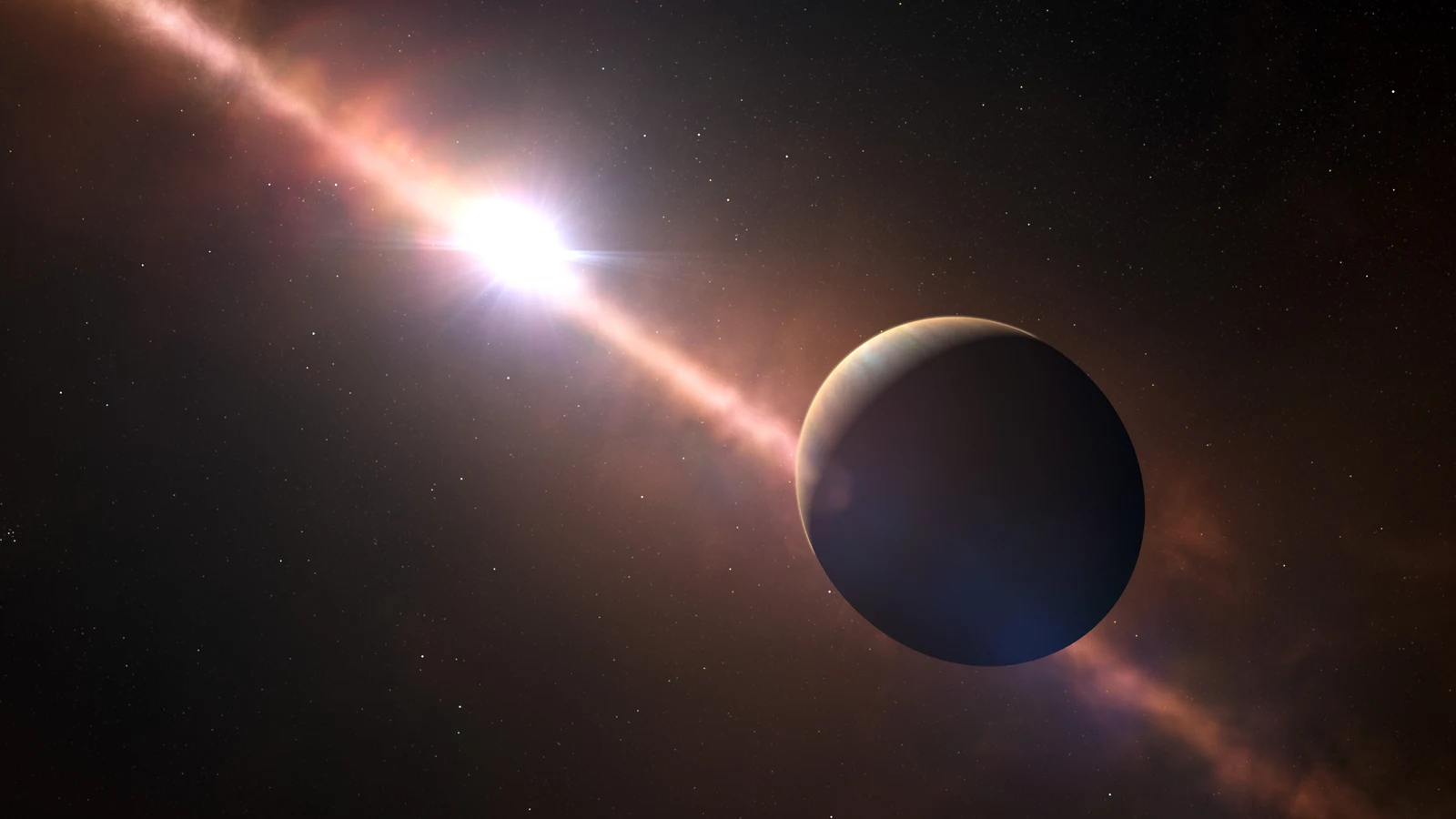
Astronomers have found an atmosphere on a rocky planet in the habitable zone of another star. It's the first time that has ever been done, and it's a genuine landmark in the search for life beyond the Solar System.
The planet is LHS 1140 b, a super-Earth about 48 light-years away in the constellation Cetus. A team led by Harvard's Collin Cherubim caught it leaking helium into space, the tell-tale sign of an atmosphere, and published the result in the journal Science this week. "This is the first time anyone has found an atmosphere on a rocky planet in the habitable zone of another star," said Cherubim.
What Is LHS 1140 b? The Super-Earth 48 Light-Years Away
LHS 1140 b has been on astronomers' shortlist for years. It's 5.6 times the mass of Earth and 1.7 times its width, which points to a rocky, Earth-like make-up rather than a small gas world. It orbits a red dwarf star once every 24.7 days.
That sounds far too close for comfort until you remember what kind of star it circles. LHS 1140 is about a fifth the size and mass of our Sun and much cooler, so its habitable zone, the region where liquid water can survive on a planet's surface, hugs the star tightly. A 24.7-day orbit lands LHS 1140 b right inside it. The planet receives about 42% of the energy Earth gets from the Sun. Chilly, but comfortably within reach of liquid water if there's an atmosphere to hold the warmth in.
And that was always the nagging question. Plenty of rocky planets sit in habitable zones. We covered one just this month, the potentially habitable super-Earth GJ 3378b, where the honest answer on habitability was "no idea, because we don't know if it has kept its air". Red dwarf stars are notorious for stripping atmospheres away with flares and radiation. Until now, nobody had ever shown that a rocky habitable-zone planet had managed to keep one.
Now we know at least one has.
How the Atmosphere Was Detected: Helium Leaking Into Space
The discovery came down to one lucky night and one very good instrument.
On 23 September 2024, both LHS 1140 b and its inner sibling planet, LHS 1140 c, crossed the face of their star just 39 minutes apart. The team watched the double transit for six and a half hours with the WINERED spectrograph on the 6.5-metre Magellan Clay telescope at Las Campanas Observatory, high in Chile's Atacama Desert.
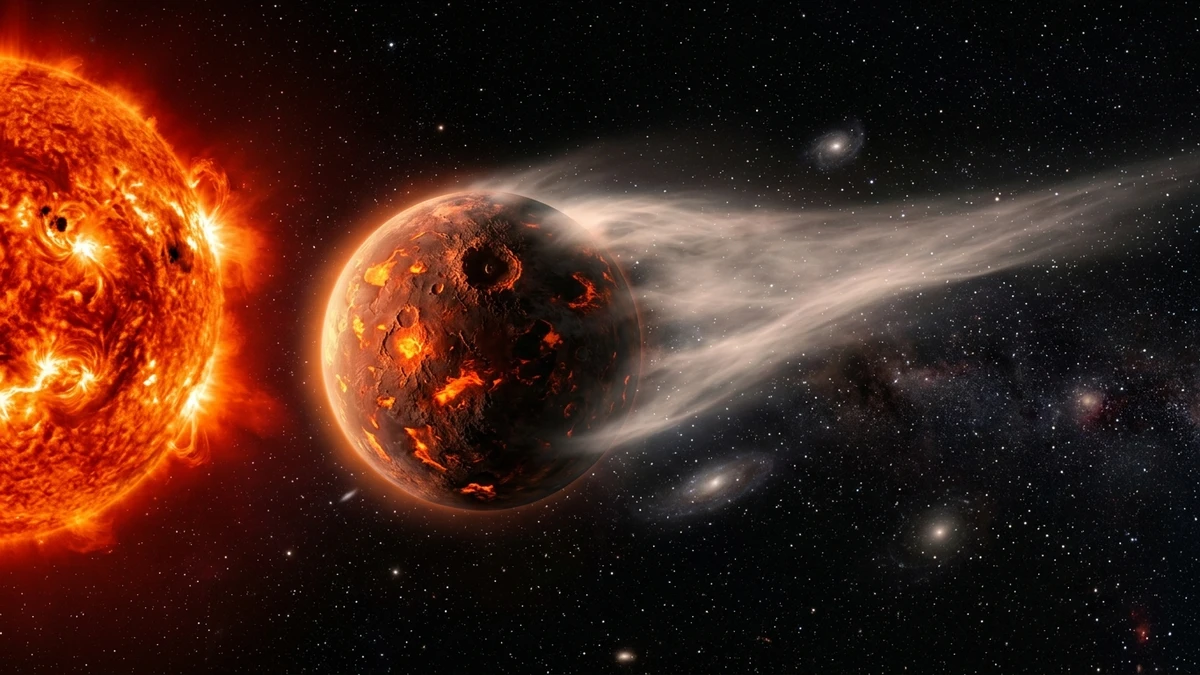
When a planet passes in front of its star, a little starlight filters through any atmosphere it has, and the gases there absorb particular wavelengths. Read those missing wavelengths and you can tell what the air is made of. In LHS 1140 b's case, the signature was unmistakable: helium, boiling off the top of the atmosphere and streaming into space at hundreds of thousands of kilograms per second, heated beyond 4,700°C by the star's radiation.
That sounds like a planet being destroyed. It isn't. The escape rate is a trickle compared with what the planet holds, and the team's models show it has kept its helium for more than three billion years. The sibling planet, tellingly, showed no such signal. Interestingly, when the team looked again in 2025 the escaping helium had faded from view, which suggests the outflow comes and goes, possibly with the star's mood.
What Is a Helium World?
Here's the part scientists are most excited about. This wasn't a lucky stumble. It was a prediction coming true.
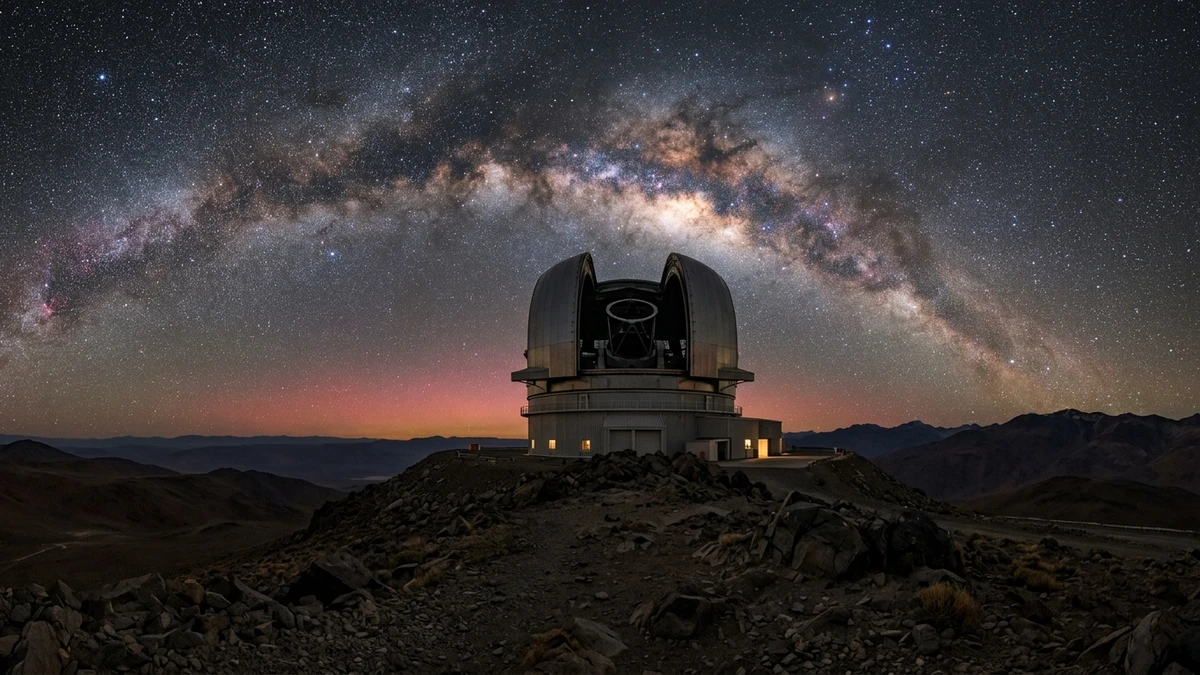
Cherubim had earlier built a computer model of a process called mass fractionation, which describes how a planet's lightest gases escape first. His model, developed with Harvard's Robin Wordsworth, showed that planets in a sweet spot around their star should lose their hydrogen but keep their heavier helium, ending up with an atmosphere dominated by helium. He called them "helium worlds", and argued they might be a natural stage in the life of many small planets rather than some exotic rarity.
"I wanted to test that prediction, so I looked for escaping helium and found it," he said. In science, it doesn't get much cleaner than that.
"Twenty years ago we wondered whether other terrestrial-type planets even existed," said Wordsworth. "Then we learned they're common, and found some in the habitable zone. The next question was whether any of them had managed to keep an atmosphere. Now we know at least one has."
Is LHS 1140 b Habitable?
An upper atmosphere of helium isn't somewhere you'd want to breathe. But that's not the full story of this planet, and it's why the discovery matters so much for the search for life.
The helium detection tells us about the top of the atmosphere. Lower down, things could be very different. Observations by the James Webb Space Telescope in 2024 hinted that LHS 1140 b may hold a nitrogen-rich atmosphere, and its low density suggests it carries a lot of water. One much-discussed possibility is a global ocean with a vast patch of open water on the side that permanently faces the star. None of that is confirmed yet. What has changed is the biggest doubt of all: we now know this planet can hold onto an atmosphere at all, and has done for billions of years while orbiting a temperamental red dwarf.
The planet is thought to be around five billion years old, a touch older than Earth. It has survived a harsher radiation history than ours and kept its air anyway. For a world sitting in the habitable zone, that's about the most encouraging health check you could ask for.
Can You See LHS 1140 From the UK?
Not easily, and it's worth being honest about that. LHS 1140 is a dim red dwarf shining at around magnitude 14, roughly 1,500 times fainter than the faintest star your naked eye can see. It sits in Cetus, the Whale, a sprawling autumn constellation that's best placed from the UK from October to December, low in the southern sky.
Seeing the star visually takes an 8-inch telescope or larger and a genuinely dark sky, and even then it's a faint speck at the limit. A smart telescope changes the game: a Seestar pointed at the right coordinates will stack up the light and show you the little red star from a suburban garden.
Cetus offers a friendlier consolation prize too. Mira, "the Wonderful", is the sky's most famous pulsating star, swelling from binocular-only dimness to easy naked-eye brightness and back every 11 months. If you're sweeping the Whale anyway, it's a lovely thing to follow.
Want to find LHS 1140's patch of sky?
Kit we've tested and reviewed in full
The star itself is a challenge at magnitude 14, but its home constellation Cetus is full of easier targets, including Mira, the famous pulsating star that fades and returns every 11 months.

Magnitude 14 is beyond most eyepieces but easy work for the Seestar, which stacks images automatically while you watch on your phone. You really can capture LHS 1140 from a UK garden.
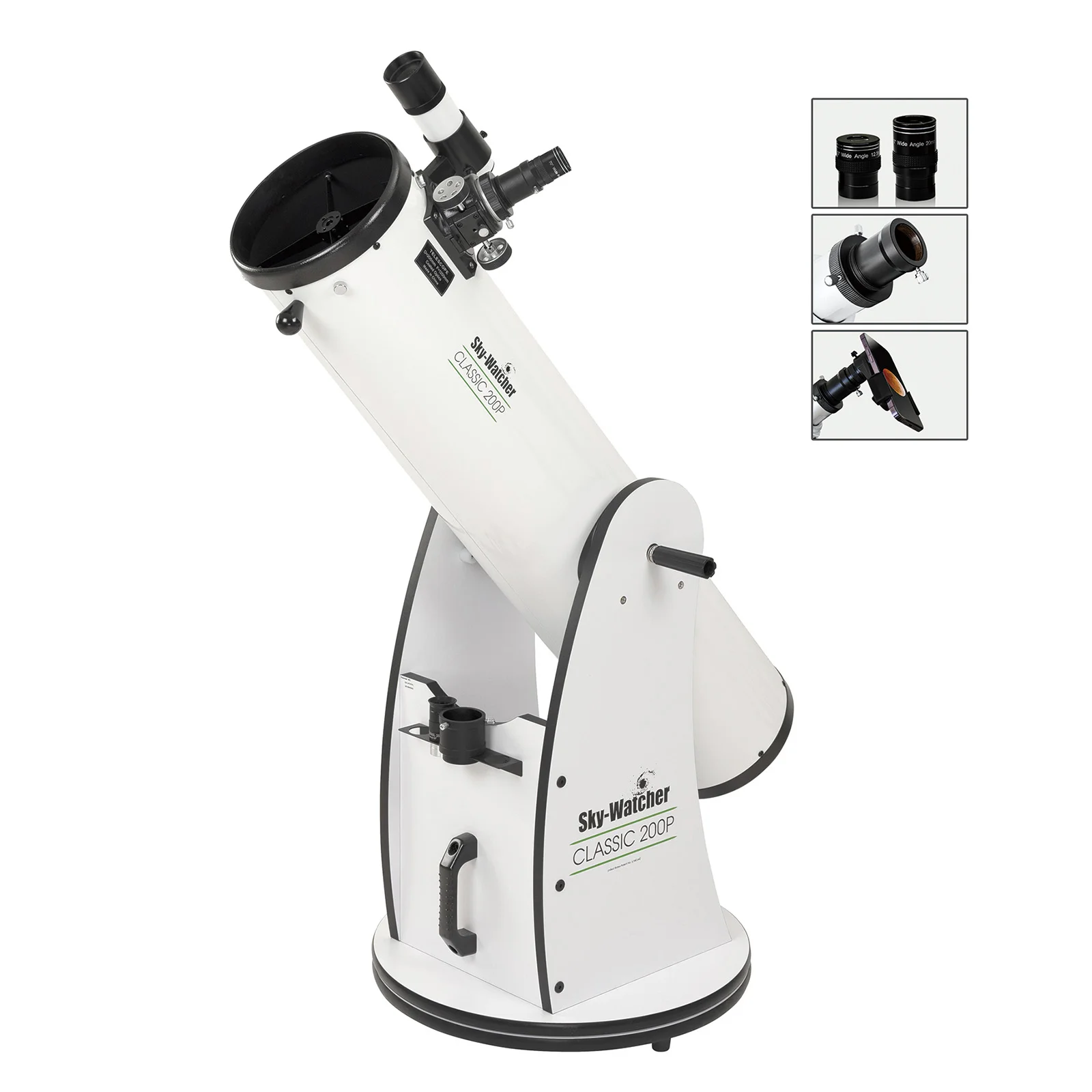
An 8-inch Dobsonian under a properly dark sky gets you to the magnitude 14 limit. Even if the red dwarf escapes you, Cetus and the autumn sky will keep it busy.

Ideal for following Mira through its slow fade and return, and for learning the Whale's dim outline before you hunt anything fainter.
Affiliate links: you pay the same price, we earn a small commission that helps keep WatchTheStars free.
Why the LHS 1140 b Discovery Matters
Three reasons this one deserves its place in the textbooks.
It answers a question 20 years in the making. Astronomers have been detecting exoplanet atmospheres since the early 2000s, but always on huge, scorched, Jupiter-like worlds. Rocky planets in habitable zones were the goal all along, and this is the first.
It confirms a brand-new class of planet. Helium worlds went from a modelling prediction to an observed reality in a single night's data. That tells astronomers their picture of how small planets evolve is on the right track, and gives them a new signature to hunt for around other stars.
And it was done from the ground. No space telescope required. A spectrograph on a mountain in Chile found an atmosphere on a rocky world 48 light-years away, which means the world's big observatories can join the atmosphere hunt rather than leaving it all to the James Webb Space Telescope. "This has been a model validation, and hopefully it's just the first of many more observations to come," said Cherubim.
The Bottom Line
LHS 1140 b is a rocky super-Earth, 48 light-years away, sitting in its star's habitable zone, and it has an atmosphere. We've never been able to say that about any planet beyond the Solar System before.
There's still plenty we don't know. The possible nitrogen air and the possible ocean are hints, not facts, and future Webb observations should firm them up either way. But the hardest question, whether a rocky planet around a red dwarf can keep its atmosphere for billions of years, now has an answer. On an unremarkable September night, a telescope in Chile watched a small red star 48 light-years away and caught a nearby world quietly breathing out. Clear skies.
Sources:
- Helium escaping from the atmosphere of a nearby rocky exoplanet orbiting in a habitable zone · Science
- Harvard scientists detect atmosphere on distant 'Earth-like' planet · Harvard FAS
- For The First Time, Astronomers Detect An Atmosphere Around A Rocky 'Habitable Zone' Planet · ScienceAlert
- Astronomers spot first atmosphere around a potentially habitable alien world · Science News
- Astronomers discover 1st atmosphere around a rocky Earth-like planet in the habitable zone · Space.com
Frequently Asked Questions
Equipment guides
Related topics

Ian ClaytonAmateur astronomer and founder of WatchTheStars.co.uk, dedicated to helping others explore the wonders of our universe. Full profile →