Finding & Observing Capricornus
Jump to section 6 sections
How to Find Capricornus
Capricornus is best observed from the UK in August, low in the south. The constellation is small but distinctive: a triangular or cocked-hat shape formed by about eight bright stars. The brightest stars (Algedi and Dabih) are on the right side of the constellation when facing south.
Find Altair First
Bright Altair (alpha Aquilae) is high in the southern sky in August. Capricornus lies below and west of Altair, about 30 degrees away.
Locate the Bright Pair
Two relatively bright stars close together on the right side of the constellation are Algedi (α) and Dabih (β). These are your anchor stars.
Trace the Goat Figure
From Algedi and Dabih, trace a large cocked-hat or arrowhead shape westward. The distinctive triangular outline is the sea-goat body.
Use Binoculars for Detail
Binoculars cleanly separate Algedi into its two golden components: one of the easiest double-star splits in the sky for naked-eye or binocular observers.
Seasonal Visibility (UK, 51°N)
| Month | Position | Max Altitude | Best Time |
|---|---|---|---|
| July | SSE horizon | ~12° | 11:00 PM |
| August | Due south | ~18° | 10:30 PM |
| September | SSW horizon | ~14° | 10:00 PM |
Note: Capricornus is very low from the UK (max ~18° altitude). Observers at latitude 40°N or south see this much more fully above the horizon.
Key Stars of Capricornus
Deneb Algedi δ Capricorni
Brightest star in Capricornus: the tail of the sea-goat. An Algol-type eclipsing binary where the magnitude dips by ~0.02 every 1.02 days as the fainter secondary eclipses the primary. At only 39 light-years, one of the nearest bright stars in this region. The short 1-day period makes this an ideal target for CCD photometry.
Dabih β Capricorni
A complex multiple system of 5 stars arranged in two gravitationally bound groups ~0.25° apart. Despite appearing close to Algedi in the sky, Dabih is 7 times more distant. A binocular double with interesting separation. Name means "the lucky stars of the slaughterer."
Algedi α Capricorni
An apparent double (optical, not physical, the two stars are at very different distances but line up in our sky). Both components are gold-tinted. Easy to split with naked eye from dark sites; binoculars cleanly separate them. A classic example of a line-of-sight coincidence. Name means "the goat."
Nashira γ Capricorni
A chemically peculiar A-type star with enhanced silicon and strontium lines in its spectrum: part of the exclusive class of "Ap stars." Forms the tail area alongside Deneb Algedi. Its unusual chemical composition is thought to result from strong magnetic fields.
Zeta Capricorni
A remote yellow supergiant forming the lower body of the sea-goat figure. Despite its faintness, it is actually a luminous supergiant, simply very distant. Has a faint 13th magnitude companion visible only in larger telescopes.
HIP 103019 / 51 Capricorni
Part of the constellation star-hopping routes. The sea-goat figure outline is completed by several 4th and 5th magnitude stars that require dark skies to trace fully. Tracing the full 20-star outline is a rewarding naked-eye project from a quality dark-sky site.
Mythology & History
Greek & Roman
Capricornus represents Pan the goat-god, who leapt into the Nile to escape the monster Typhon and transformed his lower body into a fish, creating the sea-goat. Zeus later placed him in the sky as a reward. An alternative version claims the sea-goat is Amalthea, the goat that nursed infant Zeus, whose horn became the cornucopia (horn of plenty).
Mesopotamian
One of the most ancient constellations: recognized by the Sumerians and Babylonians from at least 2000 BCE. The sea-goat (Suḫur-Maš) was the avatar of Enki (god of water and wisdom), depicted as a goat-fish. During the Babylonian epoch, the Winter Solstice occurred in Capricornus, making it the "sea-goat of winter", a critical calendrical marker.
Egyptian
The Egyptians associated the fish-goat with the floods of the Nile delta: the combination of land (goat) and water (fish) representing the ambiguous zone where the great river meets the Mediterranean. This duality held deep spiritual significance for an agricultural civilization dependent on the Nile's cycles.
Hindu & Vedic
Capricornus contains the nakshatras Uttara Ashadha (the later invincible one), Shravana (the hearing), and Dhanistha (the very swift). Shravana is associated with Vishnu and learning. The Hindu month Magha begins when the Sun enters Capricornus/Makara (the crocodile), a major festival marker in the Hindu calendar.
Chinese
The Chinese saw this region as part of the "North" section of the celestial sphere, associated with the Black Tortoise. The Ox (牛, Niú) lunar mansion includes key Capricornus stars and was associated with cattle, agriculture, and earth, fitting for a constellation representing a creature of both land and water.
Deep-Sky Objects
Capricornus is rich in double stars and multiple systems, making it a rewarding target for binocular and telescope observers. The constellation also contains several galaxies and one beautiful globular cluster.
M30: Globular Cluster
A rich, concentrated globular cluster in the southwest of Capricornus. Binoculars show a hazy spot; 10cm resolves the outer stars; 20cm shows dense packing toward the centre. Contains hundreds of thousands of ancient stars and is one of the better globulars in the summer/autumn sky from northern latitudes.
EasyNGC 6907: Galaxy
An interesting barred spiral galaxy near Deneb Algedi. In a 20cm+ telescope the bar becomes detectable as a slight elongation. Has a faint interacting companion galaxy: ideal for astrophotography to reveal tidal distortion features and the gravitational interaction.
PhotoAlgedi (α): Optical Double
Not a physical binary (the two stars are at vastly different distances) but a beautiful binocular pair. Both components are gold-tinted. Easy to split without optical aid from dark sites. A classic lesson in the difference between apparent (optical) and physical (gravitationally bound) doubles.
EasyDabih (β): Multiple System
The closer pair is itself a spectroscopic binary. The wider apparent pair is easily split in binoculars. A complex multi-star system worthy of detailed observation and sketch-making. The orbital period of ~20 years means observers can track the stars' positions over multiple decades.
EasyNGC 6887: Galaxy Pair
Two galaxies in gravitational interaction, useful for astrophotography to reveal tidal features and warping caused by their mutual gravity. A target for long-exposure imaging to capture the faint tidal bridges and distorted arms.
PhotoThe Sea-Goat Outline
Tracing the full sea-goat figure from Algedi/Dabih through the upper arc to Deneb Algedi, then following the lower curve through Zeta, is a rewarding naked-eye project under truly dark skies. The constellation outline (using ~20 stars) forms a distinctive cocked-hat or inverted triangle shape.
EasyBeginner Observing Guide
- Locate Capricornus low in the southern sky in August around 10–10:30 PM. You'll need a flat southern horizon and a clear, transparent night.
- Find the two bright stars on the right: Algedi (α, the brighter, gold-coloured) and Dabih (β, slightly fainter, close by). These are your anchor stars.
- With binoculars, look closely at Algedi: you'll see it split into two golden stars. This is one of the easiest double-star splits in the sky and requires no magnification in excellent conditions.
- From Algedi/Dabih, trace a large triangular or cocked-hat shape westward. The stars Nashira and Deneb Algedi form the lower left part of the outline.
- The "handle" of the cocked hat points downward (southward). Trace the full outline with binoculars: about 20 stars define the complete sea-goat shape from a dark site.
- Find M30 globular cluster in the lower part of the constellation: a hazy spot to the naked eye that becomes a beautiful compressed ball in binoculars.
- If using a telescope, focus on the detail in M30: it has a dense core and resolvable outer regions. Higher magnification (100x+) reveals individual stars in the outer zones.
- Observe Deneb Algedi (δ), the brightest star. It's an eclipsing binary with a 1.02-day period and a magnitude dip of ~0.02. Photometry over several nights reveals the eclipse.
- Return on clear nights to observe the constellation from different times of the month, seeing how it sets progressively later in August allows you to track Earth's motion around the Sun.
- Keep notes on what you observe: the sea-goat outline, double star positions, M30 appearance. Sketches are especially valuable for capturing the "look" of M30 at different magnifications.
Observing Kit by Equipment
Recommended equipment for observing Capricornus
Kit we've reviewed in full
Capricornus is one of the sky's quieter constellations, but M30 is one of the more interesting globular clusters: it has undergone core collapse, giving it an unusually sharp, dense centre. The double star Algedi is a naked-eye split, making it accessible to any observer without equipment.
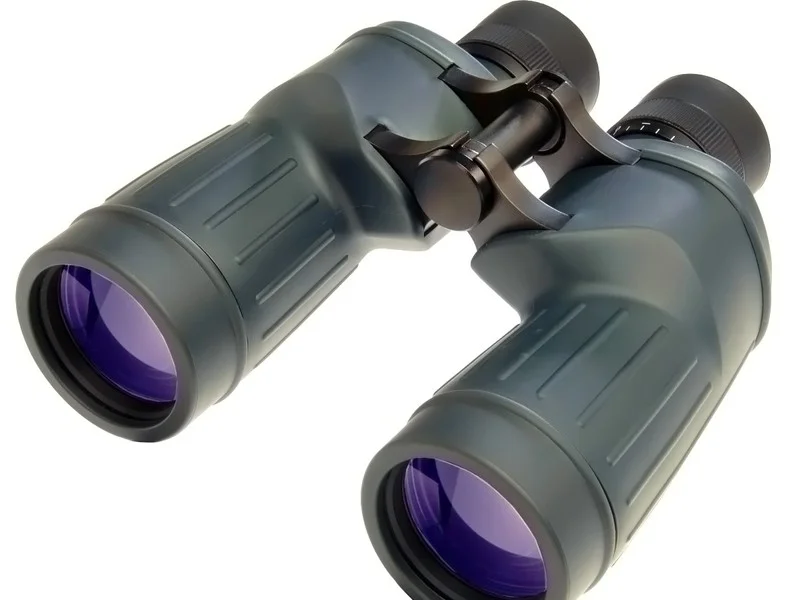
Algedi is a wide naked-eye double, beautifully resolved in binoculars: the two components are not physically related, just in the same line of sight 5 light-years apart in distance. M30 appears as a round, compact fuzzy ball brighter than average at its core. Dabih (Beta Capricorni) is itself a wide naked-eye pair with an interesting colour difference.
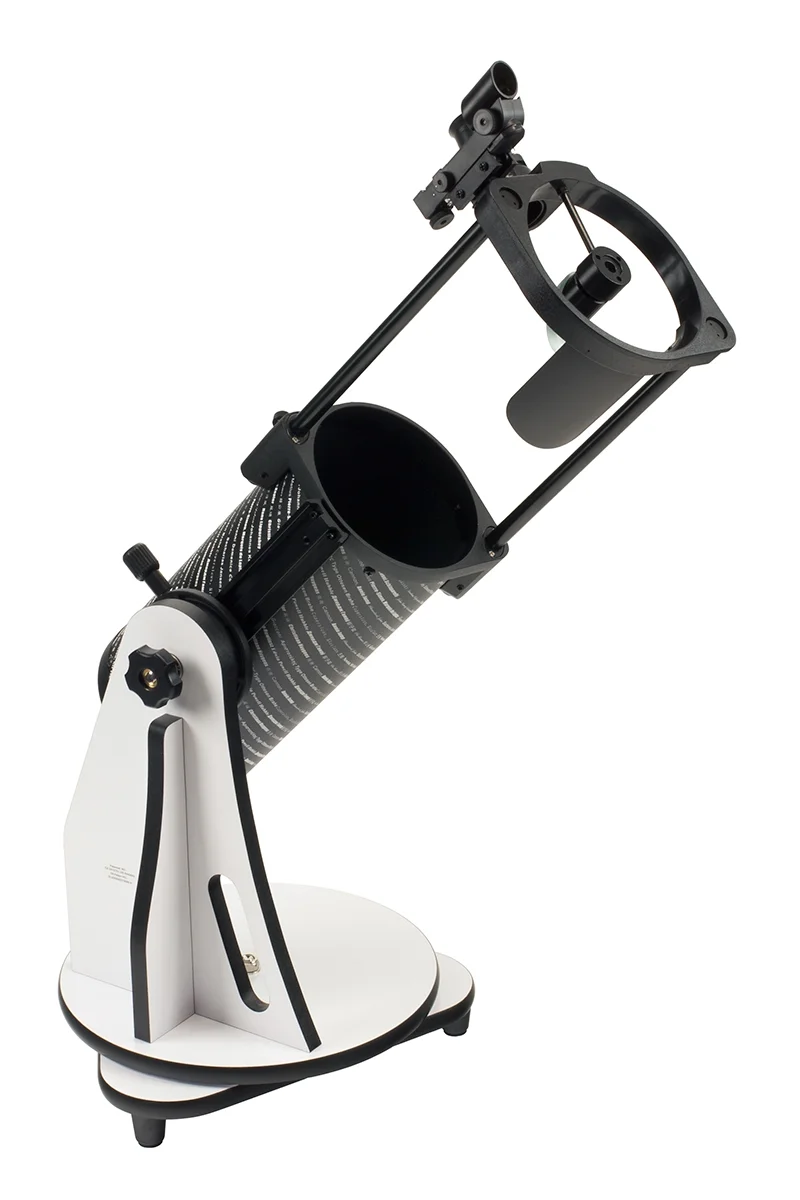
M30 at 100× shows its unusual core-collapsed structure: a very bright, sharp nucleus rather than the gradual brightening you see in typical globulars. Individual stars at the edges begin to resolve. Omicron Capricorni is a wide double with a faint companion. Beta Capricorni (Dabih) resolves into its two components clearly at moderate magnification.
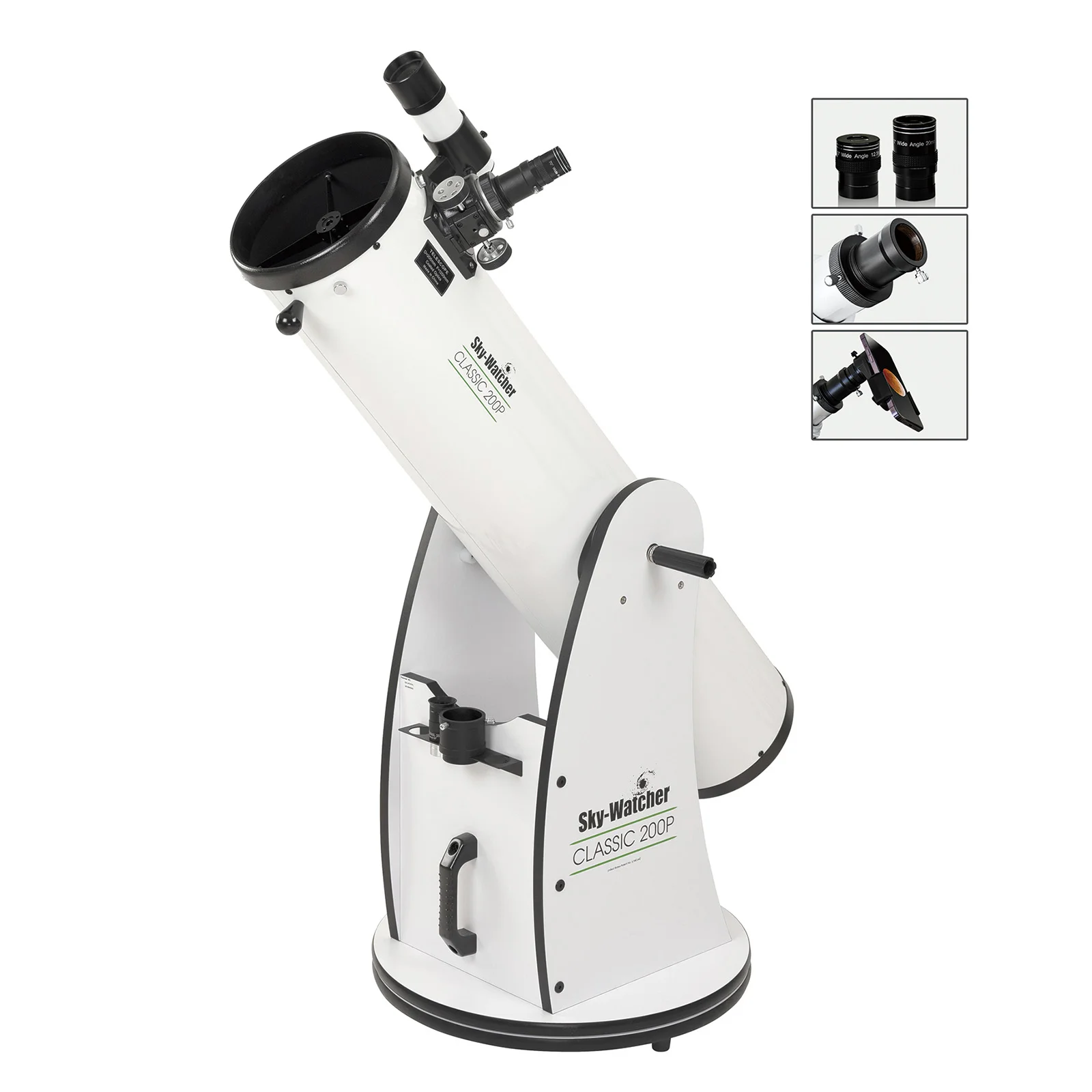
M30 at 200× resolves fully: the core-collapse structure is notable, with a needle-sharp centre and chains of stars radiating outward. The field galaxies around Capricornus reward a systematic sweep: HCG 87 (Hickson Compact Group) is a tight quartet of galaxies on the Capricornus/Microscopium border worth hunting down.
Affiliate links: you pay the same price, we earn a small commission that helps keep WatchTheStars free.
Need help choosing? See our binoculars and telescope guides.
Advanced Observing
Deneb Algedi Eclipsing Binary
With a 1.02-day period and a magnitude dip of ~0.02, Deneb Algedi is an ideal target for CCD photometry. Observing and photographing the dip over a single night trains you in photometric techniques and allows you to determine precise eclipse times.
Algedi: Optical vs Physical Doubles
The line-of-sight coincidence of Algedi (100 ly and 690 ly apart) is a lesson in distinguishing apparent (optical) pairs from physical (gravitationally bound) systems. Spectroscopy reveals their different velocities and compositions.
Dabih Orbital Motion
Dabih β is a multiple system where orbital motion is detectable over decades. Comparing your observations to historical measurements from 1900–1950 lets you determine orbital parameters and predict future positions.
M30 Core Collapse
M30 is one of a small number of globular clusters showing evidence of core collapse: where the central density increased over millions of years due to stellar dynamical interactions. Detailed observations and sketches reveal the asymmetric structure.