Finding & Observing Sagittarius
Jump to section 6 sections
How to Find Sagittarius
Sagittarius is best observed from the UK in July and August, very low in the southern sky. The constellation's defining feature is the Teapot asterism: a distinctive kettle shape formed by seven bright stars.
Locate Altair
Start with bright Altair (alpha Aquilae) high in the southern sky. Sagittarius lies below and west of Altair.
Find the Teapot
The distinctive teapot shape is the guide: handle on the left (west), spout pointing right (toward Scorpius), lid and body in the middle. Kaus Australis (the brightest star) forms the base.
The Milky Way Steam
Above the teapot's spout rises a dense cloud of stars: the richest part of the Milky Way visible from the northern hemisphere. In dark skies this casts shadows on the ground.
Use Binoculars
Binoculars are essential here: they reveal millions of faint stars, nebulae, and star clusters that are invisible to the naked eye or lost in a telescope's narrow field.
Seasonal Visibility (UK, 51°N)
| Month | Position | Max Altitude | Best Time |
|---|---|---|---|
| June | SSE horizon | ~10° | 11:00 PM |
| July | Due south | ~16° | 10:30 PM |
| August | SSW horizon | ~14° | 10:00 PM |
Note: Sagittarius remains very low from the UK (max ~16° altitude). For a full appreciation, travel to latitude 40°N or south where the entire constellation rises well above the horizon.
Key Stars of Sagittarius
Kaus Australis ε Sagittarii
The brightest star in Sagittarius: the base of the teapot's bow. Despite being designated epsilon (ε), it outshines all other stars in the constellation. A rapid rotator flattened at the poles. Points directly toward the richest part of the Milky Way.
Nunki σ Sagittarii
Second brightest star, part of the teapot's upper body and handle area. A hot, rapidly rotating B-type star. One of the brightest stars visible from the southern hemisphere.
Kaus Media δ Sagittarii
The middle of the bow: central to the teapot body. An orange giant at moderate distance. Marks the transition from the bright bow stars to the more distant teapot elements.
Kaus Borealis λ Sagittarii
The lid of the teapot: upper part of the bow. Closer than many Sagittarius stars at only 77 light-years. One of the nearer orange giants in this region.
Ascella ζ Sagittarii
The top of the teapot's handle: a close binary pair of A-type stars orbiting each other every 21 years. Requires a large telescope to resolve at closest approach, but an interesting spectroscopic binary.
Nash γ Sagittarii
The tip of the teapot's spout: the arrowhead in the archer figure. Nash means "arrowhead" in Arabic. Points almost directly toward the galactic centre (Sagittarius A*) 26,000 light-years away.
Mythology & History
Greek & Roman
Sagittarius the Archer is usually identified as either the centaur Chiron or more commonly as Crotus, son of Pan, who invented archery. He is depicted drawing a bow aimed at Scorpius to the west (appropriate, as the two constellations follow each other across the sky). Crotus lived on Mount Helicon with the Muses, who asked Zeus to immortalise him in the stars.
Mesopotamian
The Babylonians identified this as Pabilsag: a centaur-like deity with human torso, horse body, and wings, associated with the god Nergal (lord of death and plague). The constellation was critical for tracking Jupiter (the royal planet) as it passed through the galaxy's richest fields.
Egyptian
The region toward the galactic centre held immense spiritual significance: the source of the Milky Way was seen as the celestial Nile, with Sagittarius marking the great bend of this heavenly river. The richness of stars here was equated with life-giving water.
Hindu & Vedic
Sagittarius contains the nakshatras Mula (the root, near the galactic centre), Purva Ashadha (early victory), and Uttara Ashadha (later victory). Mula is associated with the goddess Nirriti and with roots, endings, and destruction/transformation, fitting for the direction of cosmic secrets.
Chinese
The Milky Way in Sagittarius was central to Chinese astronomy. The Southern Dipper (南斗, Nándǒu) lunar mansion encompasses this region and corresponds to part of the Sagittarius Teapot: a major asterism used for agricultural and navigational purposes for millennia.
Deep-Sky Objects
Sagittarius contains more Messier objects than any other constellation. This is the direction of the galactic centre, and the density of stars, clusters, and nebulae here is unmatched anywhere in the sky. Even a small telescope or binoculars reveal an extraordinary field.
M8: Lagoon Nebula
A glowing cloud of ionised hydrogen with an embedded star cluster (NGC 6530): visible to the naked eye from a dark site, which makes it unusual. Binoculars show the dark lane (the "lagoon") splitting the nebula. Long exposures reveal vivid pink and blue structure with complex filaments.
EasyM20: Trifid Nebula
Strikingly divided into three lobes by dark dust lanes: one of the sky's most photographed nebulae. The southern lobe is an emission nebula (pink); the northern lobe is a reflection nebula (blue). 20cm shows the triple dark lanes clearly. Famous for colour photography.
MediumM22: Globular Cluster
One of the finest globular clusters in the sky: among the closest to Earth at 10,600 light-years and one of the most resolved in amateur telescopes. Binoculars show a compressed glow; 10cm resolves the outer edges; 20cm shows a dense, rich core. Contains hundreds of thousands of ancient stars.
EasyM24: Sagittarius Star Cloud
Not a cluster or nebula but a transparent window through the Milky Way: a clearing in the dust that lets us see 10,000–16,000 light-years into the galaxy's core. Sweeping it with binoculars is overwhelming: millions of stars packed into a 2° field. The richest star field visible from the UK.
EasyM17: Omega Nebula (Swan)
A large, bright emission nebula just north of Sagittarius in Scutum. The distinctive omega shape is visible in any telescope; long exposures show complex networks of glowing clouds. Among the most luminous nebulae in the galaxy. Often called the Swan Nebula.
EasySagittarius A*: Galactic Centre
The radio source at the exact centre of our galaxy: a supermassive black hole of 4 million solar masses. Completely obscured in visible light but can be located by pointing toward Nash (γ Sgr). In 2022, the Event Horizon Telescope imaged its shadow. A symbolic pointing location for all observers.
Beginner Observing Guide
- Find Sagittarius low in the southern sky in July–August around 10–11 PM. You'll need a flat southern horizon and transparent, moonless night. The faint outline of Capricornus rises just to its east if you want a second target for the same session.
- Locate the Teapot asterism: the distinctive kettle shape with the handle on the left (west), spout on the right (east), and lid/body in the middle.
- The "steam rising from the teapot" is the densest part of the Milky Way. In dark skies, this view alone is worth the observation. It casts shadows.
- Sweep the region above the spout (north of Nash) with binoculars to find the Lagoon Nebula (M8): a glowing pink cloud visible with naked eye from very dark sites.
- Continue sweeping north to find the Trifid Nebula (M20): look for the characteristic split into three lobes by dark dust lanes.
- Locate the M24 Star Cloud to the left of M20: a spectacular window into millions of stars 10,000+ light-years away. Binoculars show the star-packed field overwhelming.
- Find M22 globular cluster to the lower left of the Teapot: a dense, bright ball of hundreds of thousands of ancient stars.
- If using a telescope, focus on the detail within each nebula: the Lagoon's dark lane, the Trifid's tri-lobed structure, and the structure of M22's core.
- Return every clear night in July and August. Each session reveals new details and fainter objects as your eyes adapt to the darkness.
- Keep detailed observing notes of what you see. Sketches are especially valuable for nebulae, as they train the eye to see detail.
Observing Kit by Equipment
Recommended equipment for observing Sagittarius
Kit we've reviewed in full
Sagittarius is the most object-rich constellation in the sky. On a clear summer night, sweeping the Teapot with binoculars is like drifting through a catalogue of stellar wonders: nebulae, globular clusters, and star clouds stacked one behind the other into the Milky Way's centre.
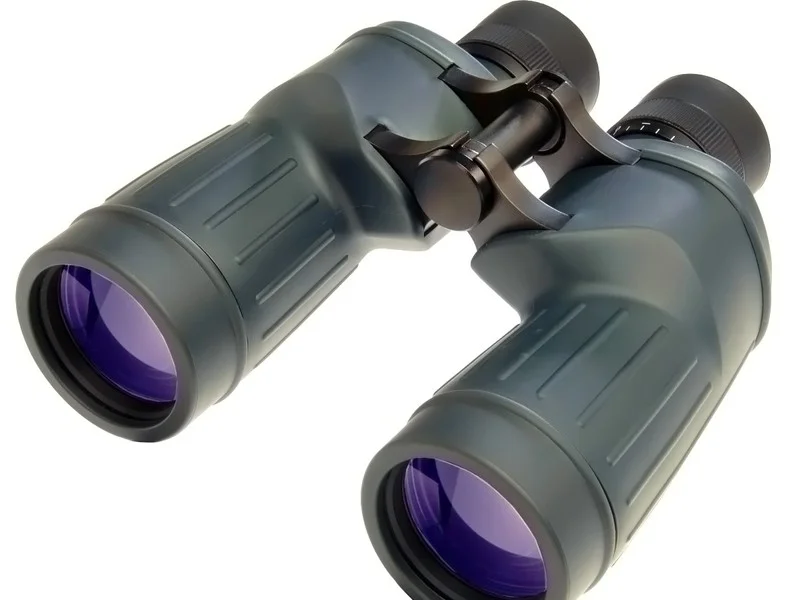
The Lagoon Nebula (M8) is visible to the naked eye and spectacular in binoculars: a glowing cloud with a bright star cluster embedded in it. M22 globular is one of the finest in the sky. The M24 star cloud is a dense section of Milky Way that fills the entire binocular field. Sagittarius in binoculars is one of summer astronomy's great rewards.
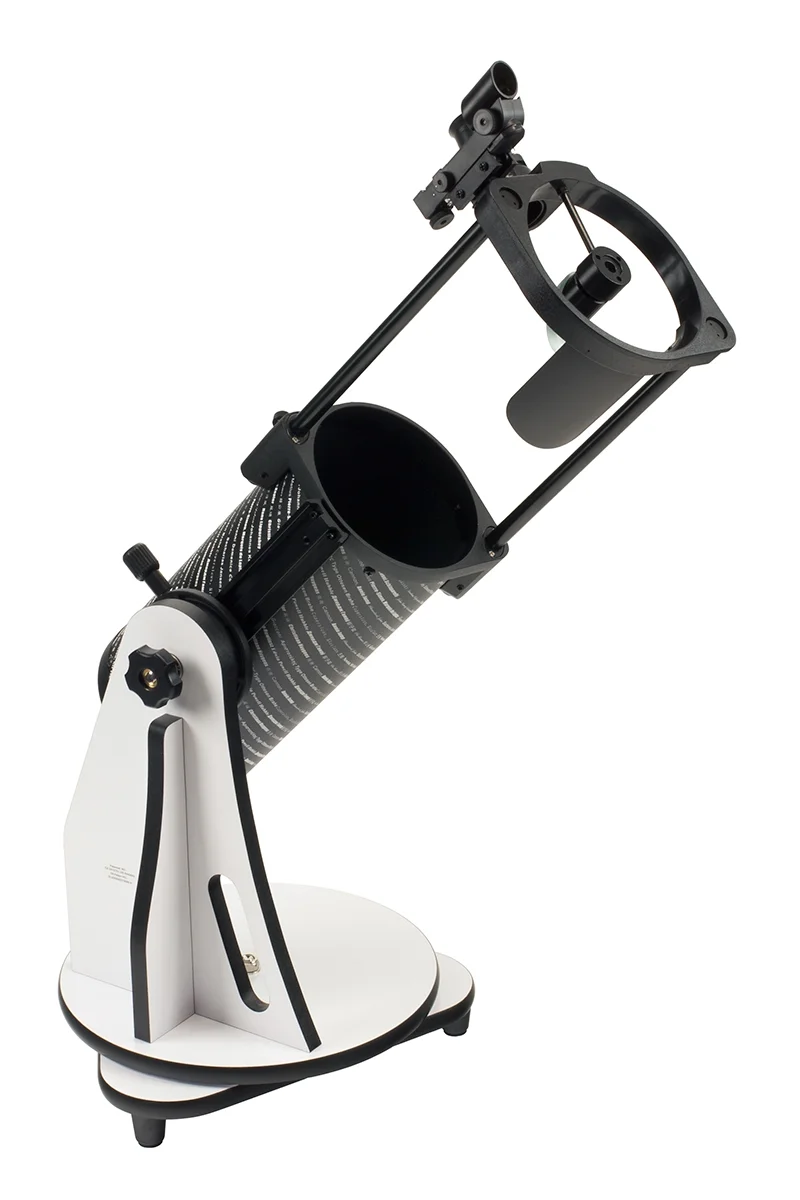
M8 shows the dark lane dividing the nebula from the cluster. M20 Trifid reveals its three-lobed structure at 80×. M17 (Swan/Omega Nebula) is one of the brightest emission nebulae in the sky. M22 partially resolves into individual stars. You can visit eight to ten Messier objects in a single summer night with a 130P in Sagittarius.
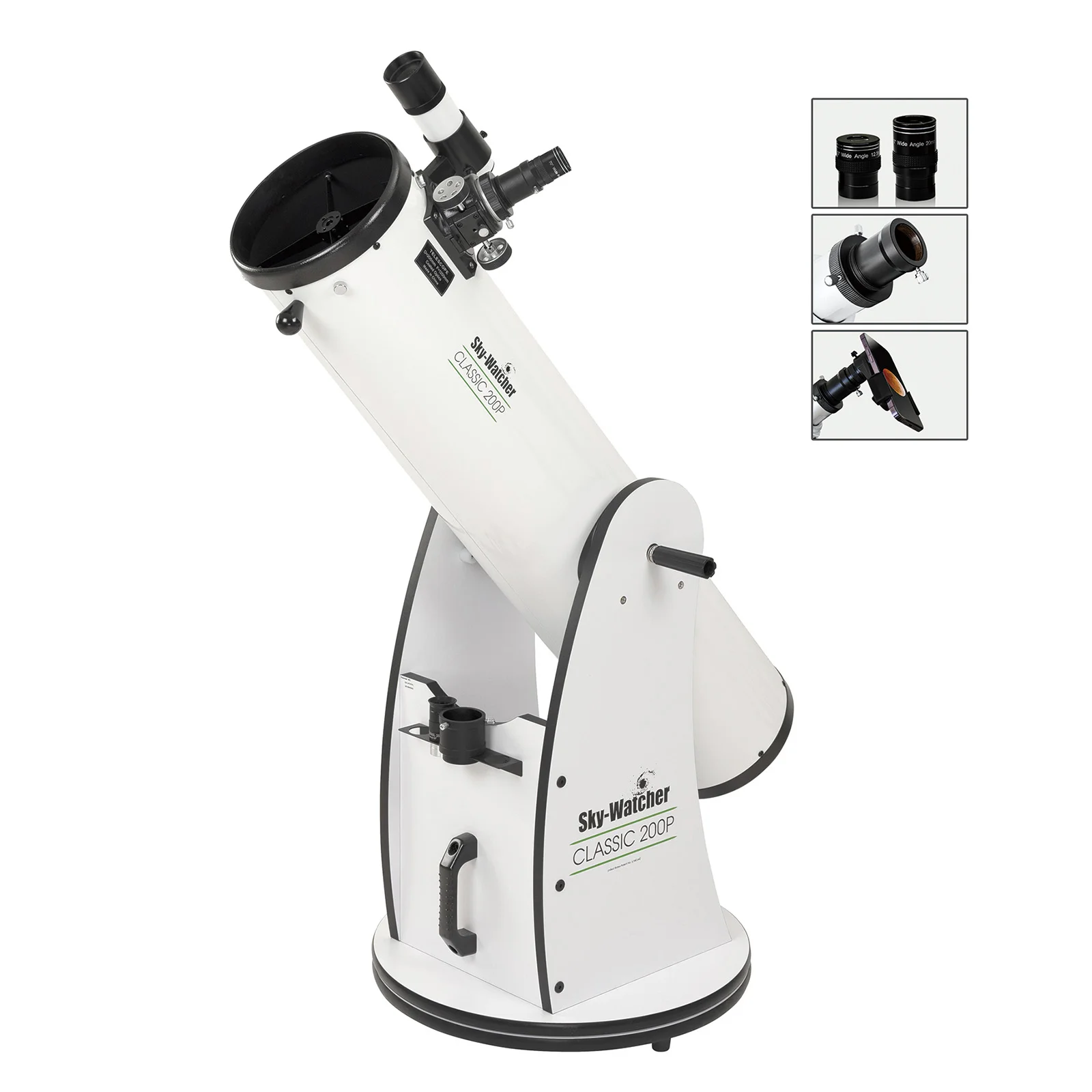
M22 resolves completely into hundreds of individual stars. NGC 6818 (Little Gem) shows as a bright blue planetary nebula. M20's dark lanes become sharp. The dark nebulae threading through the star clouds, the Great Rift extending into Sagittarius, become visually striking on a good night. This constellation alone could fill an entire summer observing programme.
Affiliate links: you pay the same price, we earn a small commission that helps keep WatchTheStars free.
Need help choosing? See our binoculars and telescope guides.
Advanced Observing
Galactic Centre Direction
Nash γ Sagittarii points almost directly toward Sagittarius A*, the supermassive black hole at the galaxy's core 26,000 light-years away. Learning to point here and describe the visual field teaches you the scale and structure of the galactic centre region.
Dust Extinction
The galactic centre is hidden by ~30 magnitudes of dust absorption at visual wavelengths. This is why we see only the foreground clusters and nebulae: the very centre is invisible optically. Only gamma rays, X-rays, and radio penetrate the dust.
Nebula Dark Lanes
At high power, the dark lanes in M8 (the "lagoon") and M20 (the "trifid") are visible as genuine dust clouds blocking background stars. These are not merely contrast tricks. They are real, opaque dust.
Star Counts
M24 is ideal for astrophotography surveys: counting stars in a defined area trains you to estimate stellar density and understand the structure of the galaxy. The density gradient from edge to centre is remarkable.