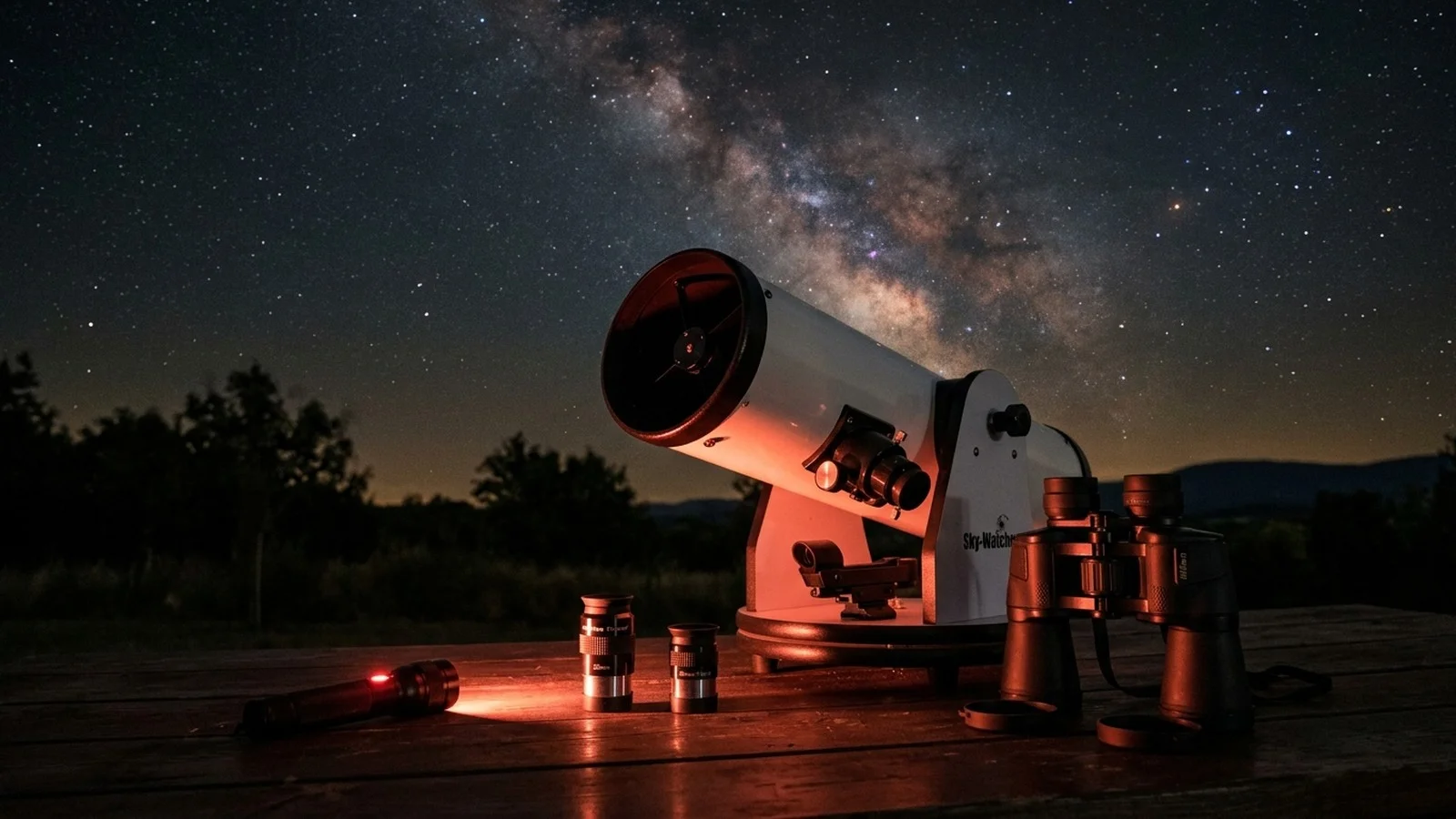
Best compact binoculars UK 2026: seven small pairs compared
The best compact binoculars for most UK buyers are the Pentax UP 8x25 WP at £102: waterproof, about 370g, comfortable with glasses and able to focus as close as 1.9m. Under £50, the Celestron Outland X 8x25 (£49) is the pick, and for the sharpest view in a pocket-sized body, the Hawke Endurance ED 8x25 (£149) uses ED glass to cut colour fringing.
Compact binoculars are the 21mm to 28mm pairs that fold into a coat pocket. They suit walks, festivals, the theatre, holidays and children's hands. This guide compares seven that First Light Optics stocks, with prices read from our product data, last checked on 6 November 2026. If the pair is really for the night sky, skip to whether compact binoculars are any good for stargazing, because the honest answer changes what you should buy.
Best compact binoculars UK 2026: the comparison table
Field of view is the width of the scene at 1,000m. Eye relief is how far from the eyepiece your eye can sit and still see the whole view; 15mm or more works with most glasses.
| Binoculars | UK price | Weight | Field of view | Eye relief | Waterproof |
|---|---|---|---|---|---|
| Celestron Outland X 8x25 | £49 | 296g | 143m (8.2°) | 10mm | Yes |
| Opticron Adventurer II WP 8x32 | £77 | 507g | 108m (6.2°) | 20mm | Yes |
| Opticron Taiga Compact 8x25 | £95 | 299g | 105m (6.0°) | 16mm | No |
| Pentax UP 8x25 WP | £102 | 370g | 108m (6.2°) | 15mm | Yes |
| Pentax Papilio II 6.5x21 | £109 | 290g | 131m (7.5°) | 15mm | No |
| Vortex Diamondback HD 8x28 | £145 | 398g | 111m (6.2°) | 18mm | Yes |
| Hawke Endurance ED 8x25 | £149 | 310g | 119m (6.8°) | 13mm | Yes |
Specifications are the manufacturers' figures for the 8x (or 6.5x) version, as listed by First Light Optics. Most of these also come in a 10x version for a few pounds more; the prices are in each section below.
Best compact binoculars by budget: under £50, £100 and £150
Best compact binoculars overall: Pentax UP 8x25 WP (£102)
The Pentax UP does the basics better than anything else near £100. It is fully waterproof to the Japanese JIS Class 6 standard, the 15mm of eye relief works with glasses, and it focuses down to 1.9m, close enough for a butterfly on the path. The inverted porro prism design keeps it short and wide, so it sits well in small hands. At 370g it is heavier than the lightest pairs here, which most people will never notice in a pocket. The 10x25 version is £110.
Best compact binoculars under £50: Celestron Outland X 8x25 (£49)
For under £50 the Outland X gives you waterproof, nitrogen-filled roof prism binoculars with BaK-4 glass and a carry case. Its 143m field of view is the widest in this guide, which makes it easy to find things. The catch is eye relief: 10mm is too short for most glasses wearers, who will see a smaller circle of view. If nobody using it wears glasses, it is the best cheap pair here. The 10x25 is also £49.
Best value with a 12x option: Opticron Taiga Compact 8x25 (£95)
The Taiga is Opticron's light porro-prism compact, at about 300g with 16mm of eye relief and a ten-year UK guarantee. It comes in 8x25, 10x25 (£99) and 12x25 (£109), so it suits anyone who wants high magnification in a small pair. It is not waterproof, which matters for a pair that lives in a walking bag. FLO showed it as awaiting stock when we checked.
Best for museums, gardens and children: Pentax Papilio II 6.5x21 (£109)
The Papilio II focuses down to 50cm, which no other pair here comes close to. That turns it into a long-distance magnifier for paintings, insects, flowers and rock pools, and children love it for exactly that reason. The 6.5x model has the widest view after the Outland X and the steadiest image. It isn't waterproof, so treat it as a fair-weather pair. The 8.5x21 is £119.
Best for glasses wearers: Vortex Diamondback HD 8x28 (£145)
With 18mm of eye relief, the Diamondback HD 8x28 shows the whole view through glasses more comfortably than any other compact here. It is argon-purged, waterproof and covered by Vortex's unconditional lifetime warranty, which repairs or replaces it even if the damage was your fault. At 398g it is the heaviest of the true compacts. The 10x28 is £159.
Sharpest compact binoculars: Hawke Endurance ED 8x25 (£149)
ED (extra-low dispersion) glass cuts the purple and green fringes you see around bright edges, such as a bird against the sky. The Hawke Endurance ED puts that glass in a 310g waterproof magnesium body with a 119m field of view and 2m close focus. Eye relief is 13mm, so glasses wearers should try the Vortex first. The 10x25 is £155. FLO showed it as awaiting stock when we checked.
Best compromise for stargazing too: Opticron Adventurer II WP 8x32 (£77)
The Adventurer II 8x32 isn't a true compact: at 507g it belongs in a jacket pocket, not a jeans pocket. Its 32mm lenses gather 64 per cent more light than a 25mm pair, and the 4mm exit pupil gives a noticeably brighter image at dusk and under the stars. With 20mm of eye relief and full waterproofing for £77, it is the pair to buy if you want something small that still shows the night sky properly.
8x25 or 10x25: which compact binocular magnification?
Choose 8x unless you have a specific reason not to. At the same 25mm lens size, 8x gives a wider view, a brighter image and a steadier one when you hold the binoculars by hand.
- Brightness. The exit pupil, the width of the beam of light reaching your eye, is the lens size divided by the magnification: 3.1mm for 8x25 and 2.5mm for 10x25. The smaller beam looks noticeably dimmer in woodland, at dusk and indoors.
- Field of view. The 8x versions here show 20 to 30 per cent more of the scene, which makes moving subjects much easier to follow.
- Shake. Every wobble of your hands is magnified too. At 10x, a light compact pair shakes visibly unless you brace your elbows.
10x makes sense for distant, still subjects in good light: waders across an estuary, a cricket match from the boundary, a stage from the back of the stalls.
Are compact binoculars good for stargazing?
Compact binoculars are fine for a quick look at the night sky and poor for anything faint. A 25mm lens gathers a quarter of the light of a 50mm one, and at night your pupils open to 5mm to 7mm, far wider than the 3mm beam a compact delivers.
From a back garden, an 8x25 pair will show the craters along the edge of the Moon's shadow, Jupiter's four largest moons as points of light, and the Pleiades as a tight little cluster. The Orion Nebula, the Andromeda Galaxy and the Milky Way's star clouds all need more light than a compact can gather. For those, our guide to the best binoculars for stargazing starts with the Opticron Adventurer 10x50 at £84, which gathers four times the light of any compact here. Our binocular astronomy guide explains how to find your way around the sky with any pair, and what's in the UK night sky this week gives you something to point them at.
For the night sky, go bigger than compact
The pairs we recommend for stargazing
Compact binoculars are made for daylight. If the pair is mainly for the Moon, star clusters and the Milky Way, a 42mm or 50mm pair gathers two to four times as much light and costs no more than a good compact.
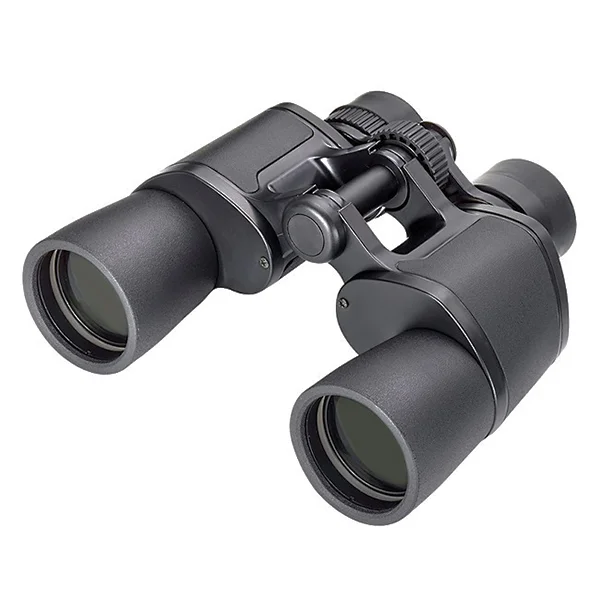
Waterproof, light enough for a walk, and big enough to show the Pleiades and the Orion Nebula properly. The pair we suggest when one pair has to do everything.
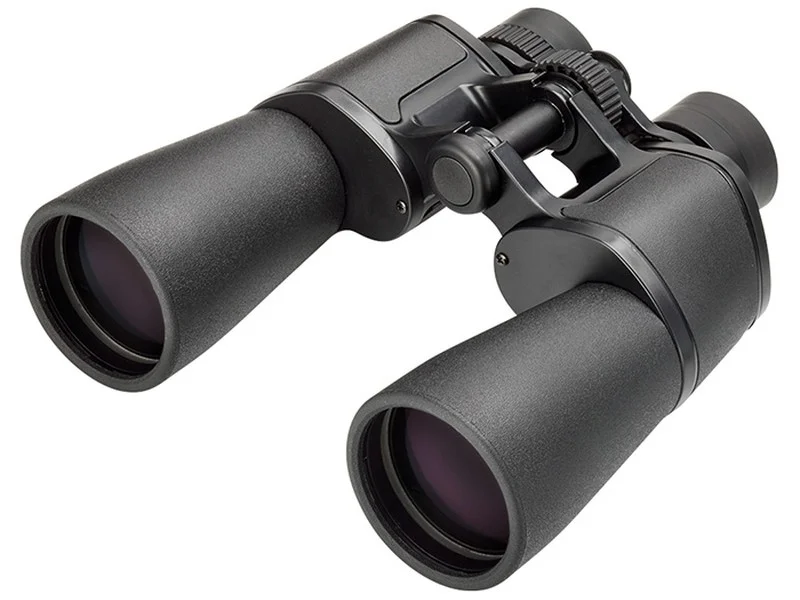
The UK astronomy forums' standard first pair. Four times the light of a 25mm compact, at 10x magnification that is still comfortable to hand-hold.
All our astronomy binocular picks
Honest, research-based recommendations for every budget.
Browse all →Affiliate links: you pay the same price, we earn a small commission that helps keep WatchTheStars free.
How to choose compact binoculars: weight, eye relief and waterproofing
- Weight. Under 350g disappears into a pocket; 350g to 400g is still easy to carry all day. Anything over 500g, like the 8x32 above, is a mid-size pair.
- Eye relief. If you wear glasses, look for 15mm or more and fold the eyecups down. Below 13mm you will see a smaller circle with dark edges.
- Waterproofing. A pair that lives in a coat in the UK will get rained on and will fog inside after a cold day unless it is sealed and gas-filled.
- Close focus. Under 2m opens up insects, flowers and museum detail. Most pairs here manage 2m to 5m; the Papilio II manages 0.5m.
- Prism type. Roof prism pairs are slim and straight; inverted porro pairs are shorter and wider and often give a little more depth for the money. Both work well.
Buying for a child? The Papilio II and the Taiga suit small hands best, and our guide to the best telescope for a child covers the next step up. For other ideas at every price, see our telescope and astronomy gift guide.
Where to buy compact binoculars in the UK
We link to First Light Optics in Devon, a UK specialist that stocks every pair in this guide, ships from UK stock and offers 30-day returns. Buying from a UK dealer also keeps the manufacturer's UK guarantee straightforward, which matters most for the Opticron ten-year guarantee and Vortex's lifetime warranty.
How we reviewed this
This is a research-based review rather than a laboratory test. The facts on this page come from the manufacturer's specifications, the First Light Optics listing and its customer reviews, and the long-running owner threads on Stargazers Lounge and Cloudy Nights, checked against what the same kit shows from a typical UK garden. We have not necessarily used every item ourselves; where we have, the page says so. We receive no free equipment, and the retailer links pay a small commission that never changes the price you pay or the verdict we give.
Prices are read from our product data, last checked against First Light Optics on 6 November 2026. Page last updated 6 November 2026. Own this kit and see it differently? Email [email protected] and we will update the page.