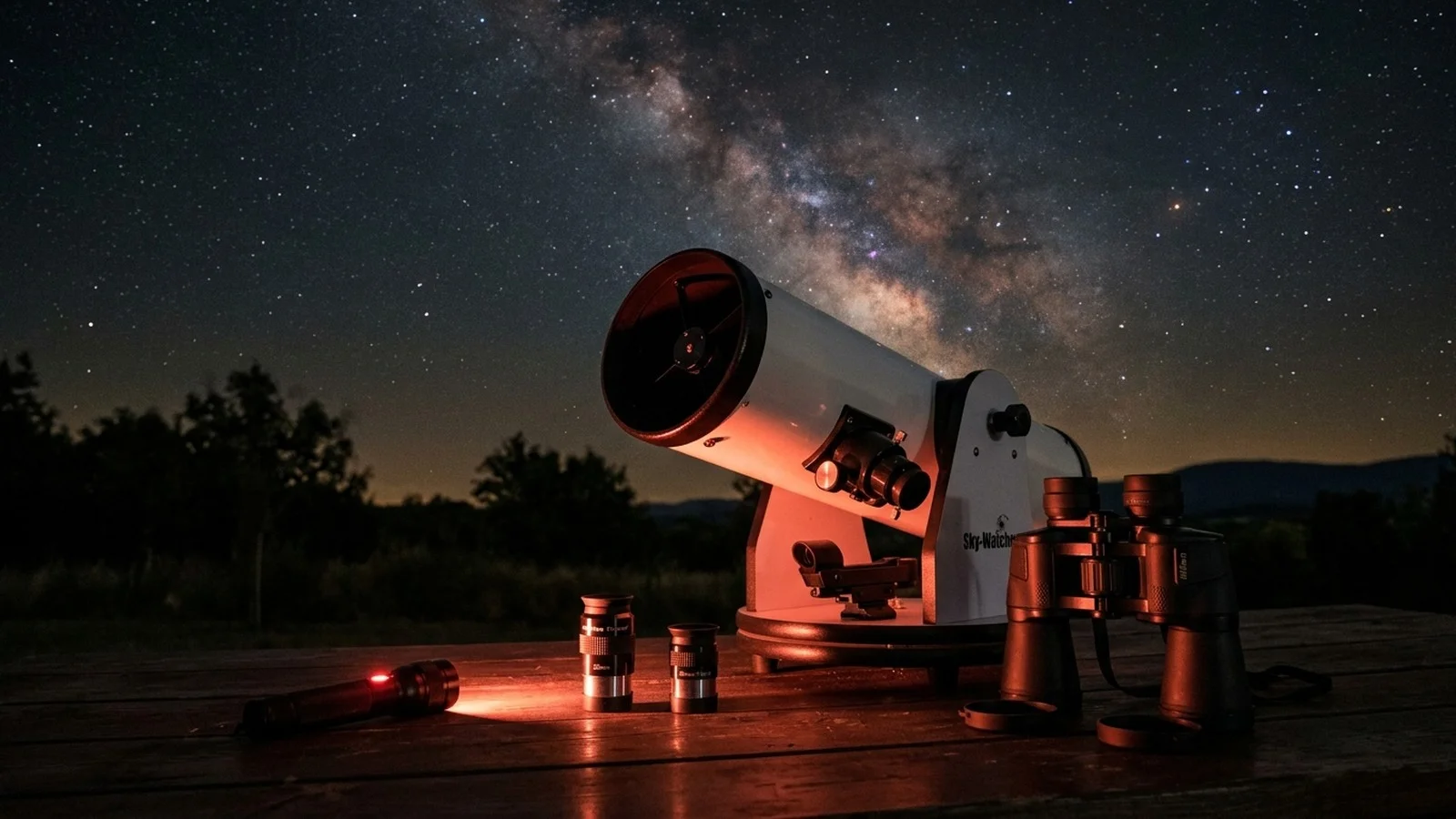
Best telescope gifts 2026: one present at every budget
The best telescope gift for most people is the Sky-Watcher Heritage 150P at £249, or the Heritage 130P at £194 if the budget stops under £200. Both are tabletop Dobsonians: nothing to align, no batteries, no wobbly tripod, and Saturn's rings on the first clear night. Under £100, buy binoculars rather than a telescope. For someone who wants photographs without the learning curve, a smart telescope such as the ZWO Seestar S50 at £539 is the right gift. Everything below is sold by First Light Optics, the UK specialist we link to, with UK stock and a 30-day return policy.
We have grouped the picks by what you want to spend. Each card links to our full review and to the retailer, with the price read from our product data, last checked on 23 October 2026. If you are buying for a child, we have a separate guide to the best telescope for a child, by age.
Astronomy gifts under £30
Under £30: stocking fillers that get used
Small, useful, and welcome whether or not they own a telescope
Every stargazer needs a red torch and nobody buys their own. The Moon filter is for anyone who already has a telescope; the eclipse glasses are a cheap way to start a conversation about the partial eclipse of 2 August 2027.
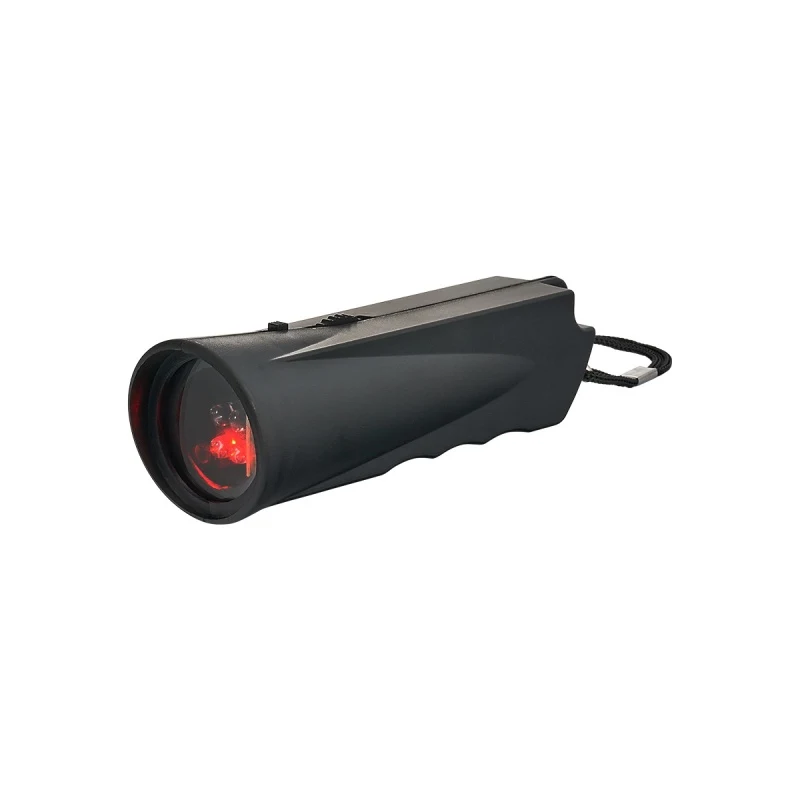
Astro Essentials Red Light Torch
Keeps night vision intact while they read a chart or find an eyepiece. The one accessory every observer uses on every clear night.
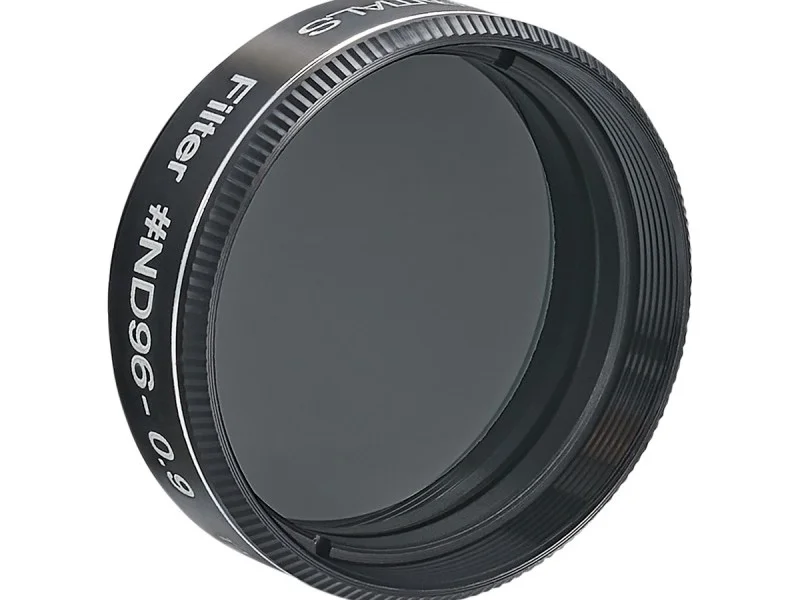
Astro Essentials ND96 Moon Filter
Takes the glare off a bright Moon so craters and mountains stand out. Screws into any 1.25-inch eyepiece in seconds.
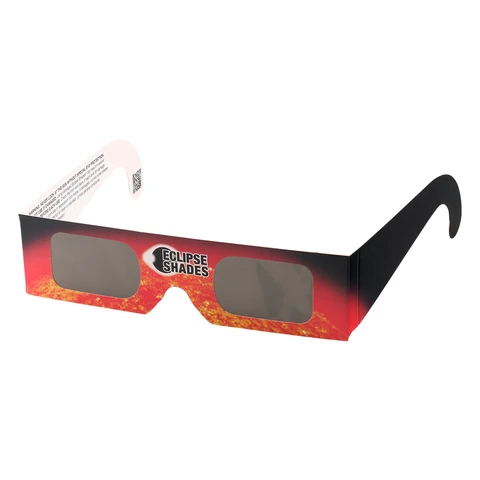
Astro Essentials Safe Solar Eclipse Handheld Viewer
A certified handheld solar viewer for the partial eclipse of 2 August 2027, when up to 47% of the Sun is covered from the UK, and for sunspots on any clear day. Buy it now and skip next summer's rush.
Affiliate links: you pay the same price, we earn a small commission that helps keep WatchTheStars free.
Astronomy gifts under £100
At this price a telescope is the wrong gift and binoculars are the right one. Our guide to the best binoculars for stargazing explains why a 10x50 shows more of the sky than any £80 telescope, and it is the pair we recommend to most UK beginners first.
Under £100: the first-night gift
Binoculars show more of the sky than a cheap telescope ever will
If the person has no equipment at all, a pair of 10x50 binoculars is the better gift at this price: the whole of the Pleiades in one view, Jupiter's moons, the Moon's biggest craters and the Milky Way from a dark site. The phone adapter turns any telescope into a camera.
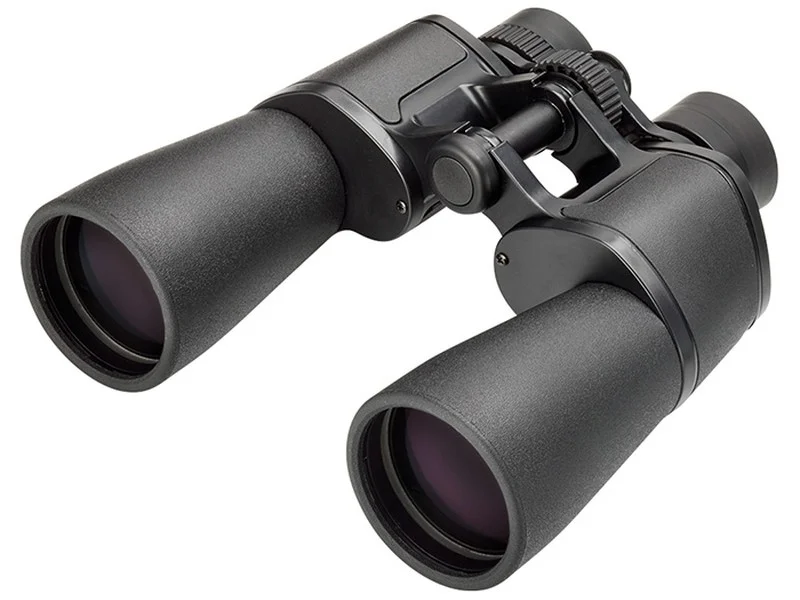
The binoculars we point most UK beginners to first: light enough to hand-hold, sharp enough to show all four of Jupiter's moons. Waterproof, so they survive a damp garden.
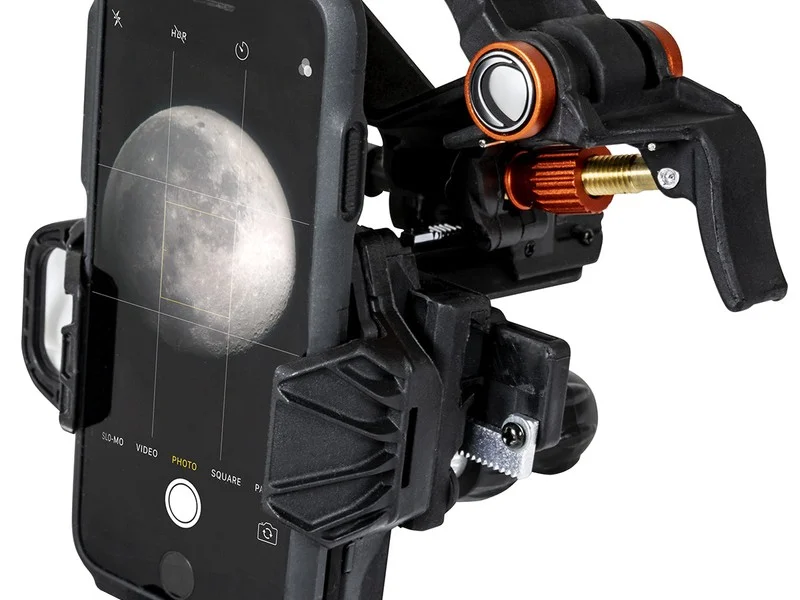
Celestron NexYZ Smartphone Adapter
Clamps a phone to any 1.25-inch or 2-inch eyepiece. First Moon photo on the first night, and it works on whatever telescope they buy later.
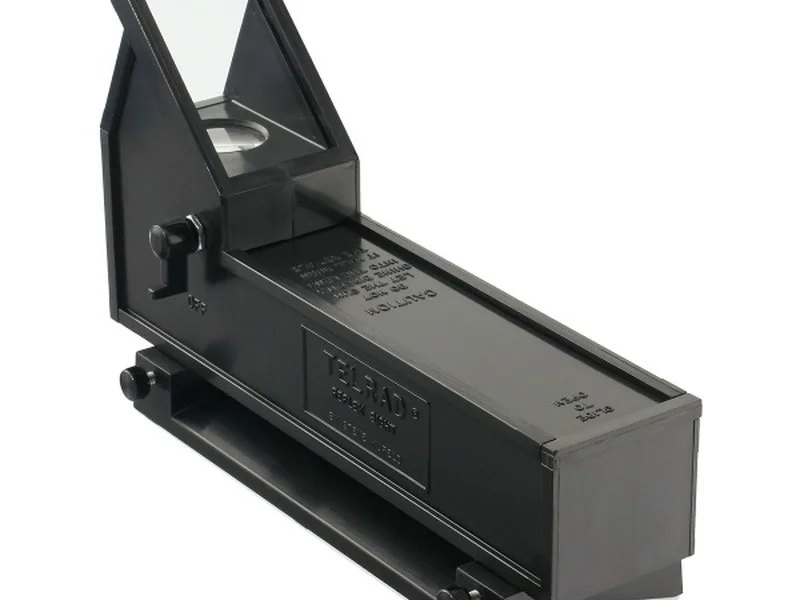
Telrad Finder
The finder every Dobsonian owner ends up buying. Three red rings on the real sky, so finding targets stops being the hard part.
Affiliate links: you pay the same price, we earn a small commission that helps keep WatchTheStars free.
Telescope gifts under £250
This is where the best beginner telescopes UK buyers actually choose live. The Heritage 150P and 130P are the same design at two sizes, and either one will be in use years from now. Our Sky-Watcher Heritage 130P review covers what it shows and what it does not.
Under £250: the telescope most people should get
Tabletop Dobsonians: nothing to align, no batteries, no wobbly tripod
This is the budget where a proper telescope becomes the right gift. Both Heritage models sit on a table or garden wall, set up in two minutes, and show Saturn's rings, Jupiter's cloud belts and the Orion Nebula. The 150P is the one to buy if the budget stretches; the 130P is the pick under £200.
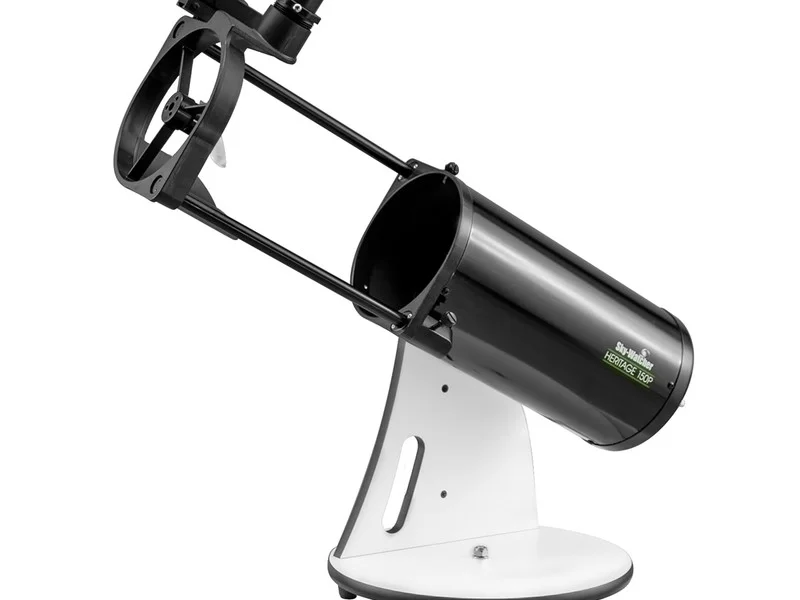
Six inches of aperture, a parabolic mirror and a collapsing tube that fits a cupboard. The one 130P owners on UK forums say they wish they had bought first.
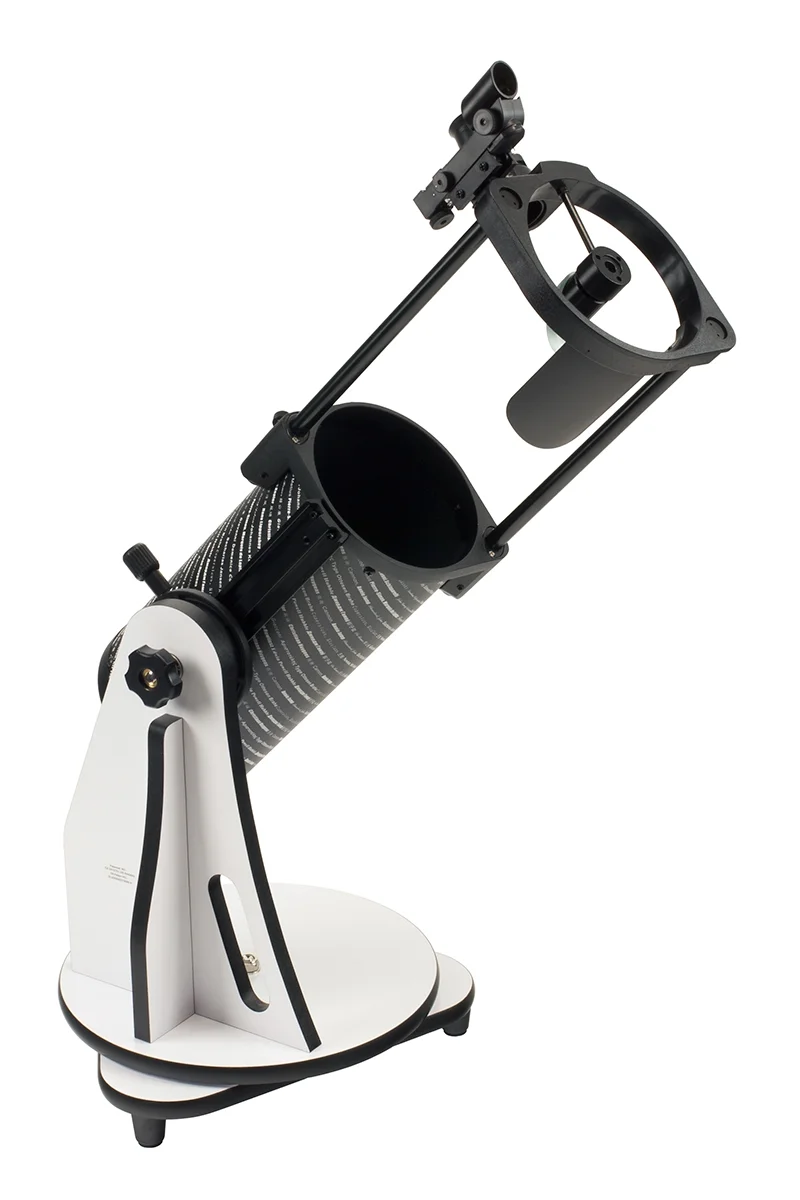
The same design with a 130mm mirror. Still Saturn's rings and Jupiter's moons on the first clear night, for less than a games console.
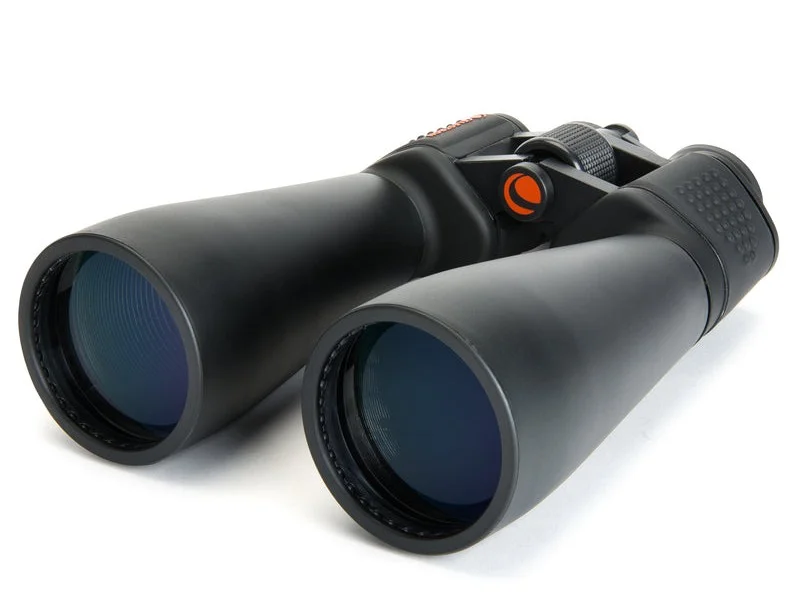
Big 70mm binoculars for the Moon, clusters and comets. At 1.5 kg and 15x they need a tripod for any use at all; the adapter is in the box, so a sturdy tripod is the natural second gift.
Affiliate links: you pay the same price, we earn a small commission that helps keep WatchTheStars free.
Smart telescope gifts under £600
The best smart telescopes have changed what a first telescope can be: the Seestar S50 photographs the Orion Nebula from a town garden on its first night, with no knowledge of the sky needed. Torn between the two under £600? Our Seestar S50 vs Dwarf 3 comparison goes target by target.
Under £600: photographs on the first night
Smart telescopes find their own targets and build the image on a phone
A smart telescope is the gift for someone who loves the idea of astronomy but will never spend an hour learning star charts. It finds the Orion Nebula or the Andromeda Galaxy by itself, stacks the exposures and sends the picture to their phone while they stay warm indoors. The StellaLyra is the opposite kind of present: a big, simple telescope for someone who wants to look with their own eye.
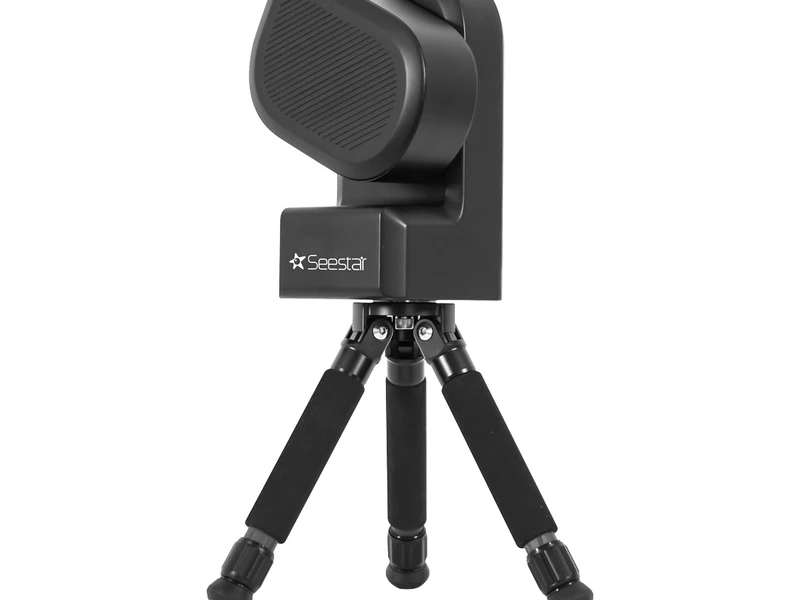
Tripod and case in the box, set up in two minutes, and the simplest first night of any smart telescope. Nebula and galaxy photos from a town garden.
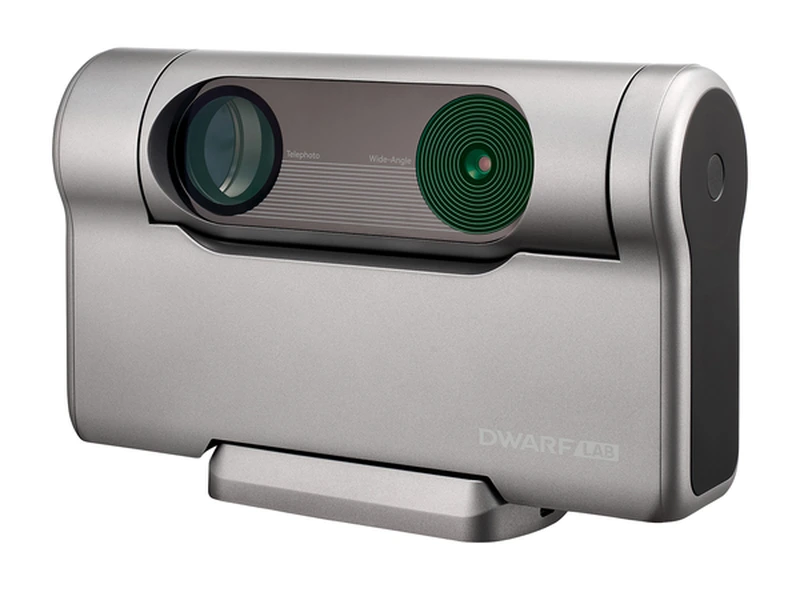
Fits in a coat pocket, runs for hours on its battery and adds a wide-angle camera. Needs a tripod, which is the first thing to add.
An 8-inch Dobsonian for someone who wants galaxies and globular clusters through an eyepiece. Big, simple and a lifetime purchase.
Affiliate links: you pay the same price, we earn a small commission that helps keep WatchTheStars free.
Serious presents: £600 and up
£600 and up: the serious present
For someone who has already caught the bug
Above this line, ask what they already own. A second telescope is rarely the answer; a better one, or a smart telescope that does what their visual scope cannot, usually is.
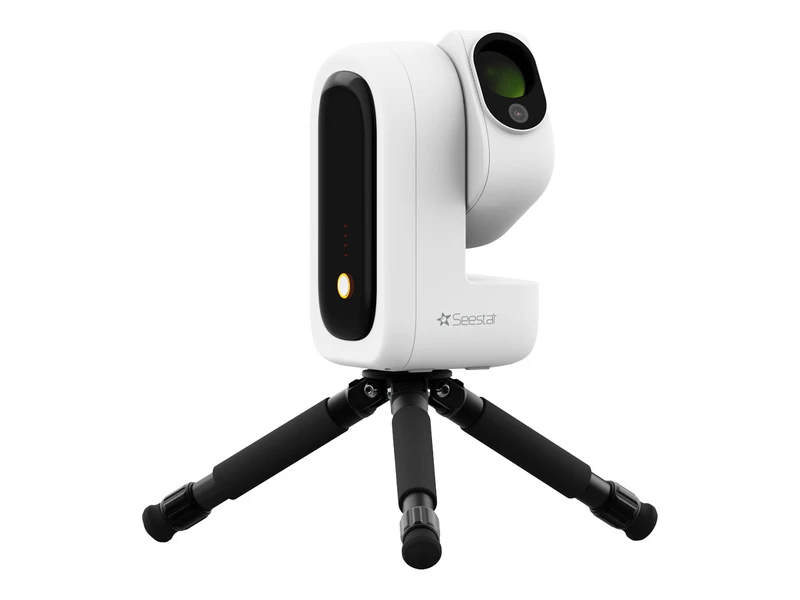
Dual 4K cameras, a bigger field and sharper stars than the S50. The one we recommend when the budget allows.
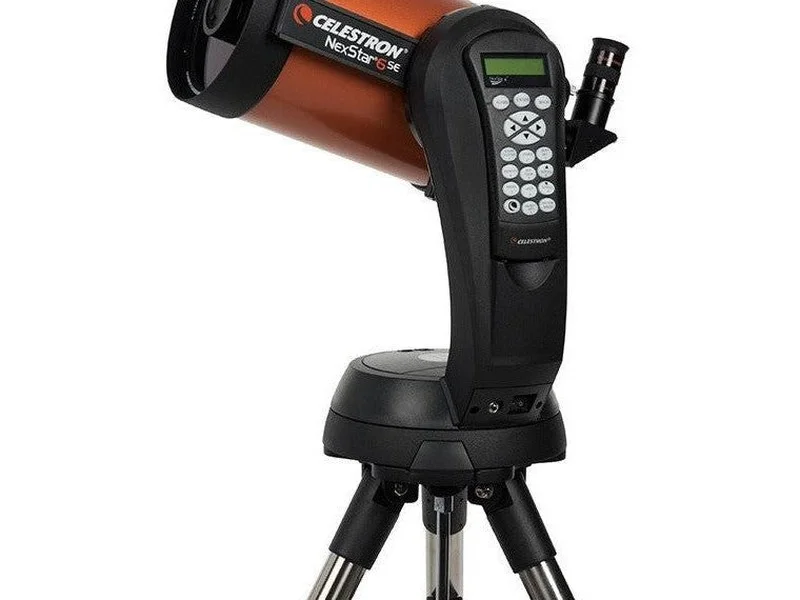
A 6-inch GoTo telescope that finds thousands of objects from a handset. For someone who wants to look, not photograph, and wants it found for them.

Sky-Watcher Skyliner 250PX FlexTube
Ten inches of aperture in a collapsing tube. Galaxies, faint nebulae and planetary detail that smaller telescopes only hint at.
Affiliate links: you pay the same price, we earn a small commission that helps keep WatchTheStars free.
One thing not to buy for Christmas 2026: the DwarfLab Draco. It is a genuinely exciting 90mm smart telescope, but it is a pre-order with deliveries expected in November or December, and nobody has tested a production unit yet.
What not to buy
- Anything advertised by magnification. "600x power" on the box is the surest sign of a telescope that will disappoint. Aperture (the mirror or lens size in millimetres) is what matters, and useful magnification is about twice the aperture in millimetres.
- Telescopes on thin aluminium tripods. The image shakes for seconds after every touch. A tabletop Dobsonian avoids the tripod entirely.
- An equatorial mount for a beginner. The counterweights and axes are a hurdle on night one. Save equatorial mounts for someone who already knows they want to photograph the sky.
- A telescope for someone who has not been outside at night yet. If in doubt, buy the binoculars and the red torch, and give them our stargazing for beginners guide to go with them.
Wrap it with a first night
The Christmas sky is kind to new telescopes: Orion and the Pleiades are high in the evening, the Moon is a target every week, and the Geminids, the strongest shower of the year, peak on 13 to 14 December. Point them at our guide to the next meteor shower in the UK, our how to use a telescope walkthrough for the first evening, and the what you can see in the sky tonight tool, which scores every night for their postcode.
Still not sure? A First Light Optics gift voucher is the safe choice when you do not know what they already own, and it lets them pick the eyepiece or filter they actually need.
How we reviewed this
This is a research-based review rather than a laboratory test. The facts on this page come from the manufacturer's specifications, the First Light Optics listing and its customer reviews, and the long-running owner threads on Stargazers Lounge and Cloudy Nights, checked against what the same kit shows from a typical UK garden. We have not necessarily used every item ourselves; where we have, the page says so. We receive no free equipment, and the retailer links pay a small commission that never changes the price you pay or the verdict we give.
Prices are read from our product data, last checked against First Light Optics on 23 October 2026. Page last updated 23 October 2026. Own this kit and see it differently? Email [email protected] and we will update the page.