The Gulf of Oman Gunship Encounter
Twenty-Five Cold Orbs, One 105mm Cannon, and a Video Recorder That Failed
On a dark night in September 2021, a US Special Operations AC-130J gunship was running live-fire training over the Gulf of Oman. The crew dropped a flare on the water as a mock target. When the sensor operator looked back at it through infrared, two four-foot orbs were sitting motionless above the flame. They showed cold, not hot. He pulled the trigger on the 105mm cannon. In the fraction of a second between the trigger and the recoil, both objects were gone. The intelligence report describing that night was declassified on 7 August 2026.
| Date and time | 8 September 2021, during hours of darkness |
| Location | Gulf of Oman, off the coast of Oman |
| Aircraft | US Special Operations Forces AC-130J gunship, on a live-fire training sortie |
| Objects | Approximately 25 instances of 'cold orbs', around four feet in diameter |
| Speeds recorded | 250 mph minimum to 1,300 mph maximum, calculated with the aircraft's targeting system |
| Propulsion | None observed |
| Key event | Two orbs hovering over a flare left the area between the cannon's trigger pull and its recoil |
| Primary evidence | Crew phone footage of the sensor display: the aircraft's own video recorder failed and corrupted the data |
| Document | DOW-UAP-D101, Intelligence Information Report, raised April 2022, released 7 August 2026 |
| Video files | Six clips, DOW-UAP-PR117 to PR122 |
| Status | Unresolved: the All-domain Anomaly Resolution Office could not explain the case |
The Gulf of Oman gunship encounter is a September 2021 incident in which the crew of a US Special Operations AC-130J tracked around 25 unidentified objects during live-fire training. The objects appeared on infrared as cold orbs roughly four feet across, flew between 250 and 1,300 mph with no visible propulsion, and appeared to respond when the aircraft fired its main cannon. The intelligence report was declassified on 7 August 2026 in the Pentagon's fifth UAP release, and the case is officially unresolved.
Of everything in that fifth release, this is the case with the best paperwork. The videos are poor, and the Department of War is unusually honest about why. But behind them sits a formal Intelligence Information Report written by Air Force Special Operations Command, distributed to most of the American intelligence community, and describing a sequence of events that its own authors could not account for.
What Is an AC-130J Gunship, and What Was It Doing There?
The AC-130J Ghostrider is a converted transport aircraft loaded with sensors and guns. It carries a 105mm howitzer and a 30mm cannon in its left side, along with an electro-optical and infrared sensor turret that lets the crew find and track targets in complete darkness. It exists to circle a point on the ground for hours and hit things precisely. The people who fly it are among the most experienced sensor operators in any air force.
On 8 September 2021 one of these aircraft was over the Gulf of Oman running a night live-fire exercise. The standard method is simple: drop a flare on the water, let it burn, orbit it, and use it as a target. The crew member watching the sensor screen is the Combat Systems Officer, and his job that night was to keep the flare in frame and put rounds on it.
Two Cold Orbs Over the Flare
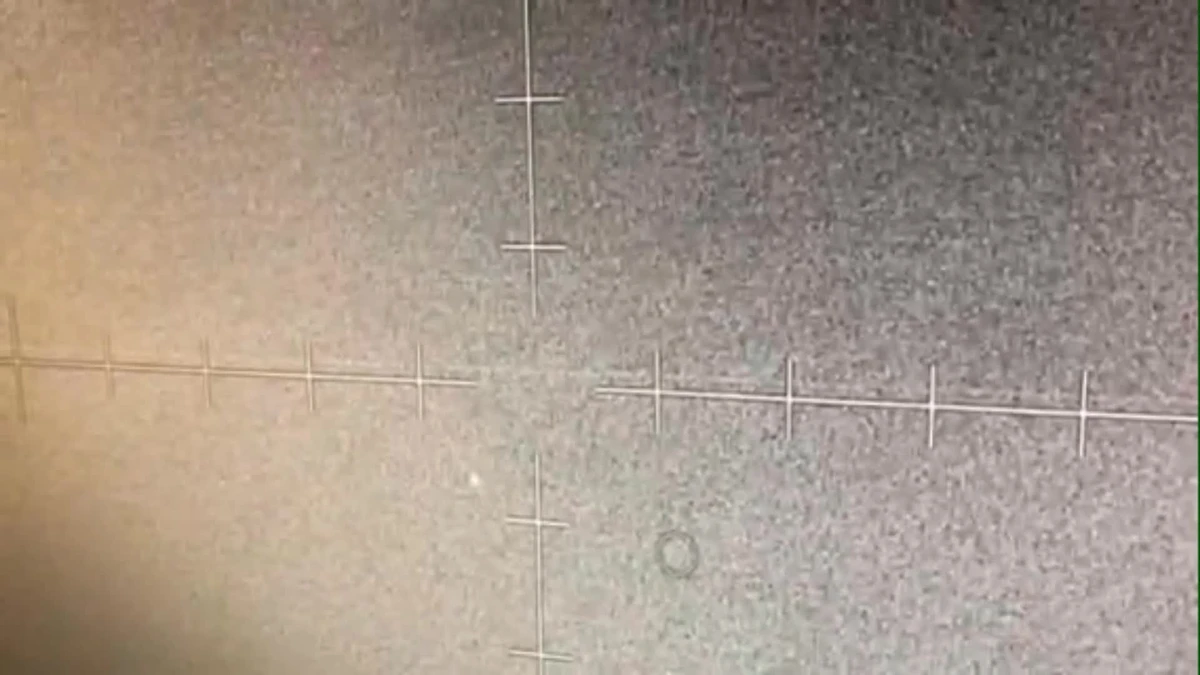
The report describes what happened in plain operational language. The aircraft dropped a water-activated flare as a mock target and entered an orbit around it. The Combat Systems Officer ran collateral scans with the infrared sensor around the flare's position. When he slewed the sensor back to the flare in infrared mode, two objects were there.
"When the CSO slewed the sensor in IR mode back to the flare they observed two approximately four-foot diameter cold orbs between 0 to 20 feet above the surface of the water stationary over the flare for approximately 15 seconds."· DOW-UAP-D101, Intelligence Information Report, released 7 August 2026
Two details matter here. The first is the word cold. A burning flare is the hottest thing for miles. Anything with an engine, a motor or an exhaust would show hot on that sensor. These objects showed cold, sitting directly above an open flame, and the crew viewed them in both white-is-hot and black-is-hot modes to check.
The second is that they were stationary. Not drifting with the wind, not falling, not passing through. They held position over a burning flare on open water for about 15 seconds while a gunship circled them.
What Happened When the Cannon Fired
After roughly 15 seconds the Combat Systems Officer fired. The report's description of the next moment is the single most striking line in the entire fifth release.
"Immediately upon pulling the trigger, during the sight delay between trigger pull and the cannon's recoil, the CSO observed the pair of UAPs rapidly fly away from the flare and out of the sensor feed without changing altitude."· DOW-UAP-D101, Intelligence Information Report
A 105mm howitzer does not fire instantly. There is a short delay between the trigger being pulled and the round leaving the barrel, and the crew feels it as the gap before the recoil. The report places the objects' departure inside that gap. They did not climb or dive. They went sideways, fast, and left the sensor's field of view.
The report offers no explanation for the timing, and neither will we. It could be coincidence: objects that had been sitting there for 15 seconds happened to move at that moment. It could be a reaction to something the aircraft did that a person on board would not notice. The document records the sequence and stops there, which is the correct way to write an intelligence report and the reason this one is worth taking seriously.
Dolphins in a Pod: The Other 23 Sightings
The two orbs over the flare were the beginning. Across the rest of the sortie the crew logged around 25 instances of these objects, and the behaviour they describe becomes stranger as the report goes on.
The dolphin comparison is doing real work in that document. The crew were not describing debris, or birds startled by a flare, or drifting lanterns. They were describing objects that appeared to be flying together on purpose, and an intelligence officer thought that impression was worth writing down and attributing to the source rather than burying it.
The Video Recorder That Inexplicably Failed
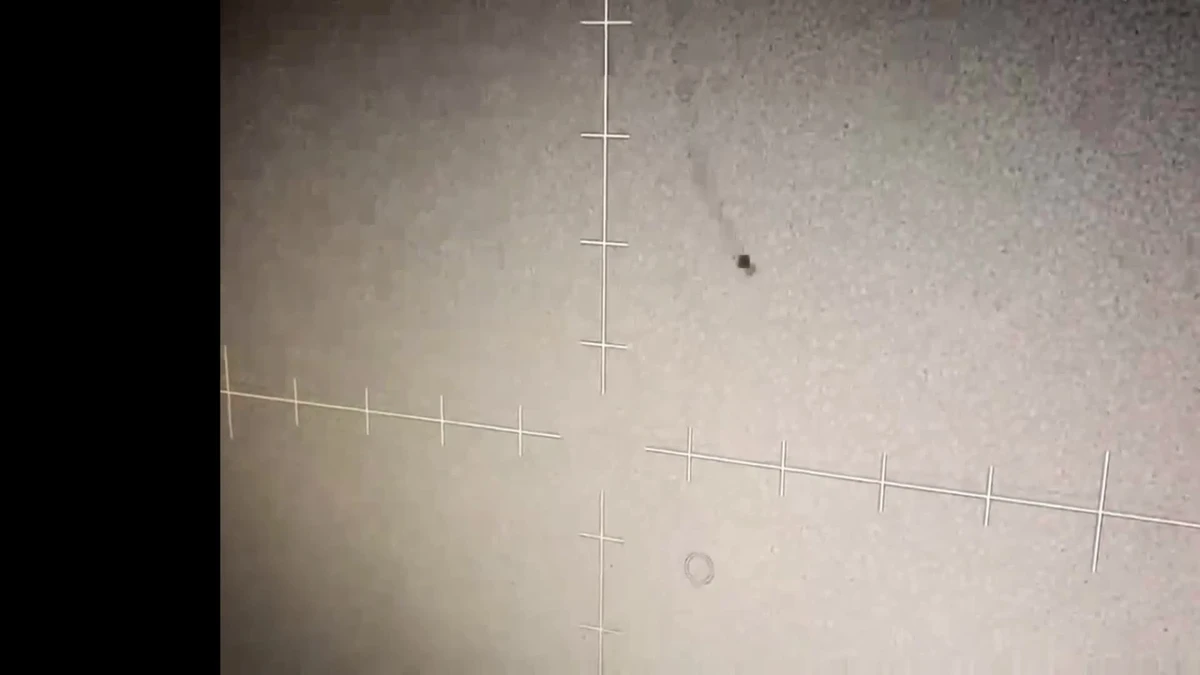
Here is the part almost no coverage of this release has mentioned. The crew did try to save the good footage. The aircraft records its sensor feed to an onboard Digital Video Recorder, and that is what any investigator would want.
"The AC-130's crew attempted to save entirety of the EO/IR footage of the UAP observations but the aircraft's Digital Video Recorder (DVR) inexplicably failed and the video data became corrupted."· DOW-UAP-D101, Intelligence Information Report
That word inexplicably is the report's own. It is why the only footage the public will ever see of this encounter is a handful of phone clips filmed off a screen in a dark aircraft cabin. Every clip on DVIDS carries a note explaining that this is a secondary capture, that it does not represent native primary sensor data, and that any blurring or flickering comes from filming a display rather than from the objects.
We would encourage reading that caveat carefully in both directions. It means the video is weak evidence and should not be presented as anything else. It also means the strongest evidence in this case was destroyed by an equipment failure, and the surviving clips are a poor proxy for what the crew actually watched.
Cold, silent and hard to judge: the case for optics
Kit we've tested and reviewed in full
The gunship crew had a million-pound infrared sensor and still could not identify what they were looking at. On the ground the problem is simpler: most odd lights are satellites, planets or aircraft, and a decent pair of binoculars tells you which within seconds.
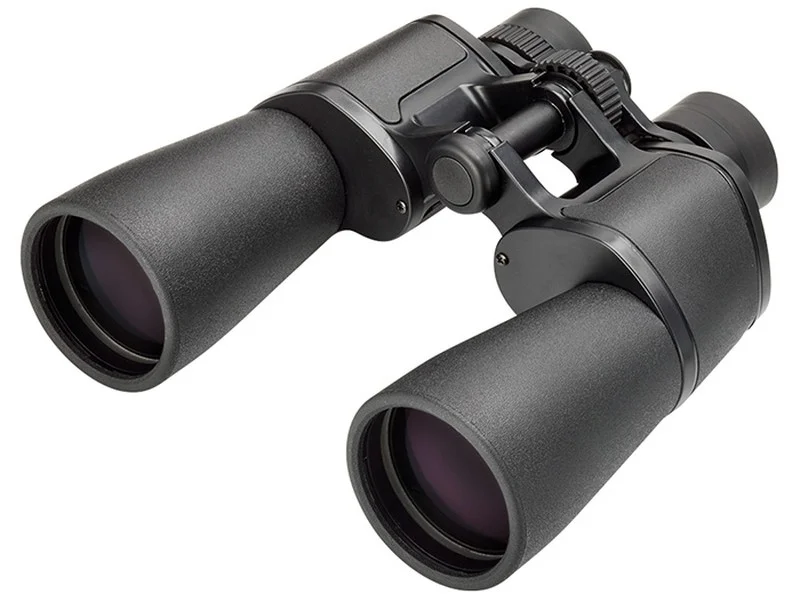
Wide field and 50mm lenses let you get onto a moving light fast, which is exactly when it resolves into something ordinary, or does not.
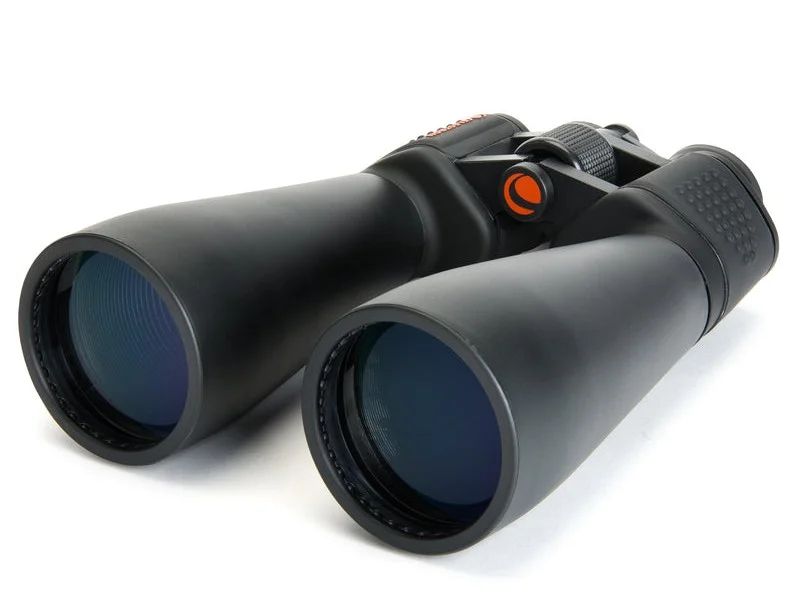
Extra magnification and aperture for anything low on the horizon or well out to sea, where most puzzling lights turn up.
Affiliate links: you pay the same price, we earn a small commission that helps keep WatchTheStars free.
Who Received the Report
The report was raised by Air Force Special Operations Command at Hurlburt Field, Florida, and transmitted in late April 2022, around seven months after the encounter. The distribution list runs to dozens of addressees, and it is worth knowing who was on it.
| Intelligence | CIA, DIA, NSA, NGA, Office of the Director of National Intelligence, NASIC |
| Law enforcement | FBI |
| Civil departments | Department of State, Department of Homeland Security |
| Military commands | US Central Command, US Special Operations Command, Joint Chiefs of Staff, Chief of Naval Operations, JSOC, US Strategic Command |
| Source access | The source had direct access to the reported information through the conduct of official duties |
| Follow-up | The report notes the source remains available for recontact |
This is not a report that sat in a drawer at one command. It went across the American national security apparatus in 2022 and, as far as the public record shows, produced no explanation in the four years before it was declassified.
What Could Explain the Gulf of Oman Orbs?
Several ordinary explanations deserve a hearing, and the honest answer is that none of them fits every detail in the file.
TESTED
DronesThe Gulf of Oman is busy, contested airspace and small drones are common there. But a battery-powered drone still shows warm on infrared, and 1,300 mph is far beyond any small quadcopter. The report also records no propulsion signature.
TESTED
Birds or batsLiving things attracted to a flare would be a reasonable first thought, and warm-blooded animals appear hot on infrared, not cold. Nor do birds hold a stationary hover over open water at speeds the crew measured in the hundreds of miles per hour.
TESTED
Sensor artefactsFilming a screen produces artefacts, and the Department of War says so explicitly. This may well account for some of what the released clips appear to show. It does not account for the crew's direct observations or the speeds derived from the aircraft's targeting system.
OPEN
Flare-related debris or effectsThe objects were first seen directly above a burning flare, which is a genuine confounder. But debris does not hold position, depart at speed on a level track, or reappear across a whole sortie in coordinated formations.
UNRESOLVED
Official positionThe All-domain Anomaly Resolution Office was unable to resolve the case. Unresolved is a specific label: it means the case was investigated and no determination could be made, not that it has been declared unexplainable.
"The UAPs were observed as cold orbs flying at lower altitudes between 250 to 1300 MPH in different formations as well as maneuvering aggressively."
· DOW-UAP-D101 summary lineTimeline
8 September: the encounter
An AC-130J gunship on night live-fire training over the Gulf of Oman logs around 25 UAP instances. Two cold orbs hover over a flare and depart as the 105mm cannon fires. The onboard video recorder fails and corrupts the footage.
27 April: the report is raised
Air Force Special Operations Command transmits Intelligence Information Report DOW-UAP-D101 to the CIA, FBI, DIA, NSA, State, Homeland Security, the Joint Chiefs and dozens of other addressees.
March: cleared for release
The document is approved for release to the Mandatory Declassification Review process under US Central Command review markings dated 26 March 2026.
7 August: declassified
The report and six video clips are published at war.gov/ufo as part of the fifth PURSUE release, alongside 34 other records. The case is listed as unresolved.
Why This Case Stands Out
Most declassified UAP footage is a smudge on a screen with a story attached. This case is the other way round. The footage is the weakest part of it, and the document is the strong part: a formal intelligence report, written by professionals seven months after the event, describing measured speeds, an absent propulsion signature, coordinated group behaviour and a departure timed to a trigger pull.
It also sits inside a pattern this site has followed all year. The Pentagon's own annual reporting has hundreds of cases it cannot close, and a striking share involve military aircraft and sensitive airspace. We covered that count in the Pentagon's 2026 UAP report, the wider release programme in our breakdown of the fifth file release, and the same "unresolved" label applied to earlier footage in what the DoD's UAP videos actually show.
Nothing in the Gulf of Oman file establishes that these objects were not made on Earth, and the report does not claim it. What it establishes is that a heavily instrumented American gunship spent a night surrounded by objects it could not identify, that the best recording of it was lost to a hardware failure, and that four years of review by the offices whose job this is produced the word unresolved.
Read the File Yourself
The full seven-page intelligence report is public. It is catalogued as DOW-UAP-D101 in Release 05 of the PURSUE archive at war.gov/ufo, and the six video clips are on DVIDS as DOW-UAP-PR117 through PR122, all public domain. Our own searchable index of the primary sources is in the UAP document archive.
Related Cases
More UAP cases
- The Black Triangle Files2002–2023 · AFGHANISTAN AND COLORADO SPRINGS · FILES RELEASED 7 AUGUST 2026
- The Pantex Plant UFO IncidentSEPTEMBER 2015 · PANTEX PLANT, AMARILLO, TEXAS · FULL REPORT RELEASED 10 JULY 2026
- The Bagram Triangle IncidentJUNE 2002 · BAGRAM AIR BASE, AFGHANISTAN · FILE RELEASED 7 AUGUST 2026
- The Pentagon UFO Files: A Complete Guide to the PURSUE ReleasesRELEASES 01–06 · 8 MAY TO 18 SEPTEMBER 2026 · 447 RECORDS
- The Art Wallace Account: An Alternative Version of the Rendlesham Forest Incident
- The Puerto Rico Encounters, November 196418–24 NOVEMBER 1964 · ATLANTIC FLEET WEAPONS RANGE, PUERTO RICO · RELEASED 7 AUGUST 2026