Dwarf Planets: How Many Are There and Is Pluto One?
There are five officially recognised dwarf planets, Pluto is one of them, and the true count is almost certainly much higher. Here is what a dwarf planet is, which bodies make the list, why Pluto lost its planet status in 2006, and which of them you can find from a British back garden.
What Is a Dwarf Planet?
A dwarf planet is a body that orbits the Sun, is massive enough for its own gravity to make it nearly round, has not cleared the neighbourhood around its orbit, and is not a moon. That is the definition the International Astronomical Union (IAU) adopted in Prague on 24 August 2006, and it has not changed since. The first two tests are the same ones a planet has to pass. The third is the one that separates the eight planets from everything else: Jupiter and Earth dominate their orbits, while Pluto shares its lane with thousands of other icy bodies in the Kuiper Belt.
The word "dwarf" is a little unfair. These are real worlds. Pluto has mountains of water ice, glaciers of frozen nitrogen and a sky with blue haze. Ceres has salt deposits left by brine that seeped up from underground. Haumea has rings. They are small, and they share their orbits, but there is nothing dull about them.
How Many Dwarf Planets Are There?
The IAU formally recognises five dwarf planets: Pluto, Eris, Haumea, Makemake and Ceres. Four of them live beyond Neptune. Ceres is the odd one out, orbiting in the asteroid belt between Mars and Jupiter. The table gives the key numbers for each.
| Dwarf planet | Diameter (km) | Average distance from the Sun (au) | Year discovered | Known moons | Where it orbits |
|---|---|---|---|---|---|
| Pluto | 2,377 | 39.5 | 1930 | 5 | Kuiper Belt |
| Eris | 2,326 | 68 | 2005 | 1 (Dysnomia) | Scattered disc, beyond the Kuiper Belt |
| Haumea | About 1,560 (elongated, roughly 2,100 by 1,000) | 43 | 2004 | 2 (Hiʻiaka, Namaka) | Kuiper Belt |
| Makemake | About 1,430 | 45.4 | 2005 | 1 | Kuiper Belt |
| Ceres | 940 | 2.77 | 1801 | 0 | Asteroid belt |
Pluto is the largest by diameter, but Eris is the heavier of the two by about a quarter, because it is built from denser rock. Haumea spins once every four hours, fast enough to stretch it into a rugby-ball shape, and in 2017 it became the first body beyond Neptune found to have a ring. Makemake is the brightest Kuiper Belt object after Pluto, with a surface of frozen methane. Ceres is the smallest of the five and the only one a spacecraft has orbited: NASA's Dawn mapped it from 2015 to 2018.
Why only five? Recognition is a slow, formal process, and the IAU has not added a dwarf planet since Makemake and Haumea in 2008. Measuring the size and shape of a body billions of kilometres away is hard, and the IAU has to be satisfied that it is round before it votes. Several larger candidates have been waiting for well over a decade.
Which Objects Are Likely to Be Dwarf Planets Next?
Four bodies beyond Neptune are large enough that most planetary scientists already call them dwarf planets. None has been formally recognised by the IAU.
| Candidate | Diameter (km) | Average distance from the Sun (au) | Year discovered | Known moons | Where it orbits |
|---|---|---|---|---|---|
| Gonggong | About 1,230 | 67 | 2007 | 1 (Xiangliu) | Scattered disc |
| Quaoar | About 1,090 | 43 | 2002 | 1 (Weywot) | Kuiper Belt |
| Sedna | About 1,000 | About 500 (never closer than 76) | 2003 | 0 | Inner Oort Cloud |
| Orcus | About 910 | 39 | 2004 | 1 (Vanth) | Kuiper Belt, an orbit like Pluto's |
Gonggong is probably the largest unrecognised body in the Solar System, and it was only named in 2020 after a public vote. Quaoar made headlines in 2023 when astronomers found a ring around it far outside the distance where rings should be able to survive. Sedna follows an orbit so stretched that it takes about 11,000 years to go round the Sun once, and its strange path is one of the clues behind the search for Planet Nine. Orcus is sometimes called the "anti-Pluto": it follows a near-identical orbit but always sits on the opposite side of the Sun.
2026 ED138: A Possible New Dwarf Planet
The newest name on the candidate list arrived in October 2026. Researchers working with the Vera C. Rubin Observatory in Chile announced 2026 ED138, a body about 46 au from the Sun on an orbit tilted roughly 25 degrees to the plane of the planets. Matthew Holman of the Center for Astrophysics spotted it on 13 October in Rubin survey data, and the team then found it in 30 separate detections across 20 nights between March and July 2026, plus older images going back to 2016.
Its size is the open question. Current estimates run from 600 to 1,500 km across, which spans the gap between a large Kuiper Belt object and a dwarf planet bigger than Ceres. Until its size and shape are pinned down it stays a possible dwarf planet, unconfirmed, but it is a sign of what Rubin's ten-year survey is likely to turn up. We covered the announcement on our Instagram feed, and we will update this page when the measurements come in.
Why Was Pluto Reclassified as a Dwarf Planet?
Pluto was reclassified because astronomers kept finding other Pluto-sized worlds, and the discovery of Eris in 2005 forced a decision.
For 76 years Pluto was the ninth planet. Then, through the 1990s and early 2000s, surveys of the outer Solar System started turning up more and more icy bodies on similar orbits. Quaoar in 2002 and Sedna in 2003 were each a good fraction of Pluto's size. The breaking point came in January 2005, when Mike Brown's team at Caltech found Eris. Early measurements suggested it was larger than Pluto. Either Eris was the tenth planet, or Pluto was not really a planet in the first place.
The IAU's answer, after a heated meeting in Prague in August 2006, was to write the first formal definition of a planet. Pluto passed the first two tests but failed the third: it has not cleared its orbital neighbourhood. Pluto's mass is a tiny fraction of the combined mass of everything else that shares its region of the Kuiper Belt, whereas Earth outweighs everything else near its orbit by millions of times. Pluto, Eris and Ceres became the first three dwarf planets that day.
Did Pluto shrink? No. Pluto is exactly the world it always was. When NASA's New Horizons flew past in July 2015 it measured Pluto at 2,377 km across, which turned out to be slightly larger than Eris. The reclassification was about where Pluto lives and what it shares its orbit with, not its size.
The decision remains unpopular with some planetary scientists, who argue that a body should be judged by what it is, not where it is. Under that view there would be dozens of planets, perhaps more than a hundred once the Kuiper Belt is fully surveyed. For now, though, the IAU definition stands, and Pluto remains the largest and best known of the dwarf planets. Our Solar System guide has the eight planets and everything that orbits with them.
Dwarf Planets Compared
Largest
PlutoHeaviest
ErisClosest
CeresStrangest
HaumeaCan You See Dwarf Planets From the UK?
One of them with binoculars, one with a serious telescope and a dark sky, and the rest only through a professional observatory.
Ceres is the easy one. Around opposition it brightens to about magnitude 6.7, within reach of 10x50 binoculars or any small telescope, and it is usually somewhere between magnitude 7 and 9 the rest of the time. It looks exactly like a faint star, so the trick is to find the right field with a planetarium app, sketch the stars, and look again a couple of nights later for the one that has moved. The best binoculars for stargazing will do the job from a reasonably dark garden.
Pluto is a genuine challenge. It sits around magnitude 14.4 and is slowly fading as it moves away from the Sun, so you need a telescope of about 200mm aperture, a sky with no Moon and little light pollution, and a chart that goes faint enough to tell Pluto from the background stars. Most people who bag it do so from one of the sites on our UK dark sky sites map, over two nights, by spotting which dot has shifted. Our guide to the best beginner telescopes UK explains why aperture matters so much for faint targets like this.
Eris, Haumea and Makemake are magnitude 17 and fainter. They are targets for big observatory instruments and a handful of amateurs with 400mm-plus telescopes and cameras. The candidates are fainter still. If you want to know what is actually within reach this evening, check what you can see in the sky tonight, and start with the bright planets before you go hunting dwarfs.
Which telescope do you need to see a dwarf planet?
Kit we've reviewed in full
Ceres is a binocular object at opposition and the rest climb steeply in difficulty. Pluto is the realistic goal for a keen amateur: a 200mm Dobsonian, a dark site and two nights of careful sketching to catch it moving. Nothing you can buy for a back garden will show Eris, Haumea or Makemake.
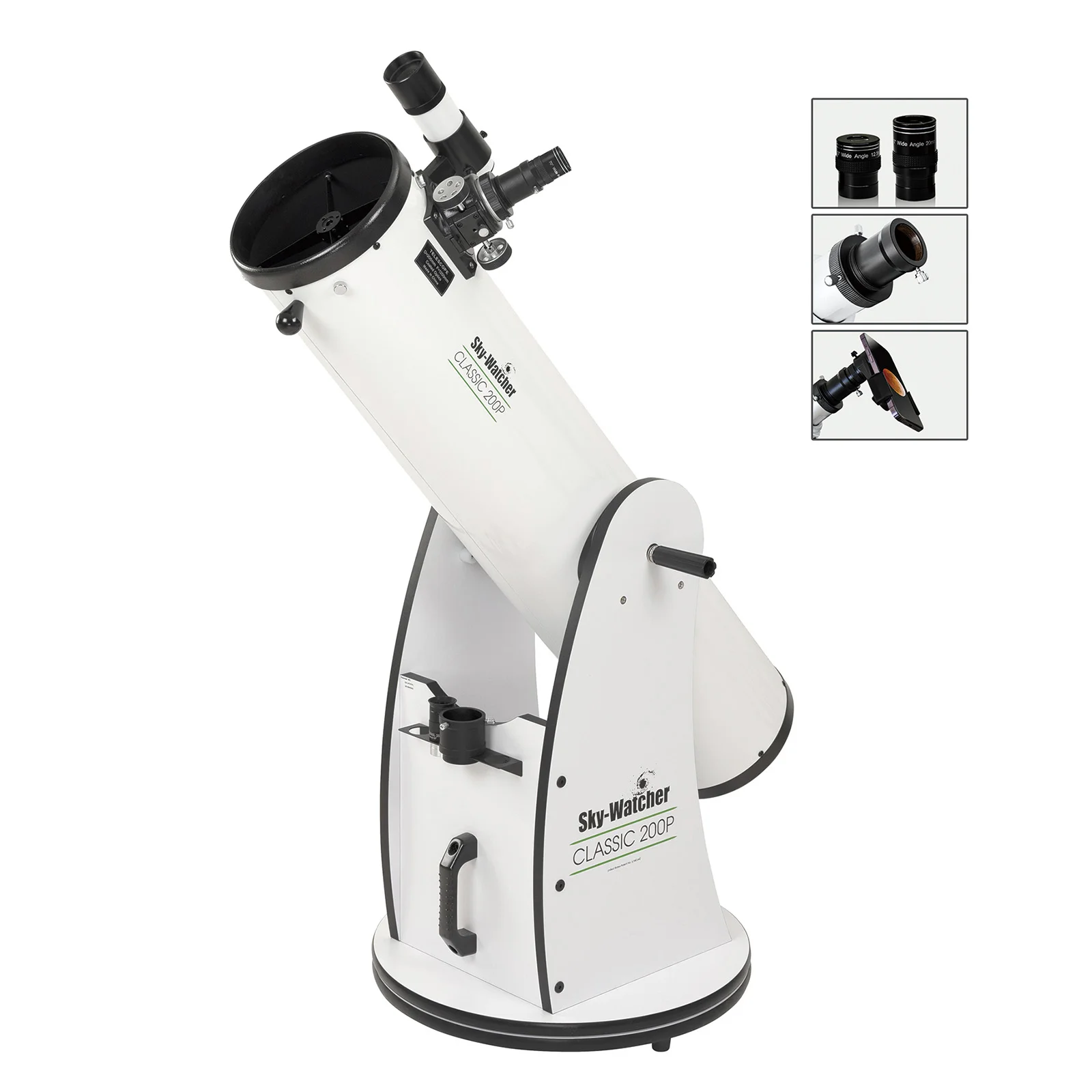
200mm of aperture is the sensible minimum for a magnitude 14 star-like dot. Take it to a dark site, use a detailed chart and compare the field over two nights.
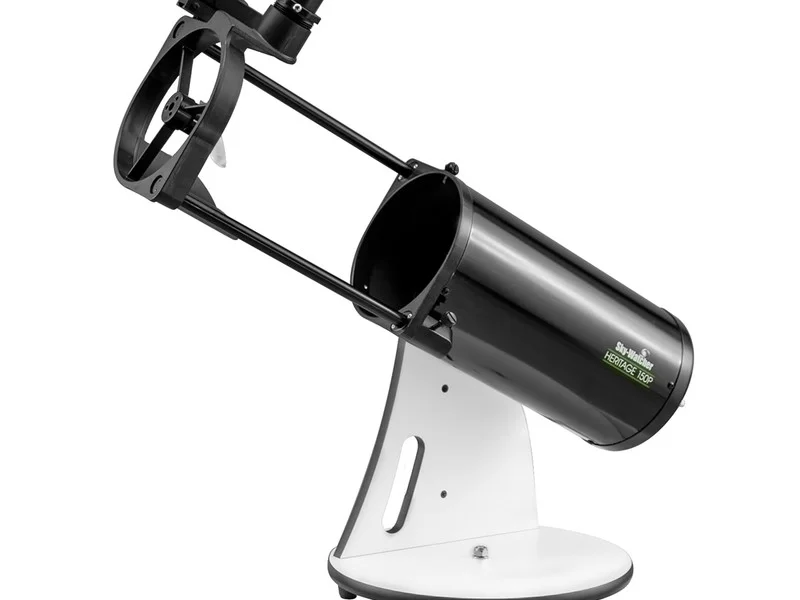
A compact 150mm tabletop Dobsonian shows Ceres and the bright asteroids at any point in their orbits, and is small enough to carry to the car for a dark-sky trip.
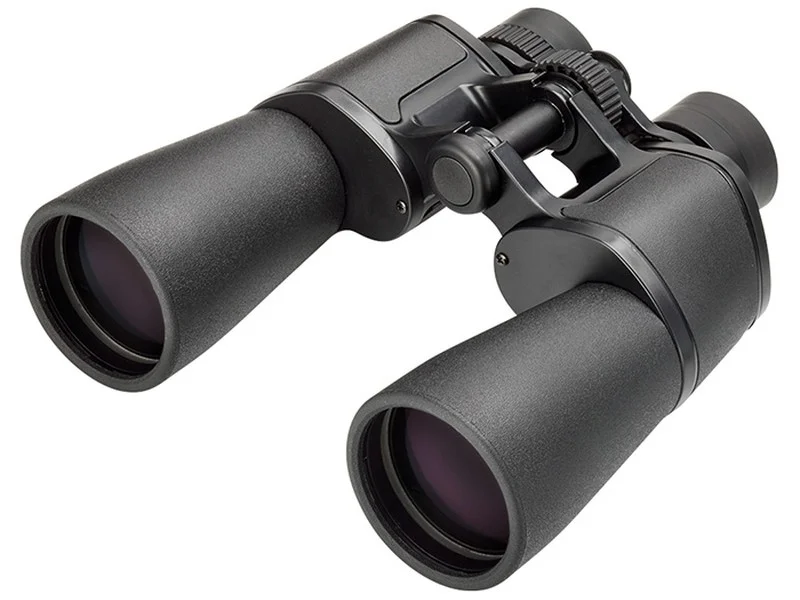
Steady 10x50 binoculars pick up Ceres at magnitude 6.7 to 7.5 around opposition. Sketch the stars, come back two nights later and spot the one that moved.
Browse all our telescope reviews
Honest, research-based recommendations for every budget.
Browse all →Affiliate links: you pay the same price, we earn a small commission that helps keep WatchTheStars free.
If you are new to finding faint objects, our stargazing for beginners guide covers star-hopping and reading a chart, and is it a full moon tonight tells you whether the sky will be dark enough to bother.