Planet 9
Planet 9, or Planet Nine, is a planet nobody has seen. Astronomers think one of about six Earth masses may be circling the Sun hundreds of times further out than Earth, because a handful of icy bodies beyond Neptune have orbits that line up in a way that is hard to explain otherwise. Here is the evidence, the searches, and how close we are to an answer.
What is Planet 9?
Planet 9 is a hypothetical ninth planet of the Solar System, proposed on 20 January 2016 by Konstantin Batygin and Mike Brown of Caltech. It is not Pluto, which was reclassified as a dwarf planet in 2006, and it is not a rebranding of the old "Planet X". It is a specific prediction: a world roughly six times the mass of Earth, on a tilted and stretched orbit that keeps it between about 300 and 500 AU from the Sun. One AU is the Earth to Sun distance, so at its closest Planet 9 would still be ten times further out than Neptune.
The odd thing about Planet 9 is that the case for it rests entirely on other objects. Nobody has photographed it. What astronomers have photographed is a small population of icy worlds far beyond the Kuiper Belt, and those worlds behave as though something big is out there shepherding them.
Why the name matters: Brown is the astronomer whose discovery of Eris in 2005 got Pluto demoted, so there is some irony in him proposing a new ninth planet a decade later. He and Batygin chose "Planet Nine" deliberately, to avoid the baggage of "Planet X", which had come to mean everything from Lowell's 1906 search to internet doomsday stories.
Is Planet 9 real? What the evidence says
The argument in one line: a dozen distant objects have orbits that point the same way, and that should not happen by chance.
The story starts with Sedna, found in 2003. Its orbit never comes closer to the Sun than 76 AU, far beyond Neptune's reach, so Neptune cannot have put it there. In 2014 Chad Trujillo and Scott Sheppard found a second such body, 2012 VP113, and noticed that both had a similar argument of perihelion. In plain terms, the point where each orbit swings closest to the Sun sits in the same part of the sky.
Batygin and Brown took that further in 2016. Looking at the six most distant known objects, they found that the whole orbital ellipses, not just the perihelion points, were bunched together and tilted the same way. They put the odds of that happening by accident at about 0.007 per cent, and showed with computer simulations that a planet of five to ten Earth masses on a distant, anti-aligned orbit would produce exactly that pattern. It would also explain two things nobody had asked about: why some Kuiper Belt objects orbit almost perpendicular to the planets, and why the Sun's spin axis is tilted six degrees relative to the planets' orbits.
By the time of their 2021 orbit paper the sample had grown to eleven objects, and the clustering was still there. That paper is where the numbers below come from.
How big is Planet 9, and where is it?
The 2021 best fit gives a mass of 6.2 Earth masses (the range runs from about 5 to 8.5), an average distance of 380 AU, a closest approach of about 300 AU and a furthest point of roughly 500 AU, with the fit's uncertainty allowing somewhat more. The orbit is tilted about 16 degrees to the plane of the planets and takes roughly 7,400 years to complete. For comparison, Neptune orbits at 30 AU and takes 165 years.
A planet that size would be a sub-Neptune or super-Earth. These are the most common type of planet found around other stars, yet our Solar System has none, which is one reason astronomers find the idea attractive. Predicted brightness is around magnitude 22 at its likely distance, about 400 times fainter than Pluto. The most probable patch of sky is near right ascension 60 degrees, towards Taurus and Orion, uncomfortably close to the dense star fields of the Milky Way. That is a large part of why it has stayed hidden.
Has Planet 9 been found?
Not yet. Every major sky survey of the past decade has looked, and each one has narrowed down where it can still be hiding.
Batygin and Brown have spent years combing archival data from Pan-STARRS in Hawaii and the Zwicky Transient Facility in California, and the Dark Energy Survey team searched their own southern-sky images. Subaru's Hyper Suprime-Cam, an 8.2-metre telescope with a wide field, has been the workhorse for deliberate hunts. None found it, but between them they have ruled out the brighter, nearer end of the predicted orbit. If Planet 9 exists, it is faint and far.
The Atacama Cosmology Telescope tried a different approach, looking for the planet's own faint heat glow at millimetre wavelengths rather than reflected sunlight. Its 2021 search found no convincing candidate.
The 2025 infrared candidate: In April 2025 Terry Long Phan and colleagues compared two old far-infrared all-sky surveys, IRAS from 1983 and AKARI from 2006, looking for a source that had shifted between them by the amount a distant planet would move in 23 years. They found one. It made headlines as the first plausible Planet 9 candidate, but the sums quickly turned awkward: the implied orbit is tilted by roughly 120 degrees, nowhere near the 15 to 20 degrees predicted. Mike Brown's view is that if the source is real it is a different object entirely. Follow-up observations are still needed to confirm it is anything more than noise.
Does Planet 9 exist? The case against
Not everyone is convinced. The strongest criticism comes from the Outer Solar System Origins Survey (OSSOS) team, who point out that surveys only find objects where and when they happen to look. A telescope that observes mostly in one season will preferentially find objects whose orbits are best placed in that season, and the clustering could be an artefact of that. Batygin and Brown dispute this, and the argument comes down to statistics that reasonable people read differently.
Then there is Ammonite. In July 2025 the Subaru telescope announced 2023 KQ14, a sednoid (a Sedna-like body whose orbit never comes near Neptune) with a closest approach of 66 AU, the fourth such object known. Its orbit does not line up with the other three. Worse for the hypothesis, simulations suggest its orbit has been stable for over four billion years, which is hard to square with a six-Earth-mass planet at 380 AU. It does not kill Planet 9, but it pushes any surviving version of it further out, to perhaps 500 AU or more, where it would be even fainter.
A few alternatives have been floated. One is that the clustering is caused not by a planet but by a diffuse ring of small bodies with a combined mass of a few Earths. Another, more exotic, is a primordial black hole the mass of a planet. Neither is easier to test than a planet would be.
When will Planet 9 be found? The Vera Rubin Observatory
The question should be answered, one way or the other, before the decade is out.
The Vera C. Rubin Observatory in Chile began its ten-year Legacy Survey of Space and Time on 30 June 2026. It pairs an 8.4-metre mirror with a 3,200-megapixel camera and photographs the entire visible southern sky every three or four nights, reaching about magnitude 24.5 in a single visit. That is deep enough to catch Planet 9 directly if it sits anywhere in the survey footprint, and it will do so hundreds of times over.
Even if the planet itself lies outside Rubin's field, the survey will find thousands of new Kuiper Belt and scattered-disc objects, including many more extreme ones like Sedna and Ammonite. With a sample of dozens rather than eleven, the clustering will either sharpen into a clear signal or dissolve into noise. Batygin said in June 2026 that Rubin would directly test every line of evidence for Planet 9 within its first years. Most astronomers expect an answer by 2028 or so, though nobody has put a firm date on it.
If it is found, it will be the first new planet in the Solar System since Neptune in 1846, and like Neptune it will have been found by working out where it must be before anyone saw it. If it is not, the outer Solar System will need a different explanation for Sedna and its cousins, and that would be interesting too.
Planet 9 facts
All figures are predictions from the 2021 Batygin and Brown orbit fit, not measurements.
Predicted Properties
HypotheticalPredicted Orbit
Beyond the Kuiper BeltThe Hypothesis
Since 2016The Search
OngoingPlanet 9 vs Planet X vs Nibiru
Three names that get mixed up constantly. Only one of them is current science.
Planet X was the name Percival Lowell gave in 1906 to a planet he believed was pulling Uranus and Neptune off course. Clyde Tombaugh found Pluto in 1930 while searching for it, but Pluto turned out to be far too small to be Lowell's planet. When Voyager 2 flew past Neptune in 1989 it measured Neptune's mass more accurately, and the supposed wobble in Uranus's orbit vanished. Lowell's Planet X never existed. Astronomers still use "Planet X" loosely for any undiscovered planet, which is exactly why Batygin and Brown avoided it.
Nibiru is a fiction. It began as a 1995 claim that a rogue planet would collide with or pass close to Earth, and it has been rescheduled for doom every few years since, including 2003, 2012 and 2017. NASA has said in plain words that Nibiru does not exist. A planet on a collision course would be the brightest object in the night sky for years before arrival, visible to anyone who looked up. Planet 9, by contrast, would never come closer than about 300 AU, ten times further than Neptune, and its gravitational effect on Earth would be nil. If you see "Planet 9" and "Nibiru" in the same headline, close the tab.
Planet 9 is a peer-reviewed, mathematically specific hypothesis that predicts where a planet should be and how bright it should look, and that is being actively tested. It may well turn out to be wrong. That is what makes it science. Officially the Solar System still has eight planets, and it will stay that way until something shows up in Rubin's images.
Can you see Planet 9 from your garden?
Kit we've tested and reviewed in full
No. If Planet 9 exists it is around magnitude 22, roughly a million times fainter than anything the eye can pick up and beyond every amateur telescope. What you can do is see the outer edge of the known Solar System for yourself. Neptune and Uranus are within reach of ordinary kit from a UK garden, and finding a faint blue dot that moves against the stars is exactly the trick astronomers are using on Planet 9, just scaled down.
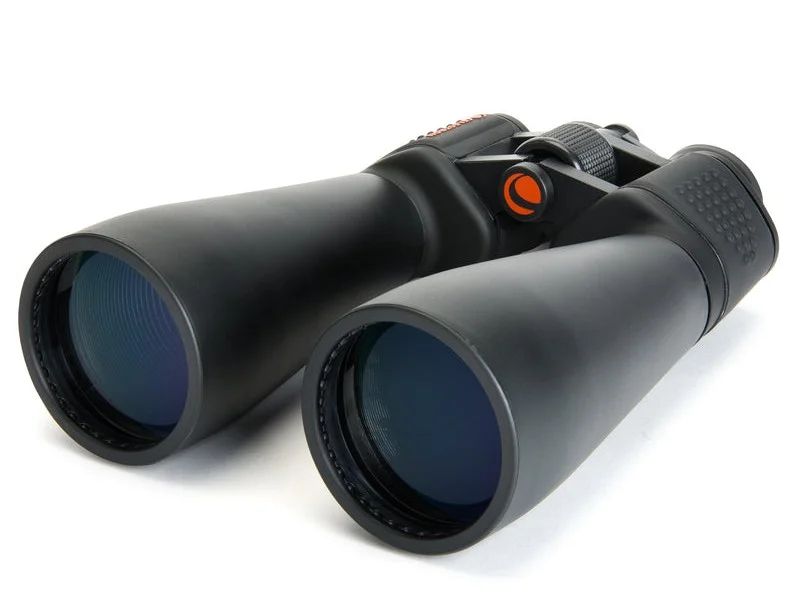
Uranus sits at magnitude 5.7 near opposition, an easy catch in 15×70 binoculars from a dark site. Neptune (magnitude 7.8) is doable too if you use a star chart and check the field on two separate nights.
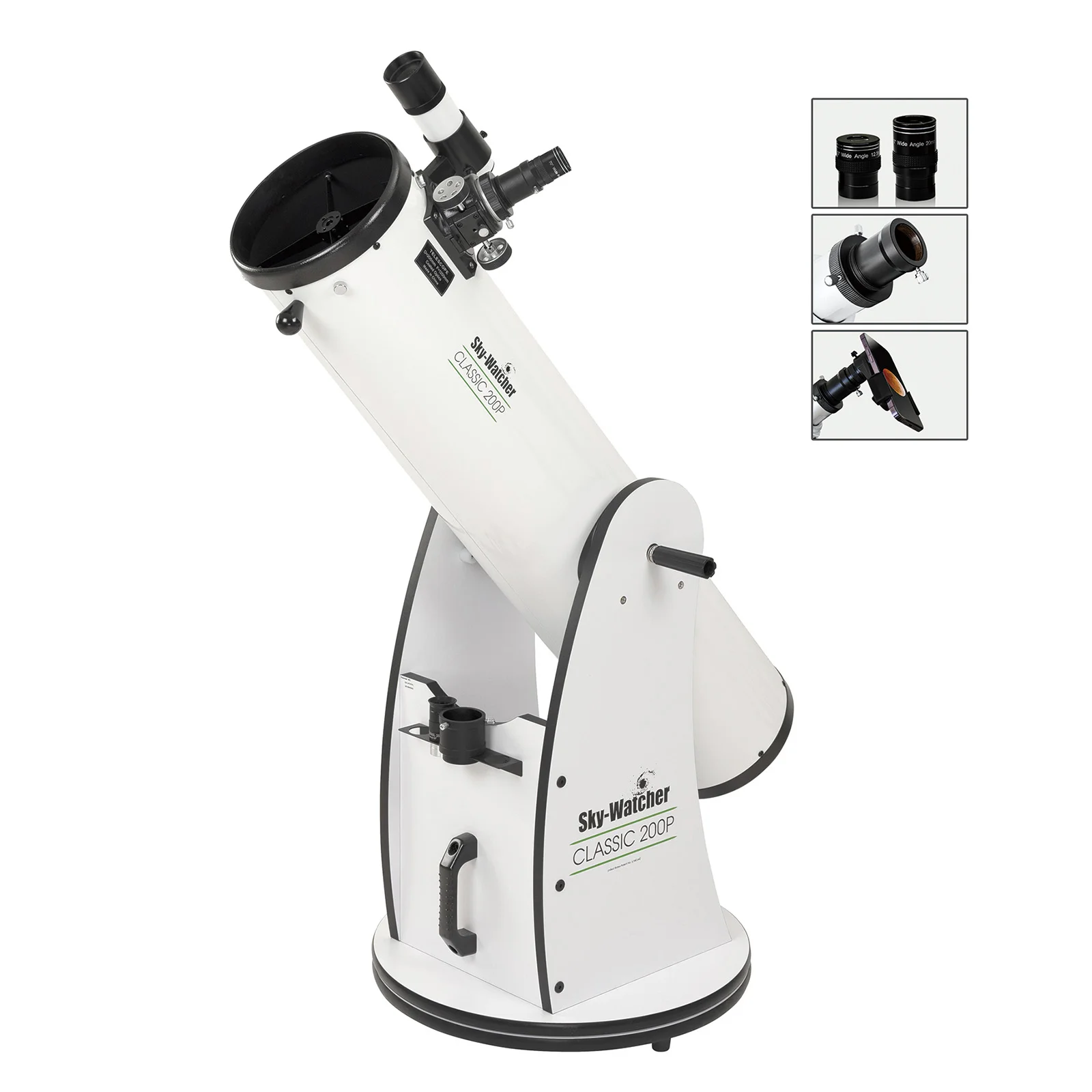
An 8-inch Dobsonian is the first aperture that shows Uranus and Neptune as tiny blue-green discs rather than points. It is also the practical minimum for hunting Pluto, the object that was the original Planet X.
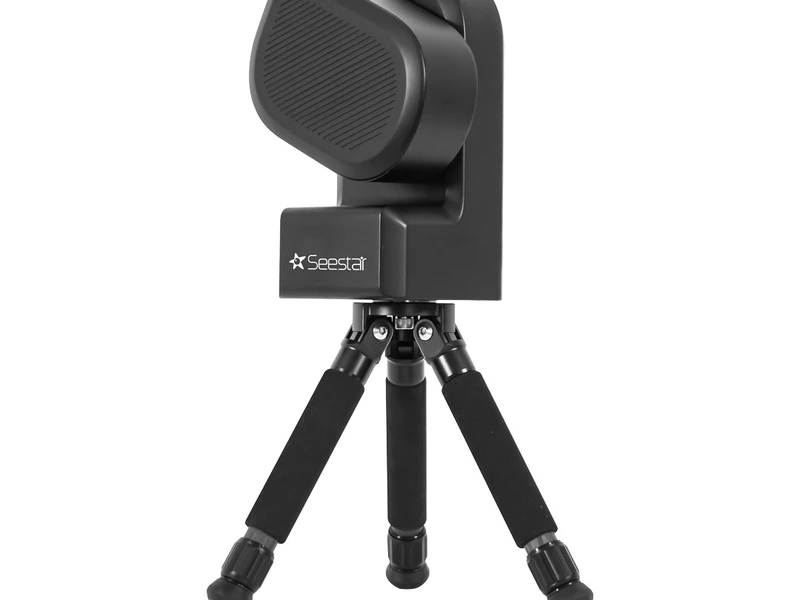
A smart telescope will image Uranus and Neptune in a few minutes and stack faint fields down to about magnitude 16 or 17. You will not reach Planet 9, but you will understand why a mag 22 object needs an 8-metre mirror.
Affiliate links: you pay the same price, we earn a small commission that helps keep WatchTheStars free.
If you want to try Uranus or Neptune, start with the best binoculars for stargazing or one of the best beginner telescopes UK buyers actually use, pick a night from the UK dark sky sites map, and check what you can see in the sky tonight to make sure the outer planets are up. New to the eyepiece? Our guide to how to use a telescope covers finding faint targets by star-hopping.