Key takeaways
- ESA's Euclid telescope has discovered 31 quasars from the early universe, published in Astronomy & Astrophysics on 6 July 2026
- Two are the oldest quasars ever found, shining just 670 million years after the Big Bang: when the universe was 5% of its current age
- The pair beat the previous record, which had stood since 2021, and each blazed with the light of a trillion Suns
- The find more than doubles the number of known quasars at redshift 7 or above: a 'census' of the universe's first giant black holes
- Nobody yet knows how black holes weighing billions of Suns grew so large, so soon after the Big Bang
Jump to section 7 sections
- Euclid Telescope Finds the Oldest Quasars Ever Discovered
- What Is a Quasar?
- Most Distant Quasars Ever Found: Light From 670 Million Years After the Big Bang
- How Did Supermassive Black Holes Grow So Fast?
- The Epoch of Reionisation: Why These Quasars Matter
- Can You See a Quasar From the UK?
- The Bottom Line
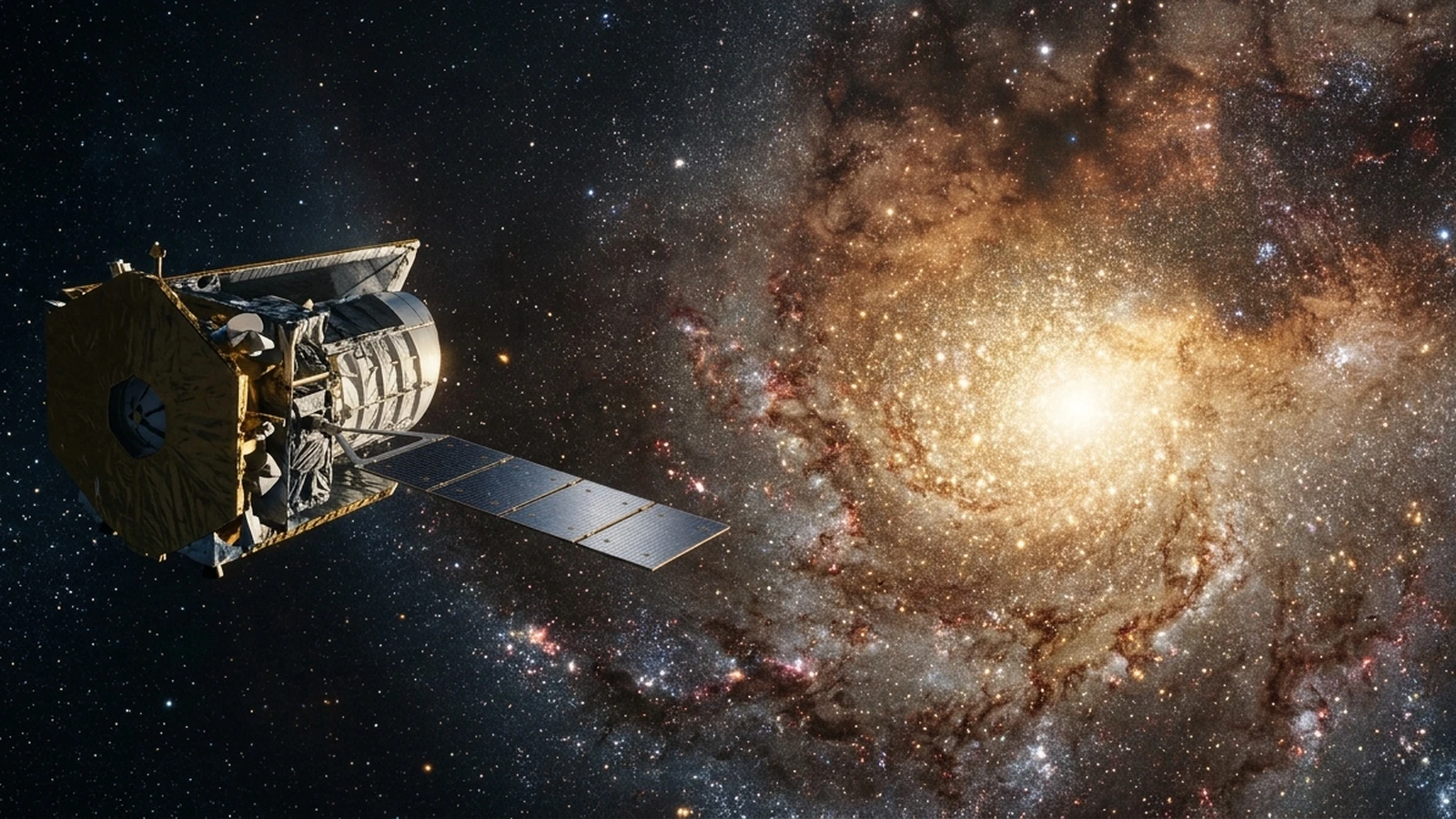
Europe's Euclid telescope was built to map the dark universe. This week it handed astronomers something else entirely: the two oldest quasars ever seen, blazing away when the cosmos was barely out of nappies.
The discovery, published on 6 July in Astronomy & Astrophysics, includes 31 early-universe quasars in total. Each one is the brilliant core of a young galaxy, powered by a black hole weighing billions of Suns. And that's the puzzle. The universe was only a few hundred million years old. Black holes that size shouldn't have had time to exist.
Euclid Telescope Finds the Oldest Quasars Ever Discovered
Astronomers have been hunting the universe's first quasars for decades, and progress has been slow. Finding the first ten at redshift 7 or beyond took more than ten years of searching. Euclid has now found more than that in a single year.
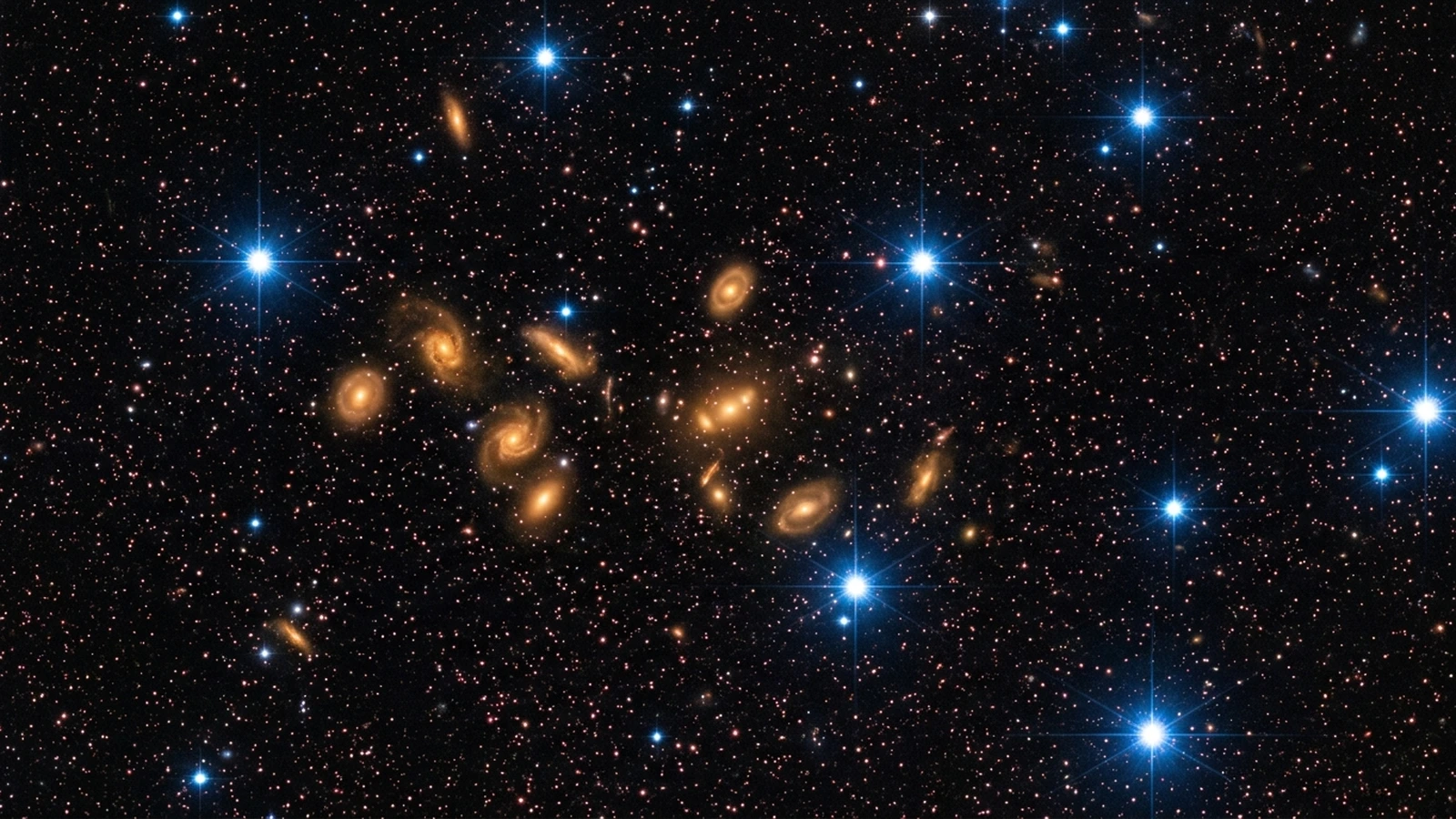
The new haul comes from the Euclid Wide Survey, the telescope's ongoing sweep of more than a third of the entire sky. Buried in that enormous dataset, a team led by Daming Yang of Leiden University picked out 31 quasars dating to the universe's first billion years, including 12 from its first 770 million.
"These early quasars date back to the universe's infancy," said Yang. "By finding and studying them, we can better understand how these enormous systems formed and grew so quickly: one of the greatest mysteries in astrophysics."
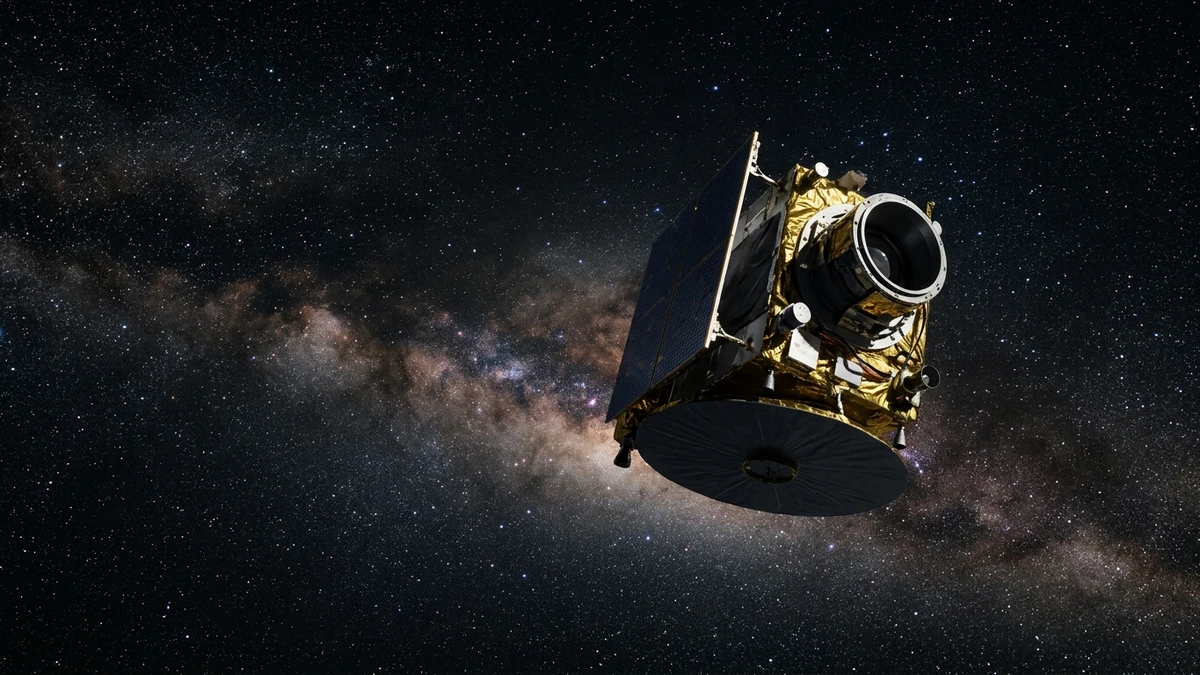
There's a British thread here too. Euclid's visible-light camera, one of the two instruments behind the discovery, was built by a consortium led from UCL's Mullard Space Science Laboratory. We covered the same telescope's survey of the Milky Way's core in June. In two years of science operations, it has doubled the number of ancient quasars known to science.
What Is a Quasar?
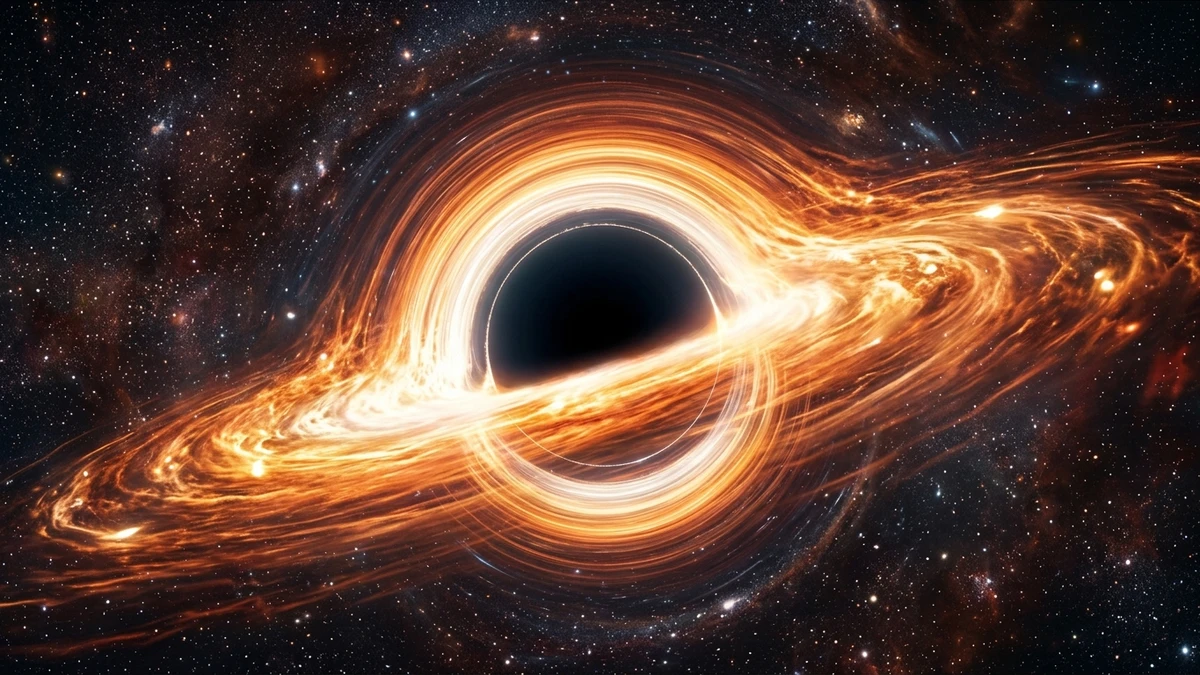
A quasar is the intensely bright core of a galaxy where a supermassive black hole is actively feeding, and quasars are the most luminous objects in the universe. In plainer terms, it's what you get when a galaxy's central black hole sits down to a very large meal.
Most big galaxies, including our own, have a supermassive black hole at their centre. Usually it just sits there. But when gas and stars start spiralling in, they pile up in a swirling disc that heats to millions of degrees and blazes. That glowing disc is the quasar, and it can outshine the rest of its host galaxy hundreds to thousands of times over.
The two record-breakers each shone with the light of a trillion Suns. That's why we can see them at all: their light has been travelling for more than 13 billion years, and they're still bright enough to show up in Euclid's images.
Quasars are a phase rather than a type of galaxy. Once the black hole runs out of nearby fuel, the light show ends and the galaxy settles down. Which means every quasar we spot in the early universe is a snapshot of a galaxy caught in its most dramatic growing years.
Most Distant Quasars Ever Found: Light From 670 Million Years After the Big Bang
The two most ancient quasars in the batch carry catalogue names only an astronomer could love: EUCL J172902.75+641018.1 and EUCL J125308.55+705432.3.
What matters is their redshift: the stretching of light by the expansion of the universe, which tells us how far back in time we're looking. They measure 7.77 and 7.69, nudging past the previous record of 7.64 that had stood since 2021. Both quasars shone during the universe's first 670 million years, when the cosmos was about 5% of its current age, and their light has spent over 13 billion years reaching us.
"This finding more than doubles the number of quasars we know of that are so ancient," said Antonio La Marca, an ESA research fellow on the Euclid team. "The Euclid team has taken a true census of quasars at the dawn of the universe for the first time."
That word "census" is the real story. Until now, astronomers had only ever caught the rare, freakishly bright outliers: the tip of the iceberg. With 31 new objects, including much fainter ones, they can finally study the early quasar population as a group: how many there were, how bright they typically got, and how quickly their black holes were growing. Follow-up observations of the second record-holder have already shown it sitting inside a dusty galaxy furiously forming new stars.
How Did Supermassive Black Holes Grow So Fast?
The short answer: nobody knows yet. A quasar this bright needs a black hole weighing billions of times the mass of the Sun, yet the universe these ones live in was less than 700 million years old. That shouldn't be enough time.
Black holes grow by swallowing matter, and there's a natural speed limit to that: feed one too fast and the radiation pouring off the infalling gas pushes the rest of the meal away. Start from the collapsed core of a dead star, even a big one, and it's very hard to reach a billion Suns in the time available. As study co-author Joseph Hennawi put it: "These monsters, weighing billions of times the mass of our sun, somehow already existed when the universe was in its infancy. We don't yet have a good understanding of how they grew so massive, so fast."
Astronomers have a few suspects. Perhaps the first black holes were born big, from giant clouds of primordial gas collapsing directly rather than passing through the star stage first. Perhaps they grew in extreme bursts that broke the usual speed limit. Or perhaps something stranger is going on: James Webb's mysterious "little red dots" have already hinted that the early universe grew its black holes in ways we don't fully understand. A proper census of early quasars is exactly the evidence needed to narrow the field.
The Epoch of Reionisation: Why These Quasars Matter
These quasars also light up one of the most important chapters in cosmic history.
For its first few hundred million years, the universe was dark: no stars, no galaxies, just cooling gas. Astronomers call this the dark ages. Then the first stars and galaxies switched on, and their radiation gradually split the hydrogen fog filling space back into charged particles. This is the epoch of reionisation: the transformation that made the universe transparent and set the stage for everything we see today. Hubble recently caught a tiny galaxy burning away that same fog, and the search for the very first generation of stars is one of astronomy's hottest races.
Quasars are perfect probes of this era because they're so bright. Their light passes through the fog on its way to us, and the fingerprints it picks up tell astronomers exactly how much of the universe had been cleared at that moment.
"Ancient quasars are rare discoveries," said ESA's Euclid project scientist Valeria Pettorino. "They're interesting in themselves, but also time machines that enable us to explore the early universe and understand how the first generation of galaxies came to be."
Can You See a Quasar From the UK?
Here's the bit that surprises most people: yes, you genuinely can.
Euclid's record-breakers are far beyond any amateur telescope. But the brightest quasar in our sky, 3C 273 in the constellation Virgo, shines at around magnitude 12.9. That's faint, but within reach of a decent telescope from a dark site, and Virgo is still placed in the south-west on July evenings.
Through the eyepiece it looks like nothing more than a dim star. The magic is in what you're looking at. That faint point of light left its galaxy 2.5 billion years ago, before complex life existed on Earth. Track it down and it will almost certainly be the most distant thing you ever see with your own eyes.
The kit to catch a quasar
Kit we've tested and reviewed in full
Quasar 3C 273 is a genuine challenge object, and a brilliant one to tick off. Here's what we'd use to hunt it, and to enjoy the summer sky while you're out there.
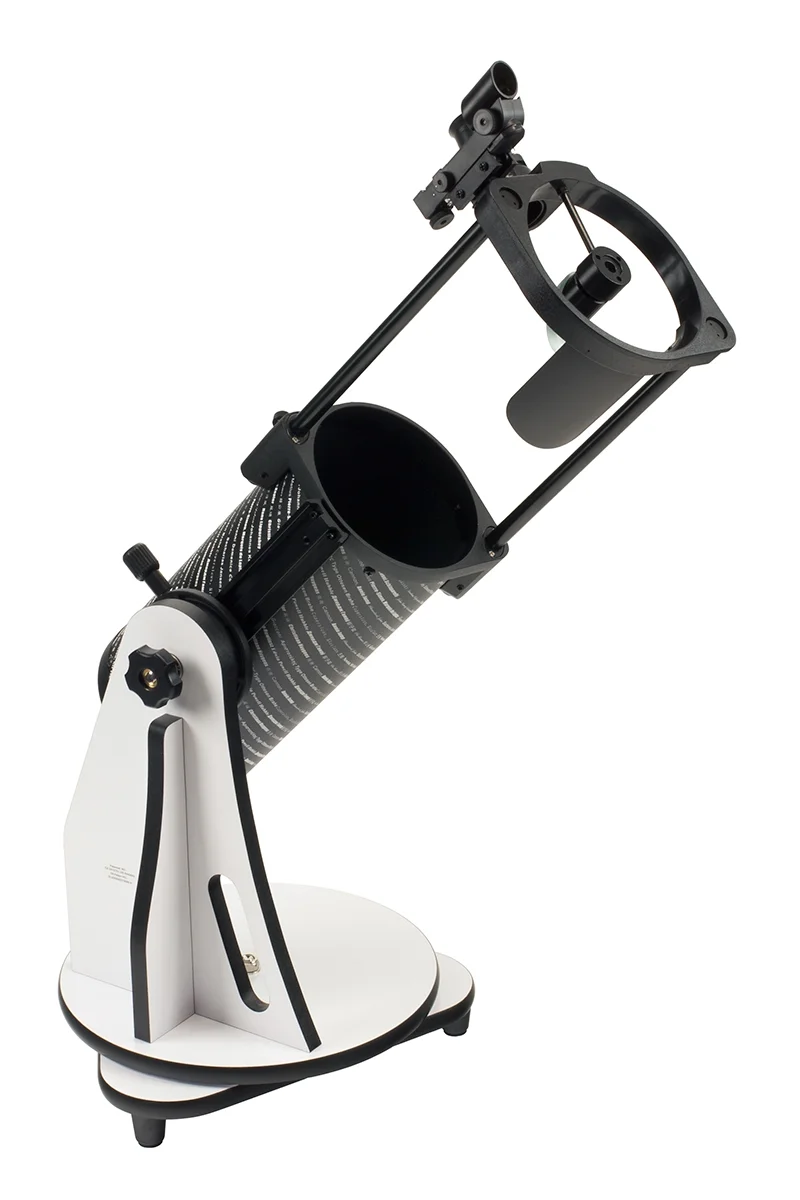
Its 130mm mirror can reach 3C 273 from a properly dark site on a steady, moonless night. A star chart and patience required, but what a prize.
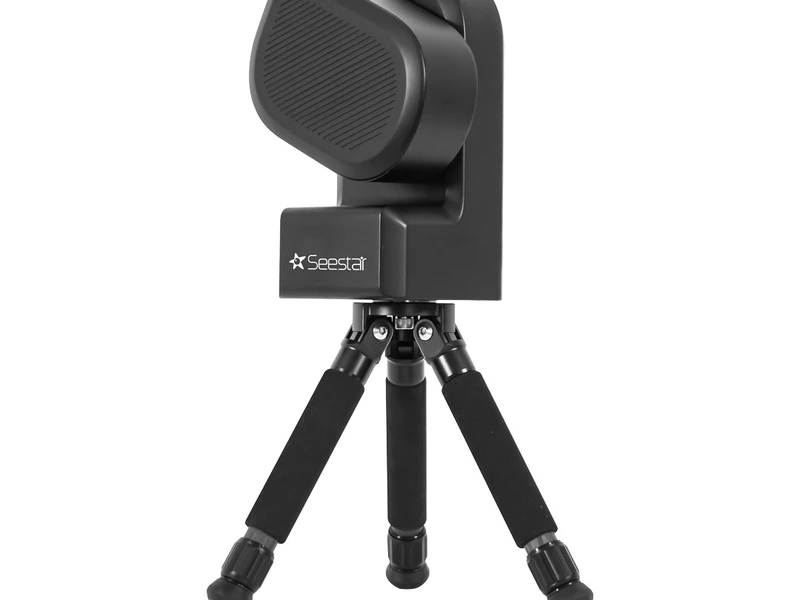
This smart telescope finds and photographs 3C 273 for you: stack a few minutes of exposures and you've captured light that set off 2.5 billion years ago.
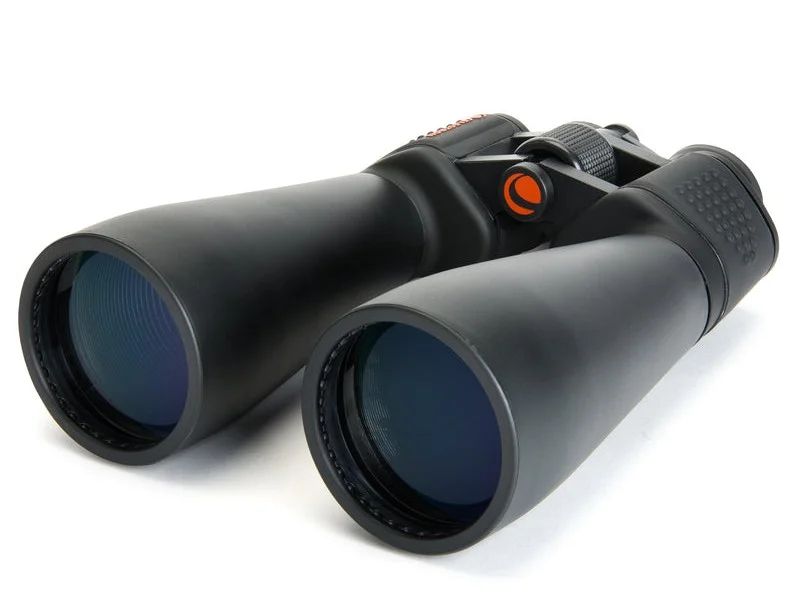
Quasars are beyond binoculars, but the July Milky Way certainly isn't. Big 70mm lenses turn the summer star clouds into one of the best sights in astronomy.
Affiliate links: you pay the same price, we earn a small commission that helps keep WatchTheStars free.
The Bottom Line
Euclid has pushed the quasar record deeper into the past and, more importantly, turned a handful of lucky finds into a proper population study. Thirty-one new quasars from the universe's first billion years, two of them the oldest ever seen, and every one powered by a black hole that grew faster than our theories comfortably allow.
The mystery isn't solved. If anything it's sharper than before. But that's how astronomy moves: first you find the monsters, then you count them, then you work out where they came from. Euclid has just done the counting. Clear skies.
Sources:
- Euclid discovers the most ancient quasar in the Universe · European Space Agency
- ESA's Euclid Space Telescope Finds Universe's Most Ancient Quasars · NASA Science
- Euclid: Discovery of 31 new quasars at 6.6<z<7.8 · Astronomy & Astrophysics (Yang et al., 2026)
- Euclid telescope spots oldest quasars ever discovered · CBS News
Frequently Asked Questions
Equipment guides
Related topics

Ian ClaytonAmateur astronomer and founder of WatchTheStars.co.uk, dedicated to helping others explore the wonders of our universe. Full profile →