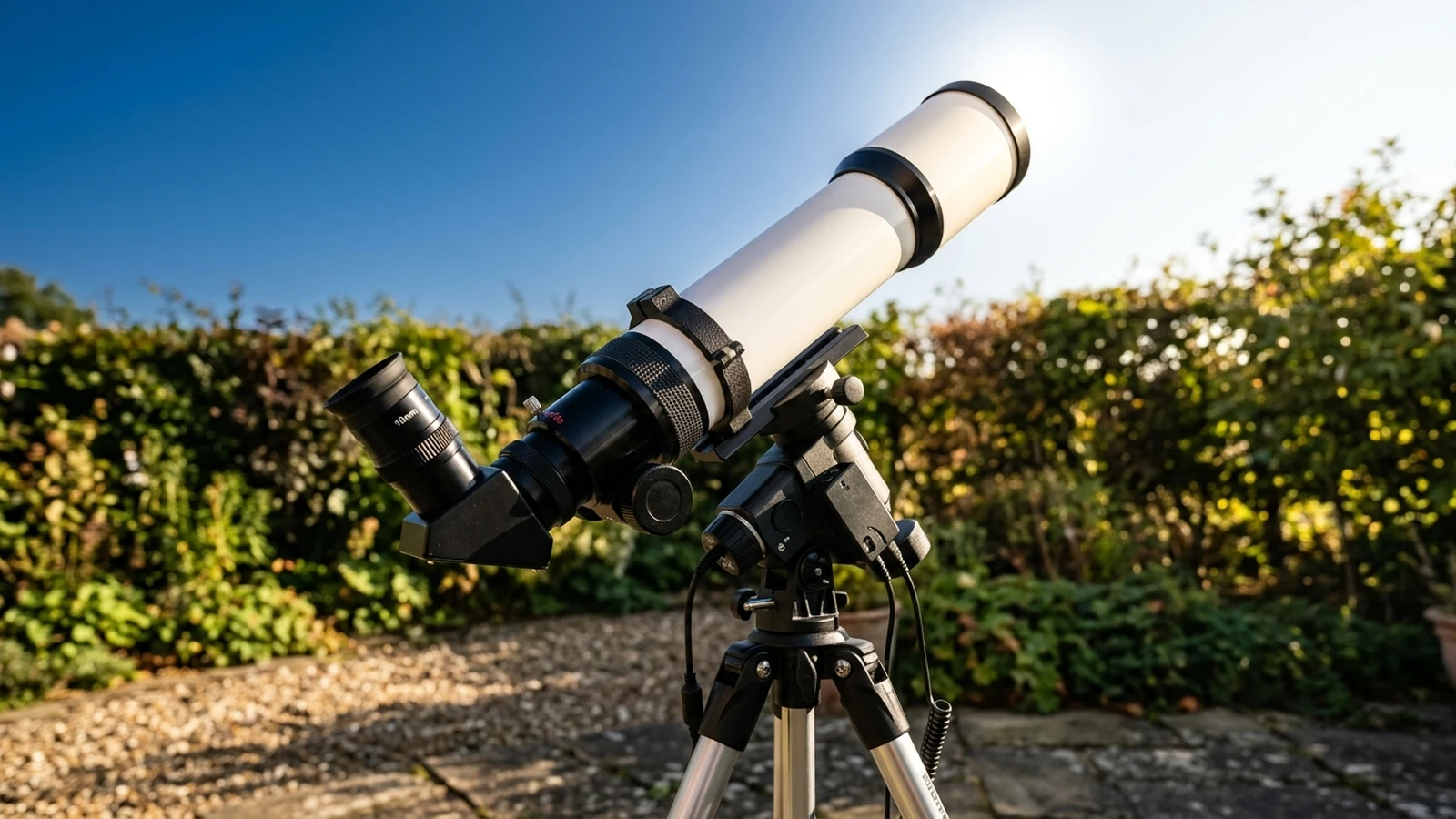
Lunt LS40THa/B500 Review
The Lunt LS40THa is the telescope to buy if you want to see and photograph prominences, filaments and flares without a second mortgage. It is a complete, safe hydrogen-alpha scope in a 1.2kg package that fits a photo tripod, tunes with one ring, and takes a small ZWO camera straight in the focuser. Forty millimetres sounds small, but in daytime seeing it is about all the aperture that pays, and the full-disc view with the whole ring of prominences is what most people want first. Add an eyepiece and you are observing the same afternoon it arrives.
Lunt LS40THa Specifications
| Key Specifications: Lunt LS40THa/B500 | |
|---|---|
| Price (UK) | £1,029 at First Light Optics |
| Aperture | 40mm, unobstructed doublet refractor |
| Focal Length | 400mm (f/10) |
| Etalon | Internal, mechanical tilt-tuned, bandwidth under 0.7 ångströms |
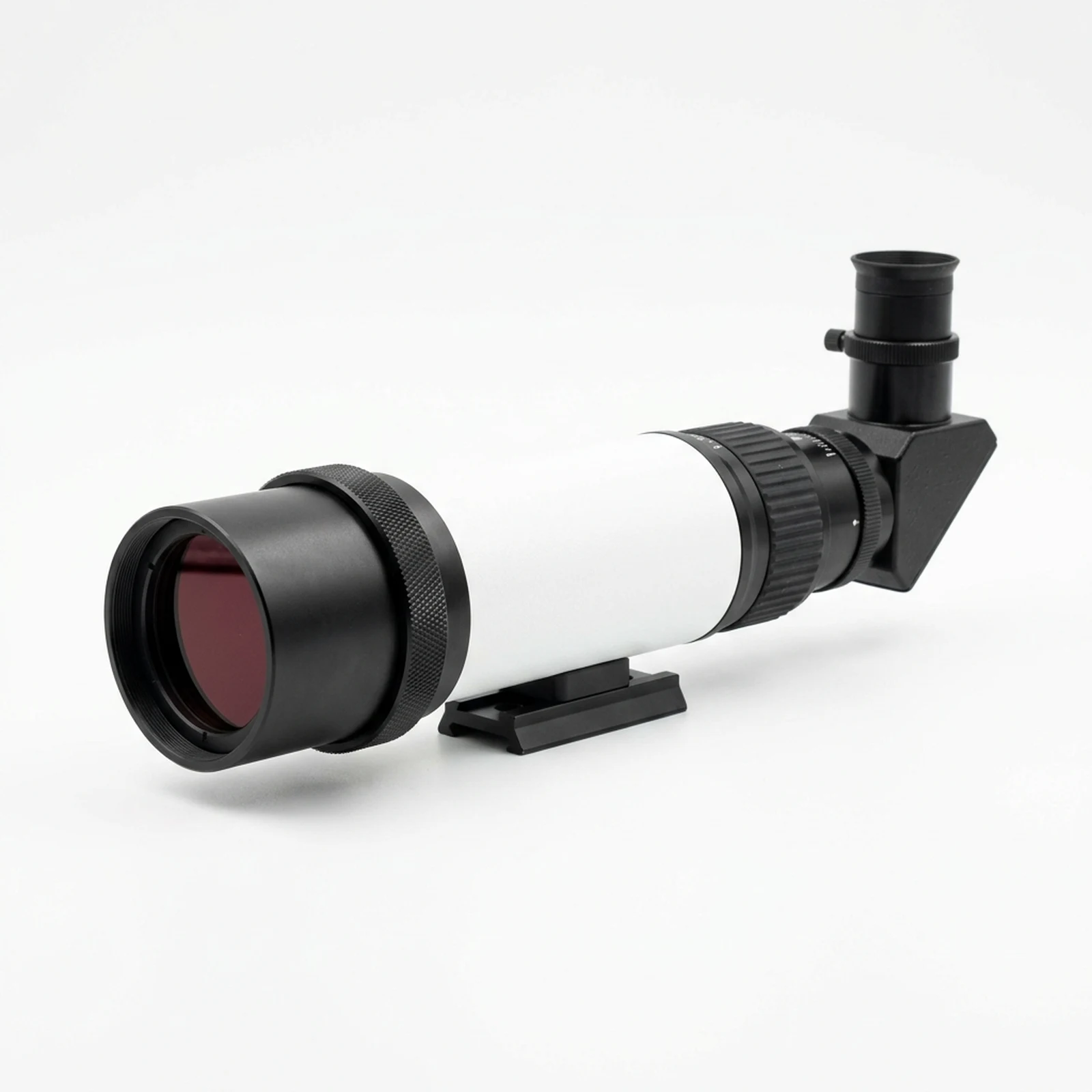
| Blocking Filter | B500 (5mm) in a 1.25" star diagonal; B600 and B1200 versions available |
| Focuser | 1.25" helical |
| Finder | Sol-Searcher (pinhole projection finder) included |
| Mounting | Vixen-style dovetail bar and 1/4-20 photo tripod thread |
| Weight / Length | 1.2kg / 41cm |
| In the Box | Telescope, B500 blocking filter in diagonal, helical focuser, dovetail, Sol-Searcher, manual. No eyepiece |
| Warranty | 5 years |
What Is the Lunt LS40THa?
The Lunt LS40THa is a dedicated hydrogen-alpha solar telescope: a small refractor with a narrowband filter system built into the tube that passes only the deep red light of hydrogen at 656.28 nanometres. Through it, the Sun stops being a featureless white disc with a few spots and becomes a boiling red sphere with prominences off the edge, filaments across the face and flares that come and go while you watch. None of that is visible through a white-light filter, and none of it can be bolted onto an ordinary telescope without spending a great deal more.
The clever part is the etalon, a pair of precisely spaced glass plates inside the tube that act as a filter narrower than 0.7 ångströms. You tune it by tilting: a knurled ring near the front shifts the pass band slightly, so you can pick the exact wavelength for surface detail or nudge off-band for brighter prominences. Behind the etalon, the B500 blocking filter sits in the diagonal and removes every other wavelength the etalon lets leak through. Between them the two filters make the scope safe to look through directly, with no external filter needed.
Lunt made its name with bigger, pricier H-alpha scopes, and the LS40THa is the budget model, and it has taken over from the Coronado PST as the UK's standard first solar scope now that the PST is hard to find new. It is the version most UK retailers stock, First Light Optics included, and it is what you will find on the mount in most beginner solar imaging posts on UK astronomy groups.
What Does the Lunt LS40THa Show?
Everything the chromosphere has on offer, at full-disc scale. At 400mm focal length a 20mm eyepiece gives 20×, which frames the whole Sun with room around it for the prominences. That is the right power for this scope: the point of a 40mm H-alpha telescope is the full-disc view, not high magnification.
Prominences are the headline. On an active day the limb is ringed with them, from small tufts to arches several Earth-diameters high, and they visibly change over half an hour. Tilt the etalon fully one way and they brighten dramatically. Filaments, the same structures seen against the disc, show as dark threads; the biggest stretch a quarter of the way across the Sun. Plage shows as bright mottling around sunspot groups, and the sunspots themselves are visible within it. With the etalon on the sweet spot and steady air, the fine fibrous texture of the chromosphere appears across the whole disc, which is the view that turns casual buyers into solar addicts.
One tip from owners that Lunt's manual does not stress enough: the H-alpha image is dim and deep red, and your pupil needs to open up to appreciate it. Observe with a dark cloth over your head, or at least with your back to the Sun and eyes shaded for a minute, and the surface detail that seemed absent appears. The single FLO reviewer who called it a "stonking little scope" found exactly this.
Solar Imaging with the Lunt LS40THa: What to Expect
This is where the LS40THa earns its price. Put a small planetary camera in the focuser, record a minute of video, stack the sharpest frames, and you get the orange full-disc images you see shared every sunny week. The scope was designed with a camera in mind, which is why the focuser is a helical unit that holds a 1.25-inch nosepiece firmly.
Two things to know before you buy. First, back focus is tight. Lunt says so on the box: there is very little distance between the diagonal and the focal plane, so a DSLR will not reach focus and neither will many cameras with deep bodies. A planetary camera with the sensor close to the front, such as the ZWO ASI678MC (£299) or the mono ASI678MM, drops straight in and focuses with room to spare. That pairing is the one we recommend in our hydrogen-alpha solar photography guide, and it is the one most UK owners use.
Second, the B500 blocking filter is fine for imaging on a small sensor. The Sun's image at 400mm is 3.7mm across, the B500's clear aperture is 5mm, and a 1/1.8-inch sensor like the 678's is 7.7mm by 4.3mm, so the disc fits with the prominences intact. You only need the B600 for a bigger sensor or a longer scope.
For tracking, the Star Adventurer GTi (£435) is the natural partner: the 1.2kg scope and camera are nothing to it, and the SynScan app has a solar alignment mode. Any driven mount works. A manual alt-azimuth or photo tripod works for visual and for short captures if you are quick with the slow-motion controls.
Lunt LS40THa vs the Alternatives
| Lunt LS40THa/B500 | Coronado PST (used) | DayStar Solar Scout 60 | |
|---|---|---|---|
| Price | £1,029 new | ~£400 to £500 used | ~£869 new |
| Aperture / FL | 40mm / 400mm | 40mm / 400mm | 60mm / 930mm |
| Tuning | Tilt ring, instant | Tilt ring, instant | Heated, needs power and warm-up |
| Full disc in one frame | Yes ✓ | Yes ✓ | Tight at 930mm |
| Camera-friendly | Yes, with a planetary camera | Awkward, needs mods | Yes ✓ |
| Warranty | 5 years | None (used) | 2 years |
The used PST is the budget route and still a fine visual scope, but its focuser is basic, cameras are awkward to fit, and older examples can suffer from a degraded internal filter that shows as a rusty tint. The DayStar Solar Scout 60 gives a bigger, sharper image of individual features at 930mm, but it cannot show the whole disc, and its heated filter needs power and ten minutes to settle every session. The Lunt sits between them: the full-disc, grab-and-go, camera-ready option, which is why it is the one to start with.
Within the Lunt range, the LS50THa (around £1,500 and up) adds aperture and a pressure tuner that gives more even tuning across the disc. It is a better telescope, but at 40 per cent more money for a first solar scope the LS40THa is the sensible buy, and the LS50 front etalon can be added later as a double-stack.
Lunt LS40THa: What Buyers Say
The full-disc view wins people over immediately. The recurring theme in owner reports is surprise: a 40mm scope showing prominences all round the limb, filaments and active regions at once, with tuning that is easy to find. FLO's one reviewer, who also owns a Quark on a 6-inch refractor, still called the little Lunt the happiest fifteen minutes of his year.
Tuning takes a session to learn. The tilt ring has a small sweet spot, and first-time users sometimes report a "blank" disc until they find it. Owners recommend going fully one way, watching the prominences appear, then easing back until the filaments darken. After the first afternoon it becomes automatic.
Dim image, dark eye. Several owners describe the surface detail "appearing" only after they shaded their eyes or covered their head. It is a feature of H-alpha, not a fault, but it catches people out.
Imagers praise the focuser and grumble about back focus. The helical focuser holds a camera firmly with no slop, and with a ZWO planetary camera there is enough travel. Anyone who tries a DSLR or a camera with a long nose finds it will not reach focus, exactly as Lunt warns.
Slight tuning drift as it warms. Ten minutes in full sun shifts the etalon a touch. Retuning is a quarter-turn of the ring; owners just do it before each capture.
Lunt LS40THa: Known Limitations
- No eyepiece included. Budget £30 to £40 for a 20mm to 25mm Plossl. A 2× Barlow is a useful second purchase for prominence close-ups.
- Very short back focus. DSLRs and deep-bodied cameras will not focus. Use a planetary camera such as the ZWO ASI678MC or ASI678MM.
- Tilt tuning is not perfectly even across the disc. One side can look slightly better tuned than the other. Retune with the feature of interest centred, or add a second etalon later.
- Forty millimetres has a resolution ceiling. Fine detail within active regions is where a 60mm to 80mm scope pulls ahead. For the full-disc view it does not matter.
- H-alpha only. This is a Sun-only instrument. It shows nothing at night and it cannot show sunspots in white light the way a filtered ordinary telescope can; that view needs a white-light filter or eclipse glasses on another scope.
- An AI product image. The tube picture on this page is an illustration; the hero photograph is too. Check the FLO listing for the actual product photos before you buy.
Lunt LS40THa: Frequently Asked Questions
How we reviewed this
This is a research-based review rather than a laboratory test. The facts on this page come from the manufacturer's specifications, the First Light Optics listing and its customer reviews, and the long-running owner threads on Stargazers Lounge and Cloudy Nights, checked against what the same kit shows from a typical UK garden. We have not necessarily used every item ourselves; where we have, the page says so. We receive no free equipment, and the retailer links pay a small commission that never changes the price you pay or the verdict we give.
Prices are read from our product data, last checked against First Light Optics on 23 October 2026. Own this kit and see it differently? Email [email protected] and we will update the page.