Where to See the 2027 Eclipse
Every realistic destination on the path of totality, ranked, and the towns that miss it by a whisker
Where is the best place to see the 2027 solar eclipse?
Egypt, if you want the best of everything. Luxor gets 6 minutes 23 seconds of totality with the Sun almost overhead, and August cloud in the Nile Valley is historically close to nil. Southern Spain or Gibraltar, if you want the easiest trip. Tarifa gets about 4 minutes 41 seconds on a two-and-a-half hour flight from the UK.
The thing that catches people out is how narrow the path is. Cairo, Seville, Marrakesh, Aswan and Tunis are all outside it, and a 98% eclipse is not a partial version of totality: it is a completely different event. Check the town, not the country.
This page is the destination guide to the 2 August 2027 total solar eclipse. For the eclipse itself (what causes the six-minute duration, UK partial times, and how to watch safely), start with our complete 2027 solar eclipse guide.
Which towns get the longest totality?
Durations below are calculated for each specific town rather than for the country, which matters a great deal: see how sharply the Spanish figures vary over a few dozen miles. Times are local. "Ease" is a rough judgement about flights from the UK, visas, infrastructure and current travel advice.
| Place | Totality | Starts | Sun height | Cloud risk | Ease |
|---|---|---|---|---|---|
| Luxor, Egypt | 6m 23s | 13:02 | 82° | Very low | Moderate |
| Bawiti (Bahariya Oasis), Egypt | 6m 20s | 12:50 | 79° | Lowest anywhere | Harder |
| Benghazi, Libya | 6m 11s | 11:27 | 68° | Very low | Not advised |
| Asyut, Egypt | 6m 08s | 12:56 | 81° | Very low | Moderate |
| Jeddah, Saudi Arabia | 6m 00s | 13:22 | 76° | Moderate, dusty | Moderate |
| Sfax, Tunisia | 5m 42s | 10:08 | 56° | Very low | Good |
| Siwa Oasis, Egypt | 5m 33s | 12:42 | 76° | Lowest anywhere | Harder |
| Batna, Algeria | 5m 18s | 10:01 | 51° | Low | Harder |
| Oran, Algeria | 5m 10s | 09:51 | 43° | Low | Harder |
| Tangier, Morocco | 4m 52s | 09:44 | 38° | Moderate (sea fog) | Good |
| Djerba, Tunisia | 4m 44s | 10:09 | 57° | Low | Good |
| Tarifa, Spain | 4m 41s | 10:45 | 38° | Moderate (sea fog) | Easiest |
| Gibraltar (Europa Point) | 4m 32s | 10:45 | 38° | Moderate (sea fog) | Easiest |
| Vejer de la Frontera, Spain | 4m 08s | 10:45 | 38° | Low (inland) | Easiest |
| Marbella, Spain | 3m 20s | 10:46 | 39° | Low | Easiest |
| Cádiz, Spain | 2m 57s | 10:45 | 37° | Moderate | Easiest |
| Málaga, Spain | 1m 56s | 10:48 | 39° | Low | Easiest |
| Jerez de la Frontera, Spain | 1m 44s | 10:46 | 38° | Low | Easiest |
Durations calculated by WatchTheStars from the JPL DE421 ephemeris for each town's coordinates at sea level, cross-checked against published figures for Cádiz, Tangier, Oran, Sfax, Benghazi and Luxor. Cloud-risk ratings are drawn from Jay Anderson's satellite climatology at Eclipsophile. Small differences of a few seconds are possible depending on exactly where in a town you stand.
Which places just miss the path of totality?
This is the section to read before you book anything. (It grew into a page of its own: our path of totality checker covers 30 near misses, including Madrid, Barcelona, the Balearics, Rome and Malta.) Every one of these places is famous, well served by flights, and outside the path. Several are close enough that a local hotel will happily sell you an "eclipse package" without ever quite saying you will not see totality from it.
A 99% eclipse still leaves a sliver of the photosphere uncovered, and that sliver is thousands of times brighter than the corona. You get a strange dim daylight, and that is all. No corona, no stars, no 360-degree sunset. The difference between 99% and 100% is the entire experience.
| Place | Maximum coverage | Totality? | Nearest place in the path |
|---|---|---|---|
| Cairo & Giza, Egypt | 95% | No | Asyut or Bahariya, ~3–4 hrs south |
| Aswan, Egypt | 99.9% | No, grazes the limit | Luxor, ~3 hrs north |
| Hurghada, Egypt | 98.5% | No | Marsa Alam, ~3.5 hrs south |
| Sharm el-Sheikh, Egypt | 96% | No | Not practical, fly to Luxor |
| Seville, Spain | 98% | No | Vejer or Tarifa, ~1.5 hrs south |
| Granada, Spain | 99% | No | Marbella, ~1.5 hrs south |
| Almería, Spain | ~100% | No, right on the edge | Drive south-west along the coast |
| Faro, Portugal | 99% | No | Vejer de la Frontera, ~2.5 hrs east |
| Marrakesh, Morocco | 89% | No, a long way out | Tangier, ~6 hrs north |
| Casablanca / Rabat / Fez | 97–99% | No | Chefchaouen or Tangier, 2–4 hrs north |
| Tunis, Tunisia | 97% | No | El Jem or Sfax, ~2–3 hrs south |
| Sousse & Monastir, Tunisia | 99.9% | No, grazes the limit | El Jem, ~40 min south |
Aswan, Sousse, Monastir and Almería are the cruellest of these. All four reach 99.9% or better and get nothing, because they sit within a few miles of the edge of the shadow. If your hotel is in any of them, the fix is a short drive on the morning rather than a change of booking, but you do need to know in advance that the drive is necessary.
Where should you go, country by country?
Egypt: the longest totality and the clearest skies
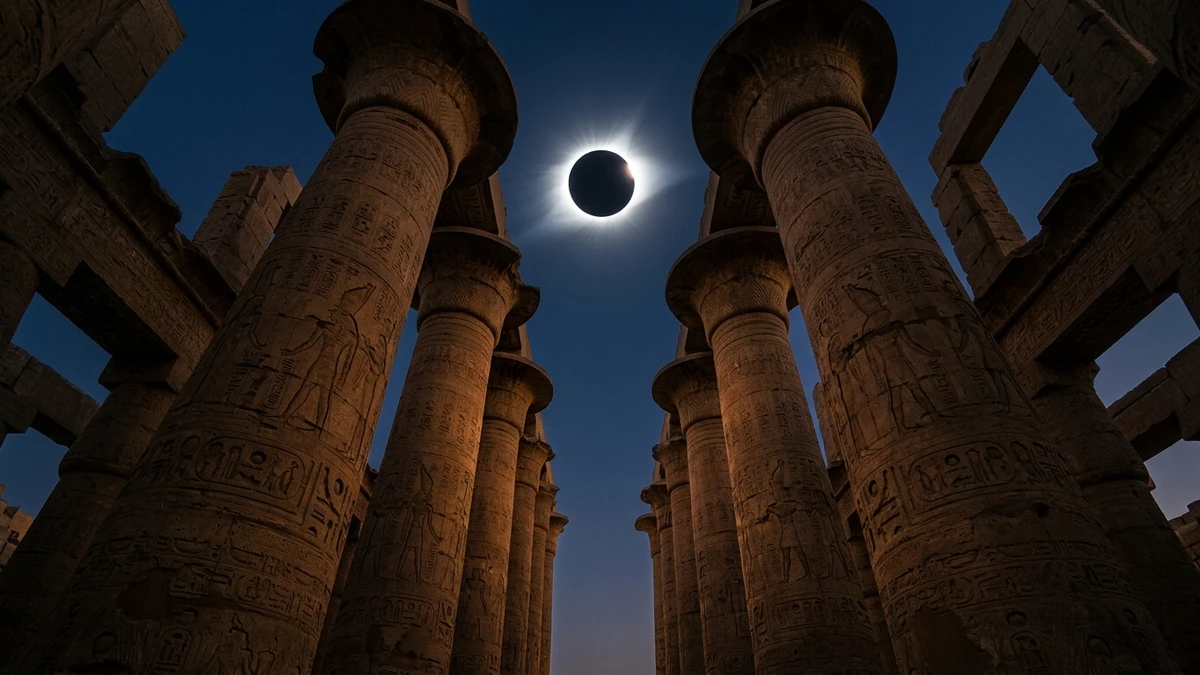
Egypt is the destination this eclipse will be remembered for. Luxor gets 6 minutes 23 seconds with the Sun 82 degrees above the horizon, which means no horizon obstructions to worry about and a corona directly overhead. August cloud in the Nile Valley is close to nil, and the main threat is thin cirrus that softens the outer corona without spoiling anything.
The trade-offs are crowds, price and heat. Luxor hotels have been filling since 2024, with rooms that normally go for around $80 a night marketed at $200–$400 for eclipse week, and the well-known properties are largely held by tour operators. Daytime highs average 42°C on 2 August and have reached 46°C. Cameras start shutting down around 45°C internally, so shade matters for your kit as well as for you.
If you want the duration without the crowds, look at Bahariya Oasis (6m 20s) and Siwa Oasis (5m 33s) in the Western Desert. Both have among the lowest cloud odds anywhere on the track and are relatively spared the dust storms that trouble the desert further east. Asyut gets 6m 08s and sees a fraction of Luxor's visitors. Marsa Alam on the Red Sea gets 5m 30s and combines the eclipse with diving.
Spain and Gibraltar: the easiest trip from the UK
If Egypt sounds like more expedition than holiday, southern Spain is two and a half hours from most UK airports and needs no visa. The catch is that the northern edge of the path runs right through the region. That makes the difference between a good spot and a poor one startling. Tarifa gets 4m 41s. Jerez, an hour up the road, gets 1m 44s. Ronda gets 1m 25s and Málaga 1m 56s.
The strongest picks are Tarifa, Gibraltar's Europa Point (4m 32s) and Vejer de la Frontera (4m 08s). Vejer is the quiet recommendation: it sits inland, and inland is where you want to be. The Atlantic coast around Tarifa and Barbate gets morning marine stratus that averaged only a 74% chance of clear sky in one recent survey, against 88% for Cádiz and under 15% average cloud for inland sites. Move away from the water and the odds improve sharply.
Gibraltar is a curiosity. The Rock's easterly Levanter wind hangs a banner of cloud off the 426m summit that sits still for hours, which makes a remarkable photograph but a poor viewing site if you are underneath it. The flatter southern end of the territory is the place to be, and the eclipsed Sun will be about 38 degrees up in the east.
Morocco: Tangier and the Rif coast
Tangier gets 4m 52s, more than any town in mainland Spain, and it is a straightforward flight or a ferry hop from Tarifa. The city is partly sheltered from Atlantic marine cloud by Cape Spartel, so the eastern side of the city and the beaches along the Bay of Tangier are the better bet. Tetouan matches it at 4m 52s and Chefchaouen inland gets 4m 15s.
Avoid the Mediterranean coast between Tetouan and El Jebha, where cloud packs against the Rif Mountains and lingers. Al Hoceima and Nador do a little better at 4m 28s and 4m 17s but are still marginal on cloud. And if you are heading for Morocco's south limit, go at least 70km inland toward Ouezzane: the flat ground around Souk el Arbaa is a gateway for marine cloud.
Tunisia: the quiet best value on the western track
Sfax gets 5 minutes 42 seconds and has the lowest average cloud of anywhere before Libya. That combination (nearly six minutes, excellent odds, an easy-going visa position and package flights from the UK) makes Tunisia the most underrated option on this eclipse. Djerba gets 4m 44s with beach resorts and its own airport. El Jem, with its enormous Roman amphitheatre, gets 4m 26s.
Watch the north limit carefully here. Sousse, Monastir and Hammamet, where most UK package holidays go, all fall outside the path. Sousse and Monastir reach 99.9% and still get nothing. From either, El Jem is about forty minutes' drive south and solves the problem entirely.
Algeria and Libya: long totality, difficult access
Algeria's numbers are good: Batna 5m 18s, M'sila 5m 14s and Oran 5m 10s, all with low cloud. The difficulties are on the ground. There is not much tourist infrastructure, visas take planning, and the Foreign Office advises against all travel within 30km of the borders with Libya, Mauritania, Mali, Niger and Tunisia. Doable through a specialist operator; awkward on your own.
Libya has the best combination of duration and weather anywhere outside Egypt. Benghazi gets 6m 11s, and eclipse meteorologist Jay Anderson singles it out as a very good site. But the Foreign Office advises against all but essential travel to Benghazi and the surrounding area, and against all travel to parts of the country. That advice also invalidates most UK travel insurance. Treat any operator selling you a Libya package as something to check very carefully.
Saudi Arabia: six minutes on the Red Sea
Jeddah gets a clean 6 minutes with the Sun 76 degrees up, and Saudi Arabia now issues tourist e-visas, which has made this a realistic option in a way it was not a few years ago. The Tihamah coastal plain averages just over 10% August cloud. The complication is dust: this stretch has the highest average aerosol levels anywhere on the track, and a heavy plume covers too much ground to drive out of. Mecca, at 5m 08s, is closed to non-Muslims.
What to pack for the path of totality
Kit we've tested and reviewed in full
Whatever you decide about the destination, this part does not change. Buy filters at home rather than hoping to find them at the other end, and pack them in hand luggage: a cracked filter in a hold bag is no use to anyone.
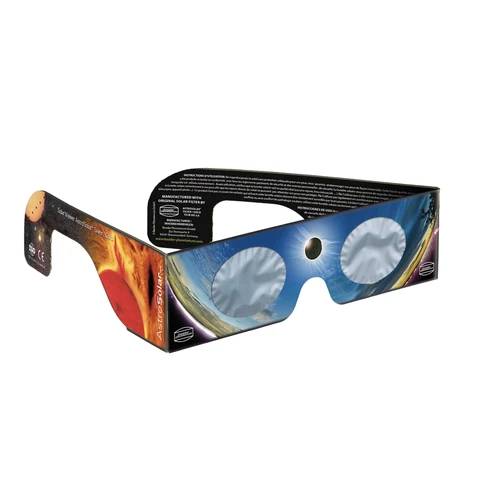
Baader Solar Eclipse Observing Glasses
Needed for the hour of partial phases either side of totality, which is most of the event. Take more than you think: you will end up handing them to people who turned up without any.
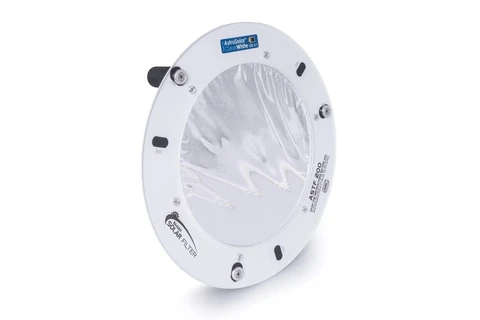
Baader AstroSolar Telescope Filter (ASTF)
Goes on the front of a telescope or binoculars for the partial phases, and comes off for totality. Never an eyepiece-end filter, which can crack under the heat.
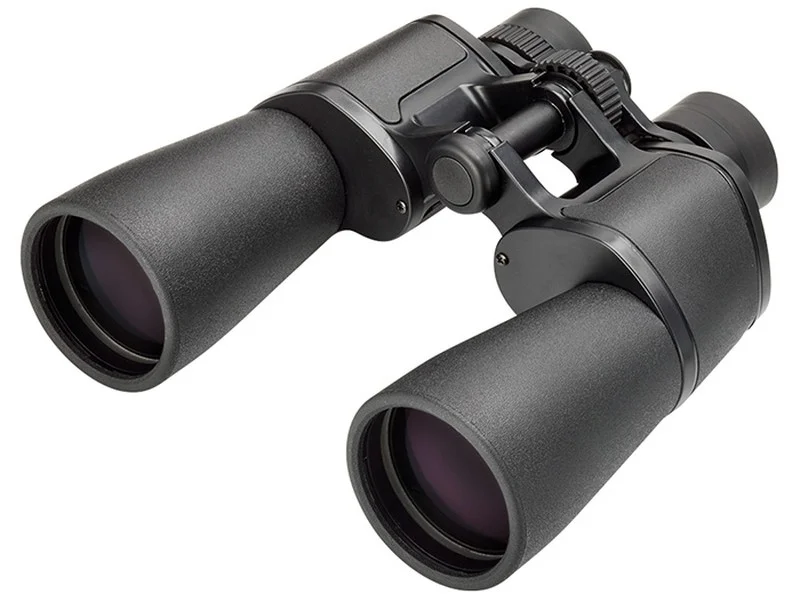
Totality is the one time you point binoculars at the Sun with nothing over the front, and the corona and pink prominences through 10x50s are the thing most people remember. Light enough for hand luggage.
Affiliate links: you pay the same price, we earn a small commission that helps keep WatchTheStars free.
How do you choose between them?
Work through it in this order and the answer usually falls out on its own.
- Is this your first total eclipse? If yes, favour the easy trip. Three minutes you actually get to is worth more than six minutes you spend the whole run-up worrying about.
- What is your cloud tolerance? Experienced chasers optimise for weather over duration every time, because a cloudy six minutes is worth nothing at all.
- Can you move on the morning? Hire car and a flexible base beats a fixed resort. This one factor changes more outcomes than the destination does.
- Would you enjoy the trip if the eclipse were cancelled? If the answer is no, pick somewhere else. It is the only real insurance there is.
- Check the town, not the country. Then check it again against the tables above.
Is it safe to travel to the path of totality?
It varies enormously by country, and the honest answer is that a few places on this track are not sensible destinations for a holiday. Spain, Gibraltar, Morocco, Tunisia and Egypt's Nile Valley and Red Sea coast are ordinary tourist destinations with the ordinary precautions. Egypt's Sinai and the area within 20km of the Libyan border are not.
For Libya, the Foreign Office advises against all but essential travel to Benghazi and much of the coast, and against all travel to other areas. For Algeria, the advice covers 30km-wide strips along several borders. Travel insurance generally will not cover you anywhere your government advises against going, which turns a straightforward trip into an uninsured one.
Check gov.uk travel advice yourself close to booking and again before you fly, because it changes. Atlas Obscura put it well in their own guide: an eclipse is six minutes long, and it is not worth it.
What should you book, and when?
Book accommodation now and flights when schedules open, which for most airlines is around eleven months ahead. Luxor is the tightest market on the track and has been filling since 2024. Southern Spain reported sell-outs in December 2025. Tunisia and the Egyptian oases are still comparatively open, which is part of why they are worth considering.
A few practical points that catch people out:
- Hire a car, or book a driver. The single best thing you can do for your odds is be able to move 100km on eclipse morning.
- Arrive two days early at least. A delayed flight on 1 August cannot be rescheduled.
- 2 August 2027 is a Monday. Not a UK bank holiday, so book the leave now.
- Get filters at home. UK stock sold out in the weeks before the August 2026 eclipse and will again.
- Check what your insurance actually covers for the country you have chosen.
- Stay a while. The Perseid meteor shower peaks on 12–13 August, ten days later, and North African skies are very dark.
On the day itself, the corona is the thing to look at rather than photograph, at least the first time. If you do want pictures, our 2027 eclipse photography guide has the full plan, and the safe solar observing guide covers filters properly. During totality look for Venus shining brightly, with Mercury to its west and Jupiter nearby: the eclipsed Sun sits in Cancer, close to the Beehive Cluster.