Key takeaways
- The Southern Delta Aquariids peak around 29–30 July 2026, producing 15–20 meteors per hour under dark skies
- A Full Moon on 29 July wrecks the peak this year: the bright Moon washes out most of the fainter meteors
- The shower has no sharp peak; it rambles on from mid-July to late August, so you have weeks of chances
- Your best bet in 2026 is the dark mornings of early-to-mid August, when the Moon has faded and the Perseids join in
Jump to section 8 sections
Looking ahead? Peak dates and viewing advice for every annual shower are in our meteor showers guide.
What Are the Delta Aquariids?
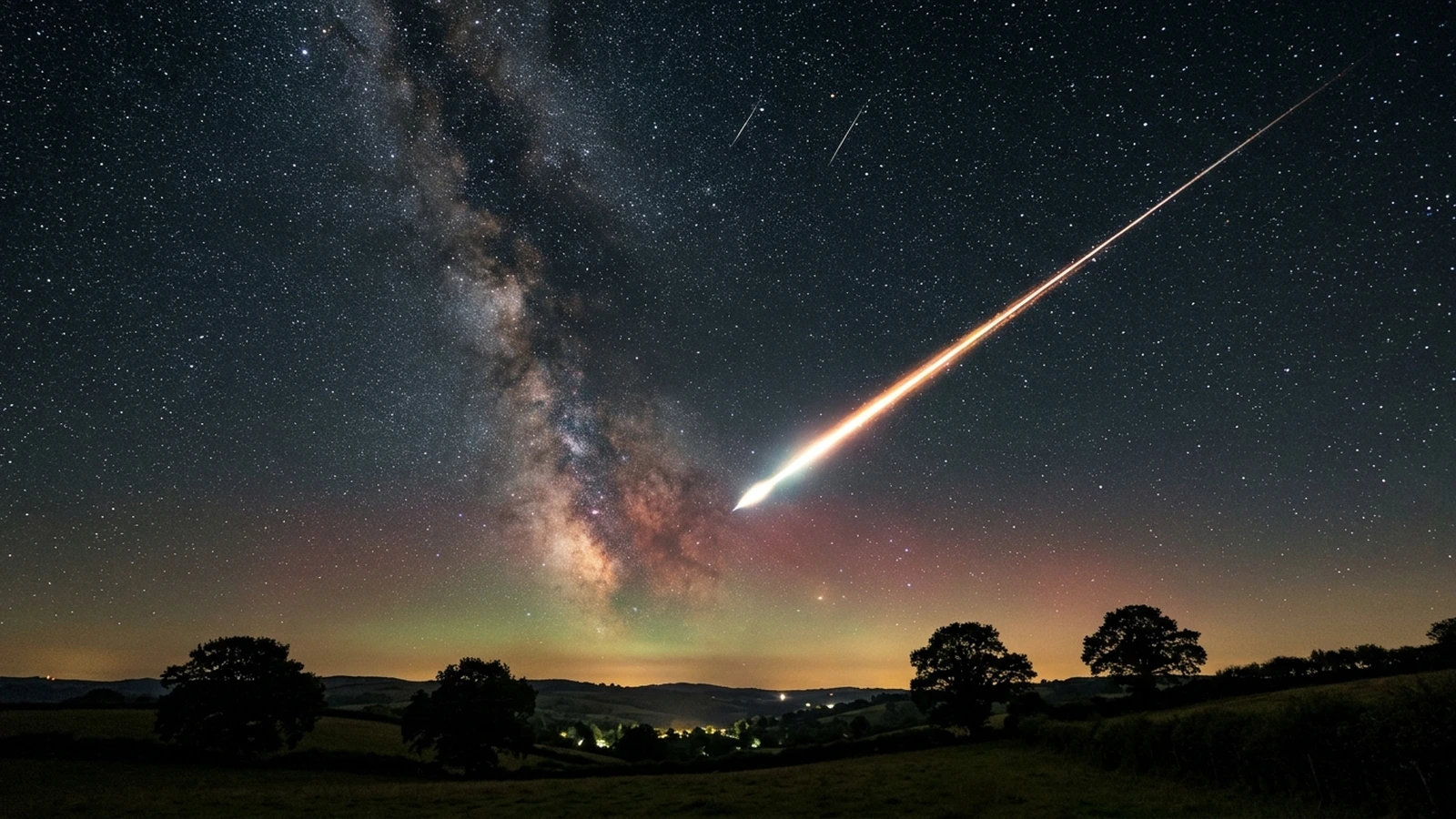
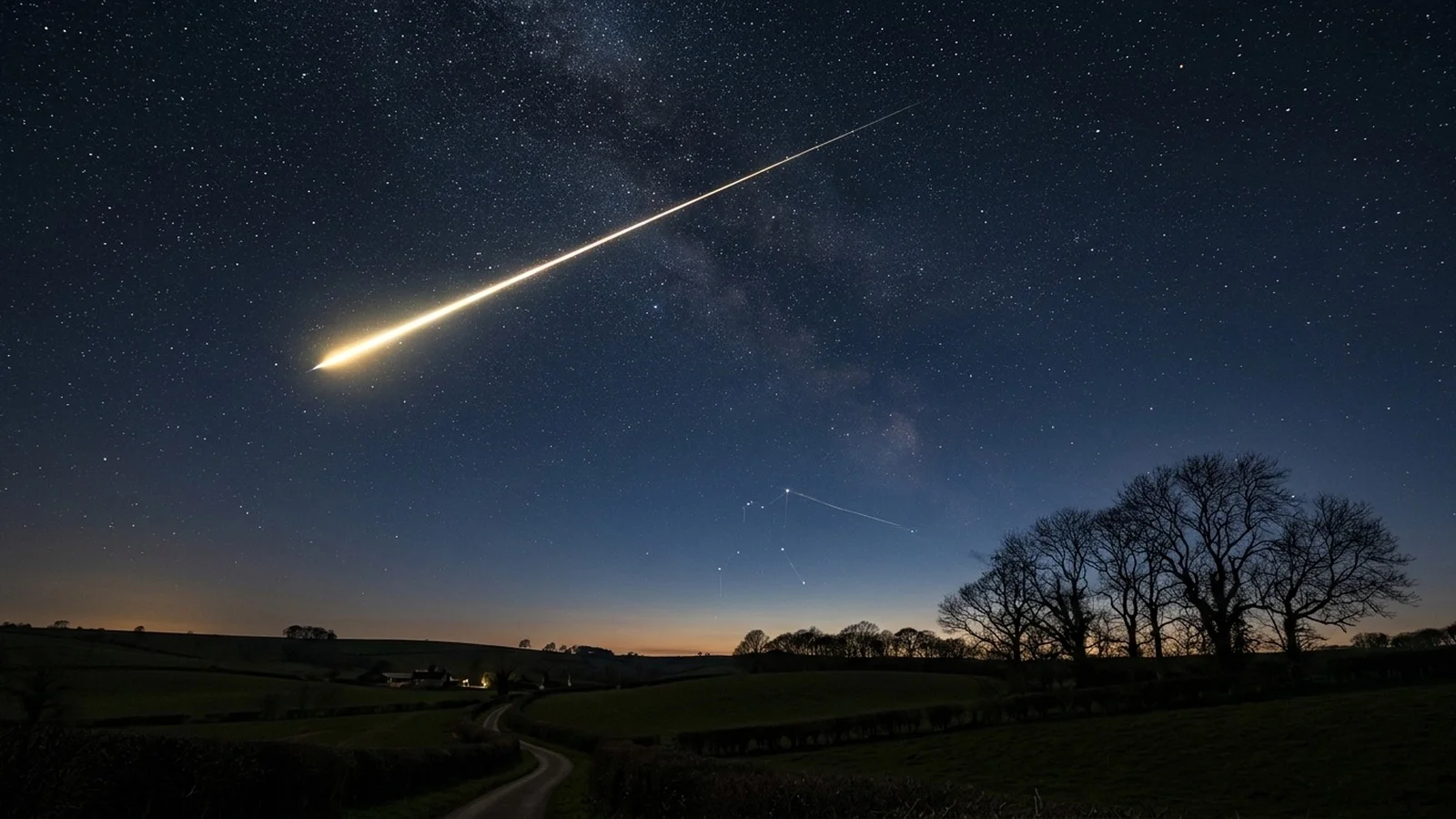
The Southern Delta Aquariids are one of summer's quieter meteor showers, but they're worth knowing about, partly for their own sake, and partly because they set the stage for the Perseids in August. Every year in late July, Earth ploughs through a stream of old cometary dust and those grains burn up in our atmosphere as meteors.
The likely source is Comet 96P/Machholz, a small comet that swings around the Sun every five years or so. Over thousands of years it has left a trail of debris along its orbit, and we cross that trail every July and August. The meteors hit the atmosphere at about 41 kilometres per second. That's middling speed: slower than the fast Eta Aquariids of May, but quick enough to give a clean, brief streak.
Under a dark sky with no Moon, the Delta Aquariids deliver around 15 to 20 meteors an hour. They tend to be faint and don't usually leave the glowing trains you get from faster showers, so dark skies matter more here than for almost any other shower. This is not a display that punches through light pollution or moonlight. Get somewhere properly dark and it rewards you; watch from a bright garden and you'll struggle.
When Do the Delta Aquariids Peak in 2026?
The shower is active from around 12 July to 23 August 2026, with the peak on the night of 29–30 July. But "peak" is a generous word for the Delta Aquariids. Unlike the Geminids or the Perseids, they don't have a sharp, obvious maximum. Instead the rates rise gently, sit on a broad plateau for a week or two, then fade just as gently. Numbers are much the same on the night either side of the official peak.
That's actually good news, because it means you don't have to gamble everything on one cloudy UK night. Any clear, dark morning from late July into the first half of August will show you Delta Aquariids. And as the shower fades through early August, the Perseids are ramping up to take its place, so the sky stays busy.
The radiant is highest, and the meteor rates best, in the hours after midnight and before dawn. That's the standard rule for almost every shower: after midnight your side of the Earth is turning into the debris stream, so you catch more meteors and they tend to be brighter.
The Full Moon Problem in 2026
Here's the catch. A Full Moon falls on 29 July 2026, almost exactly on the shower's peak, and it's around 98% lit on peak night. That's about the worst timing you can get. The Moon rides high through much of the night and floods the sky with light, and the Delta Aquariids are faint to begin with. Most of them will simply be lost in the glare.
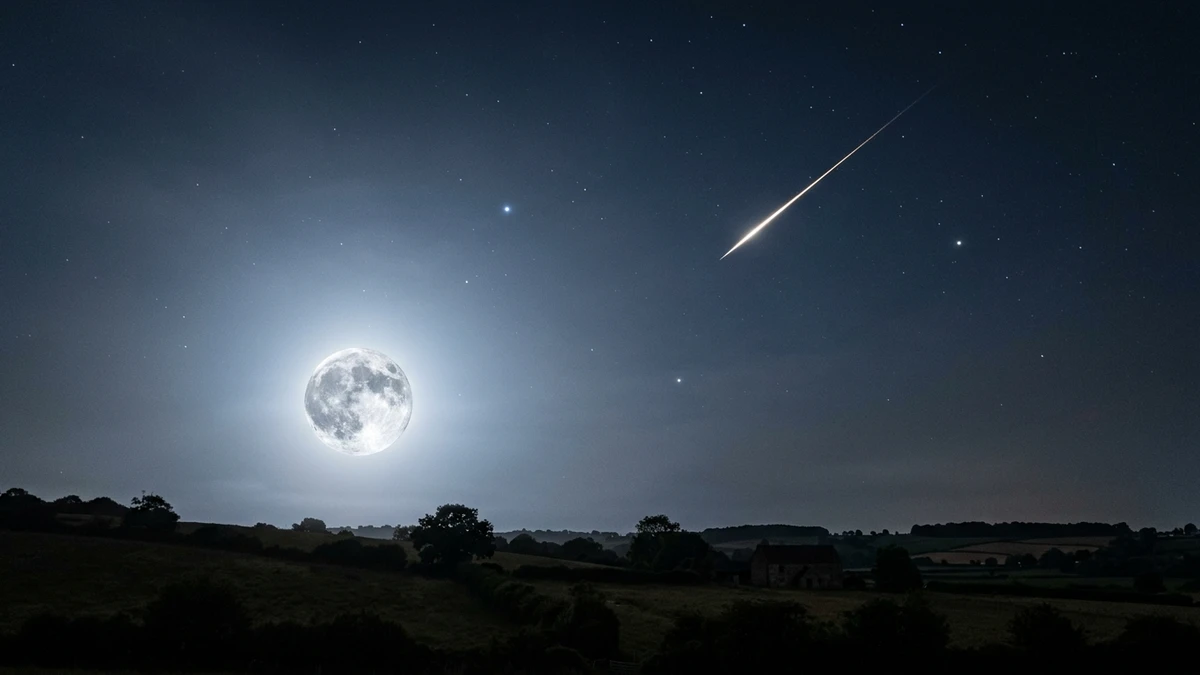
So there are two sensible ways to play 2026. The first is to catch the shower early, before the Moon fills out. In the last few nights of July, watch the short dark window after the Moon sets and before dawn twilight begins: you'll catch a few of the brighter Delta Aquariids without the worst of the moonlight.
The better option is to be patient. After 29 July the Moon wanes fast. By the first week of August it rises later each night, opening a proper dark window in the small hours. By around 8–12 August the Moon is a thin crescent, the sky is genuinely dark before dawn, and the Delta Aquariids are still trickling through alongside the first Perseids. That's the window to aim for.
How to See the Delta Aquariids From the UK
You don't need any equipment, and honestly you shouldn't use any. Binoculars and telescopes narrow your view to a tiny patch of sky, which is the opposite of what you want when meteors can appear anywhere.
Here's the short version of how to watch:
Get away from lights. This shower is faint, so a dark site makes a bigger difference than usual. A UK dark sky site like Galloway, Exmoor or Northumberland will show you far more than a suburban garden. If you can't travel, at least get into a shadow where streetlights aren't in your eyes.
Go out after midnight. The radiant climbs highest around 2am, and the pre-dawn hours give the best rates. Give yourself at least an hour: meteor watching is a slow business and comes in bursts.
Let your eyes adapt. Twenty minutes without looking at your phone. Dark adaptation is the single biggest thing separating people who see meteors from people who don't.
Get comfortable and look up. A reclining chair or a blanket on the ground so you're looking at a wide stretch of sky. Warm clothes even in July, because sitting still at 2am gets cold. A flask helps.
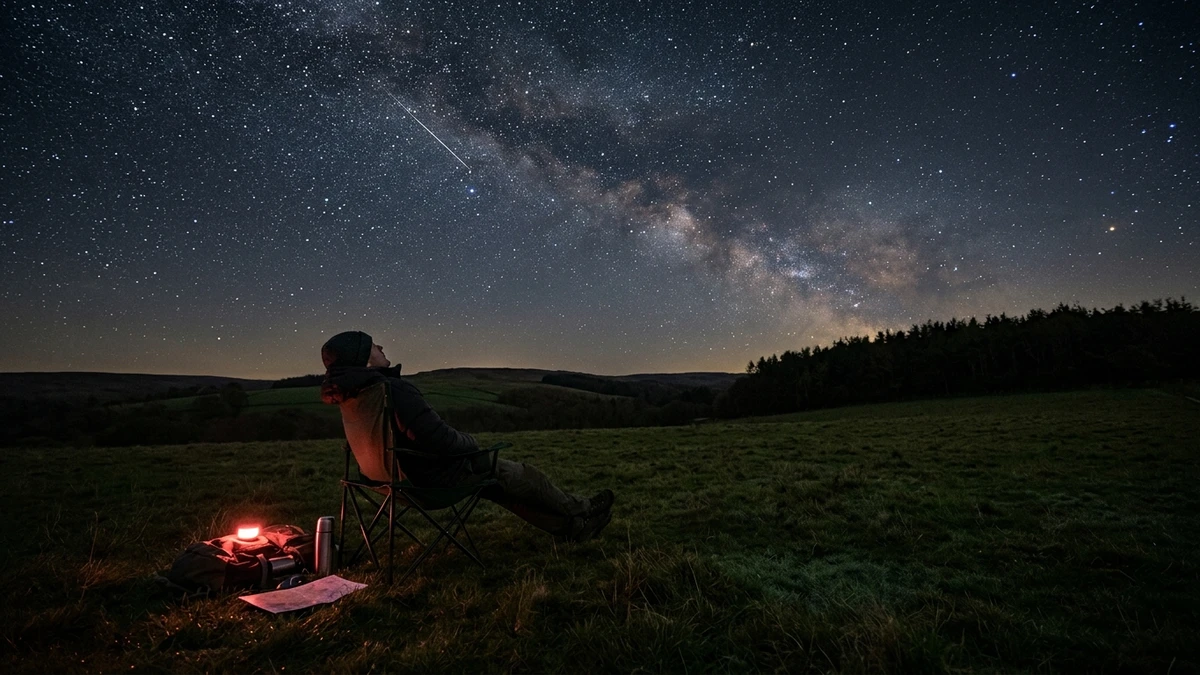
Where to Look: Finding the Radiant
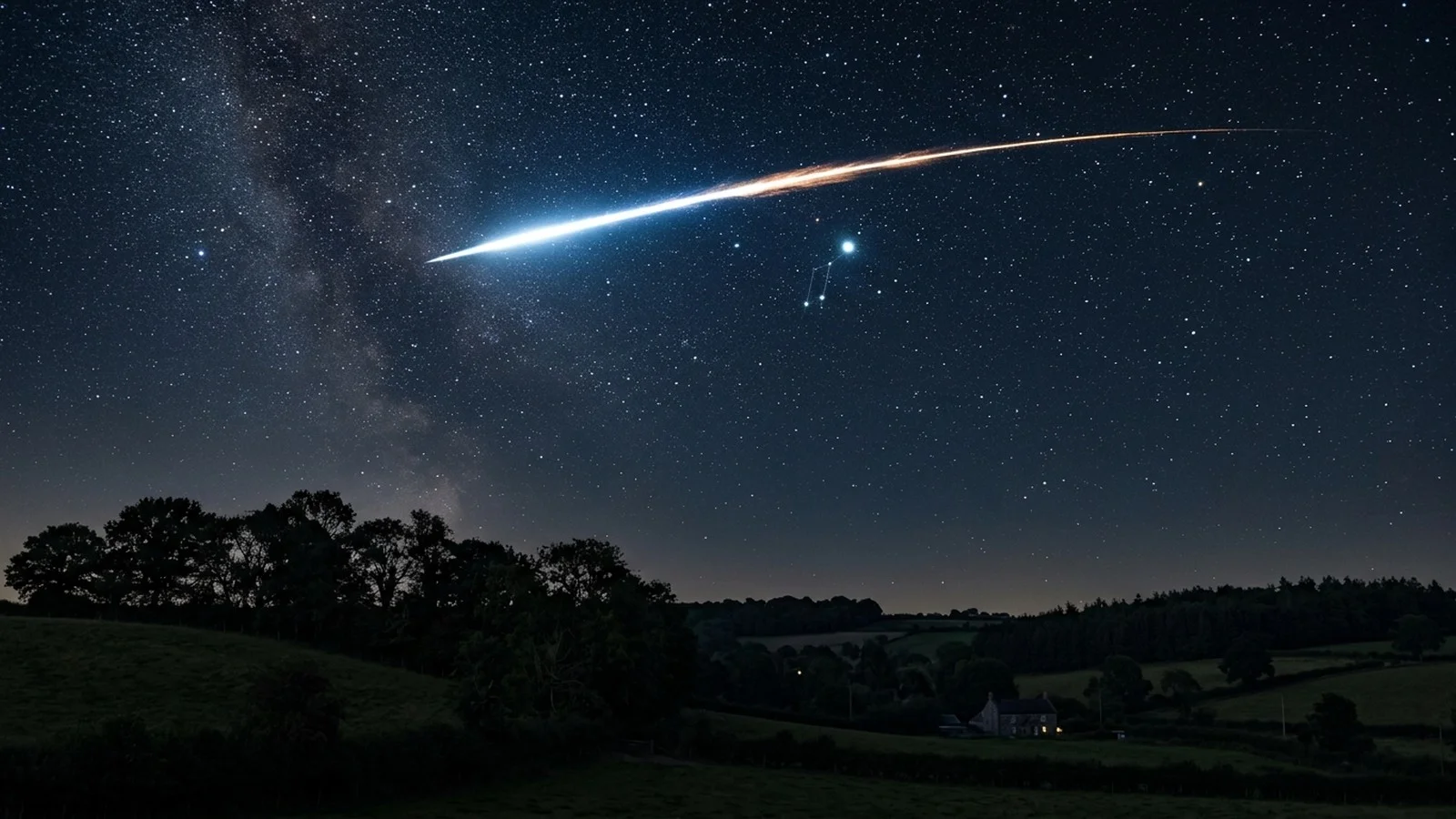
The meteors appear to stream out from a radiant point near the faint star Skat, also called Delta Aquarii, in the constellation Aquarius. From the UK, Aquarius sits low in the southern sky, which is why the shower never performs as well for us as it does from further south.
To find the rough area, look for the bright star Fomalhaut low in the south-east after midnight, then look a little above and to the right of it. You don't need to pin down the exact spot, though. The trick with any meteor shower is to not stare directly at the radiant: meteors there appear short and stubby because they're heading straight towards you. Instead, look about 45 degrees away from it, and the same meteors show longer, more dramatic trails.
For the UK that means facing roughly south to south-east and looking about 40 to 50 degrees up, letting your peripheral vision do the work. Don't lock your gaze on one spot. A relaxed, wide view catches far more.
What to take out for the Delta Aquariids
Kit we've tested and reviewed in full
Meteors are a naked-eye event, so keep the optics down while you're actually watching for streaks. But the radiant sits low in the south and there are quiet spells between meteors: that's when a pair of binoculars earns its place, sweeping the summer Milky Way, star clusters and the planets. Here's what we'd have on the groundsheet.
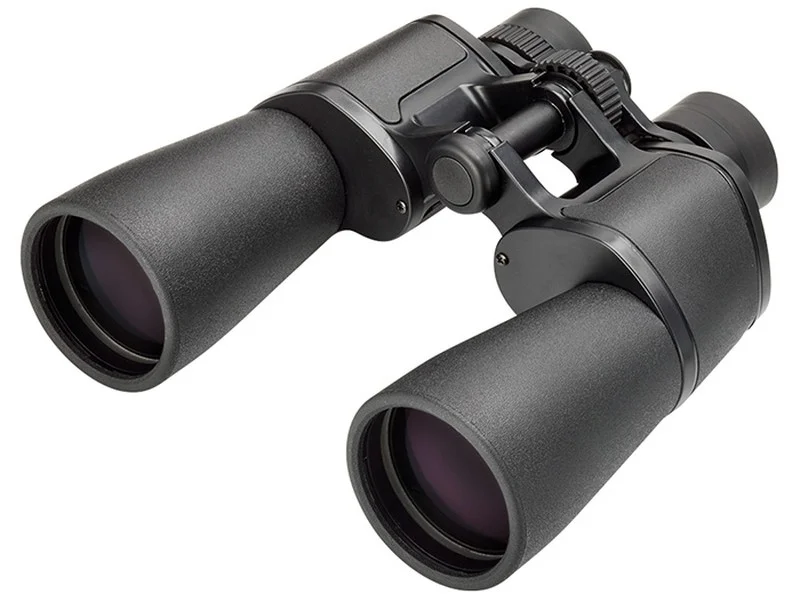
Between meteors, a wide 10×50 view sweeps the summer Milky Way and picks out star clusters low in the south. Light enough to lift one-handed from a reclining chair, and the pair we point most UK beginners to first.
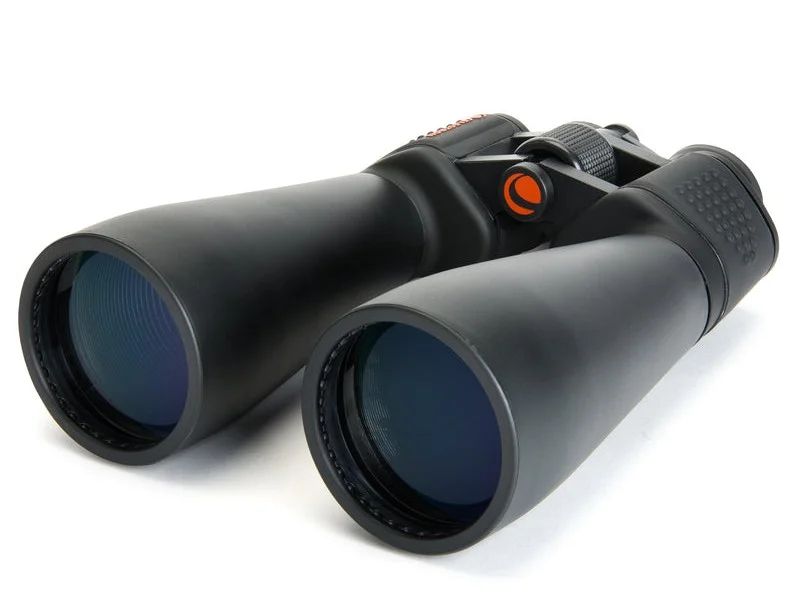
For Saturn rising in the east and the brighter deep-sky objects around Aquarius, the extra aperture and magnification pay off. Bring a tripod at this power.
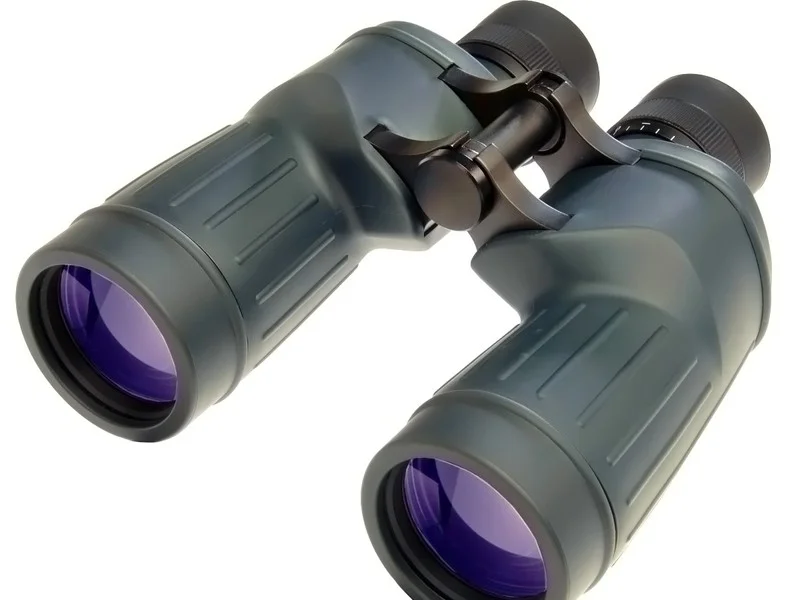
Cleaner, higher-contrast views than the entry pair, so faint clusters stand out from the summer twilight. A single do-everything pair if you only buy once.
Affiliate links: you pay the same price, we earn a small commission that helps keep WatchTheStars free.
Delta Aquariids and Perseids: The Early August Double
The Delta Aquariids' best feature might be their timing. As they fade through early August, the Perseids, the most popular shower of the year for UK skywatchers, are climbing towards their own peak on 12–13 August. For a couple of weeks the two overlap, and on a dark August morning you'll see meteors from both.
Telling them apart is easy once you know the trick. Trace the streak backwards. If it points back towards the north-east and the constellation Perseus, it's a Perseid, and it'll usually be faster and brighter. If it points back towards Aquarius low in the south, it's a Delta Aquariid, fainter and a touch slower.
There's a real bonus in 2026: the Perseid peak lands right on a New Moon, so the nights around 12–13 August will be genuinely dark. That's the opposite of the Delta Aquariid situation and it's why, if you only get out once this summer, the second week of August is the night to pick. You'll catch the tail of the Delta Aquariids and the full force of the Perseids in the same dark sky.
How to Photograph the Delta Aquariids
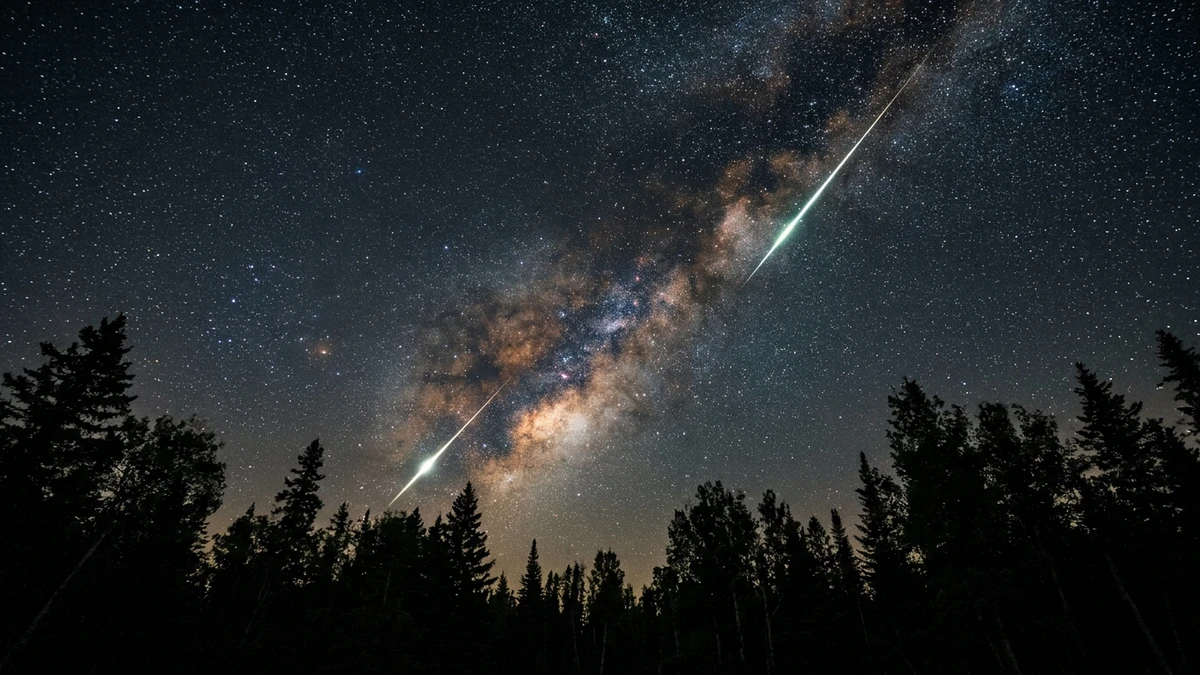
The Delta Aquariids are faint, which makes them harder to photograph than showier displays. But it's the same waiting game as any shower: point the camera at a patch of sky and take long exposures until a meteor crosses the frame.
Smartphone: A recent phone with a night mode can catch the brighter meteors. Prop it against something solid, aim south, and fire off a run of 10 to 30 second exposures. Be patient. You might take 40 or 50 frames for one meteor, and with faint meteors you may get none. Wait for the dark August mornings for the best chance.
DSLR or mirrorless: A wide lens (14–24mm) at f/2.8 or faster, ISO 1600–3200, and exposures of 15 to 25 seconds on a moonless night. Use an intervalometer to shoot continuously and review the frames later. On the moonlit peak nights, drop the ISO and shorten the exposures or you'll just record a bright grey sky.
The single biggest factor is the Moon. Shooting these under moonlight is a losing battle, so plan your photography for the dark early-August window rather than the 29–30 July peak.
Key Dates at a Glance
| Date | Event | Notes |
|---|---|---|
| 12 July | Shower becomes active | Occasional Delta Aquariids possible |
| 25–28 July | Pre-peak dark window | Short gap before dawn as the Moon sets |
| 29–30 July | Peak night | Spoiled by a ~98% Full Moon |
| 5–8 August | Moon wanes, dark window opens | Good pre-dawn viewing returns |
| 8–12 August | Best window: dark skies + Perseids | Delta Aquariids overlap the rising Perseids |
| 12–13 August | Perseid peak, New Moon | Genuinely dark skies: the night to pick |
| 23 August | Shower ends | Activity fades to background |
The Delta Aquariids won't stop you in your tracks the way the Perseids or the Geminids can, and 2026 is a poor year for them at peak thanks to that badly-timed Full Moon. But treat them as the warm-up act rather than the main event and they make sense. Get out on a dark morning in early August, look south, and you'll catch the last of the Delta Aquariids mixed in with the first Perseids, with the best of the summer's meteors still to come.
Sources:
- Delta Aquariid meteor shower 2026: When and where to see it in the UK · Royal Observatory Greenwich
- Delta Aquariid meteor shower: All you need to know in 2026 · EarthSky
- Meteor Showers Peaking in Late July 2026 · Star Walk
- The Southern Delta Aquariids and Alpha Capricornids are about to peak · Scientific American
Frequently Asked Questions
Equipment guides
Related topics
Ian ClaytonAmateur astronomer and founder of WatchTheStars.co.uk, dedicated to helping others explore the wonders of our universe. Full profile →