Key takeaways
- China's Tianwen-2 spacecraft has arrived at Kamo'oalewa, a 40–100m asteroid that has quietly kept Earth company for at least a century
- Kamo'oalewa is a quasi-moon: it orbits the Sun alongside Earth and loops around us without ever being captured by our gravity
- The best evidence suggests it's a chunk of the real Moon, blasted off the far side by the impact that dug the Giordano Bruno crater
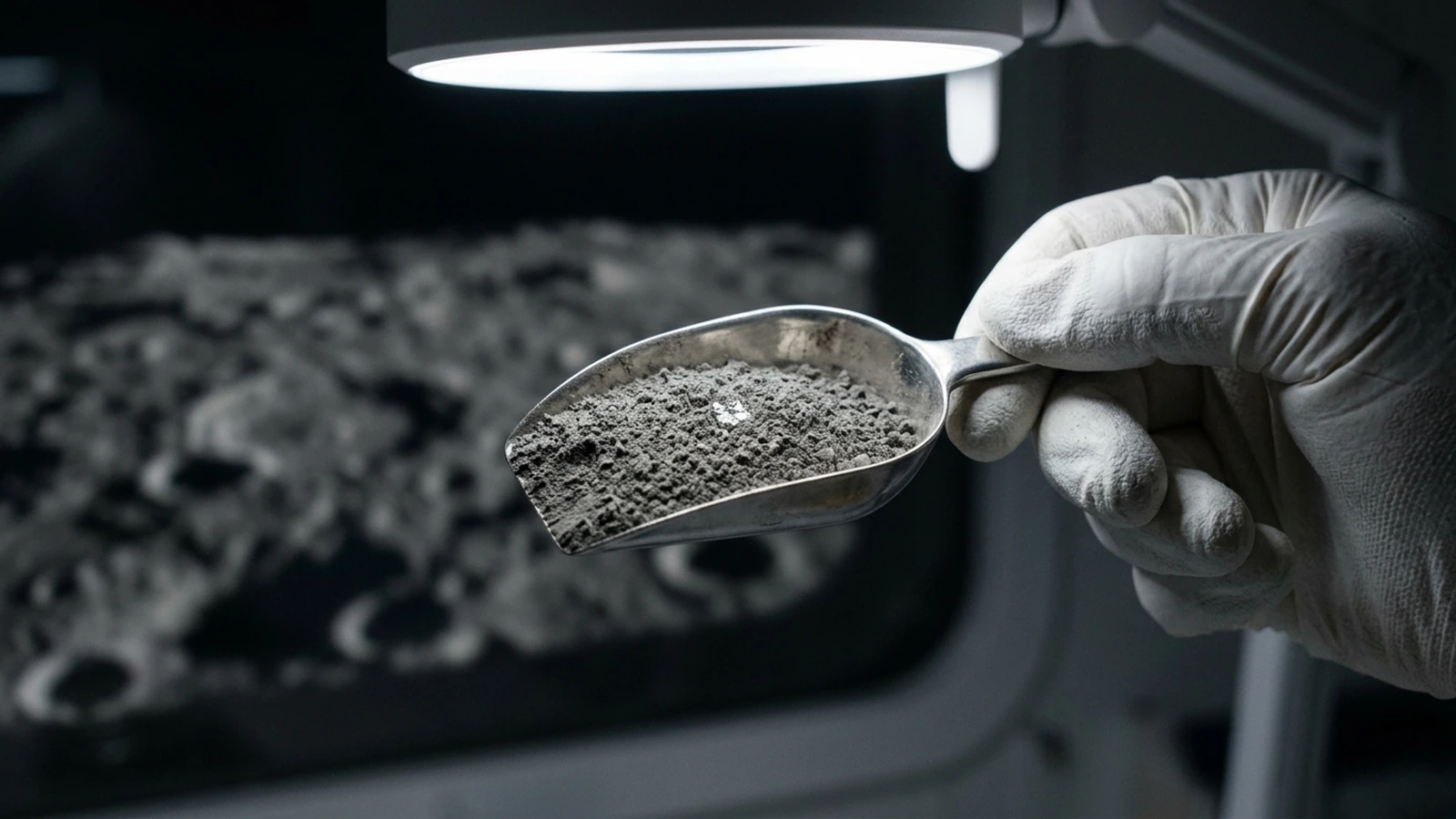
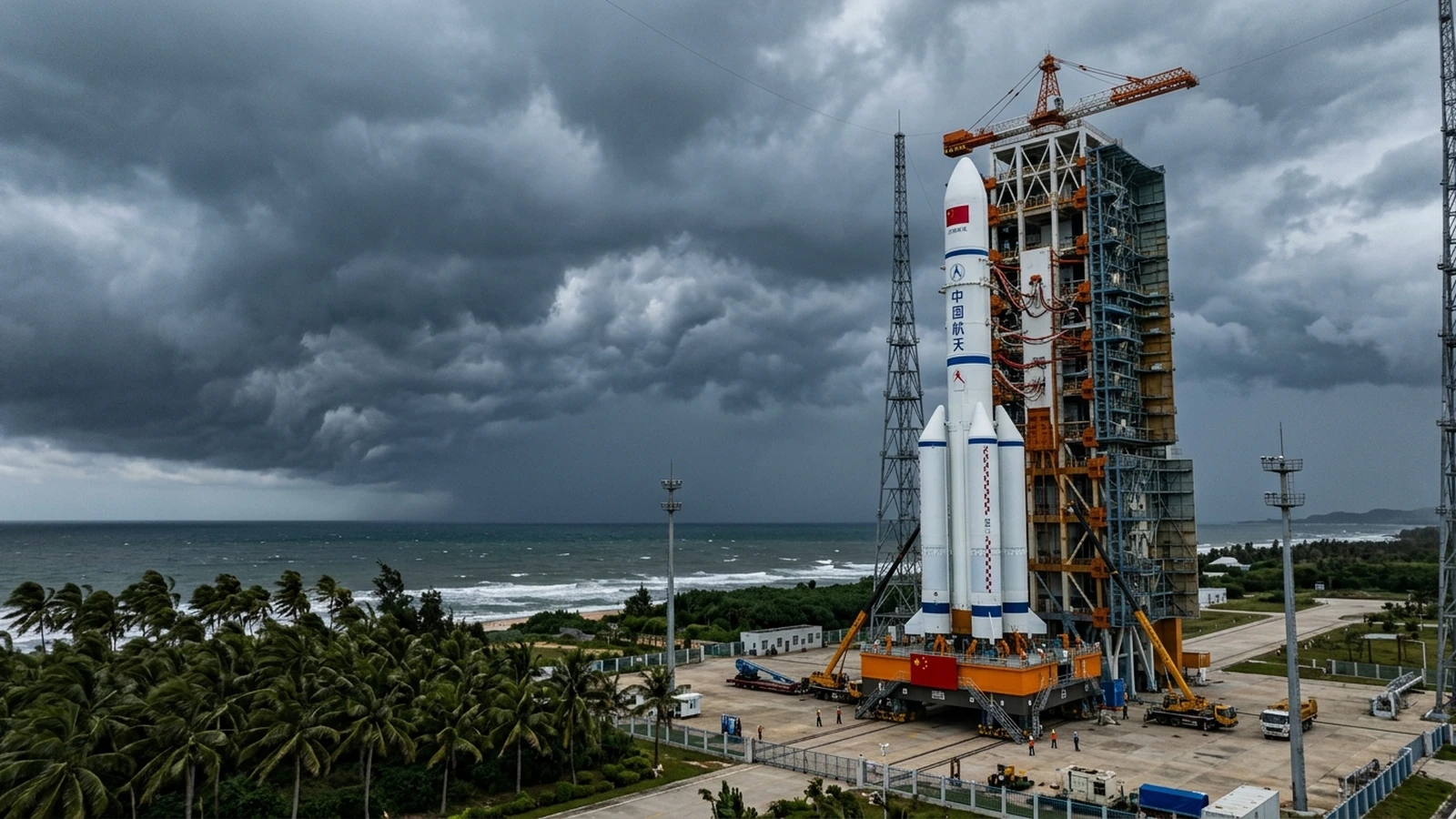
- Tianwen-2 will map the asteroid until April 2027, grab around 100g of surface material, and parachute the samples back to Earth in November 2027
- One of its three sampling methods, anchoring to the asteroid and drilling, has never been attempted anywhere before
Jump to section 6 sections
Tianwen-2 Arrives at Kamo'oalewa: What Just Happened
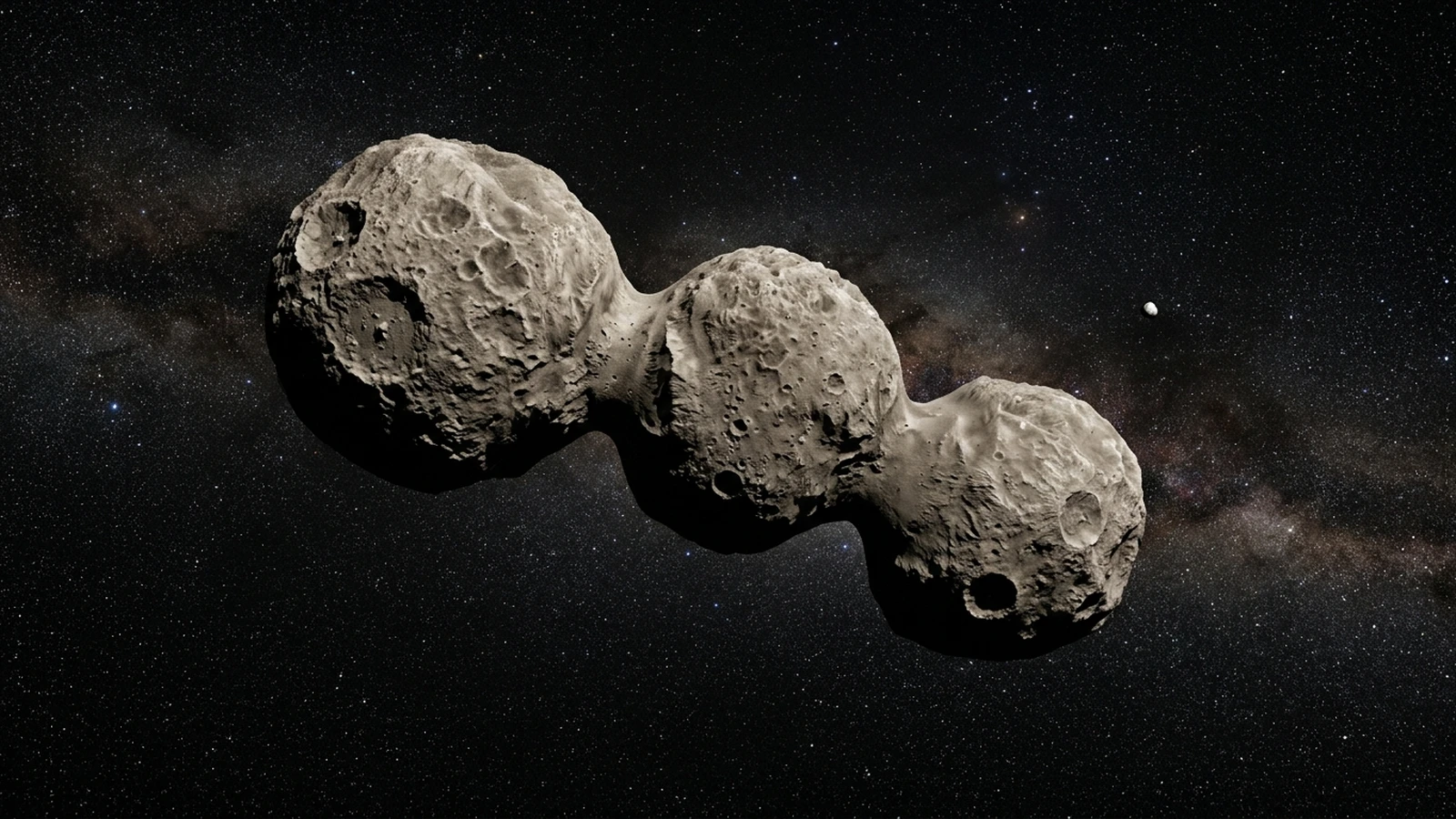
Earth has a travelling companion most people have never heard of. It's called Kamo'oalewa, it's somewhere between 40 and 100 metres wide, and it has been quietly keeping pace with our planet for at least a century. As of this week, it has a visitor.
China's Tianwen-2 spacecraft has arrived at the little asteroid and is settling into station just 20 kilometres away, ready to begin the most detailed study of a quasi-moon ever attempted. The rendezvous burn happened around 7 June, and in typical fashion for China's space agency, nobody announced it. Confirmation came instead from amateur radio astronomers at Bochum in Germany and Dwingeloo in the Netherlands, who tracked the spacecraft's engines doing exactly what an arrival burn should do. Over the past month the probe has closed in from about 2,000 kilometres, and the first close-up images are expected any day now.
It's been a good week for asteroid missions. Japan's Hayabusa2 skimmed past asteroid Torifune on Sunday at 12,000mph, and now China has parked next door to one of the strangest objects near Earth. The difference is that Tianwen-2 isn't passing through. It's staying for almost a year, and then it's bringing a piece of Kamo'oalewa home.
What Is a Quasi-Moon? Earth's Strange Companions
A quasi-moon is an asteroid that orbits the Sun in almost exactly the same path as Earth, so from our point of view it appears to loop lazily around our planet year after year. The key word is "appears". Unlike the real Moon, a quasi-moon is never gravitationally bound to Earth. It's simply travelling the same road at the same speed.
Richard Binzel, a planetary scientist at MIT, described it nicely: Kamo'oalewa moves with Earth "kind of like a dog that might tag along with you for a while on a long walk through the woods, but it's not your dog."
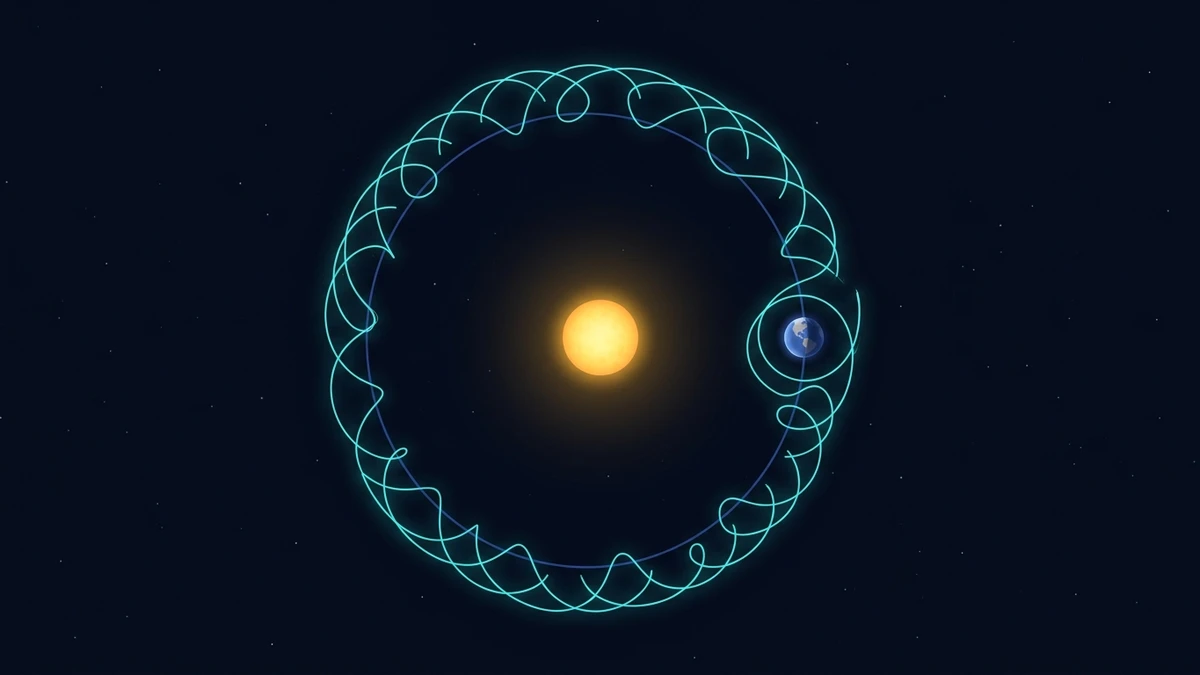
Earth has eight known quasi-moons, and Kamo'oalewa is one of the closest and most stable. It never comes nearer than about 4.6 million kilometres, roughly 12 times the distance of the Moon, and calculations suggest it has been our companion for at least 100 years. It should stay in step for another 300 before drifting away.
The asteroid was discovered in 2016 from Haleakala Observatory in Hawaii, which is why it carries a Hawaiian name meaning "oscillating celestial fragment". It also spins remarkably fast, once every 28 minutes or so. That's a useful clue in itself: anything rotating that quickly is probably one solid piece of rock rather than a loose pile of rubble, because a rubble pile spinning that fast would fly apart.
Is Kamo'oalewa a Piece of the Moon?
Here's the question that makes this mission special. The best current evidence says Kamo'oalewa may not be an ordinary asteroid at all, but a piece of our own Moon.
The idea comes from observations made in 2021, when astronomers noticed that Kamo'oalewa absorbs and reflects sunlight the way weathered lunar rock does, not the way typical asteroids do. Then in 2024, researchers ran the problem backwards and found a likely crime scene: the Giordano Bruno crater, a 22-kilometre gash on the far side of the Moon, dug by an impact within the last 10 million years. Some models suggest that collision threw debris into orbits exactly like the one Kamo'oalewa occupies today.
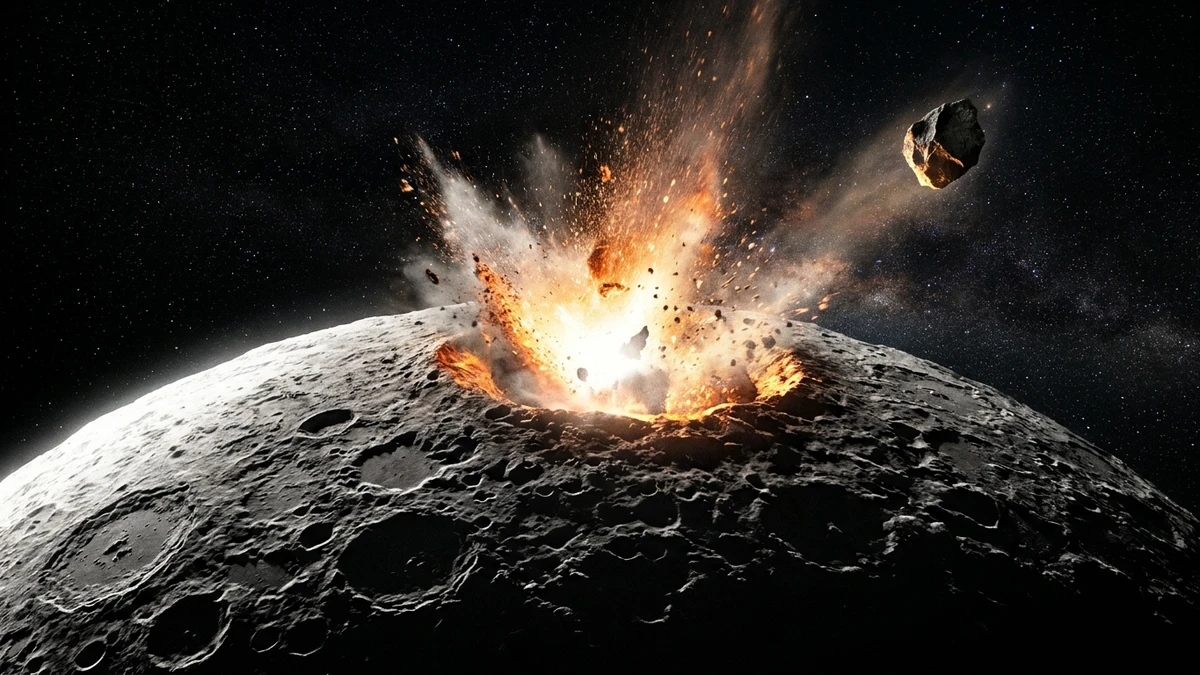
It's not settled. There's still a chance the asteroid came from the main belt between Mars and Jupiter and just happens to look lunar. Marco Fenucci of the European Space Agency's Near-Earth Objects Coordination Centre, who has studied Kamo'oalewa closely, says the debate on its lunar origin "is still very open" and that this mission should finally give us an answer.
That's the beauty of sample return. Spectra from millions of kilometres away can be argued over forever. A few grams of rock in a lab in Beijing cannot. If the samples match the Apollo Moon rocks, we'll know Earth is being trailed by a piece of its own Moon, and scientists will get a free sample of the lunar far side into the bargain. As Li Chunlai of the Chinese Academy of Sciences put it: "We'll only obtain definitive answers after completing our exploration."
How Tianwen-2 Will Collect Its Samples
First comes patience. From now until April 2027, Tianwen-2 will circle Kamo'oalewa at altitudes from 20 kilometres down to just 300 metres, mapping it with cameras, LiDAR and a sounding radar that can peer beneath the surface. The team needs to know what the asteroid is made of, and where a spacecraft can safely touch it, before anything else happens.
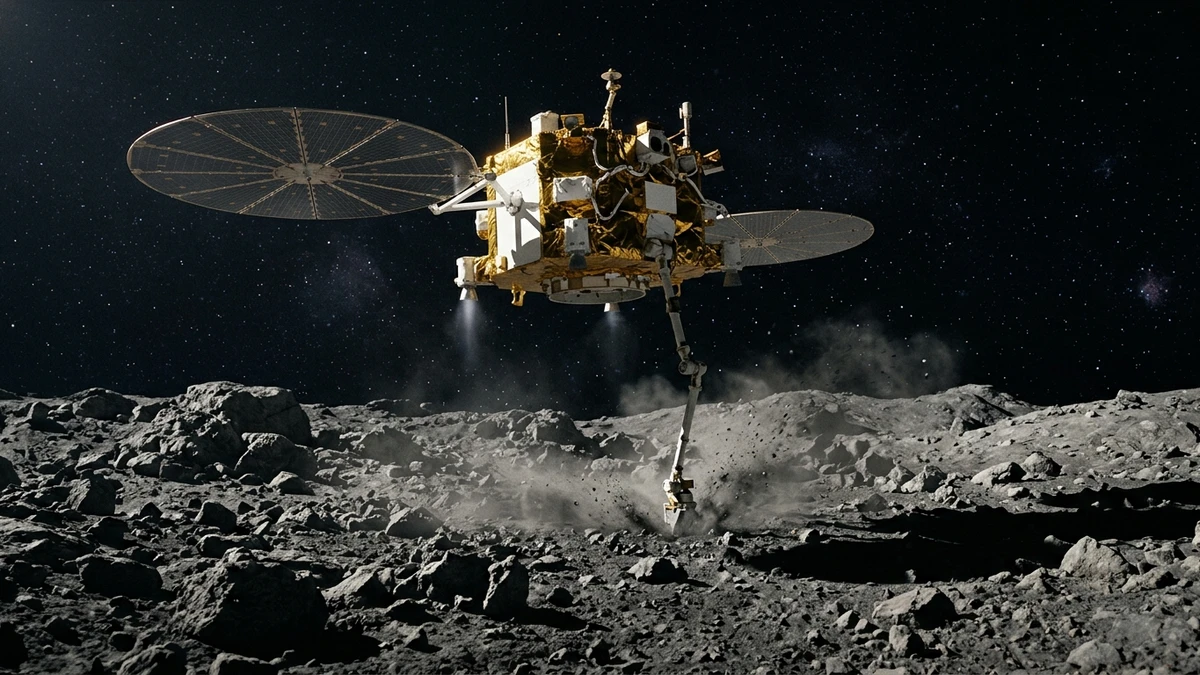
Then comes the clever part. Tianwen-2 carries three different sampling methods, because nobody knows what the surface is like:
- Touch-and-go: hover, reach out with a robotic arm, grab and retreat. This is the proven approach used at Bennu by NASA's OSIRIS-REx and at Ryugu by Hayabusa2.
- Anchor-and-attach: land on the asteroid, anchor in place, and drill. Nothing like this has ever been attempted on any asteroid.
- Hover-and-match: match the asteroid's 28-minute spin and sample while rotating with it. Also a first, and fiendishly hard.
The target is around 100 grams of surface material. That doesn't sound like much, but OSIRIS-REx changed textbooks with 120 grams from Bennu, and Hayabusa2 found amino acids in barely 5 grams from Ryugu.
Can You See Kamo'oalewa From the UK?
Sadly not. At under 100 metres wide and never closer than 4.6 million kilometres, Kamo'oalewa is a target for the world's biggest professional telescopes only.
But there's a lovely consolation prize. The Moon it may have come from is overhead most clear nights, and even modest binoculars will show you the cratered, battered surface that impacts like the Giordano Bruno event have been carving for billions of years. And if you want to see a genuine asteroid with your own eyes, Vesta is within reach of ordinary binoculars right now.
See the Moon Kamo'oalewa might have come from
Kit we've tested and reviewed in full
The far side stays hidden, but the near side is packed with craters from exactly the kind of impacts that may have launched Kamo'oalewa into space. Here's what we'd take outside (our full Moon calendar has the best nights to look).
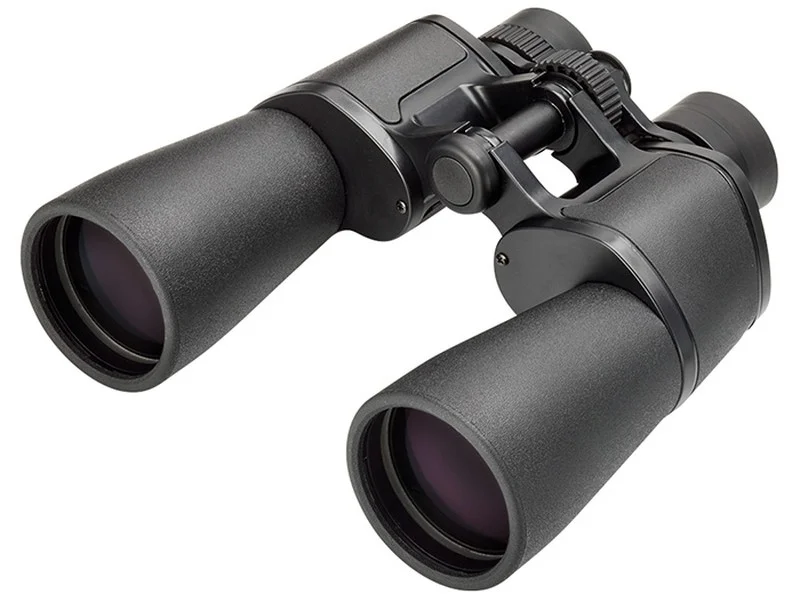
Steady 10× views bring out the Moon's biggest craters and seas, and they'll pick out the asteroid Vesta as a slowly drifting "star" too.
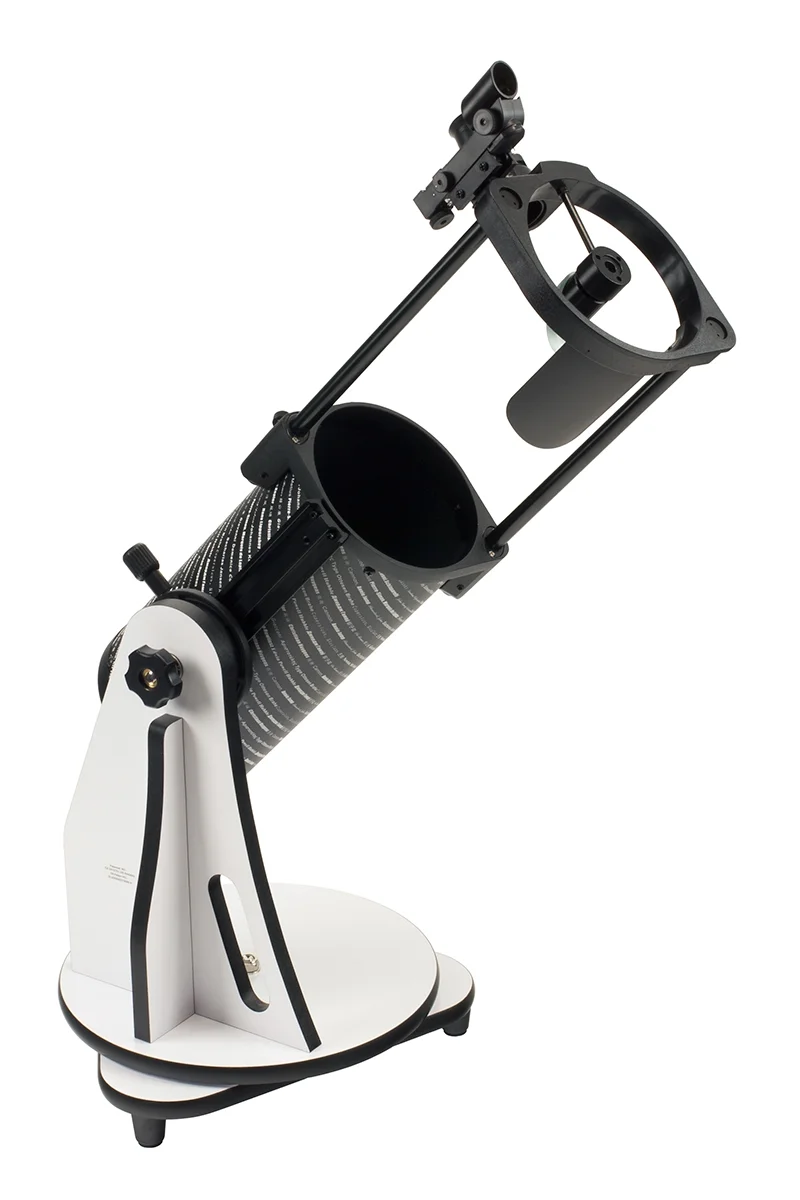
Enough aperture to show individual crater walls and mountain ranges along the Moon's terminator, night after night.
Affiliate links: you pay the same price, we earn a small commission that helps keep WatchTheStars free.
What Happens Next: Samples in 2027, a Comet in 2035
The timeline from here is tidy, at least on paper. Mapping runs until spring next year. Tianwen-2 departs Kamo'oalewa on 24 April 2027, which happens to be China's National Space Day, and cruises back towards Earth. On 29 November 2027 its return capsule hits our atmosphere at about 12 kilometres per second, the fastest reentry China has ever flown, and parachutes the samples down for collection.
The spacecraft itself doesn't stop. It uses the Earth flyby as a slingshot and heads out for a second act: a 2035 rendezvous with 311P/PanSTARRS, an odd object beyond Mars that behaves like both a comet and an asteroid. Eight quiet years in deep space, just to prove China can do it. If that sounds familiar, it should. It's the same "keep flying" philosophy that has Hayabusa2 still working 12 years after launch, and the same long-game patience behind NASA's Psyche mission out at the asteroid belt.
For now, keep an eye out for the first close-up pictures of Kamo'oalewa, due within days if the current timeline holds. Whatever they show, lunar castaway or asteroid impostor, we're about to meet Earth's other moon properly for the first time. We'll cover the images as soon as they arrive.
Sources:
- China's Tianwen-2 mission has (probably) arrived at a quasi-moon of Earth · The Planetary Society
- A secretive Chinese probe has just arrived at one of Earth's 'quasi-moons' · Live Science
- A Chinese Spacecraft Just Arrived At Earth's 'Quasi Moon' · Forbes
- China's Tianwen-2 spacecraft will soon grab samples from a 'quasi-moon' of Earth · Scientific American
- 469219 Kamo'oalewa · Wikipedia
Frequently Asked Questions
Equipment guides
Related topics

Ian ClaytonAmateur astronomer and founder of WatchTheStars.co.uk, dedicated to helping others explore the wonders of our universe. Full profile →