Finding & Observing
Perseus · The Hero
Home of the Demon Star and the Perseid Meteors
Jump to section 6 sections
How to Find Perseus in the Night Sky
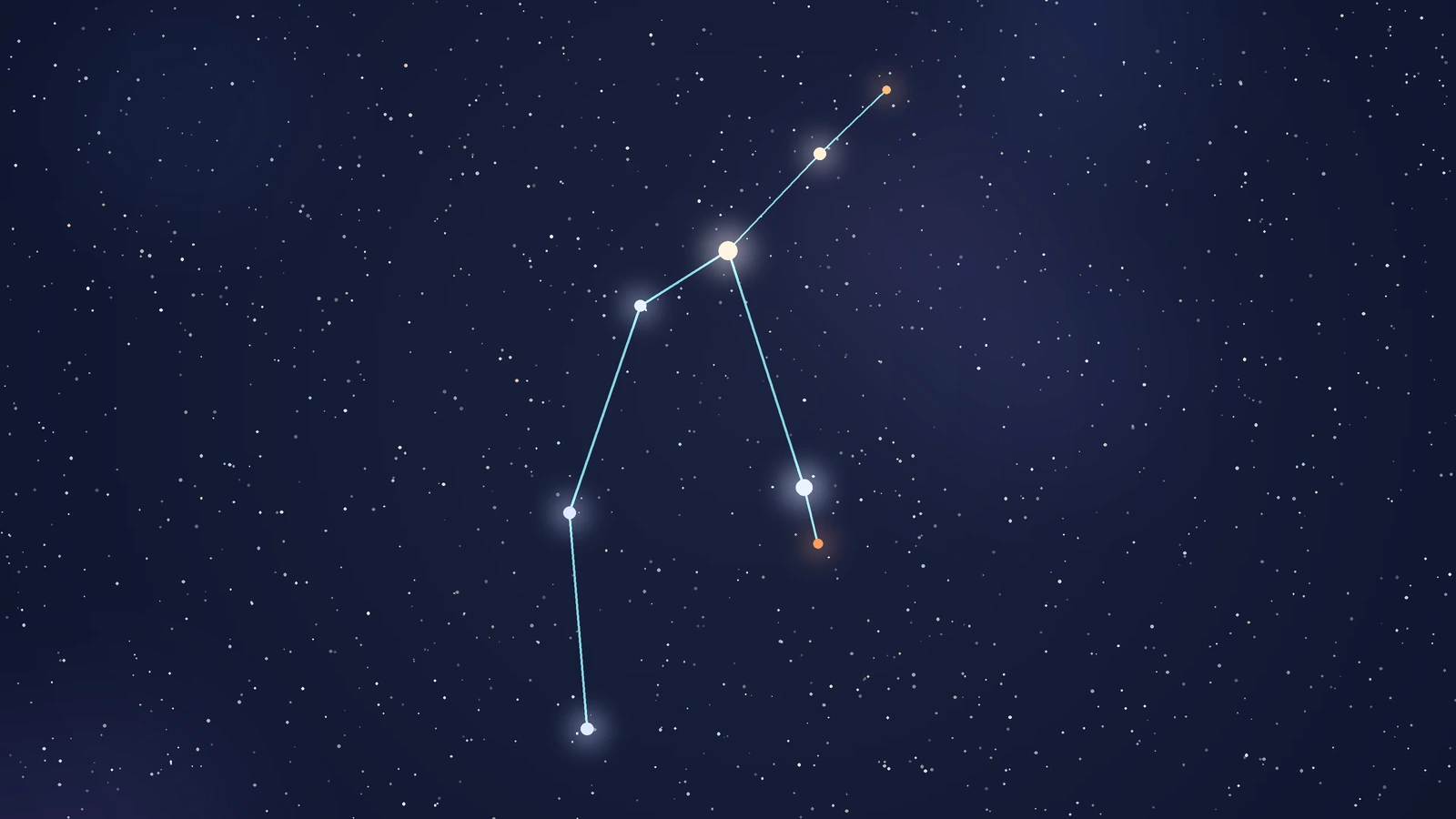
Perseus has no single obvious pattern, which puts some people off. The trick is to use Cassiopeia as a signpost. Once you have found the W, Perseus is the next constellation along, and its brightest star sits in an unmistakable curved chain that binoculars turn into something special.
🔎 Use Cassiopeia as a signpost
Find the W of Cassiopeia high in the north-east on an autumn evening. Perseus lies immediately below and to the left of it. The two constellations sit next to each other in the Milky Way and are best learned together.
⭐ Look for the curve at Mirfak
Mirfak is not especially bright on its own, but it sits in a distinctive curved chain of stars. In binoculars that chain resolves into dozens of members of the Alpha Persei Cluster, and it is unlike anything else nearby.
👻 Track down Algol
Algol sits below Mirfak, marking Medusa's head. Most nights it shines at magnitude 2.1. Every 2.87 days it drops to 3.4 for a few hours, and the change is obvious to the naked eye if you compare it to nearby stars.
📅 Best time to look
Perseus is highest around 10pm in mid-December. It is well placed from September through to March. Because it is circumpolar from the UK it never truly sets, but summer views are low and poor.
Seasonal Visibility from the UK (51°N)
| Season | Evening Position | Altitude | Conditions |
|---|---|---|---|
| Autumn (Sep–Nov) | North-east, climbing | 40–70° | ✅ Excellent |
| Winter (Dec–Feb) | Overhead, near zenith | 70–88° | ⭐ Best |
| Spring (Mar–May) | North-west, sinking | 25–50° | 👍 Fair |
| Summer (Jun–Aug) | Low north, pre-dawn | 10–35° | 👍 Morning only |
The Main Stars of Perseus
Perseus has no first-magnitude star, but it makes up for that with variety. It holds the best-known variable star in the sky, a supergiant embedded in its own cluster, and a red giant that visibly changes colour and brightness over a few months.
Mirfak (α Persei)
The brightest star in Perseus and the anchor of the whole constellation. Mirfak is a supergiant about 62 times the Sun's diameter and 5,000 times its luminosity. What makes it special is its setting: it lies within the Alpha Persei Cluster, a genuine group of young stars all moving together, which fills a binocular field with a curving stream of light. The name comes from the Arabic for "elbow".
Algol (β Persei)
The Demon Star, and the most famous variable star in the sky. Every 2.867 days a dimmer orange subgiant slides in front of its brighter blue-white companion, and Algol fades by more than a magnitude over about ten hours before climbing back. You can follow the whole thing with your eyes alone. Ancient observers seem to have noticed the behaviour long before anyone could explain it, and the star's name and its role as Medusa's severed head both hint at that unease.
Rho Persei (ρ Per)
A semiregular variable sitting just next to Algol, and a useful companion to it. Rho Persei pulses over cycles of roughly 50 and 1,100 days, drifting slowly between magnitude 3.3 and 4.0. Its deep orange colour is obvious in binoculars, and comparing it with Algol on the same night is a good way to train your eye for judging brightness.
Zeta Persei (ζ Per)
A hot blue supergiant marking the hero's right foot, and the leading light of the Zeta Persei association, a loose group of young massive stars drifting apart. It is also a runaway star candidate: its motion suggests it was flung out of a tighter group, possibly when a companion exploded as a supernova.
Epsilon Persei (ε Per)
One of the hotter naked-eye stars, with a surface temperature above 26,000K, which gives it a distinctly blue-white cast next to Mirfak's warm yellow. It is a spectroscopic binary with a faint visual companion about 9 arcseconds away that a small telescope can pick up on a steady night.
GK Persei: Nova 1901
In February 1901 a new star appeared in Perseus and brightened to magnitude 0.2 within days, briefly rivalling Vega. GK Persei was one of the brightest novae of the last few centuries. It turned out to be a white dwarf pulling gas from a companion until the surface detonated. It still flares faintly every few years, and its expanding shell, the Firework Nebula, is a favourite target for large telescopes.
Mythology and History of Perseus
Perseus sits at the centre of the largest connected story in the sky. Six constellations in this part of the heavens tell a single tale, and you can trace the whole thing on one clear autumn night.
The Greek myth
Perseus was sent to kill Medusa, a gorgon whose gaze turned people to stone. He used a polished shield as a mirror to avoid looking at her directly, cut off her head, and carried it away in a bag. Flying home, he found Andromeda chained to a rock as a sacrifice to the sea monster Cetus, sent by Poseidon after her mother Cassiopeia boasted about their beauty. Perseus killed the monster and married Andromeda.
Every character has a constellation. Cassiopeia the vain queen, Cepheus the king, Andromeda the daughter, Cetus the sea monster, Pegasus the winged horse, and Perseus himself, still holding Medusa's head. Algol marks the head, which explains why a star that visibly dims and recovers was tied to something so unsettling.
The oldest variable star record
There is a long-running argument about whether the ancient Egyptians spotted Algol's variability more than 3,000 years ago. The Cairo Calendar, a papyrus from around 1200 BC, lists lucky and unlucky days on a cycle that some researchers say matches Algol's period closely. Not everyone is convinced. If it holds up, it would be the earliest known record of a variable star by a very wide margin.
🇬🇷 Greek & Roman
The hero who killed Medusa and rescued Andromeda. His story links six neighbouring constellations, making this corner of the autumn sky the most narratively connected region in the heavens.
🕌 Arabic
The name Algol comes from ra's al-ghul, the head of the ghoul. Medieval Arabic astronomers regarded it as one of the unluckiest stars in the sky, a reputation that followed it into European astrology.
🇨🇳 Chinese
Algol belonged to Da Ling (大陵), the Great Mausoleum, and was known as Ji Shi, the piled-up corpses. The dark association with this star appears independently across several cultures.
🇪🇬 Ancient Egyptian
The Cairo Calendar of roughly 1200 BC assigns good and bad days on a 2.85-day cycle. Some astronomers argue this is Algol, which would make it the oldest variable star observation on record.
☄️ Modern
Since the 19th century Perseus has been known mostly for the Perseid meteor shower, which peaks each August. The meteors take their name from the constellation their paths appear to trace back to.
Deep-Sky Objects in Perseus
Perseus lies along the Milky Way, and it holds one of the genuinely great sights of the northern sky. Most of what follows works in binoculars, which is unusual for a constellation this rich.
Double Cluster (NGC 869 & NGC 884) Easy
Two rich clusters of young hot stars sitting side by side, separated by only a few hundred light-years in space. Both are around 13 million years old, which is infancy for a star cluster. From a dark site they are visible to the naked eye as a hazy double patch between Perseus and Cassiopeia. In binoculars they are superb, and many observers rate this the finest binocular object in the northern sky. Look for the scattering of orange supergiants among the blue-white stars.
Alpha Persei Cluster (Melotte 20) Easy
A large, loose group of bright young stars centred on Mirfak, and one of the closest clusters to us. It is far too big for a telescope, spanning six full Moon widths, so binoculars are the only sensible way to see it. The curving chains of blue-white stars flowing out from Mirfak are the reason this part of Perseus looks so distinctive to the naked eye.
M34 (NGC 1039) Easy
A pleasant open cluster of around 100 stars, roughly halfway between Algol and Almach in Andromeda. Binoculars show it as a granular patch, and a low-power telescope resolves about 60 members spread across an area larger than the full Moon. Around 200 million years old, so middle-aged as clusters go.
M76: Little Dumbbell Hard
The faintest object in the Messier catalogue, and a proper test of a dark sky. M76 is a dying star's ejected shell, shaped into a small rectangular bar with fainter wings on either side. A 150mm telescope shows the bar clearly, and an OIII filter helps a great deal. It sits close to the Cassiopeia border, well north of Algol.
California Nebula (NGC 1499) Photo
An enormous cloud of glowing hydrogen shaped rather like the US state, stretching across two and a half degrees of sky near Xi Persei. Its light is spread so thinly that it is very hard to see, despite the bright catalogue magnitude. An H-beta filter gives you a chance visually. With a camera it is straightforward and spectacular.
The Perseid Radiant Seasonal
Each August, Earth passes through dust shed by comet Swift-Tuttle, and the meteors appear to stream from a point in northern Perseus. Rates can reach 50 to 100 an hour from a dark site at the peak. You do not need to look at Perseus to see them, and you are better off not doing so. Full dates and viewing advice are on our meteor shower calendar.
Observing Perseus: A Beginner's Guide
Perseus suits beginners well, because its three best features need no telescope. Here is a session plan for a clear autumn or winter evening.
- Find Cassiopeia, then drop down. Face north-east on an autumn evening and locate the W. Perseus lies below and to the left. Give your eyes twenty minutes in the dark before you start judging faint things.
- Sweep for the Double Cluster. Aim binoculars roughly halfway between Cassiopeia's W and Mirfak. Two knots of stars will drift into view together. Take your time here, because this is the best thing in the constellation.
- Look at Mirfak with binoculars. Centre the brightest star in Perseus and hold steady. The curving chains of stars around it are the Alpha Persei Cluster, and this is the view that sells binocular astronomy to most people.
- Check on Algol. Compare it with Mirfak (1.79) and Almach in Andromeda (2.1). If Algol looks clearly fainter than both, you have caught it mid-eclipse. Predicted minima are published on most astronomy sites and apps.
- Try M34. Halfway between Algol and Almach, this loose cluster is an easy binocular target and a good first step towards fainter deep-sky work. Our binocular astronomy guide has more on getting the best from a pair.
Perseus sits between Cassiopeia and Taurus, so the Pleiades are close by and worth a look on the same night. Cygnus is sinking into the north-west while Perseus climbs. To plan a session, see what else is up this week in our UK night sky guide, or check the stargazing score before you go out.
Equipment Guide
Algol's eclipses, Perseids, Double Cluster
Double Cluster, α Per Cluster, M34
Cluster stars resolved, M76 glimpsed
M76 structure, NGC 1333
California Nebula (H-alpha)
Nov–Jan, 9pm–midnight
Recommended equipment for observing Perseus
Kit we've tested and reviewed in full
Perseus is a wide-field constellation. Its two best targets, the Double Cluster and the Alpha Persei Cluster, are both too large to frame properly in a long-focus telescope, so binoculars often beat a scope here. You need no equipment at all to follow Algol or watch the Perseids, though a telescope opens up M34 and the fainter M76.
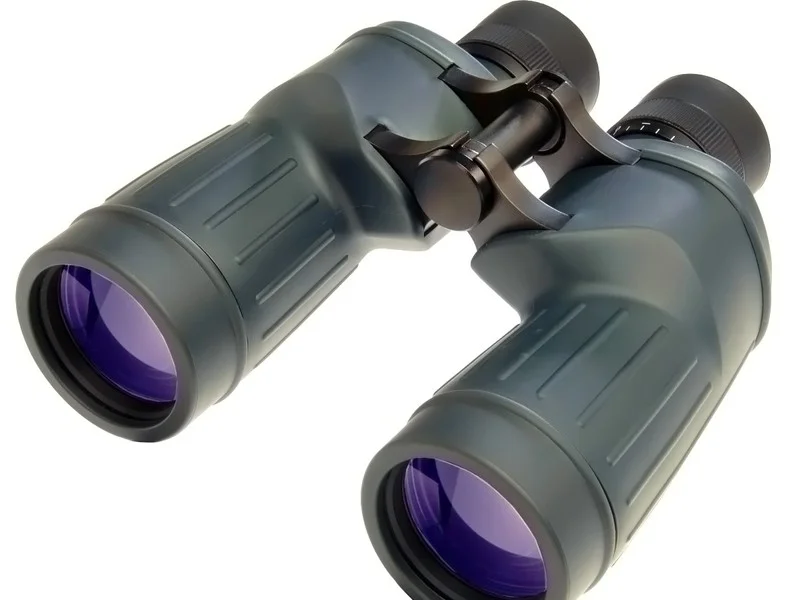
The right instrument for this constellation. 10x50s frame both halves of the Double Cluster in a single field, which a telescope usually cannot manage, and they show the Alpha Persei Cluster around Mirfak as a river of stars. They are also ideal for judging how faint Algol has become on an eclipse night.
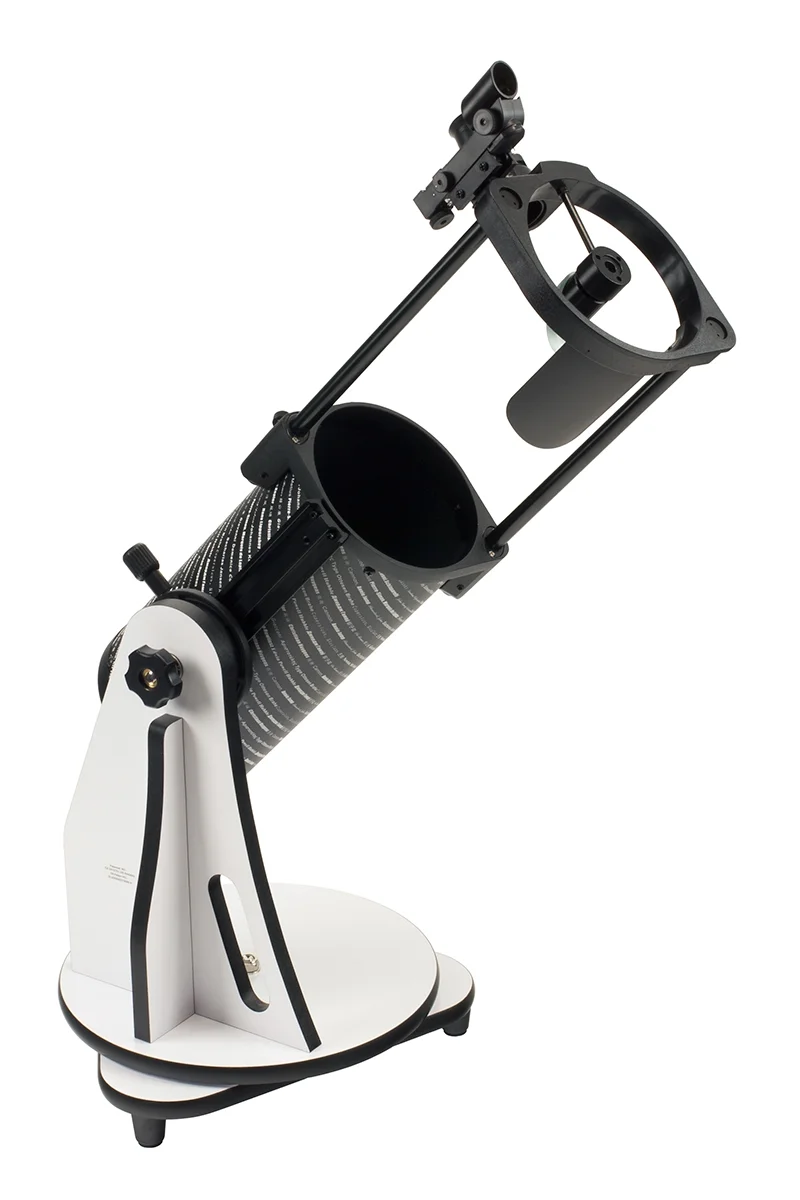
A short-focus 130mm resolves the Double Cluster into hundreds of individual stars while still fitting a decent field, and picks out the orange supergiants scattered among the blue ones. M34 becomes a loose spray of about 60 stars, and the small planetary nebula M76 turns from a faint smudge into a distinct rectangular shape.
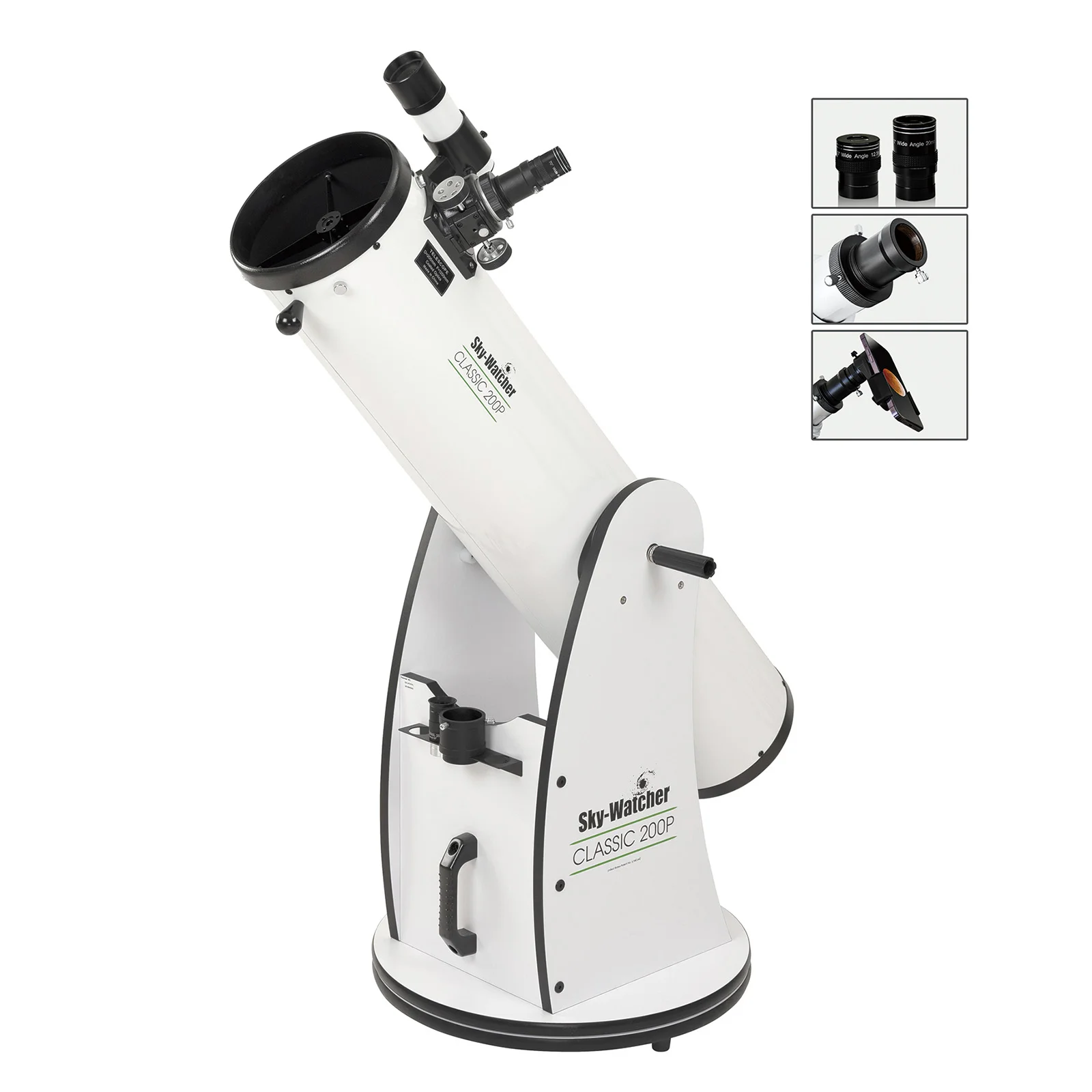
200mm brings out the structure in M76, the Little Dumbbell, which is one of the faintest objects in the Messier catalogue. It also reaches NGC 1333, a dusty reflection nebula in a nearby star-forming region, and shows the Double Cluster at its absolute best on a dark, transparent night.
Affiliate links: you pay the same price, we earn a small commission that helps keep WatchTheStars free.
Need help choosing? See our binoculars and telescope guides.
Advanced Observing in Perseus
Time an Algol eclipse
Pick a predicted minimum and start watching three hours before. Estimate Algol's brightness every twenty minutes against fixed comparison stars, then plot your figures. You will end up with a light curve of a star 90 light-years away, drawn with nothing but your eyes and a notebook.
Count the Perseids properly
Record the time of every meteor you see over an hour, along with your limiting magnitude and how much sky you can see. Send the results to the International Meteor Organization. Visual counts from amateurs still feed real research on the density of the debris stream.
Push on M76
The Little Dumbbell rewards patience. Start at 100x to find the bar, then push to 200x with an OIII filter and use averted vision to tease out the fainter wings on either side. On an exceptional night the whole thing takes on a faintly bow-tied shape.
Hunt NGC 1333
A reflection nebula in a nearby star-forming cloud, lit by young stars still gathering mass. It needs 200mm and a properly dark sky, appearing as a soft glow around a faint star. You are looking at a stellar nursery roughly 1,000 light-years away.