Taurid Meteor Shower 2026 UK
Two slow, fireball-rich streams that run through the whole of November. The Southern peak has just passed; the Northern Taurids peak on 12–13 November under a dark, moonless sky.
The Taurid meteor shower is the slowest and most fireball-rich of the year's annual showers, and in 2026 the night to aim for is Thursday 12 to Friday 13 November, when the Northern Taurids peak with a 12 per cent Moon that sets before dark. Expect 5 to 10 meteors an hour from a dark site, not hundreds, but a better chance of a ground-lighting fireball than any other shower gives you.
Taurids 2026 at a glance
| Southern Taurids | Northern Taurids | |
|---|---|---|
| Peak night | Wednesday 4 to Thursday 5 November 2026 (passed) | Thursday 12 to Friday 13 November 2026 |
| Best time (UK) | Dark 18:29 to 02:40 GMT (moonrise) | 22:00 to 04:00 GMT |
| Active | 10 September to 20 November | 20 October to 10 December |
| Max rate (ZHR) | About 5 per hour | About 5 per hour |
| Moon on peak night | 17% crescent, rose 02:40. Good | 12% crescent, sets 17:38. Excellent |
| Speed | 27 km/s (slow) | 29 km/s (slow) |
| Radiant | In Taurus, between the Pleiades and Aries; high in the south around midnight | |
| Parent body | Comet 2P/Encke | |
| Known for | Slow, bright, orange fireballs; swarm years every few years | |
When is the Taurid meteor shower in 2026?
The Taurid meteor shower peaks twice in 2026: the Southern Taurids on the night of Wednesday 4 to Thursday 5 November, and the Northern Taurids on the night of Thursday 12 to Friday 13 November. The Taurids are really two streams, both shed by Comet 2P/Encke, that run side by side across the autumn sky. The Southern branch is active from 10 September to 20 November and the Northern branch from 20 October to 10 December, so they overlap for the whole of November.
The Southern peak came on the night of 4 to 5 November, when the 17 per cent Moon did not rise until about 02:40 and the radiant stood 51 degrees up in the south at midnight. If you missed it, you have lost very little. Taurid peaks are broad and gentle, not the sharp spikes of the Geminids meteor shower or the Perseid meteor shower, and the Northern peak a week later is just as good. The Leonids follow on 17–18 November.
What time is best to watch the Taurids in the UK?
The best time to watch the Northern Taurids from the UK is 22:00 to 04:00 GMT on the night of 12–13 November 2026. Sunset in Birmingham is at 16:19, the sky is fully dark from 18:17 until 05:26, and sunrise is at 07:25. The Moon is a 12 per cent crescent that sets at 17:38, before the sky is properly dark, so it is no problem at all this year.
The radiant climbs steadily through the evening. From Birmingham it is 30 degrees up in the east at 20:00, 48 degrees in the south-east at 22:00, 59 degrees in the south at midnight, 55 degrees in the south-south-west at 02:00 and still 40 degrees up in the west-south-west at 04:00. The higher the radiant, the more meteors you see, so midnight to 02:00 is the sweet spot. The whole country is well placed: at 01:00 the radiant is 61 degrees up from Plymouth and 56 degrees from Edinburgh.
An early evening is not wasted. Taurids that arrive while the radiant is low skim the atmosphere and can cross half the sky, so 20:00 to 22:00 gives fewer meteors but longer ones. Check our stargazing tonight page for cloud cover before you go out, and our guide to whether there is a meteor shower tonight for any night in the overlap.
Where to look for Taurid meteors
Taurid meteors trace back to a radiant in Taurus, between the Pleiades star cluster and Aries, which is in the east by 20:00 GMT and high in the south around midnight. You do not need to stare at it. Lie back facing south-east in the evening or south after midnight, take in as much sky as you can, and let the meteors come to you. Streaks 30 to 60 degrees away from the Pleiades are longer and more dramatic than the short ones close to the radiant.
To confirm a meteor was a Taurid, trace its path backwards: a Taurid points to the Pleiades, while a Leonid points to the sickle of Leo in the east. The Pleiades are the easiest signpost on our UK night sky this week page.
Light pollution matters more for a weak shower, because the faint members are the ones a town sky hides. Moving from a suburban garden to one of the sites on our UK dark sky sites map can double your hourly count. The fireballs show from anywhere, including a city centre.
How many Taurid meteors will I actually see?
A realistic expectation for the Taurids is 5 to 10 meteors an hour from a dark site around midnight, when both streams are overlapping, and perhaps 2 to 5 an hour from a town garden. Each branch has a zenithal hourly rate (ZHR) of about 5, the lowest of any shower we cover. Ten minutes may show you nothing. An hour will usually show you a handful, and that handful is the point.
The Taurids have a higher share of fireballs than any other annual shower. A fireball is a meteor brighter than Venus, and the Taurids produce them because the stream contains large particles, some of them pebble-sized, hitting the atmosphere at a gentle 27 to 29 km/s. Compare that with 71 km/s for the Leonids. A big, slow particle burns for a second or two rather than a flash, often orange or yellow, and sometimes breaks up along its path. Several each November are caught by doorbell cameras and reported to the UK Fireball Alliance.
What is a Taurid swarm year and is 2026 one?
A Taurid swarm year is a year when Earth runs through a denser clump within the Taurid stream, and fireball numbers rise well above the usual few an hour. The clump is held together by Jupiter's gravity, and Earth meets it every few years rather than every November. The autumns of 2015, 2022 and 2025 were all notable, with bright Taurid fireballs filmed across the UK.
Treat 2026 as a normal Taurid season: low rates, with the occasional fireball that makes the evening. The Moon is on your side at the Northern peak, which is not true every year. Swarm encounters can be forecast, but we would rather you plan around the astronomy events calendar than around fireball forecasts that even the experts hedge.
What causes the Taurid meteor shower?
The Taurid meteor shower is caused by Earth passing through the debris of Comet 2P/Encke, a small comet that circles the Sun every 3.3 years, the shortest orbit of any known comet. Encke has been shedding dust for thousands of years and its trail has spread into a broad band, which is why the Taurids last for weeks and why there are two branches on slightly different orbits.
Many astronomers think Encke and the Taurids are the surviving pieces of a much larger comet that broke apart 20,000 to 30,000 years ago; the stream contains several small asteroids as well as dust, which is the best evidence for that idea. Our next meteor shower in the UK calendar lists every stream we follow and where each one comes from.
How to watch the Taurids: the honest version
Leave the telescope indoors. A Taurid fireball can cross 40 degrees of sky, and any optical aid narrows your view and guarantees you miss it. What matters is this:
- Pick a clear night in the overlap, not just the peak. If 12–13 November is cloudy, the nights either side are nearly as good. The is it a full moon tonight page shows how much Moon you will have to put up with.
- Give your eyes 20 minutes. No phone screens. Dark adaptation is the difference between seeing the faint Taurids and only the fireballs.
- Lie back. A recliner or camping mat lets you watch half the sky in comfort. Standing with your neck craned, you will give up in ten minutes.
- Dress for January. Mid-November, lying still, for an hour. Hat, gloves, a blanket and a flask. More of our stargazing tips are on that page.
- Stay out for an hour. At 5 to 10 an hour, a short session proves nothing. Treat every fireball as a bonus.
The Pleiades, the V-shaped Hyades with orange Aldebaran, and the Double Cluster in Perseus are all within a short hop of the radiant and look superb in a pair like the Opticron Adventurer 10x50. Our guide to binocular astronomy shows you how to find them.
What to take out for the Taurids
Kit we've reviewed in full
Meteors are a naked-eye event, and the Taurids ask for patience more than kit. The three things that make an hour outside in November bearable are a comfortable recliner, a red torch and something to look at between fireballs. The Pleiades sit right beside the radiant and are the finest binocular target in the sky. See our best binoculars for stargazing guide for more.
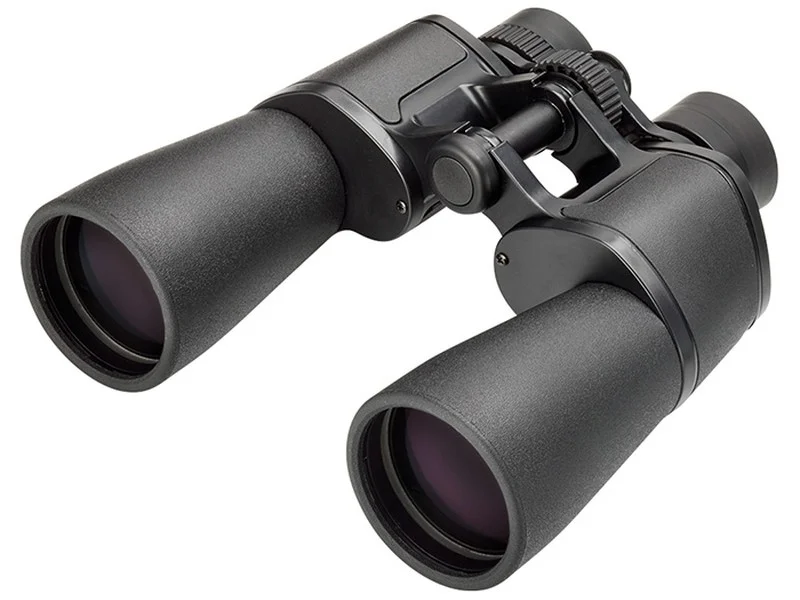
While you wait for a fireball, the Pleiades, the Hyades and the Double Cluster in Perseus are all within a few degrees of the radiant and look superb in 10x50s. The pair we point most UK beginners to first.
Lepro Rechargeable Head Torch with Red Light (2 pack)
A red head torch keeps your hands free for the flask and your eyes dark-adapted. It takes 20 minutes to get your night vision and one white phone screen to lose it.
Straame Zero Gravity Garden Recliners (set of 2)
Taurid watching is slow. A reclining chair lets you take in half the sky for an hour without a stiff neck, and makes it far more likely you are still outside when the fireball comes.
Browse all our equipment reviews
Honest, research-based recommendations for every budget.
Browse all →Affiliate links: you pay the same price, we earn a small commission that helps keep WatchTheStars free.
When are the Taurids in 2027?
The Southern Taurids peak on 4–5 November 2027 and the Northern Taurids on 12–13 November 2027. The Moon splits the two nights. On 4–5 November 2027 it is 36 per cent lit and sets at 21:01 GMT, so the sky is good from then until dawn. On 12–13 November 2027 it is 98 per cent lit and up all night, so only the fireballs will show. Make the Southern peak the one to plan for in 2027, and treat the Northern one as a fireball-only night.