Stargazing by region · Scotland · Updated 6 November 2026
Stargazing in Scotland: Where to Go and What You'll See
The best stargazing in Scotland is at Galloway Forest Park (Bortle 2, the UK's first Dark Sky Park), the Isle of Rum (Bortle 1, an International Dark Sky Sanctuary) and Tomintoul and Glenlivet in the Cairngorms (Bortle 2 to 3). Scotland also has the best northern lights odds in the UK and three island Dark Sky Communities. Enter a postcode to rank the ten Scottish sites by distance from you.
Dark sky sites in Scotland: map
Driving times are rough estimates and distances are straight-line. Check access and opening before you travel; most Discovery Sites are simple car parks with no facilities.
Best dark sky sites in Scotland
Scotland holds one Dark Sky Sanctuary, two Dark Sky Parks and four Dark Sky Communities, and the darkest of them, Loch Trool and the Isle of Rum, reach Bortle 1 to 2. That puts Scotland level with the darkest places in Europe. The ten sites below are pulled from our UK dark sky sites map, sorted darkest first.
Galloway Forest Park in Dumfries and Galloway was the first Dark Sky Park in the UK, certified at Gold Tier in 2009. It is 300 square miles of forest and moorland with almost nobody living in it, and the three Forestry and Land Scotland visitor centres at Kirroughtree, Clatteringshaws and Glentrool give you somewhere to park with a toilet and a clear sky. Loch Trool, reached by the minor road from Glentrool village to Bruce's Stone, is often called the darkest spot on the British mainland.
Tomintoul and Glenlivet, on the northern edge of the Cairngorms, became a Dark Sky Park in 2018. The Glenlivet Estate has three dedicated dark sky viewing car parks, and the village of Tomintoul sits high enough that the sky stays dark almost all the way round. The Sanctuary and Community islands, Rum, Coll and North Ronaldsay, are a different kind of trip: a ferry, a night or two, and a sky with no street lights at all.
| Site | Designation | Bortle | Getting there | Map |
|---|---|---|---|---|
| Isle of Rum Sanctuary | International Dark Sky Sanctuary (2024) | 1 | Reached by CalMac ferry to Kinloch; no need for a car on the small island road network. | Directions |
| Loch Trool Discovery Site | Reputedly the darkest spot in the UK | 1-2 | Free car park at Bruce's Stone, via minor road from Glentrool village. | Directions |
| North Ronaldsay Community | International Dark Sky Community (2021) | 1-2 | Reached by inter-island ferry or flight from Kirkwall; island roads only. | Directions |
| Coll Community | International Dark Sky Community (2015) | 1-2 | Reached by CalMac ferry to Arinagour. | Directions |
| Galloway Forest Park Park | Gold Tier International Dark Sky Park (2009) | 2 | Multiple forest car parks; Kirroughtree and Clatteringshaws visitor centres run stargazing events. | Directions |
| Clatteringshaws Loch Discovery Site | One of the darkest points in Galloway Forest Dark Sky Park | 2 | Visitor centre car park on the A712. | Directions |
| Kirroughtree Visitor Centre Discovery Site | Within Galloway Forest Dark Sky Park | 2-3 | Forestry Scotland visitor centre car park near Newton Stewart. | Directions |
| Tomintoul and Glenlivet (Cairngorms) Park | International Dark Sky Park (2018) | 2-3 | Village car parks; three dedicated dark sky viewing car parks nearby. | Directions |
| Moffat Community | International Dark Sky Community (2016) | 4 | Small market town; on-street and town car parks. | Directions |
| Mills Observatory Observatory | Public observatory: the UK's first purpose-built public observatory | 6-7 | Balgay Hill, Dundee; free entry, on-site parking. | Directions |
Bortle ratings are typical for a clear moonless night; designations are as listed on DarkSky International's register.
When is the best time to go stargazing in Scotland?
The best time to go stargazing in Scotland is from September to March, and the single most important thing to check is the Moon. Scotland sits far enough north that the sky never reaches full astronomical darkness from early May to early August; in Shetland and Orkney the midsummer twilight, the simmer dim, lasts all night.
The Milky Way season in Scotland runs from late July to October. The bright band through Cygnus passes overhead on August and September evenings, and from a Bortle 1 or 2 island it is bright enough to cast a faint shadow. The galactic core in Sagittarius never climbs far above a Scottish horizon, so if the core is what you want, pick a site with an open view to the south, such as Galloway's southern lochs or the south coast of Coll. Our guide to how to see the Milky Way from the UK covers the method.
Plan trips for the week either side of new moon. A full moon turns a Bortle 1 sky into a Bortle 5 one, and the long Scottish drive is wasted if you arrive under moonlight. Check is it a full moon tonight before you book. The best meteor nights are the Perseids in August, which clash with the short nights, and the Geminids in December, which do not; our calendar of the next meteor shower in the UK has every peak date.
Scotland is the best place in the UK to see the northern lights. The aurora is most often visible from the north coast, Caithness, Orkney, Shetland, the Moray coast and the Outer Hebrides, and in a strong storm it reaches Galloway and the Borders. You need a clear horizon to the north, ideally over the sea, and a site away from town lights. Check northern lights tonight for the live reading and our UK aurora forecast for the next few nights. Activity peaks around the equinoxes, in September and October and again in March.
What can you see from Scotland's dark skies?
From a Bortle 1 or 2 site in Scotland you can see the Milky Way, the Andromeda Galaxy, the Double Cluster in Perseus and the zodiacal light with nothing but your eyes. Thousands of stars are visible rather than the few hundred you get from a town, and Cassiopeia and the Plough in Ursa Major become hard to pick out because of the stars around them.
Through 10x50 binoculars the Pleiades fill the view, the Beehive Cluster shows dozens of stars, and the star clouds of the summer Milky Way break into individual points. A small telescope adds Saturn's rings, Jupiter's four big moons and the Orion Nebula in winter, plus globular clusters that a town sky swallows. For what is up on any given night, use our stargazing tonight page, which is calculated for the UK every day, and ISS passes tonight lists when the space station crosses the sky.
Astronomy clubs in Scotland
There are 21 astronomy societies in Scotland in our directory, from Stornoway to the Borders. Most hold monthly talks in winter, run public observing nights, and welcome beginners without a telescope of their own.
- Aberdeen Astronomical SocietyAberdeenshire
- Aberdeen West Astronomy Group5 The Haughs, Clinterty, Kinnellar, Aberdeen, Aberdeenshire
- Ancrum Astronomy ClubAncrum Village Hall, Roxburghshire
- Association of Falkirk AstronomersStirlingshire
- Astronomical Society of EdinburghEdinburgh
- Astronomical Society of GlasgowRoyal College Building, University of Strathclyde, Glasgow
- Ayrshire Astronomical SocietyAyr Academy, Ayr, Ayrshire
- Bute Astronomical ClubPavilion Cafe, The Pavilion, Rothesay, Argyllshire
- Caithness Astronomy GroupCaithness
- Clydesdale Astronomical SocietyBank Hall, Climpy road, Forth, Strathclyde, ML11 8BL
- Dalgety Bay Astronomy ClubFife
- Dumfries Astronomy SocietyGeorgetown Community Centre, Lochvale House, Georgetown Rd, Dumfries, Dumfriesshire, DG1 4DF
- Dundee Astronomical SocietyMills Observatory, Balgay Hill, Dundee, DD2 2UB
- Galloway Forest Astronomical Society5 Elm Grove, Newton Stewart, Dumfries and Galloway, DG8 6JT
- Helensburgh Astronomical SocietyBraeholm, 31 East Montrose Street, Helensburgh, Argyll & Bute, Argyllshire
- Highlands Astronomical SocietySmithton Culloden Free Church, Smithton, Inverness, Highlands and Islands, IV2 7WX
- Kintyre and Gigha Night Sky GroupCampbeltown Picture House, 26 Hall St, Campbeltown, Argyllshire, PA28 6BU
- Moray Astronomy Club (SIGMA)Lhanbryde Community Centre, Robertson Road, Lhanbryde, near Elgin, Morayshire, IV30 8QQ
- Renfrewshire Astronomical SocietyThe Secret Collection, 9 High St, Paisley, Renfrewshire, PA1 2AE
- Stirling Astronomical SocietySmith Museum & Art Gallery, Dumbarton Road, Stirling, Stirlingshire, FK8 2RQ
- Stornoway Astronomical SocietyStornoway Coastguard Station, Isle of Lewis, HS1
Galloway Forest Astronomical Society in Newton Stewart and Moray Astronomy Club near Elgin are the ones to contact if you are visiting the two Dark Sky Parks. The full list, with a map, is on our astronomy clubs UK directory.
Where to stay for stargazing in Scotland
Galloway has the most choice: Newton Stewart, Glentrool and the villages around Loch Ken have B&Bs, cottages and campsites that advertise themselves as dark-sky-friendly, with outside lights off on request and a sky chart in the hallway. Tomintoul is a small village with a couple of hotels and self-catering, and the Glenlivet Estate has a campsite. Book somewhere inside the park rather than in a town on its edge, so that a clear spell at midnight means stepping outside rather than driving.
The islands need more planning. Rum has a bunkhouse, a campsite and a handful of beds, and the ferry from Mallaig does not run every day in winter. Coll is reached by CalMac ferry from Oban and has a hotel and self-catering. North Ronaldsay has a bird observatory with guest accommodation and a flight or ferry from Kirkwall. On all three, book months ahead and allow a spare night for weather.
Practical points: Scottish weather changes by the hour, so give yourself three or four nights rather than one. The west coast is wetter; Moray and the east are drier. Midges are fierce from May to September at dusk, which is another reason to go in autumn or winter. Mobile signal is patchy at the best sites, so download maps and star charts before you leave. Our stargazing tips page covers what to wear and how long to let your eyes adapt.
What to take to a dark sky site
Kit we've reviewed in full
A dark sky is the biggest upgrade there is, and the Milky Way needs no kit at all. These three cover the first few trips: binoculars that show hundreds of extra stars, a telescope that fits in a boot, and a red torch so you keep your night vision. See our best binoculars for stargazing guide for more.
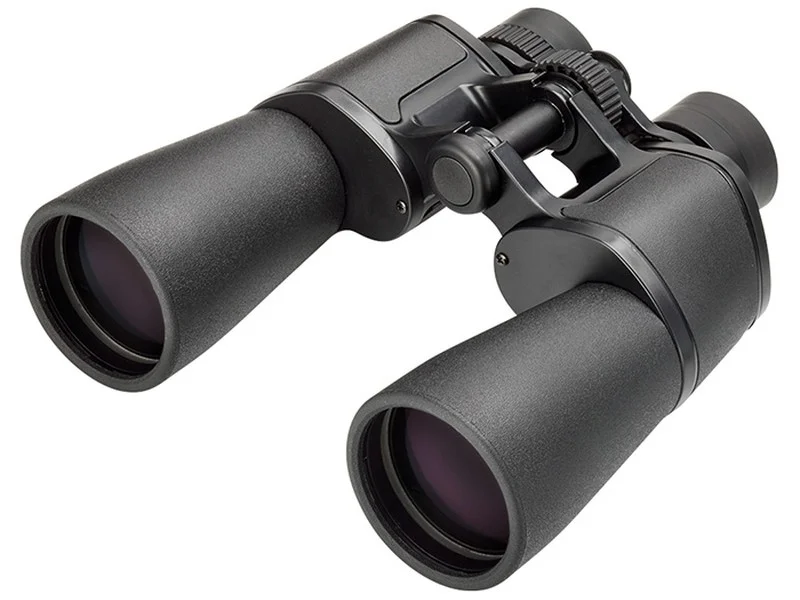
A 10×50 hangs round your neck all night and shows the Andromeda Galaxy, the Double Cluster and the star clouds of the Milky Way from any Bortle 2 or 3 site.
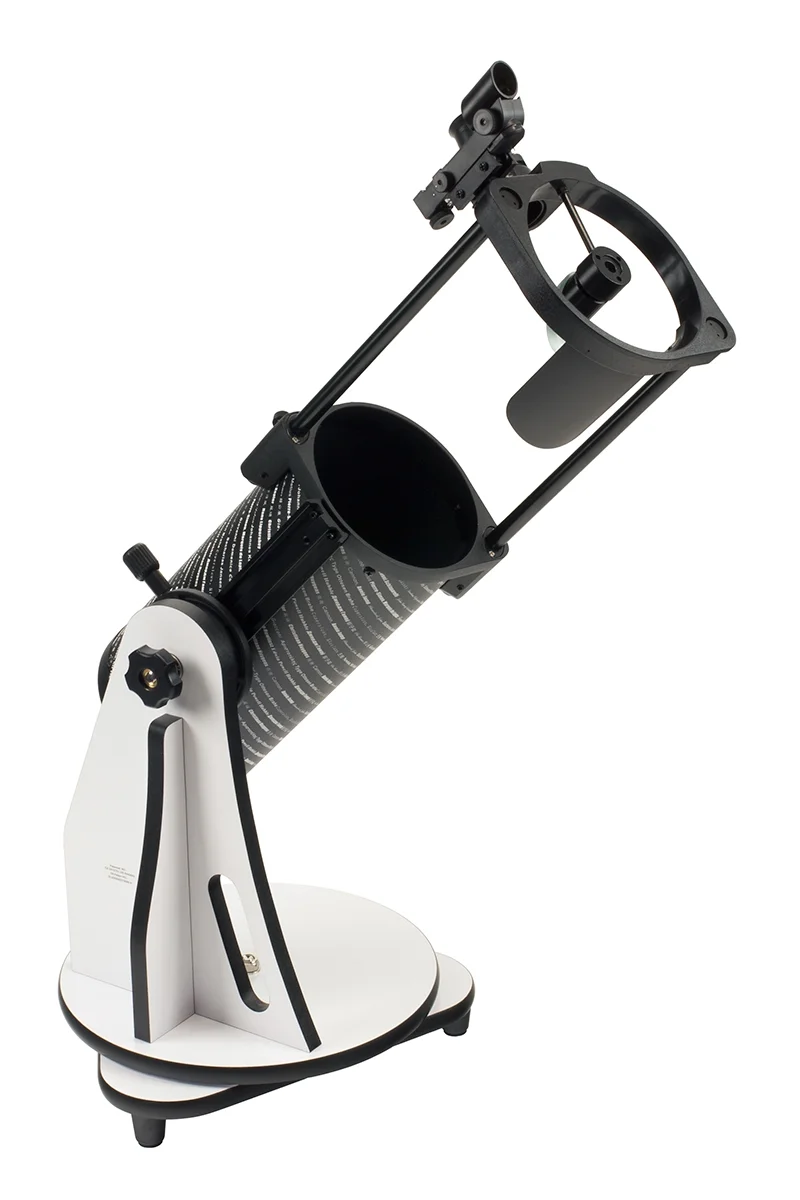
Collapses to fit a car boot or a rucksack. 130mm of aperture shows Saturn's rings, Jupiter's moons and dozens of deep-sky objects from a dark site.
Lepro Rechargeable Head Torch with Red Light (2 pack)
Two red modes on their own switch, USB rechargeable, hands free. White light is the one thing that gets you tutted at in a dark sky car park.
Browse all our equipment reviews
Honest, research-based recommendations for every budget.
Browse all →Affiliate links: you pay the same price, we earn a small commission that helps keep WatchTheStars free.
You do not need a telescope for a Scottish dark sky site, and on a first trip we would leave it at home. A pair of Opticron Adventurer 10x50 binoculars, around £84, shows more from Galloway than a telescope shows from Glasgow. If you want a telescope that travels, the Sky-Watcher Heritage 130P collapses to fit a boot and sets up in a minute. For a family trip, our guide to the best telescope for a child has options that survive a campsite. New to all this? Start with stargazing for beginners.