Seestar S50 vs Dwarf 3: Which Smart Telescope Should You Buy?
Short answer: buy the Seestar S50 if you want the easiest first night and the biggest community to lean on; buy the Dwarf 3 if you want the sharpest images for the least money and are happy with an app that's a step behind. The Seestar has the bigger lens, 50mm against the Dwarf 3's 35mm, so it gathers roughly twice the light per exposure, but both have a built-in dual-band filter for nebulae from light-polluted skies, and the Dwarf 3 answers with a sensor that has four times the pixels, a native equatorial mode and a second wide-angle lens, so the old "Seestar for nebulae, Dwarf for everything else" advice is out of date. The real differences are sensor, second lens, app maturity and what's in the box.
The two telescopes, and the one we'd add
Kit we've tested and reviewed in full
Both are stocked by First Light Optics, a UK specialist, with UK warranty and returns. Prices on the cards are kept current from our product data.
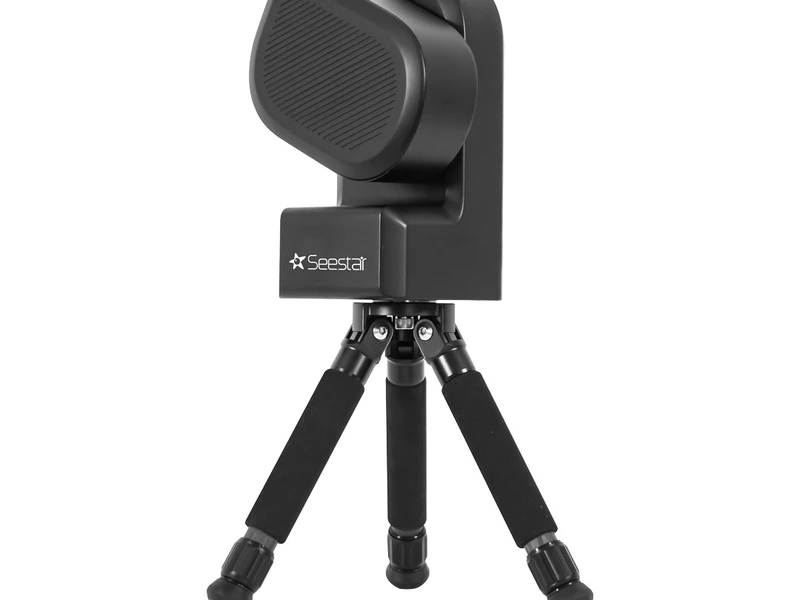
The most polished smart telescope experience: a mature app, a huge community for help, and a tripod, case and dew heater in the box.
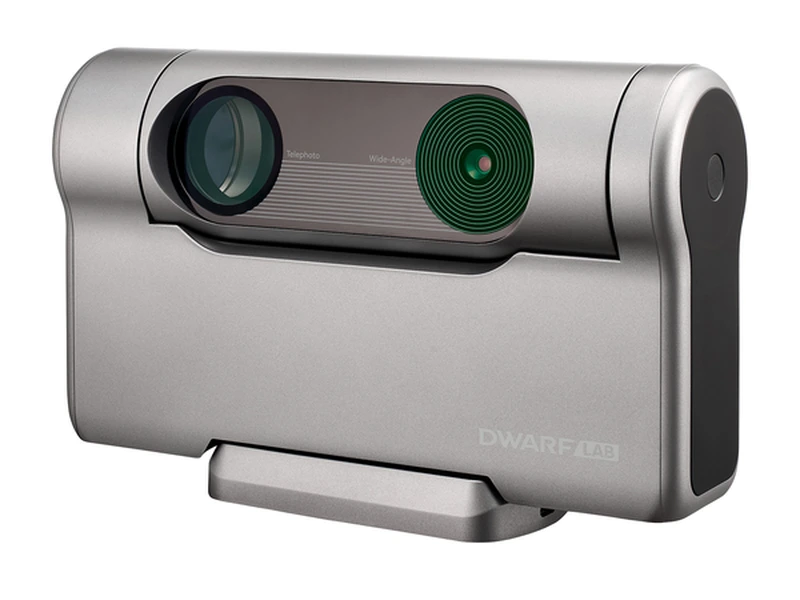
Higher-resolution sensor, a second wide-angle lens for timelapses and the Milky Way, equatorial mode for longer exposures, and £80 less.
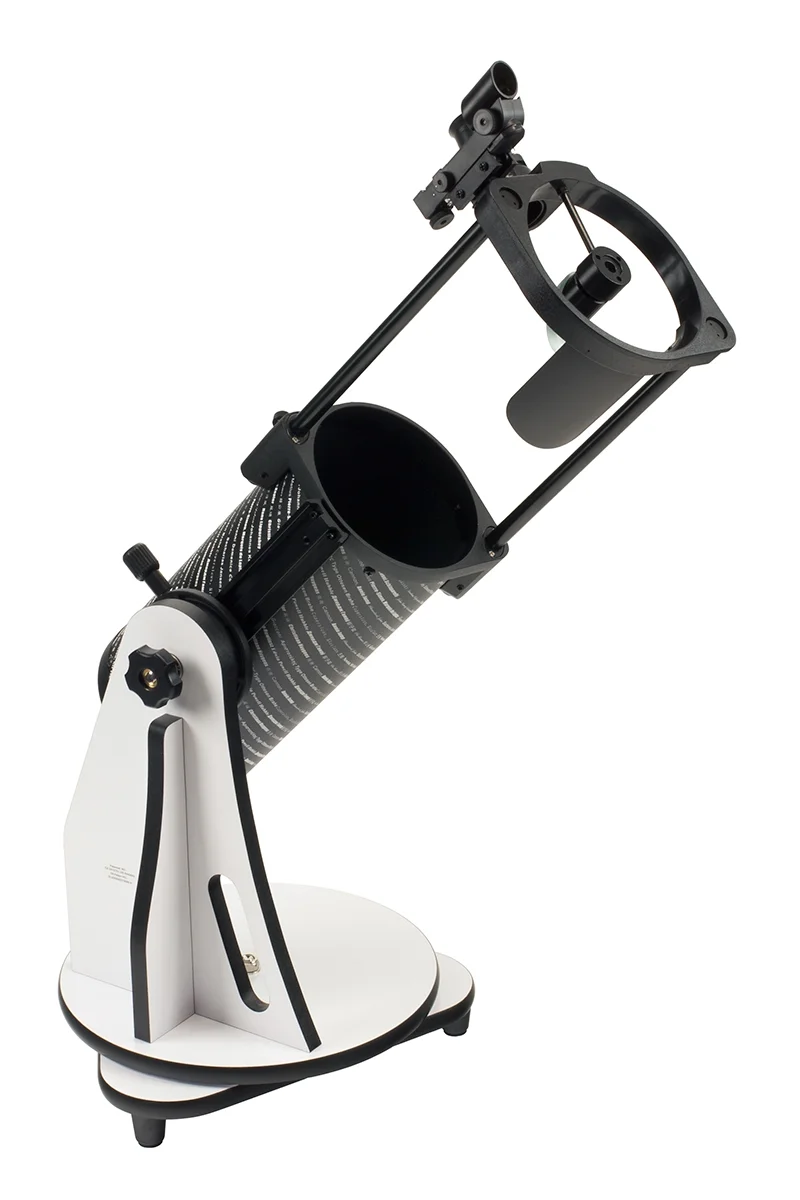
If what you actually want is to see Saturn's rings with your own eye, neither smart scope does that. This does, for under £200.
Affiliate links: you pay the same price, we earn a small commission that helps keep WatchTheStars free.
| Spec | ZWO Seestar S50 | DwarfLab Dwarf 3 |
|---|---|---|
| Optics | 50mm f/5 triplet APO, 250mm | 35mm f/4.3, 150mm, plus 3.4mm f/2 wide lens (IMX307, 2MP) |
| Main sensor | Sony IMX462, 2.1MP | Sony IMX678, 8.3MP |
| Built-in filters | Dual-band Hα + OIII (switchable) | Dual-band Hα + OIII, UV/IR-cut astro, visible (filter wheel) |
| Mount | Motorised alt-az; EQ mode via firmware with a tilt | Motorised alt-az; native equatorial mode |
| Battery | 6,000mAh, about 6 hours | Built-in, about 5.5 to 6.5 hours imaging |
| Storage | 64GB | 128GB |
| Weight | 2.5kg with tripod | About 1.35kg |
| In the box | Carbon tripod, solar filter, case, dew heater | Magnetic solar filter, carry bag, cable; tripod sold separately |
| Solar mode | Yes, auto-find and track | Yes, magnetic filter included |
| Wide-field / timelapse | Limited (mosaic mode stitches frames) | Yes, dedicated wide lens shoots alongside |
| UK price | Around £539 | Around £459 |
Seestar S50 vs Dwarf 3 for nebulae
This is where most people start, and the gap has narrowed rather than closed. The Seestar's 50mm lens gathers roughly twice the light of the Dwarf 3's 35mm per exposure, but both have a dual-band filter that passes hydrogen-alpha and oxygen-III light while blocking most of the orange sky glow over a UK town. Point either at the Orion Nebula from a Bortle 7 garden, leave it stacking for 45 minutes, and you'll get a picture you'd have been proud of with £2,000 of kit ten years ago.
The Dwarf 3 pulls ahead on the final image. Its 8.3MP sensor has four times the pixels of the Seestar's 2.1MP chip, so the same nebula comes out larger and with finer detail, and its native equatorial mode allows longer sub-exposures without star trailing. The Seestar wins on getting there: its app's target list, framing and stacking preview are more polished, and when something goes wrong there are far more owners on Stargazers Lounge and Facebook who've had the same problem.
Verdict: Dwarf 3 for the better picture, Seestar S50 for the smoother night.
Galaxies, star clusters and the Milky Way
Galaxies are broadband targets, so the dual-band filter comes off for both (the Seestar switches it out; the Dwarf 3 rotates to its UV/IR-cut filter). Here the Dwarf 3's sensor advantage is clearer, because galaxies like M81 and M51 are small and reward resolution. Andromeda is the exception: it's so large that the Seestar's mosaic mode or the Dwarf's wide lens is needed to fit it in.
The Dwarf 3's second lens is the feature the Seestar has no answer to. It's a 24mm f/1.75 wide-angle camera that shoots at the same time as the main telephoto, which means all-sky timelapses, meteor-shower nights, the Milky Way arch and constellation shots without swapping anything. If you've read our Milky Way guide and want to photograph it, this is the one.
Verdict: Dwarf 3.
The Moon and planets
Both produce a good full-disc Moon shot, and the Dwarf 3's extra resolution shows more crater detail along the terminator. Planets are the honest weak spot of every small smart telescope: Jupiter and Saturn are tiny discs with a hint of belts and rings, and Mars is a dot. Neither is what you'd buy for planets. A Heritage 130P with a phone adapter will beat both for a third of the price, and our moon phase tool tells you when the terminator is best placed.
Verdict: Dwarf 3 by a little; neither for planets.
The Sun
Both ship with a solar filter and have a solar mode that finds and tracks the Sun for you, which makes sunspots and partial eclipses a two-minute job; several of the best UK photos of the August 2026 eclipse came from Seestars in back gardens, and the Dwarf 3's magnetic clip-on filter is if anything quicker to fit. Whichever you use, read our safe solar observing guide first: an unfiltered smart telescope pointed at the Sun is a dead sensor.
Verdict: A draw; the Seestar's solar mode is a touch more automatic.
App, community and living with it
The Seestar app is the more finished product: clearer target lists, better live previews, a plan mode that queues targets through the night, and firmware that has added EQ mode, mosaics and better stacking since launch. ZWO also sells the S30 and S30 Pro on the same app, so the ecosystem is large. The Dwarf app has caught up a lot and its scheduling is arguably more flexible, but it still has the odd rough edge, and English-language help is thinner.
Battery is a wash (both manage around six hours of imaging on a charge), storage favours the Dwarf 3 (128GB against 64GB), and weight favours the Dwarf 3 (it fits in a coat pocket without its tripod). Kit in the box favours the Seestar: tripod, carry case and dew heater are included, whereas the Dwarf 3 needs a photographic tripod with a standard quarter-inch screw if you don't already own one.
Verdict: Seestar S50 for the app and support, Dwarf 3 for storage and portability.
Price and value in the UK
At around £459 the Dwarf 3 is about £80 cheaper than the £539 Seestar S50. Add a tripod (£40 to £80) to the Dwarf and the two land within a few pounds of each other with the same accessories. So the real question isn't price, it's whether the Dwarf 3's higher-resolution sensor and second lens matter more to you than the Seestar's easier app and bigger community.
If you're choosing between these and a conventional telescope, our equipment guides and stargazing for beginners page cover the trade-offs, and the smart telescope roundup adds the cheaper Seestar S30 and Dwarf Mini to the picture.
Which should you buy?
- First smart telescope, want it to just work, no tripod at home: Seestar S50.
- Want the sharpest deep-sky images for the money and a wide-field camera for the Milky Way and meteor showers: Dwarf 3.
- Mostly want to look through an eyepiece: neither. Get a Dobsonian and come back to smart scopes later.
- Budget under £400: the Seestar S30 or Dwarf Mini, both in our roundup.
Both of these are the budget end of the market. If you can spend more, the new ZWO Seestar S50 Pro (£999) and DwarfLab's 90mm Draco (£1,349, pre-order) are the step up, compared in our Seestar S50 Pro vs Dwarf Draco vs Vespera II guide.