Are we inside a nebula?
Sort of. The Sun is skimming the edge of a wisp of warm gas called the Local Interstellar Cloud, which floats inside a 1,000 light-year hole in the Milky Way blown out by supernovae. Neither glows, neither can be seen, and one of them is falling on Antarctica right now. Two or three million years ago, a far denser cloud may have reached Earth itself.
What is the Local Interstellar Cloud?
The Local Interstellar Cloud is a patch of warm, mostly hydrogen gas roughly 30 light-years across that the Solar System is passing through right now. Astronomers shorten it to LIC and nickname it the Local Fluff. The Sun is drifting through it at about 26 kilometres per second, and so is everything the Sun holds: ask where the Solar System ends and most people say Pluto, or the Kuiper Belt, or the Oort Cloud, but keep going past all of them and you are still inside this cloud.
It is not alone. The LIC is one of a loose cluster of about 15 small clouds within 50 light-years of us, all flowing in roughly the same direction, away from the Scorpius-Centaurus group of young stars. Our nearest neighbours in the cluster are the G cloud, which Alpha Centauri sits in, and the Blue cloud in the direction of Sirius. Astronomers map them by looking at the light of nearby stars and reading the faint absorption lines each cloud leaves in it, like fingerprints on a window.
How thin is thin? The LIC holds about 0.3 particles per cubic centimetre: roughly 0.2 hydrogen atoms plus a scattering of free electrons. A cubic metre of it contains around 300,000 atoms, which sounds a lot until you learn that a cubic centimetre of the air in front of you holds about 25 million trillion molecules. The cloud is about a hundred billion billion times thinner than air, and emptier than the best vacuum chambers on Earth. It only counts as a cloud because the space around it is emptier still.
The gas is warm, around 7,000 K, but so sparse that the warmth means nothing. A thermometer placed in it would simply radiate away to the temperature of deep space. It is partly ionised, threaded by a weak magnetic field, and it carries a sprinkling of dust grains. That dust turns out to matter, as we will see.
Is the Local Interstellar Cloud a nebula?
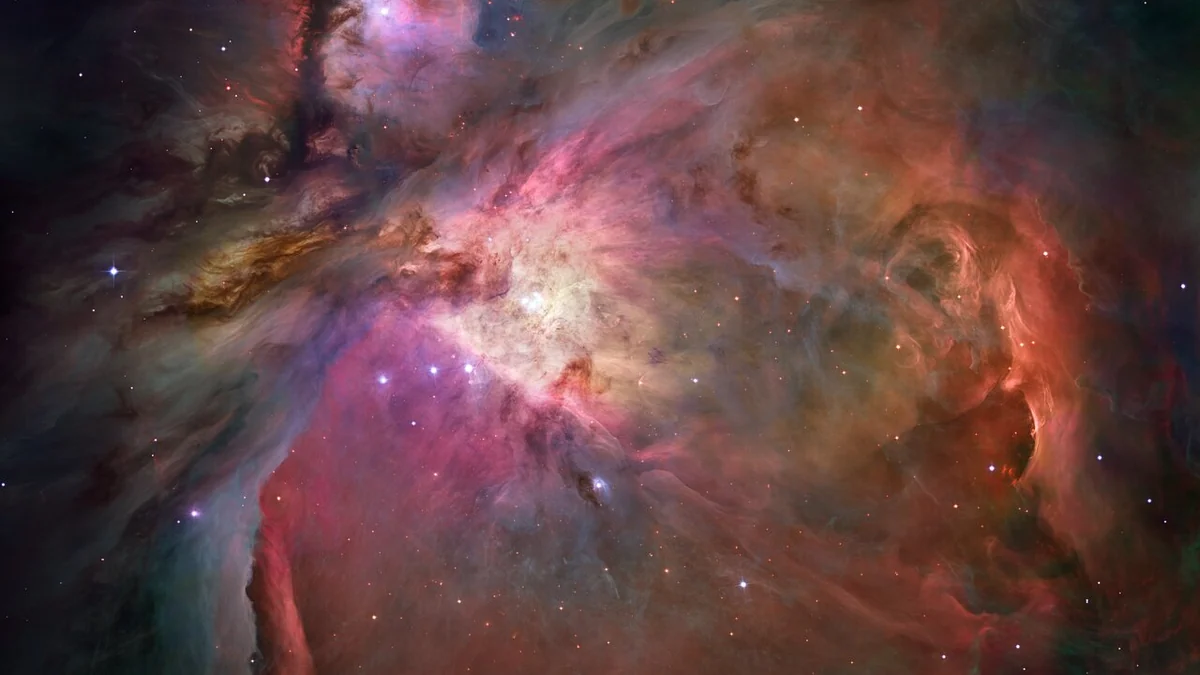
Not in the everyday sense. A nebula is usually taken to mean a cloud of gas and dust dense enough to glow or to block starlight, and the Local Interstellar Cloud does neither. It depends what you mean, though. The word nebula covers everything from glowing stellar nurseries to the invisible gas between stars, and the LIC is firmly at the invisible end. The Orion Nebula, the brightest one visible from the UK, packs thousands to tens of thousands of particles into each cubic centimetre and is lit from inside by hot young stars. Our cloud has no stars forming in it, nothing to light it, and roughly ten thousand times fewer atoms. If you could somehow fly a thousand light-years out and look back, you would not see it. We call it a cloud because it is denser than its surroundings, which is a bit like calling a patch of mist a cloud because the rest of the room is drier.
Is the Sun inside the Local Interstellar Cloud, or at its edge?
The Sun is right at the edge of the Local Interstellar Cloud and on the way out. We arrived recently and we will not be staying long.
For a long time the standard picture had the Sun comfortably inside the LIC. The most detailed maps of the cloud, built by Jeffrey Linsky of the University of Colorado and Seth Redfield of Wesleyan University from the absorption lines of 62 nearby stars, tell a different story. In their 2019 model the cloud stretches about 6 light-years from us in one direction and essentially zero in the opposite direction. We are not in the middle of the fluff. We are brushing its outer skin.
How long we have been here is argued over. Priscilla Frisch of the University of Chicago put our entry within the past 10,000 years. Gunther Korschinek of the Technical University of Munich, working from iron isotopes in Antarctic snow, suggested about 40,000 years. Either way it is an eyeblink against the Sun's 4.6-billion-year life. At 26 km/s the Solar System covers a light-year every 11,500 years or so, which means we are skimming a corner of the cloud rather than ploughing through its heart.
When will the Sun leave the Local Interstellar Cloud?
Within the next 3,000 years, and possibly much sooner. That is the figure from the Linsky and Redfield models, and nobody expects the exit to be noticeable from Earth.
Leaving soon: Linsky and Redfield's analysis gives the Sun fewer than 3,000 years inside the LIC, and a 2020 update tightened that to fewer than 1,900 years, with the honest footnote that it could happen "perhaps this year". The heliosphere's measured inflow of helium already disagrees slightly with the LIC's velocity, a hint that we may be feeling the next cloud over. What comes after is either the G cloud, which Alpha Centauri sits in, or a hotter, fully ionised gap between clouds.
None of this would be noticeable from Earth. The change in gas density would be too small to affect the planets, the climate or anything you could see in the UK night sky this week. The heliosphere, the great magnetic bubble the solar wind inflates around the Sun, would shrink or stretch a little, and the two Voyagers would record it. That is all. The interesting part is what happens when the cloud is not thin.
What is the Local Bubble, and who blew it?
Zoom out from the fluff and you find it floating inside something far larger: a thousand-light-year hole in the Galaxy with a violent history.
The Local Bubble is a cavity of extremely hot, extremely thin gas, about 1,000 light-years across, that contains the Sun, the LIC and most of the bright stars in the UK sky. Its gas is a tenth as dense as the LIC, around 0.05 atoms per cubic centimetre, which is why the fluff shows up as a cloud at all. Astronomers have known about the bubble since the 1970s, from the strange lack of absorbing gas towards nearby stars and from a faint glow of soft X-rays coming from every direction. Where it came from took much longer to work out.
The answer arrived in January 2022, in a paper in Nature led by Catherine Zucker of the Harvard-Smithsonian Center for Astrophysics. Using the Gaia space telescope's precise positions and motions for young stars within 650 light-years, her team traced their paths backwards in time. The stars all pointed to the same place: a burst of star formation and then supernovae near the bubble's centre that began about 14 million years ago. Around 15 stars exploded over a few million years (the paper's range is 8 to 26). Each blast swept the surrounding gas outwards like a snowplough, and the piled-up shell is still expanding today at about 6.7 km/s.
The striking result was where the shell is now. Nearly every star-forming cloud within 650 light-years of the Sun sits on the bubble's surface: Taurus, Ophiuchus, Lupus, Chamaeleon, Musca, Corona Australis and the Pipe Nebula. Seven nurseries, all on one wall. The supernovae did not just empty the bubble; they compressed the gas at its edge until it collapsed into new stars. The one nearby exception is the Perseus cloud, which belongs to a neighbouring bubble, and the Orion Nebula sits a little further out still, beyond our wall along a vast ribbon of gas called the Radcliffe Wave. When you look at the dark lanes of Taurus east of the Pleiades on a winter night, you are looking at a star factory that our own bubble built.
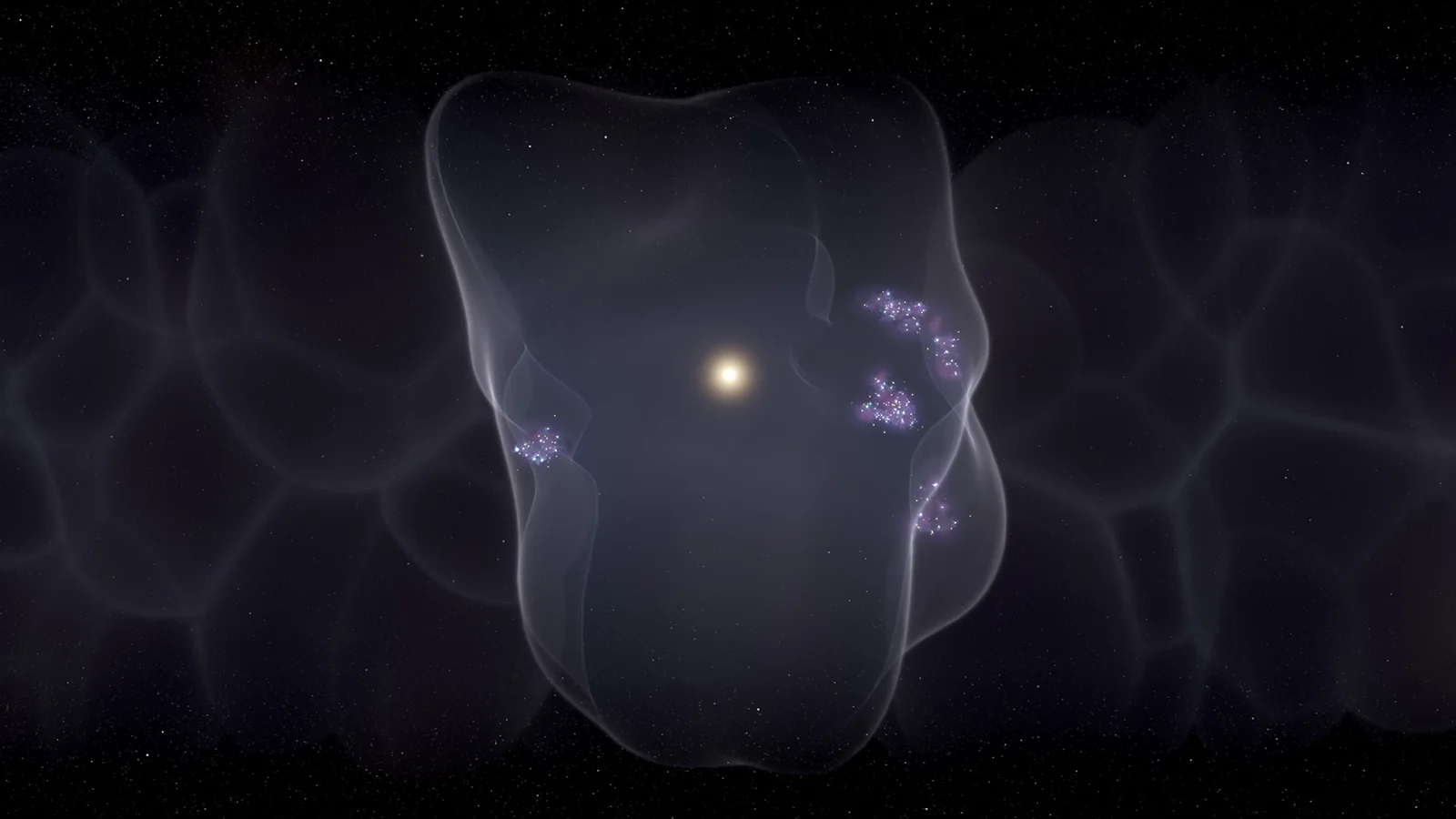
We are a visitor, not a native: The Sun had nothing to do with blowing the bubble. Zucker's team calculated that it wandered in about 5 million years ago, and by luck it now sits close to the centre. "When the first supernovae that created the Local Bubble went off, our Sun was far away from the action," co-author João Alves of the University of Vienna said at the time. Fourteen million years ago our ancestors, such as they were, would have had a very different sky.
The Local Bubble is not unique. The Milky Way's disc looks to be riddled with these cavities, like the holes in Swiss cheese, each marking a cluster of dead stars. Ours happens to be the one we can study from inside. Its wall runs through Taurus, which is why that part of the winter sky is so rich in dark dust, and just beyond it lie Orion and the clouds of Perseus, bubbles of their own.
Did the Solar System pass through a dense interstellar cloud 2 million years ago?
Possibly. A 2024 study found that the Sun crossed a cold, dense cloud 2 to 3 million years ago, and that it may have squeezed the Sun's protective bubble to inside Mercury's orbit. The Local Interstellar Cloud cannot do that. Not every cloud on the Sun's path has been so gentle.
What is the heliosphere, and why does it matter?
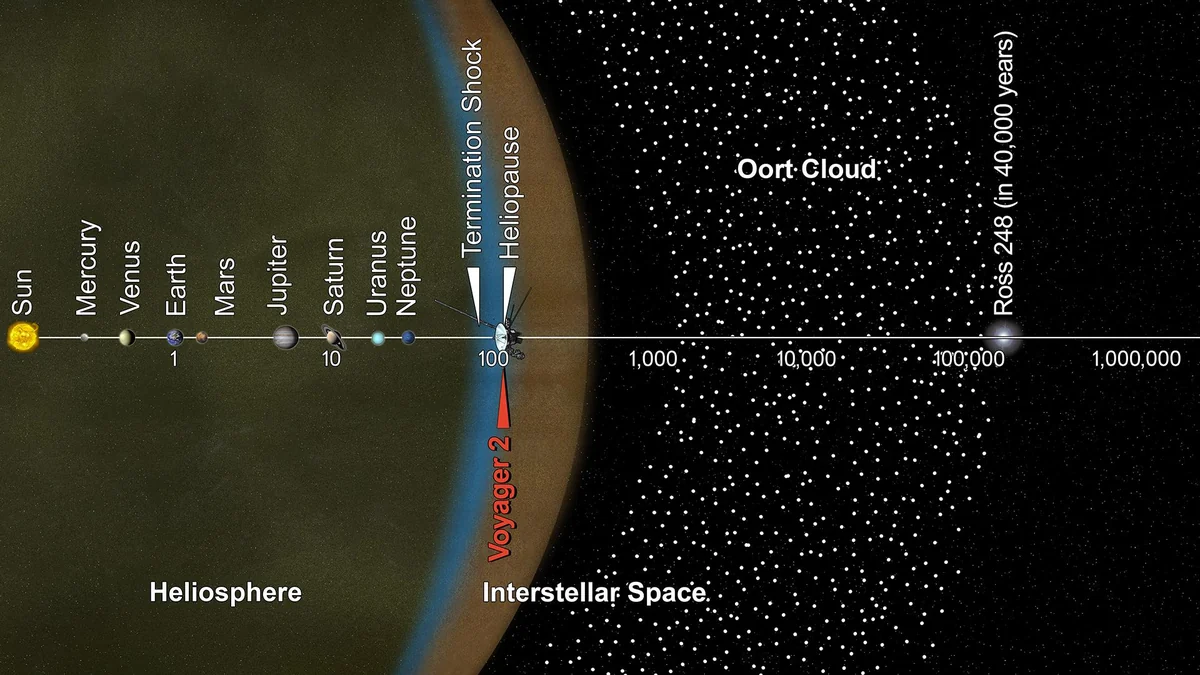
The heliosphere is the vast bubble of solar wind and magnetic field that the Sun blows around itself, and it is our shield against the gas between the stars. The solar wind inflates it to roughly 120 astronomical units in the direction we are travelling, about three times the distance to Pluto, and it deflects most of the galactic cosmic rays and all of the neutral interstellar gas that would otherwise reach the planets. How big it is depends on a tug of war between the pressure of the solar wind pushing out and the pressure of the interstellar gas pushing in. In the thin LIC, the wind wins easily. Put the Sun inside a dense cloud and the balance flips.
In June 2024 Merav Opher of Boston University, with Abraham Loeb and Joshua Peek, published a paper in Nature Astronomy arguing that this happened recently. Tracing the Sun's path back through the Galaxy, they found that between 2 and 3 million years ago it crossed a structure called the Local Ribbon of Cold Clouds, a chain of cold, dense gas clouds, at a point towards the constellation Lynx. If that cloud was then as dense as it is now, more than 3,000 hydrogen atoms per cubic centimetre, ten thousand times the LIC, their model shows the heliosphere being crushed to about 0.22 AU. Mercury orbits at 0.39 AU. Earth, Mars and every outer planet would have been outside the Sun's protective bubble, sitting directly in cold interstellar gas.
What would that have meant? Far more galactic cosmic rays reaching the ground, a flood of neutral hydrogen into the upper atmosphere, and an increased rain of interstellar dust. Opher's team argue it could have cooled the climate and increased radiation at the surface, and they note that the timing overlaps a global cooling trend around 2 million years ago, when human ancestors were walking the East African plains. They are careful to call it a possible exposure. How long it lasted is unknown, anywhere from a couple of hundred years to a million.
What is the iron-60 evidence for a near-Earth supernova or cloud?
Iron-60 is a radioactive form of iron that only forms in massive stars and supernovae, and two layers of it on the ocean floor show that something from outside the Solar System reached Earth within the last 10 million years.
What makes the idea more than a thought experiment is that trail of radioactive iron. With a half-life of 2.6 million years, any iron-60 that Earth was born with is long gone. Yet in 2016 Anton Wallner and colleagues reported in Nature that deep-sea crusts and sediments from every major ocean carry two clear pulses of it, one laid down 1.5 to 3.2 million years ago and an older one 6.5 to 8.7 million years ago. Lunar soil brought back by Apollo shows the same signature, and in 2021 Wallner's team found plutonium-244 alongside the iron.
The usual explanation is supernovae within about 300 light-years, exploding in the same Scorpius-Centaurus region that blew the Local Bubble. Opher's cold-cloud passage offers a second route: iron-60 already drifting in the interstellar medium, swept straight onto Earth once the heliosphere could no longer keep it out. The two ideas are not exclusive, and the dates of the two iron pulses match the two cold-cloud encounters that Opher's group have since modelled. The debate is live, and it is one of the few places where astrophysics, geology and human evolution meet on the same timeline.
Our own cloud, meanwhile, is doing the same thing on a tiny scale. In 2019 a team led by Dominik Koll melted 500 kg of fresh Antarctic snow, less than 20 years old, and found at least five atoms of iron-60. With nuclear tests and Fukushima ruled out, the best explanation is dust from the Local Interstellar Cloud leaking through the heliosphere and settling on the ice. Five atoms in half a tonne of snow is not much. It is still the cloud we live in, falling on us.
What have Voyager 1 and 2 found in interstellar space?
Voyager 1 entered interstellar space on 25 August 2012 and Voyager 2 on 5 November 2018. Both are now inside the Local Interstellar Cloud, and they have found it denser, hotter and more magnetised than the models expected.
Everything above was worked out from starlight until 25 August 2012. That was the day Voyager 1 crossed the heliopause at about 122 AU and became the first object made by people to touch interstellar gas. Its plasma instrument had failed decades earlier, so the proof came sideways: a burst of solar activity set the surrounding plasma ringing, and the pitch of the ringing gave its density. The gas outside was more than 40 times denser than the outer layer of the heliosphere. Voyager 2 followed on 5 November 2018 at about 119 AU, and because its plasma instrument still worked, it could measure the cloud directly.
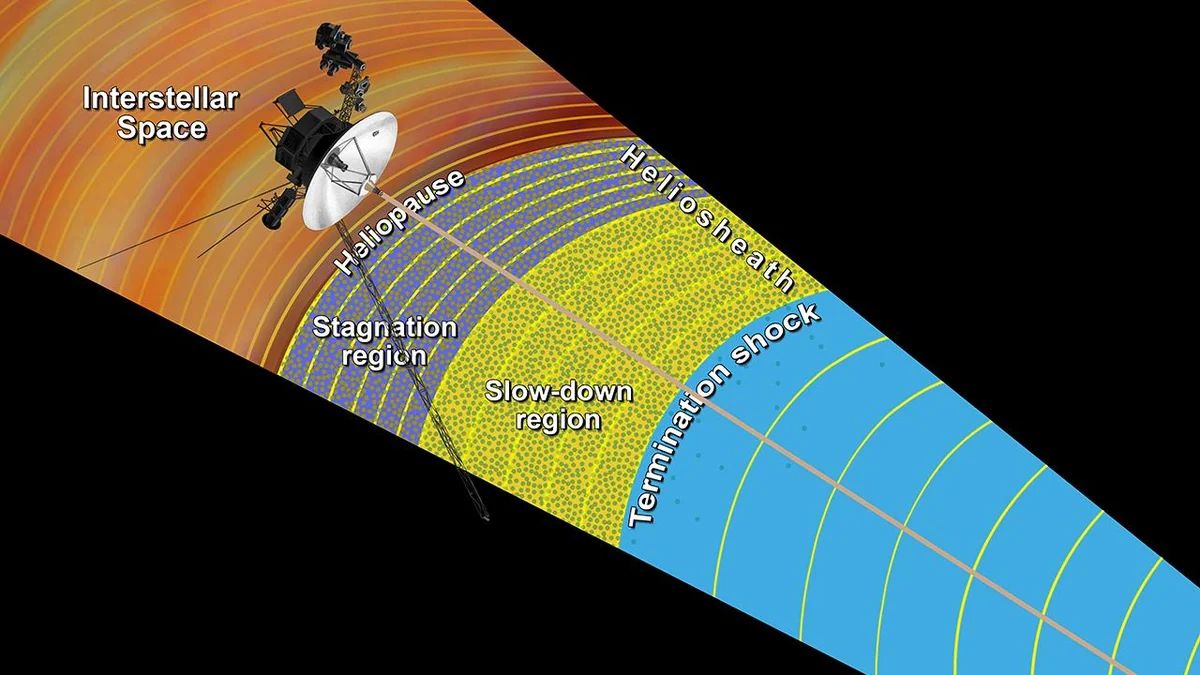
The readings held surprises. Voyager 2 found the interstellar plasma at 30,000 to 50,000 K, well above the 15,000 to 30,000 K the models had predicted, and just before it crossed it hit a wall of magnetic field and compressed plasma that nobody had expected to be so sharp. Both probes found the magnetic field outside lined up with the field inside, as if the heliosphere were draped in it. Neither has yet reached gas untouched by the Sun's influence: the region just beyond the heliopause is still stirred by it, and the pristine cloud may begin tens of AU further out.
Help is on its way. NASA's Interstellar Mapping and Acceleration Probe, IMAP, launched on 24 September 2025 and now sits a million miles sunward of Earth, mapping the whole heliosphere boundary by catching the neutral atoms that stream in from the cloud. Its first full maps are expected through 2026. The Voyagers, meanwhile, keep going. Voyager 1 reaches one light-day from Earth in November 2026, and the Oort Cloud, still technically part of the Solar System, is about 300 years ahead of it. Both spacecraft will have fallen silent long before then, and will coast on through the cloud, and out the other side, in the dark.
Local Interstellar Cloud facts
Our neighbourhood from the inside out. Figures are rounded; the cloud's edges are fuzzy and the numbers vary by study.
The Local Interstellar Cloud
Warm CloudThe Local Bubble
Supernova CavityThe Cold Cloud Encounter
Hypothesis · 2024Density Ladder
Particles per cm³Can you see the cloud we live in?
Kit we've tested and reviewed in full
Not the Local Interstellar Cloud itself. It is far too thin to glow, and we are inside it, so there is nothing to point at. What you can see is the wall of the Local Bubble. The dark clouds of Taurus, just east of the Pleiades and about 450 light-years away, sit on the shell of gas our bubble swept up, and the Orion Nebula lies a little beyond that wall, the next star factory along. On an autumn or winter night from the UK you are looking out to the edge of our own cavity in the Galaxy.
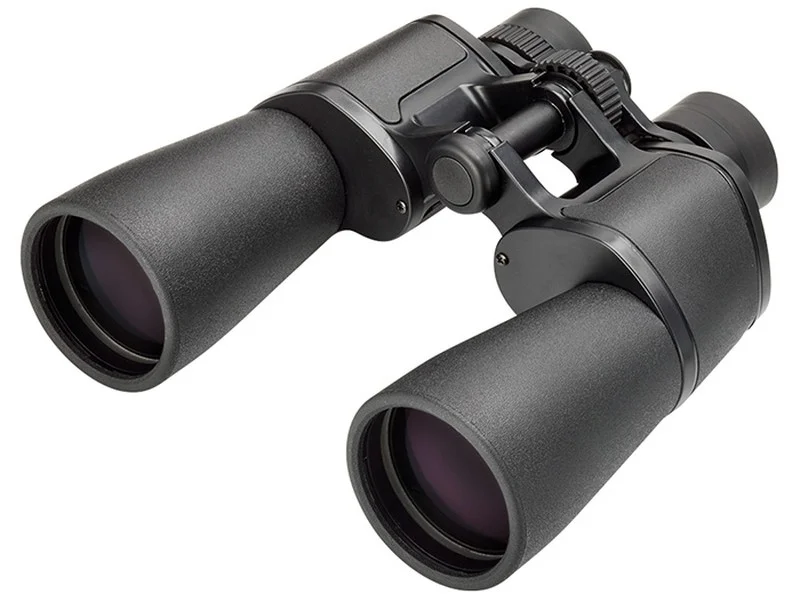
10×50s show the Pleiades as a sparkling knot of thirty or more stars, with the dusty Taurus clouds, part of the Local Bubble's wall, spread invisibly to their east, and the Orion Nebula as a soft grey glow around the middle star of Orion's sword, just beyond the wall.
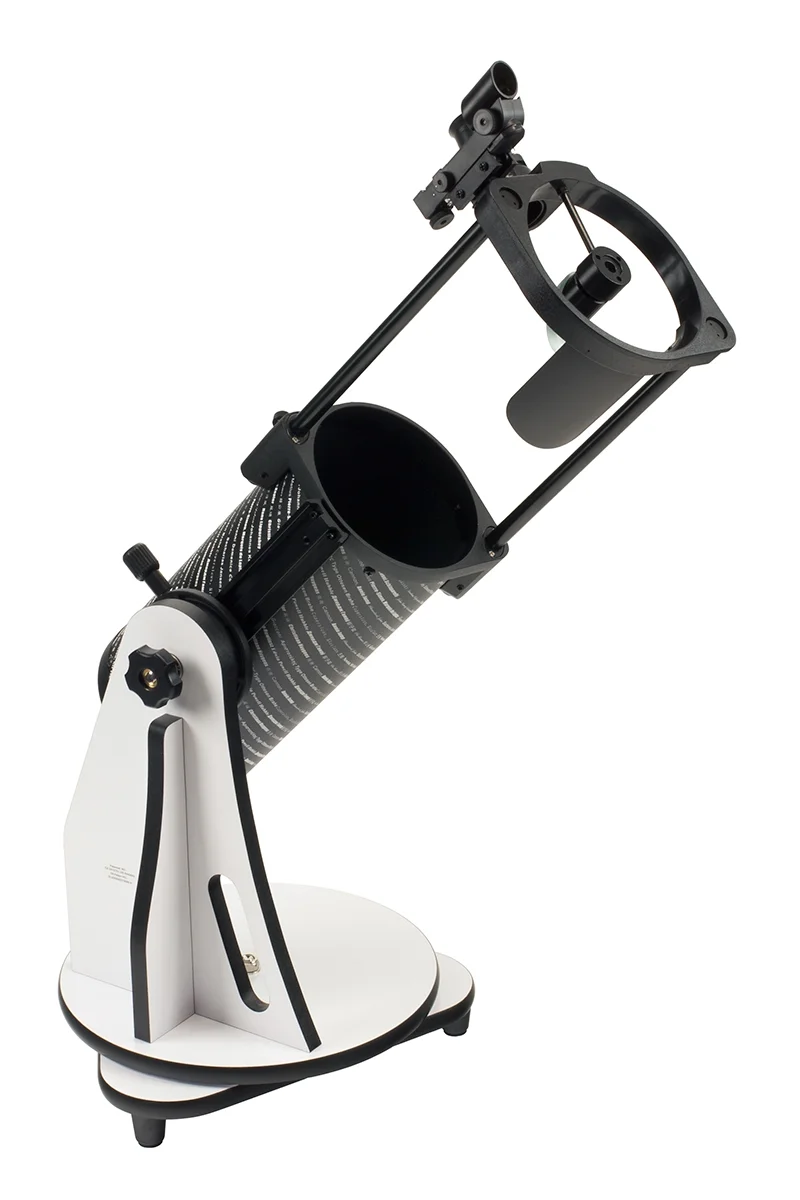
A 130mm tabletop Dobsonian at 65× resolves the Trapezium, the four hot young stars lighting the Orion Nebula from inside. The gas you see glowing is thousands of times denser than the cloud around the Sun, which is why one shines and the other does not.
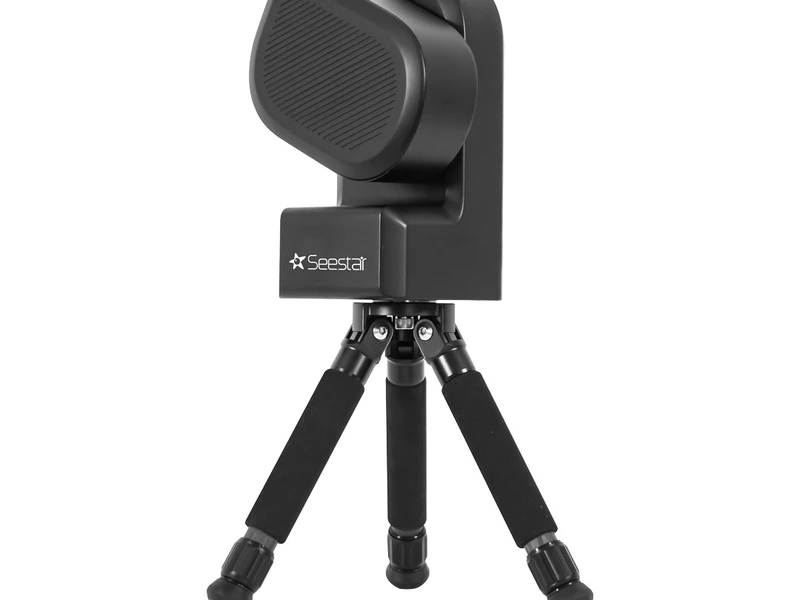
A smart telescope stacks the Orion Nebula into a colour image in ten minutes from a garden, and pulls the faint nebulosity around the Pleiades out of light-polluted skies. Good for a side-by-side with the invisible cloud we actually live in.
Affiliate links: you pay the same price, we earn a small commission that helps keep WatchTheStars free.
The wall of the Local Bubble is a winter sight from Britain. The Pleiades and Taurus climb the eastern sky from October, and Orion, just beyond the wall, clears the rooftops in the late evening from November and is well placed all night by January. Start with the best binoculars for stargazing or one of the best beginner telescopes UK observers actually buy, pick a dark night on the UK dark sky sites map, and check what you can see in the sky tonight before you set up. If you are new to this, our guide to how to use a telescope covers finding the Orion Nebula by star-hopping, and stargazing for beginners explains how to let your eyes adapt so the fainter nebulosity shows.