The UK UFO Files: A Guide to the MOD and National Archives Records
Project Condign, the Rendlesham file, and the Ministry of Defence's own UFO desk paperwork
Britain never had a Blue Book or a PURSUE. Its UFO records are ordinary civil service files: sighting forms, letters from the public, briefings for ministers, and one secret intelligence study that recommended the whole subject be dropped. We hold two sets of them, around 550MB of scans in all. This guide explains what they are, how they came out, and which files are worth your evening.
| What it is | Ministry of Defence and Air Ministry UFO records, plus the Defence Intelligence Staff's 2000 UAP study |
| Project Condign | DI55 Scientific & Technical Memorandum 55/2/00, December 2000: executive summary plus three volumes, released under FOI in May 2006 |
| Rendlesham file | MOD file Sec(AS) 12/2/1, about 179 pages, including the Halt memo of 13 January 1981; released 2001 |
| National Archives files we hold | AIR 2/17318 (Air Ministry, early 1960s) · DEFE 24/1943/1 (close encounter letters, to 1992) · DEFE 24/1958/1 (UFO policy, from 1985) · DEFE 31/172/1 (DI55 file, early 1980s) |
| How released | MOD files transferred to The National Archives in ten batches, May 2008 to June 2013 |
| Size | Around 550MB of scans: 87 MOD files and 11 National Archives files |
| Official source | The National Archives UFO research guide and Discovery catalogue |
What Are the UK UFO Files?
The UK UFO files, sometimes called Britain's "X-Files", are the Ministry of Defence's own paperwork on unidentified flying objects, now public at The National Archives. They are not a single dramatic release. They are hundreds of ordinary government files: report forms filled in by police officers and RAF duty staff, letters from members of the public, briefings for ministers answering questions in Parliament, and the occasional note from an intelligence officer who checked a sighting against the radar tapes.
Our archive holds two sets. The first is the MOD's own material, released directly by the department: the full Project Condign report and the Rendlesham Forest file. The second is a group of genuine National Archives catalogue files from the DEFE 24, DEFE 31 and AIR 2 series, scanned as The National Archives released them. Together they run from the early 1960s to 2005, and they cover nearly every stage of how Britain handled UFO reports: the Air Ministry years, the MOD's "UFO desk" in Whitehall, and the Defence Intelligence Staff's attempt to settle the question for good.
This page is the companion to our UAP document archive hub, which covers all of our collections, including the US Pentagon UFO files. If you want the American side of the story and how it overlaps with Britain's, our piece on what the Pentagon's files mean for the UK is the place to start.
How Were the UK UFO Files Released?
The UK UFO files came out slowly, over about twelve years, through three routes. The National Archives' own research guide sums up the starting point: official recording of UFO sightings began in the early 1950s, and until 1967 MOD policy was to destroy UFO files every five years, so a lot of early material is simply gone. A 1983 briefing in our copy of DEFE 31/172 says the same thing from the inside: the earliest reports the MOD still held dated from 1962, and the decision to keep them rather than shred them was taken "in response to increasing public interest in the subject".
Freedom of Information and the Code of Practice. Before the Freedom of Information Act came into force in 2005, researchers could ask for papers under the Code of Practice on Access to Government Information. That is how the Rendlesham file came out in 2001, and how parts of DEFE 31/172 were released in December 2002 (an email on the file records the date). Project Condign followed in May 2006, after an FOI request by the researchers David Clarke and Gary Anthony.
The National Archives programme, 2008 to 2013. In May 2008 the MOD began transferring its UFO files to The National Archives at Kew. The first batch covered 1979 to 1991. In December 2009 the MOD closed its UFO desk, and the tenth and final batch went to Kew in June 2013. The files sit mainly in the DEFE 24 series (the Directorate of Air Staff and its predecessors) and DEFE 31 (Defence Intelligence), with older Air Ministry papers in AIR 2. The official starting point is The National Archives' UFO research guide, and you can search the Discovery catalogue for any file reference on this page. The archive also published a highlights guide to the final 2013 release.
What's in the UK MOD UFO Files? A Tour of the Collection
The MOD set (87 files, about 275MB). Most of this is Project Condign, split the way the MOD published it: the executive summary (23 pages, also issued in three parts), Volume 1 in seven chapter files plus two annex files, Volume 2 in two runs of technical papers (162 and 96 pages), and Volume 3 in five files of 48 pages. Alongside it sit the five scanned parts of the Rendlesham file, a standalone copy of the Halt memo, and a folder of 44 transcriptions we keep to make the scans searchable. Two stray images, copies of the so-called JFK UFO memo, ended up in this folder too; they are American, not British, and we covered them separately in our JFK UFO memo fact check.
The National Archives set (11 files, about 280MB). Four catalogue files, scanned page by page with The National Archives' reference stamped on every sheet. AIR 2/17318 is a 344-page Air Ministry file from the early 1960s, stamped "Closed until 1994". DEFE 24/1943/1 is a 47-page file of close encounter and abduction letters. DEFE 24/1958/1 is the MOD's UFO policy file, opened in January 1985 and scanned in seven parts. DEFE 31/172/1 is a 189-page Defence Intelligence file from the early 1980s, which comes with a machine-read text version (rough, but searchable).
One thing to know before you start: almost none of it has a text layer. These are photographs of paper, much of it handwritten, so reading the UK files means doing what a researcher at Kew does: page by page, with a cup of tea.
The Most Interesting UK UFO Documents
Six files we would hand to anyone who wants to understand how Britain really dealt with UFOs. Each reference can be searched in The National Archives' Discovery catalogue.
Project Condign: DI55 Memorandum 55/2/00 (December 2000)
"Unidentified Aerial Phenomena in the UK Air Defence Region" is the only serious study of UFOs the British state ever commissioned, and it is odder than its reputation as a debunking exercise suggests. It opens with a quote from Winston Churchill in July 1952 ("What does all this stuff about flying saucers amount to?"), then concludes that UAP reports have no significant defence intelligence value, and that nothing links them to any nation or suggests they are hostile. The odd part is the explanation. The author argues that some sightings are rare, electrically charged plasmas, possibly triggered by meteors, and that the space between several such glowing masses can look like a solid black triangle "even up to hundreds of feet in length". It goes on to suggest these fields can affect people's brains and make witnesses believe vivid but "mainly incorrect" accounts. Its key recommendation was blunt: DI55 should stop monitoring UAP reports. A subsidiary one has a line you could not make up: "No attempt should be made to out-manoeuvre a UAP during interception." For more on the triangle idea, compare the American cases in our black triangle files.
"It should no longer be a requirement for DI55 to monitor UAP reports as they do not demonstrably provide information useful to Defence Intelligence."
· Key recommendation, Project Condign executive summary, December 2000The Rendlesham Forest file: MOD Sec(AS) 12/2/1 (1980 to 2000)
The file cover reads "Unidentified Flying Objects (UFOs): Report of Sighting, Rendlesham Forest, December 1980". The most famous page in it is Lieutenant Colonel Charles Halt's memo of 13 January 1981, headed simply "Unexplained Lights". It describes two USAF security police patrolmen seeing lights outside the back gate at RAF Woodbridge at about 3am on 27 December 1980, a "strange glowing object" in the forest that was "metallic in appearance and triangular in shape", three depressions in the ground the next day, and radiation readings peaking at 0.1 milliroentgens. Just as revealing is the covering note above it: Squadron Leader D.H. Moreland at RAF Bentwaters forwarded the report to the MOD on 15 January 1981 "for your information and action as considered necessary". What the MOD then did, and didn't do, fills the rest of the file. Our full case page is the Rendlesham Forest incident, and we examine a disputed alternative version in the Wallace account.
The MOD's UFO policy file: DEFE 24/1958/1 (from 1985)
Registered by the MOD as D/Sec(AS) 12/1 and opened on 14 January 1985, this is where the department kept its thinking about UFOs rather than the sightings themselves: lines to take, briefings and correspondence with other bodies. Its cover was so worn that it was "recovered" in January 2005. Buried in it is a fax from the Civil Aviation Authority containing Airmiss Report 2/95, the investigation into a Boeing 737 crew who saw a lit object pass close by on the approach to Manchester Airport on 6 January 1995. The report's verdict on both cause and risk was "unassessable". We wrote it up in full as the Manchester Airport UFO near miss, and the story has a modern sequel in our look at UK UFO near misses in 2026.
The Defence Intelligence UFO file: DEFE 31/172/1 (early 1980s)
This DI55 file is the best single explanation of how the system worked. A January 1983 briefing, written when an MOD officer was invited onto a programme with the British UFO Research Association, sets out the official line: the MOD's "sole interest" in UFO reports is whether they reveal anything of defence interest, "there is no unit within the Ministry appointed solely for the study of UFOs", and "the Ministry of Defence does not deny that there are strange things to see in the sky". It also contains Hansard extracts from a House of Lords exchange on 4 March 1982, where the minister gave the yearly totals: 756 reports in 1978, 550 in 1979, 350 in 1980 and 600 in 1981. Then come the reports themselves, such as a February 1982 form from Northampton describing one large object with red flashing lights hovering over houses for 15 minutes, and a signal from RAF Shawbury about rows of bright red lights. It is the UFO desk in miniature.
The Air Ministry UFO file: AIR 2/17318 (early 1960s)
The oldest file we hold, and the one that best shows the space age arriving. A typed briefing near the front notes that "some ninety man-made satellites and associated objects are at present in orbit and can be seen from this country from time to time; 70 with telescope or binoculars and 20 with the naked eye", and lists the usual suspects: high aircraft, lit weather balloons, giant research balloons drifting over from the Continent, planets, even birds. It ends: "About 10% of flying objects reported to the Air Ministry are not explained and they remain unidentified because the evidence given about them is not sufficient." Further in, you can watch the checking happen. A handwritten memo from the Air Ministry's technical intelligence branch in November 1963 traces a sighting at Longdown in Devon to Army battle exercises on northern Dartmoor, concluding the witness "probably saw a green 'Very' flash". Today the same job takes a phone app: our ISS passes tonight page and what you can see in the sky tonight page answer most "what was that light?" questions before they become reports.
Close encounters and abduction letters: DEFE 24/1943/1 (to 1992)
The MOD gave this file the title "UFOs: close encounter reports, alien entities, abductions etc" and registered it as D/Sec(AS) 12/5. Its last enclosure is dated 23 January 1991 and it was closed in July 1992. It is almost entirely letters from the public, most handwritten, and it is the most human file in the collection. One correspondent describes a drive home towards Manchester with their mother, a car in front slowing them almost to a stop, and a craft "the size of a double decker bus on its side" overhead. Another, in 1990, writes to "The Air Ministry", 26 years after it ceased to exist, asking where a crashed UFO was recovered during the Second World War. The MOD's replies are polite and short. There is no investigation here. The file records what landed on the desk, not what anybody did about it.
Are the UK UFO Files Worth Reading?
Most of it is dull, and it is meant to be. The UK never ran a dedicated investigation unit, so the bulk of every file is routine: a sighting form, a covering minute, a stock reply. The MOD and Air Ministry consistently said they only cared whether a report showed an intruding aircraft, and the paperwork bears that out. If you are hoping for wreckage or cover-up memos, they are not here. Neither are many radar cases: the famous RAF Lakenheath radar-visual case of 1956 is better documented on the American side than in anything we hold from Kew.
There are practical limits too. Pre-1967 material was routinely destroyed, so the early years are thin. Names and signatures are blanked out under the Data Protection Act, often with a "Section 40" box, which makes witness follow-up impossible. Project Condign still carries rows of crosses marked "S.26", the FOI exemption for defence, including part of the description of what its secret Volume 3 covers. And Condign leans hard on plasma theories and brain-effect claims that it does not test itself.
What is interesting is the texture. You can see a civil service trying to be helpful without being drawn in, ministers giving straight numbers in the Lords, an intelligence officer ringing the Army to ask about flares, and a secret report that ends by telling its own branch to stop. Read alongside the much louder American releases, the UK files are a useful corrective: they show how far most sightings get once someone does the boring checks. They also show why astronomy matters here. Condign's top natural explanation is meteors, which is why it is worth knowing the next meteor shower in the UK before reporting a fireball.
Our UK UFO Files Coverage So Far
Everything below draws directly on documents in this collection.
Case pages: The Rendlesham Forest Incident (1980) · Rendlesham: The Wallace Account
Articles: Manchester Airport UFO near miss: inside Airmiss Report 2/95 · What the Pentagon's UFO files mean for the UK · The CIA's 1952 memo on Britain and R.V. Jones
Our document of the week series will keep working through this collection, starting with the unread Condign volumes and the policy file. For everything else, including Brazil's Varginha and Operação Prato records and the NSA UMBRA file, go back to the UAP document archive hub, or browse all our UAP research and declassified cases.
Scan the skies yourself
Kit we've reviewed in full
A 1960s Air Ministry briefing in these files notes that about 70 satellites could be seen with a telescope or binoculars and only 20 with the naked eye. Most of the UK's 'unexplained' lights were things a decent pair of binoculars would have settled on the spot.
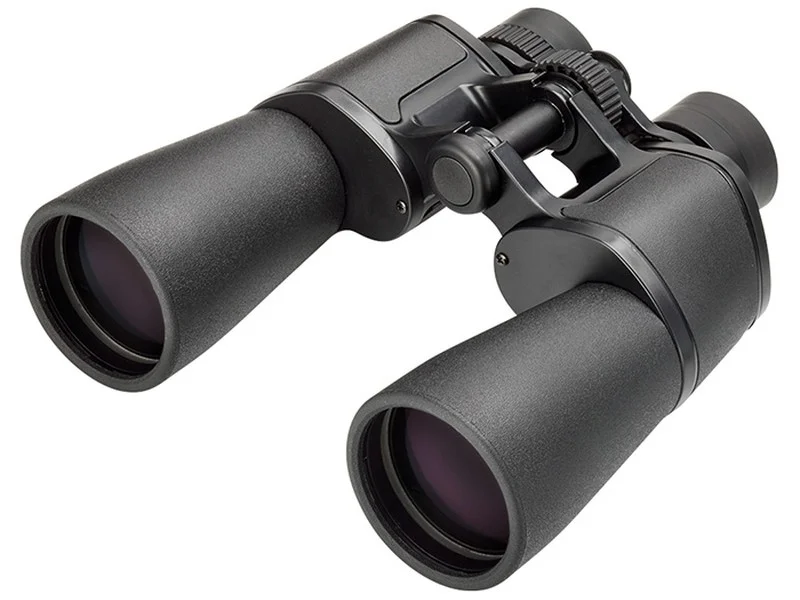
Bright and steady enough to show navigation lights, a satellite's steady glide or a flare's smoke trail, the details that closed most of these cases.
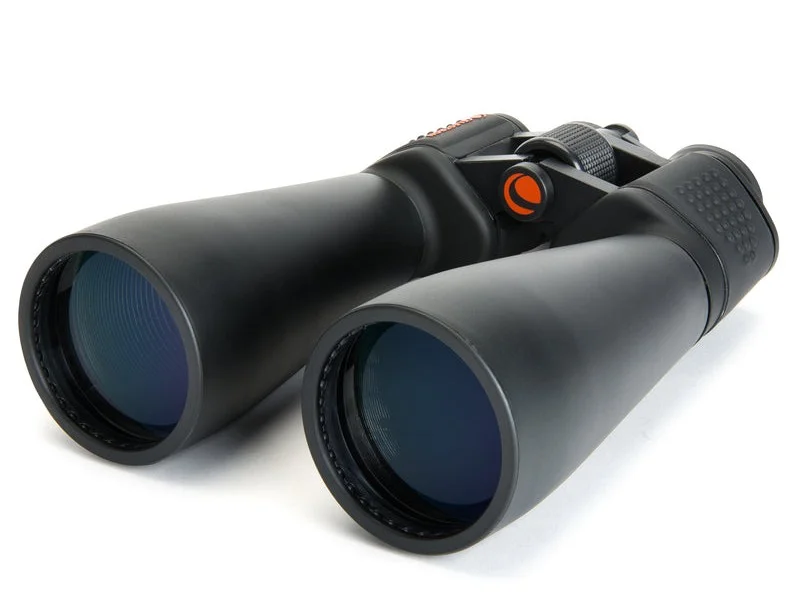
The extra reach that turns a light over the horizon into an aircraft you can actually describe, which is what every good sighting report needs.
Affiliate links: you pay the same price, we earn a small commission that helps keep WatchTheStars free.
Will the UK Release More UFO Files?
Probably not many. The MOD closed its UFO desk in December 2009, said it would no longer record or investigate reports, and announced the last of its planned transfers in June 2013. A few files that had been missed have surfaced since, so the odd late batch is possible. Any later material, such as reports that reach the MOD now, can only come out through individual Freedom of Information requests. The live British source today is the UK Airprox Board, which still logs encounters between aircraft and unknown objects, and which we follow in our UK near miss coverage. This page will be updated as we publish more from the files. If there is a specific UK document you want us to read next, tell us through our about page.
More UAP cases
- The Tremonton and Great Falls Film AnalysisREPORT DATED 4 MAY 1953 · FILMS FROM 1950 AND 1952 · RELEASED 7 AUGUST 2026
- Types of Aliens & the EvidenceGreys · Reptilians · Robots · Monsters · Men in Black
- The Puerto Rico Encounters, November 196418–24 NOVEMBER 1964 · ATLANTIC FLEET WEAPONS RANGE, PUERTO RICO · RELEASED 7 AUGUST 2026
- UAP and Nuclear Weapons: A 70-Year PatternCOVERAGE PERIOD: 1945–PRESENT | DECLASSIFIED INCIDENTS: 150+ | US + SOVIET CASES
- The Pentagon UFO Files: A Complete Guide to the PURSUE ReleasesRELEASES 01–07 · 8 MAY TO 23 OCTOBER 2026 · 478 RECORDS
- UAP Document Archive: Official UFO Files from the US, UK & BrazilUS DoD PURSUE Releases · UK MOD & National Archives Files · Brazilian Air Force Records · NSA UMBRA Files