Key takeaways
- The UK Airprox Board could not identify 13 objects that passed close to aircraft in incidents between January and July 2026
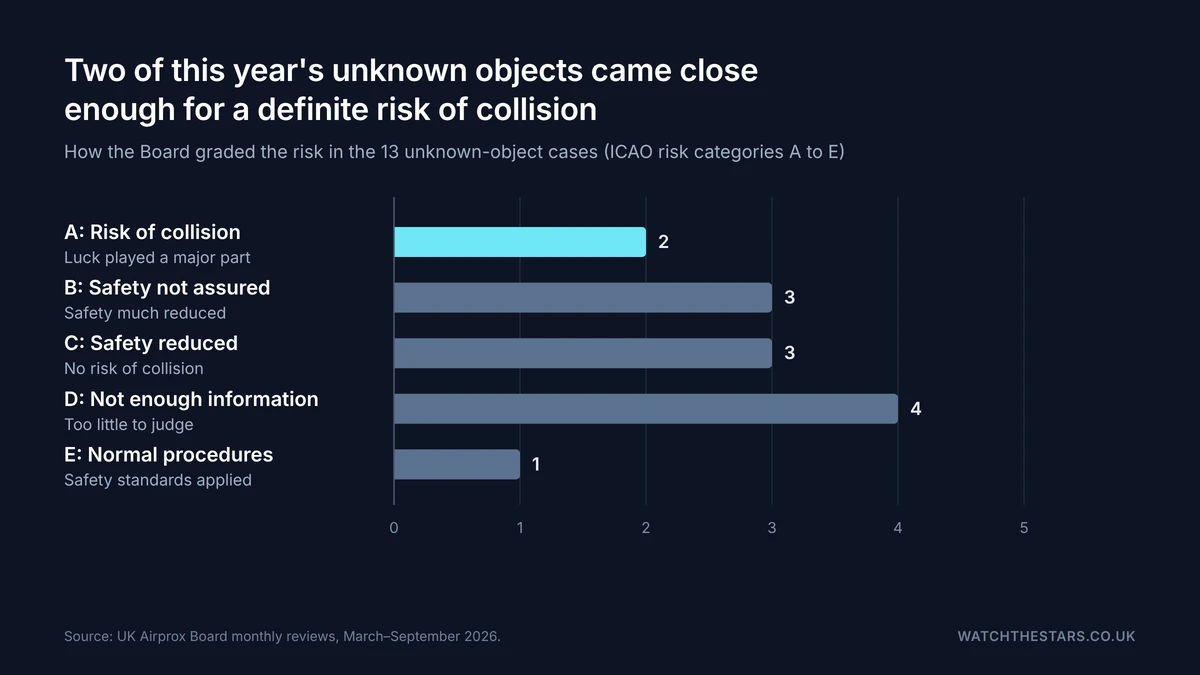
- The UK Airprox Board graded two of the 13 unknown objects at its top risk level, A, meaning luck played a major part in avoiding a collision
- The Guildford near miss involved a Boeing 777 climbing out of Heathrow and a shiny silver object 'the size of four toasters' about 50 ft above the right wing
- Two crews of military jets also met unknown objects: an RAF Voyager tanker and a Typhoon pilot both saw a black disc pass over them at 16,000 ft off Norfolk
- In 10 of the 13 unknown-object cases, radar showed nothing where the crew saw the object
Jump to section 7 sections
- UFO Near Miss Over Guildford: The 'Four Toasters' Case
- UK Airprox Board Unknown Objects: All 13 Cases in 2026
- UFO Near Misses With RAF Jets: The Black Disc Over the North Sea
- Flying Saucer Near Gatwick: The Disc With the Dark Rim
- Drone, Balloon or UFO? What 'Unknown Object' Really Means
- Seen a UFO From the Ground? Check These First
- The Bottom Line
A passenger jet climbing out of Heathrow on a sunny June lunchtime. A shiny silver object, "the size of four toasters", flashes past about 50 ft above the right wing. Radar shows nothing.
That Boeing 777 near Guildford made the papers this week. But it isn't a one-off. The UK Airprox Board, the official body that investigates near misses in British airspace, couldn't say what the object was. It has said the same about 12 other objects seen close to aircraft over the UK this year. They turned up near Gatwick, over central London, above Birmingham, off the Norfolk coast and in the path of RAF jets.
We've read every case in the Board's 2026 monthly reviews. Here's what the crews reported, what the Board decided, and why "unknown" doesn't have to mean alien.
UFO Near Miss Over Guildford: The 'Four Toasters' Case
Airprox 2026127 happened at 1:08pm on 24 June 2026. A Boeing 777 had just left Heathrow and was climbing towards 6,000 ft about 4 nautical miles north-east of Guildford. Passing 5,800 ft, the crew saw "a shiny silver object" coming the other way "very fast and very close to the right wing", no more than 50 ft above them. "It was too close for comfort," the pilot reported.
The pilot thought it was probably a mid-size drone. When air traffic control asked how big, the answer was "about the size of four toasters". NATS, which runs UK air traffic control, went back through the radar recording. There was nothing on it.
The press reported the aircraft as a British Airways flight to New York. The Board's report gives only the type, and BA told reporters the crew didn't need to take any action and the flight carried on as normal.
The Board couldn't identify the object and gave it its highest risk grade, A. That means "providence had played a major part in the incident": in plain terms, luck. Only one other unknown object this year got an A. That one came three weeks earlier, on 1 June. An A320 was descending into Heathrow over Stamford Hill in north London when "a black object" passed "no more than a few metres" from the flight deck. The captain, who was flying, ducked.
UK Airprox Board Unknown Objects: All 13 Cases in 2026
The Board meets most months and publishes its findings two to four months after each incident. These are all 13 cases from the 2026 reviews where it recorded an "unknown object". Times are UK time. The risk grade runs from A (risk of collision) to E (normal safety standards applied), and D means there wasn't enough information to judge.
| Date | Aircraft | Where | Height | What the crew saw | Risk |
|---|---|---|---|---|---|
| 29 Jan, 3:41pm | RAF Hawk | 2 miles SW of Blackpool Airport | 4,780 ft | Flat, solid object about 25cm long, about 5 metres from the canopy. Pilot rolled away | B |
| 18 Feb, 10:15am | RAF Voyager tanker | 37 miles NNE of Cromer, out to sea | 16,000 ft | Black circular object 100–150 ft overhead, also seen by a Typhoon pilot | B |
| 23 Feb, 3:21pm | RAF Typhoon | North Sea training area | 12,000 ft | Black circle "similar in size to a car tyre", ~300 ft above | C |
| 29 Apr, 11:30am | Airbus A319 | Near Handcross, Sussex | 8,000 ft | Disc or "flying saucer" type object with darker markings on the rim | C |
| 8 May, 6:51pm | Airbus A320 | 17 miles NE of Heathrow | 9,000 ft | Large black and white object about 50cm across, ~100 ft away | B |
| 8 May, 7:23pm | Airbus A321 | Near Lambourne, Essex | 14,500 ft | Black object "of unknown but significant size", 30–100m away | D |
| 30 May, 3:55pm | Airbus A320 | 28 miles ENE of Bristol Airport | 8,000 ft | "Big black chunky" object the size of a wheelie case, below | E |
| 1 Jun, 11:32am | Airbus A320 | Stamford Hill, London | 6,500 ft | Black object a few metres from the flight deck | A |
| 21 Jun, 8:34pm | Airbus A320 | Kensal Town, London | 5,300 ft | Large object a few hundred feet below | D |
| 24 Jun, 1:08pm | Boeing 777 | 5 miles NE of Guildford | 5,800 ft | Shiny silver object, "size of four toasters", ~50 ft above | A |
| 28 Jun, 9:47pm | Boeing 787* | Over Rochdale | 14,000 ft | Object the size of a drone or balloon, under 1,000 ft below | C |
| 9 Jul, 7:26pm | Boeing 787 | Over Aston, Birmingham | 3,000 ft | Metallic object down the left side and under the wing | D |
| 11 Jul, 6:23am | Airbus A320 | 3 miles from Liverpool Airport, on final approach | ~1,000 ft | Backpack-sized object, possibly with a red light | D |
*The Board's table lists a Boeing 787 for the Rochdale case, but the pilot's account inside the same report says Boeing 737.
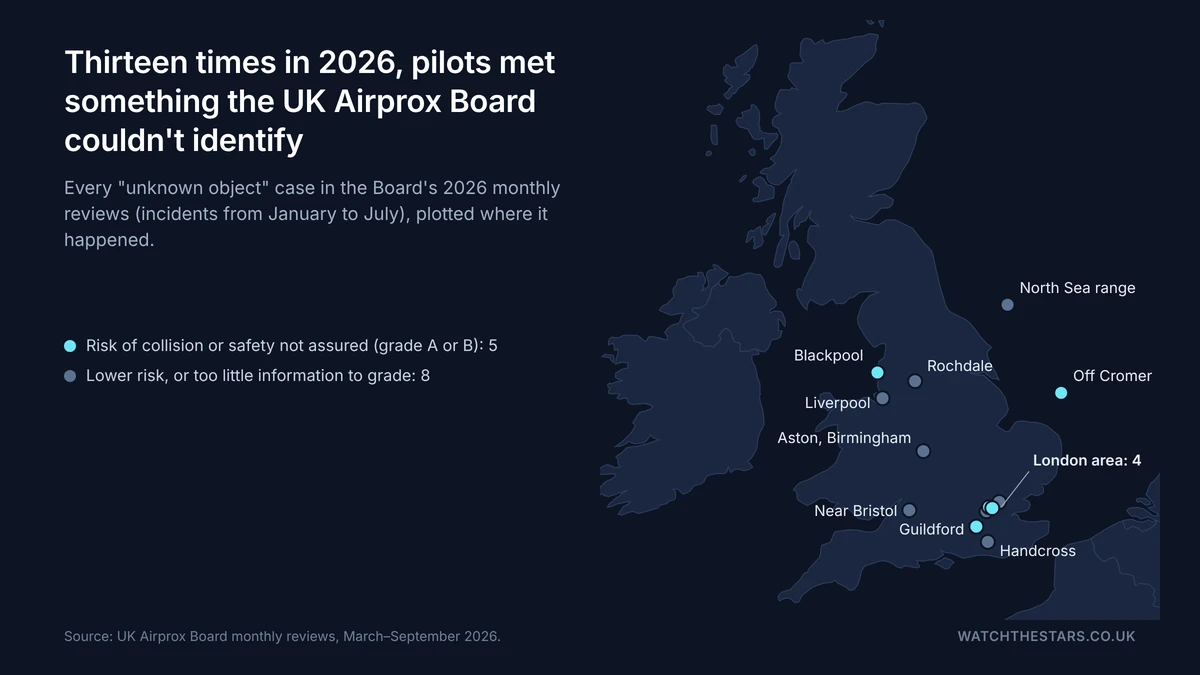
Two things stand out. Most of these happened close to the big London airports, which is where most of the traffic is. And in 10 of the 13, the investigators checked the radar and found no trace of the object.
UFO Near Misses With RAF Jets: The Black Disc Over the North Sea
Three of this year's cases involved military aircraft. They're among the most interesting, because military crews often have better recording kit, and in one case two aircraft saw the same thing.
On 18 February an RAF Voyager tanker was refuelling a Typhoon at 16,000 ft, about 37 miles off the Norfolk coast. The pilot in the captain's seat, who wasn't flying at that moment, saw something directly ahead. A black, circular object passed 100 to 150 ft over the top of the aircraft, close enough to make them duck. One of the Typhoon pilots saw it too and agreed on its description, its direction and how far above them it passed. Military controllers had nothing on their radar. Afterwards the crew said they couldn't be sure it was a drone. It "could have been a balloon or something similar", and they "could put no confidence in confirming it as a specific object".
Five days later, another Typhoon pilot was flying straight and level at 12,000 ft over a North Sea training range. A black circular object "similar in size to a car tyre" passed about 300 ft above. It was flying straight and level too, heading east.
The closest call of the year came on 29 January. An RAF Hawk was climbing out of Warton in Lancashire when the front-seat pilot spotted an object and rolled right. One second later it passed down the left side of the canopy, an estimated 5 ft vertically and 5 metres sideways from the cockpit. Both crew asked, "What was that?" The object was about a quarter of a metre long, "flat and solid", with no visible detail. The Board reviewed the Hawk's head-up display recording as well and still couldn't identify it.
Flying Saucer Near Gatwick: The Disc With the Dark Rim
The case that set off the "flying saucer" headlines this summer was Airprox 2026064. On 29 April an A319 was descending towards Gatwick at about 8,500 ft near Handcross in West Sussex. The crew saw "a disc or 'flying saucer' type suspected drone" heading the opposite way at the same height, passing 100 to 300 ft from the right wing. It "looked like a disc with darker markings on the rim".
The pilot called it "a suspected possible drone but not sure". Drone activity in the area was being reported on the airport's recorded information broadcast at the time. Once again, radar showed nothing.
Drone, Balloon or UFO? What 'Unknown Object' Really Means
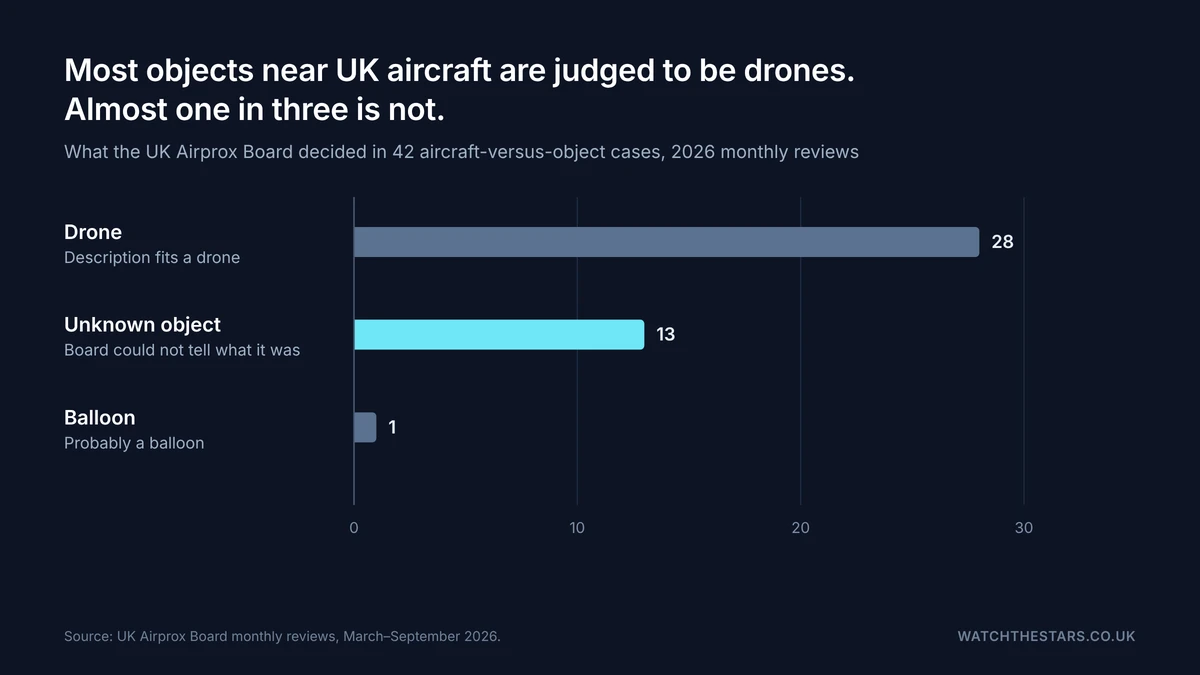
The Airprox Board isn't hunting for aliens. Its job is to grade risk and help pilots stay safe. When a crew's description fits a drone, it records a drone; when it fits a balloon, a balloon. "Unknown object" is what's left when the Board can't decide either way, usually because the object was seen for a second or two and nobody got a proper look.
Plenty of these were probably drones. Several crews said so at the time, and one at Liverpool thought they saw a red light. Others may have been drones flown well outside the rules. In the UK, drones must stay below 400 ft unless specially authorised, yet eight of these objects were seen at 6,500 ft or higher.
Balloons are the other obvious suspect, especially foil party balloons, which are shiny, round and can drift to great heights. The Rochdale crew raised this themselves. The object "may have been illuminated but may also have been reflecting the setting sun", and they couldn't rule out "a metallicised balloon". We checked the Sun's position. At 9:47pm the Sun had set on the ground five minutes earlier, but at 14,000 ft it was still just above the horizon. Something floating at that height could easily have caught the last of the sunlight. At Aston, where the crew said "the sunlight caught the object", the Sun was 16° up in the west-north-west, low enough to throw a bright glint.
The missing radar traces aren't as strange as they sound. Air traffic radar is built to track aircraft, and a small drone or balloon often doesn't show up at all. And the risk grades matter more than the mystery. Two A grades and three Bs this year mean that, whatever these things were, they came close enough to worry the people whose job is keeping planes apart.
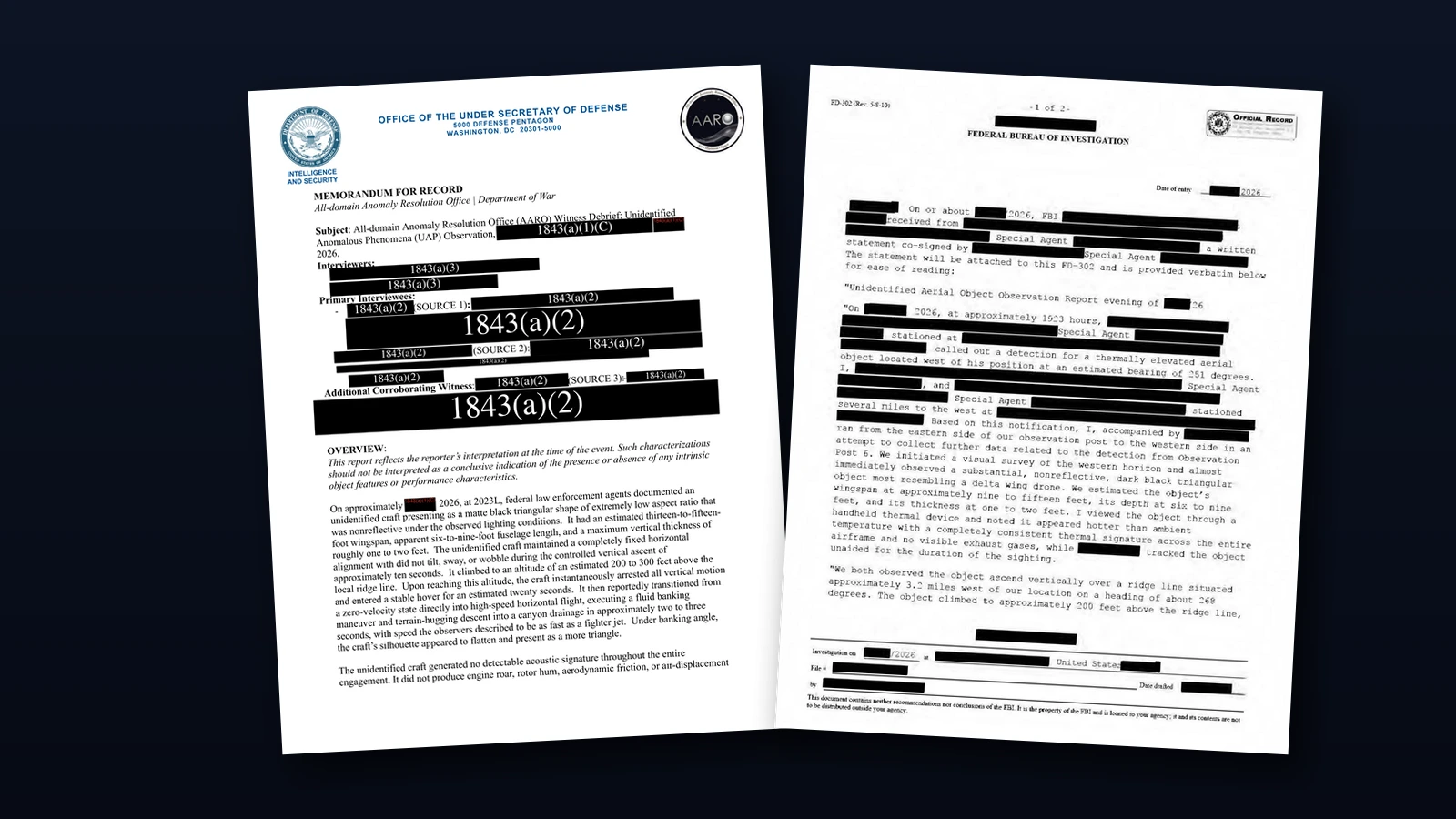
None of this is new. In January 1995 a Boeing 737 crew coming into Manchester saw a lit object flash past at 4,000 ft. The official report on that case, Airmiss 2/95, is still unresolved 31 years later. In the US, federal agents have described a black triangle over a secret site in the latest Pentagon files. Our UAP research hub gathers the official cases we've covered, and the UAP document archive holds the files themselves.
Seen a UFO From the Ground? Check These First
None of the 13 Airprox objects could have been a planet or a satellite. They all passed within a few hundred feet of the aircraft and were gone in seconds. But if you see a strange light from your garden, the odds are very different. Most reports from the ground turn out to have a simple answer.
- The International Space Station is the brightest thing that moves across the night sky. It glides steadily, takes a few minutes to cross and never flashes. Check our ISS passes tonight times, or learn how to spot the ISS.
- Venus is so bright low in the twilight that it gets reported as a UFO more often than anything else. It's returning to the morning sky in early November. Our Venus page explains why it's so bright.
- Satellites, including Starlink trains, are common after dusk, especially soon after a launch.
- Fireballs are bright meteors that can look like something burning as it falls. The Taurids, active now and into November, are known for slow, bright ones. Our calendar shows the next meteor shower in the UK.
- Planets and bright stars near the horizon can seem to twinkle in colour and dart about. They don't move. Our page on what you can see in the sky tonight shows which bright planets are up.
If you're new to looking up, our stargazing tips explain how to find your way round the sky. The UK night sky this week page tells you what's worth going out for.
Get a proper look at that strange light
Kit we've reviewed in full
Most odd lights people report from the ground turn out to be planets, satellites or aircraft. A pair of binoculars settles it in seconds: a planet stays put, a satellite drifts steadily without flashing, and an aircraft shows its red, green and white navigation lights.
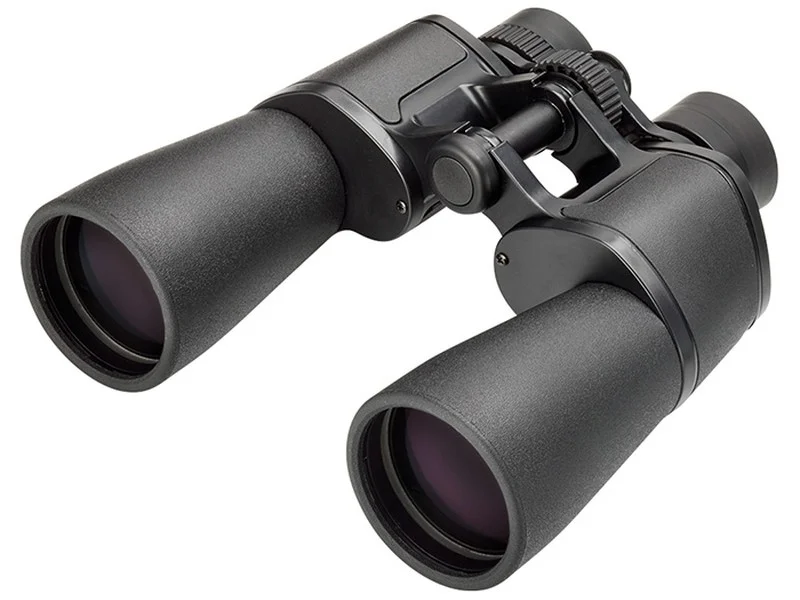
Bright and wide enough to follow a moving light across the sky. Light enough to have round your neck the moment something catches your eye.
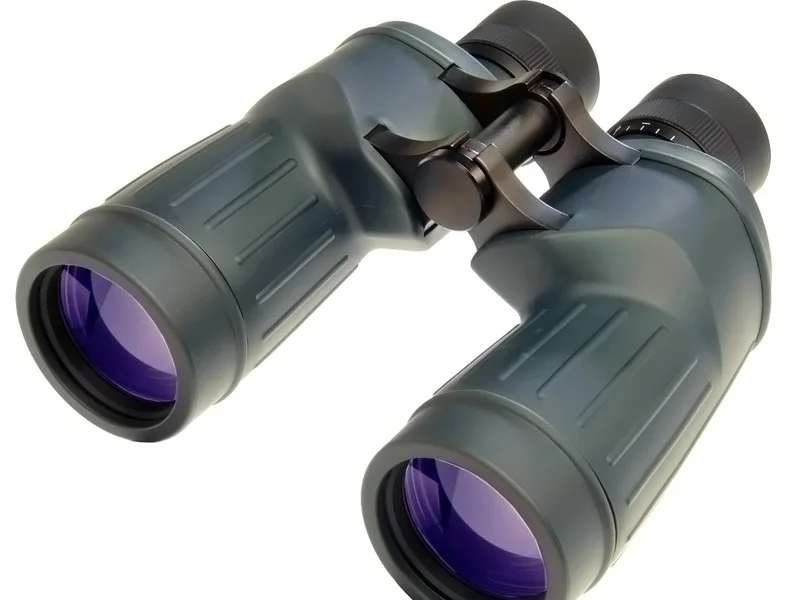
Better glass and coatings for crisper detail on navigation lights, satellites and planets, even near town lights.
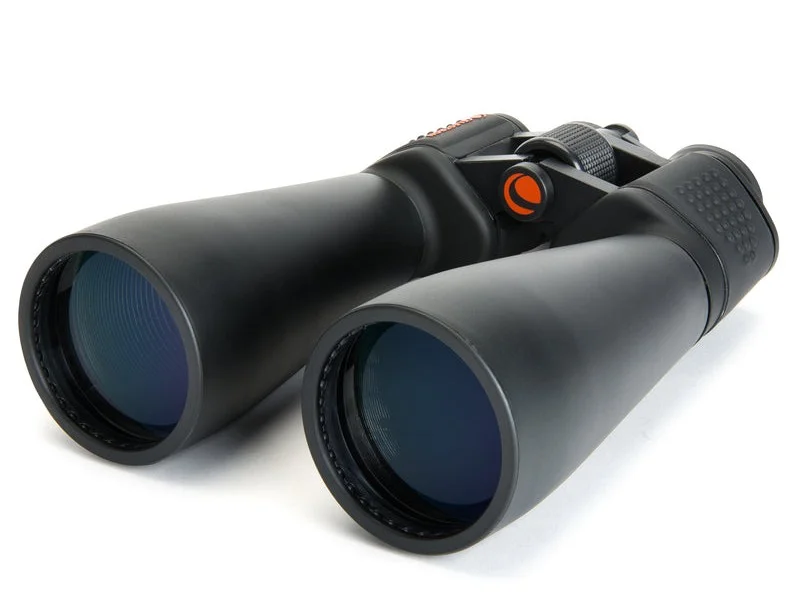
More magnification for a steadier, closer look. Best on a tripod, which makes a slow-moving object much easier to study.
Affiliate links: you pay the same price, we earn a small commission that helps keep WatchTheStars free.
The Bottom Line
The headlines say a BA jet nearly hit a UFO. The official record says something a bit different. Thirteen times this year, pilots over the UK reported an object close enough to matter. Each time, the body that investigates near misses couldn't say what it was. Most were probably drones or balloons in the wrong place. But two came close enough that luck kept them apart, and the RAF crews at 16,000 ft over the North Sea saw something none of them could name.
We'll update this list when the Board publishes its October review.
Sources:
- UK Airprox Board monthly reviews, 2026 (March, April, June, July and September meetings), UK Airprox Board
- Individual reports: Airprox 2026008, 2026012, 2026014, 2026064, 2026073, 2026084, 2026093, 2026097, 2026123, 2026127, 2026129, 2026153, 2026155
- British Airways crew reports near miss with UFO during New York flight, Aerospace Global News, 27 October 2026
- Sun positions for the Rochdale and Aston cases calculated by WatchTheStars with Skyfield (JPL DE421 ephemeris)
Header image: AI illustration.
Frequently Asked Questions
Equipment guides
Related topics

Ian ClaytonAmateur astronomer and founder of WatchTheStars.co.uk, dedicated to helping others explore the wonders of our universe. Full profile →