What Is the Equinox? Autumn and Spring Equinox Explained
The autumn and spring equinox explained, with exact UK dates and times to 2030
The equinox is the moment the Sun crosses the celestial equator, and it happens twice a year. The autumn equinox arrives around 22 or 23 September and the spring equinox around 20 March. In 2026 the autumn equinox fell at 01:05 BST on Wednesday 23 September, and the next spring equinox is at 20:24 GMT on Saturday 20 March 2027.
Most of what you'll read about the equinox rounds things off: equal day and night, the Sun rising due east, the first day of autumn. None of those is the whole story, and this page gives the real figures for the UK, worked out for Plymouth, Birmingham, Edinburgh and Lerwick. There's also a good reason for skywatchers to care. The weeks either side of an equinox are the best of the year for the northern lights, and the September one brings the Harvest Moon.
What Happens at the Autumn and Spring Equinox?
An equinox is the instant the Sun sits directly above Earth's equator. Earth spins on an axis tilted by about 23.4°, and that tilt stays pointing the same way in space as we go round the Sun. For half the year the northern hemisphere leans towards the Sun and gets our summer. For the other half it leans away and we get winter.
Twice a year, halfway between, the tilt points neither towards nor away from the Sun. That's the equinox. From the ground it looks like the Sun crossing the celestial equator, the projection of Earth's equator onto the sky: northwards in March, southwards in September. The word comes from the Latin for "equal night".
It's a moment, not a day. The equinox happens at the same instant everywhere on Earth, which is why its date can differ by time zone. Seasons come from the tilt, not from our distance to the Sun. Earth is actually closest to the Sun in early January and farthest in early July, as our post on Earth at aphelion explains.
When Is the Equinox? UK Dates and Times, 2026 to 2030
Here is every equinox and solstice to 2030 in UK clock time. We calculated them from NASA JPL's DE421 planetary ephemeris, the standard tables of where the Sun, Moon and planets are. The March equinox always falls before the clocks go forward, so it's in GMT. The September one is in BST.
| Year | Spring equinox | Summer solstice | Autumn equinox | Winter solstice |
|---|---|---|---|---|
| 2026 | Fri 20 Mar, 14:45 GMT | Sun 21 Jun, 09:24 BST | Wed 23 Sep, 01:05 BST | Mon 21 Dec, 20:50 GMT |
| 2027 | Sat 20 Mar, 20:24 GMT | Mon 21 Jun, 15:10 BST | Thu 23 Sep, 07:01 BST | Wed 22 Dec, 02:42 GMT |
| 2028 | Mon 20 Mar, 02:17 GMT | Tue 20 Jun, 21:02 BST | Fri 22 Sep, 12:45 BST | Thu 21 Dec, 08:19 GMT |
| 2029 | Tue 20 Mar, 08:01 GMT | Thu 21 Jun, 02:48 BST | Sat 22 Sep, 18:38 BST | Fri 21 Dec, 14:14 GMT |
| 2030 | Wed 20 Mar, 13:52 GMT | Fri 21 Jun, 08:31 BST | Mon 23 Sep, 00:26 BST | Sat 21 Dec, 20:09 GMT |
Notice the pattern. Each equinox is roughly six hours later than the year before, because a year is about 365 and a quarter days long. Then 2028 is a leap year, and the extra day in February pulls the dates back. For the full list of eclipses, meteor showers and moon events around these dates, see our astronomy events calendar.
Are Day and Night Equal on the Equinox?
No. On the equinox, days in the UK are about 8 to 10 minutes longer than 12 hours. There are two reasons. The atmosphere bends sunlight over the horizon, so we see the Sun a few minutes before it's truly up and a few minutes after it's truly set. And sunrise and sunset are timed from the top edge of the Sun, not the middle, which adds another minute or two at each end.
The day that really comes closest to 12 hours has its own name: the equilux. After the September equinox it comes a couple of days later. Before the March equinox it comes a couple of days earlier.
| Place | Daylight on 23 Sep 2026 | Autumn equilux 2026 | Spring equilux 2027 | Daylight lost per day |
|---|---|---|---|---|
| Plymouth | 12h 8m | Fri 25 Sep | Thu 18 Mar | 3.8 minutes |
| Birmingham | 12h 8m | Fri 25 Sep | Thu 18 Mar | 4.1 minutes |
| Edinburgh | 12h 9m | Fri 25 Sep | Thu 18 Mar | 4.6 minutes |
| Lerwick | 12h 10m | Fri 25 Sep | Thu 18 Mar | 5.4 minutes |
The last column is why late September feels like the evenings are vanishing. Day length changes fastest around the equinoxes, and faster the further north you live. Lerwick loses more than five minutes of daylight a day at this time of year, Plymouth less than four.
Is the Autumn Equinox the First Day of Autumn?
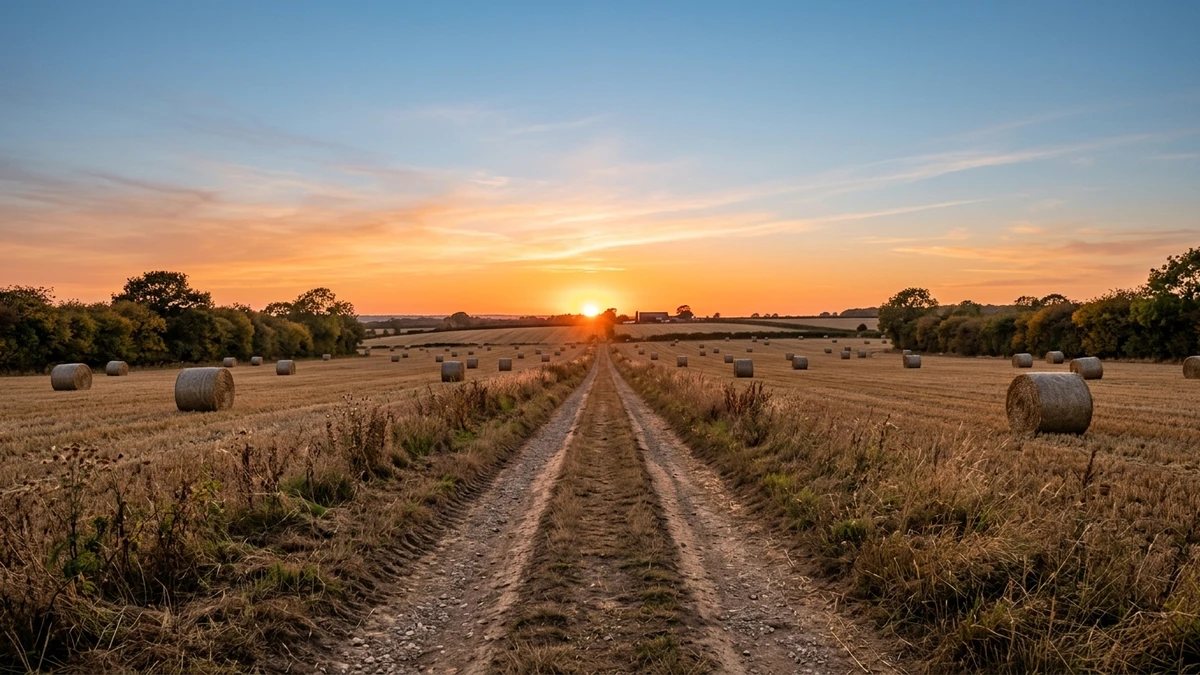
It's the first day of astronomical autumn, which runs from the September equinox to the December solstice. The Met Office uses meteorological seasons instead, which follow whole calendar months, so its autumn is September, October and November. Meteorologists prefer fixed months because they make it easy to compare one year's weather with another.
Neither is wrong. If someone tells you autumn started on 1 September, they're using the weather calendar. If they say it started on the 23rd, they're using the sky.
Does the Sun Rise Due East on the Equinox?
Almost. On 23 September 2026 the Sun rose at a bearing of 89° and set at 271° from everywhere in the UK, within a degree of due east and due west. It's the one time of year you can use sunrise as a rough compass. By December it rises well round in the south-east, and in June it rises in the north-east.
At midday on the equinox, the Sun's height above the southern horizon is roughly 90° minus your latitude. We worked it out as 39° over Plymouth, 37° over Birmingham, 34° over Edinburgh and 30° over Lerwick. That's why autumn shadows start to feel long even in the middle of the day.
Why Are the Northern Lights Stronger Around the Equinox?
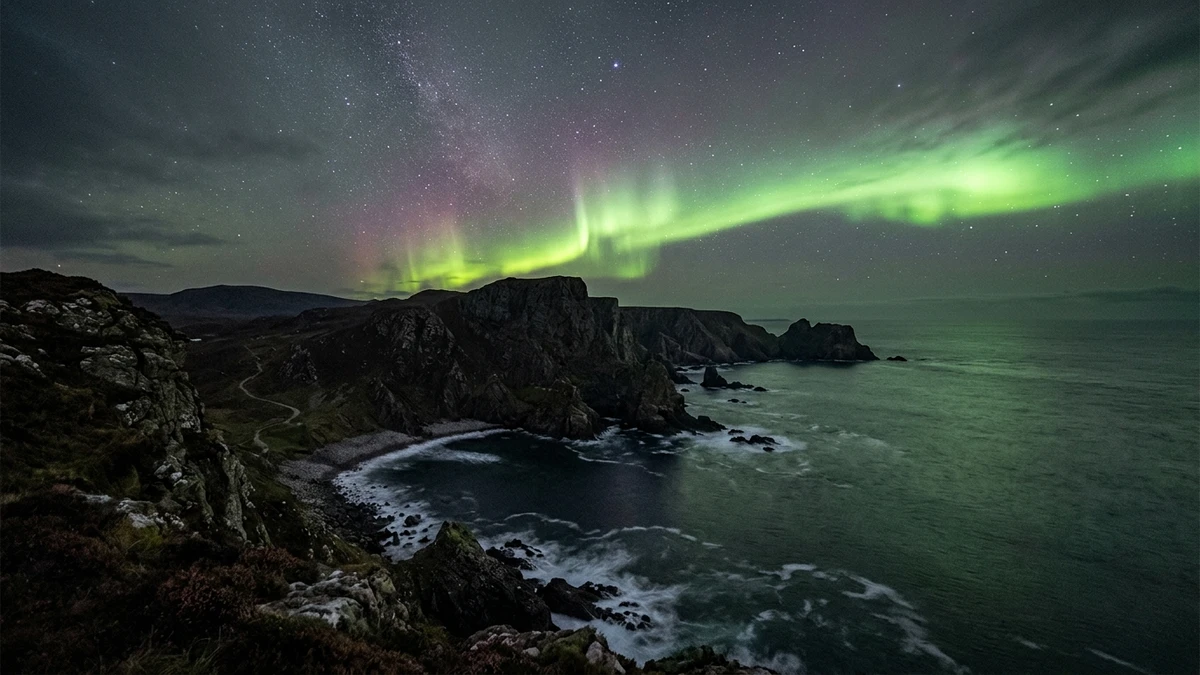
Geomagnetic storms, the kind that bring the northern lights to the UK, happen noticeably more often in the weeks around the equinoxes. Scientists have known this since the 1850s. According to the British Geological Survey, a sizeable magnetic storm happens on nearly twice as many days in March as in June or July.
The best-known explanation is the Russell–McPherron effect, published in 1973. The solar wind carries its own magnetic field. When that field points opposite to Earth's, the two link up and energy pours into our magnetic field, which is what drives an aurora. Around the equinoxes, the angle of Earth's tilt means that opposite-pointing link-up happens more often, so the same solar wind does more. It isn't the only idea: a second one, the equinoctial effect, points to the angle between Earth's magnetic poles and the incoming solar wind. Either way, the seasonal pattern itself is well established.
It also helps that the UK finally has proper dark nights again by late September, after a summer when northern Scotland barely gets dark at all. Check our UK aurora forecast before heading out, see whether there's a live alert on our northern lights tonight page, and read our guide on how to see the northern lights in the UK for where to stand and which way to point your phone.
What Is the Harvest Moon and When Is It?
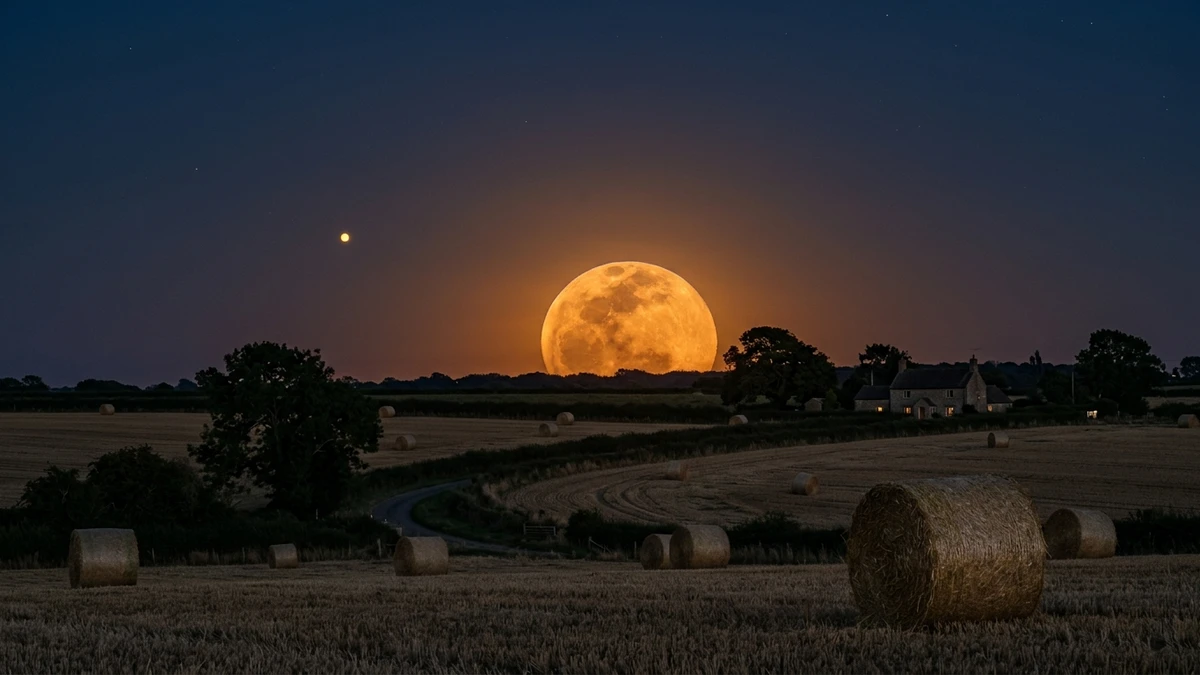
The Harvest Moon is the full Moon closest to the autumn equinox. It's one of the few full moon names defined by astronomy rather than by the calendar. Around this time of year the Moon's path meets the eastern horizon at a shallow angle, so for several evenings in a row it rises only a little later each night instead of the usual fifty minutes or so. Before tractors had headlights, that meant several nights of moonlight straight after sunset.
This year showed it well. From Birmingham, the Moon rose at 18:14 BST on Thursday 24 September, 18:24 on Friday, 18:35 on Saturday 26 September (Harvest Moon night) and 18:47 on Sunday. That was only 10 to 12 minutes later each evening.
| Year | Harvest Moon (full Moon, UK time) | Note |
|---|---|---|
| 2026 | Sat 26 Sep, 17:49 BST | Three days after the equinox |
| 2027 | Thu 16 Sep, 00:03 BST | So the night of 15 to 16 September |
| 2028 | Tue 3 Oct, 17:24 BST | An October Harvest Moon |
| 2029 | Sat 22 Sep, 17:29 BST | About an hour before the equinox itself |
| 2030 | Wed 11 Sep, 22:17 BST | Eleven days before the equinox |
Binoculars for the equinox skies
Kit we've tested and reviewed in full
Long, dark autumn evenings are when a pair of binoculars earns its keep. These are the three we'd point at the Andromeda Galaxy, the Pleiades and a rising Harvest Moon.
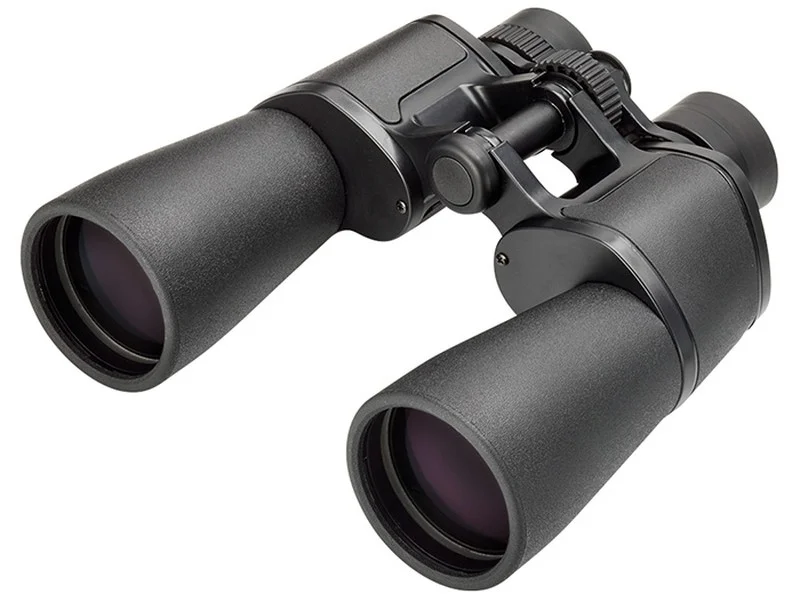
Light enough to hand-hold all evening, with 50mm lenses that pull in star clusters and the Andromeda Galaxy from a dark garden.
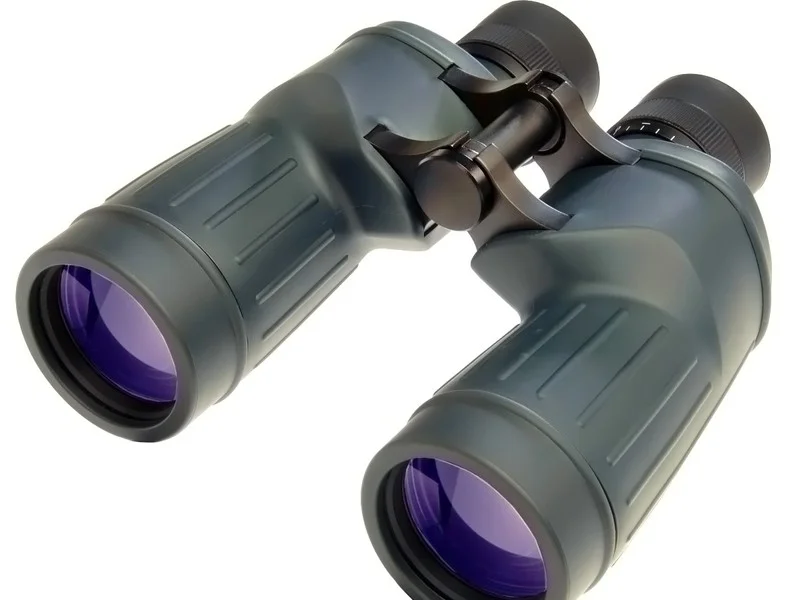
Sharper to the edge and fully waterproof, which matters on a dewy autumn night. The pair to keep for years.
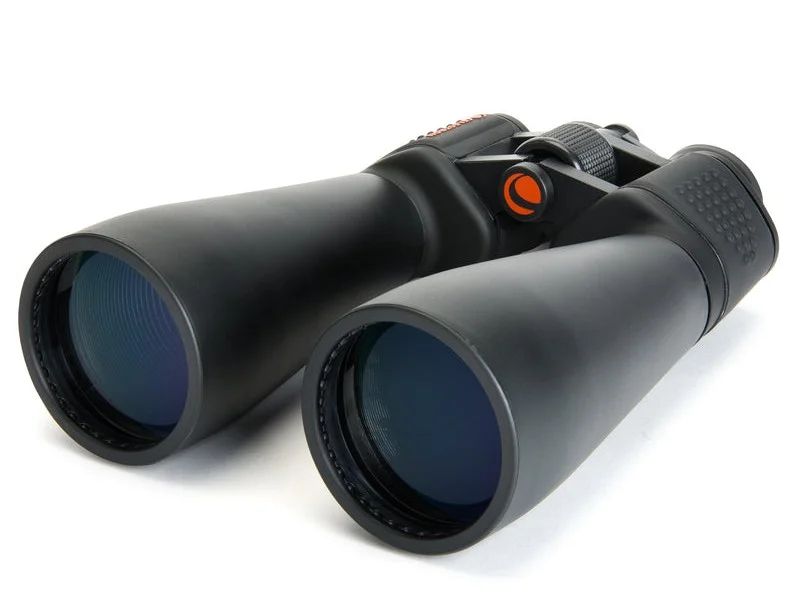
More magnification and more light. At 15x the craters along the edge of a rising Harvest Moon stand out, but you'll want a tripod.
Best binoculars for stargazing
Honest, research-based recommendations for every budget.
Browse all →Affiliate links: you pay the same price, we earn a small commission that helps keep WatchTheStars free.
What Can You See in the Night Sky Around the Equinox?
The two equinoxes show you two completely different skies. Stars return to the same place at the same clock time each year, so these positions hold for any late September or late March. We worked them out for central England. From Scotland, everything in the south sits a few degrees lower and everything in the north a few degrees higher.
Around the autumn equinox, 22:00 BST
- The Summer Triangle is still up. Deneb in Cygnus is almost overhead, Vega is high in the west-south-west and Altair is 44° up in the south-south-west.
- The Square of Pegasus is 50° up in the south-east, the signpost for the autumn sky.
- The Andromeda Galaxy is 52° up in the east, off the corner of the Square. In binoculars on a moonless night it's a soft oval smudge.
- Cassiopeia, the W-shape, is high in the north-east.
- The Pleiades are just rising, 12° up in the east-north-east, a first sign of the winter stars to come.
Around the spring equinox, 21:00 GMT
- Orion is heading down in the south-west, with Sirius low in the south-south-west. It's your last good month for it.
- Leo is 46° up in the south-south-east, the backwards question mark with Regulus at its base.
- The Plough in Ursa Major is high in the north-east, nearly 70° up.
- Arcturus is rising in the east, orange and bright. When it's up in the evening, spring has arrived.
Planets and the Moon move from year to year, so for what's up on any given night use our what you can see in the sky tonight tool, or the UK night sky this week for times, directions and the best nights to go out.
Explore More
Times, day lengths, bearings and star positions calculated with Skyfield and the JPL DE421 ephemeris for Plymouth, Birmingham, Edinburgh and Lerwick. Aurora background: Russell–McPherron effect; British Geological Survey storm statistics via Space.com. Last updated 23 September 2026.