Skinwalker Ranch in the Pentagon's UFO Files: What BAASS Actually Found
A 60-page field report, a monthly report and a DNA test, read from the primary documents
The Pentagon has released its contractor's Skinwalker Ranch files, though the main report never uses the name. On 23 October 2026 the Department of War published a 60-page report titled "Utah Ranch Investigation", written in 2010 by BAASS, the contractor on the DIA's AAWSAP programme, plus monthly reports that mention the same property. The ranch's name is redacted to "[AAP Person 4] Ranch". Fort Duchesne, Bottle Hollow and "Skinwalker Ridge" are left unredacted, which is why everyone has identified it. This page sets out what the files say, and what the team actually found.
| Main file | DOW-UAP-D174, "Utah Ranch Investigation", 60 pages, by Bigelow Aerospace Advanced Space Studies (BAASS) |
| Field trips | 22–26 March and 19–23 April 2010. Dated April, but the content runs to 7 May 2010 |
| Place named | Fort Duchesne, Utah. The ranch itself is "[AAP Person 4] Ranch" |
| Related files | D173 (November 2009 monthly report), D175 (November 2010 capability report), D168–D170 |
| Released | 23 October 2026, seventh PURSUE release |
| Physical results | Dog and raccoon hair. No camera image reported |
Did the Pentagon Release Skinwalker Ranch Files?
Yes, though the main report never uses the name. The Skinwalker Ranch material in the Pentagon's seventh UFO release is a 60-page BAASS report titled "Utah Ranch Investigation" (DOW-UAP-D174), published by the Department of War on 23 October 2026, plus a November 2009 monthly report covering the same property. In the 2010 report the ranch's name is a redaction box reading "AAP Person 4", so the property is "[AAP Person 4] Ranch" or "the Utah Ranch".
Everyone has identified it anyway, because the place names around it are left unredacted: "Fort Duchesne, UT", Bottle Hollow reservoir and "Skinwalker Ridge". The November 2009 report heads one section "Skinwalker Ridge (As named by Ute Tribal members over several generations)". The release doesn't say who owns the property. Its fame comes from outside these files, much of it from the Las Vegas journalist George Knapp, who also features in our Hellfire missile UAP case. Our guide to the Pentagon's seventh UFO file release covers the other 27 documents.
What Was BAASS, and Why Was It at Skinwalker Ranch?
BAASS, Bigelow Aerospace Advanced Space Studies, was the Las Vegas company that held the Defense Intelligence Agency's AAWSAP contract, worth about $22 million, from 2008 to 2010. The contract talks about future aerospace threats. BAASS's own reports describe a UFO investigation outfit with staff investigators, security officers and field teams. Until this release, its ranch work was known mostly from insiders' accounts such as the 2021 book Skinwalkers at the Pentagon.
The ranch shows up early. BAASS's staff lists for March and April 2009 end with a row for "Utah Ranch Security Officers" (D169, D170). Its December 2008 management plan describes earlier work at a location it doesn't name, where "having placed ourselves in residency at the location for a substantial period of time, we began to 'participate' in what we considered games and demonstrations" (D168, p.20). By November 2009 BAASS was telling its customer that "A large part of the current investigations at BAASS are focused on the Utah ranch and surrounding areas" (D173).
The 2010 report never mentions the DIA, AAWSAP or any contract. The link comes from the Department of War's AAWSAP tag on the file, and from BAASS's November 2010 capability report (D175), which cites the DIA contract number and lists a "Utah Ranch Database" in its data warehouse.
What Did the Skinwalker Ranch Investigation Do in 2010?
The 2010 Skinwalker Ranch investigation sent a BAASS "Utah Task Force" of two investigators and two scientists, plus a director, to Fort Duchesne on 22–26 March and 19–23 April 2010. Its job was to find evidence of "the reported unidentified creatures and lights", interview new witnesses and set up cameras. The abstract lists four aims.
Nothing else in the 2010 report describes a game, a puzzle or a communication attempt. The puzzles are in the 2009 monthly report.
By 7 May 2010, "over twenty-five (25) people" had been interviewed, mostly at home: life-long residents living within a mile or two of the ranch, among them four local police officers, eleven Native Americans, twelve ranchers, six business owners and about fifteen members of the Mormon Church. The groups overlap, so the numbers can't simply be added up. Eleven separate people said they had seen a two-legged "dog-like" creature or orbs of light.
The team installed "seven (7) Moultrie digital game cameras" on the ranch and a neighbouring property, and BAASS security staff stationed on the ranch collected the memory cards weekly. The appendix lists nine camera IDs. No photograph or video from any of them appears in the report.
What Did the Skinwalker Ranch DNA Test Show?
The Skinwalker Ranch DNA test found dog and raccoon. Of four hair samples sent to an outside laboratory, one matched raccoon. The other three, two from a barbed-wire fence and one from a known dog, shared a single canine sequence, and BAASS concluded the fence hair most likely came from that dog.
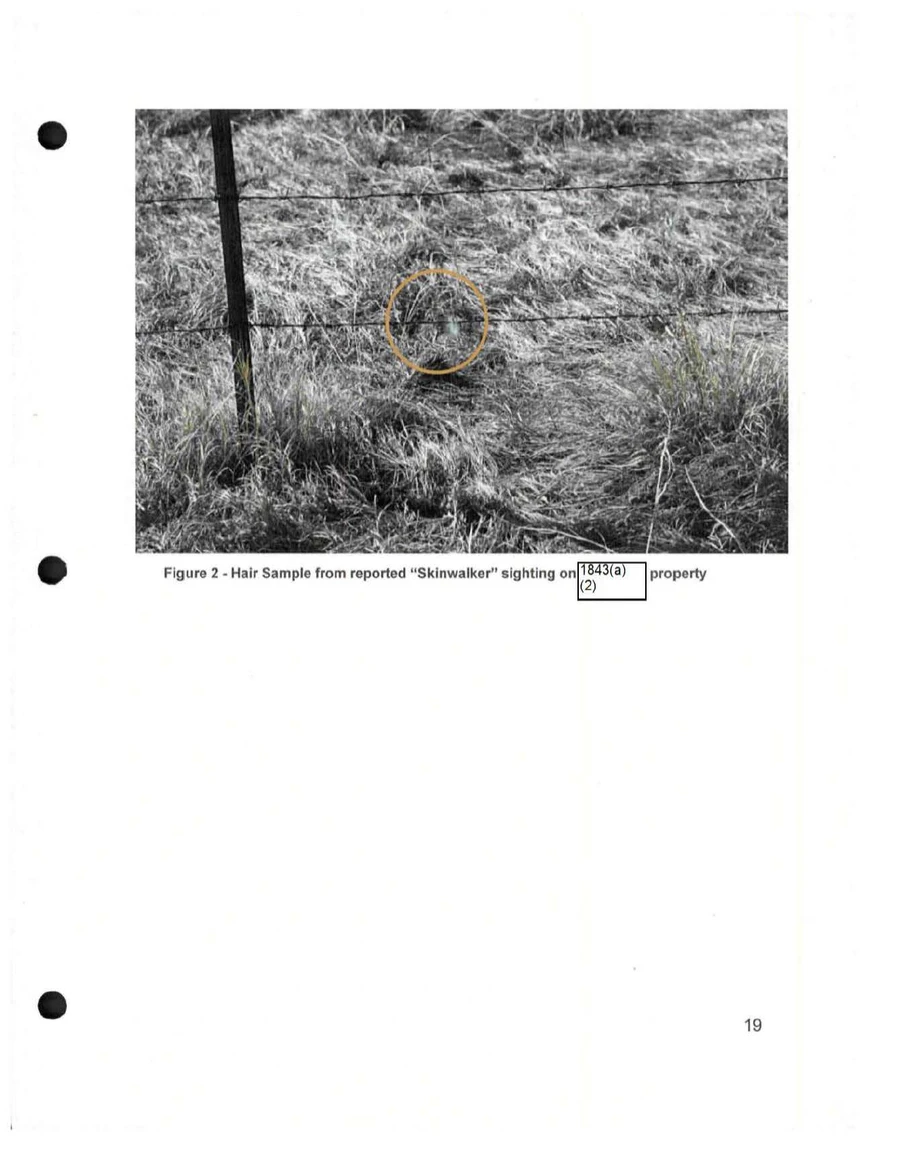
A couple of days before the March trip, a local man said he saw a "Skinwalker" run past his house in the dark, chased by his dogs, and heard it hit his barbed-wire fence again and again. An investigator found fur on the wire where he said it struck. The fourth sample was hair stuck to a "red stained rock" found on the mesa in January 2010.
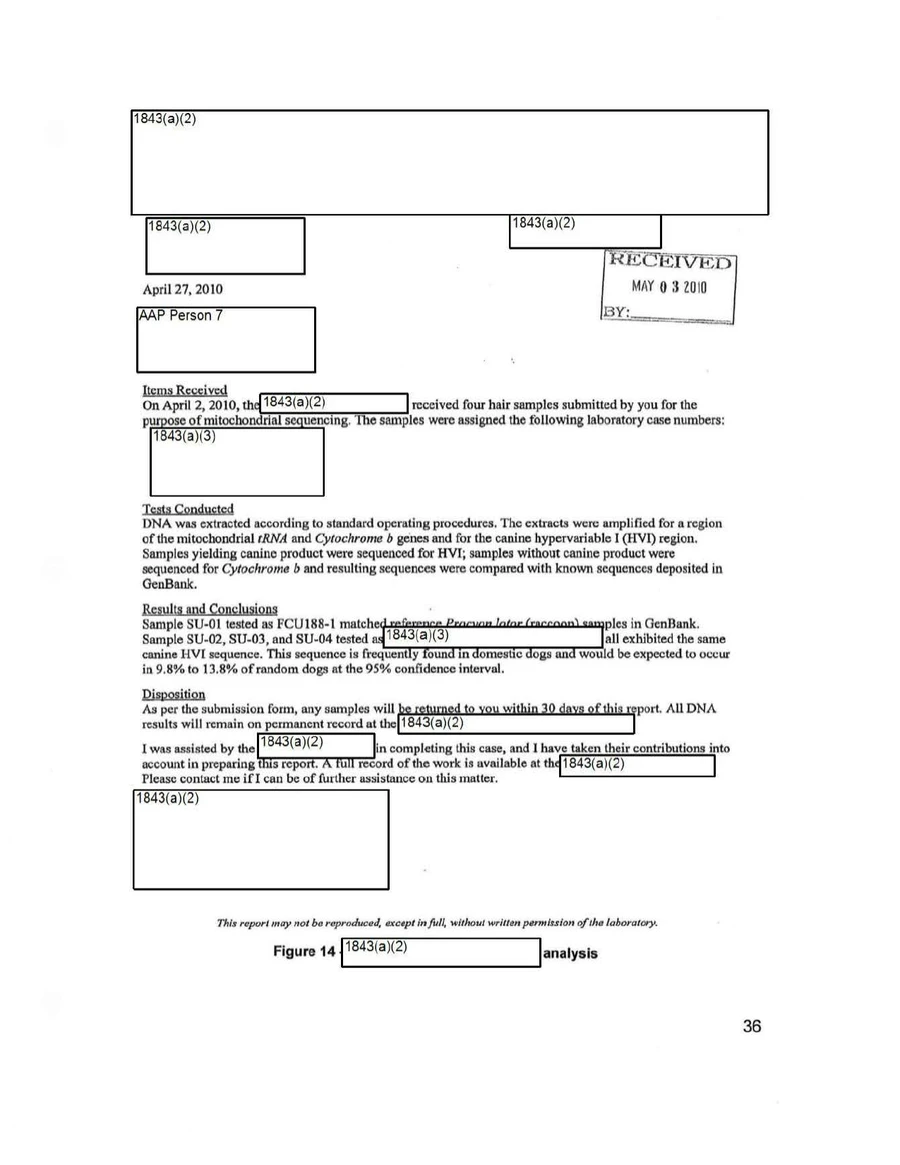
The laboratory, whose name is redacted, received the samples on 2 April 2010 and reported on 27 April. Sample SU-01, the rock hair, "matched reference Procyon lotor (raccoon) samples in GenBank". Samples SU-02 to SU-04 "all exhibited the same canine HVI sequence", which is "frequently found in domestic dogs and would be expected to occur in 9.8% to 13.8% of random dogs".
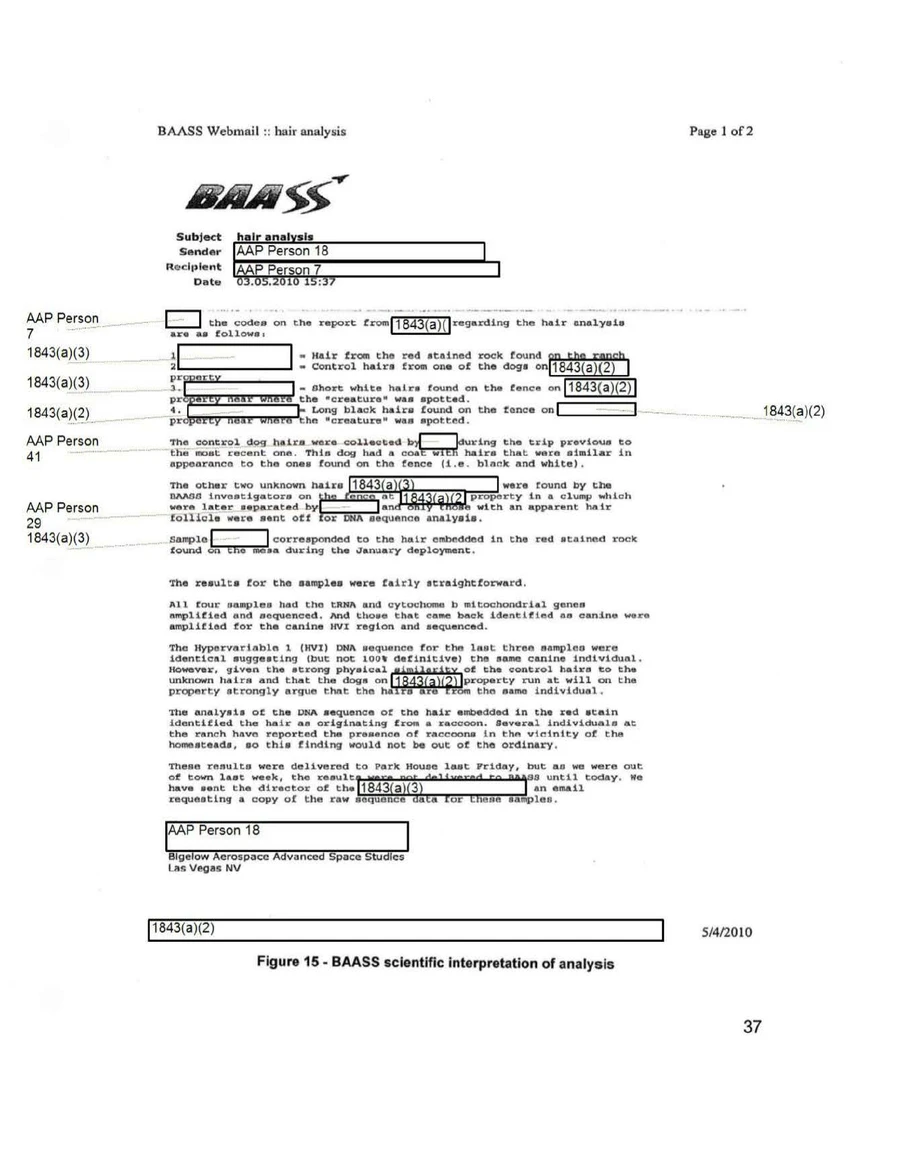
A sequence carried by roughly one dog in ten can't tie hair to a single animal by itself, so BAASS added the physical evidence in an email of 3 May 2010. The control hairs came from "one of the dogs" on the same property, black and white like the hair on the fence. The identical sequences suggested one dog, "(but not 100% definitive)". BAASS added that the similar look of the hairs, and the dogs' habit of running "at will on the property", "strongly argue that the hairs are from the same individual". Raccoons had been reported around the ranch, "so this finding would not be out of the ordinary."
The result doesn't prove there was no creature. It shows that the hair collected after the sighting came from a dog, most likely one from that property. The report's summary still says the samples "are currently undergoing scientific DNA analysis": nobody updated it to match the appendix.
What Did the Skinwalker Ranch Witnesses Describe?
The Skinwalker Ranch witnesses described creatures, lights and stranger things, and the report records them as allegations. It says the "vast majority" of the creature reports "have allegedly occurred within the last five to seven years", and its stated goal was evidence "of purported anomalies". Nothing in it confirms any account. The main claims, as recorded:
- Dog- or wolf-like creatures that walk and run on two legs, six to seven feet tall when standing (the "dogman" of much online coverage), from eleven separately interviewed witnesses.
- Small, hairy, three-foot "troll"-like figures that run like chimpanzees, plus "worm"-like creatures, a "pterodactyl"-like bird and "little people".
- A red ball of light that one man said came "About 4 inches" from his face, leaving warmth, a high-pitched whistle and numbness for a few minutes. He was fixing his car radio during the interview and "was unable to give his full attention". It is the kind of claim the DIA UFO injury study discusses.
- A "portal" seen about twenty years earlier, a transparent wall rippling like water. The witness "was not sure what a portal was until she read the 'Skinwalker' book".
- A long-haired figure in rags seen on rooftops, which the witness said "is also known in Ute culture as the 'Basket Lady'".
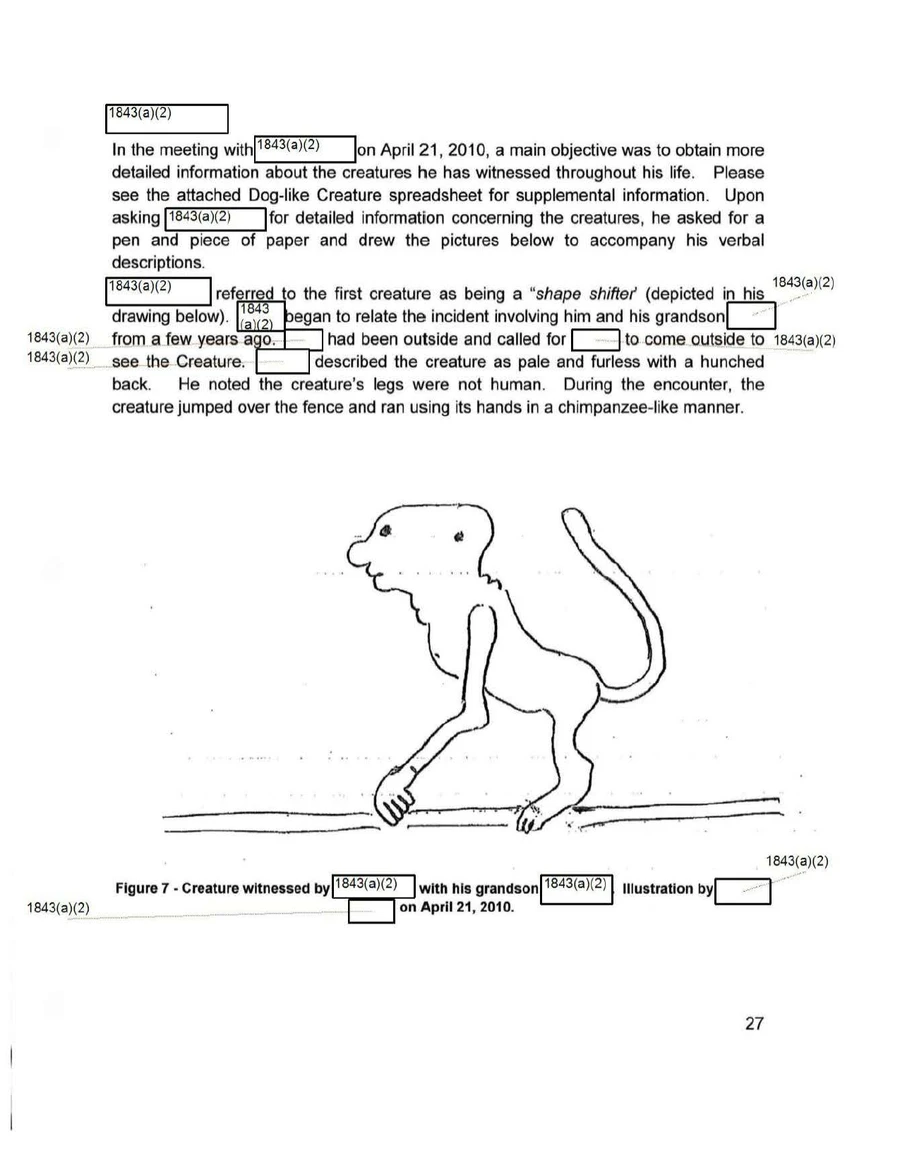
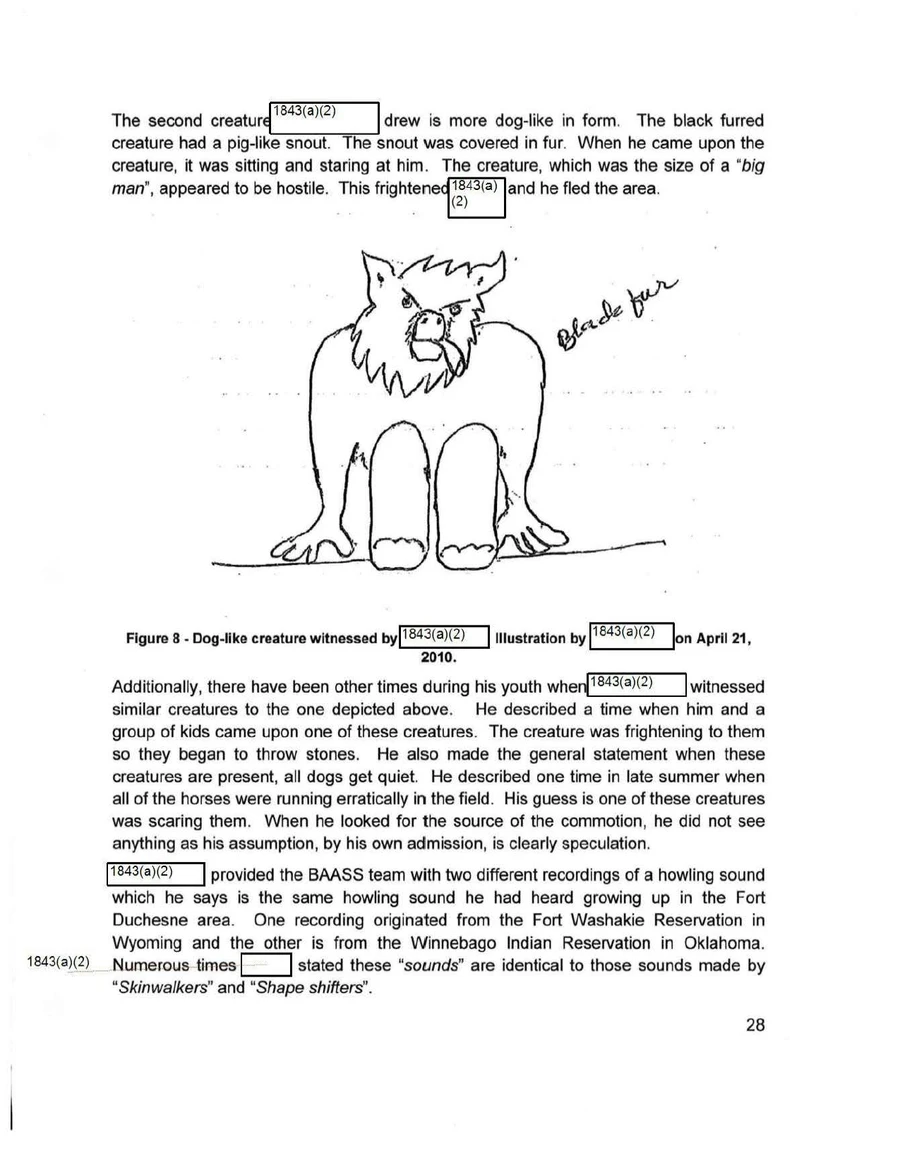
"Skinwalker" is the witnesses' word. It comes from Navajo tradition, while the report attaches the "Basket Lady" to Ute culture. BAASS's November 2009 report said this knowledge "must be gathered while maintaining the highest level of respect for the tribal members and Native American culture." Interviews in one corner of Utah are no guide to what any tribe believes, and we don't repeat anything that could identify the people who spoke.
Skinwalker Ranch Surveillance and Experiments: Pennies, Puzzle Boxes and Plants
BAASS guarded Skinwalker Ranch around the clock from August 2009 and set tests for whatever might be there, from pennies and locked puzzles to plants meant to register radiation.
"Since BAASS initiated round the clock surveillance of the Utah property on August 3, 2009," the November report says, its security officers had reported multiple incidents. Their logs from 10 to 21 November describe night-vision patrols, photographs checked for "anomalies/orbs", pennies found moved, flipped or missing, and one officer's "cold grip" on an ankle in the night. BAASS's own verdict was blunt:
"...they can be easily explained by (a) fraud perpetrated by the officers, (b) trespassers, (c) animals etc. In short these reports are difficult to interpret."· BAASS November 2009 monthly report (DOW-UAP-D173)
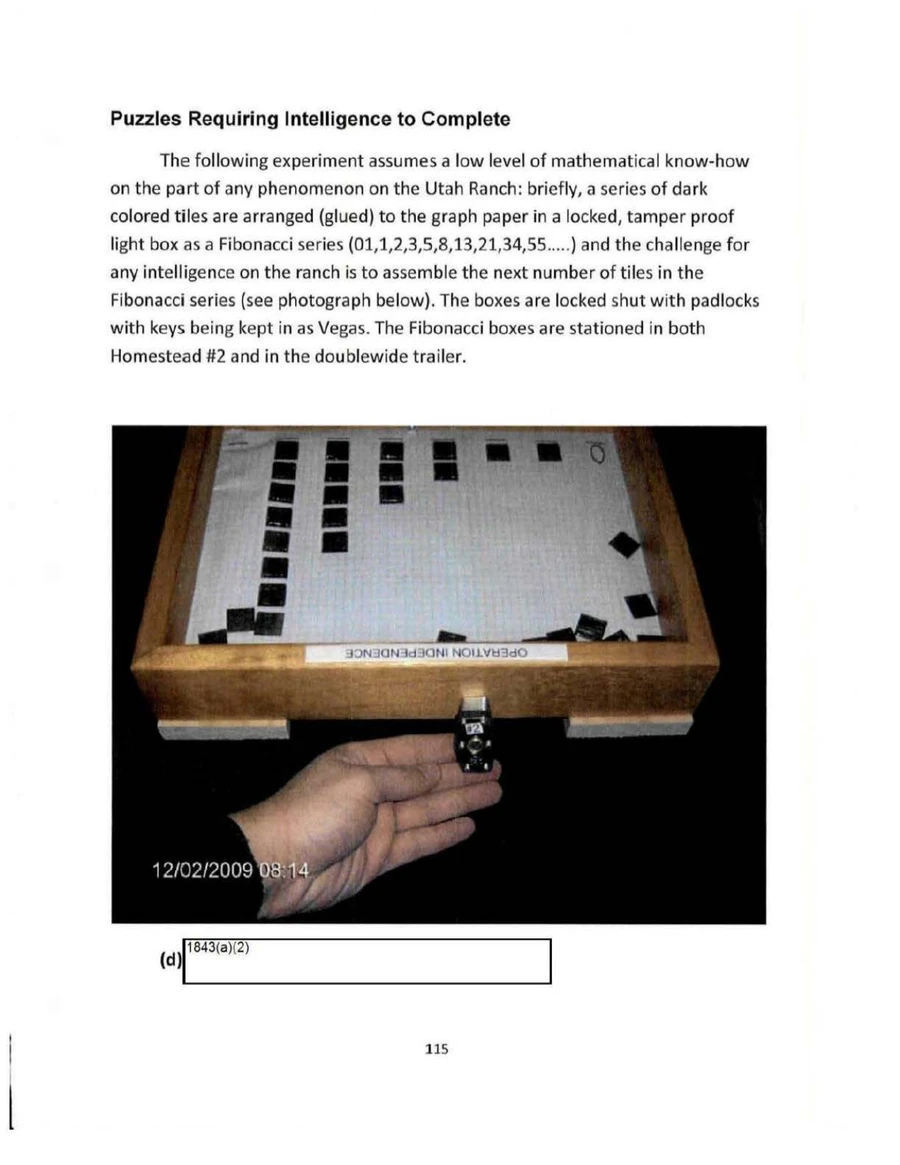
The experiments were odder. BAASS scientists sowed sweet corn, beans and peas on the ranch, with control trays in Las Vegas, to test whether conditions there affected growth. Puzzles were "assembled in Las Vegas, photographed, locked in briefcases" and left in a "hotspot" on the ranch for a month, with the keys kept in Las Vegas. A padlocked light box held dark tiles laid out in a Fibonacci series, and "the challenge for any intelligence on the ranch is to assemble the next number of tiles". Neither report gives a result.
In 2010 BAASS added plant biosensors: six tobacco and six spiderwort plants, placed in a trailer on the ranch on 6 April. The aim mentions transgenic plants, but the tobacco test "is based on a naturally occurring mutation at the Sulfur (Su) gene". Two weeks later the leaves showed no tell-tale dark green spots ("none are present at this time"), it "was too soon" to examine the spiderwort, and a seed trial started on 22 April had no results yet.
The November report also shows BAASS watching its critics. From late summer 2009 it monitored a website about the ranch, and an investigator's memo called the private individual behind it a threat. The memo holds personal details we won't repeat. BAASS later found most of the material came from the internet and said it "no longer considers him a threat".
What Was the Skinwalker Ranch Radio Signal?
The Skinwalker Ranch radio signal is the only instrument reading in the 2010 report: two L-band signals, around 1.2 GHz, picked up at one point on the mesa. The report calls it "a strong, yet to be explained, signal" and says the source still had to be checked against satellite transmissions.
The figures are 1210, 1213 and 1216 MHz, then 1232.5, 1235.5 and 1238.5 MHz, at a measuring point labelled D2. The report says these bands are allocated to radionavigation and Earth exploration satellites, radiolocation and space research, and ends:
"Further measurements and research, particularly into satellite transmitting frequencies and times will be required to identify the origin of these signals."· Utah Ranch Investigation, p.9 (DOW-UAP-D174)
The text has its own caveats. The "not present the day before" comparison was made at a different spot (D0, then D2), and no date, instrument or signal strength is given. Our note, not the report's: the 1215–1240 MHz band carries the GPS L2 signal at 1227.60 MHz and is shared with long-range L-band air-surveillance radar. You can't see GPS satellites, but our guide to spotting the ISS and other satellites covers the ones you can. One reading with no source attached is a loose end, and the report treats it as one.
What Did BAASS Find at Skinwalker Ranch?
On the evidence in the released files, BAASS found testimony, dog hair, raccoon hair and one radio reading at Skinwalker Ranch. It went looking for photographs, radiation and magnetic readings, plant responses and contact with "the source/origin" of the anomalies, and none of those appears in the report.
In the files
TestimonyOver 25 people interviewed, with spreadsheets of creature, light and "portal" descriptions.
In the files
Hair DNARaccoon from the mesa rock. Dog from the fence, matching a dog on the same property.
In the files
One radio readingTwo L-band signals at one point on the mesa, source unchecked.
Not in the files
Camera imagesSeven game cameras installed. No photograph or video reported.
Not in the files
Radiation, magnetic or soil readingsListed as aims. No results given.
Not in the files
Plant, seed or puzzle resultsPlants on site two weeks with nothing to show. Seeds just sown. No puzzle outcome.
Unknown
Snow tracksBAASS says it has photos of unidentified tracks, some appearing to walk "through" a barbed wire fence. They aren't reproduced.
The ranch still mattered to BAASS. In November 2009 it had started "a separate Capella database for the events on the Utah ranch", and its 2010 capability report lists a "Utah Ranch Database" and a "Post-Utah Ranch Effects Database" among eleven, alongside NIDS, Blue Book, MUFON and, for British readers, a "United Kingdom Release Database". BAASS says it ran a first-level statistical analysis of the ranch data, but it gives no results or record counts.
The same November 2009 conclusion lists what had stalled: "Northern Tier, entry into classified archives, Project Oral History" were "on hold because BAASS currently does not have the Need to Know". Northern Tier looked at old UFO reports from nuclear bases, the subject of our UAP and nuclear weapons page.
Strange Lights in the Night Sky: How to Check What You Saw
To check a strange light in the night sky, rule out the ordinary first: most turn out to be aircraft, satellites, the International Space Station or a bright planet such as Venus low in the sky. Lights are the commonest thing in the ranch file too, with about 15 light reports from 1966 to 2010, and one witness first took a blue light for a street light, then wondered about a flare or a meteor. Check what you can see in the sky tonight and look up ISS passes tonight. Our UK night sky this week lists the bright planets, and stargazing for beginners covers the usual suspects.
Most lights at night have an ordinary answer
Kit we've reviewed in full
Lights in the night sky are the commonest UFO report anywhere, over a Utah ranch or a Yorkshire farm. A steady pair of binoculars shows you an aircraft's navigation lights, a drone's arms or a planet's disc within seconds.
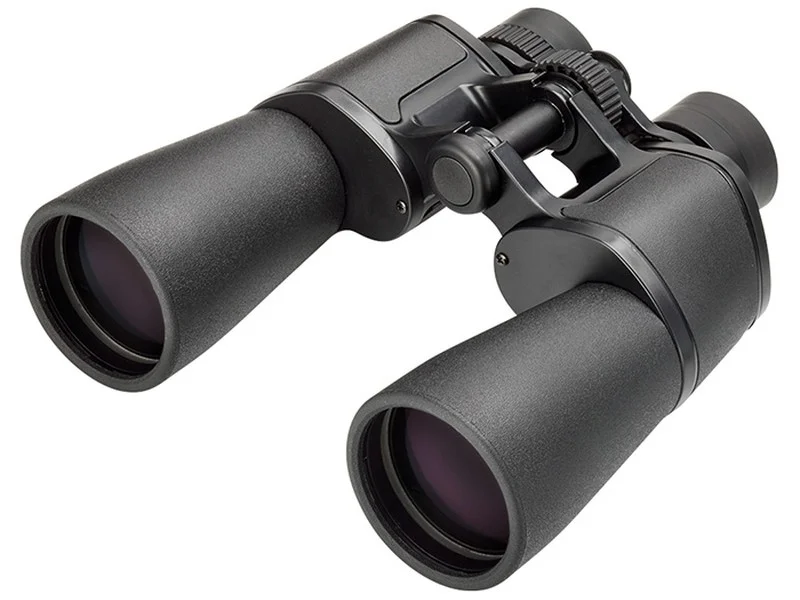
Bright and quick to aim, so you can get onto a moving light before it has gone.
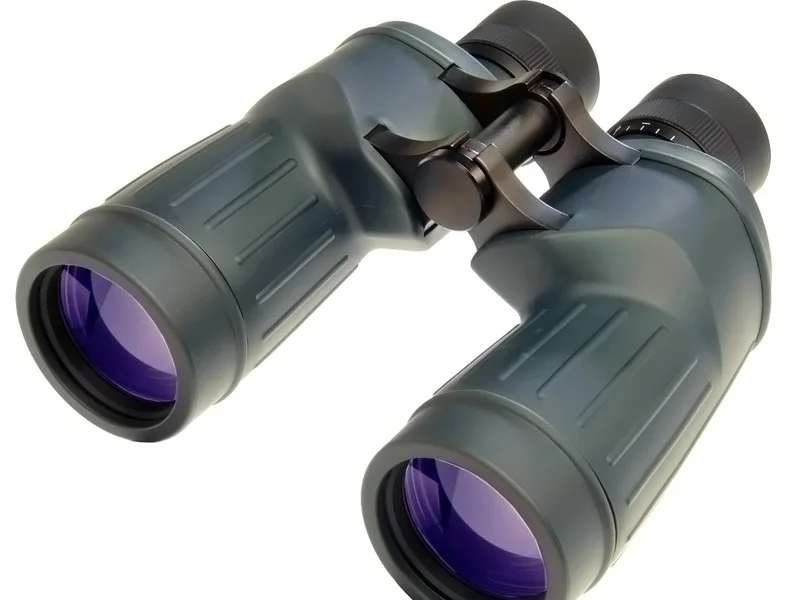
Built for long, cold nights outdoors, which is when ranch lights get reported.
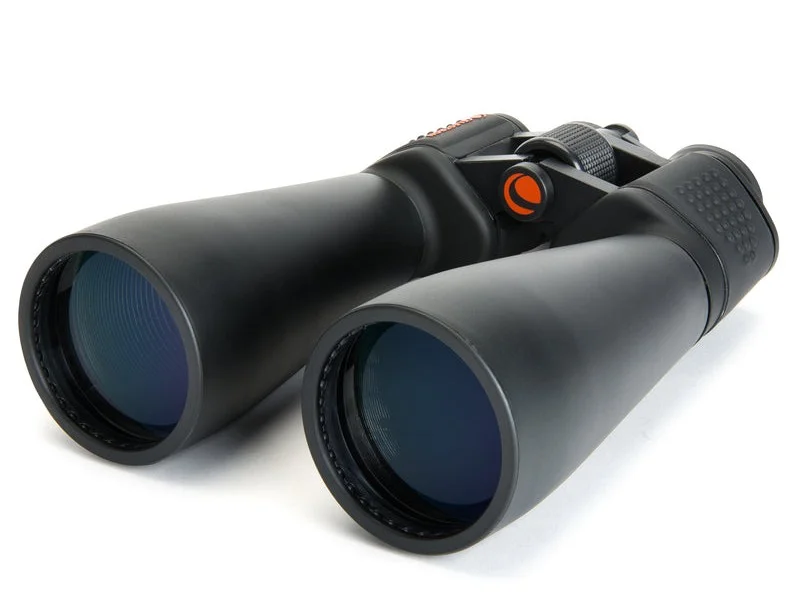
Extra power to split the red and green navigation lights of a far-off aircraft. Best on a tripod.
Browse all our binocular reviews
Honest, research-based recommendations for every budget.
Browse all →Affiliate links: you pay the same price, we earn a small commission that helps keep WatchTheStars free.
Do the Skinwalker Ranch Files Prove Anything?
No. The Skinwalker Ranch files prove that a Pentagon contractor spent a lot of time and money on the ranch, not that anything unexplained happened there. They are BAASS's account of its own work, written for its customer, and every creature, light and portal in them is something a witness told an investigator. Those accounts might be sincere or mistaken. The files can't tell you which.
Read as a record, they are revealing. BAASS kept guards on the ranch day and night, built databases around it and planned to make contact through puzzles. When it sent hair to a laboratory, the answer was a dog and a raccoon, and BAASS accepted it. It even warned its customer that its own officers' reports could be fraud, trespassers or animals.
How to Read the Skinwalker Ranch Files Yourself
The Skinwalker Ranch files are free to read. Search for D174 in our PURSUE files browser to open the Utah Ranch Investigation from our own mirror, and D173, D175 and D168 to D170 for the monthly reports, the capability report and the management plan. The originals are on the Department of War's war.gov/UFO site. Our guide to the US PURSUE releases explains the designations, and our UAP research hub lists every case we've covered.
There are two errors in the Pentagon's catalogue entry for D174. It gives the location as Las Vegas, which is BAASS's base, not the ranch, and it calls the plant experiments "planned" when the plants had been on site since 6 April 2010. The catalogue also dates AAWSAP to 2008–2012, where BAASS's own capability report says "Between 2008 and 2010".
// Page Update Log //
Related Reading
Header image: an illustration generated with Google Gemini, not a photograph of the ranch or of the fence in the report. Report pages: DOW-UAP-D174 and DOW-UAP-D173, BAASS documents released by the US Department of War, PURSUE Release 7. Witness sketches: drawn by witnesses for BAASS investigators in April 2010, via DOW-UAP-D174.
More UAP cases
- Reptilian AliensSerpent men · Officer Schirmer · David Icke
- The 2025 Military UFO EncounterLATE 2025 · CLASSIFIED US MILITARY TEST RANGE · AMERICAN SOUTHWEST
- Project SIGN: The 1947–48 FileSEPTEMBER 1947 – NOVEMBER 1948 · 245 PAGES · RELEASED 7 AUGUST 2026
- The 2026 Western US Black Triangle: What the AARO and FBI Files SayJUNE 2026 · WESTERN UNITED STATES (SITE UNNAMED) · STATUS: NO CONCLUSION
- Project Northern Tier: AAWSAP and the Nuclear-Base UFO Cases2008–2010 · MONTANA · MAINE · MICHIGAN · NORTH DAKOTA · STATUS: ON HOLD, NOVEMBER 2009
- The Art Wallace Account: An Alternative Version of the Rendlesham Forest Incident