Key takeaways
- In 1946, a year before the phrase 'flying saucer' existed, around a thousand reports of fast-moving 'ghost rockets' were logged over Sweden, Finland, Denmark and Norway
- A US War Department intelligence review from January 1947, declassified on 7 August 2026, records the wave in detail, including a Swedish Air Force pilot's close encounter with a wingless 50-foot object
- Sweden's Defence Staff privately insisted the objects were Soviet missiles fired from Peenemünde, while producing, in the review's words, no fragments, no impact points and no evidence
- US analysts judged only a handful of the thousand reports were real missiles, with the high-altitude sightings 'definitely' meteors, the Perseids peak fell right inside the wave
- Eighty years on, no wreckage has ever been recovered and the ghost rockets have never been fully explained
Jump to section 6 sections
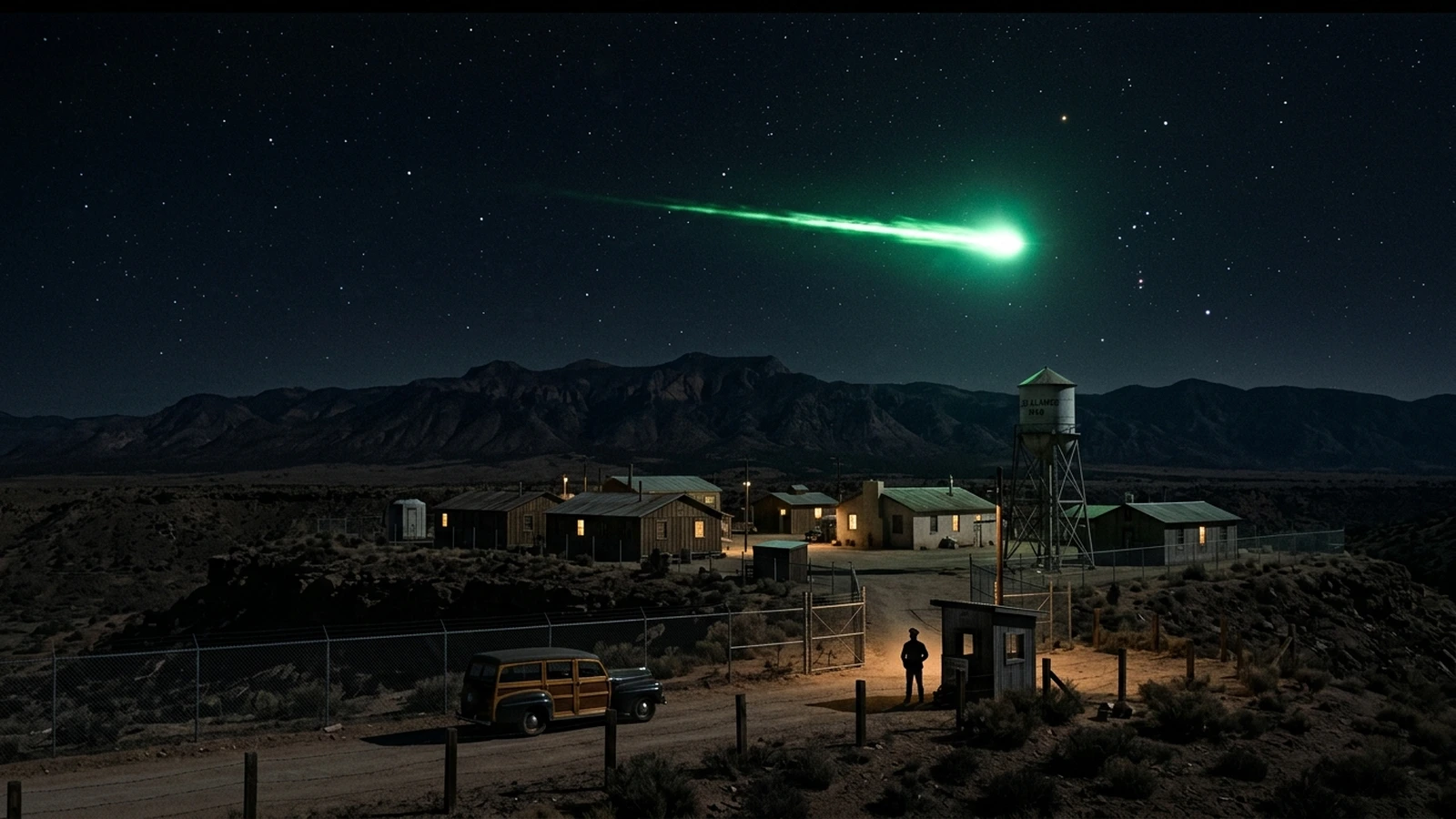
A year before anyone had heard of a flying saucer, something was crossing the skies of Scandinavia. Through the summer and autumn of 1946, Swedes, Finns, Danes and Norwegians reported fast, low, missile-like objects by the hundred: glowing, cigar-shaped, sometimes diving into lakes and leaving nothing behind. The press called them spökraketer: ghost rockets.
Among the papers in the Pentagon's fifth UFO file release is the US War Department's own intelligence review of the wave, written in January 1947 and classified Secret for decades. It's eight pages long and dry as dust, and it repays a slow read, because it shows exactly what military intelligence knew about the first great UFO wave of the modern era, months before that era officially began.
What Were the Ghost Rockets of 1946?
According to the review, the first flying missiles were reported over southern Sweden in late May 1946, and the press supplied the name. By June the objects were being seen over Finland and Denmark; by July, sightings over Sweden had multiplied and Norway had joined the list. When Sweden's Defence Staff asked the public to report anything unusual, it received almost a thousand reports by the end of July alone. Modern catalogues of the wave, built from newspaper archives, put the full year's total around two thousand.
Remember the date. Kenneth Arnold's sighting, the one that gave the world the phrase "flying saucer", came in June 1947. The ghost rockets predate the entire saucer era by a full year, which is why historians of the subject treat 1946 as the true starting gun. Whatever was over Scandinavia, nobody was primed by saucer headlines to see it.
'A Ball of Fire With a Tail': What Witnesses Reported
The review is blunt about the quality of most reports: untrained observers, wildly varying descriptions. But two descriptions dominated: "a ball of fire with a tail" and "a shiny cigar-shaped object". Reported altitudes ran from treetop height to 160,000 feet, the highest almost all from Finland, and speeds from 65 mph to "lightning fast". Most flew level. A few were seen diving into the ground or into lakes, or exploding in the air.
And then the detail that has kept this case alive for eighty years: "In no case have fragments been found other than bits of material described as 'nonmetallic slag'." Lakes were dragged. Impact sites were searched. Nothing military, nothing metallic, nothing traceable was ever recovered, not by the Swedes, and, as the review notes pointedly, not by any US personnel either.

The Swedish Air Force Pilot's Sighting
One report stood above the rest, and the review gives it most of a page. On 14 August 1946, at 10 in the morning, a Swedish Air Force pilot flying at 650 feet over central Sweden saw a dark, cigar-shaped object about 50 feet long and three feet in diameter, passing 200 feet above him and roughly 6,500 feet away, at an estimated 400 mph. It had no visible wings, rudder or projections of any kind, and no flame or light.
The analysts didn't swallow it whole. The pilot reported the object holding constant altitude over the terrain, following the landscape, and the review notes drily that a wingless missile can't do that, which "casts doubt on the reliability of the entire report". The pilot himself allowed there might have been wings he couldn't see. But he was firm on one point: it wasn't a Swedish jet, because none was flying near him that day. A trained military observer, in daylight, at close range, describing a wingless 50-foot cylinder at 400 mph: reports like this are why the wave couldn't simply be filed under meteors and forgotten.
Tell a meteor from a mystery
Kit we've tested and reviewed in full
Most 1946 witnesses had never studied the sky and had seconds to judge what they saw. Spend a few evenings meteor-watching with decent binoculars and you'll recognise a fireball instantly, and know when something isn't one.
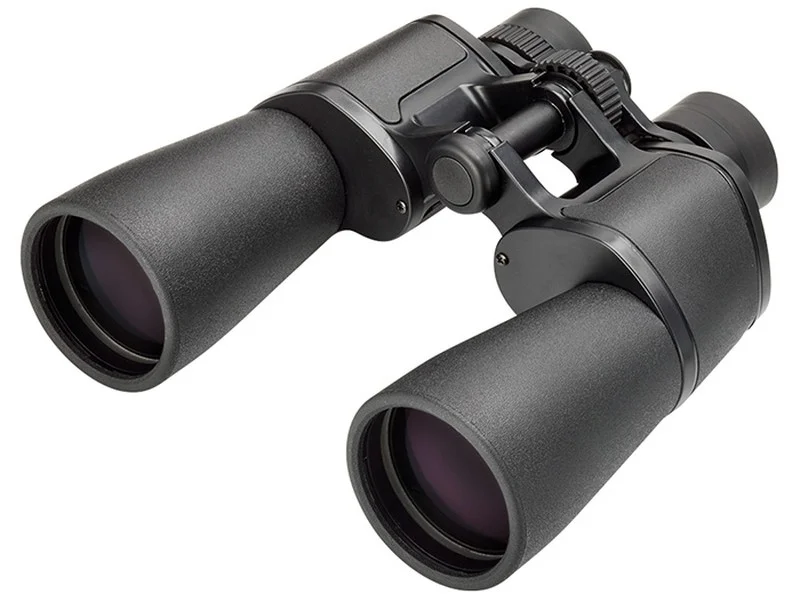
Wide field of view for sweeping the sky during meteor showers, and quick enough to catch a slow fireball's smoke trail before it fades.
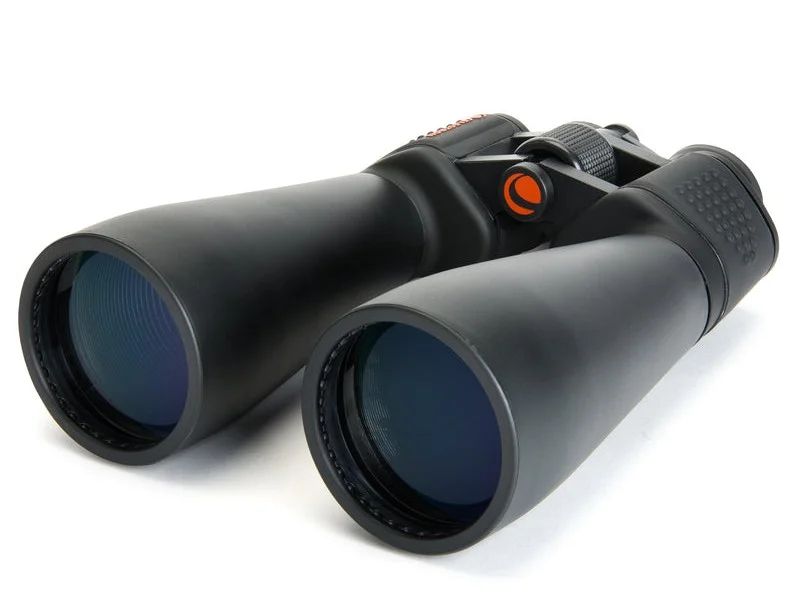
Big 70mm lenses built for twilight and darkness: the conditions every ghost rocket was reported in. Add a tripod and faint satellites become easy.
Affiliate links: you pay the same price, we earn a small commission that helps keep WatchTheStars free.
Were the Ghost Rockets Soviet Missiles?
The theory everyone reached for in 1946 was obvious: the Soviets had captured Peenemünde, the Baltic home of the V-1 and V-2, a year earlier. Test missiles overflying Sweden would be alarming but explainable. Sweden's Defence Staff told the US military attaché, repeatedly and definitely, that they believed rockets launched from Peenemünde were crossing their country.
The US review took the idea seriously and worked through it. The Soviets could probably build V-1 derivatives with 500-mile range. Three witnesses described a sound like an outboard motor, the signature of the V-1's pulse-jet, and one said the object looked exactly like the V-1s he'd watched over wartime London. There was evidence of missile work at Stolp and possibly the Baltic islands of Oesel and Dago.
But the same review keeps tripping over the absence of evidence. The Defence Staff "have not been able to produce any evidence to support these statements". No fragments, no impact points, nothing. And Sweden's public line kept shifting, from "not meteorites" in August to "mostly celestial origin" by October, a reversal the analysts read as political: a neutral country talking down a story that was becoming a diplomatic problem with Moscow, at a moment when the Swedish public wanted defence spending cut. There's a strange familiarity to a government privately convinced and publicly evasive; it's the same pattern the files show inside the US Air Force eighteen months later.
The deeper problem with the Soviet theory only grew with time. Early missiles were unreliable and inaccurate: repeatedly test-firing them over a neutral neighbour, for months, without a single one crashing recoverably, borders on the miraculous. When the Soviet archives opened decades later, no record of any such test programme over Scandinavia emerged. Even the CIA's own Cold War UFO files show the intelligence world still logging unexplained objects over Soviet territory years afterwards, the mystery pointed in every direction at once.

What the Declassified 1947 Review Concluded
The review's verdict is careful, and startling if you read it slowly. The best evidence, it says, supported "only 2 or 3 real incidents, perhaps as many as 5 or 10, of low-flying missiles of the V-1 type". The high-altitude reports "seem definitely to have been meteors or fireworks".
On the meteors, the analysts were surely largely right. The wave peaked in July and August, and mid-August brings the Perseids, the year's most reliable crop of fast, bright streaks. If you've ever watched the Perseid meteor shower from the UK, you'll know how easily a bright fireball with a glowing train could become a "ball of fire with a tail" in a newspaper report; our guide to meteor showers lists plenty of others that salt the summer sky. A footnote in the review even tracks the contagion spreading: by autumn 1946, similar objects were being reported over Belgium, Greece, Italy, Morocco and Austria, most of them "due to explainable causes".
But notice what the conclusion actually concedes: after subtracting the meteors, the fireworks and the excitable newspapers, the analysts still believed a residue of real, unexplained, low-flying objects remained: machines, in their reading, that someone had flown over Sweden and that nobody could produce a single bolt of. Eighty years later, that residue is exactly where the mystery still lives.
Why the Ghost Rockets Still Matter
The ghost rockets are the modern UFO era's founding case, and the template is all there a year early: a wave of sightings, a plausible foreign-technology theory, official investigation, political pressure to hush it, a public explanation of meteors, and a stubborn core of reports from credible witnesses that fits none of it. Within two years, American skies would produce their own version: the green fireballs that haunted Los Alamos, watched by atomic scientists and never explained. The pattern has barely changed since; only the sensors have.
The eight-page review is free to read at war.gov/ufo, catalogued as DOW-UAP-D099 in Release 05, alongside the other historical papers in our UAP document archive. It's worth ten minutes of your time, if only for the reminder that the sky was strange before we had a word for it.
Sources:
- Department of War UAP file release (PURSUE), Release 05 · DOW-UAP-D099, "Ghost Rockets" feature, War Department Intelligence Division digest, January 1947
- Ghost rockets · Wikipedia
- PROJECT 1947: Sweden · Ghost Rocket Reports, 1946
Frequently Asked Questions
Equipment guides
Related topics
Ian ClaytonAmateur astronomer and founder of WatchTheStars.co.uk, dedicated to helping others explore the wonders of our universe. Full profile →