Key takeaways
- The best telescope for a child this Christmas is the Sky-Watcher Heritage 130P for most children from about age 8, a tabletop telescope with nothing to align
- Children aged 5 to 7 get more from a light pair of binoculars such as the Opticron Adventurer 8x42 than from any telescope
- Teenagers who live on a phone take to a smart telescope such as the Dwarf 3 or Seestar S30, or the phone-guided StarSense Explorer DX 130AZ
- Skip anything sold on magnification, anything on a thin tripod and any equatorial mount; these are the telescopes that end up in a cupboard
- The Geminids meteor shower peaks on the night of 13 to 14 December 2026 and the Cold Moon is full on Christmas Eve, so there is something to look at straight away
Jump to section 8 sections
- Best Telescope for a Child This Christmas: The Short Answer
- Best Telescope for a 5 to 7 Year Old: Binoculars First
- Best Telescope for an 8 to 12 Year Old: Sky-Watcher Heritage 130P
- Best Telescope for a Teenager: Dwarf 3, Seestar S30 or StarSense Explorer
- Telescopes Not to Buy a Child for Christmas
- Ordering a Telescope in Time for Christmas
- The One Safety Rule for a Child's Telescope
- First Night Plan: Geminids, the Christmas Eve Full Moon and the Craters
Best Telescope for a Child This Christmas: The Short Answer
The best telescope for a child this Christmas is the Sky-Watcher Heritage 130P, at £194, for most children from about eight years old. It is a tabletop Dobsonian: the child pushes it to point it, there is nothing to align and no battery to charge, and it shows the Moon's craters, Jupiter's cloud belts and Saturn's rings on the first clear night. Under about eight, buy binoculars instead. For a teenager who wants photographs, a small smart telescope is the present that gets used.
This post is the Christmas version of our full guide to the best telescope for a child, which goes through every pick by age. Here we keep to the three choices that matter, what not to buy, how to get it delivered in time, and what to look at on the first night. For presents for grown-ups, our telescope gift guide is sorted by budget.
| Age | Buy | Price | Why |
|---|---|---|---|
| 5 to 7 | Opticron Adventurer 8x42 binoculars | £79 | Both eyes, no eyepiece to line up, works the first time |
| 8 to 12 | Sky-Watcher Heritage 130P | £194 | Real detail on the Moon and planets, nothing to align |
| 8 to 12, bigger budget | Sky-Watcher Heritage 150P | £249 | A third more light, same two-minute setup |
| 13 and up, photos | Dwarf 3 or ZWO Seestar S30 | £459 / £419 | Finds its own targets, builds the picture on a phone |
| 13 and up, eyepiece | Celestron StarSense Explorer DX 130AZ | £429 | Phone app guides the teenager to each target |
Every product here is sold by First Light Optics, the UK specialist we link to, with UK stock and a 30-day return policy. Prices come from our product data, last checked on 2 November 2026.
Best Telescope for a 5 to 7 Year Old: Binoculars First
The best telescope for a five-, six- or seven-year-old is not a telescope at all. It is a light pair of binoculars. The frustration with a first telescope is almost never the optics. It is the eyepiece: a small child cannot keep one eye lined up on a small eyepiece while a tripod shakes, and a telescope that will not stay pointed is put away after one night.
Binoculars have none of that. A child uses both eyes, finds the Moon in a second, and sees the craters along its edge. The Pleiades look like a handful of diamonds, and Jupiter's four big moons show as a neat line of dots. Our pick is the Opticron Adventurer T WP 8x42, £79 at First Light Optics. At 8x the view is easier to hold still than 10x, the 42mm lenses keep the weight down, and they are waterproof, so they survive the beach in August too.
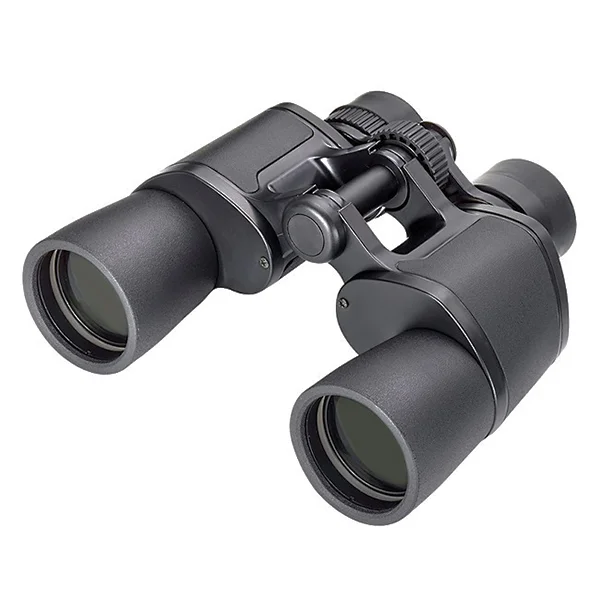
Check the hinge closes far enough to match the child's eye spacing, or plan to share them. For an older child in this group, or a pair the whole family will use, the Opticron Adventurer 10x50 (£84) gathers more light, but it is heavier and suits a child who can rest their elbows on a wall or a parent's shoulder. Our guide to the best binoculars for stargazing covers the choice in detail. Add an Astro Essentials red light torch (£16) to the stocking: children love a torch, and a red one lets them read a star chart without wrecking their night vision.
Best Telescope for an 8 to 12 Year Old: Sky-Watcher Heritage 130P
The best telescope for an 8 to 12 year old is the Sky-Watcher Heritage 130P, £194 at First Light Optics. This is the age when a real telescope becomes the right present, and the right telescope is a tabletop Dobsonian. It has a 130mm mirror, a tube that collapses to fit a cupboard, and a mount the child pushes by hand. There is nothing to break and nothing to charge, and it is the most recommended first telescope on UK astronomy forums for good reason.
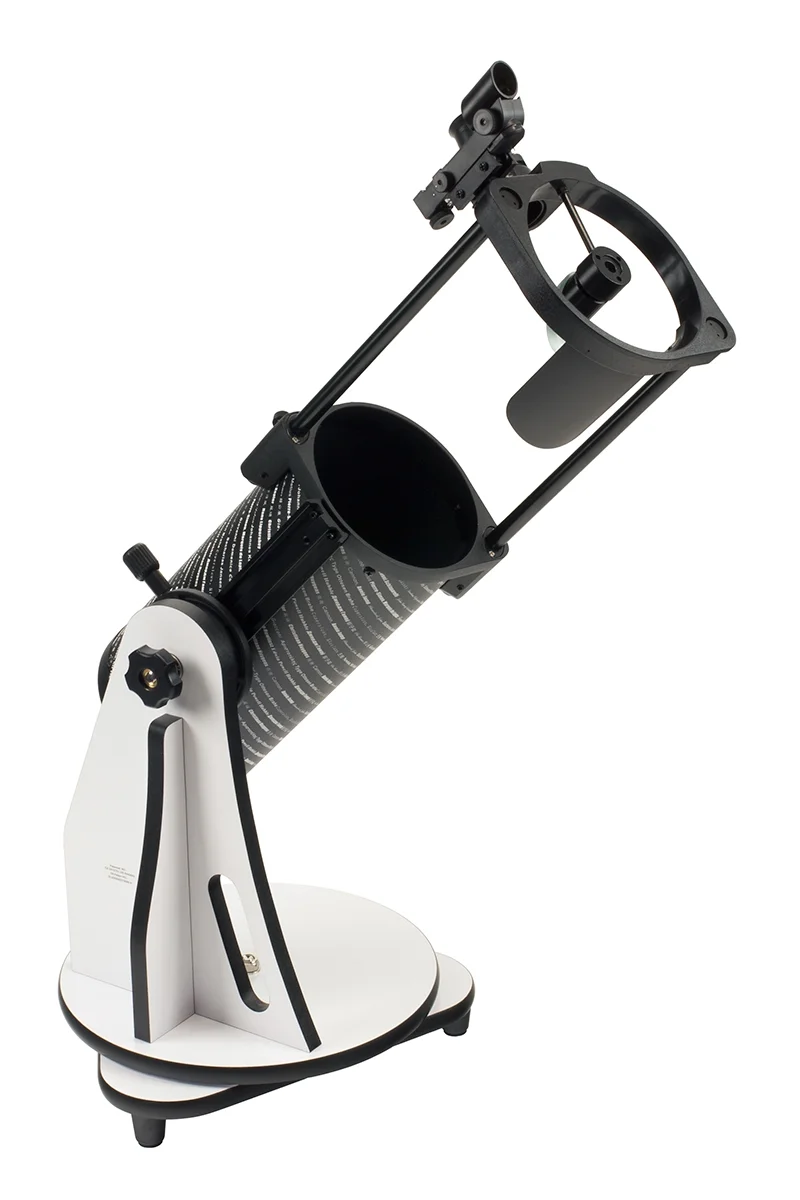
The best beginner telescopes UK buyers choose are tabletop Dobsonians, and they are the right design for a child for the same reasons: a solid base, no tripod to shake, and a view that stays put when a small hand lets go. Put it on a sturdy garden table or a low wall, not a flimsy camping table. The telescope is steady; the surface under it has to be too.
If the budget stretches, the Sky-Watcher Heritage 150P (£249) is the same design with a parabolic mirror and a third more light. Stars are sharper, clusters and nebulae are brighter, and it still sets up in two minutes. A Celestron NexYZ smartphone adapter (£55) is the stocking filler to go with either: it clamps a phone to the eyepiece, and a ten-year-old's own photograph of the Moon is what keeps them coming back outside.
The telescope picks for an 8 to 12 year old
Kit we've reviewed in full
A tabletop Dobsonian sits on a garden table, points where the child pushes it and shows Saturn's rings, Jupiter's cloud belts and the Moon's craters on the first clear night. Nothing to align, nothing to charge.
130mm of aperture, a collapsing tube that fits a cupboard, and a mount a child can aim without help. The most recommended first telescope on UK astronomy forums.
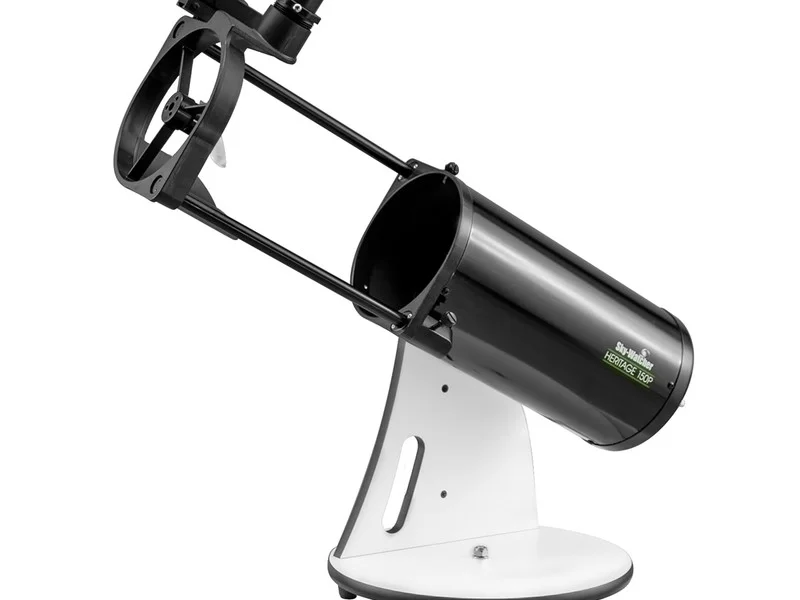
The same design with a parabolic mirror and a third more light: sharper stars, brighter clusters and nebulae, and still a two-minute setup.
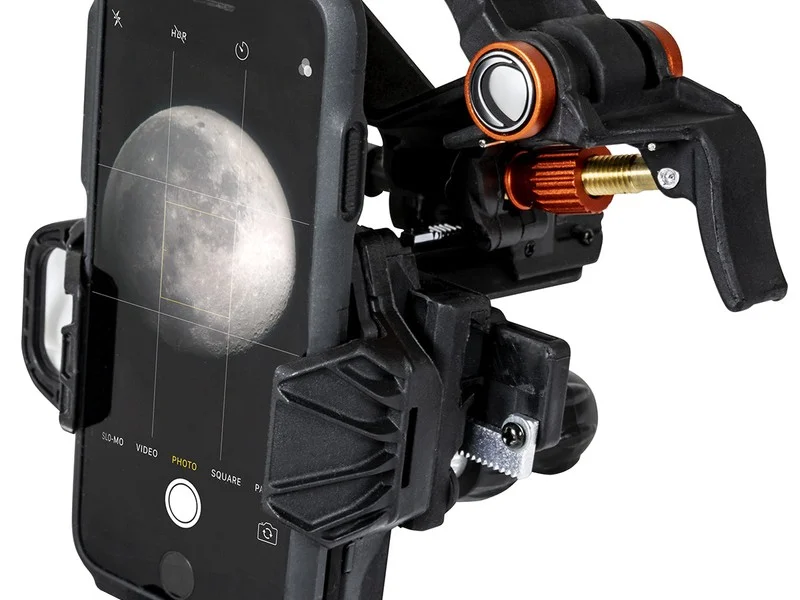
Celestron NexYZ Smartphone Adapter
Clamps a phone to the eyepiece. A ten-year-old's own photograph of the Moon's craters is the thing that keeps them coming back outside.
Affiliate links: you pay the same price, we earn a small commission that helps keep WatchTheStars free.
Best Telescope for a Teenager: Dwarf 3, Seestar S30 or StarSense Explorer
The best telescope for a teenager depends on one question: do they want to look, or do they want the picture? A teenager who lives on a phone often takes to the sky through one, and the best smart telescopes have changed what a first telescope can be.
The Dwarf 3 (£459 at First Light Optics) fits in a coat pocket, runs on a battery, finds its own targets and stacks the photos on their phone. It needs a tripod, so budget for one. The ZWO Seestar S30 (£419) is the simplest first night of all, with the tripod in the box: set it down, tap a target, and the Orion Nebula appears on screen a few minutes later. If the budget stretches to the bigger Seestar, our Seestar S50 vs Dwarf 3 comparison is the place to go.
For a teenager who wants the eyepiece and the satisfaction of finding things themselves, the Celestron StarSense Explorer DX 130AZ (£429) is a 130mm reflector whose phone app shows where to push the telescope next. With it, a complete beginner can find the Andromeda Galaxy alone on the first night. Check the teenager's phone is on Celestron's StarSense compatibility list before you order.
For the youngest and the oldest: binoculars and smart telescopes
Kit we've reviewed in full
Under eight, buy binoculars and keep them light. For a teenager, a smart telescope builds the photograph on their phone while they watch it arrive.
At 8x the view is easier to hold still than 10x, and the 42mm lenses keep the weight down. Waterproof, with a strap, and good for birds and the beach by day.
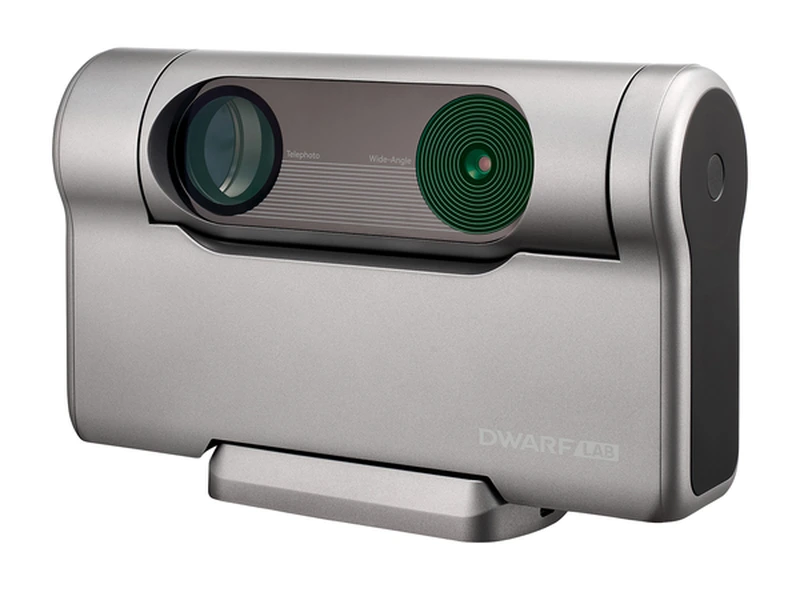
Fits in a coat pocket, battery powered, finds its own targets and stacks the photos on their phone. Add a tripod. The one they will show their friends.
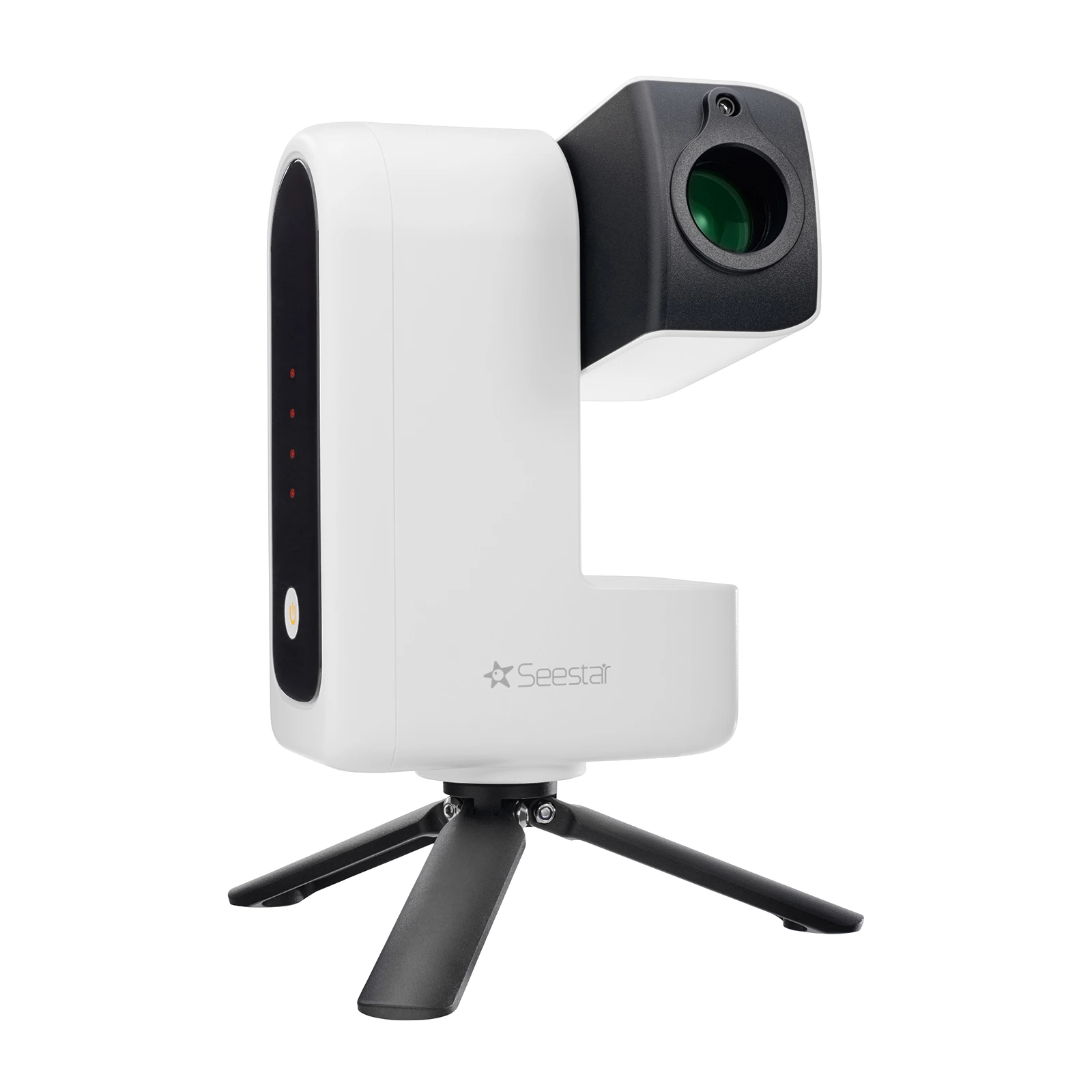
A smart telescope with the tripod in the box. Set it down, tap a target, and the Orion Nebula appears on screen a few minutes later.
Affiliate links: you pay the same price, we earn a small commission that helps keep WatchTheStars free.
Telescopes Not to Buy a Child for Christmas
The telescopes not to buy a child are the ones that end up in a cupboard by New Year. They are easy to spot once you know the signs.
- Anything sold on magnification. "400x" or "600x" on the box is the surest sign of a telescope that will disappoint. Useful magnification is about twice the aperture in millimetres, so a 60mm department-store refractor is good for about 120x however the box is printed. Aperture is what shows detail.
- Thin aluminium tripods. The view shakes for seconds after every touch, which is exactly when a child gives up. A tabletop Dobsonian has no tripod to shake.
- Equatorial mounts. Counterweights, two axes and a polar alignment are a hurdle on night one. Save them for a teenager who already knows they want to photograph the sky.
- Anything without a return policy. First Light Optics gives 30 days. A marketplace listing from an unknown seller usually does not.
Ordering a Telescope in Time for Christmas
Order a telescope for Christmas as early as you can, and November is better than December. The Heritage 130P sells out most Decembers, and so do the popular smart telescopes, because the same guides recommend the same few models every year. First Light Optics publishes its last order dates for Christmas delivery on its website each year. Check First Light Optics' last order dates for Christmas delivery before you buy rather than trusting a general courier cut-off, and allow a few extra days if the present is going to a rural address.
Two practical points. First, unpack the telescope before Christmas Day and check nothing is missing, then box it up again. A missing eyepiece on Christmas morning is a problem; the same missing eyepiece on 15 December is an email. Second, leave the collimation alone. The Heritage 130P arrives aligned well enough for the first few months, and our how to use a telescope guide walks through the first evening, from setting it on the table to finding the Moon, when you are ready.
The One Safety Rule for a Child's Telescope
Never point any telescope or binoculars at the Sun, and never leave a telescope set up in daylight where a child could look through it. A plain telescope concentrates enough sunlight to cause permanent eye damage in an instant. Eclipse glasses are for the eyes only and must never be used to look through a telescope or binoculars; the only safe way to point a telescope at the Sun is a proper solar filter fitted over the front of the tube. Our guide to how to observe the Sun safely covers both. At night, a telescope is as safe as a pair of binoculars.
First Night Plan: Geminids, the Christmas Eve Full Moon and the Craters
The first night plan for a child's new telescope starts before Christmas, with a meteor shower that needs no telescope at all. The Geminids meteor shower, the strongest of the year, peaks on the night of Sunday 13 to Monday 14 December 2026, and this is a very good year for it. The sky is fully dark from 18:00 to 06:03 GMT, and the 21%-lit Moon sets at 20:04, so there is no moonlight to spoil it. A child can see meteors from 20:00, when the radiant in Gemini is 25° up in the east-north-east. It climbs to 42° in the east by 22:00, 60° at midnight and about 70°, close to overhead, at 02:00. The numbers are for Birmingham, and the rest of the UK is within a few degrees.
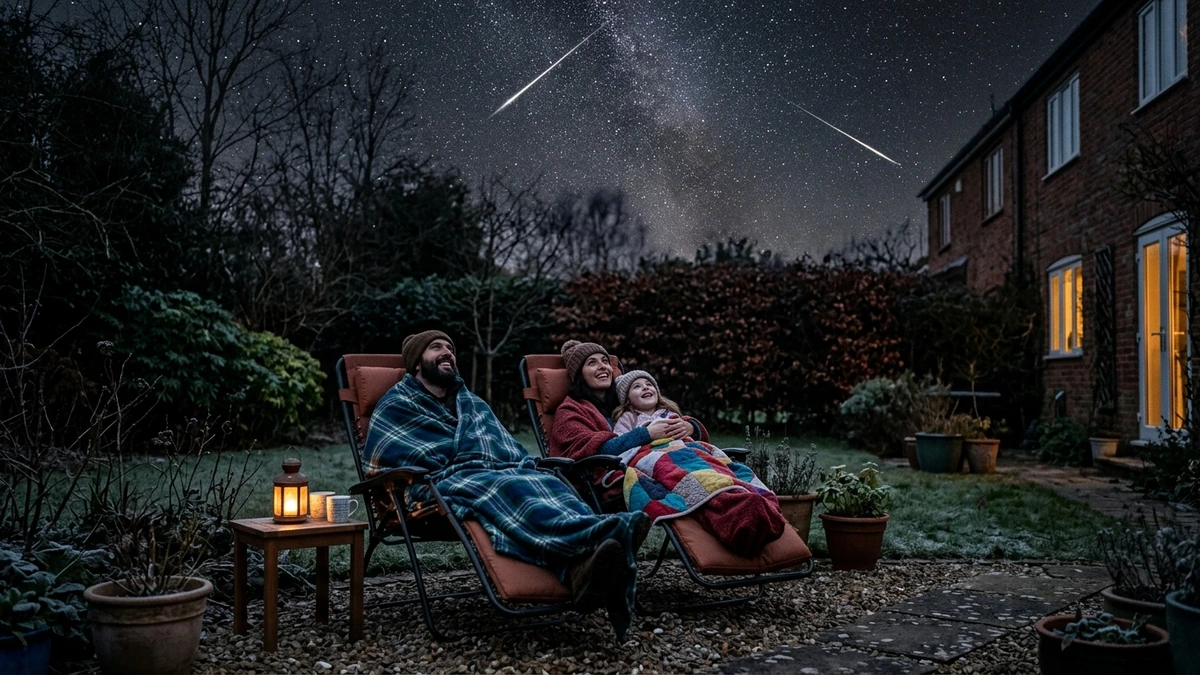
For a child, 20:00 to 22:00 is the window. Lie back on garden chairs, face anywhere but the brightest streetlight, and give your eyes 15 minutes to adjust. Meteors can appear anywhere in the sky, so the widest view wins, which is why binoculars and telescopes stay indoors for this one. The stargazing is better after 22:00 as the radiant climbs, so a teenager who wants to stay up will see more. If 13 December is cloudy, the nights either side still produce. Our stargazing for beginners guide has the rest of the first-night basics, and what you can see in the sky tonight will tell you what is up from your postcode on any date.
Then Christmas itself. The Cold Moon, December's entry in the list of full moon names, is full at 01:28 GMT on Thursday 24 December 2026. It is a supermoon, 356,760 km away, and it rises at about 16:10 in Birmingham on the 24th. So the Moon is full on Christmas Eve night and still looks full on Christmas night, which makes it the easy first target for a new pair of binoculars: the dark lava plains, the bright rays around the crater Tycho, and the whole disc filling the view. If you want to check the phase on any evening, is it a full moon tonight gives the answer, and when is the next full moon lists the dates for the year ahead.
The craters, though, look better a few nights after Christmas, when the shadows come back. A full Moon is lit face-on, so it looks flat. From about the 27th onwards the terminator, the line between day and night, creeps across the disc again and every crater along it casts a long shadow. That is the view that makes a child gasp through a Heritage 130P, and it is a good reason to keep the telescope out of the cupboard once the wrapping paper is gone. Jupiter, Saturn, the Orion Nebula and the Pleiades are all winter targets too, once the Moon has moved on.
Header image: AI illustration made for WatchTheStars.
Frequently Asked Questions
Equipment guides
Related topics

Ian ClaytonAmateur astronomer and founder of WatchTheStars.co.uk, dedicated to helping others explore the wonders of our universe. Full profile →