Key takeaways
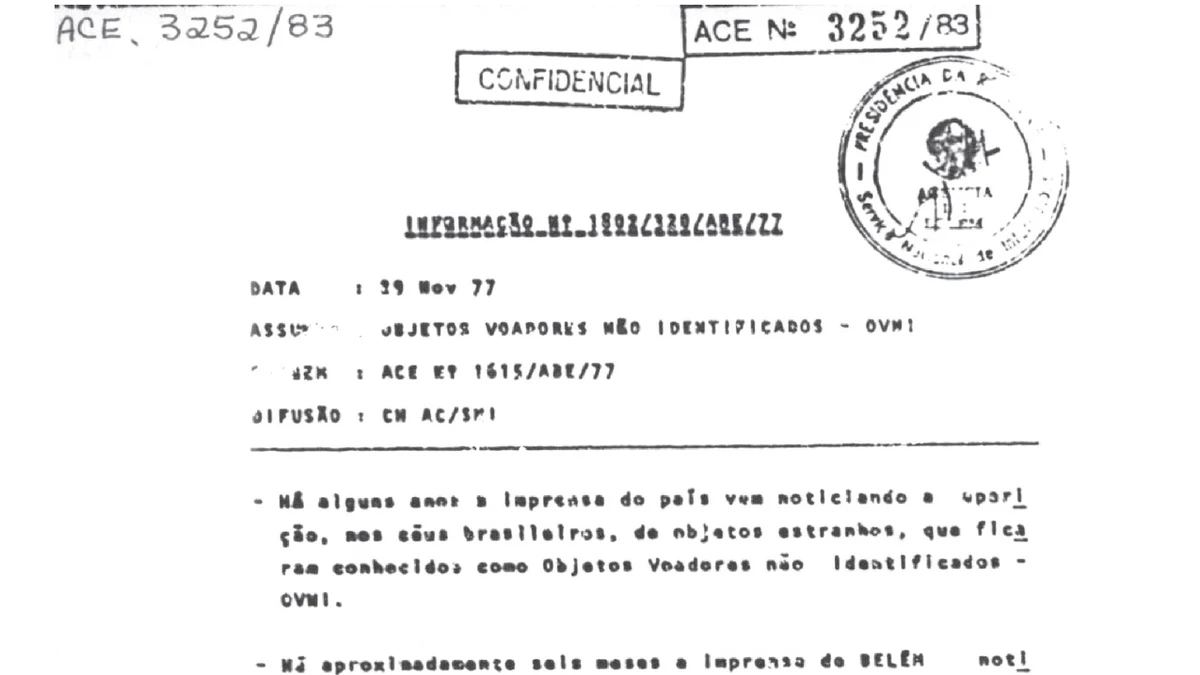
- Informação Nº 1802/320/ABE/77, dated 29 November 1977, is the SNI's confidential summary of the chupa-chupa flap, sent from its Belém agency to the spy service's central office under Brazil's Presidency
- It confirms the Air Force's first Operação Prato mission photographed an object it put at roughly 3,000 metres up and an empirically calculated 30,000 km/h
- It also records the team chief's doubt: the most impressive photo matched one he had taken of Venus, the morning star
- Dr Wellaide Cecim de Carvalho's burns-and-punctures testimony appears here in an official file twenty years before she spoke publicly
- The report notes twice that witnesses and even Air Force officers held back for fear of ridicule, and ends by confirming a new mission was being organised
Jump to section 7 sections
- Brazil's SNI UFO File: A Spy Agency Reports on the Chupa-Chupa
- Colares UFO Attacks: The Flap as Intelligence Officers Saw It
- Operação Prato Photos: A UFO at 30,000 km/h, or Venus?
- Dr Wellaide Cecim de Carvalho: The Doctor's Evidence, Twenty Years Early
- Colares Witnesses: The Priest and the Prefect in the SNI File
- UFO Stigma: Why Witnesses and Officers Feared Ridicule
- Where to Read the SNI UFO File
On 29 November 1977, while Air Force teams were still chasing lights over Colares and the Bay of Marajó, Brazil's secret service wrote up what it knew about the chupa-chupa. Informação Nº 1802/320/ABE/77 is a five-page confidential brief from the Belém agency of the SNI, the Serviço Nacional de Informações, addressed to the service's central office. The SNI answered directly to the Presidency, which is why the released copy carries a Presidência da República archive stamp and the later filing reference ACE 3252/83. Subject line: "Objetos Voadores Não Identificados: OVNI". Unidentified flying objects, in the files of a military dictatorship's spy agency.
This is the eighth post in our Document of the Week series, where we take one file from our declassified UAP document archive and set out in plain English what it actually says. Last week we covered the Air Force's own Operação Prato psychiatrist report, which blamed the chupa-chupa symptoms on fear. This document sits above that one in the food chain. It is what Brazil's intelligence establishment told itself about the same events, and it is stranger than you might expect: it confirms the operation's photographs, then quietly doubts them, and it worries throughout about one thing above all. Ridicule.
Brazil's SNI UFO File: A Spy Agency Reports on the Chupa-Chupa
The SNI was not a UFO bureau. Created after the 1964 coup, it was the military government's eyes inside Brazil, an agency better known for watching students and union leaders than the sky. That is what makes this file worth reading. Nobody at the Belém agency, "ABE" in the reference number, chose this subject for fun. The flap along the Pará coast had grown loud enough that the intelligence service felt the Presidency's network needed a briefing.
The report opens by admitting the press had been on the story for years, and that about six months earlier the Belém papers had reported the town of Viseu living "under alarm" because of a strange object that came from the sky without any noise, sometimes hovering, sometimes landing, giving off a very intense light. Then comes the file's least flattering passage. The coastal population of Pará, it says, is "undernourished, of low educational level, and above all mystical", their stories "worthy of any folklore". For that reason, the report notes, no greater attention was paid at first.
That single line explains a lot about how the case was handled. The villagers were dismissed as superstitious until the sightings spread to Bragança, Vigia, Colares and Mosqueiro, and the press coverage became impossible to ignore. Only then, the report says, did the Air Force's First Regional Air Command organise "a team composed of intelligence elements" to find out what was happening. That team was Operação Prato.
Colares UFO Attacks: The Flap as Intelligence Officers Saw It
The team went to Colares because that is where things were worst. The report describes a town that had reorganised its nights around the visitor: processions after dark, bonfires lit, fireworks set off, all "with the aim of frightening away what they called the 'bicho'". The bicho, the beast, appeared sporadically from about seven in the evening, crossing the town at high and low altitude. At low altitude, the report says, it gave off an intense beam of light, at times directed at people, "leaving those it focused on inert, trembling, with their voice caught, and other symptoms".
There is no scoffing in that paragraph. The same file that called the population mystical two pages earlier passes on the beam accounts without comment, because by this point the source is no longer village rumour. It is the Air Force's own team, which had interviewed the people who said the object had struck them, and then set up equipment to photograph it when it returned.

Operação Prato Photos: A UFO at 30,000 km/h, or Venus?
The middle of the file is the part researchers quote, and it earns it. Two Air Force teams were posted at the spots where the object was reported most often. After some days of vigil, one of them photographed "what could be the OVNI". The photographer put the object at roughly 3,000 metres up, moving at a speed "calculated empirically at more or less 30,000 km/h", which, he declared, "differentiated it from the satellites and meteorites that were also observed". When the frame was taken, the second team reported seeing the object too.
Then the file does something government UFO documents rarely do. It shows its working, and its working is deflating. The developed film showed only a bright blot, "as if it were a light", tending towards a circle, with no shape you could argue about. Another frame came back as a black blot, as if the film had burnt. The camera was a Minolta SRT-101, an ordinary manual SLR. And the team chief, comparing the results, identified the most impressive photo as matching one he had taken of the Estrela D'Alva, the morning star, which is to say Venus. The resemblance, the report says plainly, "led him to doubt that the photos really portray the OVNI".
It is an honest paragraph and a familiar trap. Venus low over water has probably generated more UFO reports than any other object in the sky, and a quick speed estimate means little when you don't actually know the object's distance. Anyone who has watched satellites or meteors knows how badly the eye judges height at night. What the estimate does tell you is that trained observers believed they were seeing something that behaved unlike either, and said so in a report they knew their superiors would read.
Before you report a UFO, rule out Venus
Kit we've reviewed in full
The SNI file's most awkward page is an Air Force photographer realising his best UFO shot matched one he'd taken of Venus. A pair of binoculars would have settled it on the spot. New to them? Start with our guide to binocular astronomy.
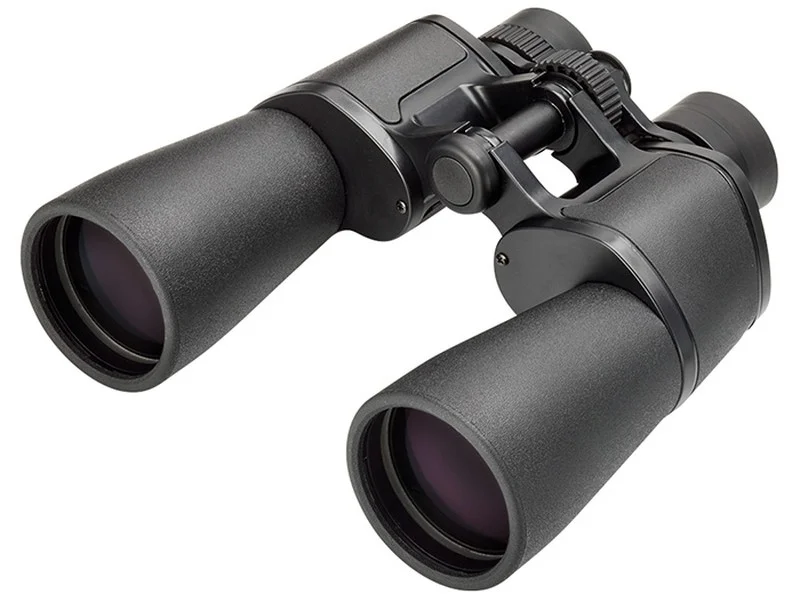
Bright, wide and quick to point at a low light over water. Enough to tell a planet from a plane from something odder.
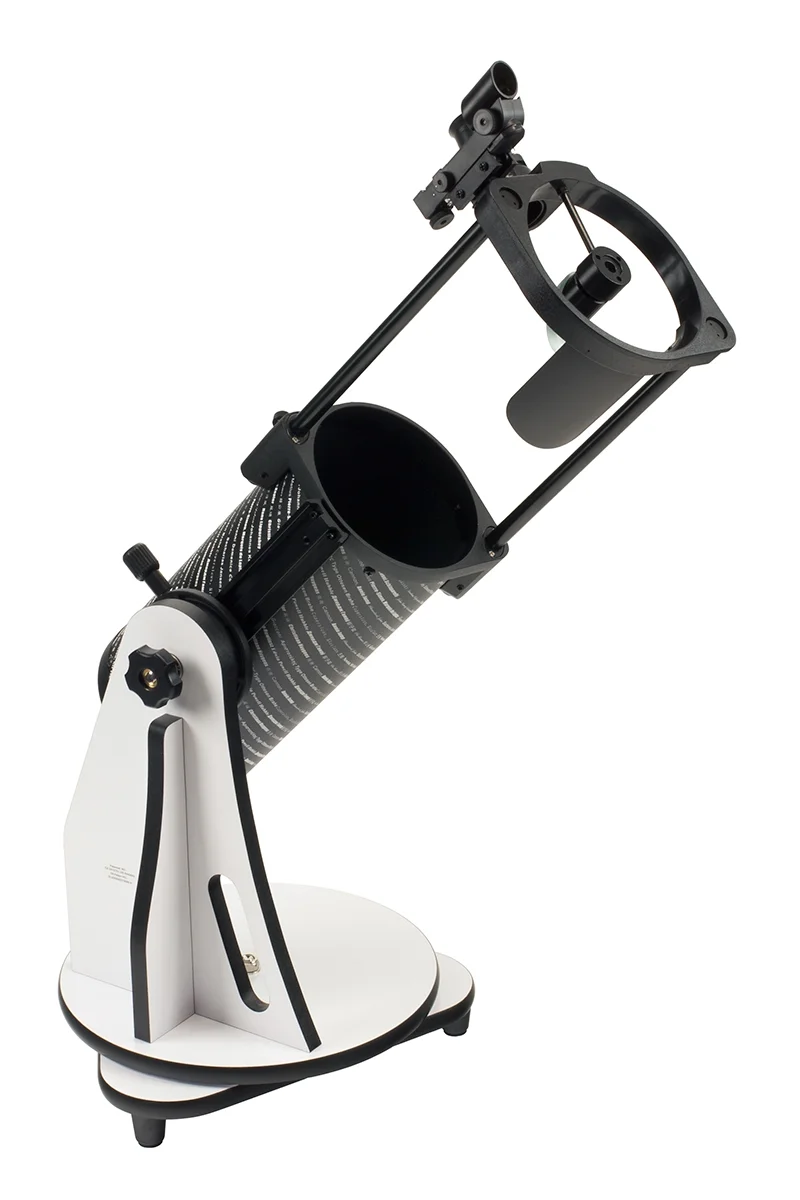
Through this little Dobsonian, Venus stops being a blob of light and shows an actual phase, which ends most misidentifications immediately.
Astro Essentials Red Light Torch
A red torch lets you check a star chart in the dark without wrecking your dark adaptation.
Affiliate links: you pay the same price, we earn a small commission that helps keep WatchTheStars free.
Dr Wellaide Cecim de Carvalho: The Doctor's Evidence, Twenty Years Early
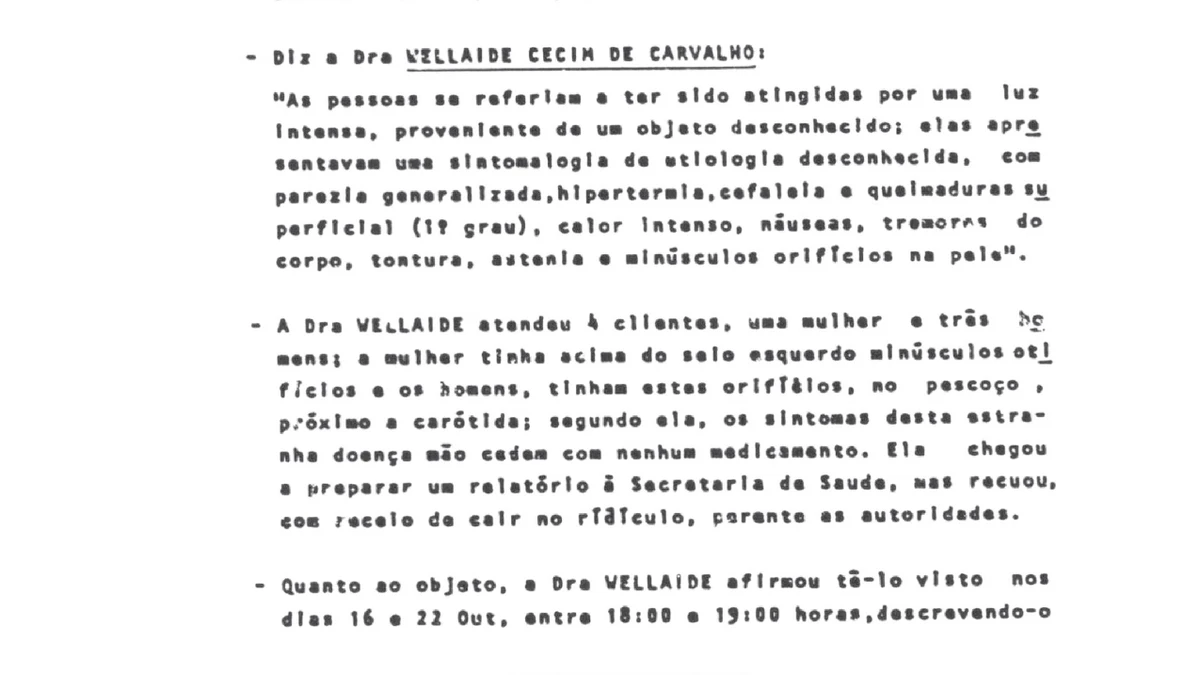
The most valuable page historically is the third. Drawing on the report of one of the team members, the SNI records the testimony of the doctor at the Colares hospital unit, Dra Wellaide Cecim de Carvalho. Her words are quoted directly:
"The people referred to having been struck by an intense light coming from an unknown object; they presented a symptomology of unknown aetiology, with generalised paresis, hyperthermia, headache and superficial first-degree burns, intense heat, nausea, body tremors, dizziness, asthenia and minuscule orifices in the skin."
The file adds detail from her practice. She attended four patients, a woman and three men. The woman had the tiny orifices above her left breast; the men had them on the neck, near the carotid. The symptoms of this "strange illness", she said, yielded to no medication. She went as far as preparing a report for the state Health Secretariat, then pulled back, "for fear of falling into ridicule before the authorities".
She was also a witness. The file records that she saw the object herself on 16 and 22 October, between six and seven in the evening, and describes it in her words as "a luminous metallic object, making high-speed manoeuvres over the front part of the town of Colares; the shape of the object was cylindrical, almost conical". She found no anaemic changes in the people struck, but believed it possible they had been hit by "a ray or beam of light of unknown characteristics".
Dr Wellaide only told her story publicly in the 1990s, and interviewers have sometimes treated it as an uncorroborated memory. This document settles that question. Her account, symptoms, punctures, withdrawn health report and all, was sitting in a confidential intelligence file dated November 1977, written while the flap was still happening. Whatever the lights were, the SNI record confirms she said what she has always said, at the time. Last week's psychiatrist report, which diagnosed collective hysteria, never engaged with her burns cases. Neither file mentions the other.
Colares Witnesses: The Priest and the Prefect in the SNI File
Two more named witnesses fill page four, and neither fits the report's early sketch of mystical villagers. Padre Alfredo de la Ó, the vicar of Colares, Mexican-born and a naturalised American, woke at 3:25 in the morning of 26 October to dogs barking near the chapel. From his window he watched an object with strong luminosity come in from the sea, heading north to south, at great speed, at a height of about twenty metres, "in absolute silence". It showed a red light on top and, underneath, a light so intense it "lit up the whole area it passed over".
The prefect of Vigia, Ildone Favacho Soeiro, a secondary school and higher-education teacher, told the newspaper Província do Pará that at 6:45 in the evening of 18 October he heard a commotion in the street, went to a window and saw a strange object crossing the sky "at astonishing speed", throwing out a yellow light, without any noise. Two minutes after it disappeared it came back the opposite way, vanished again, and then, "when the spectacle seemed over", two identical objects rose from the direction of Colares island and Tapará island, crossed the town, and were gone.
A doctor, a priest and a town prefect, all named, all on the record inside an intelligence file. The SNI could dismiss folklore. It clearly found this harder to dismiss.
UFO Stigma: Why Witnesses and Officers Feared Ridicule
Read the five pages in one sitting and a pattern emerges that has nothing to do with lights. The Operação Prato team came back to Belém "keeping reserved about what was observed". There was no consensus among its members about what they had seen, and the report offers a reason: that attitude "is intimately related to the fear of falling into ridicule before their colleagues". Dr Wellaide shelved her report to the Health Secretariat for the same stated reason. And the file closes by complaining that the press, with its fantastic tales of a ray that "would suck people's blood", was already leading the Belém public "to disbelieve and to mock".
We keep finding this dynamic in official files from every country. American officers watched it happen around the Sandia Base sightings logbook, and the CIA's analysts tiptoed around it in their Soviet missile-range UFO report. Whatever you make of the phenomenon, the paperwork consistently shows trained professionals under-reporting it because of the laughter, and intelligence services quietly writing that fact down. The SNI brief ends without a conclusion of its own. Its final line simply notes that the First Air Command "is organising a new mission to continue the investigations". That new mission became the long field phase of Operação Prato, whose sketches, logs and mission reports fill the rest of the dossier.
Where to Read the SNI UFO File
Informação Nº 1802/320/ABE/77 was archived in 1983 under reference ACE 3252/83 and later released through Brazil's Arquivo Nacional, which also holds the I COMAR cover letter (ARX 197) and the SNI's memo on the leak of the Prato file (ARX 322). The copy we hold sits as Section D of the leaked I COMAR dossier digitised by the Brazilian research team at operacaoprato.com, indexed in our UAP document archive alongside the psychiatrist report and the mission records.
Brazil's official UFO paper trail is still growing. Campaigners are pressing Congress to release the remaining Varginha files, and our fact-check of the 1963 Brazil UFO sphere story shows why the documents matter: sometimes they confirm the witnesses, and sometimes they quietly bury the legend. The rest of our UAP and UFO research coverage is collected in one place.
Sources:
- Informação Nº 1802/320/ABE/77, SNI Agência Belém, 29 November 1977 (ACE 3252/83) · Section D, I COMAR Operação Prato dossier (local archive copy, digitised by operacaoprato.com)
- Operação Prato · Wikipedia
- Colares: From UAP flap to military investigation · UAPedia
- Operation Saucer: the official search for UFOs that attacked Brazilians with 'light beams' in 1977 · Yahoo News UK
- 1977 Colares UFO flap / Operação Prato · Metabunk discussion of the documents
Frequently Asked Questions
Equipment guides
Related topics
Ian ClaytonAmateur astronomer and founder of WatchTheStars.co.uk, dedicated to helping others explore the wonders of our universe. Full profile →