Key takeaways
- Voyager 1 reaches one light-day from Earth at 10:16am GMT on Wednesday 18 November 2026, according to NASA
- One light-day is 25.9 billion km, so a radio command to Voyager 1 now takes a full 24 hours to arrive
- NASA's 'Shine Bright for Voyager' asks people to flash V-G-R in Morse code with a torch after sunset on Tuesday 17 November
- From the UK at 6pm GMT on 17 November, Voyager 1 is about 24° up in the west-south-west, just below the star Rasalgethi
Jump to section 6 sections
Voyager 1 reaches one light-day from Earth next week. NASA puts the moment at 10:16am GMT on Wednesday 18 November 2026, when the probe will be 25.9 billion km away and any radio signal will take a full 24 hours to reach it. Nothing we have ever built has been that far from home.
NASA is marking it with a public event the evening before. After sunset on Tuesday 17 November, it wants people all round the world to point a torch at the sky and flash Voyager's call sign, V-G-R, in Morse code. You can join in from anywhere in the UK, and below we've worked out exactly where in the sky Voyager is from here, so you can point your light the right way.
Voyager 1 One Light-Day From Earth: When It Happens
Voyager 1 crosses the one light-day mark at 5:16:07am Eastern time on Wednesday 18 November, which is 10:16am GMT in the UK. That's NASA's own figure, from its mission page. By then it will have been flying for 49 years, two months and 11 days since its launch from Cape Canaveral on 5 September 1977.
Crossing the line won't change anything on the spacecraft. It is a mile marker, not an event. But it does change what it's like to fly the mission. Engineers at NASA's Jet Propulsion Laboratory in California will now wait a full day for any command to arrive, and another day to hear whether it worked. A simple "are you all right?" takes two days.
It also stays that way. Earth's orbit swings us towards and away from Voyager through the year, so its distance from us wobbles by a couple of hundred million km. We checked the distance in JPL's Horizons system: even at its closest next spring, in late April 2027, Voyager 1 is still about 25 million km beyond the one light-day line. Its distance from the Sun passes the same mark around early February 2027.
Its twin isn't far behind. Voyager 2, which had its own power fix this summer, took a slower route past Uranus and Neptune and should reach one light-day in November 2035.
What Is a Light-Day? How Far 24 Hours of Light Goes
A light-day is a distance: how far light travels in 24 hours. NASA gives it as 25,902,068,356 km, or 16,094,799,096 miles. That's about 173 times the distance from Earth to the Sun.
Light is so fast that it makes most space distances feel small. It reaches the Moon in 1.3 seconds and gets from the Sun to us in 8 minutes 20 seconds. A signal from Mars takes between 3 and 22 minutes depending on where the two planets are in their orbits. Neptune, the farthest planet, is just over four light-hours away.
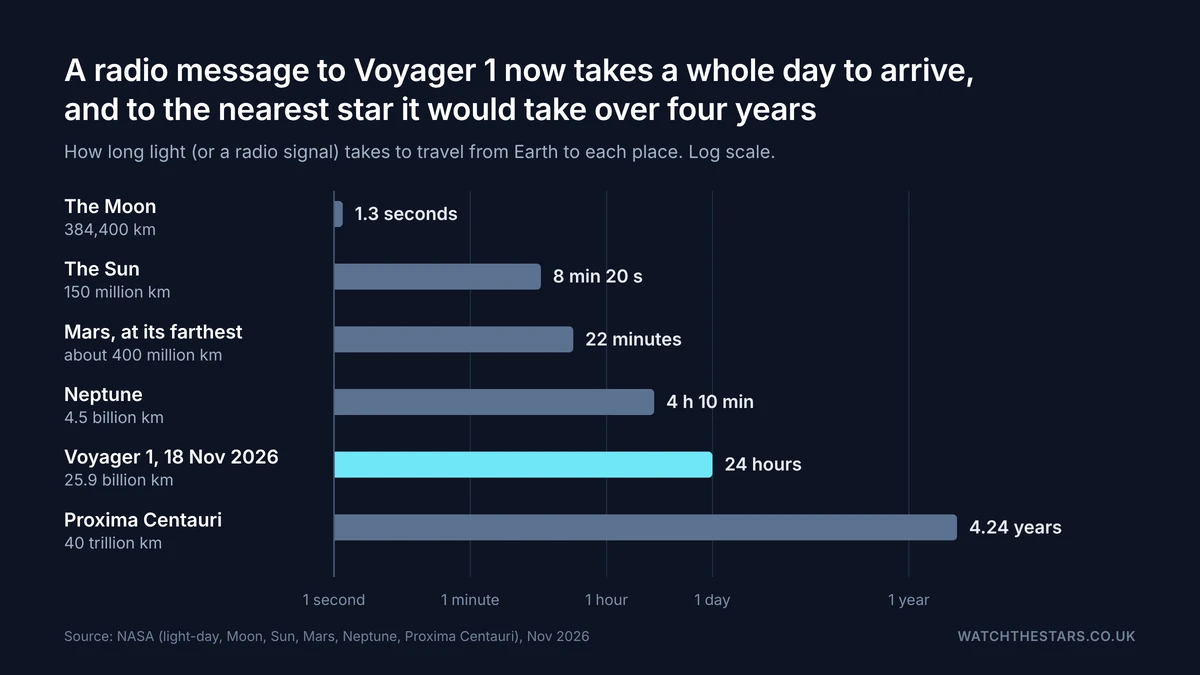
Put the other way round, Voyager 1 has spent nearly half a century covering one day's worth of light. The nearest star, Proxima Centauri, is 4.24 light-years away, about 1,550 light-days. At Voyager's pace that's roughly 75,000 years.
Where Is Voyager 1 Now?
In mid-November 2026, Voyager 1 is about 25.9 billion km from Earth and 25.8 billion km from the Sun, in interstellar space. It crossed the heliopause, the edge of the bubble of solar wind that surrounds the Sun and planets, on 25 August 2012, the first spacecraft ever to do so. Our page on the Local Interstellar Cloud explains what it found out there, including gas more than 40 times denser than just inside the bubble.
It's heading out of the solar system at about 61,000 km/h relative to the Sun, which works out at roughly 530 million km a year. It is nowhere near the edge of the Sun's influence, though. The Oort Cloud, the vast shell of icy comets far beyond the planets, is thought to start about 2,000 times Earth's distance from the Sun. That's more than ten times farther than Voyager has got, and it won't reach the inner edge for about 300 years.
Its direction is fixed now. Voyager 1 is heading towards a faint star called Gliese 445 in Ursa Minor, the Little Bear, and will pass about 1.7 light-years from it in 40,000 years. In our sky, though, Voyager 1 currently sits in Ophiuchus, close to the border with Hercules. That's where you point your torch.
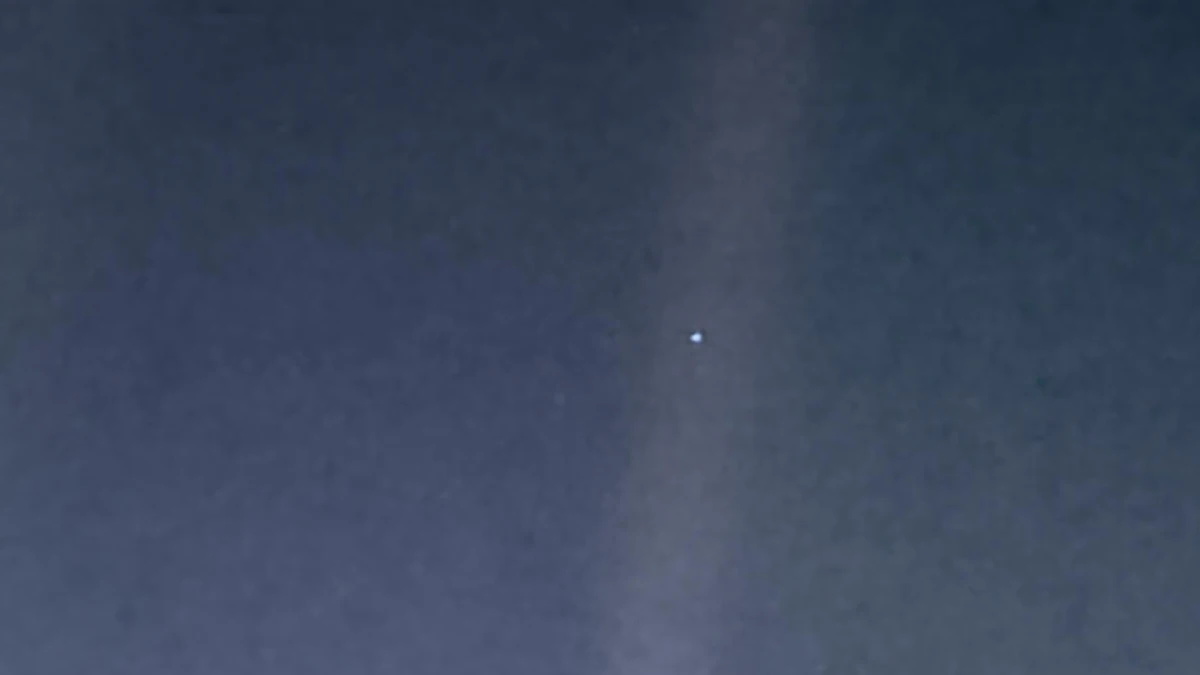
Before it got here, Voyager 1 visited Jupiter in March 1979 and Saturn in November 1980, finding a thin ring round Jupiter, two new Jovian moons and five more round Saturn. Then on 14 February 1990, from about 6 billion km away, it turned its camera back and took the most famous picture of Earth there is.
Shine Bright for Voyager: How to Join In From the UK
NASA's "Shine Bright for Voyager's Light-Day" takes place after sunset on Tuesday 17 November 2026, wherever you are. The idea is a wave of light rolling round the planet as the Sun goes down in each time zone. Here's how to take part.
- Get a light. A torch, a phone, a bike light or a lantern all work. NASA also has an automated V-G-R flasher web page (linked from its Shine Bright page) that does the Morse code for you on a phone or tablet.
- Flash V-G-R. Short flashes are under a second, long ones about a second. V is three short and one long. G is two long and one short. R is short, long, short. Pause for a second between letters, and repeat for about a minute.
- Share it. Take a photo or video and tag @NASA. We'd love to see yours too: tag @watchthestarsuk on Instagram.
There's a nice touch here: Voyager already knows Morse code. The Golden Record that both probes carry includes the phrase "Ad astra per aspera", Latin for "through struggle to the stars", in Morse.
Where to point your torch
You don't have to aim at Voyager. But if you'd like to, we worked out its position for UK observers, using JPL's coordinates for the spacecraft and Skyfield for the sky. The Sun sets at 4:12pm in Birmingham on Tuesday (4:02pm in Edinburgh, 4:29pm in Plymouth), so the best window is 5pm to 7pm GMT.
- 5pm: Voyager 1 is about 33° up in the west-south-west from Birmingham, roughly a third of the way up the sky.
- 6pm: about 24° up in the west-south-west.
- 7pm: about 15° up, almost due west, and getting low over rooftops.
It's much the same across the country. At 6pm Voyager is 26° up from Plymouth and 24° from Edinburgh, and it sets around 8:45pm in England and just after 9pm in Scotland.
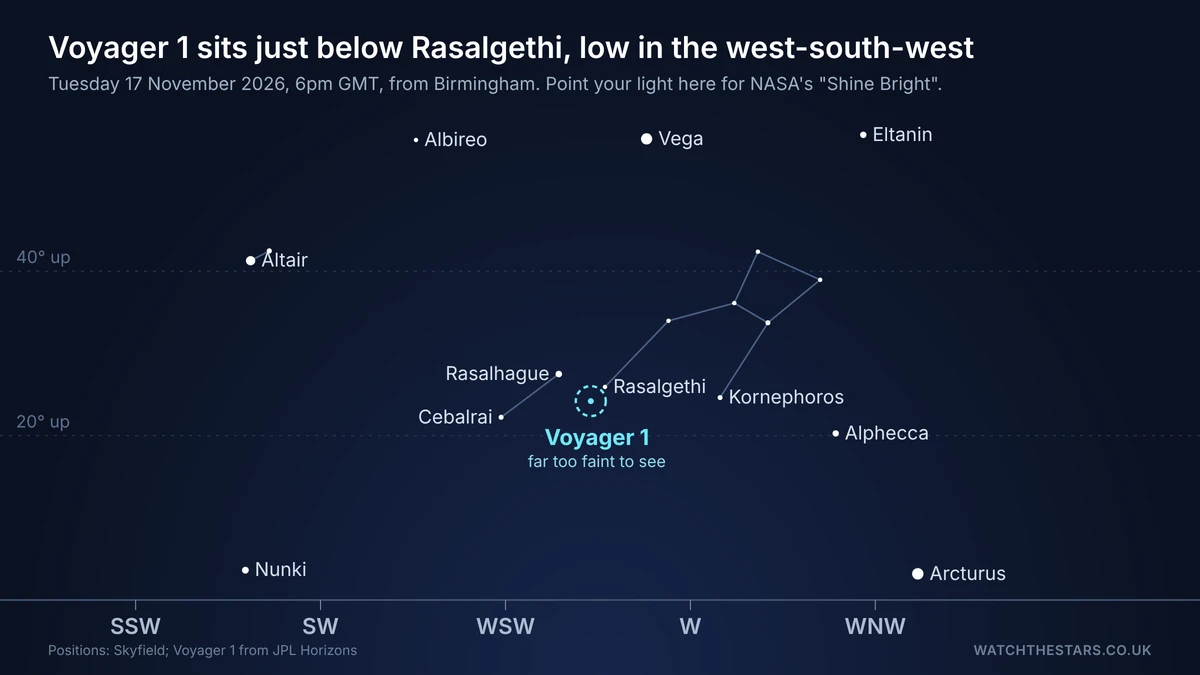
To find the spot, look for brilliant Vega, the brightest star in the west at that time, more than halfway up. Drop down from Vega, and very slightly left, to two fainter stars about a quarter of the way up the sky. The right-hand one is Rasalgethi, the head of Hercules, and the left-hand one is Rasalhague, the head of Ophiuchus. Voyager 1 is just below Rasalgethi. The First Quarter Moon will be in the south at the same time, so turn about a quarter-turn right from the Moon and you're facing the right way.
What to take outside on Tuesday night
Kit we've reviewed in full
You don't need any kit to wave at Voyager, but a torch makes the Morse easier, and binoculars help you find the right stars. The same evening gives you a half Moon in the south and Saturn in the south-east.
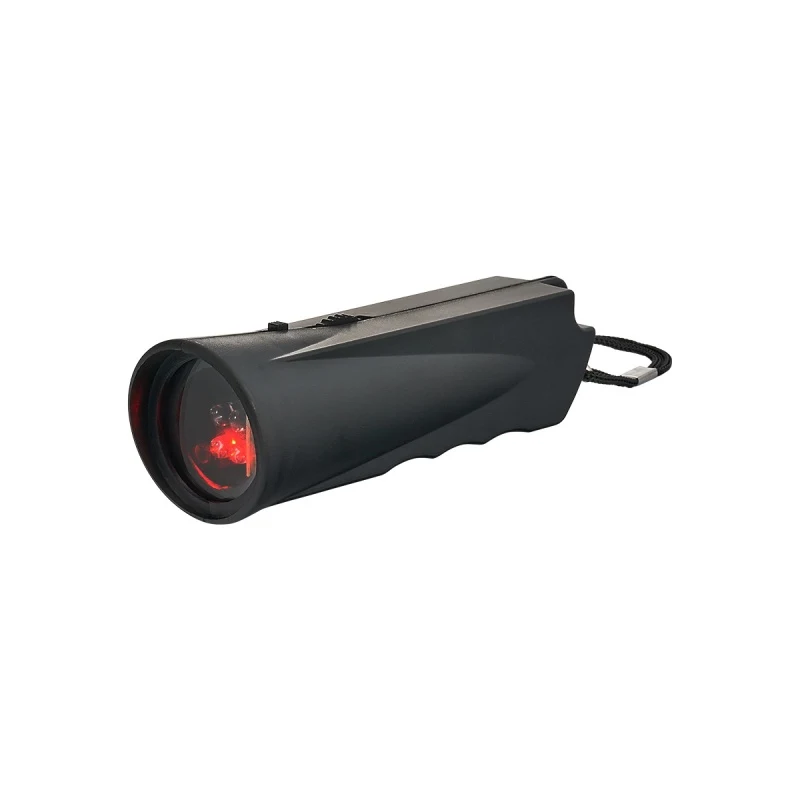
Astro Essentials Red Light Torch
Switch to the white light for the Morse code, then back to red so you keep your night vision for the stars.
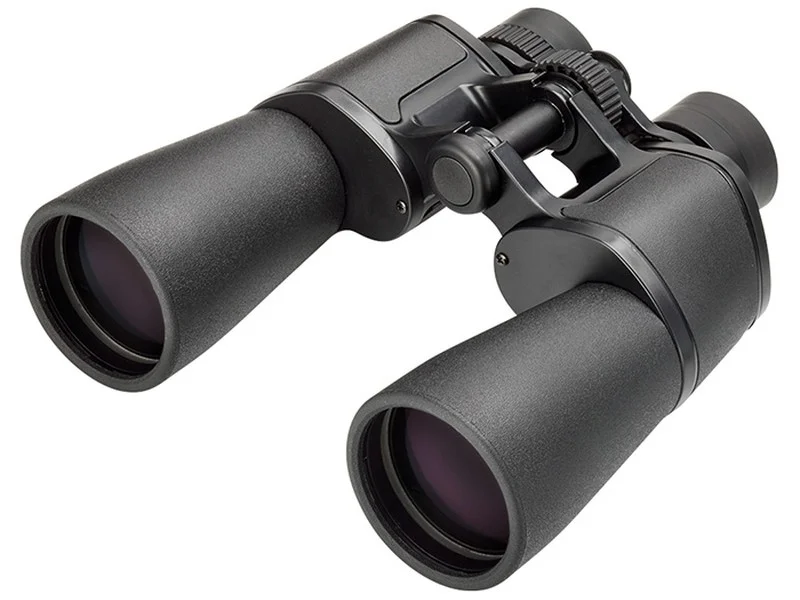
Rasalgethi and Rasalhague both fit in the 6.3° field, with Voyager's patch of sky just below Rasalgethi.
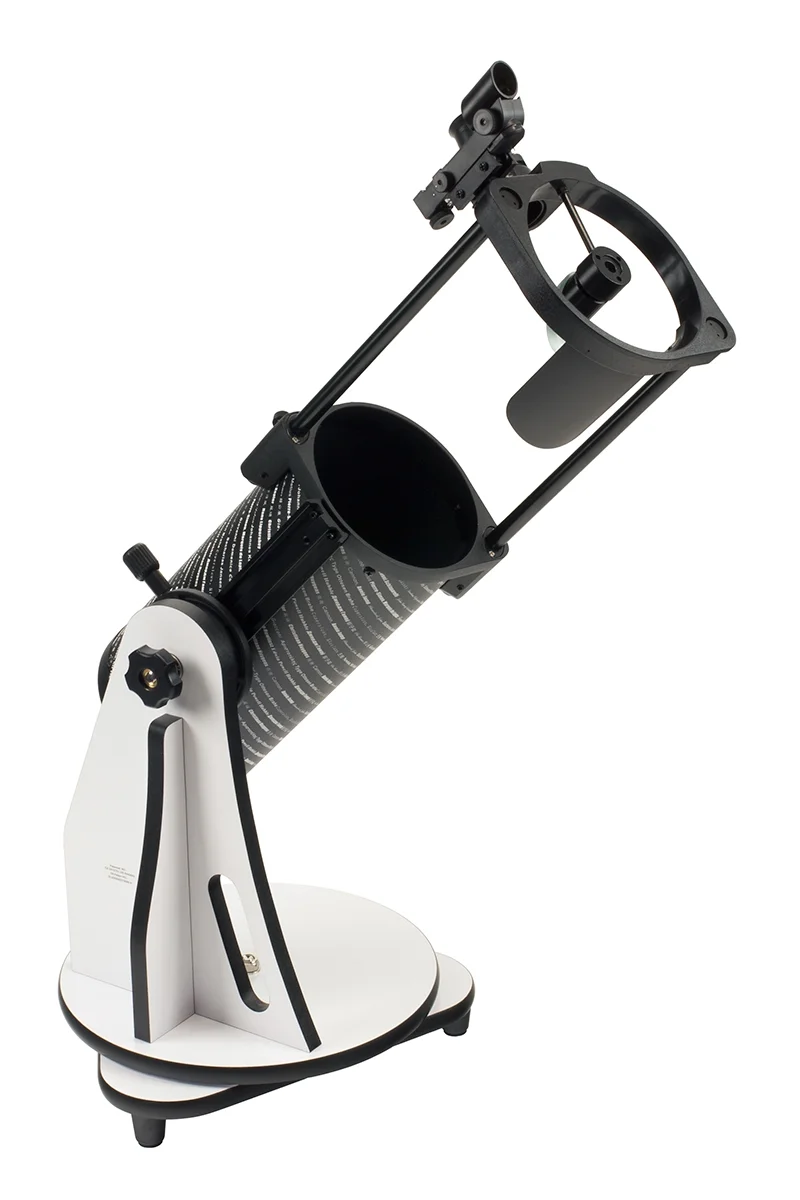
The First Quarter Moon is 25° up in the south at 6pm, and Saturn's rings are 27° up in the south-east.
Affiliate links: you pay the same price, we earn a small commission that helps keep WatchTheStars free.
While you're out, it's a busy week. Our UK night sky this week guide has the rest, and the Leonid meteor shower peaks in the early hours of the same night, best from about 3am to 5:15am GMT on Wednesday. If you're up that early, Voyager crosses the line a few hours later. You could also check ISS passes tonight in case the space station flies over while you're waving.
Can You See Voyager 1 With a Telescope?
No. Voyager 1 is about the size of a small car and is lit only by a Sun that, from out there, looks like a dazzling star rather than a disc. It is far too faint for the biggest telescope on Earth, let alone a garden one. The only way anyone can "see" it is with radio. NASA's Deep Space Network uses dishes up to 70 metres across in California, Spain and Australia to pick up its signal, which is incredibly weak by the time it gets here.
So the torch-waving is symbolic. Your light won't reach Voyager for a day, and it would be far too faint to notice if it did. That's rather the point. It's a way of marking how far one small machine has gone.
If you'd like something real to look at that evening, the patch of sky round Voyager is a good first target for binocular astronomy. Rasalgethi is a red giant that changes in brightness, and it's a lovely orange colour in binoculars.
How Long Will Voyager 1 Keep Working?
Voyager 1 runs on three radioisotope thermoelectric generators, which turn heat from decaying plutonium into electricity. They lose about 4 watts a year, and after almost 50 years there is very little spare. NASA has been switching things off in a set order agreed years ago.
This has been a tense year for the mission:
- 27 February: power dropped unexpectedly during a routine roll.
- 17 April: NASA switched off the Low-energy Charged Particles instrument, which had run almost nonstop since 1977. That left two working science instruments, one listening to plasma waves and one measuring magnetic fields.
- September: engineers completed the "Big Bang", swapping three heating devices for lower-power ones at the same time, as they had on Voyager 2 a few weeks earlier. Without it, another instrument could have gone as early as summer 2027.
- 18 to 20 October: the Deep Space Network lost Voyager 1's signal for 48 hours. It came back on its own. The team found that one set of thrusters had gone offline and the backups had taken over automatically.
Voyager 1 turns 50 on 5 September 2027. The team says it is focused on keeping both Voyagers going for as long as possible. For now, the farthest thing people have ever made is still sending data home every day, and each message takes a day to get here.
Sources:
- NASA Invites Media, Public to Join Voyager 1 One-Light Day Activities, NASA, 10 November 2026
- What Is a Light-Day?, NASA Science
- Shine Bright for Voyager's Light-Day, NASA Science
- Voyager 1 mission page, NASA Science
- NASA Shuts Off Instrument on Voyager 1 to Keep Spacecraft Operating, NASA Voyager blog, 17 April 2026
- NASA's Voyager 1 Conserves Power, Resolves Brief Communications Pause, NASA Voyager blog, 29 October 2026
- JPL Horizons, Voyager 1 (spacecraft -31) positions and distances, checked 11 November 2026
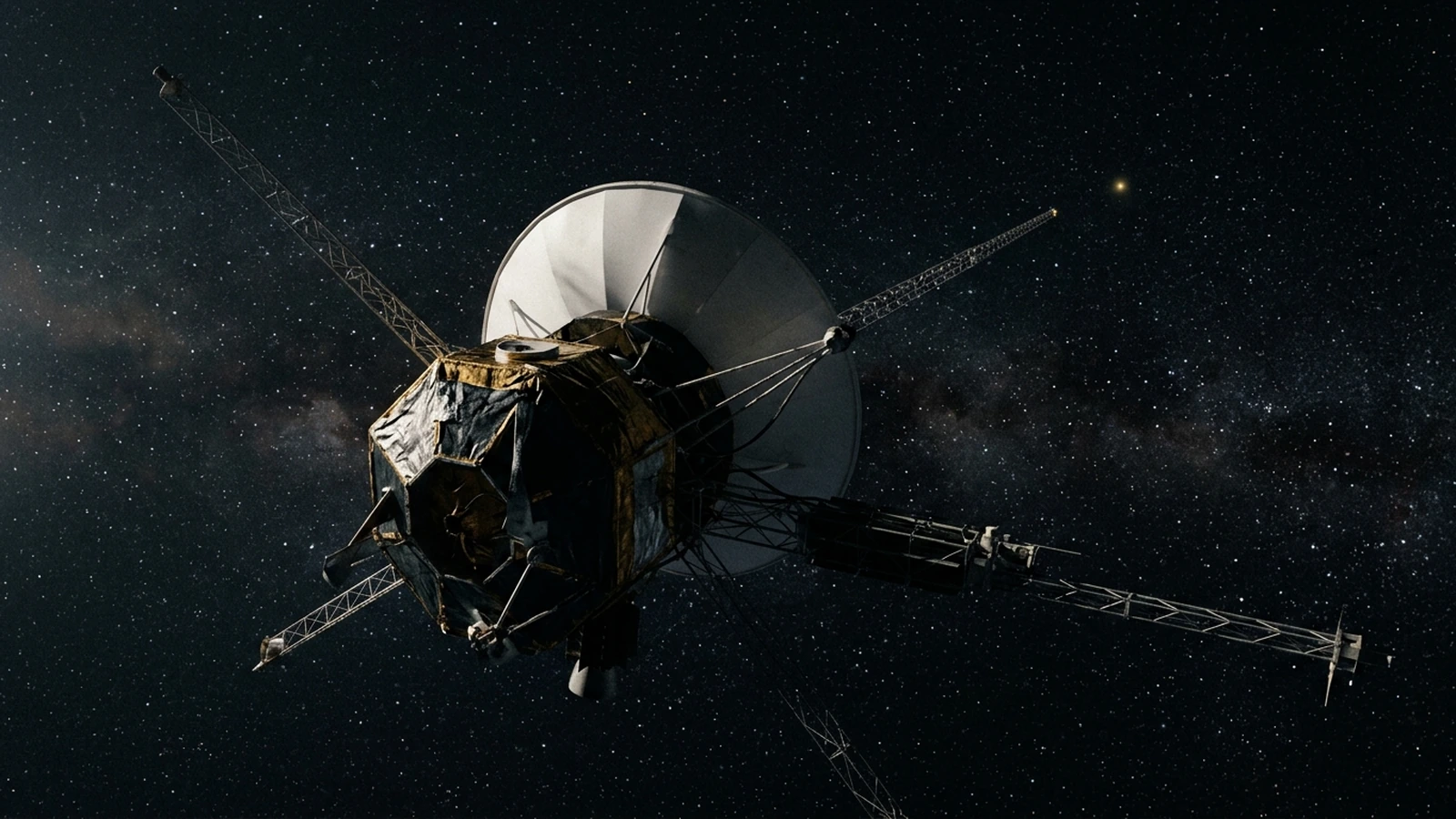
Header image: artist's impression of a Voyager spacecraft, NASA/JPL-Caltech. Sky positions computed by WatchTheStars with Skyfield, using JPL Horizons coordinates for Voyager 1.
Frequently Asked Questions
Equipment guides
Related topics
Ian ClaytonAmateur astronomer and founder of WatchTheStars.co.uk, dedicated to helping others explore the wonders of our universe. Full profile →