Key takeaways
- SN 2026aaiv is a Type Ia supernova in the galaxy NGC 7331, 45 million light-years away in Pegasus, discovered by the ATLAS survey on 1 September 2026
- The supernova brightened from magnitude 15.7 to around magnitude 12, held there from 10 to 24 September 2026, and had faded to about 13.4 by 9 October
- NGC 7331 sits about 4.5° north-north-west of Matar, the star just beyond the top corner of the Great Square of Pegasus, and is 60° high in the east by 22:00 BST
- A 150mm to 200mm telescope shows the supernova as a star-like point beside the galaxy's core from a dark site; a smart telescope like the Seestar S50 records it in minutes
- The early-October dark window closed around 16 October; the last realistic one runs from about 1 to 14 November, with NGC 7331 still about 68 degrees up at 21:00 GMT but the supernova close to magnitude 14
Jump to section 8 sections
- SN 2026aaiv: What Has Exploded in NGC 7331?
- How Bright Is the Supernova, and How Long Will It Last?
- Where Is NGC 7331? How to Find the Supernova From the UK
- What Telescope Do You Need to See SN 2026aaiv?
- How to Photograph the Supernova With a Smart Telescope
- What Is a Type Ia Supernova?
- Why NGC 7331 Has Had Two Supernovae in 14 Months
- Best Nights to Look: Early November
SN 2026aaiv: What Has Exploded in NGC 7331?
A star has blown itself apart in NGC 7331, a spiral galaxy 45 million light-years away in the constellation Pegasus, and you can still see it from the UK with a modest telescope.
The supernova, catalogued as SN 2026aaiv, was picked up by the ATLAS survey on 1 September 2026 at magnitude 15.7. Japanese amateur Koichi Itagaki had already caught it a few hours earlier at magnitude 17.9, before anyone knew it was there. Spectra taken over the following days confirmed it as a Type Ia supernova: a white dwarf that gained too much mass and detonated.
Since then it has climbed by more than three magnitudes. By 10 September, observers in France, Spain and Italy were measuring it at magnitude 12.0 to 12.2, and a BAA member in south-east England logged it at 12.7 through cloud gaps the same night. It sat on that peak until late September and has been fading slowly since, to about 13.0 by early October. It is still within reach of a telescope with 150mm or more of aperture.
NGC 7331 itself is a lovely target in its own right. William Herschel found it in 1784, three years after he found Uranus, and it is often called the Milky Way's twin because it is so close to our own galaxy in size and mass. We see it tilted about 75° from face-on, so it looks like a slender oval with a bright core, roughly 10 arcminutes long. The supernova sits about half an arcminute south-east of that core, which makes it easy to pick out once you have the galaxy in the eyepiece.
How Bright Is the Supernova, and How Long Will It Last?
SN 2026aaiv reached about magnitude 12 in mid-September 2026 and has held there since, and it will fade slowly through October.
Here is how the brightening went, from the magnitudes logged on the Rochester Astronomy supernova page and the BAA forum:
| Date (2026) | Magnitude | Notes |
|---|---|---|
| 1 September | 17.9, then 15.7 | Pre-discovery image, then ATLAS discovery |
| 3 September | 14.8 to 15.3 | First amateur images |
| 4 September | 13.7 to 13.9 | Type Ia confirmed |
| 6 September | 13.2 to 13.7 | Spectrum shows about one week before peak |
| 8 September | 12.5 to 13.4 | |
| 10 September | 12.0 to 12.7 | UK observer notes it "might be levelling off" |
| 12 September | 12.0 to 12.6 | |
| 14 September | 11.6 to 12.4 | |
| 16 September | 12.3 | |
| 18 September | 11.5 to 12.2 | |
| 19 September | 12.0 to 12.3 | |
| 20 September | 11.6 to 12.2 | |
| 21 September | 11.7 to 12.4 | |
| 22 September | 12.1 to 12.2 | |
| 23 September | 11.9 to 12.4 | |
| 24 September | 12.4 | |
| 28 September | 12.6 | Starting to fade |
| 29 September | 12.6 to 12.9 | |
| 1 October | 13.0 to 13.1 | |
| 2 October | 12.9 | |
| 4 October | 13.0 to 13.1 | |
| 5 October | 13.1 to 13.3 | |
| 7 October | 13.0 | |
| 9 October | 13.3 to 13.4 | Latest estimates |
Robin Leadbeater's spectrum on 5 September matched Type Ia templates at about one week before maximum, which points to a peak around 12 to 14 September. Different filters give slightly different numbers, so treat anything between 11.5 and 12.5 as "peak".
That is what has happened. Since 10 September the magnitude estimates have barely moved, sitting between 11.5 and 12.5 for a fortnight, which is the broad flat top a Type Ia makes around maximum. From late September it began to fade, reaching about 13.0 by 1 October and 13.3 to 13.4 by 9 October.
Type Ia supernovae fade in a predictable way. They drop by roughly one magnitude in the first fortnight after peak, then settle into a slower decline of about a magnitude a month. SN 2026aaiv is following that script: about magnitude 13 in early October, heading for around 14 by late October, and a hard 15th-magnitude target by the end of the year. In other words, the clock is running: the moonless evenings up to about 16 October were the last easy chance, and early November is the last realistic one.

Where Is NGC 7331? How to Find the Supernova From the UK
NGC 7331 is at RA 22h 37m, Dec +34° 25', in the northern part of Pegasus. From the UK it is already 50° up in the east by 21:00 BST in mid-September, 60° high at 22:00, and passes almost overhead, 72° up and due south, at midnight. That is about as well placed as a deep-sky object gets from Britain.
Here is the star-hop.
Step 1: Find the Great Square of Pegasus. Face east once it is properly dark: about 21:30 BST in mid-September, and closer to 20:15 BST by the middle of October. The Great Square is the big, nearly empty box of four second-magnitude stars standing on one corner as it rises. Our constellations guide has the full pattern if you have not found it before.
Step 2: Go to Scheat. Scheat (Beta Pegasi) is the corner at the top of the Square as it rises in the east, and the reddest of the four.
Step 3: Step out to Matar. About 5° beyond Scheat, on the side away from the Square, is Matar (Eta Pegasi), a magnitude 2.9 star. Five degrees is roughly three fingers held together at arm's length.
Step 4: Sweep 4.5° north-north-west. NGC 7331 is about 4.5° from Matar, again on the side away from the Square, towards the faint zigzag of Lacerta. In a 9×50 finder or at low power in the telescope it is a faint, elongated smudge with a brighter middle. Half a degree to its south-south-west is Stephan's Quintet, the famous group of five faint galaxies, which is a good sign you are in the right place.
Step 5: Look for the extra star. Centre the galaxy and go to 100× or more. The supernova is a sharp, star-like point just south-east of the core, about half an arcminute out. Compare with a chart from Stellarium or SkySafari, or with any of last year's photos of NGC 7331, and it is the point of light that should not be there.
If you are not confident hopping between stars at this level yet, our guides to stargazing for beginners and how to use a telescope will get you comfortable with the finder and low-power eyepiece first.
What Telescope Do You Need to See SN 2026aaiv?
To see SN 2026aaiv with your own eyes you need a telescope of at least 150mm aperture, and 200mm makes it comfortable rather than borderline.
A magnitude 12 star is not intrinsically hard. A 150mm reflector reaches to about magnitude 13.5 from a dark site, and a 200mm to about 14. The complication is that the supernova sits inside the glow of the galaxy's core, so it is fighting a brighter background than an ordinary field star would. Two things help. Use more magnification than you would for the galaxy itself, because higher power spreads the galaxy's light thinner while the supernova stays a point. And use averted vision: look a little to one side of the core and the point pops out.
Under a bright suburban sky, a 130mm scope will show you the core of NGC 7331 and probably not much else, and the supernova will be a struggle. From a properly dark site, the same scope has a chance. If you have the option, the drive to a dark horizon is worth it for this one; our UK dark sky sites map shows the nearest.
Binoculars will not do it. Even big 15×70s only reach about magnitude 10 to 11, and they will show you the galaxy as a faint smudge at best. This is the kind of target where a Dobsonian earns its keep. Our round-up of the best beginner telescopes UK buyers can get for the money explains the aperture trade-offs.
What you need to see the supernova
Kit we've tested and reviewed in full
At magnitude 12 this is a telescope target, not a binocular one. Aperture decides whether you see it at all, and a smart telescope is the easiest way to take a picture home.
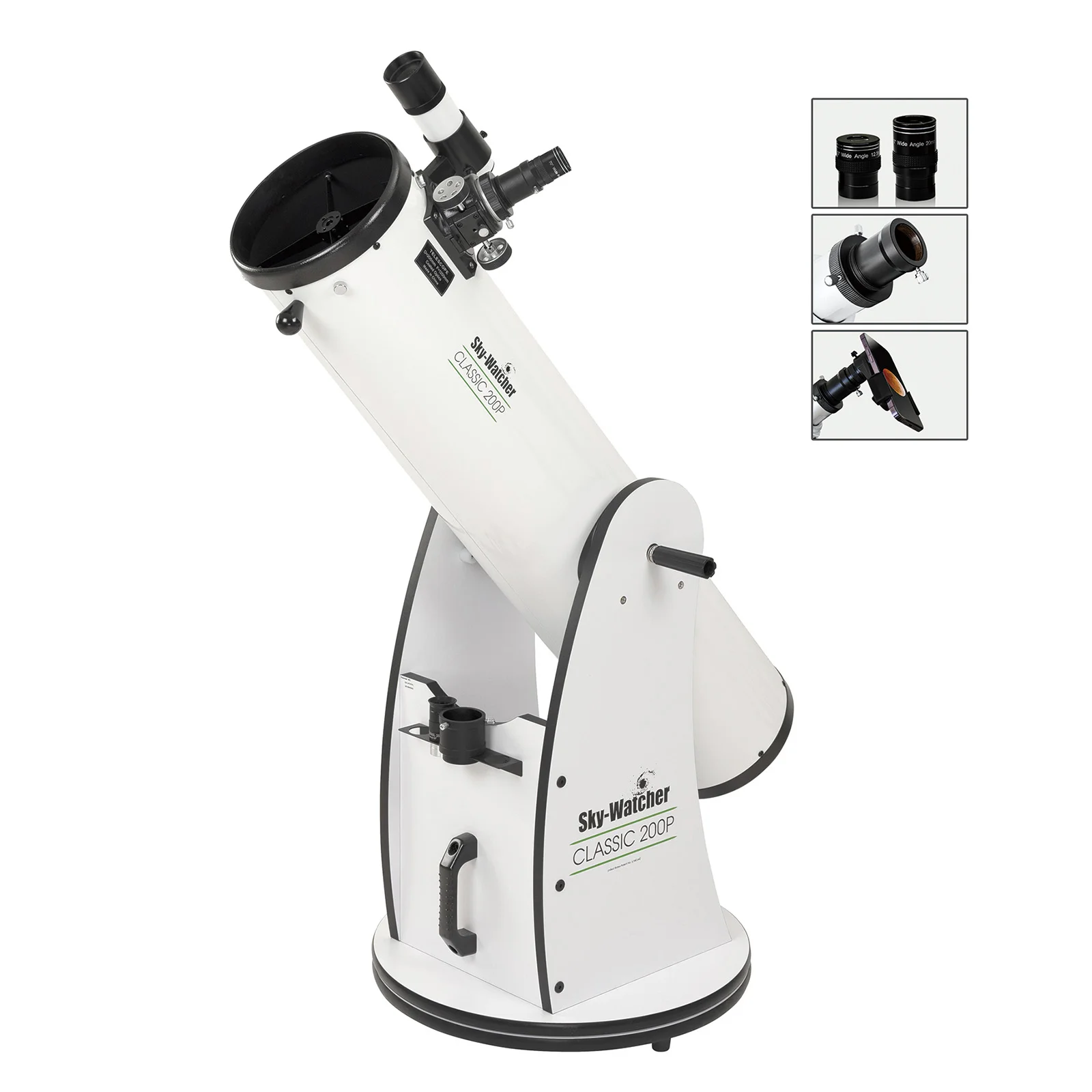
200mm of aperture reaches to about magnitude 14 from a dark site, which puts a magnitude 12 point beside a galaxy core comfortably in reach. Use 100× or more to darken the background and pull the supernova clear of the galaxy's glow.
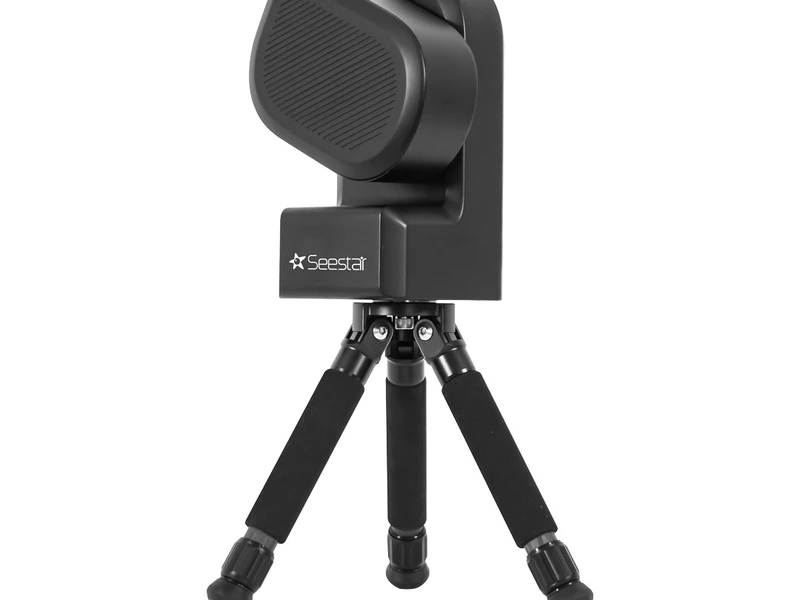
Type NGC 7331 into the app and it slews, focuses and stacks on its own. The supernova shows within minutes; an hour or two of stacking gives you the galaxy's spiral arms as well. Seestar owners have been sharing images of SN 2026aaiv since the first week.
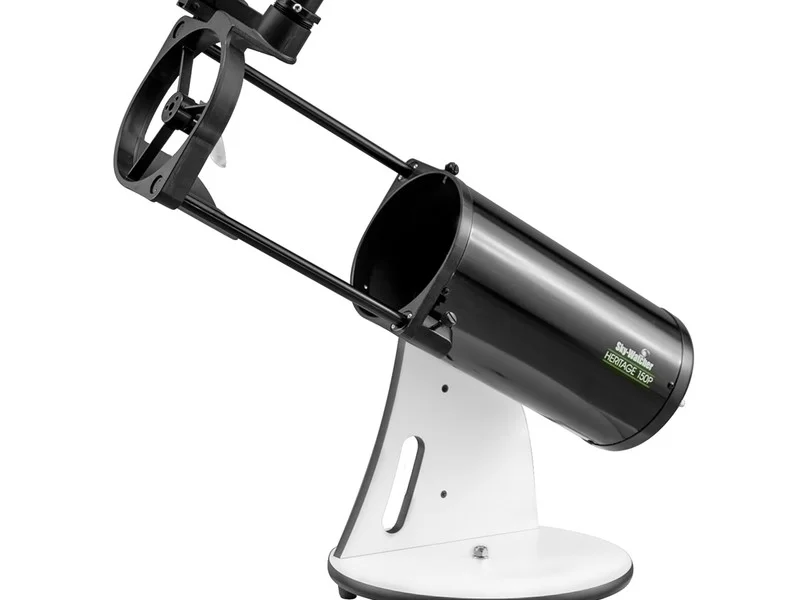
150mm is about the minimum that shows a magnitude 12 star-like point visually. From a properly dark site, with averted vision and a bit of patience, this is the cheapest telescope that will get you there.
Affiliate links: you pay the same price, we earn a small commission that helps keep WatchTheStars free.
How to Photograph the Supernova With a Smart Telescope
Photographing SN 2026aaiv is easier than seeing it, and a smart telescope makes it almost automatic.
Type "NGC 7331" into the Seestar, Dwarf or Vespera app, tap go, and the scope finds the galaxy, focuses and starts stacking 10-second frames. The supernova appears as a star-like point next to the core within the first few minutes. Leave it running for an hour or two and the galaxy's spiral arms and the four small background galaxies of the Deer Lick Group fill in around it. Seestar S50 users have been posting exactly this image since early September, and it is a satisfying thing to have taken from a back garden.
Two tips. Turn off any "planetary" or "solar system" mode and use the deep-sky stacking mode. And if your app offers it, save the individual frames rather than just the final stack, so you can measure the supernova's brightness against nearby stars and contribute a data point of your own.
With a conventional telescope and a DSLR or astronomy camera, 30-second to 60-second subs at ISO 1600 will pick the supernova up easily. Ten minutes of total exposure is plenty to show it clearly; an hour gives you a galaxy image you will keep. A phone held to the eyepiece will not manage a magnitude 12 point, so this is one for a proper camera or a smart scope.

What Is a Type Ia Supernova?
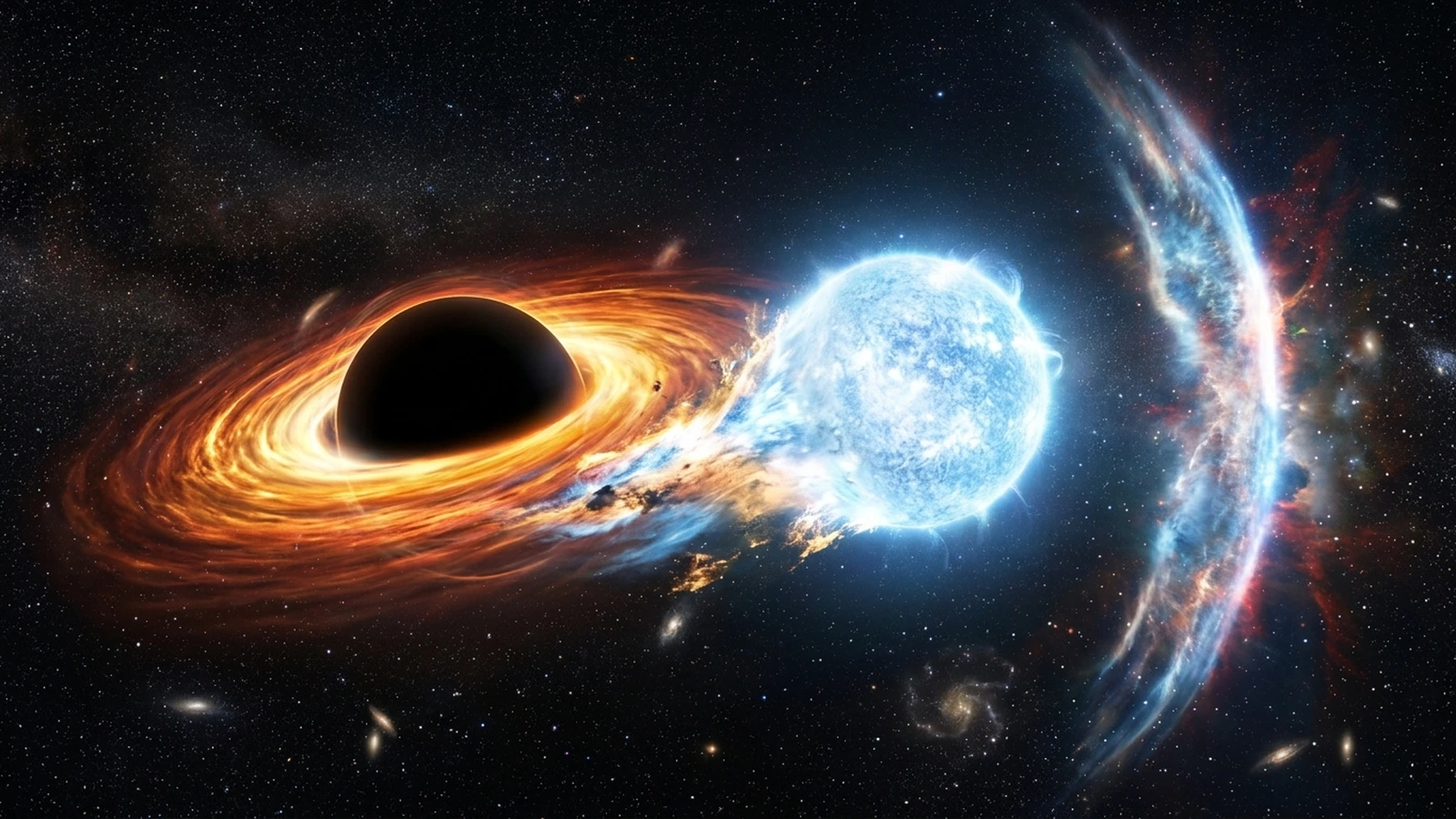
A Type Ia supernova is the complete destruction of a white dwarf star, the dense, Earth-sized remnant left behind when a star like the Sun runs out of fuel.
On its own a white dwarf just cools for billions of years. But if it has a close companion star, it can steal gas from it and slowly gain weight. When the white dwarf's mass reaches about 1.4 times the mass of the Sun, a limit worked out by Subrahmanyan Chandrasekhar in 1930, carbon fusion ignites throughout the star in a runaway reaction. Within seconds the whole thing blows apart. Nothing is left behind, not even a neutron star.
Because every Type Ia goes off at nearly the same mass, they all reach nearly the same peak brightness: around 5 billion times the luminosity of the Sun. That makes them standard candles. Measure how bright one looks, compare it with how bright you know it really is, and you have its distance. It was Type Ia supernovae in distant galaxies that revealed the expansion of the universe is speeding up, a discovery that won the 2011 Nobel Prize in Physics.
Astronomers can tell a Type Ia apart from a collapsing massive star by its spectrum. There is no hydrogen, and there is a strong silicon absorption line, which Robin Leadbeater's BAA spectrum of SN 2026aaiv showed clearly on 5 September, along with material flying outward at more than 10,000 km per second.
That is a different kind of explosion from the one waiting for Betelgeuse, which will die as a core-collapse supernova when its core runs out of fuel. Both are supernovae, but they are set off by completely different physics.
Why NGC 7331 Has Had Two Supernovae in 14 Months
The strange thing about SN 2026aaiv is that it is the second Type Ia in this galaxy in just over a year. SN 2025rbs was discovered in NGC 7331 on 14 July 2025, brightened to around magnitude 12, and was the brightest supernova of 2025.
That is a coincidence, not a pattern. A galaxy the size of NGC 7331 is expected to produce a Type Ia supernova only once every few centuries on average. Two in 14 months is the kind of thing that happens occasionally when you have billions of galaxies to watch, and modern surveys like ATLAS and the Zwicky Transient Facility now catch nearly all of them. Anyone who photographed NGC 7331 last summer has a ready-made "before" image, which is one reason this one has spread so fast on astronomy forums.
The new supernova is also closer to the galaxy's core than last year's, so the two do not sit on top of each other. If you imaged SN 2025rbs, put the frames side by side and you will see two different points of light, in two different places, 14 months apart.

Best Nights to Look: Early November
The early-October dark window has closed. The Moon was new on 10 October and kept out of the evening sky until about the 16th, with NGC 7331 about 69° up at 21:00 BST from London and the supernova around magnitude 13.3.
Now the waxing Moon has taken over the evening sky, full on 26 October, and with the supernova heading for magnitude 14 that rules out the rest of the month for most telescopes. The last realistic window opens around 1 November, when the waning Moon doesn't rise until about 22:30 GMT, and runs to about 14 November, with New Moon on the 9th. The clocks go back on 25 October, so by then the sky is dark from about 18:30 GMT and NGC 7331 is about 68° up at 21:00. Expect the supernova to be close to magnitude 14 by then: a job for 200mm of aperture or a smart telescope rather than a small scope.
Before you go out, check the cloud forecast and Moon on our what you can see in the sky tonight page, and is it a full moon tonight has the rise and set times for the nights either side.
Everything else up in the sky this week is in our UK night sky this week guide, and the astronomy events calendar has the rest of the autumn.
Supernovae bright enough for a back-garden telescope come along once or twice a year, and ones in a galaxy this photogenic are rarer still. The light you will be looking at left NGC 7331 45 million years ago, when the first whales were still learning to swim. Find the Square, step up to Matar, and go and see it while it is still there.
Sources:
- Supernova 2026aaiv in NGC 7331 — Rochester Astronomy (magnitude log)
- New supernova SN 2026aaiv in NGC 7331 — British Astronomical Association forum (discovery details, spectrum, UK magnitudes)
- SN 2026aaiv — Transient Name Server
- A star is exploding 45 million light-years away — Space.com
- Caldwell 30 (NGC 7331) — NASA Hubble
Frequently Asked Questions
Equipment guides
Related topics
Ian ClaytonAmateur astronomer and founder of WatchTheStars.co.uk, dedicated to helping others explore the wonders of our universe. Full profile →