Stargazing by region · the Lake District · Updated 6 November 2026
Stargazing in the Lake District: Where to Go and What You'll See
The best stargazing in the Lake District is at Low Gillerthwaite in Ennerdale (Bortle 2 to 3, a Dark Sky Discovery Site), Wasdale Head (Bortle 3) and Grizedale Forest (Bortle 3, a Dark Sky Discovery Site). The western valleys are the darkest part of the park, with the Irish Sea rather than a city beyond the fells. Enter a postcode to rank the three Lake District sites by distance.
Dark sky sites in the Lake District: map
Driving times are rough estimates and distances are straight-line. Check access and opening before you travel; most Discovery Sites are simple car parks with no facilities.
Best dark sky sites in the Lake District
The Lake District has three sites on our UK dark sky sites map: Low Gillerthwaite Field Centre in Ennerdale, Wasdale Head and Grizedale Forest, all Bortle 2 to 3. The national park as a whole holds no DarkSky International designation at the time of writing, but its western valleys are as dark as anywhere in England outside Northumberland.
Ennerdale is the darkest. The valley has no through road, no village and no street lights, and the Low Gillerthwaite Field Centre at its western end is a Dark Sky Discovery Site with car parks that look up a seven-mile valley to Pillar and Great Gable. Wasdale Head, at the end of England's deepest lake, is hemmed in by Scafell Pike and Great Gable, so the horizon is high but the sky above it is Bortle 3 and the only lights are the inn's. Grizedale Forest, between Coniston Water and Windermere, is the easiest to reach from the south and has Forestry England car parks with toilets.
| Site | Designation | Bortle | Getting there | Map |
|---|---|---|---|---|
| Low Gillerthwaite, Ennerdale Discovery Site | Dark Sky Discovery Site | 2-3 | Field centre car parks at the western end of Ennerdale valley. | Directions |
| Wasdale Head Discovery Site | Popular Lake District stargazing spot | 3 | Wasdale Head car park, CA19 1UX. | Directions |
| Grizedale Forest Discovery Site | Dark Sky Discovery Site | 3 | Forestry England car parks, LA22 0QJ. | Directions |
Several other Lake District spots are well used by local astronomers though they hold no official designation. The shores of Derwentwater south of Keswick and the Borrowdale valley beyond are dark once Keswick's lights are behind a hill. Haweswater, in the far east of the park, has a dead-end road and almost no habitation. The Duddon Valley and Eskdale in the south-west are as quiet as Wasdale with a lower horizon. If you want a Bortle 2 sky with a designation behind it, Northumberland's Kielder Forest is 90 minutes north-east of Penrith.
Bortle ratings are typical for a clear moonless night; designations are as listed on DarkSky International's register.
When is the best time to go stargazing in the Lake District?
The best time to go stargazing in the Lake District is from September to March, when the nights are long and the fells are quiet. At the Lake District's latitude the sky never reaches full astronomical darkness from mid May to late July, so a summer visit gives you a fine twilight and bright planets but not the Bortle 2 sky Ennerdale can deliver. By October the dark lasts ten hours a night.
The Milky Way season for the Lake District runs from late July to October. On August and September evenings the bright band through Cygnus passes overhead, and from Ennerdale it shows real structure to the naked eye. The galactic core in Sagittarius stays over the southern horizon, and in a valley the fells will hide it, so for the core go to the coast at Ravenglass or Silecroft, or to the open shore of Coniston Water. Our guide to how to see the Milky Way from the UK covers the method.
Go in the week either side of new moon and check is it a full moon tonight before you book, because a full moon turns a Bortle 3 valley into a Bortle 6 one. The Perseids in August and the Geminids in December are the two meteor showers worth a special trip; our calendar of the next meteor shower in the UK has every peak date. The northern lights reach Cumbria several times a year in strong storms, with the Solway coast near Silloth and the shore of Bassenthwaite the usual places to look north.
What can you see from the Lake District's dark skies?
From Ennerdale or Wasdale on a clear moonless night you can see the Milky Way, the Andromeda Galaxy and the Double Cluster in Perseus with the naked eye, and several thousand stars rather than the few hundred visible from Kendal or Carlisle. In spring and autumn the zodiacal light shows as a faint cone after dusk or before dawn. Familiar shapes like Cassiopeia and the Plough in Ursa Major get harder to pick out because of all the stars around them.
Binoculars show the Pleiades, the Beehive Cluster and the star clouds of the summer Milky Way. A small telescope adds Saturn's rings, Jupiter's moons, the Orion Nebula in winter and the brighter globular clusters in summer. The high fell horizon means objects rise later and set earlier than they would on the coast, so plan around what is high in the sky rather than what is just rising. For what is up on any given night, our stargazing tonight page is recalculated for the UK every day, and ISS passes tonight lists when the space station crosses the sky.
Astronomy clubs in the Lake District
There are five astronomy societies in Cumbria in our directory, covering Carlisle, Cockermouth, Kendal, Penrith and Barrow. All hold monthly talks through the winter and run observing nights that beginners can join.
- Border Astronomical SocietyTrinity School Observatory, Strand Road, Carlisle, Cumbria, CA1 1JB
- Cockermouth Astronomical SocietySt. Joseph's Roman Catholic Church Hall, Cumbria, CA13 0E
- Eddington Astronomical SocietyKendal Museum, Station Rd, Kendal, Cumbria, LA9 6BT
- Eden Valley and Penrith Astronomy ClubMoreland Community Hall, High Street, Morland, Cumbria
- Furness And South Lakeland Astronomical SocietyAbbey Road Baptist Church, Corner of Abbey Road and Park Drive, Barrow-in-Furness, Cumbria, LA13 9BD
Eddington Astronomical Society in Kendal, named after the Kendal-born astrophysicist Arthur Eddington, and Cockermouth Astronomical Society are the two closest to the dark western valleys. Border Astronomical Society in Carlisle has its own observatory at Trinity School. The full list, with a map, is on our astronomy clubs UK directory.
Where to stay for stargazing in the Lake District
The Lake District has more beds than any other national park in England, but most of them are in Keswick, Ambleside, Windermere and Bowness, all of which have street lighting. For the sky, stay in a valley. Wasdale Head has an inn, a campsite and a handful of cottages. Ennerdale has the Low Gillerthwaite and YHA Black Sail hostels, a campsite and farm B&Bs around Ennerdale Bridge. Eskdale, the Duddon Valley and Borrowdale all have campsites and cottages a long way from a street light. A few owners now advertise dark-sky-friendly stays, with outside lights off and a sky chart in the kitchen; those are the ones to pick.
Practical points: Lake District weather is wetter than almost anywhere in England, and the western valleys are the wettest of all, so give yourself three or four nights and watch the forecast for a clear window rather than a clear night. Valley bottoms hold mist on still autumn nights; a car park a few hundred feet up the hill is often clear when the lake shore is not. Single-track roads into Wasdale and Ennerdale have no lighting and few passing places, so drive in before dark the first time. Mobile signal is poor; download maps and star charts first. Our stargazing tips page covers clothing, dark adaptation and red light.
What to take to a dark sky site
Kit we've reviewed in full
A dark sky is the biggest upgrade there is, and the Milky Way needs no kit at all. These three cover the first few trips: binoculars that show hundreds of extra stars, a telescope that fits in a boot, and a red torch so you keep your night vision. See our best binoculars for stargazing guide for more.
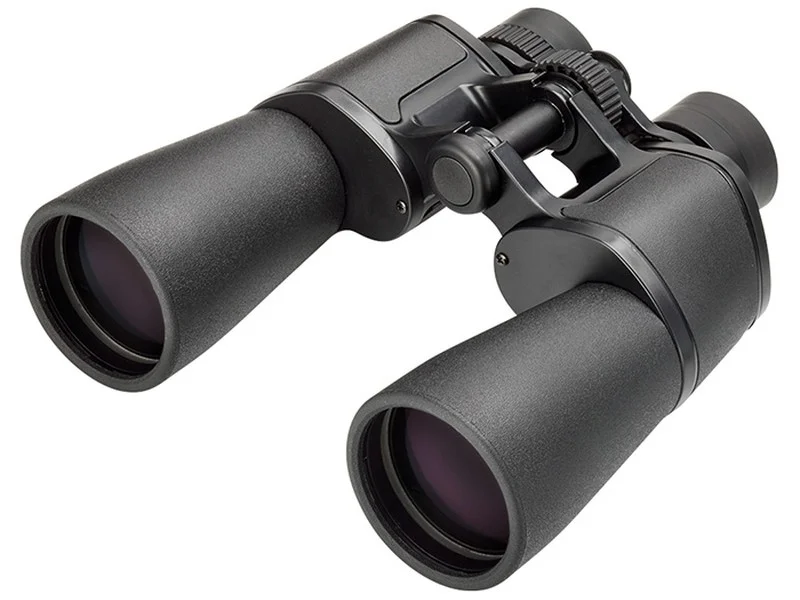
A 10×50 hangs round your neck all night and shows the Andromeda Galaxy, the Double Cluster and the star clouds of the Milky Way from any Bortle 2 or 3 site.
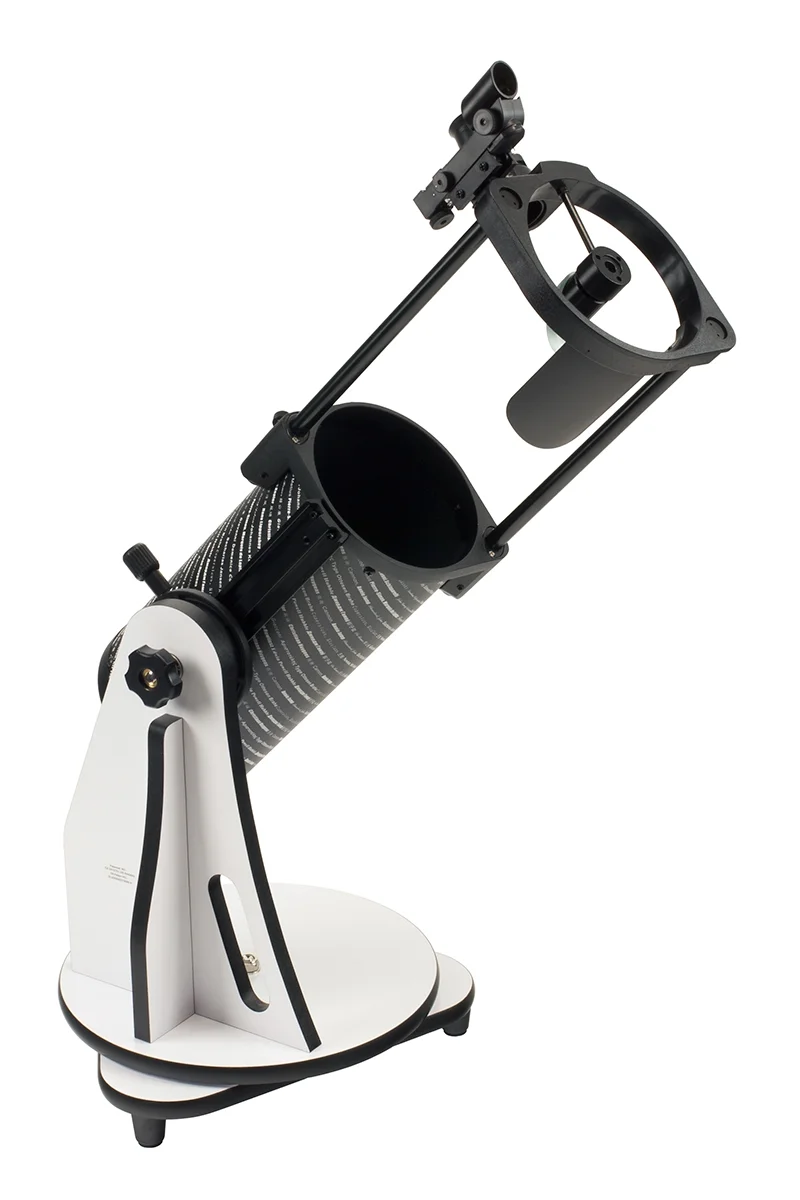
Collapses to fit a car boot or a rucksack. 130mm of aperture shows Saturn's rings, Jupiter's moons and dozens of deep-sky objects from a dark site.
Lepro Rechargeable Head Torch with Red Light (2 pack)
Two red modes on their own switch, USB rechargeable, hands free. White light is the one thing that gets you tutted at in a dark sky car park.
Browse all our equipment reviews
Honest, research-based recommendations for every budget.
Browse all →Affiliate links: you pay the same price, we earn a small commission that helps keep WatchTheStars free.
A dark valley needs no equipment, and for a first trip we would take binoculars rather than a telescope. The Opticron Adventurer 10x50, around £84, shows more from Ennerdale than a telescope shows from Manchester. If you want a telescope that travels, the Sky-Watcher Heritage 130P collapses to fit a boot and sets up in a minute. Taking children? Our guide to the best telescope for a child covers options that survive a campsite, and stargazing for beginners explains the first things to find.