Key takeaways
- The Project Blue Book file on the 1952 Tremonton UFO film, 156 pages, was released by the Pentagon on 18 September 2026 as document D102
- In February 1953 the Air Force's own lab still rated the Tremonton film unidentified and asked the Navy to redo its brightness measurements
- The same 1953 memo plans a press line: say the Air Force is 'reasonably sure that they are balloons or gulls' and that the technical reports 'must be discounted'
- The firm 'seagulls' verdict dates from a 1 June 1956 memo written for the Pentagon press room, three years after the analysis, in response to a UFO documentary
- An independent 1956 Douglas Aircraft study found 'no single hypothesis of a natural phenomenon' fully explained the Tremonton objects
Jump to section 9 sections
- What Is the Tremonton UFO Film? The 1952 Utah Footage
- Did the Air Force Think the Tremonton Film Showed Birds in 1952?
- Who Disputed the Navy's Tremonton Analysis?
- Why Did the Air Force Say 'Balloons or Gulls'? The 1953 Press Plan
- What Did the 1956 Douglas Aircraft Study Find?
- When Did the Air Force Decide the Tremonton Film Was Seagulls?
- What Did Donald Keyhoe Claim About the Tremonton Film?
- Watch the Tremonton UFO Film
- Where to Read the Blue Book Tremonton File
The Pentagon's sixth batch of UFO files went out on 18 September 2026, and most of the headlines went to the warp-drive papers. The document I went to first was a 156-page Project Blue Book case file on the 1952 Tremonton UFO film from Utah, catalogued as D102. It is the Air Force's side of a story we already knew half of, and it is a better story than "the military thought it was seagulls".
I wrote up the Navy's analysis of the Tremonton film in August, when the fifth release put the Navy's 1953 report online. That report ruled out birds, aircraft and balloons and measured decelerations of nearly 1,500g. The new file shows what the Air Force did with that report, and how "unidentified" in February 1953 became "seagulls" by June 1956. Here is the paper trail, in order.
Here is the sequence the file lays out, with the document each date comes from.
| Date | What happened | Source in the file |
|---|---|---|
| 2 July 1952 | Delbert Newhouse films about 30 feet of 16mm colour film near Tremonton, Utah | Newhouse's signed statement |
| 15 October 1952 | ATIC suggests sending the film to an ornithologist to ask whether the objects "may not possibly be birds in flight" | ATIC transmittal letter |
| December 1952 | ATIC films General Mills "pillow balloons" in Minneapolis for comparison | Photo file D103, trip notes |
| 29 January 1953 | Ruppelt told the press has learned of the movies; a release is drafted | Memorandum for record |
| February 1953 | Two astronomers say the Navy's brightness method was wrong; Air Force lab asks the Navy to redo the study and drafts the "balloons or gulls" press line | Memorandum for record |
| 26 February 1953 | Draft public statement hedges between "seagulls or balloons" and "high intensity light sources" | Draft press statement |
| January 1954 | Navy reports the original film may have deteriorated beyond safe copying | Naval PIC letter |
| 16 May 1956 | Douglas Aircraft study of about 1,200 frames finds no single natural explanation | R. M. L. Baker Jr report |
| 1 June 1956 | Air Force memo for the Pentagon press room declares "unanimity of opinion" for seagulls | Col. John G. Eriksen memo |
What Is the Tremonton UFO Film? The 1952 Utah Footage
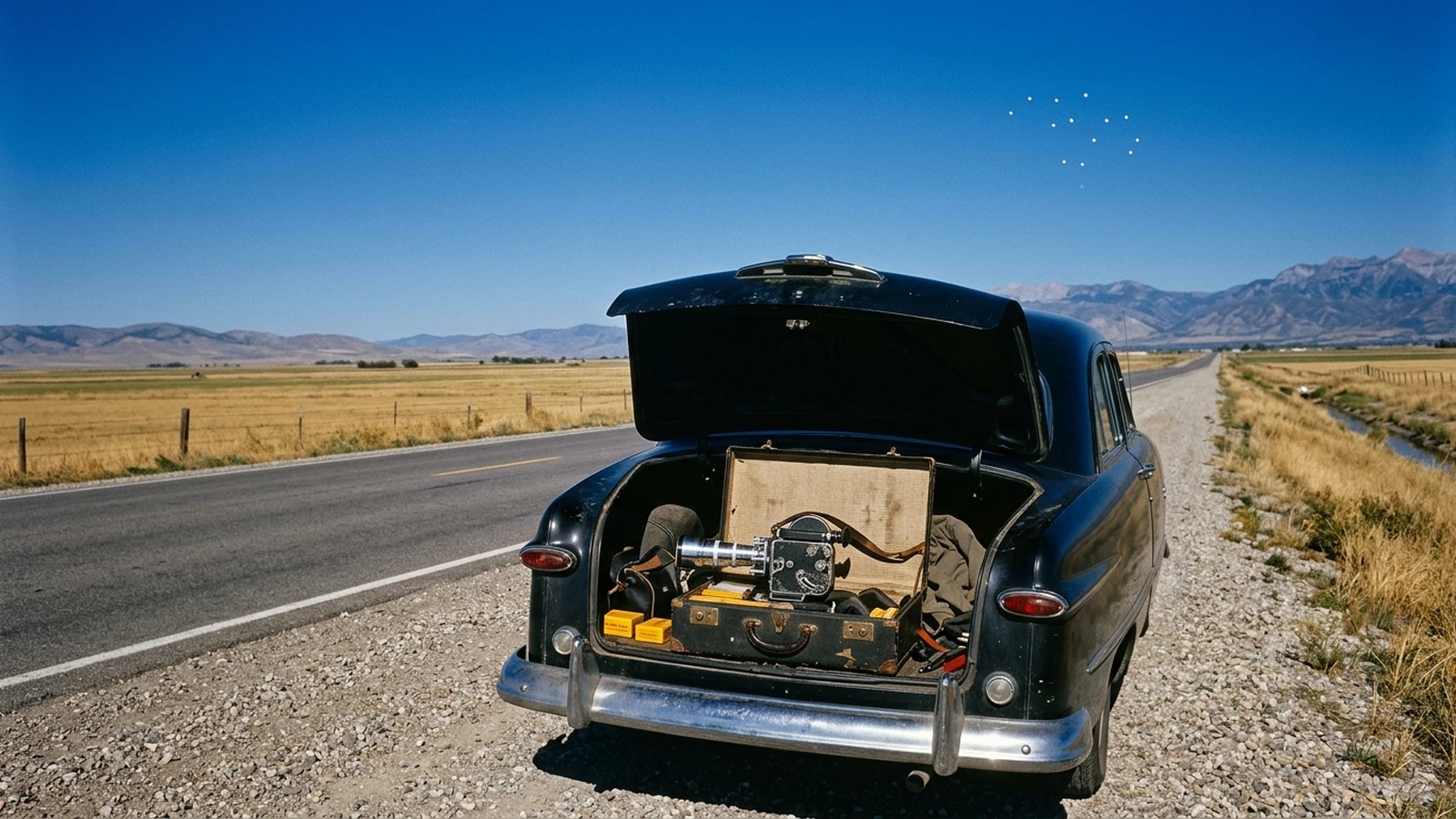
The Tremonton UFO film is roughly 30 feet of 16mm Kodachrome shot by Chief Photographer Delbert C. Newhouse, a US Navy warrant officer, at about 11am on 2 July 1952, seven miles north of Tremonton, Utah. His wife spotted a group of bright objects from the car; he pulled over and filmed them with a hand-held Bell and Howell Auto Master fitted with a three-inch telephoto lens, at 16 frames per second, f/8 for the first few feet and f/16 for the rest. Those details are from his own signed statement in the file. Several routing slips in the same folder call the film "35mm", which it was not. The full background is on our Tremonton and Great Falls film analysis page.
The file also settles what the Air Force thought of the man. A 28th Air Division message summarising the September 1952 interview at the family home says Newhouse and his wife "appeared to be extremely honest and reliable persons", and that he could be classed as an expert photographer after 19 years in the Navy. Nothing in the file questions his good faith. The argument was always about what he filmed, not whether he was telling the truth.
Did the Air Force Think the Tremonton Film Showed Birds in 1952?
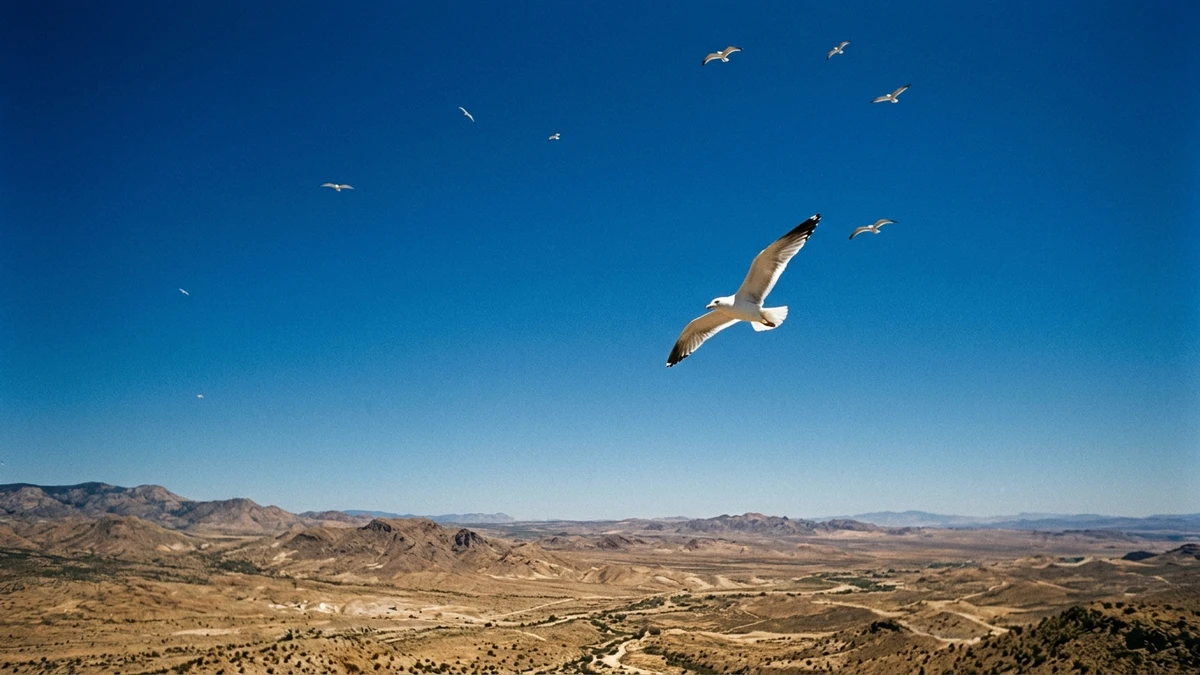
The Air Force did not conclude in 1952 that the Tremonton film showed birds. Birds were an early suggestion, and it came from the Air Technical Intelligence Center (ATIC) itself. A letter dated 15 October 1952, forwarding the film with a photo-lab analysis attached, says "it is the opinion of ATIAA-5 that the film should be submitted to an ornithologist, perhaps at the Smithsonian Institute in Washington, to obtain an opinion as to whether the objects may not possibly be birds in flight."
That is a question, not an answer. The Blue Book photo file (D103) shows the same uncertainty: the summary card for the Tremonton print carries a handwritten note reading "Explanation: Pillow balloons or Birds", with a question mark drawn underneath. ATIC went as far as sending an officer to General Mills in Minneapolis that December to film "pillow balloons" for comparison, and a General Mills test photo sits in the photo file next to the Tremonton print. It is a comparison shot, not a frame of the film, and it is easy to confuse the two.
Who Disputed the Navy's Tremonton Analysis?
Two astronomers disputed the Navy's Tremonton analysis, and the Blue Book file does not name them. The Navy's Photographic Interpretation Center spent about a thousand man-hours measuring the density of every image on every frame and concluded the objects were self-luminous or light sources, could not be aircraft or balloons, and were brighter than any bird could reflect. Its final figures, repeated in this file, include a maximum deceleration of 32,448 mph per second, or 1,479g.
A memorandum for record from February 1953 records the pushback in a single sentence: "It was brought out by two astronomers who heard a Navy briefing on the analysis of the movies that the method used to measure the brightness of each spot was wrong, therefore, the results of the entire study were wrong."
That is the whole objection as written. There is no working, no names and no reply from the Navy in this file. But it mattered, because the Air Force's own lab then set out its position. It was "reasonably certain that the brightness of the images on the film exceeds that of any bird", the objects were not spherical, and they could in theory be aircraft, except that the absence of sound rules aircraft out. Its recommendation was to "request that the Navy re-do the study using the methods of density measurement that are prescribed by the astronomers." In other words, in February 1953 the Air Force still had an unidentified film and wanted the numbers done again.
Why Did the Air Force Say 'Balloons or Gulls'? The 1953 Press Plan
The Air Force reached for "balloons or gulls" in February 1953 because the press had found out about the film and a release had to say something. The same memo records that on 29 January 1953 Captain Edward Ruppelt, head of Blue Book, was told in Washington that reporters had learned about the Tremonton movies. Al Chop of the Defense Department's public information office and others wanted them released, to honour the summer's promise that no UFO information would be withheld. Chop wrote a draft release. Then someone pointed out that the press would ask for the Air Force and Navy lab reports, and that holding them back would look like "the Air Force was holding back some important data".
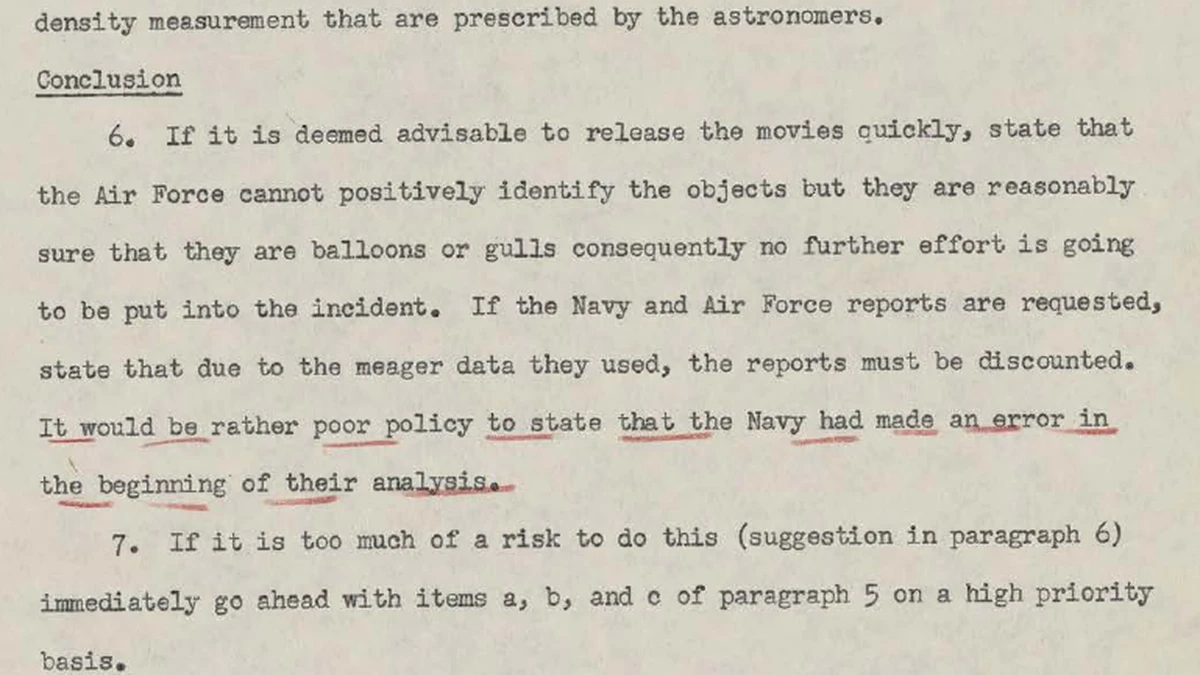
The memo's conclusion is the paragraph that makes this file worth reading. I am quoting it in full because the wording is the story:
"If it is deemed advisable to release the movies quickly, state that the Air Force cannot positively identify the objects but they are reasonably sure that they are balloons or gulls consequently no further effort is going to be put into the incident. If the Navy and Air Force reports are requested, state that due to the meager data they used, the reports must be discounted. It would be rather poor policy to state that the Navy had made an error in the beginning of their analysis."
Somebody at the time underlined that last sentence in red pencil. The next paragraph offers the alternative: if that is "too much of a risk", get on with the extra tests (film aircraft doing manoeuvres, have the Navy redo the study) "on a high priority basis". A later note in the same file says the decision was to release the movies "without comment as to what they were and hope that no questions were asked about the Navy report", which it calls a "calculated" risk of "another big flap".
The draft public statement that followed, sent for ATIC coordination on 26 February 1953, is hedged to the last comma. It opens by saying the film "confirms the faith of the USAF in the veracity of the many citizens who have reported sightings", then says examination "allows a deduction that the images were caused by surfaces having good reflective qualities (such as seagulls or balloons), or by bodies or substances possessing high intensity light sources." Reflective things or light sources. That covers gulls, balloons and the Navy's conclusion in one sentence, and commits to none of them.
Settle your own 'balloons or gulls' question
Kit we've tested and reviewed in full
Every argument in this file comes down to one problem: nobody could get close enough to the objects to tell what they were. A pair of binoculars solves that in seconds. See our guide to the best binoculars for stargazing if you want the full comparison.
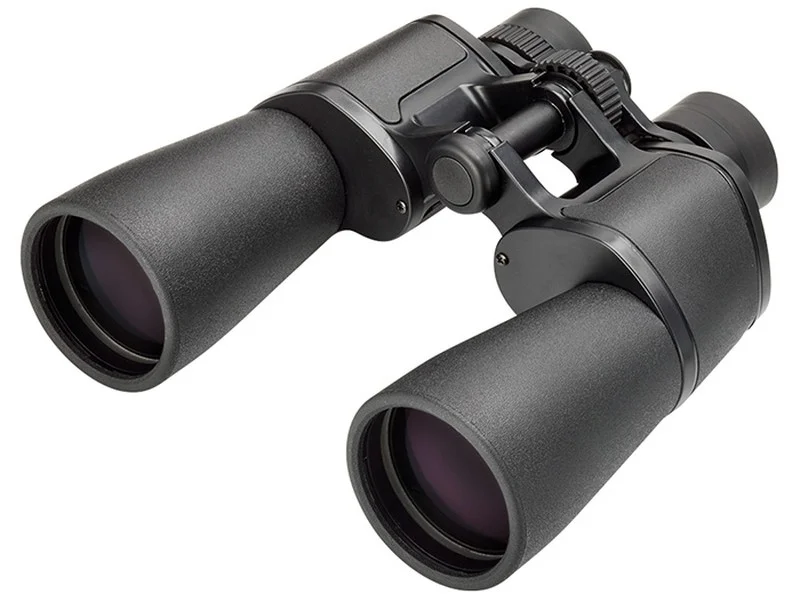
Wide, bright and quick to point at anything odd overhead. At 10x a distant gull or balloon gives itself away straight away.
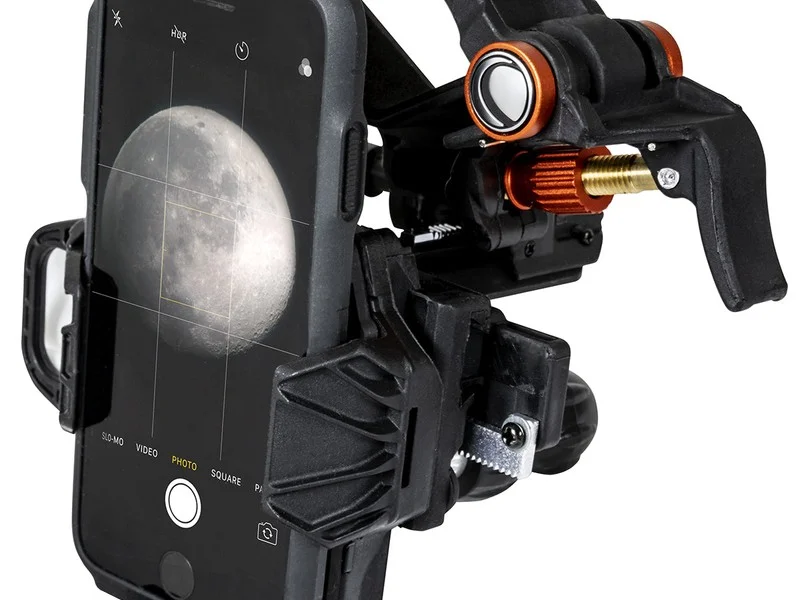
Celestron NexYZ Smartphone Adapter
Clamps your phone to binoculars or a telescope so you have footage with some magnification behind it, the thing Newhouse never had.
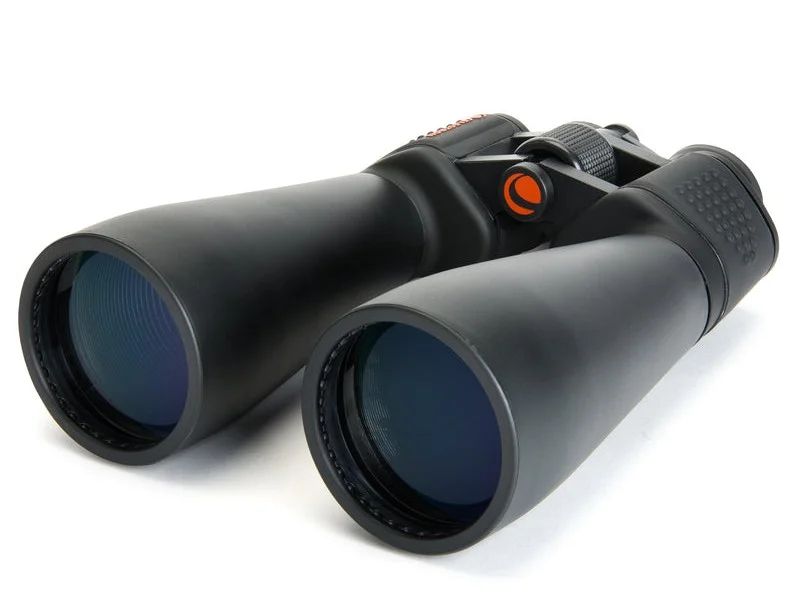
Extra magnification for high, distant objects. Use a tripod and the shimmer of a thermal-soaring bird is obvious.
Affiliate links: you pay the same price, we earn a small commission that helps keep WatchTheStars free.
What Did the 1956 Douglas Aircraft Study Find?
The 1956 Douglas Aircraft study found that no single natural explanation accounted for the Tremonton objects. It came about because the film reached the cinema. Green-Rouse Productions incorporated the Utah and Montana clips in the documentary "Unidentified Flying Objects", released by United Artists in May 1956, and the studio sent a 35mm reprint of the Tremonton footage to Douglas Aircraft for examination. The report, signed by R. M. L. Baker Jr and dated 16 May 1956, is in the Blue Book file. It is not an Air Force product and it is the most careful document in the folder.
Baker measured about 1,200 frames on an astronomical plate-measuring engine and tested the natural explanations one at a time. Birds: many of the images have an angular diameter of 0.0012 radians, so they could be one-foot birds at 600 to 800 feet or three-foot birds at 2,400 to 3,200 feet, but at those distances "it is doubted if birds would give the appearance of round dots; also they would have been identifiable by the camera if not visually." Balloons: "probably not", because "their number is too great" and the way the objects flare up to a steady brightness for several seconds and then fade "cannot well be associated with any known balloon observations." He also considered aluminium chaff, ballooning spiders, mirage and light leaks in the camera.
His conclusion: "The evidence remains rather contradictory and no single hypothesis of a natural phenomenon yet suggested seems to completely account for the UFO involved." He allows that two natural phenomena at once might do it, then adds that, as with the Montana film, "no definite conclusion could be obtained."
When Did the Air Force Decide the Tremonton Film Was Seagulls?
The Air Force's firm seagull verdict on the Tremonton film is dated 1 June 1956, two weeks after Baker's report and in reply to a request from the Pentagon press room. The CIA's Robertson Panel had favoured birds back in January 1953, as covered in our August post, but the Air Force's own file shows no settled view until this memo. The documentary had put the film back in the news, and M. A. Monts of the Air Force Press Room asked on 29 May 1956 for the service's position on both films. The answer is a memorandum for the Director of Intelligence signed by Colonel John G. Eriksen.
On Tremonton it says the original film was analysed by an Air Force photo reconnaissance laboratory "shortly after the sighting", that the conclusion was that a strong possibility existed the bright spots were seagulls soaring in thermal air currents, and that "the credibility of the conclusion was undoubtedly supported by the presence of identifiable seagulls in some of the frames." Then it cites something new: "A recent analysis of the Newhouse film, made by Air Force photo specialists totally unaware of the previous history of this case, yielded the opinion that the bright spots of light on the film were bird reflections in the strong sunlight." And it closes: "The unanimity of opinion present in all evaluations made in this case leaves little reasonable doubt that the UFOs in the Newhouse film were indeed seagulls."
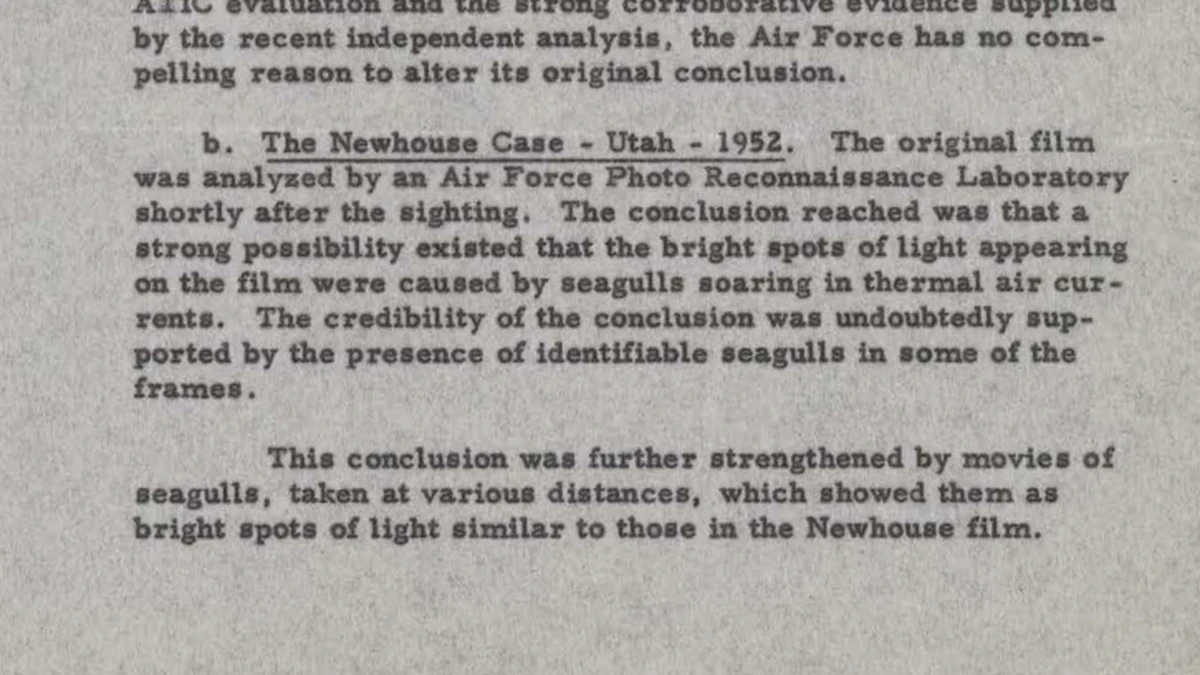
Set that against the rest of the folder. The Navy said not birds. Two astronomers said the Navy's method was wrong, without saying what the objects were. ATIC said the images were brighter than any bird and asked for the study to be redone. Douglas said no single natural explanation fitted. The "unanimity" rests on a 1956 look by specialists who, in the memo's own words, knew nothing of that history. None of this proves the objects were not gulls. It does show that the confident public answer was assembled for a press enquiry three years after the technical work stopped, not produced by it.
What Did Donald Keyhoe Claim About the Tremonton Film?
Donald Keyhoe claimed the Air Force suppressed a Navy finding that the Tremonton objects were unexplained. The file reproduces an illustrated feature telling the case from the point of view of Major Donald Keyhoe, the retired Marine officer whose 1953 book "Flying Saucers from Outer Space" made Tremonton famous. This is Keyhoe's account, not an Air Force admission, and it should be read as advocacy. In it, Keyhoe says a planned public disclosure of the Navy findings was cancelled, that an Air Force press release of 29 September 1953 described the pictures as of no importance, and that he sent a telegram to Brigadier General Sory Smith inviting the Air Force to court-martial him if he had misrepresented its analysis. He was never disciplined. The Air Force memos in the file neither confirm nor deny his version. That it was filed alongside them shows Blue Book was tracking the public argument as closely as the evidence.
One more chain-of-custody note. A Navy letter in the file from January 1954 says ATIC was no longer in immediate possession of the original film and that it "appears that the original may have deteriorated beyond the point where it could be successfully copied." The transfer the Pentagon released this month is a dark 16mm print, and part of it turns out to be unrelated sewing-machine footage. Whatever gets analysed in future will be analysed from copies.
Watch the Tremonton UFO Film
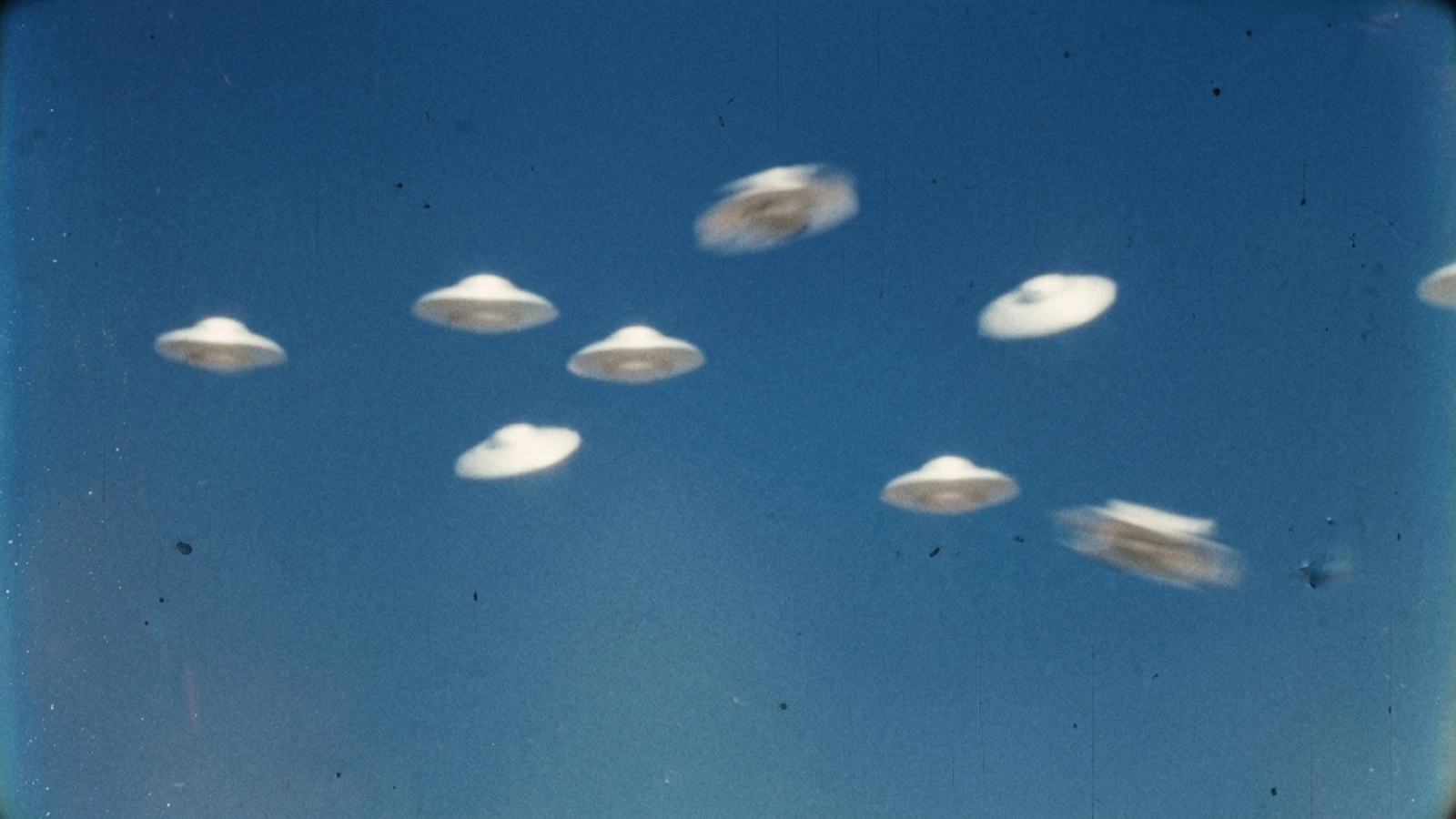
You can watch the Tremonton UFO film below. It is the National Archives digitisation released as PR159, a 16mm print about 70 seconds long, and it is a poor copy: the transfer is dark, the objects are faint specks visible from roughly 12 to 18 seconds in, and from about 55 seconds the reel cuts to unrelated sewing-machine footage that has nothing to do with the case. The Pentagon's own note says the surviving footage may be a composite or reused print. This is not the film the Navy measured in 1953, it is what is left of it.
Watch it with the file in mind. The Navy's densitometer work, Baker's 1,200-frame study and the Air Force's "identifiable seagulls" all came from sharper copies than this one, which is one more reason the argument was never settled by looking.
Where to Read the Blue Book Tremonton File
The case file is DOW-UAP-D102 in the Pentagon's sixth PURSUE release, free at war.gov/ufo. The photo file is D103 and the digitised film embedded above is PR159 (DVIDS 1023402). All three can be opened from our PURSUE files browser, and the earlier Navy report, D098 from the fifth release, is there too. The wider collection is on our UAP document archive page, and if you want the mood of the Air Force in the months before the sighting, the MIT Lincoln Lab 1952 flying saucer tape is the best companion piece.
If you ever find yourself in Newhouse's position, the lesson of this file is that footage without a reference point cannot be settled afterwards, however many experts look at it. Check what you can see in the sky tonight before you assume anything, check whether the ISS passes tonight over your area, and if you are new to all this, our stargazing for beginners guide covers the usual suspects. Then get some magnification on it. Seventy-four years on, that is still the only thing that would have ended the Tremonton argument.
Sources:
- DOW-UAP-D102, Project Blue Book File on Tremonton Film, Utah, 1952, US Department of War, PURSUE Release 06, 18 September 2026
- DOW-UAP-D103, Project Blue Book Photo File Relating to Tremonton Film, US Department of War, PURSUE Release 06
- DOW-UAP-D105, US Air Force Flying Discs File, September to December 1952, US Department of War, PURSUE Release 06
- DOW-UAP-D098, Naval Photographic Interpretation Center report on the Tremonton and Great Falls films, US Department of War, PURSUE Release 05
Frequently Asked Questions
Equipment guides
Related topics
Ian ClaytonAmateur astronomer and founder of WatchTheStars.co.uk, dedicated to helping others explore the wonders of our universe. Full profile →