Key takeaways
- A bright fireball crossed Southern California at about 7:08pm on 30 November 1957 and was reported from six places
- The Air Defense Command scrambled four fighters after the 1957 fireball and found nothing
- An Air Force analyst checked Sputnik's track and wrote 'Not Sputnik! Other side of the World.'
- Mount Wilson Observatory and every Air Force evaluator in the file called the 1957 fireball a meteor
Jump to section 6 sections
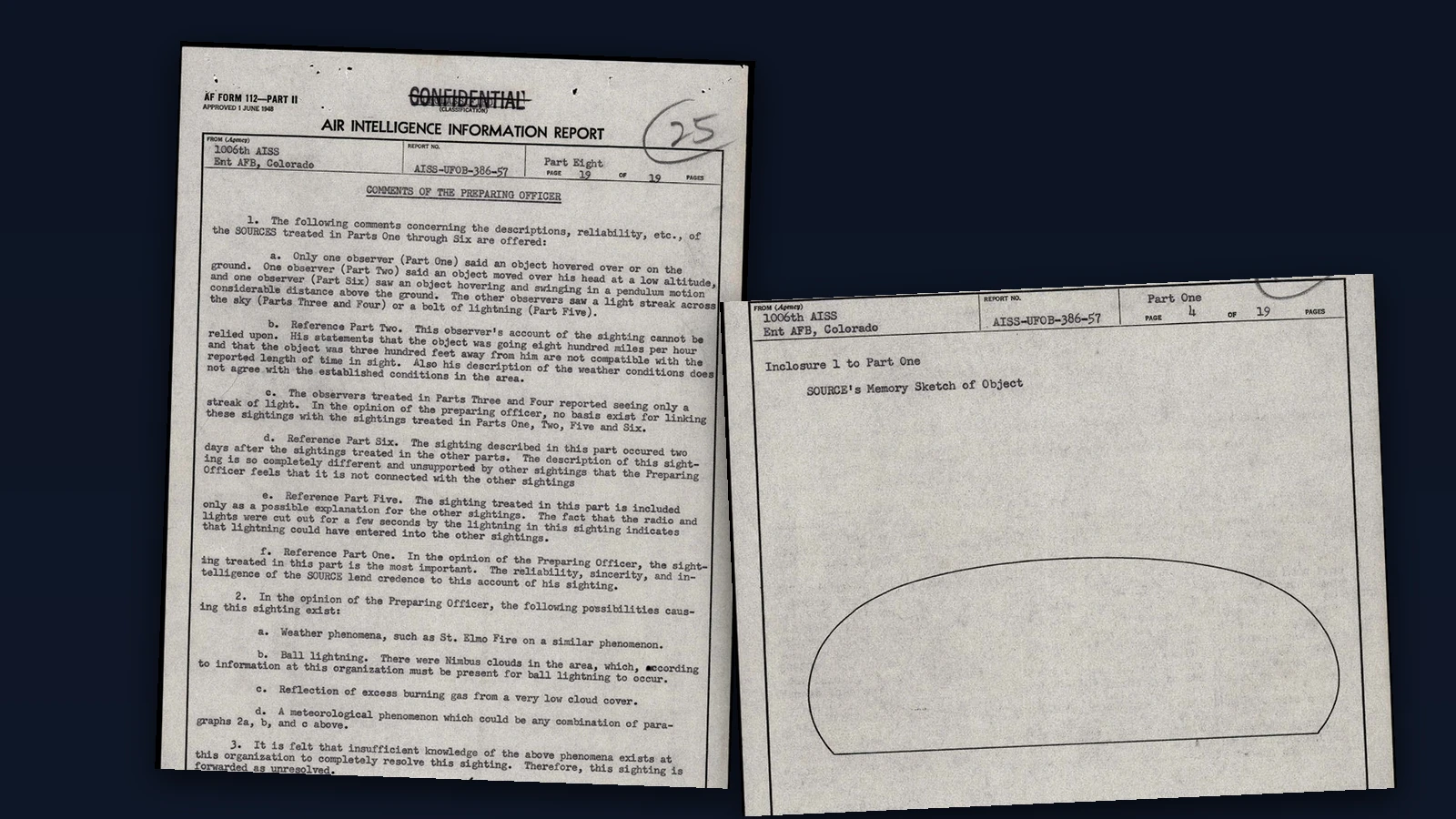
The 1957 California fireball is one of the shortest files in the Pentagon's eighth UFO file release, and one of the most revealing about the autumn of Sputnik. On the evening of 30 November 1957, a bright bluish-white light streaked across Southern California in a few seconds. Air defence scrambled four fighters. An Air Force analyst checked whether it could have been the Soviet satellite, and scribbled the answer in the margin: "Not Sputnik! Other side of the World."
The file, DOW-UAP-D210, is filed in the release as an "Unresolved UAP Report". It isn't unresolved at all. Every person who evaluated it, from a radar station director to Mount Wilson Observatory, said it was a meteor. Here's the story, with our own check of the sky that night.
1957 California Fireball: What People Saw
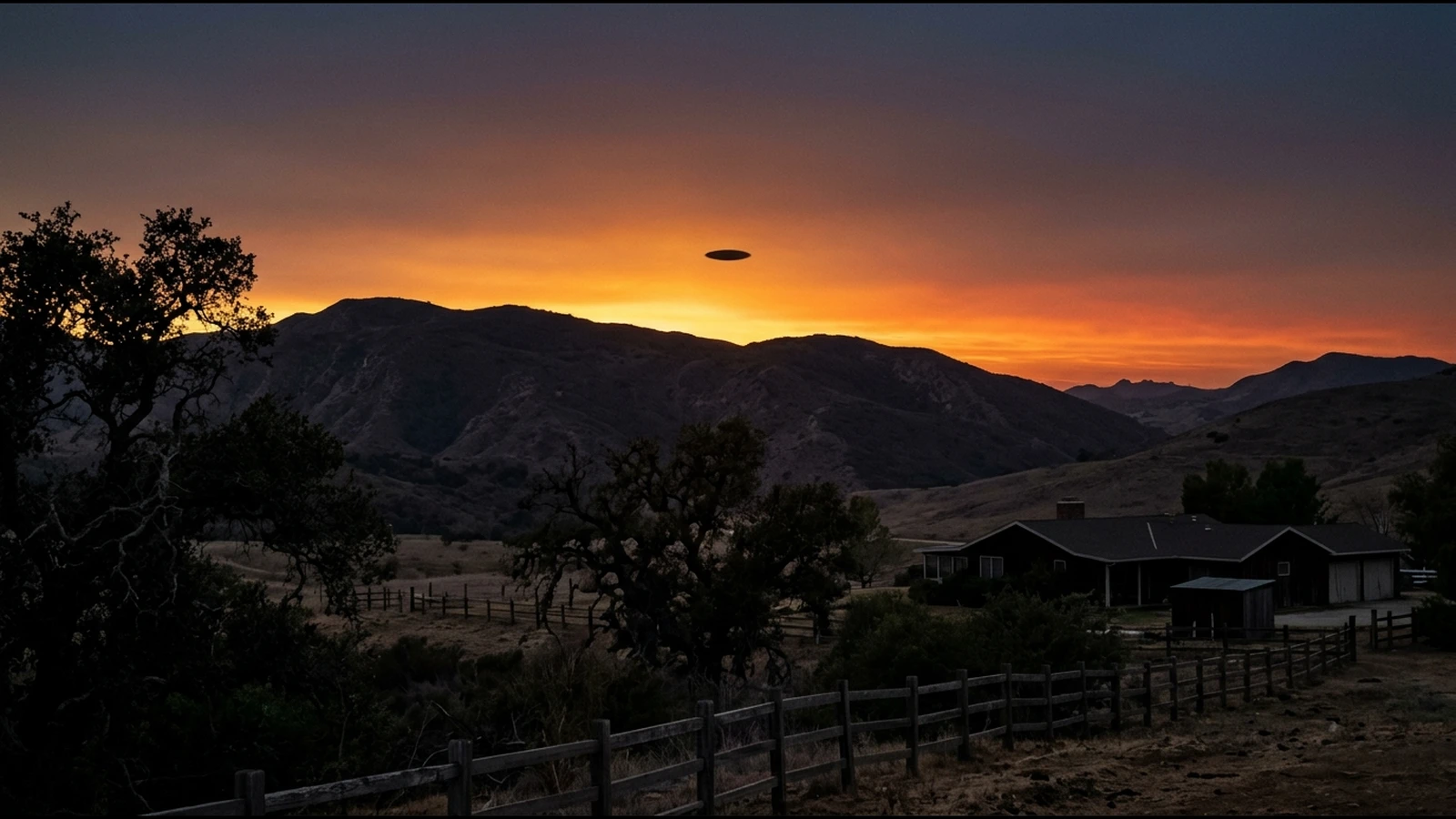
The 1957 California fireball was seen from at least six places between about 7:06 and 7:10pm Pacific time on 30 November (03:06 to 03:10 GMT on 1 December). The record card lists them: San Clemente Island, a point eight miles south-east of Borrego Springs, 30 miles west of Blythe, five miles east of Oxnard, Ventura and San Bernardino. That's a spread of about 240 miles.
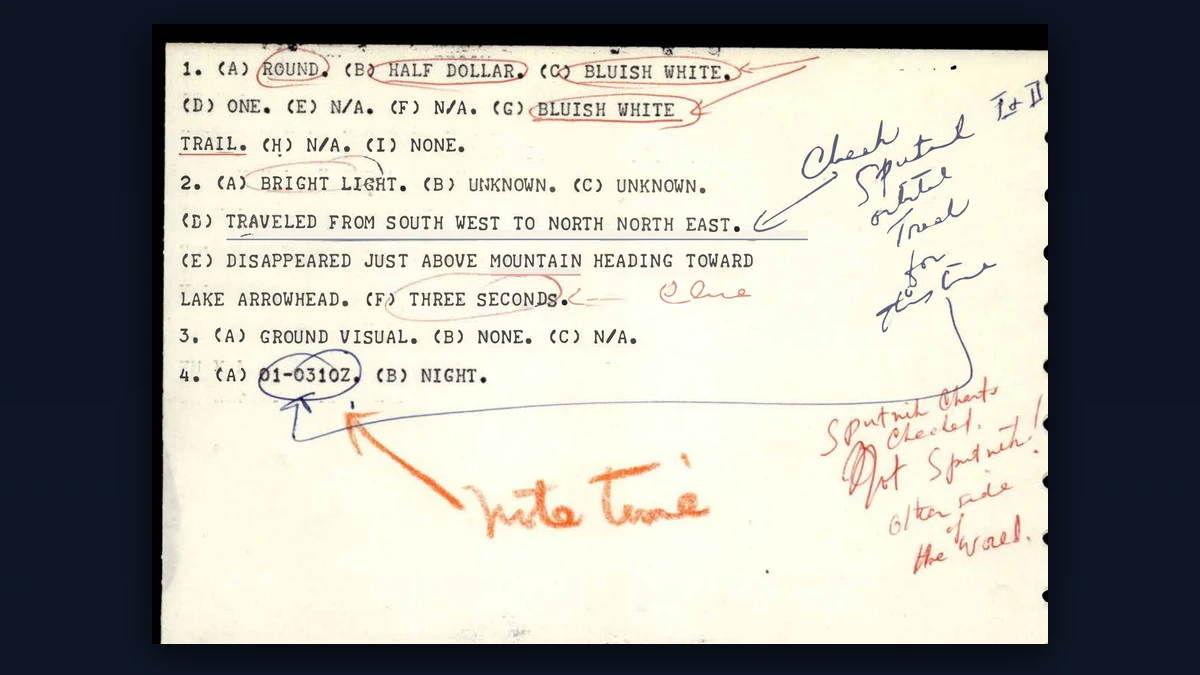
The witnesses were a mix. A Navy seaman on San Clemente Island saw a bluish "streak of light" pass "directly overhead" and on "a north east heading" towards the mainland. A Navy F3D crew at 24,000 ft over Highway 78 saw a ball in "bluish white flame" falling past them to the north-west, with the flame "blowing back" into a cone; a DC-7 at 20,000 ft saw it too. An Air Force weather officer driving west of Blythe saw two objects "in trail", the second "much smaller" and bluish, burning out together. A man in Ventura said it "burst in flame north of Santa Paula". In San Bernardino a witness had it travelling "from south west to north north east" and vanishing over the mountains towards Lake Arrowhead in three seconds.
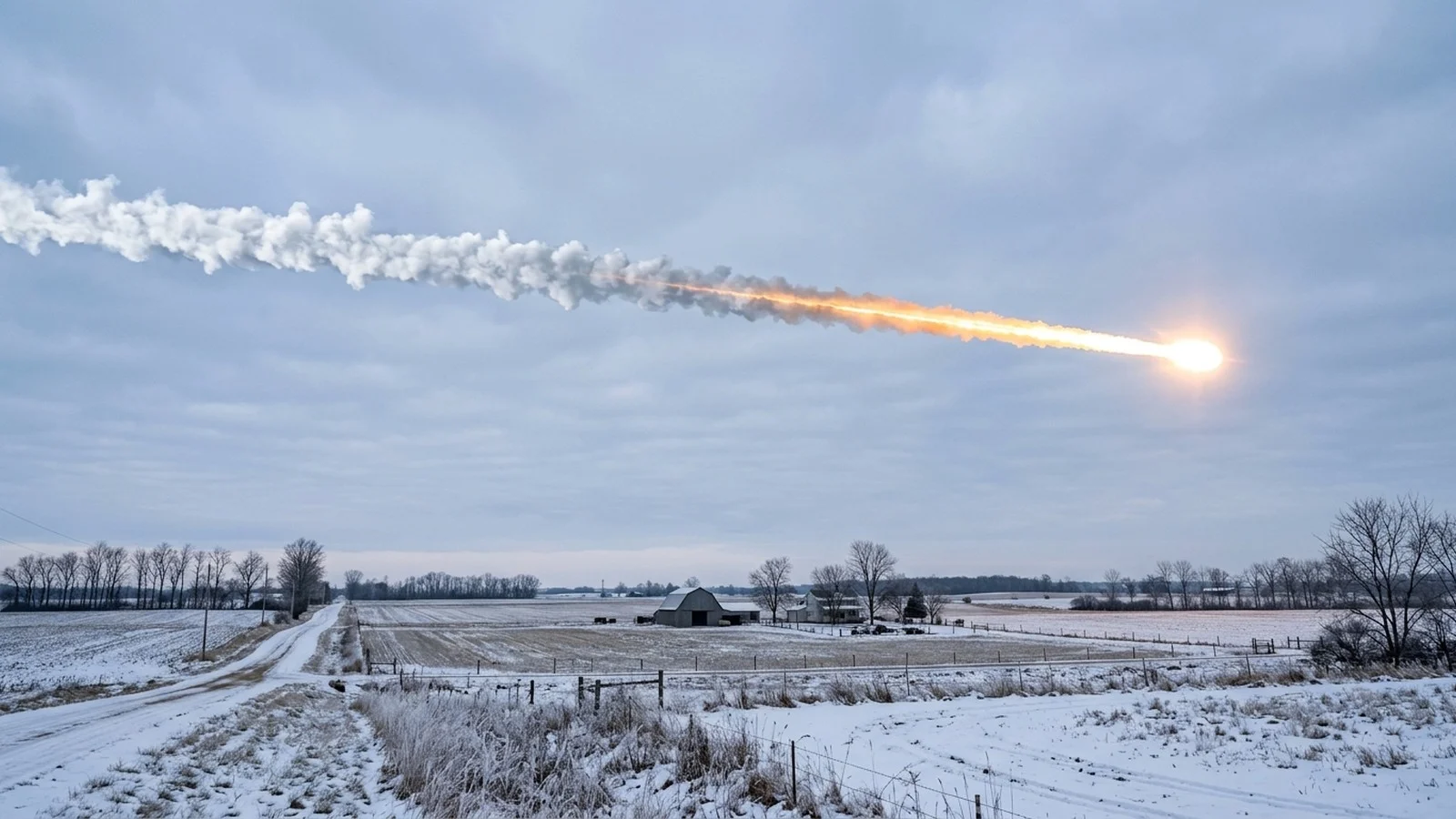
Fragmenting into two pieces, a terminal burst and a few seconds of bright, bluish light are all classic signs of a big meteor, a fireball. So is being seen from San Clemente Island to Blythe at the same moment.
Why Four Fighters Were Scrambled at a Meteor
The 1957 fireball arrived eight weeks after Sputnik 1 and four weeks after Sputnik 2, at a time when American air defence was jumpy about anything unexplained in the sky. The reports went to the 27th Air Division's air defence control centre, and one teletype records what happened next.
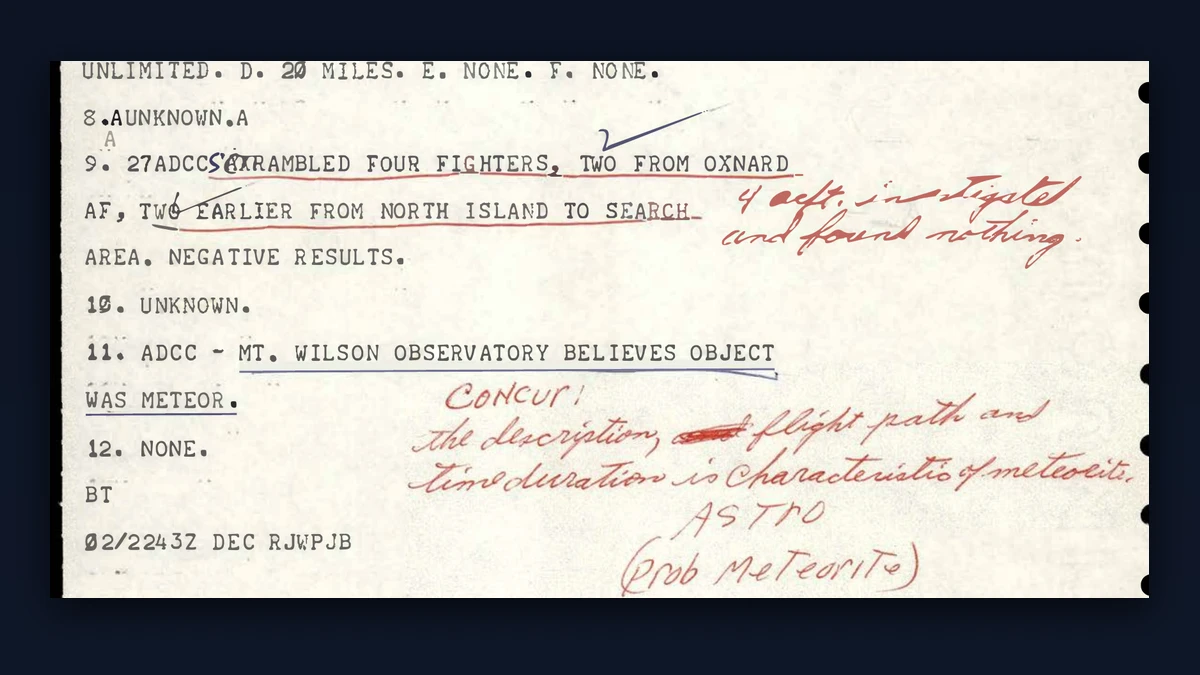
"27ADCC SCRAMBLED FOUR FIGHTERS, TWO FROM OXNARD AF, TWO EARLIER FROM NORTH ISLAND TO SEARCH AREA. NEGATIVE RESULTS." A reviewer added in the margin: "4 acft. investigated and found nothing". Of course they didn't. A meteor is gone in seconds, and by the time a fighter is airborne the only thing left is, at most, a fading smoke trail.
It's easy to smile at that now, but it's what an air defence system is for. A bright, fast object of unknown origin crossing the coast at night had to be treated as possibly hostile until someone could say otherwise. Someone also asked an astronomer.
"Not Sputnik! Other Side of the World": The Sputnik Check
The Sputnik check in the 1957 fireball file is a handwritten exchange on the San Bernardino report. Next to the time someone wrote "Check Sputnik orbital track for this time", circled "01-0310Z" and added "Note time". The answer is written beside it: "Sputnik Charts Checked. Not Sputnik! Other side of the World."
There was a good reason to ask. As outside context, not from the file: the rocket core stage that put Sputnik 1 into orbit, the bright "Sputnik" that people were actually seeing cross the sky that autumn, is catalogued as coming down on about 1 December 1957, within a day or so of this fireball. A falling rocket stage would look a lot like a fireball. The analyst checked the charts and found the Soviet hardware on the far side of the planet at 03:10 GMT.
We can't recheck that ourselves, because there are no reliable orbital elements for that night, so we'll take the analyst's word. The witnesses' descriptions also fit a meteor better than a re-entry: most of the reported durations are three to five seconds, which is short for a re-entering rocket stage, since those usually take far longer to cross the sky. Our post on the Levelland UFO of the same month shows how quickly the newspapers tied every strange light that November to Sputnik 2.
Was It a Meteor? What Mount Wilson and the Air Force Said
Yes. Every evaluation in the 1957 fireball file says meteor, and the Project 10073 record card closes it as "Was Astronomical: Meteor". The verdicts stack up:
- The radar station director at Mount Laguna: "BELIEVE OBJECT TO BE LARGE METEOR".
- The weather officer who saw it near Blythe: "OBJECT SIGHTED SUGGEST METEORS".
- The air defence control centre, relaying Mount Wilson Observatory: "MT. WILSON OBSERVATORY BELIEVES OBJECT WAS METEOR."
- The analysts at the Air Technical Intelligence Center, in handwriting: "the description, flight path and time duration is characteristic of meteorite", "Highly suggestive of a 'bolide'", and on the last page, "All info indicates obj. Prob. METEOR".
The file isn't perfectly tidy. The San Clemente time is typed as 03:46 GMT in the teletype and changed to 03:06 on the card, probably a typing slip given that the description matches the rest. The card says one object, NE, five seconds, while other reports mention two pieces and 15 to 30 seconds. None of that changes the answer. The release's "Unresolved" label is the only part of the file that disagrees with it.
Kit for a night of meteor watching
Kit we've reviewed in full
Meteors and fireballs are a naked-eye show, so the best thing you can do is lie back and take in as much sky as possible. Binoculars come into their own afterwards, for the smoke trail a big fireball can leave, and for the sky between meteors.
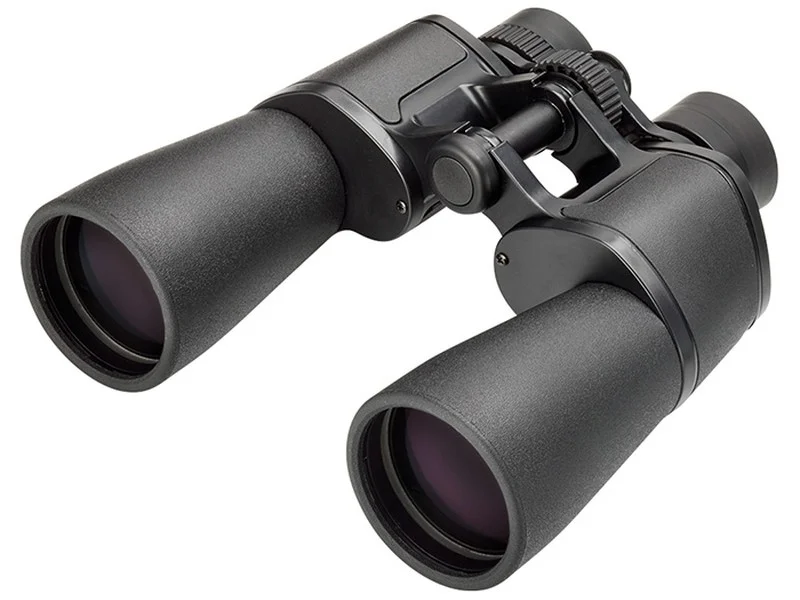
Wide, bright views for following a lingering fireball trail or sweeping star fields while you wait.
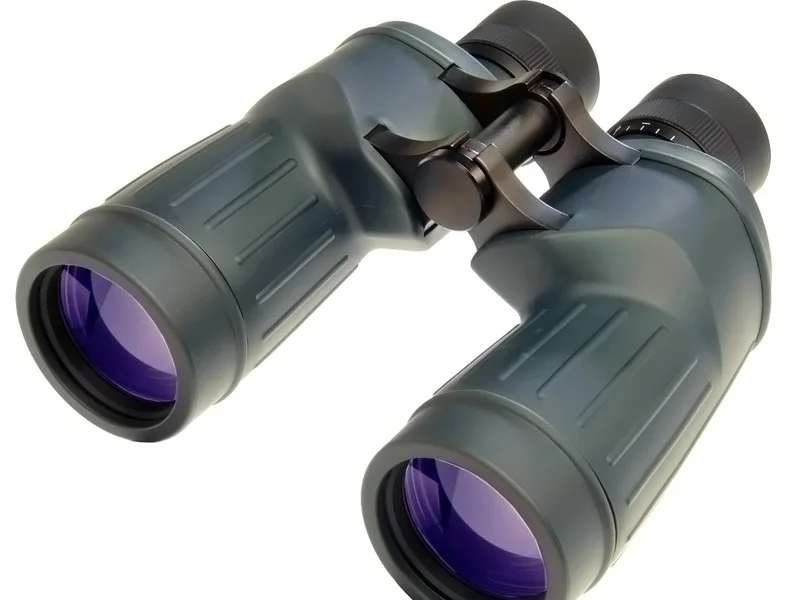
Crisp, contrasty optics that make the most of a dark winter sky between meteors.
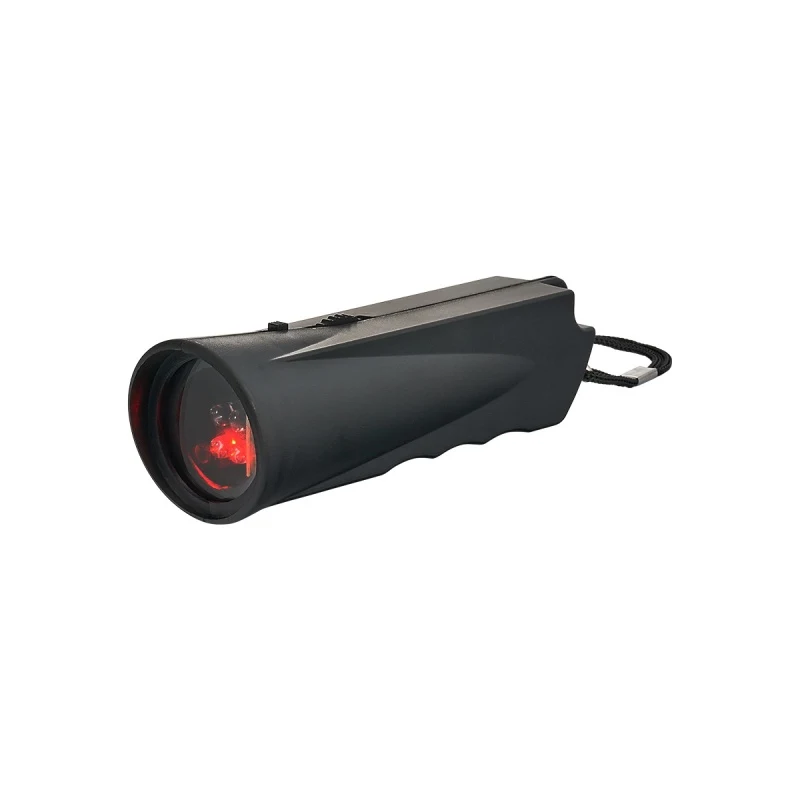
Astro Essentials Red Light Torch
A red torch lets you note the time and direction of a fireball without ruining your dark adaptation.
Affiliate links: you pay the same price, we earn a small commission that helps keep WatchTheStars free.
Which Meteor Shower Was Active on 30 November 1957?
The only meteor shower with a real claim on 30 November 1957 is the Northern Taurids, and the fireball went the wrong way for one. The Taurid meteor shower is famous for slow, bright fireballs, and the International Meteor Organization lists the Northern Taurids as active until about 10 December (outside context). So it was the obvious suspect.
We checked with Skyfield and the JPL DE421 ephemeris for the Los Angeles area at 7:10pm Pacific time. Our calculation puts the Northern Taurid radiant, using the International Meteor Organization's 30 November position near Aldebaran, about 25° up in the east-north-east. Meteors fly away from their radiant, so a Taurid passing overhead that evening would have been heading roughly west. The witnesses describe this fireball crossing from the south-west towards the north-east, the opposite direction.
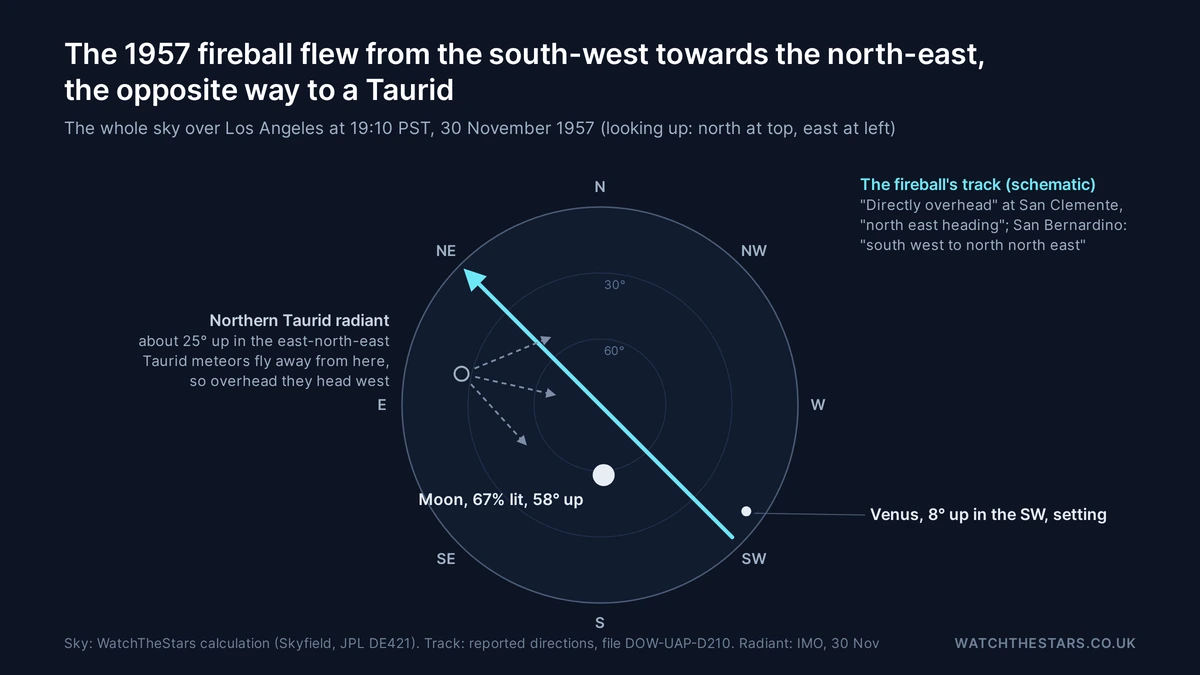
The other candidates don't fit either. The Leonid meteor shower's radiant was about 33° below the horizon at that hour, and the shower was at the very end of its season. The Geminids meteor shower didn't start until about 4 December. So the best reading is a sporadic fireball, one of the random bright meteors that turn up on any night of the year. That's our inference from the reported directions, which vary a little from place to place, not something the 1957 analysts wrote.
The rest of the sky was bright. Our calculation puts the Moon 67% lit and 58° up, almost due south, a couple of days after first quarter, with Venus 8° up in the south-west and about to set. Neither could be mistaken for a streak that crossed the sky in seconds, and for a meteor to stand out that well against a moonlit sky it must have been very bright indeed.
How to See a Fireball Yourself
You don't need a scramble order to see a fireball. They turn up on any clear night, but your odds are best during a major shower. The next big one is the Geminids, which peak on the night of 13 to 14 December 2026 with almost no Moon. Our guide to the next meteor shower in the UK lists every peak for the year ahead, and our meteor shower tonight page tells you whether anything is active right now.
If you see one, do what the 1957 witnesses did: note the exact time, where it started and ended against the horizon, how long it lasted and what colour it was. Reports from several places are what let astronomers work out a fireball's path, and sometimes where any meteorites landed, as happened with the Ohio fireball in March 2026. Before you report a slow, steady light as a UFO, check what you can see in the sky tonight and whether there are any ISS passes tonight. For fireballs that really did puzzle the military, see our page on the green fireballs over New Mexico. You can read all 17 pages of this file in our Pentagon UFO file browser.
Sources:
- US Department of War, PURSUE Release 8 (20 November 2026): DOW-UAP-D210 ("Unresolved UAP Report, California, 1957": Project 10073 record card and six 27th Air Division and 751st AC&W teletype reports), originals at war.gov/ufo
- Moon, Venus and meteor-shower radiant positions for the Los Angeles area and San Clemente Island on 30 November 1957 computed with Skyfield and the JPL DE421 ephemeris, Pacific Standard Time. Northern Taurid radiant position approximate
- Sputnik 1 core stage re-entry (catalogued about 1 December 1957) and Northern Taurid activity dates (International Meteor Organization): outside context, not in the file
Header image: the Project 10073 record card and the San Bernardino teletype with the analyst's Sputnik note, from DOW-UAP-D210.
Frequently Asked Questions
Equipment guides
Related topics

Ian ClaytonAmateur astronomer and founder of WatchTheStars.co.uk, dedicated to helping others explore the wonders of our universe. Full profile →