Key takeaways
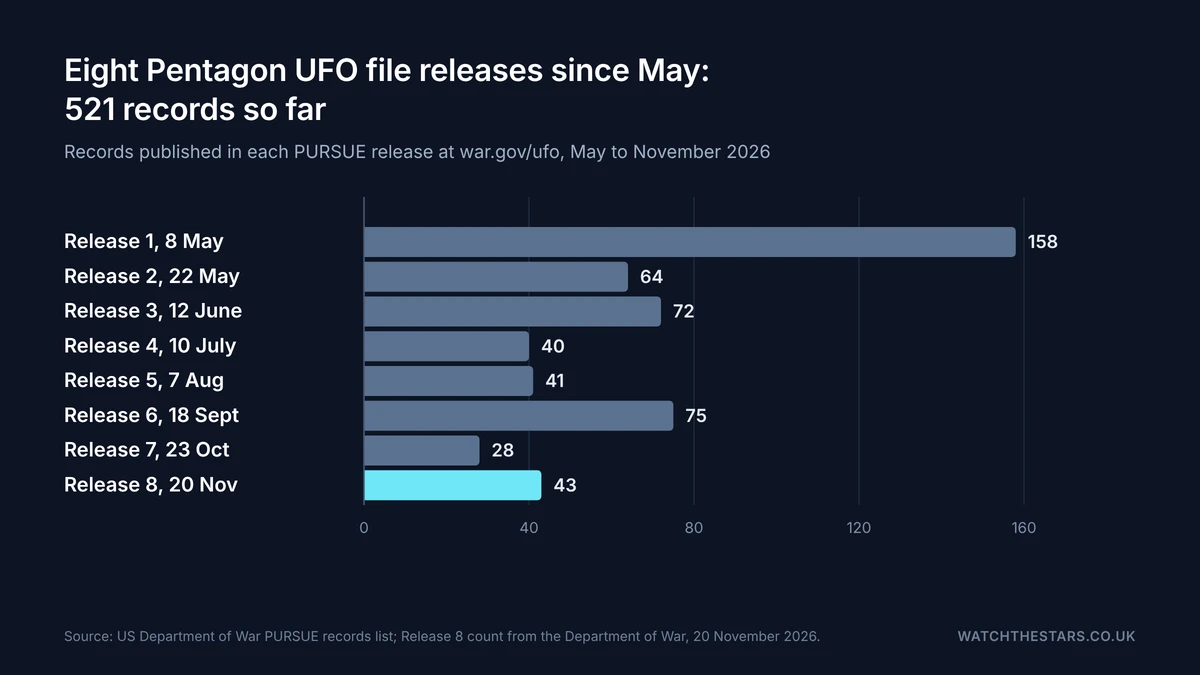
- The Pentagon's eighth UFO file release went up at war.gov/ufo on Friday 20 November 2026 with 43 records: 40 documents and 3 videos
- The PURSUE archive now holds 521 records across eight releases since 8 May 2026
- Lockheed engineer Kelly Johnson's 1953 report of a dark elliptical object at sunset was filed by the Air Force as a lenticular cloud
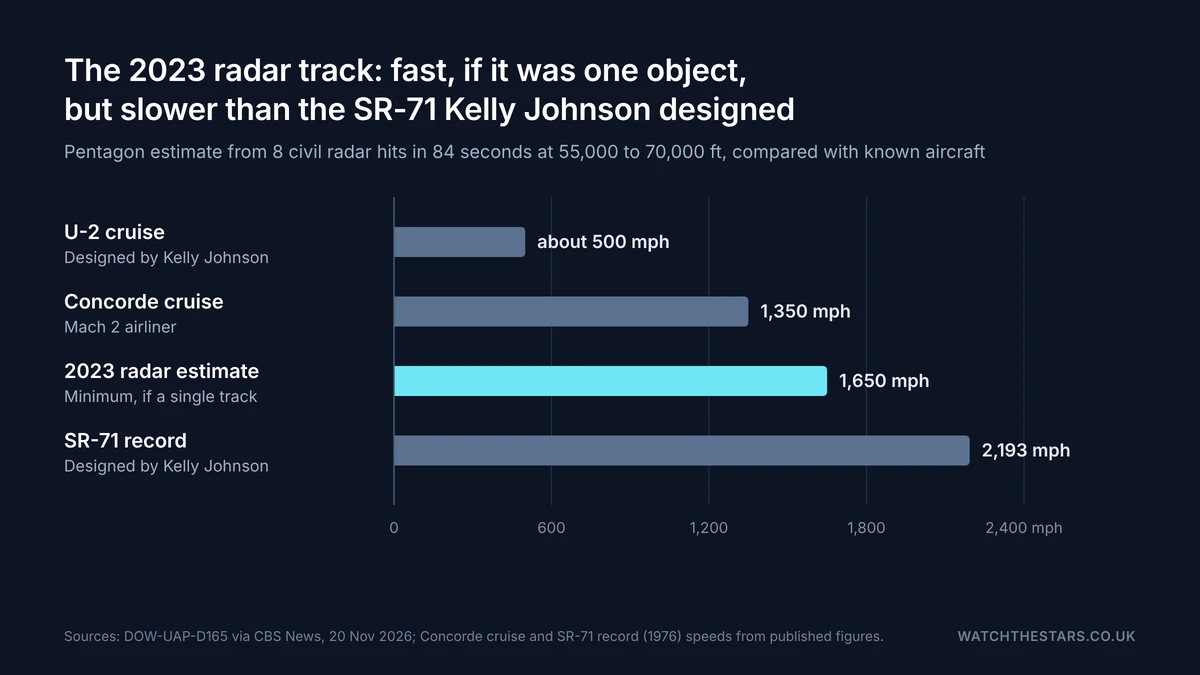
- A 2023 radar file gives a minimum 1,650 mph, about Mach 2.5, only if eight radar hits came from one object, which the data can't show
- WatchTheStars is reading all 43 files now and will publish fuller write-ups, plus the files in our PURSUE browser, over the coming days
Jump to section 6 sections
- What's in the New Pentagon UFO Files (Release 8)?
- Kelly Johnson UFO Sighting: What the Lockheed Engineer Saw in 1953
- Mach 2.5 UFO Radar Track: Was It Really That Fast?
- Bigelow UFO Vault: The Underground Store for 'Exotic Material'
- CIA 1952 Flying Saucer Report and the New CENTCOM UFO Videos
- When Is the Next UFO File Release? What We're Doing Next
The Pentagon released its eighth batch of declassified UFO files at war.gov/ufo on Friday 20 November 2026. The new UFO files are a bigger drop than October's: 43 records, made up of 40 documents and three videos, taking the archive to 521 records since the first release on 8 May.
Update, 21 November 2026: we've now read all 43 files in full, and every one is in our Pentagon UFO file browser with a mirrored download. This post was first written from the Pentagon's catalogue notes and the news coverage. We've corrected it below where the documents say something different, and the first full write-up is Kelly Johnson's UFO: we ran the 1953 sunset sky.
What's in the New Pentagon UFO Files (Release 8)?
The new Pentagon UFO files in Release 8 are mostly 1950s Air Force and CIA paperwork, with a 2023 radar file, a 2009 contractor report and three recent videos mixed in. The batch includes:
- Six CIA documents from 1952 on flying saucer reports and what they might mean for national security.
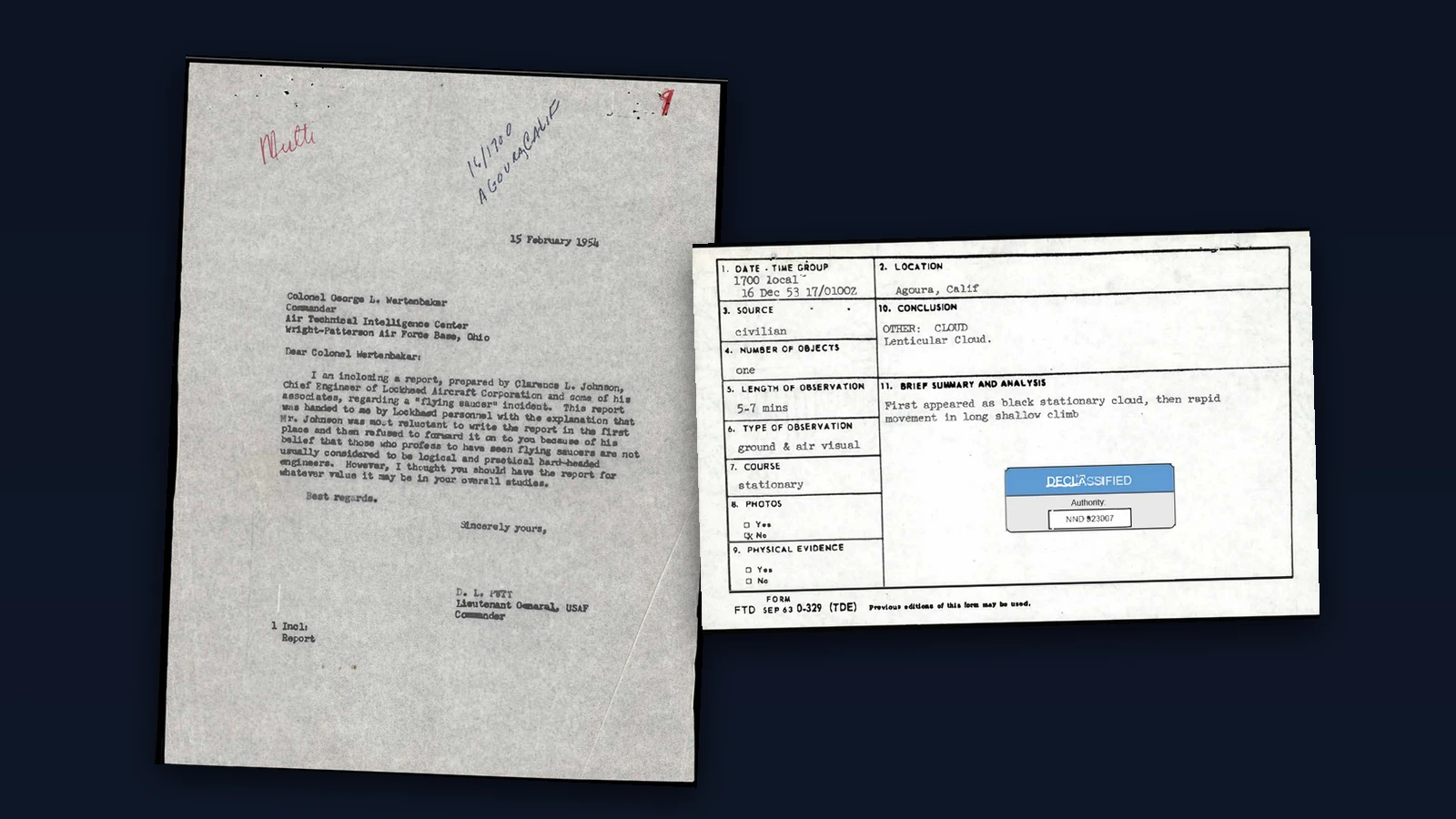
- Lockheed engineer Kelly Johnson's 1953 sighting (DOW-UAP-D206), with witness statements, a sketch and correspondence.
- A 2023 radar analysis (DOW-UAP-D165) that has been widely reported as a Mach 2.5 UFO.
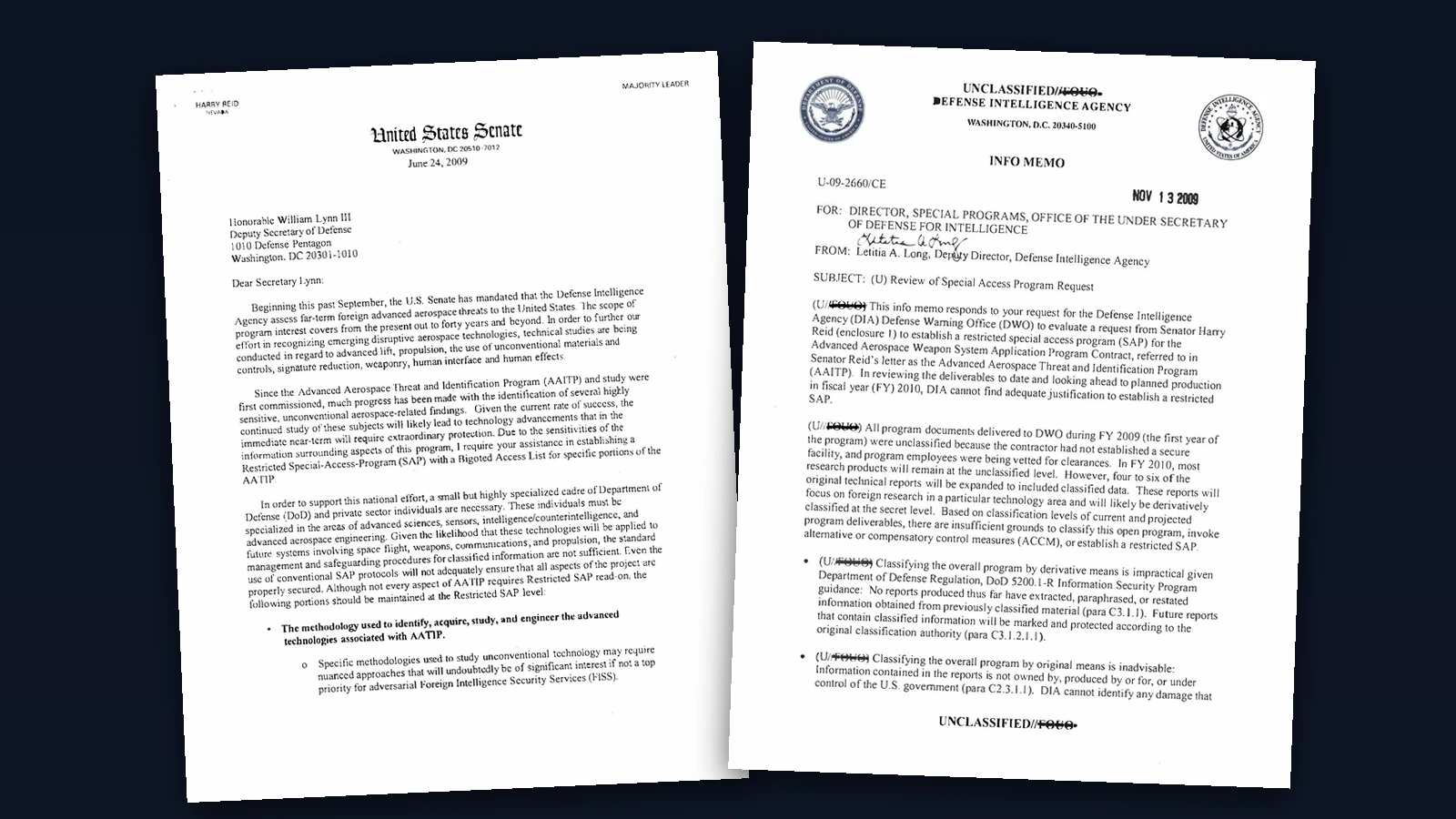
- A 538-page BAASS "Ten Month Report" from July 2009 (DOW-UAP-D172), written by the Pentagon's AAWSAP contractor, plus seven government papers on the same programme, including Senator Harry Reid's 2009 letter asking for part of it to be made a special access programme, under the name AATIP.
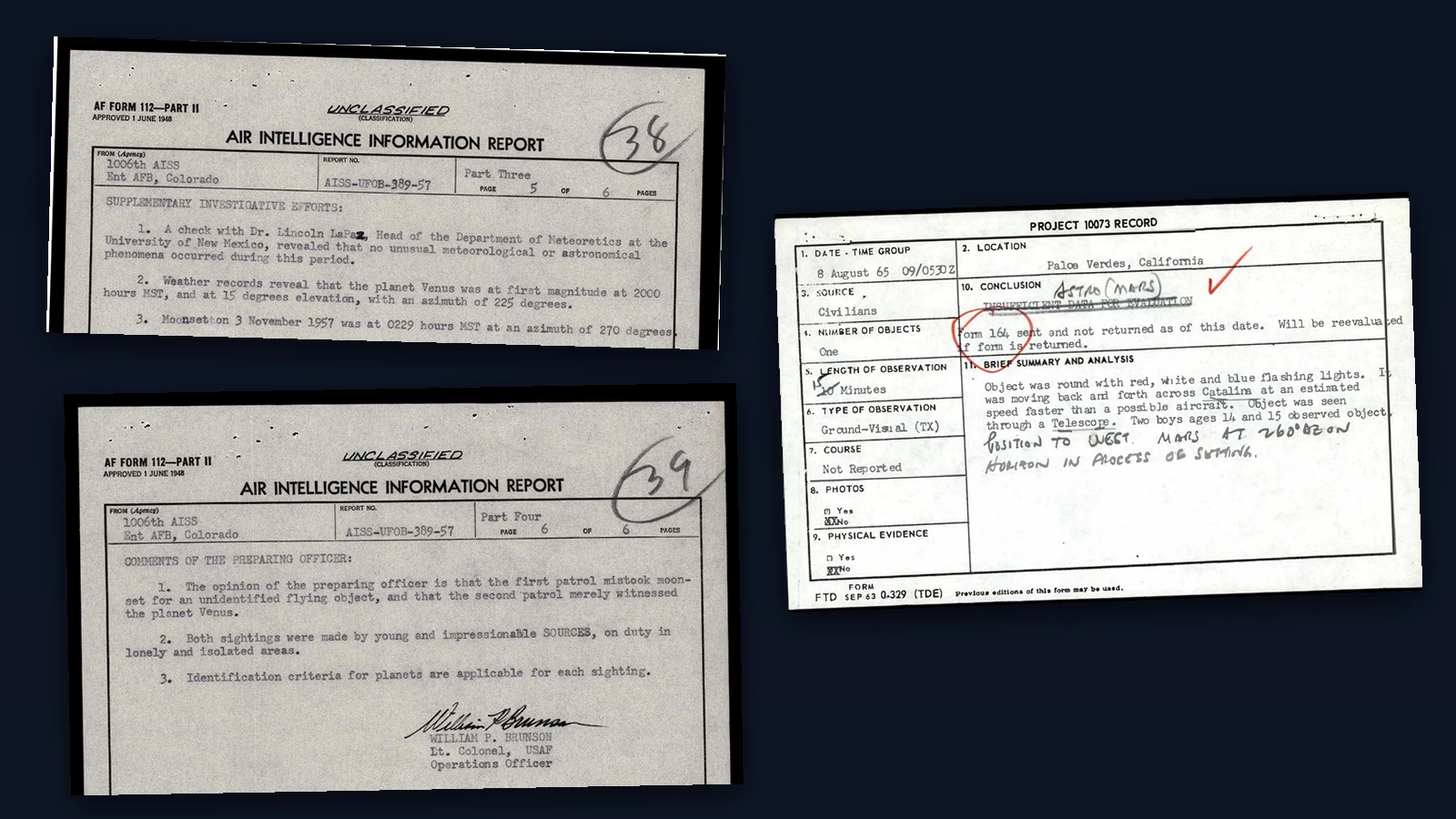
- 1957 Air Force intelligence reports and Project Blue Book case records.
- Three infrared videos from US Central Command, recorded in the Middle East in 2020, 2023 and 2026.
PURSUE, the Presidential Unsealing and Reporting System for UAP Encounters, is the Pentagon programme that has published declassified UFO records online since May 2026, following President Trump's directive in February. Our guide to the earlier PURSUE releases covers what each batch contained, and our write-up of the seventh release has the black triangle and Utah ranch files from October.
Kelly Johnson UFO Sighting: What the Lockheed Engineer Saw in 1953
Kelly Johnson, Lockheed's chief engineer, reported a dark elliptical object hanging still in the sunset over his California ranch on 16 December 1953, and the Air Force filed it as a lenticular cloud. Clarence "Kelly" Johnson ran Lockheed's Skunk Works and went on to design the U-2 spy plane and the SR-71 Blackbird. Few people alive in 1953 knew more about what aircraft could and couldn't do.
At about 5pm on 16 December 1953, Johnson was at his ranch west of Agoura, California, watching the sunset. He saw a dark elliptical object hanging motionless against a "gold and red" sky. He first took it for a cloud or a smoke trail, then wondered "why this one object was so dark". He watched it through binoculars for several minutes before it moved off to the west. At about the same time a Lockheed flight-test crew flying off the coast near Point Mugu reported a dark, wing-like object that shrank to "a mere speck". The Air Force's Project Blue Book record card files the sighting as a lenticular cloud, though the card is on a form first printed in 1963, so that verdict was typed at least ten years later.
We ran the sky for that evening through Skyfield and NASA's JPL ephemeris, the tools we use to verify every sky claim on the site, including our UK night sky this week guide. From Agoura the Sun set at 16:47 Pacific time, so at 5pm it was 3° below the horizon in the west-south-west, lighting the sky gold and red exactly as Johnson described. Venus had already set and no bright planet stood in the west, so nothing astronomical explains it. Point Mugu lies on a bearing of 255.5° from the ranch, against Johnson's "about 255°", which puts the object about 12° to the right of where the Sun had gone down. A dark, sharp-edged shape against a bright afterglow is just what a lens-shaped cloud looks like. But four of the five witnesses describe it moving away and shrinking to a speck, which a cloud can't do. We've laid out the whole file, the sky chart and the case for and against the cloud on our new Kelly Johnson UFO sighting page.
Mach 2.5 UFO Radar Track: Was It Really That Fast?
The Mach 2.5 UFO was probably not that fast: the figure only holds if eight separate radar hits belonged to one object, and the Pentagon's own file says the data can't show that. The headlines come from a 2023 slide deck. A civil air-surveillance radar somewhere in North America picked up eight detections over 84 seconds, at heights of about 55,000 to 70,000 feet. The Pentagon's analysis says that if all eight belonged to one continuous track, the total point-to-point distance was about 38.5 miles, giving a minimum average speed of 1,650 mph. At that height the speed of sound is about 660 mph, so that works out at roughly Mach 2.5.
The key word is "if". The same file says the data is "not sufficient" to show that all eight detections came from one object. Eight scattered radar returns from several things, such as balloons, birds, clutter or other aircraft, can join up into a fast-looking track that nothing actually flew. It's the same caution that applied to the Nimitz "Tic Tac" speed figures in the last release.
Seen something odd yourself?
Kit we've reviewed in full
Most lights reported as UFOs turn out to be satellites, planets, aircraft or, as the Air Force decided for Kelly Johnson, clouds. A pair of binoculars settles most of them in seconds.
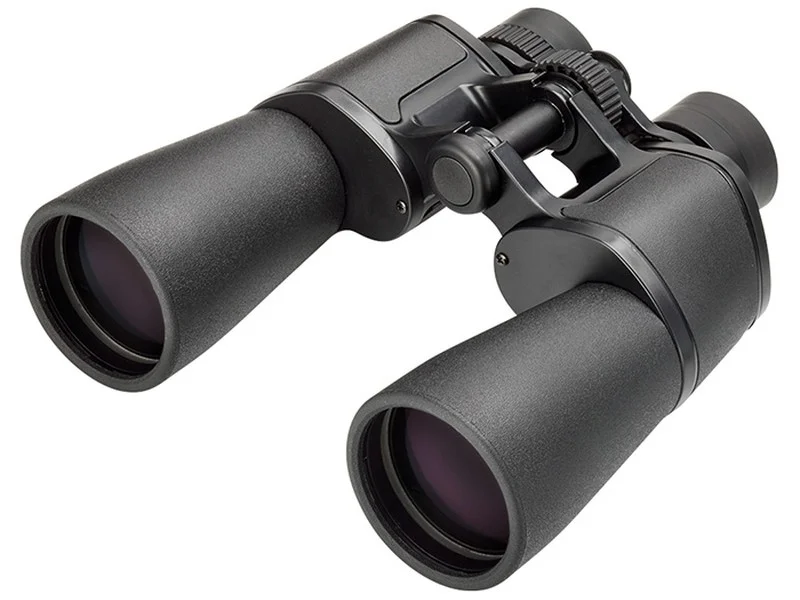
Wide field and light enough to hold steady by hand, so you can get onto a moving light before it's gone. Kelly Johnson used binoculars too.
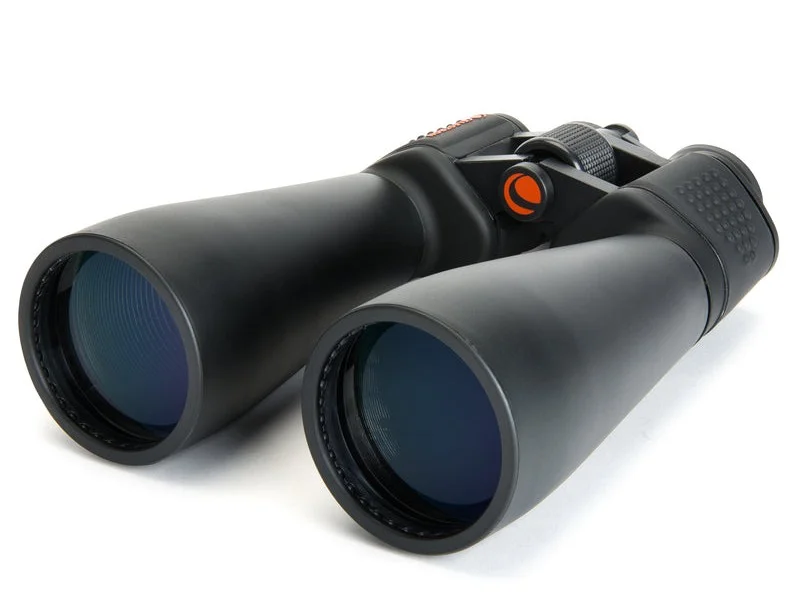
15× brings a distant shape much closer and the 70mm lenses gather plenty of light at dusk. Best on a tripod.
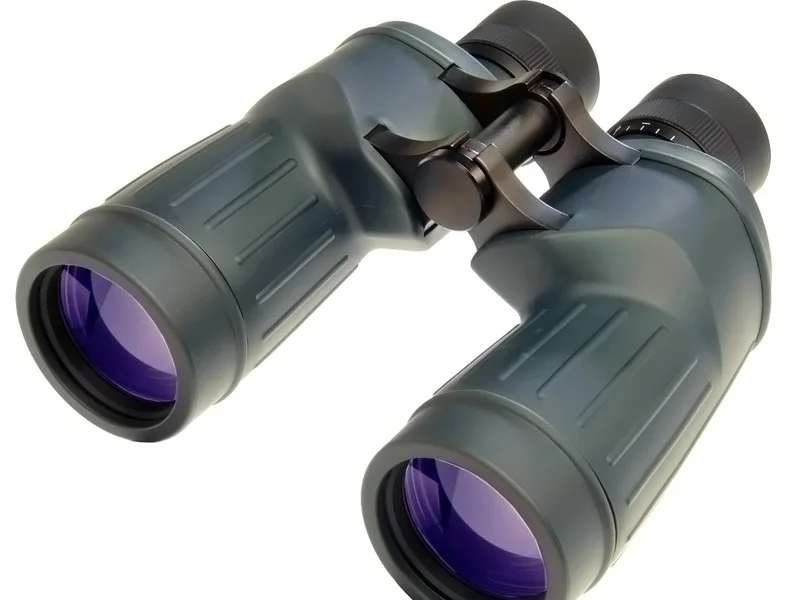
Better contrast and cleaner edges, which is exactly what you want when you're trying to tell a cloud from a solid object against a bright sunset.
Affiliate links: you pay the same price, we earn a small commission that helps keep WatchTheStars free.
Bigelow UFO Vault: The Underground Store for 'Exotic Material'
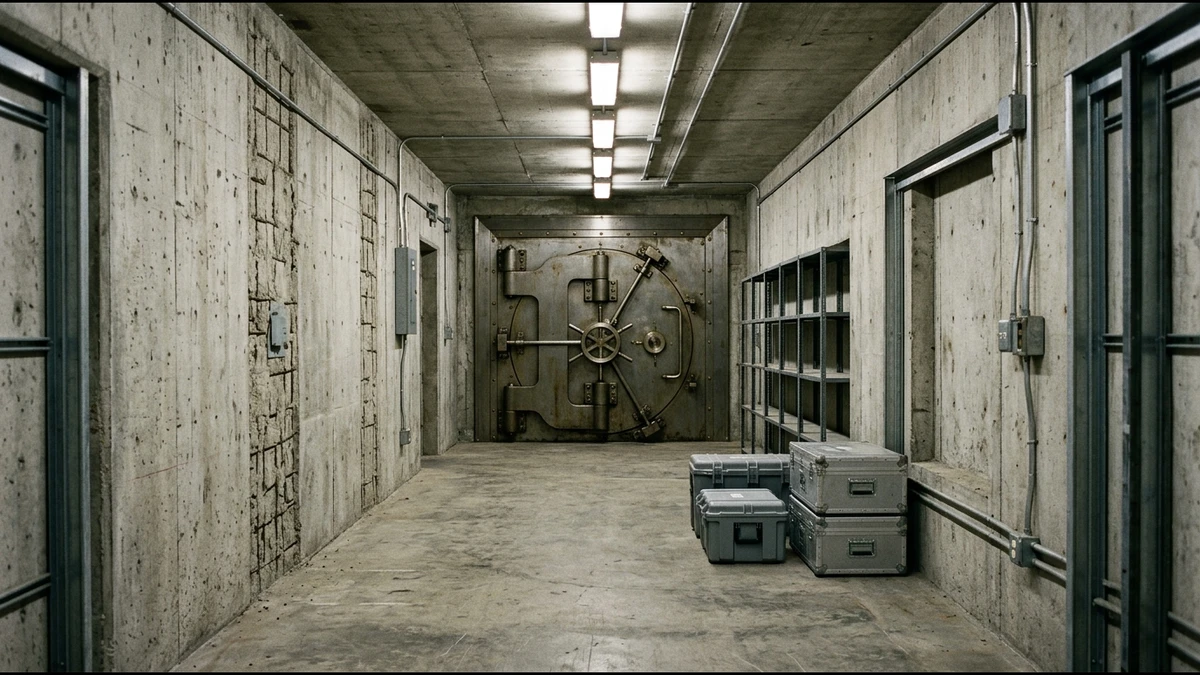
The Bigelow UFO vault was a 2009 plan for an underground store for "exotic material" in North Las Vegas, and there is no record it was ever built. The story comes from the July 2009 BAASS report. Bigelow Aerospace Advanced Space Studies held the Defense Intelligence Agency's AAWSAP contract, and its report says there was "no highly secure facility at BAASS to store exotic material or tissue". So it drew up plans for one: a 5,000-square-foot vault under 15 to 20 feet of earth at the Bigelow Aerospace site in North Las Vegas, with 3-foot-thick walls, a heavy steel vault door, a concrete access tunnel and round-the-clock armed guards. Anything above ground was to be "extensively camouflaged".
There's no public record that it was ever built, and later BAASS reports don't mention it. CBS News reports that a copy appeared online last year, but this is the first time the Pentagon has published it. It also describes a method for testing witnesses' fingernail clippings for radiation exposure, and a chip that a Brazilian UFO group said had been taken from a military officer's neck, with no analysis and no chain of custody. Those are claims in the contractor's report, not findings. In an undated memo in the same release, the Defense Intelligence Agency's director wrote that after a November 2009 meeting with Senator Reid, he and Deputy Defense Secretary William Lynn "determined the reports were of limited value to DIA". The contract ran out in December 2010. We've covered the contractor's Utah work in our Skinwalker Ranch Pentagon files page and its deal with the MUFON volunteer group.
CIA 1952 Flying Saucer Report and the New CENTCOM UFO Videos
The CIA's 1952 flying saucer report in this batch is an Office of Scientific Intelligence briefing dated 14 August 1952, a few weeks after the radar sightings over Washington DC. It reviews the Air Force's investigation. It counts about 1,500 US reports, 250 of them in July 1952 alone, with about one in five left unexplained by the Air Force. It also goes back to Kenneth Arnold's June 1947 report of nine discs passing Mount Rainier, the sighting that gave us the phrase "flying saucer". It sits neatly beside Edward Ruppelt's 1952 Blue Book talk from an earlier release.
The three videos were sent to AARO, the Pentagon's UFO office, by US Central Command. They're short infrared clips from US military platforms in the Middle East: 20 seconds from 2020, 13 seconds from 2023 and 54 seconds from this year. All show white spots, or "areas of contrast", moving across the frame, and in the longest the sensor zooms in on two of them and keeps losing them. They're unresolved. The astrophysicist Avi Loeb has already said some look like birds, which is a fair first guess for small warm dots on a thermal camera.
If you ever see something similar for yourself, check what you can see in the sky tonight and ISS passes tonight first. Planets, the space station and Starlink trains account for most of the lights people report to us.
When Is the Next UFO File Release? What We're Doing Next
The next UFO file release has no date yet. Pentagon spokesman Sean Parnell said the department and its partners are "actively working on the next release", and with batches four to six weeks apart so far, late December or January would fit.
We've now read all 43 files against the documents themselves rather than the headlines, and run every timed sighting through our ephemeris software. Several of the 1950s "unresolved" reports turn out to be Venus, the Moon or a bright star, and we'll publish those, the Reid letter and the rest of the BAASS report over the coming days. Every file is already in our PURSUE file browser.
Sources:
- Department of War publishes eighth release of UAP files: US Department of War, 20 November 2026 (files at war.gov/ufo)
- New UFO files show Pentagon contractor planned underground vault for "exotic material": CBS News, 20 November 2026
- Pentagon releases eighth batch of declassified UFO files: LiveNOW from FOX, 20 November 2026
- US releases 1953 report on dark, elliptical UFO: Interesting Engineering, 20 November 2026
- Sun and planet positions for Agoura, California (34.15°N, 118.78°W) at 17:00 PST on 16 December 1953 computed with Skyfield and the JPL DE421 ephemeris
Header image: AI-generated illustration based on Kelly Johnson's description, not a photograph of the object.
Frequently Asked Questions
Equipment guides
Related topics

Ian ClaytonAmateur astronomer and founder of WatchTheStars.co.uk, dedicated to helping others explore the wonders of our universe. Full profile →