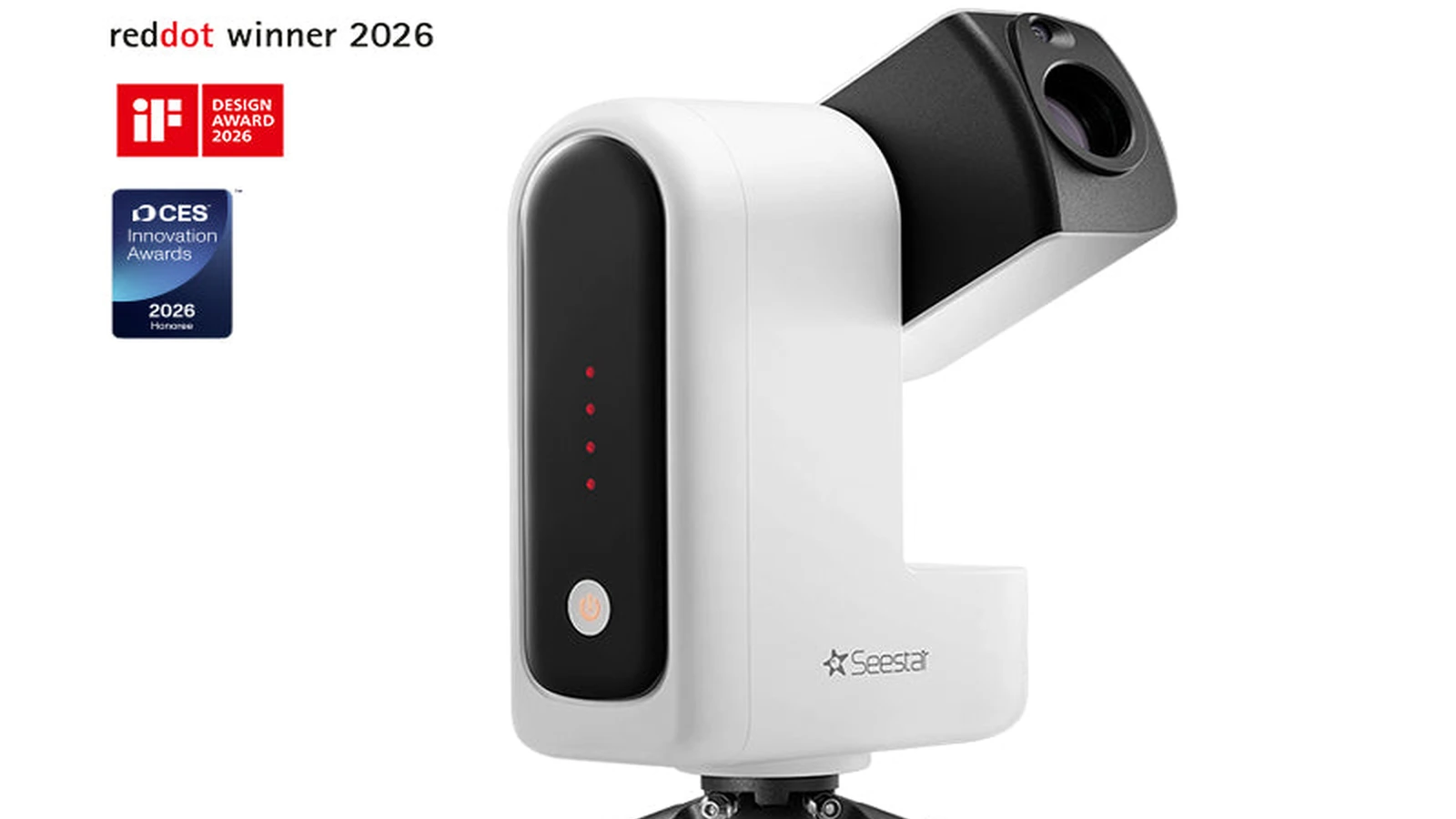
ZWO Seestar S50 Pro
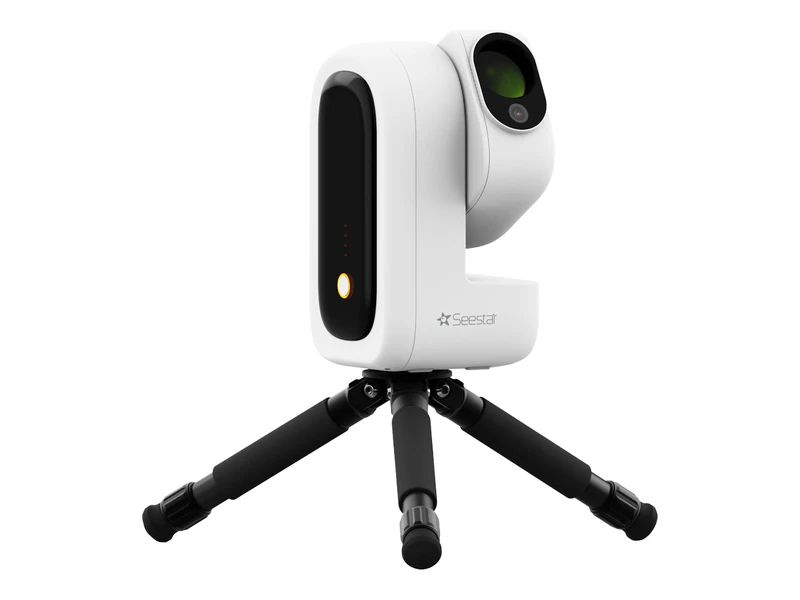
Image: ZWO
New for autumn 2026. The S50 Pro launched on 25 August 2026 and started shipping in early September. This guide is built from ZWO's specifications, First Light Optics' listing and the first hands-on reports; we'll add owner feedback as it comes in. Weighing it against DwarfLab's 90mm Draco or the Vaonis Vespera II? Our Seestar S50 Pro vs Dwarf Draco vs Vespera II comparison goes through that decision.
The ZWO Seestar S50 Pro is the telescope the original Seestar S50 always deserved to be. For three years the Seestar S50 has been the smart telescope most UK beginners buy, and its one real weakness was a 2.1MP sensor that left fine detail on the table. The S50 Pro keeps everything that made the S50 work, the 50mm aperture, the dual-band filter, the polished app and the complete kit in the box, and fixes the sensor with an 8.3MP 4K chip. It also adds a second 4K wide-angle camera and a battery nearly twice the size. At £999 it is the best smart telescope you can buy under £1,000 in September 2026, and the one to get if you can stretch to it. Its £899 launch price ended on 15 September 2026.
| Key Specifications: ZWO Seestar S50 Pro | |
|---|---|
| Telephoto aperture | 50mm, four-element APO quadruplet |
| Telephoto focal length | 260mm, f/5.2 |
| Telephoto sensor | OmniVision OS08B10, 1/1.2-inch, 8.3MP (3840×2160), 2.9µm pixels |
| Telephoto field of view | 2.8° (portrait) |
| Wide-angle camera | Sony IMX586, 1/2-inch, 8.3MP 4K, 6mm f/1.75, 63° field |
| Built-in filters | Dual-band light pollution (OIII 30nm / Hα 20nm) and dark-frame filter, telephoto only |
| Longest exposure | 60s in equatorial mode; shorter in alt-az |
| Mount | Motorised alt-az with GoTo and tracking; equatorial mode via tilt |
| Battery | 10,000mAh, up to 9 hours (ZWO lab figure); USB-C, 5V or 12V input |
| Storage | 128GB (about 100GB usable) |
| Connectivity | Wi-Fi 2.4/5GHz, Bluetooth, NFC, USB-C; Seestar app (iOS and Android) |
| Weight | 2.8kg main unit; 140 × 149 × 268mm folded |
| Operating temperature | -10°C to 40°C |
| In the box | Telescope, tripod, hard case, magnetic solar filter, USB-C cable |
| Warranty | 2 years (via First Light Optics) |
| UK price | £999 at First Light Optics |
What's new on the Seestar S50 Pro vs the S50?
ZWO followed the same recipe that turned the S30 into the S30 Pro earlier in 2026, and went a step further.
- An 8.3MP 4K telephoto sensor. The S50's Sony IMX462 was a 2.1MP chip with big pixels that gathered light well but resolved little. The Pro's 1/1.2-inch OmniVision sensor has four times the pixels and a far larger light-collecting area, so the same 50mm lens now delivers images you can crop into and print. This single change is what closes the gap to the Dwarf 3, whose 8MP sensor was the main reason to pick it over the old S50.
- A four-element APO lens. The S50's triplet becomes a quadruplet, designed to keep stars tight across the bigger sensor. Aperture stays at 50mm, still the largest of any smart telescope under £1,000 until the Draco ships.
- A second 4K wide-angle camera. A 6mm f/1.75 lens on a Sony IMX586 gives a 63° view with autofocus and live stacking. The original S50 had no wide camera at all. It runs at the same time as the telephoto, so you can capture the Milky Way arch or a star-trail timelapse while a nebula stacks.
- 10,000mAh battery. Up from 6,000mAh. ZWO quote up to nine hours in the lab; expect six or seven on a cold UK night with both cameras running.
- Everything else. 128GB storage (double the S50), NFC tap-to-connect, a hard case instead of the soft one, a redesigned drive that ZWO say tracks more smoothly in equatorial mode, and mosaic stitching that can output up to 8K images.
What hasn't changed: the built-in dual-band filter (OIII 30nm, Hα 20nm), the magnetic solar filter in the box, and the Seestar app. Those were the S50's strengths and ZWO left them alone.
Who is the Seestar S50 Pro for?
- First-time buyers who can spend £999. If the budget stretches this far, the S50 Pro is the simplest recommendation on our best smart telescopes page: the biggest aperture under £1,000, a modern sensor, the best app, and nothing to add. It's the telescope that gets you a nebula picture on your first clear night and keeps giving as you learn.
- Seestar S50 owners who want more detail. If you've spent two winters with the S50 and the soft, small images have started to bother you, this is the upgrade. Same app, same targets, four times the pixels.
- People who want the Milky Way as well as nebulae. The wide camera is the reason to pick this over the standard S50, and the reason it competes with the Dwarf 3's dual-lens design. Read our guide to seeing the Milky Way from the UK for when and where.
- Anyone who values the community. The Seestar range has the largest owner base of any smart telescope, on Stargazers Lounge, Facebook and Cloudy Nights. When something won't connect at 11pm, someone has already solved it.
It's not for you if you want the lightest option (the 1.65kg S30 Pro is the portable Seestar), if £999 is a stretch (the standard S50 and the Dwarf 3 do the important things for £460 to £540 less), or if you want to look through an eyepiece, because no smart telescope has one.
What can the Seestar S50 Pro photograph?
Nebulae
The Orion, North America, Rosette, Heart and Veil Nebulae through the dual-band filter, from a suburban garden. The bigger sensor pulls out filaments and dust lanes the S50 blurred over.
Galaxies
Andromeda fits with mosaic mode; M81, M82, the Whirlpool and the Leo Triplet show shape and, from a dark site, structure. 50mm is enough to make galaxies more than smudges. Try one of the UK dark sky sites for the best results.
Star clusters
The Pleiades, the Double Cluster, the Beehive and M13 are quick wins on any clear night and look far sharper at 8.3MP than they did on the S50.
The Moon
A full-disc Moon at 260mm focal length with real crater detail along the terminator. Our Moon photography guide covers when the terminator is best placed.
The Sun
Sunspots and eclipses through the magnetic solar filter, found and tracked automatically. Fit the filter before pointing at the Sun, every time; read our guide to observing the Sun safely.
Milky Way and timelapses
The 63° wide camera does one-tap Milky Way arches, meteor-shower nights and star trails while the telephoto works on something else.
Planets are the weak spot, as with every small smart telescope. Jupiter and Saturn are small discs with a hint of belts and rings. A Sky-Watcher Heritage 130P with a phone adapter beats it on planets for £200, and our planetary imaging for beginners guide explains why.
Seestar S50 Pro vs Dwarf 3 vs Draco: how it compares
Against the Dwarf 3 (£459), the S50 Pro has twice the light-gathering area (50mm against 35mm), matches its 8MP resolution, and includes a tripod and case. The Dwarf 3 is lighter at 1.35kg, has a native equatorial mode, and costs £540 less. If the money is there, the Seestar is the better telescope; if it isn't, the Dwarf 3 remains the value pick, and our Seestar S50 vs Dwarf 3 comparison covers the cheaper Seestar.
Against the DwarfLab Draco (£1,349, pre-order at First Light Optics with deliveries from November), the S50 Pro is the safe choice: £350 cheaper, half the weight, in stock, and from the company with the better app. The Draco's 90mm aperture and 300-second guided exposures will beat it on faint targets if the optics deliver, but nobody has tested one. The full breakdown, with the Vaonis Vespera II alongside, is in our Seestar S50 Pro vs Dwarf Draco vs Vespera II guide.
Against the standard Seestar S50 (£539), the Pro is £460 more for four times the pixels, a wide camera and a bigger battery. If you'll use the telescope often, the Pro is worth it; if it will come out a few times a year, the S50 still does the important things.
Known limitations and trade-offs
- 50mm is still 50mm. The Pro resolves more than the S50 but collects the same amount of light. Faint galaxies and planetary nebulae still need a dark site and a long stacking run.
- Heavier than it looks. 2.8kg for the main unit, more with the tripod and case. It's a rucksack telescope, not a pocket one; the S30 Pro is the Seestar for travel.
- 60-second subs, and only in equatorial mode. Fine for most targets, but the Dwarf 3's native EQ mode is simpler to set up and the Draco's guided 300-second subs are in a different league for faint nebulosity.
- No dew heater listed. ZWO's specification doesn't mention one. The S30 Pro has a built-in heater; if the S50 Pro follows the original S50 it may have one too, but budget for a £20 heater band until owners confirm.
- No eyepiece. Everything is on your phone screen. If you want to look at Saturn with your own eye, a small Dobsonian does that and this doesn't.
- New product. The S50 Pro has been shipping for a fortnight. ZWO's record with the S50 and S30 Pro is good, but early firmware always has rough edges.
Accessories for the Seestar S50 Pro
Unusually, you don't need any. The tripod, hard case and solar filter are all in the box. The only additions worth considering are a USB-C power bank for all-night plan-mode sessions in winter, and a dew heater band if the lens fogs on damp nights. ZWO also sell a fluid tripod head and a carbon-fibre tripod for anyone who wants a taller, steadier setup on grass.
Seestar S50 Pro and the alternatives
Kit we've tested and reviewed in full
All three are in stock at First Light Optics with UK warranty and returns. Prices are pulled from our product data.
50mm quadruplet APO, dual 8.3MP 4K cameras, 10,000mAh battery, tripod and hard case. The one to buy if you can stretch to it.
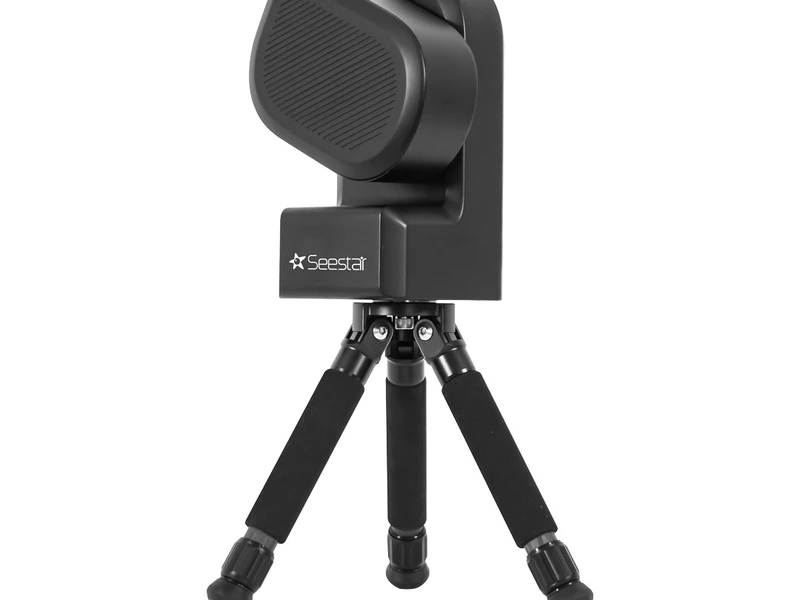
Same aperture and filter, 2.1MP sensor, no wide camera. Still the smart telescope with the biggest community.
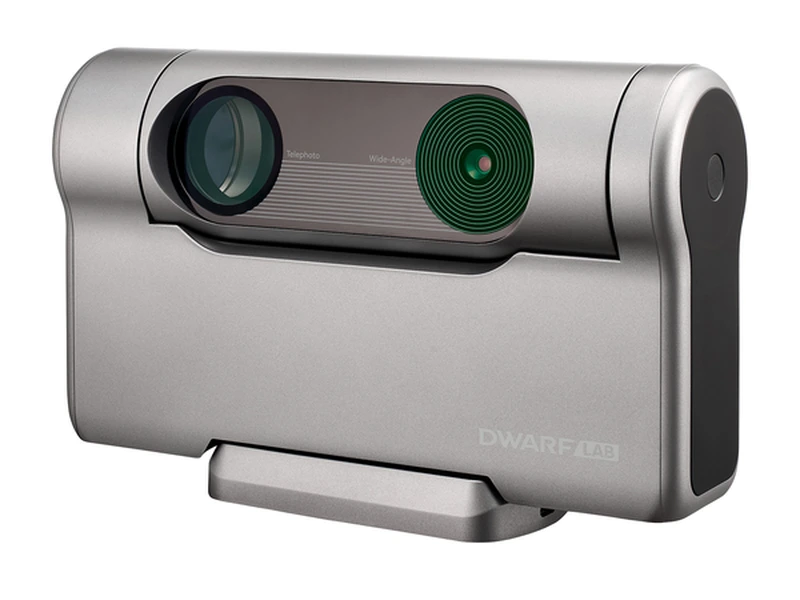
35mm f/4.3 with an 8MP sensor, wide-angle camera and equatorial mode. Lighter, cheaper, no tripod.
Affiliate links: you pay the same price, we earn a small commission that helps keep WatchTheStars free.