Key takeaways
- ESA released Euclid's first major data set, DR1-Foundation, on 12 November 2026: about 13 months of observations.
- The Euclid release covers 1,900 square degrees, an area of sky as big as 9,500 full Moons, and more than a billion objects including 900 million galaxies.
- Euclid's data contain around 15,000 strong gravitational lenses, more than all previous catalogues combined, plus 60 million quasar candidates.
- The galaxy M81 in Ursa Major, one of the release's showcase images, never sets from the UK and shows in binoculars from a dark site.
Jump to section 6 sections
Euclid Data Release: What ESA Published on 12 November
The European Space Agency has released the first big batch of science data from its Euclid space telescope. It's called DR1-Foundation, and it is a big step up from anything Euclid has shared before.
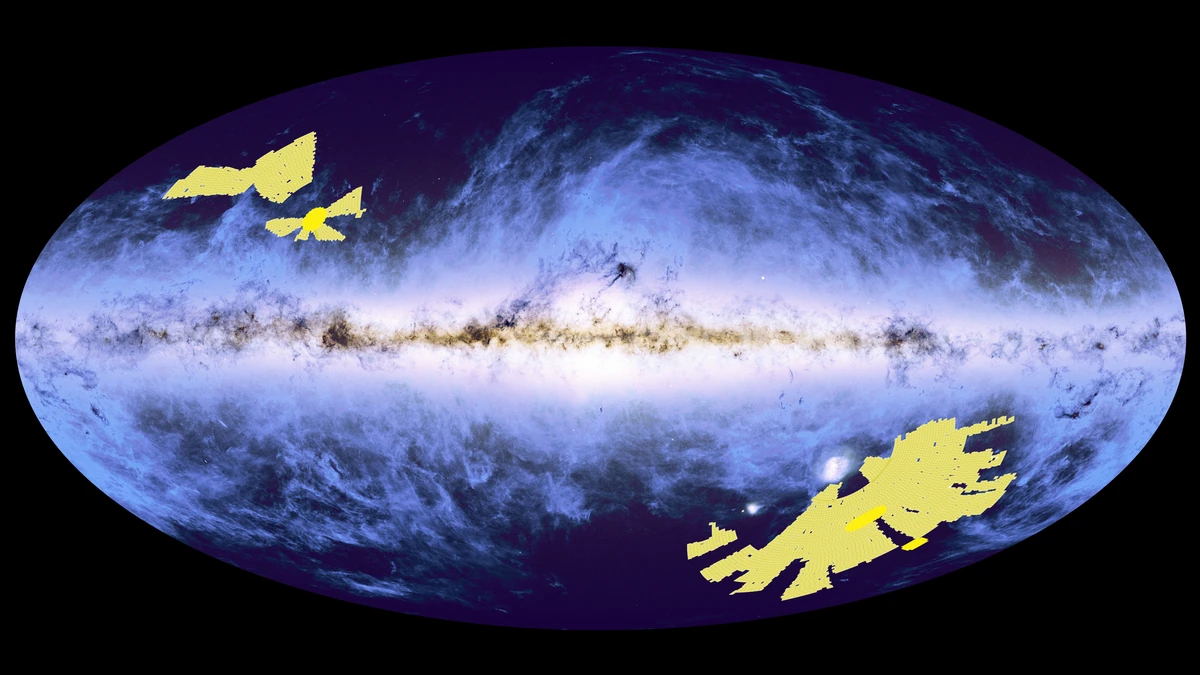
The numbers are hard to picture. About 13 months of observations cover 1,900 square degrees of sky, an area as big as 9,500 full Moons. In that patch Euclid has catalogued more than a billion objects, over 900 million of them galaxies. The release also holds spectra for 160 million sources, around 60 million quasar candidates and about 1.7 million GB of data.
ESA's project scientist Valeria Pettorino said earlier releases held "a few days of observations over around 60 deg² of sky". This one holds more than a year.
ESA's Director of Science, Carole Mundell, called it "far more than beautiful pictures". The pictures are still worth a look, and one of them shows a galaxy you can find from your own garden this weekend. More on that below.
Euclid's 3D Map of the Universe: Why Distances Matter
Euclid's job is to map the Universe in three dimensions. Most of what's out there is dark matter and dark energy, and neither can be seen directly. What we can see is how galaxies are arranged. They cling to a vast web of filaments, mostly made of dark matter, and the shape of that web shows how the Universe grew.
To build the map, Euclid needs a distance for each galaxy as well as its position. It gets distances by splitting the light from galaxies into spectra and finding the glow of hydrogen gas. How far that glow has been stretched tells you how far away the galaxy is. The 160 million spectra in this release are the raw material for that.
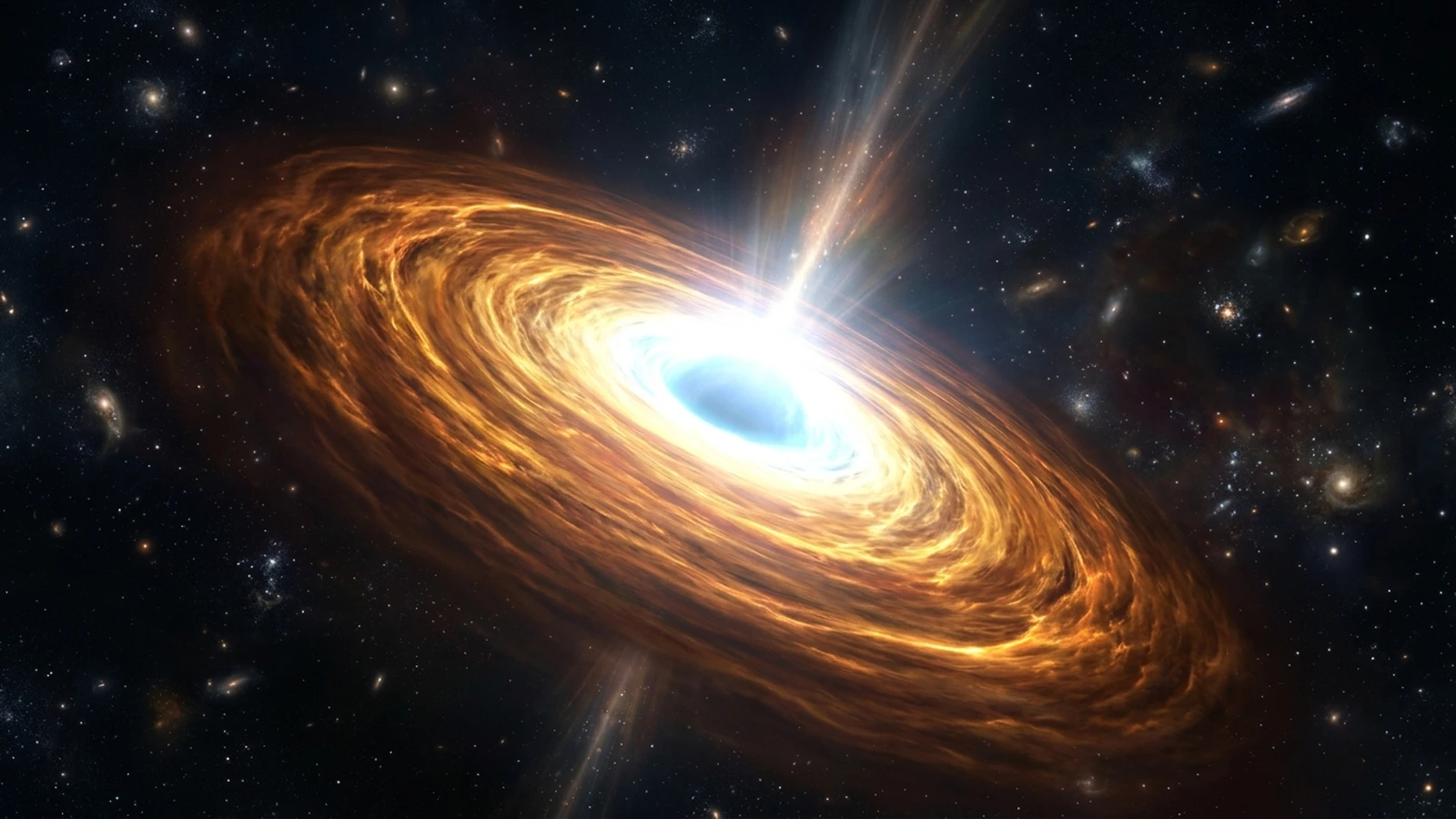
We covered one early result from the mission in July, when Euclid found the oldest quasars ever seen. This release adds tens of millions more quasar candidates for that hunt.
Gravitational Lenses: Euclid Finds 15,000 at Once
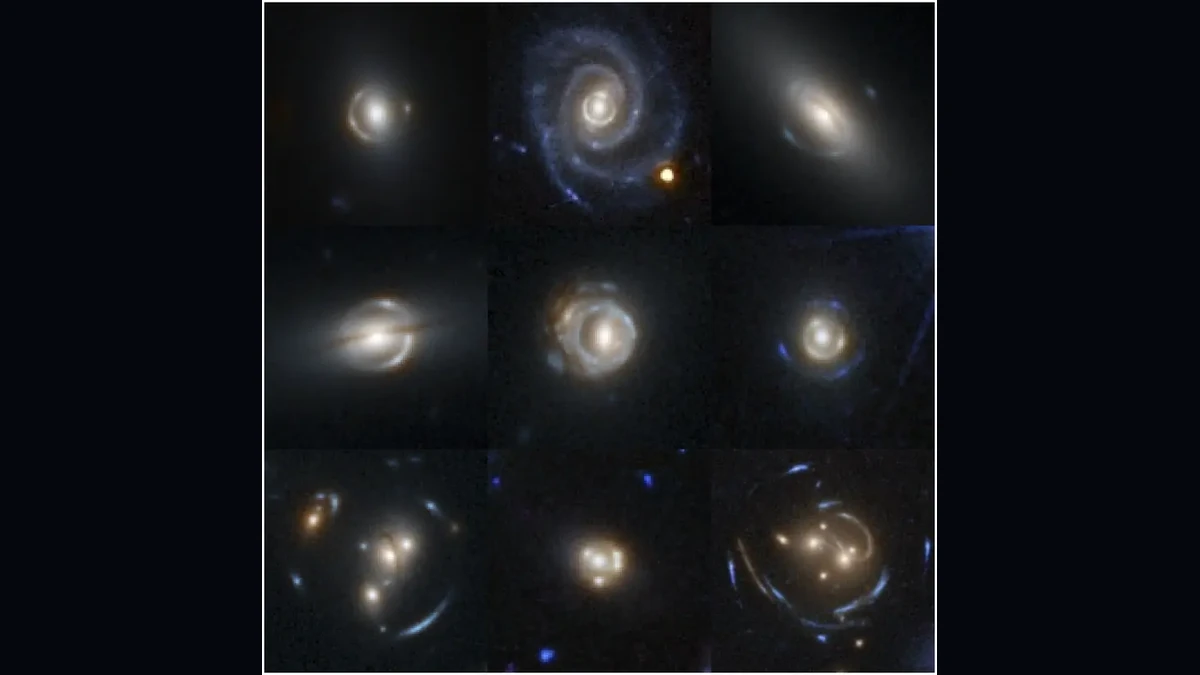
The headline science result is lenses. When a galaxy sits almost exactly in front of a more distant one, its gravity bends the background galaxy's light into arcs and rings. Only about one galaxy in several thousand lines up like this, so they're rare.
DR1-Foundation contains around 15,000 strong lens candidates. That is more than every previous catalogue combined, and Euclid found them all with one telescope and one method. Machine learning did the first sift, and thousands of volunteers checked the results on the Zooniverse project Space Warps.
Natalie Lines of the University of Portsmouth explained why it matters: strong lensing lets astronomers "weigh" individual galaxies, including their invisible dark matter. It's the same bending of light that let NASA's TESS find a planet by bending spacetime earlier this year, on a much bigger scale.
Euclid's New Images: M81, Abell 3128 and More
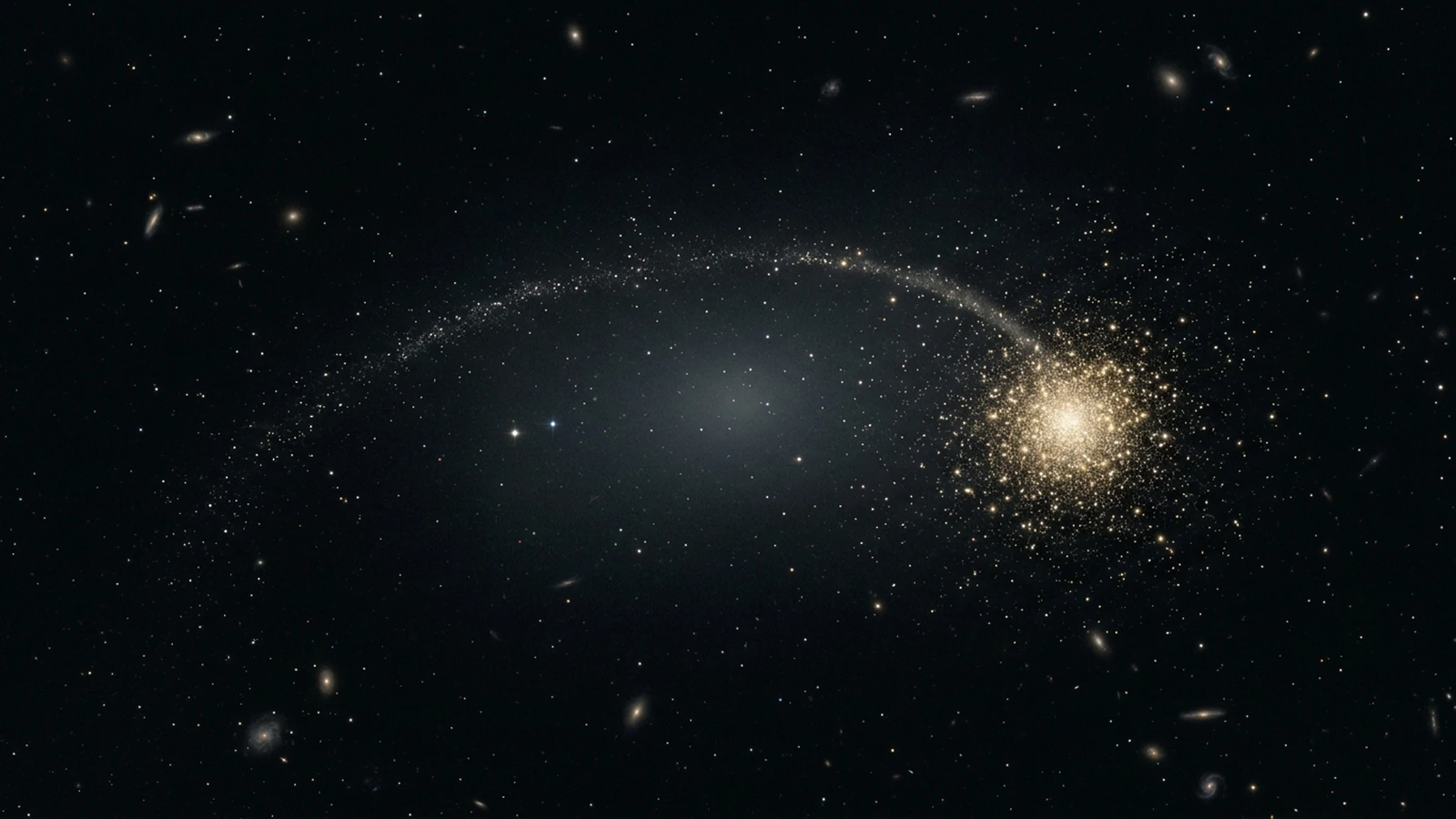
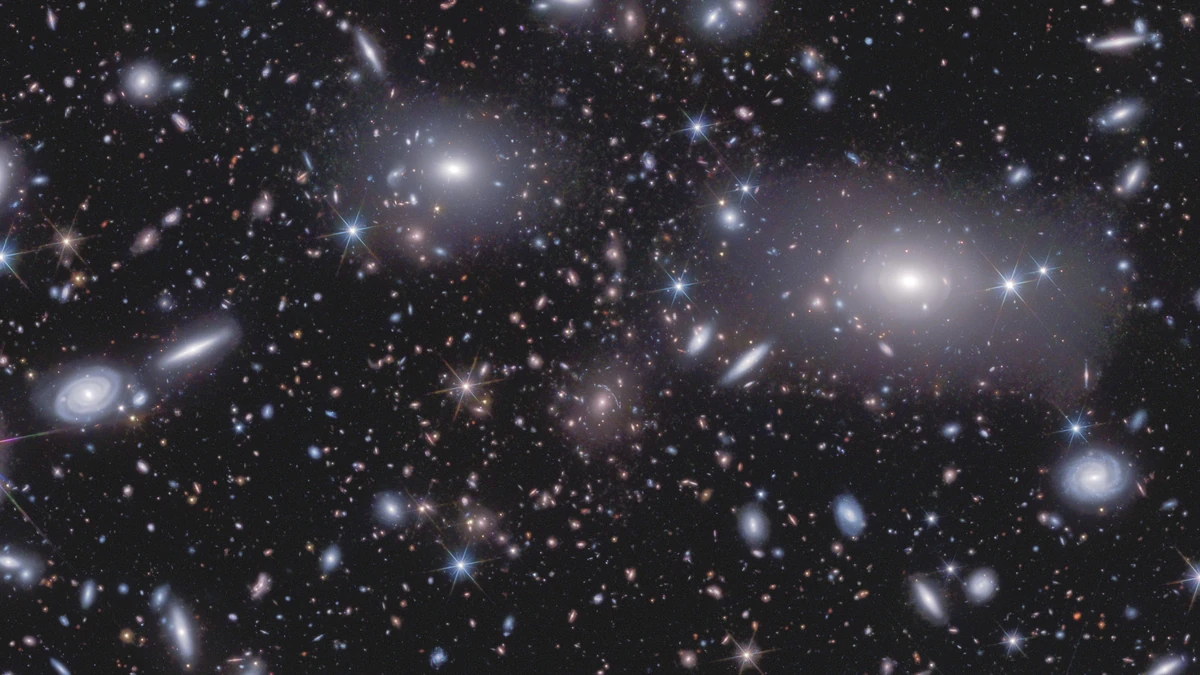
ESA picked out a handful of views from the 500-gigapixel mosaic. The header of this post shows the core of the M81 galaxy group: M81 itself at upper right and the smaller NGC 3077 at lower left. Another view zooms into M81's hazy edge, where the faint blue dwarf galaxy Holmberg IX sits against the background.
The southern views are just as striking: the Horologium Supercluster, the ring galaxy NGC 1291 and the rich cluster Abell 3128. All three are too far south to rise from the UK. For deep-space pictures you can't see from here, our roundup of James Webb's biggest discoveries has plenty more.
See Euclid's Galaxy M81 From the UK
M81, also known as Bode's Galaxy, is about 12 million light-years away in Ursa Major. From the UK it never sets: even at its lowest, around 6pm in November, it is about 30° up in the north.
This weekend is a good time to look. The crescent Moon sets at 6:40pm on Friday, 7:50pm on Saturday and 9pm on Sunday (Birmingham times; check whether it's a full moon tonight for your own evening). After that you'll have a dark sky.
How to find it, all times GMT:
- 10pm: M81 is about 37° up in the north-north-east from Birmingham (35° from Plymouth, 40° from Edinburgh).
- Midnight: it has climbed to about 45° in the north-east, which is better if you can stay up.
- The star-hop: find the Plough. At 10pm it stands low in the north-north-east. M81 is about 10° above Dubhe, the brightest star in the Plough's bowl. That's roughly a fist's width at arm's length.
In 10x50 binoculars from a dark site, M81 is a soft oval glow with a brighter middle. M82, the Cigar Galaxy, sits 0.6° away in the same field of view as a thin, fainter streak. Our guide to binocular astronomy covers holding them steady, which helps more than you'd expect.
Light pollution hides faint galaxies, so look up a spot on our UK dark sky sites map before you go out. Then check what you can see in the sky tonight for your postcode. Clear skies matter more than kit.
Find M81 and M82 yourself
Kit we've reviewed in full
Euclid's M81 is a pin-sharp portrait, but the galaxy itself is up every clear night from the UK. Here's the kit we'd take to find it and its neighbour M82.
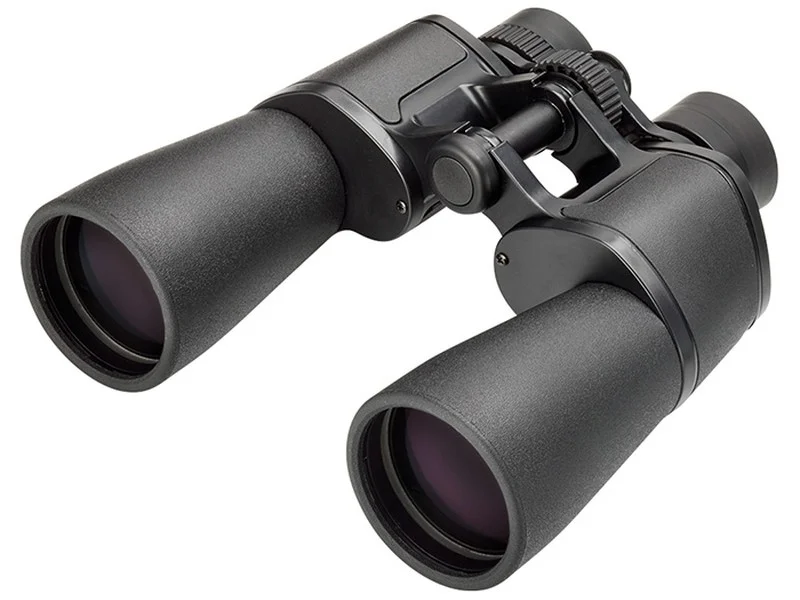
Shows M81 as a soft oval glow with M82 as a faint streak beside it, both in the same field of view from a dark site.
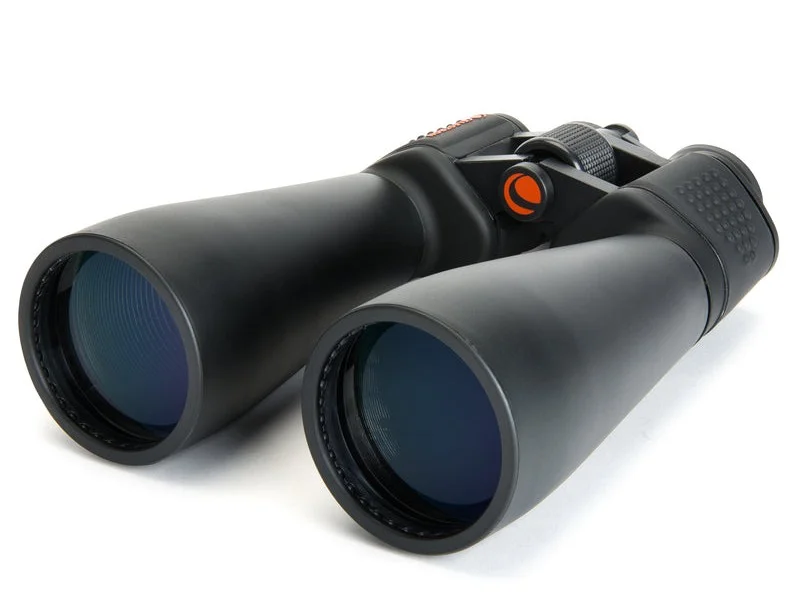
More light and magnification make both galaxies easier to pick out, and M82's cigar shape becomes obvious. Use a tripod.
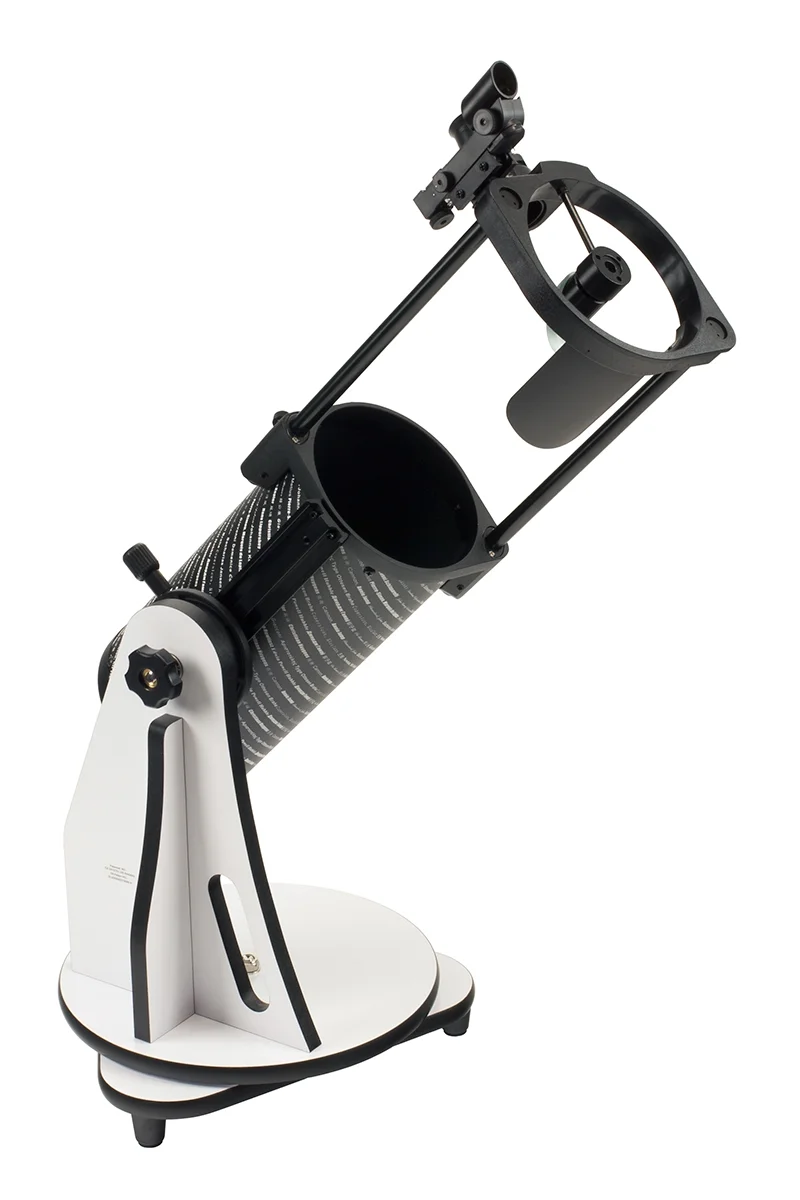
At low power M81's bright core and oval halo, and M82's dark central lane on a good night, sit together in one eyepiece view.
Affiliate links: you pay the same price, we earn a small commission that helps keep WatchTheStars free.
Next Euclid Data Release: What Comes in 2027
DR1-Foundation covers about 14% of the sky Euclid will eventually survey. ESA says the full Data Release 1 will follow in mid-2027, adding weak lensing (the subtle, statistical version of the bending above) and work on how galaxies and clusters sit in the cosmic web.
Euclid launched in July 2023 and began routine science on 14 February 2024. NASA's Roman Space Telescope, launched in August, will survey some of the same questions in more depth over a smaller area. Between them, the next few years should tell us a lot more about the 95% of the Universe we can't see directly.
For now, the easiest way to feel part of it is to go out on a clear night, find the Plough and look for M81. Its light set off about 12 million years ago, long before there were any humans to see it.
Sources:
- Euclid lays the foundation for its best-ever 3D map of the Universe, ESA, 12 November 2026
- Euclid Data Release DR1, ESA Cosmos
- Euclid views the core of the Messier 81 galaxy group, ESA
- Euclid images 900 million galaxies on its quest to make the largest 3D map of the universe, Live Science
Header image: ESA/Euclid/Euclid Consortium/NASA, image processing by J.-C. Cuillandre and E. Bertin, CC BY-SA 3.0 IGO. Viewing times and altitudes computed with Skyfield for Birmingham, Plymouth and Edinburgh.
Frequently Asked Questions
Equipment guides
Related topics
Ian ClaytonAmateur astronomer and founder of WatchTheStars.co.uk, dedicated to helping others explore the wonders of our universe. Full profile →