Key takeaways
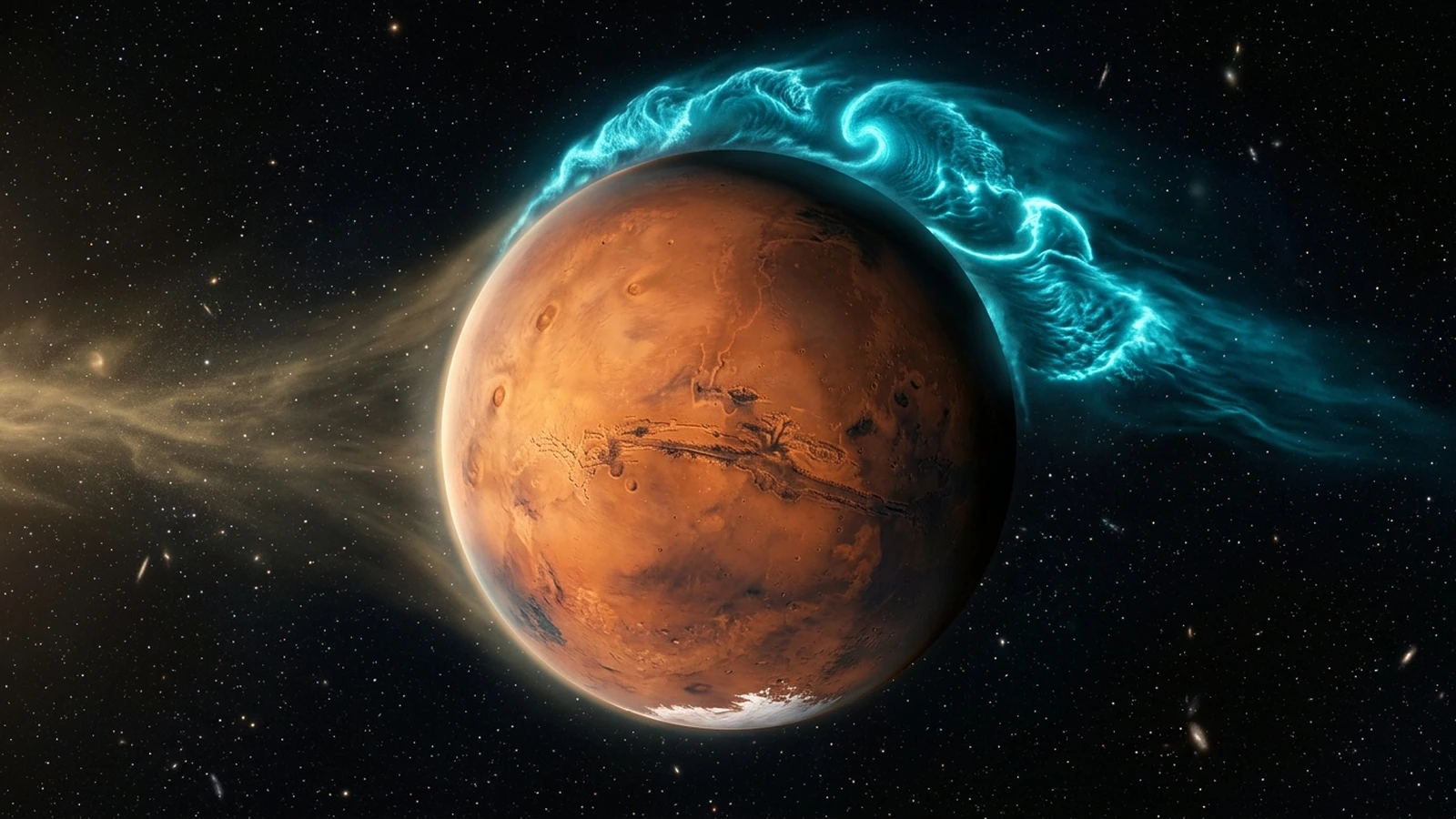
- A new study in Nature (27 August 2026) finds the interior beneath Mars's southern hemisphere is roughly 200 to 400°C hotter than the north, and may be partially molten
- The team used 'tidal tomography', reading tiny seasonal changes in Mars's gravity from decades of orbiter tracking data, to take the planet's temperature from orbit
- The hidden heat lines up with Mars's famous two-faced surface: the boundary between hot and cool interior follows the split between southern highlands and northern plains
- It could explain the strange magnetism locked in southern rocks and why marsquake energy fades faster in the south
- Mars is a morning object in Gemini right now, brightening steadily towards its February 2027 opposition
Jump to section 7 sections
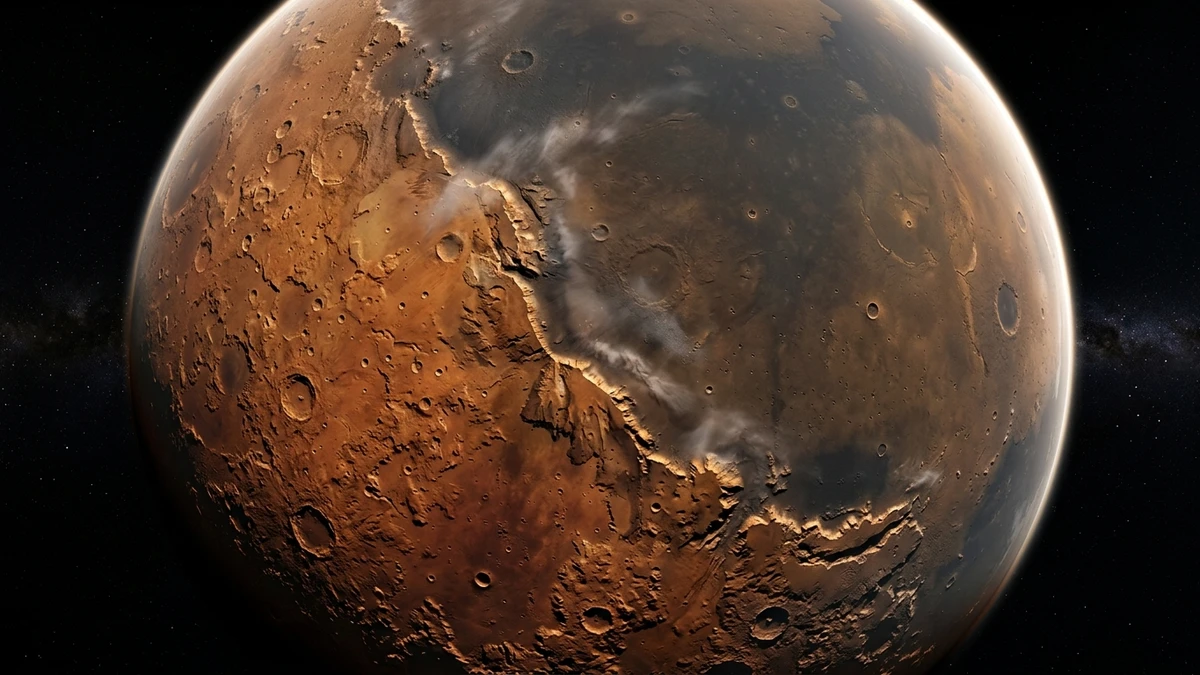
Mars has always shown us two faces. The south is a jumble of ancient, cratered highlands. The north is smooth, low-lying plains. Planetary scientists have argued about why for fifty years.
A new study says the split doesn't stop at the surface. It goes right down into the planet's guts, and half of Mars is running hot.
Is Mars Molten Inside?
Partially, it now seems. Research published in Nature on 27 August 2026 finds that the interior beneath Mars's southern hemisphere is roughly 200 to 400°C hotter than the north, and hot enough that some of the mantle rock may be partially molten.
The study was led by Alexander Berne, who developed the technique during his PhD at Caltech and is now at the University of Arizona. His team didn't drill into Mars or land anything new on it. They measured its insides using gravity, with data that had been sitting in NASA's archives for decades.
"Scientists usually assume that the interiors of planetary bodies are generally spherically symmetric, but this is not necessarily true," Berne says. In plain terms: we tend to treat planets as neat onions, the same in every direction. Mars, it turns out, is anything but.
Mars's Two Faces: What Is the Crustal Dichotomy?
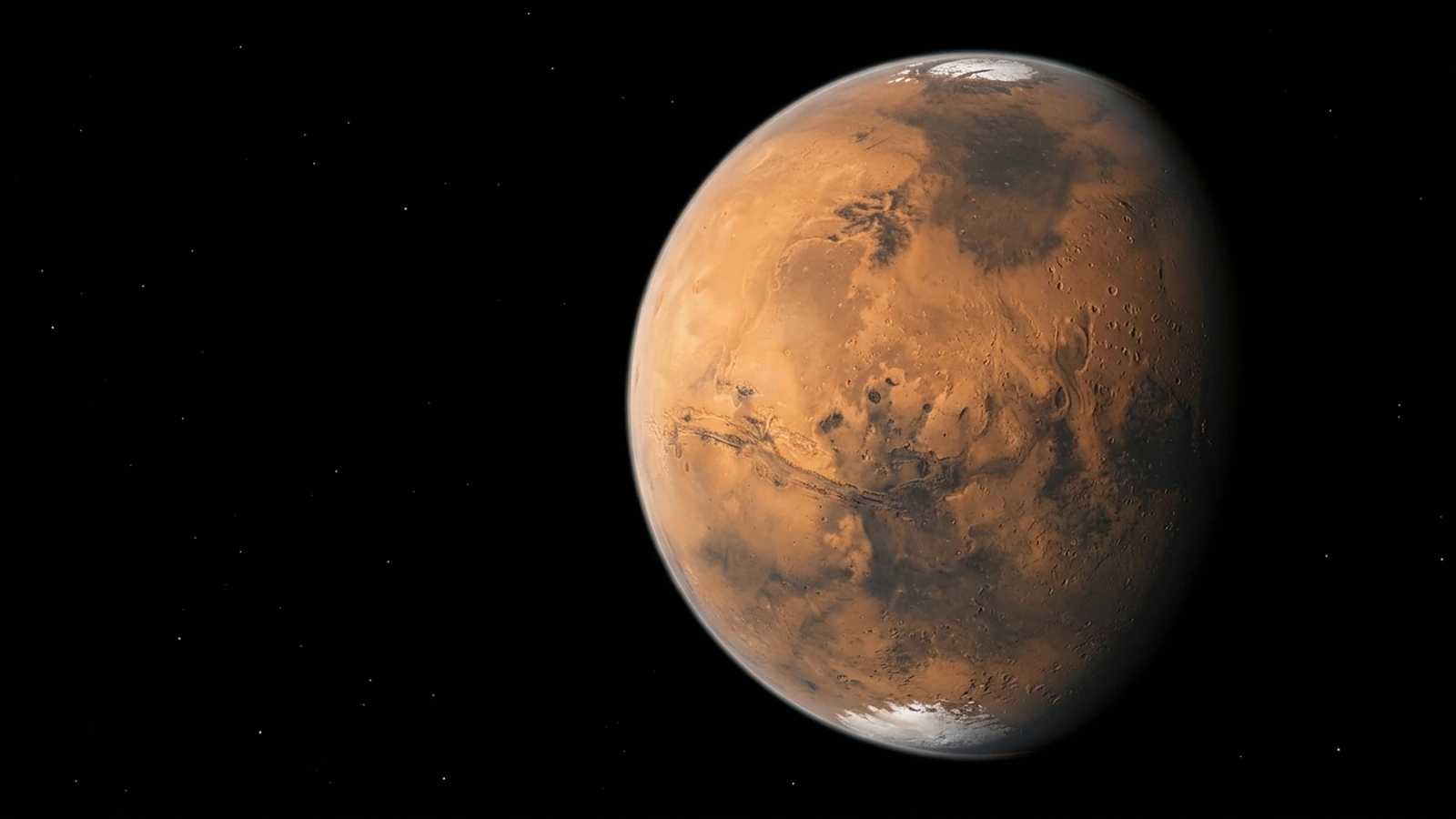
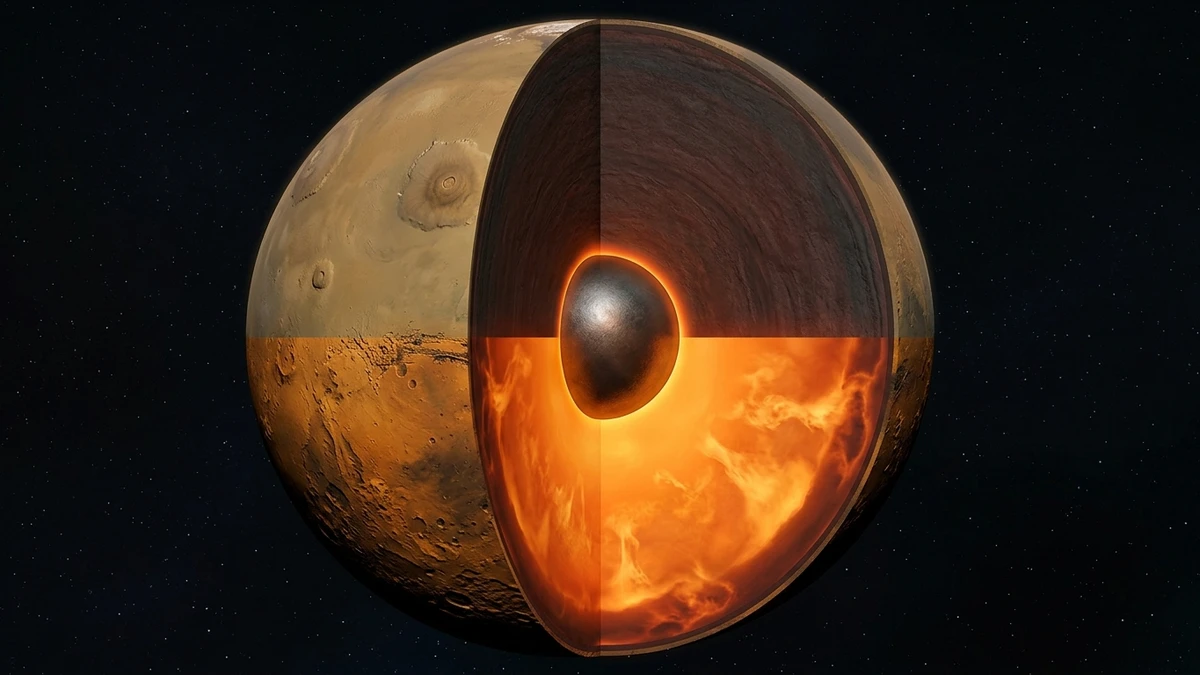
Look at any global map of Mars and the divide jumps out. The southern hemisphere sits several kilometres higher than the north, pocked with craters that date back billions of years. The north is younger, flatter and strangely smooth, as if something wiped it clean. Scientists call this the crustal dichotomy, and it is one of the oldest unsolved puzzles in planetary science.
The surprise in the new study is how faithfully the interior follows that surface line. Where the crust changes from highlands to lowlands, the deep rock changes too, from hot and soft to cooler and stiffer. Even where the boundary wanders north or south, the warm zone below tracks it.
That is a big clue. Whatever carved Mars into two faces did not just scar the surface. It reshaped, or was shaped by, the whole engine of the planet.
How Do You Take a Planet's Temperature From Orbit?
You use tides. Not ocean tides, obviously, but the same physics. As Mars travels its slightly stretched orbit with its axis tilted over, the Sun's pull on it keeps changing. The planet flexes in response, and how much it flexes depends on what it's made of. Warm, soft rock gives more than cold, rigid rock, the difference between squeezing putty and squeezing a cricket ball.
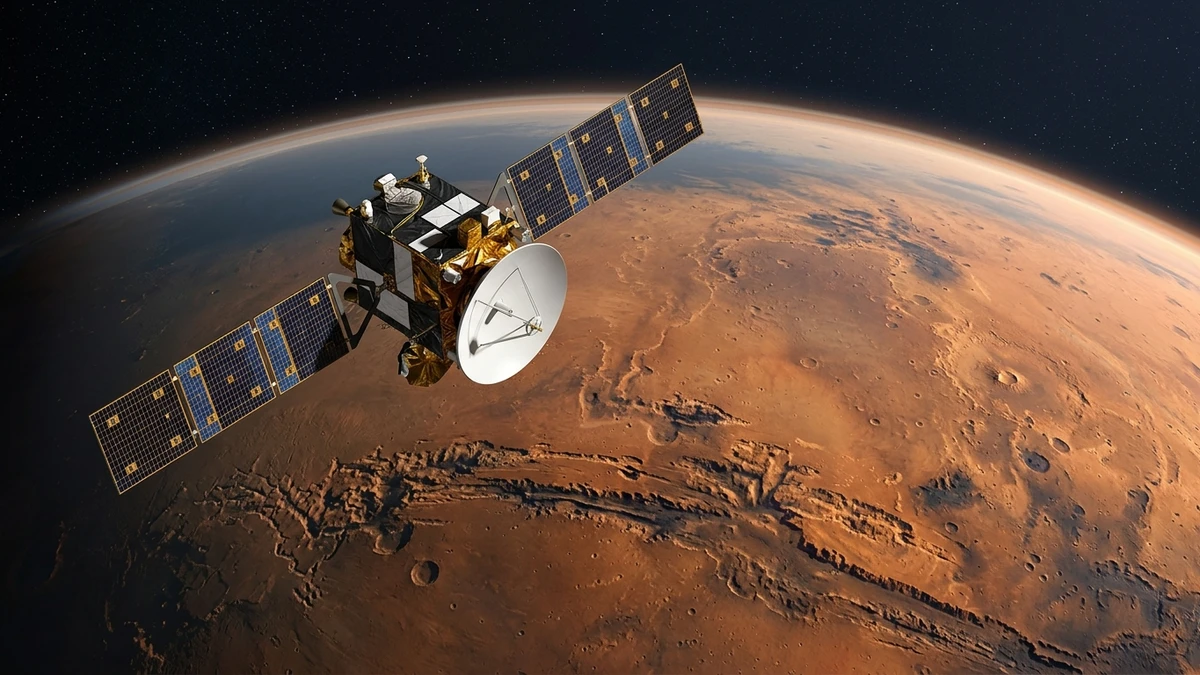
That flexing leaves fingerprints in Mars's gravity, and gravity tugs on spacecraft. Berne's team went through decades of radio tracking from three NASA orbiters, Mars Global Surveyor, Mars Odyssey and Mars Reconnaissance Orbiter, watching for tiny changes in their speed as they circled. It's the same gravitational pull that NASA's Psyche probe used for its slingshot around Mars last year, just read with extraordinary precision. From those wobbles they rebuilt the planet's gravity field season by season, a method called tidal tomography. Think of it as a CT scan where the Sun provides the X-rays.
The result matched something NASA's InSight lander had already hinted at. InSight recorded hundreds of marsquakes before it shut down, and their seismic waves lost energy faster when they travelled through the south. Warm rock soaks up seismic energy the way a duvet soaks up sound. Nobody could say why the south should be warmer. Now the gravity data says the same thing, independently.
What Caused the Heat Under Mars's South?
Honest answer: nobody knows yet. The paper offers three suspects.
The first is a giant impact. Early in its history the northern third of Mars may have been struck by something enormous, the kind of collision that formed our own Moon. That could have blasted away northern crust and redistributed the planet's internal heat.
The second is convection. The southern mantle may once have churned like a lava lamp, carrying heat upwards, before the motion stalled and left the warmth behind.
The third is a blanket. The southern crust is thick and old, and thick crust is good insulation. Heat generated by radioactive elements inside Mars may simply have been trapped under the highlands for billions of years while the thin northern crust let it leak away.
Each idea leads to a different early history for Mars, which is why the answer matters far beyond geology.
What It Means for Mars's Water and Lost Magnetic Field
Two of Mars's oldest mysteries look a little less mysterious with a hot southern mantle in the picture.
The first is magnetism. Mars has no global magnetic field today, but iron-rich rocks in the southern hemisphere carry strong magnetic imprints, souvenirs of a field that died billions of years ago. A lopsided, hotter southern interior could help explain why the south recorded that ancient field so much more strongly than the north.
The second is water. "The dichotomy that we see between north and south is important to understand because it gives information about processes that may have influenced the hydrology of Mars, including the formation of basins that may have held water," says co-author Amirhossein Bagheri of Caltech, a former InSight team member. The northern lowlands are the leading candidate for an ancient Martian ocean, and the shape of the interior helped set where water could gather.
That story connects to everything else we've learned about the planet this year. We've seen how giant waves of solar wind stripped away the Martian atmosphere, and Curiosity find the building blocks of life in Gale Crater. Add a partially molten interior and Mars starts to look like a planet that was genuinely alive, geologically speaking, for longer than we thought. It's a similar rewrite to the one Venus got this month, when new simulations showed Venus is still tearing itself apart. Our neighbours keep turning out to be less dead than advertised.
It also hands a target list to the next generation of missions, including Europe's life-hunting Rosalind Franklin rover, due to launch in 2028. Knowing where Mars kept its heat tells you where groundwater could have stayed liquid longest, and that is exactly where you'd look for signs of past life.
How to See Mars From the UK Right Now
The planet in this story is up before breakfast. Through late August and early September 2026, Mars sits in Gemini in the eastern morning sky, an unmistakable orange point of around magnitude +1.4 below the twin stars Castor and Pollux. Look east from about 4.30am, an hour or two before sunrise. On 25 September the twins line up to point almost straight at it, a lovely bit of sky geometry.
No telescope needed to find it, though the view gets better from here. Mars brightens all autumn, and by mid-October its disk grows large enough for telescope work on the polar cap and dark surface markings. The whole run-up leads to opposition in February 2027, when Mars will be at its biggest and brightest for two years. Our weekly night sky page will flag the best mornings along the way.
When you spot that small orange dot, picture what this week's study added to it: a world with one half of its insides still hundreds of degrees hotter than the other, possibly still soft enough to flow.
Follow Mars into its best season
Kit we've tested and reviewed in full
Mars is a naked-eye morning object now, and by October it starts showing real detail in a telescope. Our Mars 2026 guide has the month-by-month calendar.

Mars is an easy orange point before dawn, and 10x50s make the colour pop and frame it neatly with Castor and Pollux.
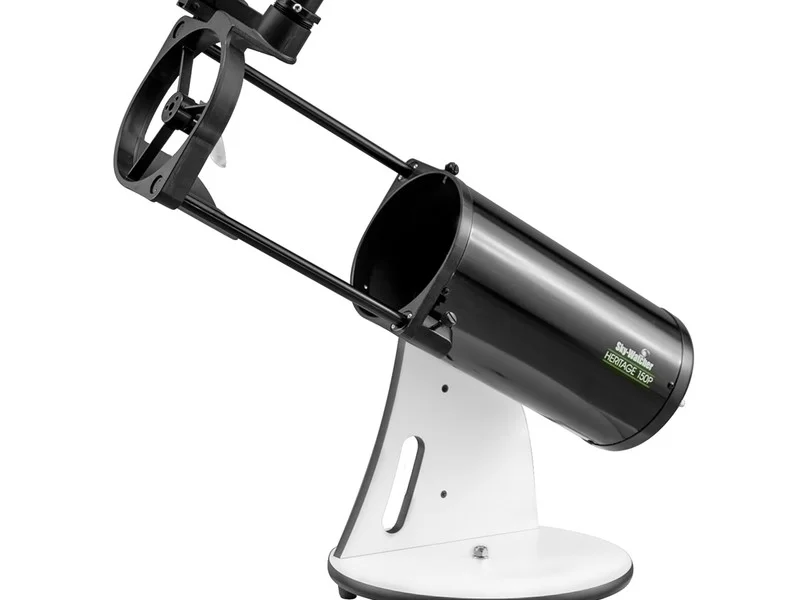
From October the disk grows past 6 arcseconds and a 6-inch scope starts pulling out the polar cap and dark markings.

A smart telescope for capturing Mars among the stars of Gemini now, with nebulae and galaxies to fill the rest of the night.
Affiliate links: you pay the same price, we earn a small commission that helps keep WatchTheStars free.
The Bottom Line
For decades we've known Mars wears two faces on the outside. Now we know the divide runs deep: the south is hundreds of degrees hotter inside, possibly partially molten, and the boundary between the two halves follows the surface split with uncanny precision.
One clever technique and thirty years of archived tracking data turned three old orbiters into a planetary thermometer. The cause is still up for grabs, a giant impact, ancient churning, or a thick crustal blanket, and settling it will keep Mars scientists busy for years. In the meantime, the planet itself is climbing the morning sky and heading for a fine 2027 opposition. Worth an early alarm. Clear skies.
Sources:
- Tidal tomography reveals a thermal anomaly beneath Mars's crustal dichotomy · Nature
- Thermal Anomaly Discovered Below Mars's South Pole · Caltech
- Scientists discover a massive heat anomaly deep inside Mars · ScienceDaily
- Scientists discover massive underground 'thermal anomaly' on Mars · Space.com
- Mars may be two-faced to its core · Scientific American
Frequently Asked Questions
Equipment guides
Related topics

Ian ClaytonAmateur astronomer and founder of WatchTheStars.co.uk, dedicated to helping others explore the wonders of our universe. Full profile →