Key takeaways
- Neptune reaches opposition at about 02:30 BST on 26 September 2026: its closest and brightest point of the year
- The full Moon falls on the same day, just 9° from Neptune, which will badly spoil the view on opposition night itself
- The best window is the fortnight after: new Moon falls on 10 October, with Neptune still 36° high at midnight
- At magnitude 7.8 Neptune is never visible to the naked eye. You need binoculars at minimum, and a telescope to see it as a disc
- Saturn sits about 8° away and reaches its own opposition on 4 October, making it the ideal signpost for finding Neptune
Jump to section 8 sections
- When Is Neptune at Opposition in 2026?
- Why the Full Moon Spoils Opposition Night
- The Best Time to See Neptune in 2026
- How to Find Neptune With Binoculars or a Telescope
- What Does Neptune Look Like Through a Telescope?
- Can You See Triton, Neptune's Largest Moon?
- Why Neptune Is So Hard to See
- How to Photograph Neptune
When Is Neptune at Opposition in 2026?
Neptune, the eighth and outermost planet, reaches opposition in the early hours of Saturday 26 September 2026, at about 02:30 BST. Opposition is the moment Earth passes directly between a planet and the Sun, putting that planet opposite the Sun in our sky. Published times vary by half an hour or so depending on how each source defines the alignment, so treat it as "the early hours of the 26th" rather than a moment to set an alarm for.
Opposition is the best geometry an outer planet ever gives us. Neptune rises in the east as the Sun sets in the west, stays up all night, and sits at its closest and brightest of the year. From the UK it rises at about 19:00 BST, climbs to roughly 36° above the southern horizon at 01:05 BST, and sets around 07:05 BST.
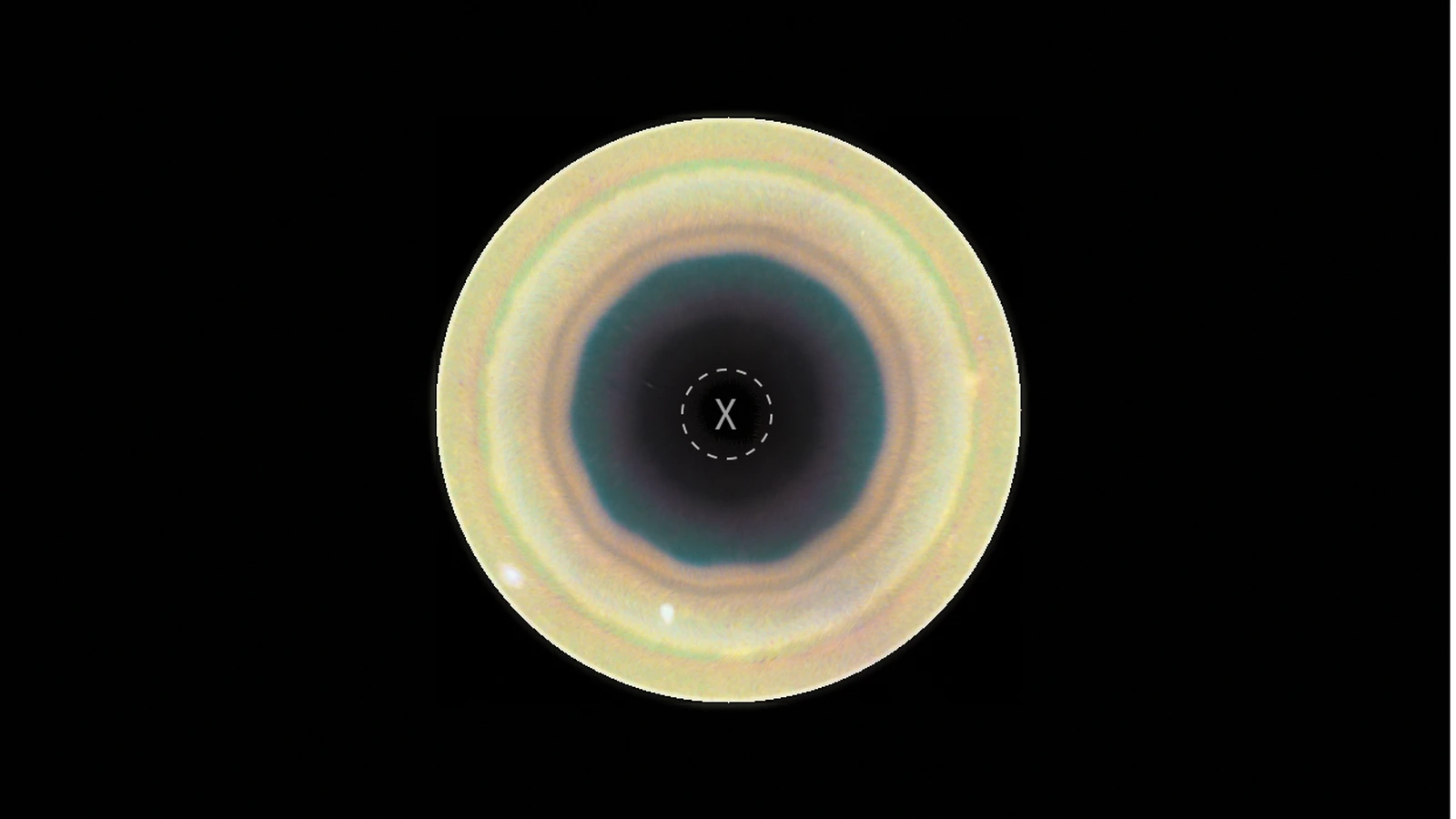
"Closest" is doing some heavy lifting there. At opposition Neptune is still 28.9 astronomical units away, about 4.3 billion kilometres. Sunlight takes four hours to reach it. It shines at magnitude 7.8 and shows a disc just 2.4 arcseconds across, roughly the apparent size of a golf ball seen from four miles away.
So this isn't an event you step outside and look up at. It's a target you hunt down deliberately. Well worth doing, but the date on the calendar isn't the date you want.
Why the Full Moon Spoils Opposition Night
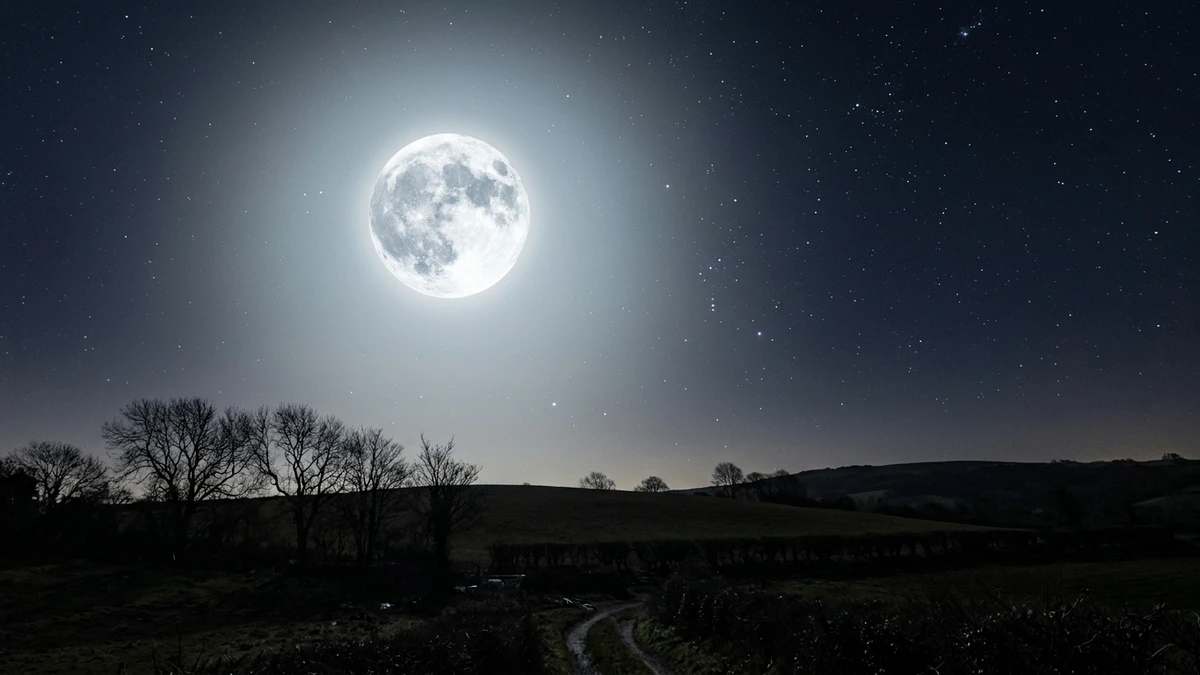
Most Neptune opposition write-ups skip over this bit. The full Moon falls at 17:49 BST on 26 September 2026, the very same day as opposition.
That isn't a coincidence, and it isn't bad luck. It's geometry. A planet at opposition sits opposite the Sun. A full Moon also sits opposite the Sun. When the two land on the same date, they end up in the same region of sky by definition.
On opposition night the Moon will be 99.5% lit and about 9° from Neptune, a little less than a fist held at arm's length. A near-full Moon that close throws enough light across the sky to lift the background brightness dramatically, and a magnitude 7.8 target is exactly the kind of faint object that gets washed out first. You might still pick Neptune up in a telescope if you know precisely where to point. You'll just have a far worse time than you need to.
If you want to check the Moon before you commit to a night out, our is it a full moon tonight page gives the current phase and rise times.
The Best Time to See Neptune in 2026
Wait two weeks.
Neptune does not brighten and fade sharply around opposition the way a comet might. It sits near peak brightness from roughly mid-July to mid-November, and across a fortnight either side of opposition the change is far too small to notice at the eyepiece. What does change enormously is the Moon.
New Moon falls at 16:50 BST on 10 October 2026. On that night Neptune still climbs to 36.2° at almost exactly midnight, and the sky around it is properly dark. That's the night to aim for. The whole window from roughly 6 to 15 October works, with only a thin crescent Moon around at worst.
There's a bonus. Saturn reaches its own opposition on 4 October 2026, sitting about 8° from Neptune. So in early October you get both planets high in the south together, with the brighter one acting as a signpost to the fainter.
| 26 September (opposition) | 10 October (new Moon) | |
|---|---|---|
| Neptune magnitude | 7.8 | 7.8 |
| Highest point | 36.4° at 01:05 BST | 36.2° at 23:55 BST |
| Moon illuminated | 99.5% | 0% |
| Moon distance from Neptune | 9° | Not in the sky |
Getting somewhere genuinely dark matters more for Neptune than for almost any other planet. Our UK dark sky sites map will find your nearest properly dark horizon, and it is worth the drive for a target this faint.
How to Find Neptune With Binoculars or a Telescope
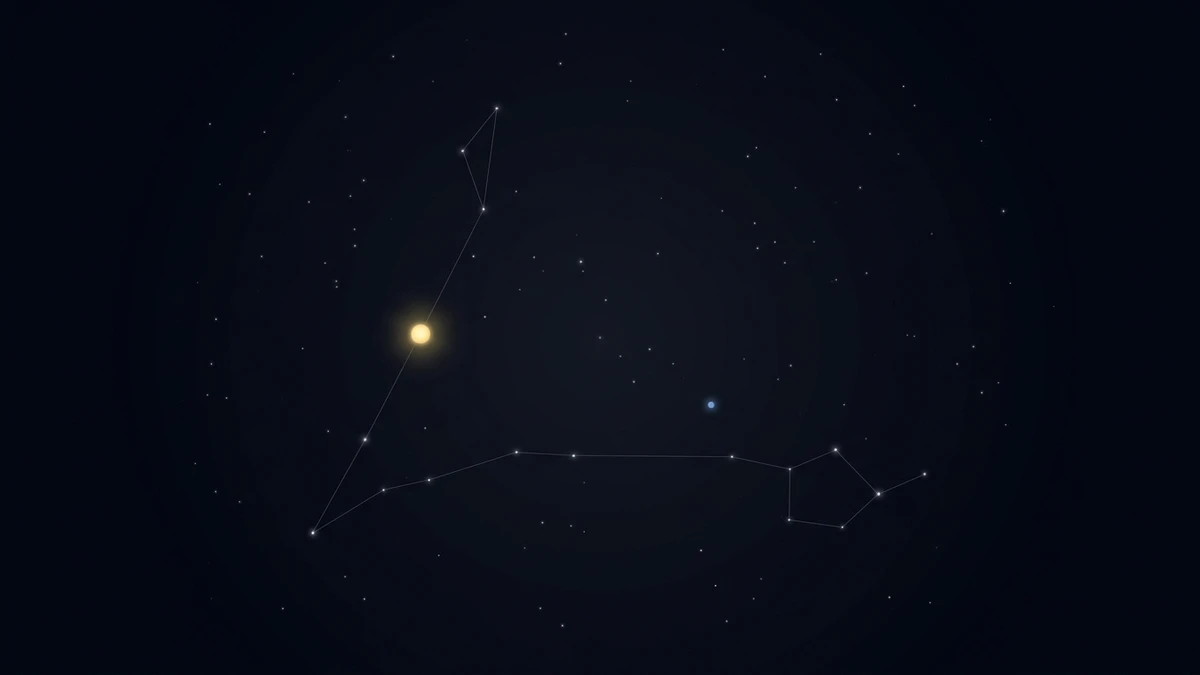
Neptune sits in Pisces, almost exactly on the celestial equator, at around RA 00h 10m, Dec −00° 25'. It's an awkward patch of sky. The nearest stars of any real brightness are magnitude 6 and fainter, so there's no obvious naked-eye pattern to hop from.
Which is why Saturn is the answer.
Step 1: Find Saturn. Through late September and October, Saturn is the brightest thing in that part of the southern sky by a wide margin. You cannot really mistake it. By midnight in early October it is around 38° up, due south.
Step 2: Move west. Neptune sits about 8° west and 2° south of Saturn, just under a fist-width at arm's length, slightly down and to the right as you face south. In binoculars, that's roughly one and a half fields of view.
Step 3: Confirm with a chart. This is the step people skip, and it's the one that matters. Neptune looks identical to the faint stars around it. Load Stellarium, SkySafari or Star Walk 2, set it to your exact time, and match the star pattern in your eyepiece against the screen. There's no shortcut here. You're identifying it by position, not by appearance.
Step 4: Prove it moved. The satisfying confirmation is to come back a week later. Neptune is retrograde until 13 December 2026, drifting slowly westward against the background stars. Sketch the field tonight, sketch it next week, and the dot that shifted is the planet.
If you are new to star-hopping at this level, our guides to binocular astronomy and how to use a telescope cover the technique properly.
What Does Neptune Look Like Through a Telescope?
Manage your expectations and you will enjoy this far more.
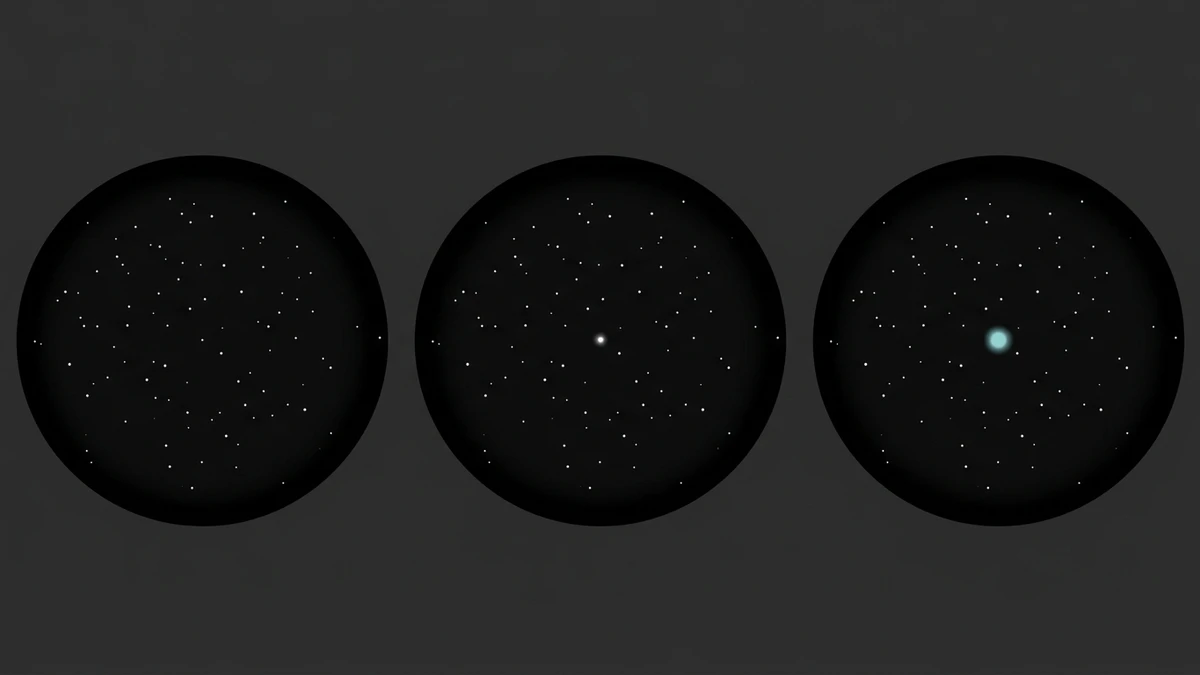
Through binoculars, Neptune is a faint star. That's all it is. The reward isn't the view, it's knowing which dot it is.
Through a small telescope of 80–100mm at low power, it's still a point. Push the magnification past about 100× and observers with good eyes start to notice it looks subtly softer than the stars around it. Not quite a disc, but not quite a pinpoint either.
Through a 150–200mm telescope at 150–250× on a night of steady seeing, Neptune finally becomes a tiny, definite disc with a grey-blue or blue-green tint. It's small and undramatic, and it's also one of the most quietly astonishing things you can see from a British back garden. That faint dot is a world four times the diameter of Earth, so far away that the light reaching your eye left it four hours ago.
Magnification is the lever that matters here, and there's a limit to how far you can push it before the image falls apart. Our guide to telescope magnification explains where that ceiling sits for your particular scope.
One caveat on colour. The vivid deep blue everyone knows from Voyager 2 was enhanced during image processing in 1989. Reprocessing of the original data suggests Neptune's true colour is a paler, greener blue, much closer to Uranus than the famous pictures suggest. What you see at the eyepiece is the honest version.
Can You See Triton, Neptune's Largest Moon?
Yes, but treat it as a proper challenge rather than a casual add-on.
Triton shines at about magnitude 13.5 and never strays further than roughly 17 arcseconds from Neptune, completing an orbit every 5.9 days. So you are hunting a very faint point of light sitting extremely close to a much brighter one. Realistically that needs 200mm of aperture or more, high magnification, genuinely steady seeing and a dark, moonless sky. The early-October window gives you the best shot at all four at once.
Triton is worth the effort for what it is. It orbits Neptune backwards, against the planet's rotation, which almost certainly means it didn't form there. It's a captured Kuiper Belt object: a world from the outer solar system that wandered too close and got caught. It's geologically active, with nitrogen geysers, and at around −235°C it's one of the coldest places we have ever measured.
Why Neptune Is So Hard to See
Neptune is roughly 30 times further from the Sun than we are. Sunlight falling on it is about 900 times weaker than sunlight at Earth, and that dim light then has to travel all the way back to us. The result is a planet four times Earth's diameter that never rises above magnitude 7.7.
It has never been an easy object. Neptune was the first planet found by mathematics rather than observation. Urbain Le Verrier worked out where it should be from irregularities in Uranus's orbit, and Johann Galle found it in 1846 within a degree of the prediction, on the first night he looked.
Only one spacecraft has ever visited. Voyager 2 flew past in August 1989 and remains our only close-up encounter with the planet, and with Triton. Nearly forty years later, almost everything we know about Neptune's surface features still traces back to that single flyby. Which is a fair argument for why the outer solar system deserves another mission.
A Neptunian year lasts 165 Earth years. The planet completed its first full orbit since discovery in 2011.
How to Photograph Neptune
Photographing Neptune is easier than seeing it well, which surprises people.
The simplest approach is a tracked camera and a modest lens. A 30-second exposure at 200mm will record Neptune as a clear dot among the stars of Pisces. Shoot the same field a week apart and blink the two frames: the dot that moved is the planet. It's a satisfying project, and it needs no telescope at all.
For a disc, you need the planetary imaging approach: a small high-frame-rate camera on a telescope of 200mm or more, capturing a few thousand frames of video and stacking the sharpest few percent. Neptune is faint enough that you will be working at higher gain and longer per-frame exposures than you would for Jupiter or Saturn, so a steady night matters more than usual.
For Triton, a stacked run of longer exposures will pick it up more readily than your eye will. It often shows up in images taken by people who were not specifically hunting for it.
Whichever route you take, check the forecast and the Moon first. Our what you can see in the sky tonight page gives conditions at a glance, and the astronomy events calendar has the rest of the autumn's highlights if cloud beats you this time.
Neptune isn't going anywhere. It stays at essentially this brightness until mid-November, so if early October clouds over, you have weeks of second chances. Everything else on offer this month is in our September night sky guide.
Mark 10 October in the diary, find Saturn, and sweep west. The eighth planet is waiting.
What you need to see Neptune
Kit we've tested and reviewed in full
Neptune is the one planet where kit genuinely decides what you see. Binoculars will confirm you have found it. A telescope with real aperture turns it from a dot into a disc, and a high-power eyepiece is what makes that difference visible.
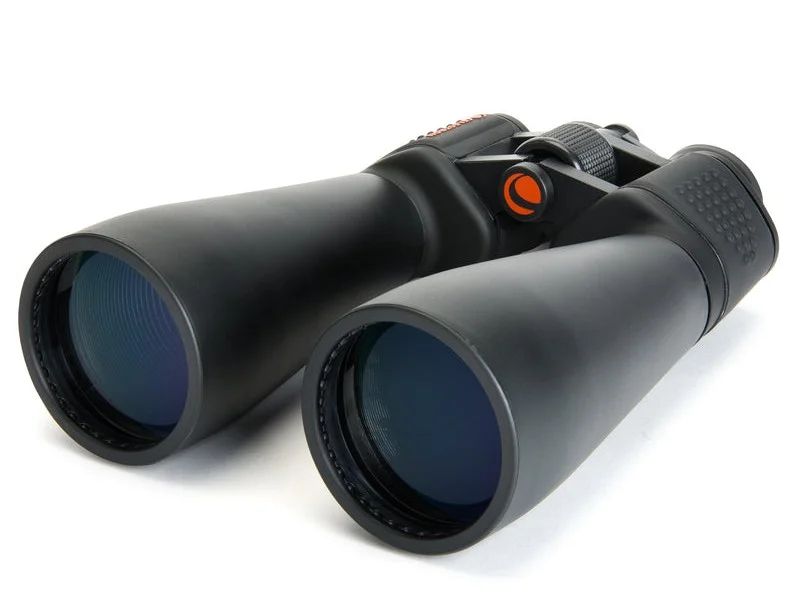
At magnitude 7.8, Neptune is comfortably within reach of 15×70s from a reasonably dark garden. It will look exactly like a faint star, which is the point: these get you to the right patch of sky so you can confirm the position against a chart before moving up to a telescope.
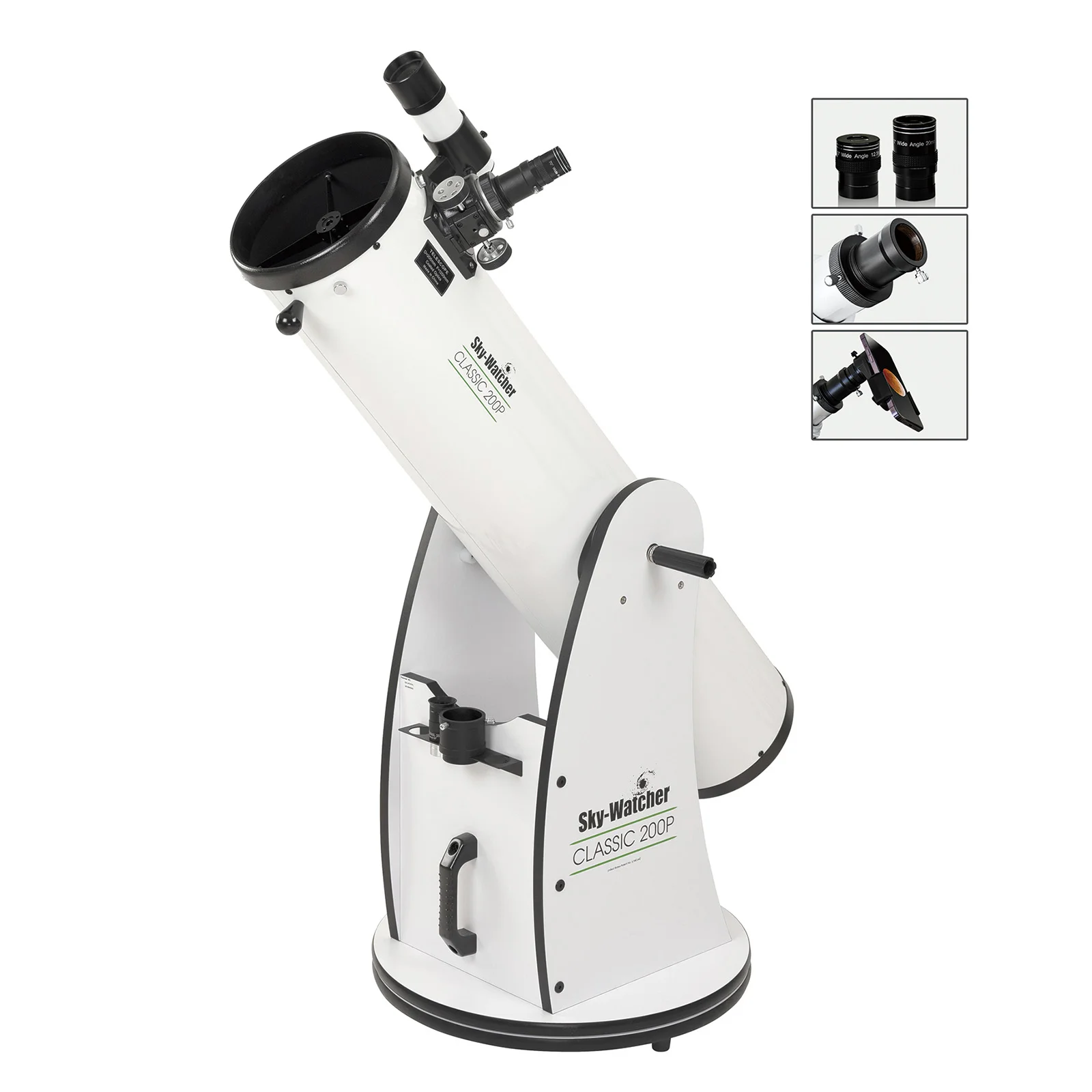
200mm is the aperture where Neptune stops being a dot. Push it to around 200× on a steady night and the tiny blue-grey disc resolves, and this is also roughly the minimum aperture that puts Triton within reach of a patient observer.
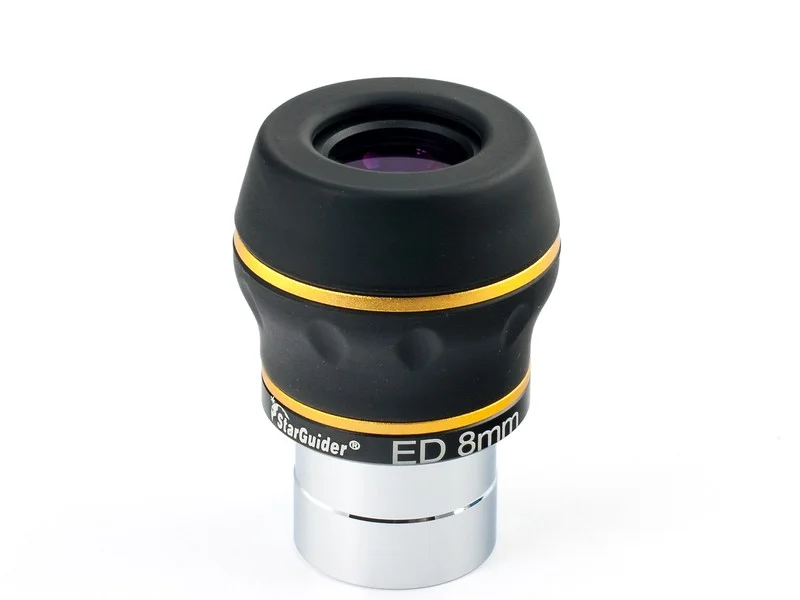
BST StarGuider 60° 8mm ED
Neptune is only 2.4 arcseconds across, so you need real magnification before the disc shows at all. In a 200P this 8mm gives about 150× with proper eye relief, comfortable enough to keep looking at, which matters when you are waiting for the seeing to steady.
Affiliate links: you pay the same price, we earn a small commission that helps keep WatchTheStars free.
Frequently Asked Questions
Equipment guides
Related topics
Ian ClaytonAmateur astronomer and founder of WatchTheStars.co.uk, dedicated to helping others explore the wonders of our universe. Full profile →