Key takeaways
- Venus reaches greatest brilliancy on 18 September at magnitude −4.8, its most dazzling evening showing until 2028. It stays low, so you need a clear western horizon
- Neptune is at opposition on the night of 25–26 September, its closest and brightest of the year, in Pisces just below Saturn
- Saturn rises by 8pm mid-month and is nearly at its best, with opposition following on 4 October
- The Harvest Moon rises alongside Saturn on Saturday 26 September, the closest full Moon to the equinox
- The autumn equinox on 23 September opens the strongest weeks of the year for aurora from the UK
Jump to section 8 sections
- When Does It Get Dark in the UK in September 2026?
- Venus at Its Brightest: Greatest Brilliancy on 18 September
- Planets in September 2026: Saturn Nearly at Its Best
- Neptune at Opposition on 25–26 September: How to Find It
- Harvest Moon 2026: Full Moon Meets Saturn on 26 September
- Autumn Equinox 23 September: Aurora Season Begins
- Milky Way Nights Around the 11 September New Moon
- Key Dates in September 2026
August went out with a deep lunar eclipse before dawn and Saturn rising with the Moon. September doesn't have a single headline event like that. What it has instead is depth: Venus at its most dazzling until 2028, Neptune at opposition, Saturn a week short of its own, a proper dark-sky week around new Moon, and the Harvest Moon to finish. There's something worth going outside for on most clear nights this month.
Here's your complete guide to the September 2026 night sky from the UK.
When Does It Get Dark in the UK in September 2026?
Darkness comes back fast in September. From London, astronomical darkness runs from about 21:20 to 04:20 BST mid-month. By 30 September it stretches from roughly 20:35 to 04:50, more than eight hours of genuinely black sky. Compare that with barely five hours in mid-August.
The change is even sharper further north. Edinburgh's dark window grows from around six and a half hours mid-month to nearly eight by the 30th, and Inverness is back to a full working night after its brief midsummer shutdown.
| City | 15 September | 30 September |
|---|---|---|
| London | 21:20 – 04:20 | 20:35 – 04:50 |
| Edinburgh | 21:40 – 04:00 | 20:50 – 04:35 |
| Inverness | 21:50 – 03:50 | 20:55 – 04:30 |
Astronomical darkness, BST. Times shift by a few minutes depending on how far east or west you are.
The practical upshot: you can now do serious stargazing before 10pm and still get to bed. Evenings are still mild, the summer Milky Way is still up, and the autumn constellations are arriving behind it. If you're new to all this, our guide to stargazing for beginners is the place to start.
Venus at Its Brightest: Greatest Brilliancy on 18 September
Venus reaches greatest brilliancy on Friday 18 September, blazing at magnitude −4.8. That's the brightest it gets in this evening apparition, and it won't match it in the evening sky again until April 2028. At that brightness you can find it before the Sun has fully set, and from a properly dark site it can cast faint shadows.
The catch is the same one we had in August, only sharper: height. The ecliptic meets the UK's western horizon at its shallowest angle of the year in early autumn, so Venus never climbs far before it follows the Sun down. On 18 September it stands only about 3° above the horizon at sunset from central England and sets roughly 20 minutes later — nearer 4° and half an hour from the south coast, and barely 10 minutes from central Scotland. By the end of the month it is down within a quarter of an hour of the Sun almost everywhere. You need a genuinely flat, open western horizon, and a west-facing coast or hilltop is the difference between seeing it and not bothering. Binoculars help you pick it out of the twilight glow, but never sweep with them until the Sun is fully below the horizon.
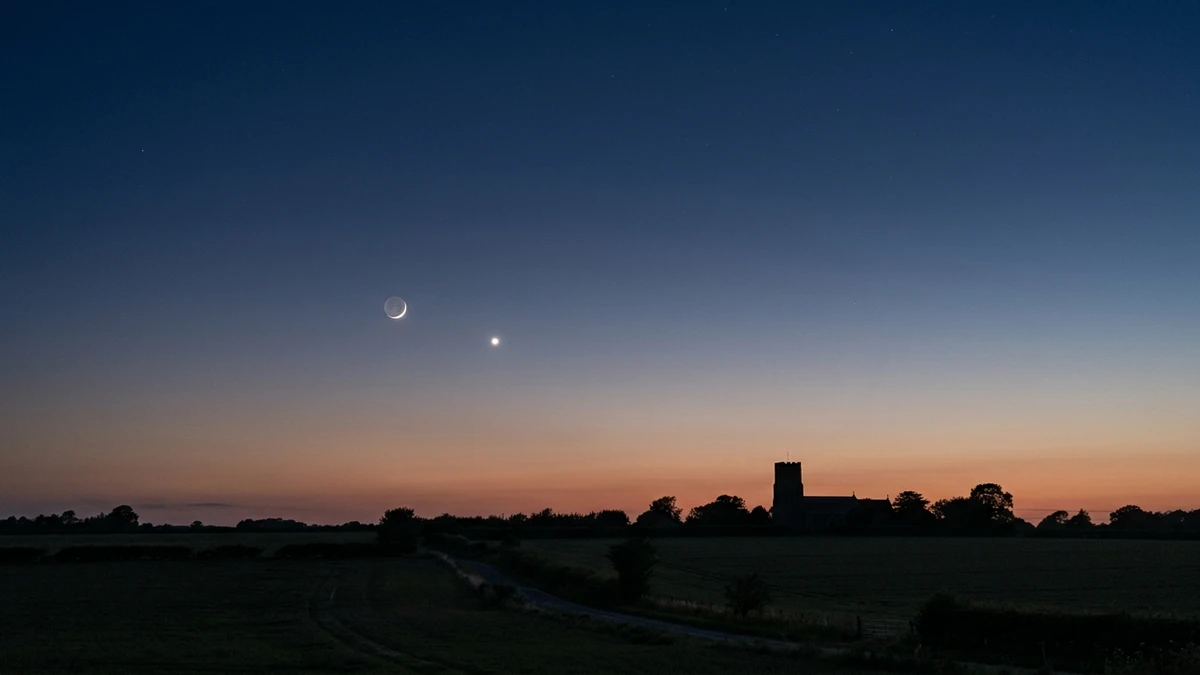
Before that, put Sunday 13 September in your diary, and be ready early. A slim two-day-old crescent Moon sits below Venus and to the right, about 8° away, with both of them very low. From central England the window runs from roughly 19:25 to 19:45: the Moon sets first at about 19:35, and Venus follows around 19:50. With a flat horizon it's a lovely sight, and a phone braced on a wall will catch it, but it is a hard one from the north. Monday 14 September is the easier evening — the Moon has climbed to sit right alongside Venus, about 3° away, and stays up a few minutes longer.
Through a telescope Venus is now a proper crescent, around 27% lit at mid-month and growing to nearly 40 arcseconds across. Even steadily-held binoculars will hint at the shape. Watching the crescent thin week by week is one of the easiest bits of real planetary astronomy you can do.
Planets in September 2026: Saturn Nearly at Its Best
Here's the quick reference for mid-September, from London:
| Planet | Magnitude | When to look | Where |
|---|---|---|---|
| Venus | −4.8 | 20–60 min after sunset | W, only 7–8° up |
| Saturn | +0.4 | From ~8pm, best after 11pm | E rising to S, ~45° up by 1am |
| Jupiter | −1.7 | From ~3am | E, 25°+ by dawn |
| Mars | +1.4 | Before dawn | E, low in the twilight |
| Uranus | +5.7 | After 11pm | Taurus, high before dawn (binoculars) |
| Neptune | +7.8 | All night | Pisces, below Saturn (see next section) |
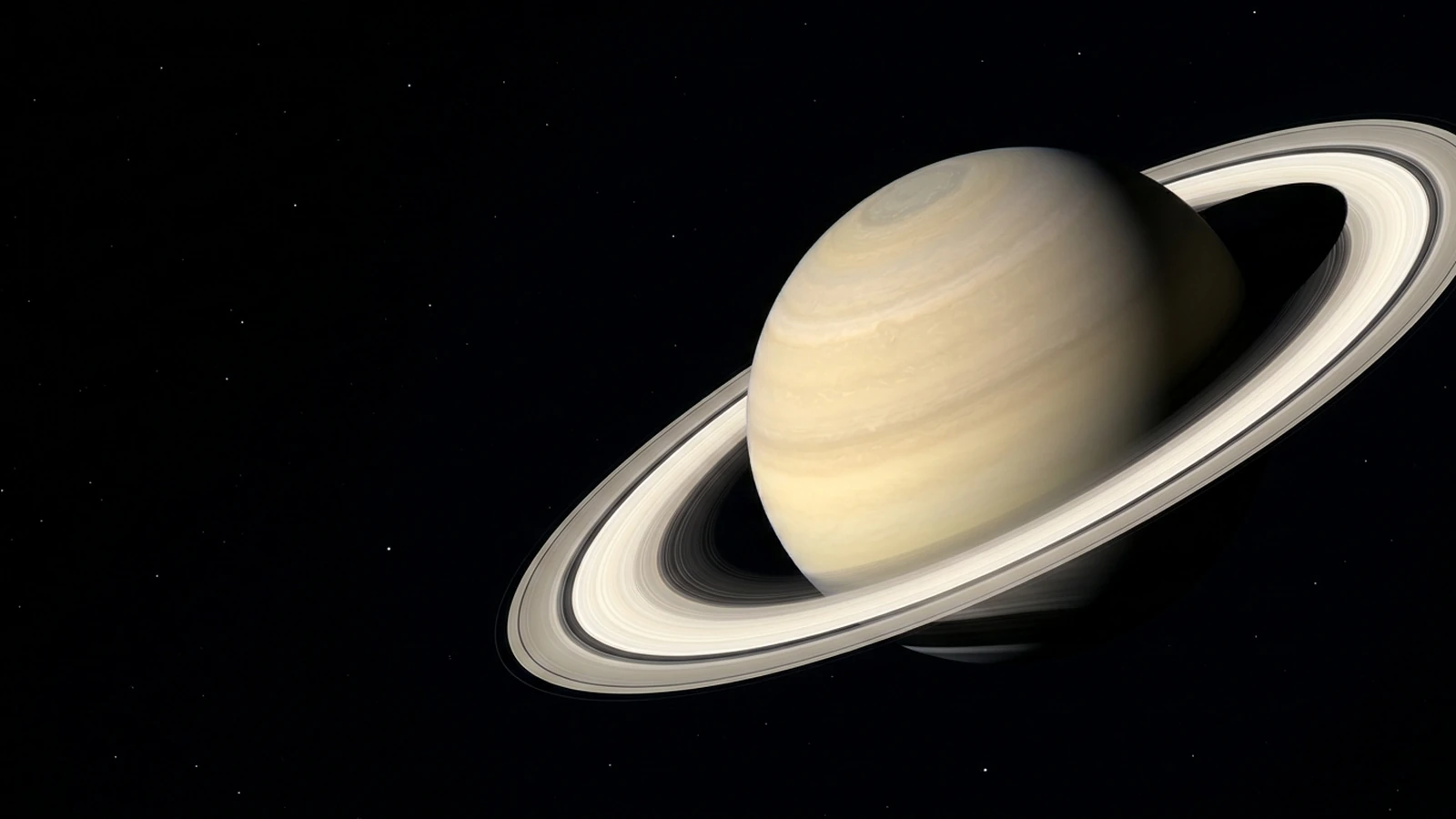
Saturn is the evening's main event, and it improves nightly. It rises in the east around 20:00 BST mid-month and by about 18:55 on the 30th, so by late September it's up before the sky is fully dark. It crosses the meridian around 1am at roughly 45° altitude, which is comfortably high enough for sharp telescope views. At magnitude +0.4 it's the brightest thing in that part of the sky, a steady yellowish point that doesn't twinkle. Opposition comes on 4 October, so this month's views are essentially as good as 2026 gets. Any small telescope shows the rings; a 4 to 6-inch scope adds the Cassini Division and a handful of moons. Our year-round guide to observing Saturn has the full story.
Jupiter has finished its slow crawl out of the dawn. By mid-September it rises around 3am and stands 25° or more above the eastern horizon as twilight begins, bright at magnitude −1.7. Early risers get first use of it: the cloud belts and the four big moons are back in reach of any telescope. On the mornings of 8 and 9 September a thin waning crescent Moon rises close to it, a lovely pre-dawn pairing.
Mars is fading into the morning twilight at magnitude +1.4 and sits lower each week. Catch the waning crescent Moon near it before sunrise on Sunday 6 September, then let it go until next year. Our month-by-month Mars guide explains when it comes good again.
Mercury technically enters the evening sky after its 27 August superior conjunction, but this is a hopeless apparition from UK latitudes. It hugs the horizon in bright twilight all month. Skip it.
Uranus keeps improving. It rises around 23:00 BST mid-month in Taurus and is high before dawn at magnitude +5.7, an easy binocular target if you have a chart.
What to take outside this month
Kit we've tested and reviewed in full
Binoculars cover most of September: the Moon-Venus pairing on the 13th, the Milky Way in dark-sky week, and even Neptune as a faint star from a dark site. Add a telescope and you get Saturn's rings at a sensible hour plus Venus's shrinking crescent.
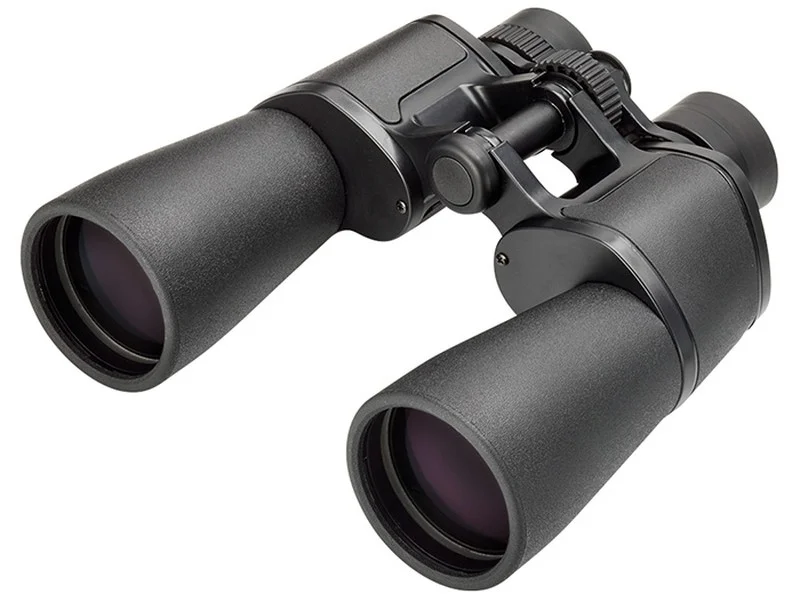
Enough to pick Neptune out of the Pisces star field with a chart, and the right tool for sweeping the Milky Way overhead in dark-sky week.
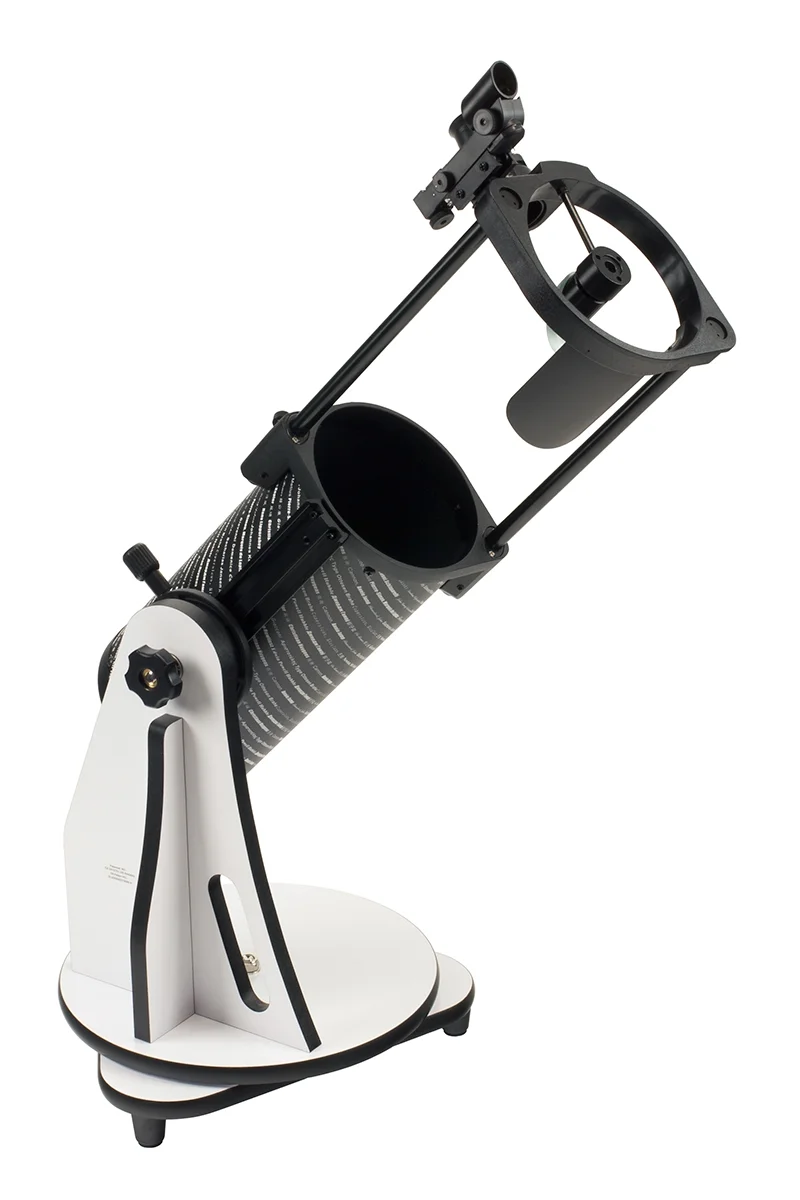
Shows Saturn's rings clearly now it's up by 8pm, and at high power it will just resolve Neptune's tiny blue-grey disc. Still the best first telescope for the money.
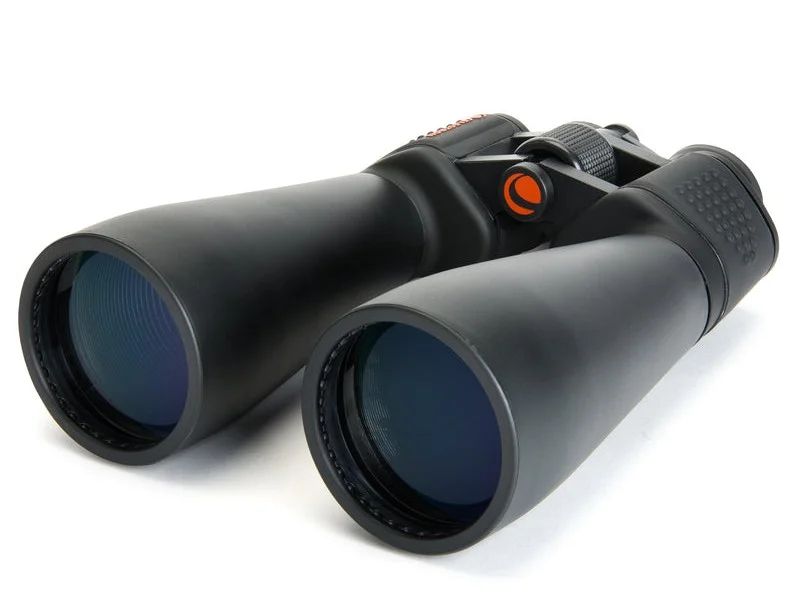
The extra aperture makes Neptune an easier catch and pulls more stars out of the Milky Way. Rest it on a wall or tripod for steady views.
Affiliate links: you pay the same price, we earn a small commission that helps keep WatchTheStars free.
Neptune at Opposition on 25–26 September: How to Find It
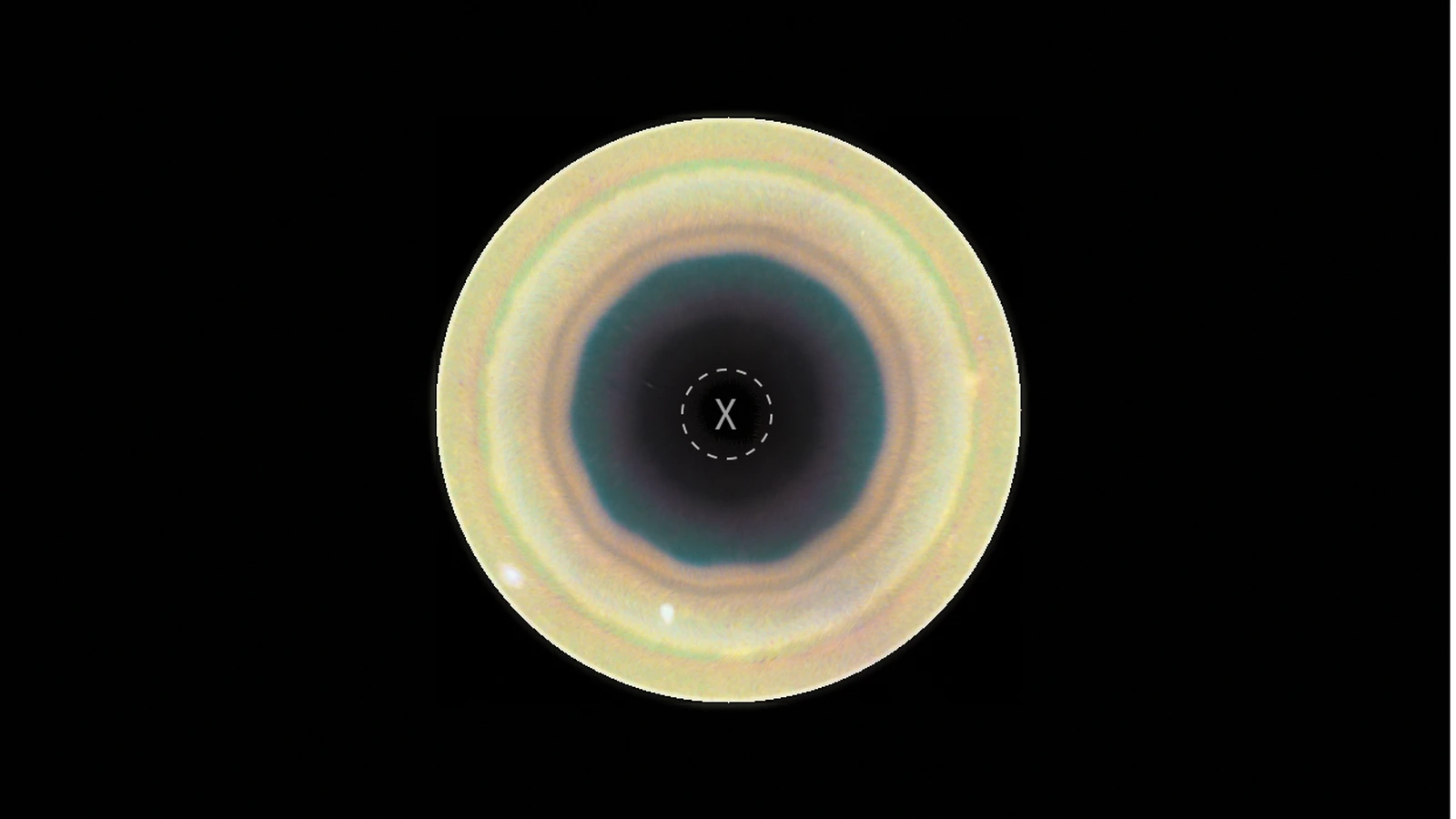
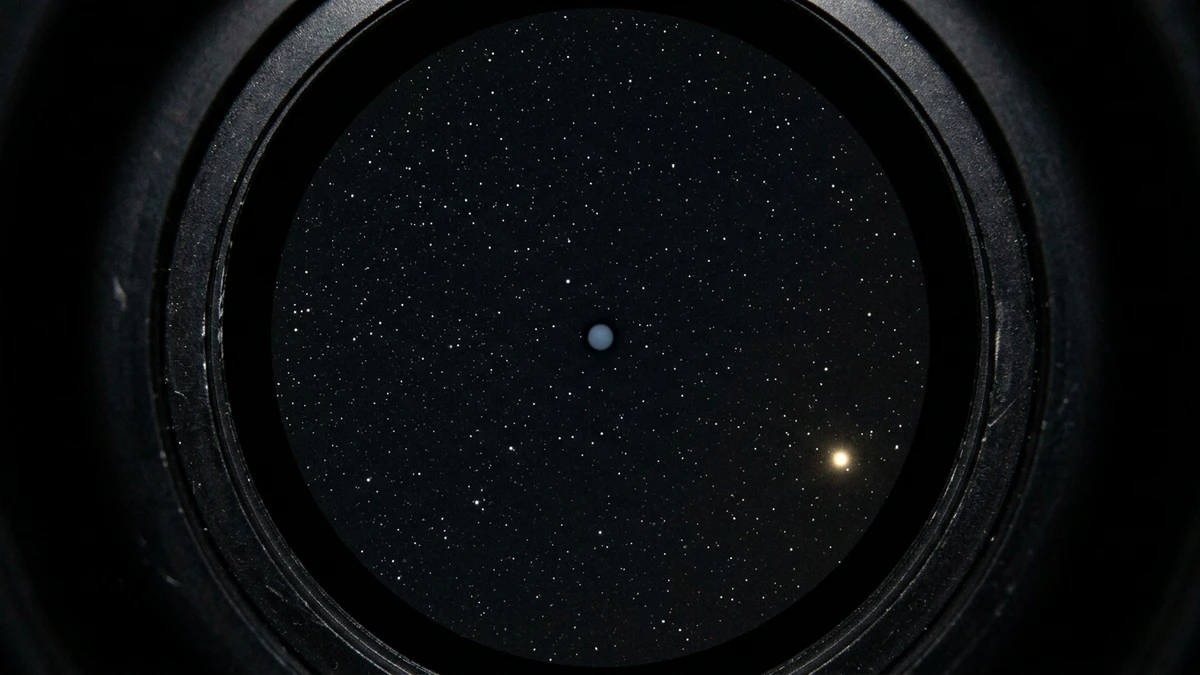
Neptune reaches opposition at about 3am BST on Saturday 26 September, the moment Earth passes directly between it and the Sun. That puts the most distant planet at its closest and brightest for the year: about 4.3 billion kilometres away, shining at magnitude +7.8, and above the horizon all night.
Be clear about what that means. Neptune is never a naked-eye object. But from a dark site, ordinary 10x50 binoculars will show it as a faint blue-grey "star", and a telescope at 150x to 200x resolves it into a tiny, unmistakably non-stellar disc. There's a genuine thrill in that: you're looking at sunlight that left our star over eight hours ago, bounced off an ice giant, and came all the way back.
Finding it is the challenge. Neptune sits in Pisces this year, conveniently close to Saturn, which acts as a signpost: sweep the area a few degrees below and east of Saturn with a chart from an astronomy app and look for the one "star" with a hint of colour that isn't on the map.
One honest caveat: the Harvest Moon is full on the 26th, right at opposition, and it will wash out the faint field. Don't fight it. Hunt Neptune in the dark week around the 11 September new Moon, or wait until early October when the Moon has gone and Neptune is still essentially at peak brightness. Opposition is a season, not a single night. Our complete guide to observing Neptune in 2026 has charts and more detail.
Harvest Moon 2026: Full Moon Meets Saturn on 26 September
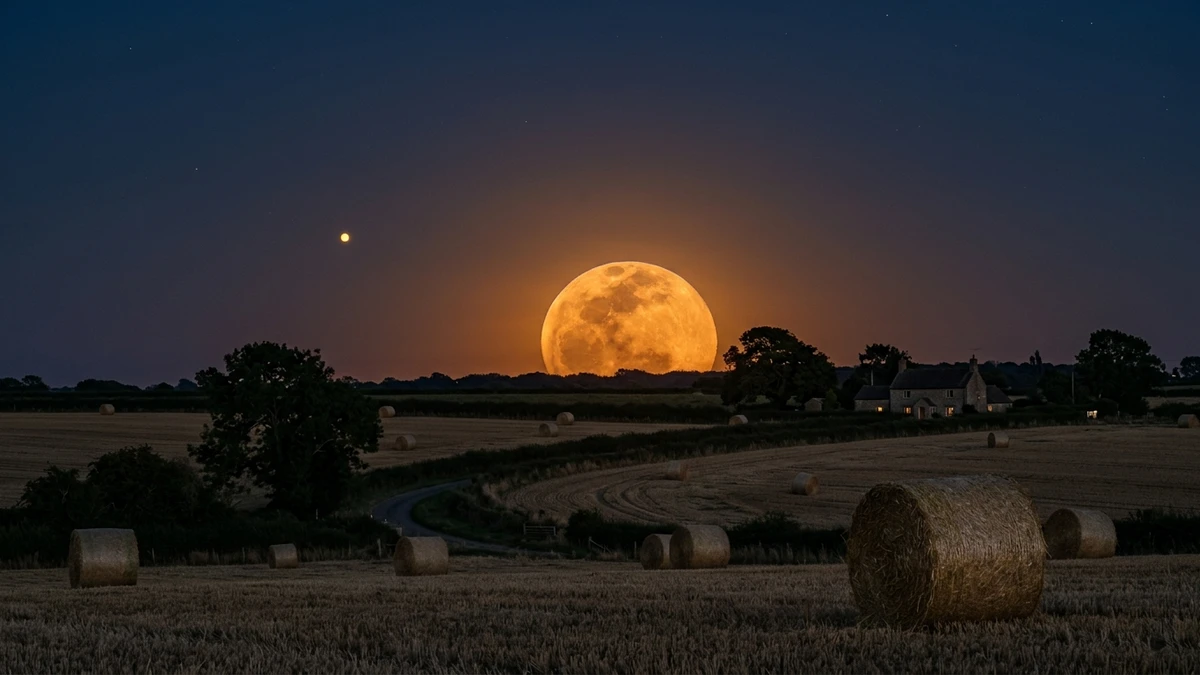
The full Moon on Saturday 26 September at 5:49pm BST is the Harvest Moon, the closest full Moon to the autumn equinox. It rises in the east around sunset with Saturn just a few degrees away, an easy and striking naked-eye pairing that lasts all evening.
The Harvest Moon comes with a quirk worth knowing. Around this full Moon, the Moon's path along the horizon is at its shallowest, so it rises only 20 to 30 minutes later each evening instead of the usual 50. The result is a run of nights either side of the 26th where a big, low, orange-tinted Moon appears in the east just as the light fades. That low, amber look is the same trick of atmosphere and perception that makes any rising Moon seem huge; the Harvest Moon just performs it several nights running. Before artificial light, that early moonlight genuinely helped farmers bring the harvest in, which is where the name comes from.
New Moon falls on Friday 11 September, first quarter on the 18th, and if you want the mechanics behind all this, our explainer on the phases of the Moon covers it in five minutes. Check tonight's Moon phase for your exact date.
Autumn Equinox 23 September: Aurora Season Begins
The autumn equinox falls on Wednesday 23 September, the moment the Sun crosses the celestial equator heading south. Astronomical autumn begins, day and night are near enough equal, and from here the nights lengthen quickly.
For UK skywatchers the equinox carries a bonus that deserves to be better known: the weeks around it are statistically the most geomagnetically active of the year. The tilt of Earth's magnetic field relative to the solar wind lines up most favourably near the equinoxes, so the same solar activity produces stronger displays in late September than it would in midsummer. Combine that with properly dark skies returning to Scotland and the aurora season is officially open.
No display is guaranteed, so it pays to be ready rather than lucky. Set up alerts, learn what a faint display actually looks like (a grey-green glow on the northern horizon, not a dancing curtain), and keep an eye on space weather. Our northern lights tonight page carries the current alert in plain English, and our guide to seeing the northern lights from the UK covers the apps, the forecasts and the realistic expectations.
One more piece of space news to watch for: on Tuesday 29 September, ESA's JUICE spacecraft swings past Earth at around 9,000 km for a gravity assist on its long road to Jupiter, its second of three Earth flybys. It won't be visible to casual observers from the UK, but it's a nice thought while you're out under the sky that a Jupiter-bound probe is briefly closer to you than some satellites.
Milky Way Nights Around the 11 September New Moon
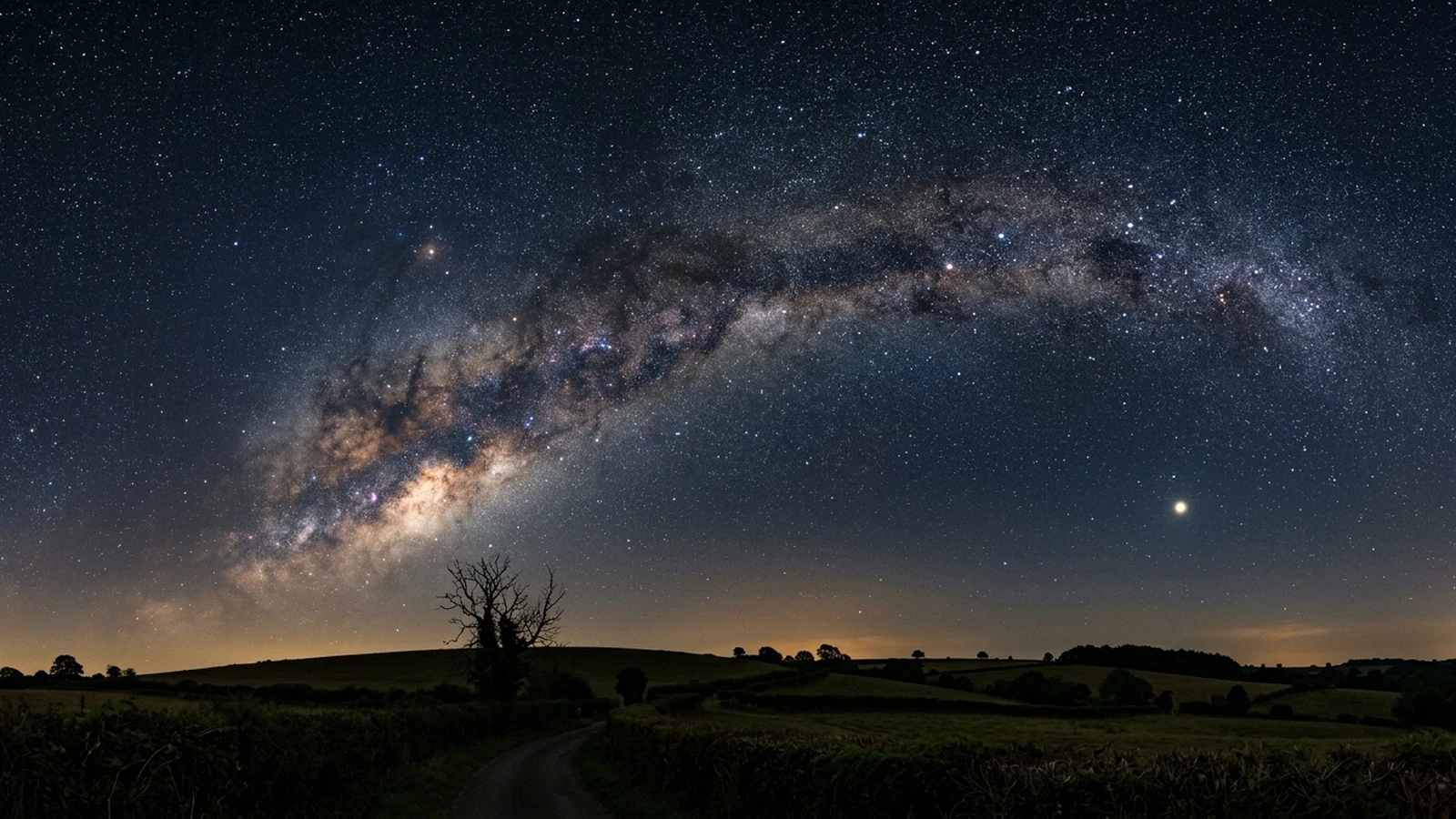
The darkest skies of the month run from roughly 7 to 15 September, centred on the new Moon on the 11th. This is your window for the faint stuff, and September is one of the best Milky Way months of the year: the band is still high overhead in the evening, but unlike August you don't have to stay up late for full darkness.
Look up from about 21:30 BST and the Milky Way runs right across the sky, from Sagittarius low in the south-west, up through Aquila and Cygnus overhead, and down to Cassiopeia and Perseus rising in the north-east. The Great Rift, the dark dust lane that splits the band, is obvious from any genuinely dark site. Binoculars turn the whole run into fields of stars. Our guide to seeing the Milky Way from the UK explains how to find a dark enough site near you.
Meteor-wise, September is a quiet month, but not silent. The minor September epsilon Perseids peak on the night of 8–9 September with around five meteors an hour under perfect skies. That would barely rate a mention in August, but with new Moon two days later the conditions are as good as they get, so any late-evening Milky Way session that week may be punctuated by the odd free meteor. The meteor shower calendar has the rest of the year's dates, with the big Geminids now on the horizon.
Key Dates in September 2026
The month at a glance.
September rewards little and often. One twilight look at Venus with the Moon on the 13th, one dark-sky session in the week around the 11th, one evening on Saturn's rings, and the Harvest Moon to see the month out. Check what's up tonight before you head out. Clear skies!
Sources:
- Sky guide for September 2026 · timeanddate.com
- Neptune at opposition, 26 September 2026 · EarthSky
- Venus at greatest brilliancy · EarthSky
- September 2026: what's in the sky this month · Astronomy.com
- September night sky events · National Geographic
- Saturn at opposition, 4 October 2026 · EarthSky
- Juice's journey to Jupiter · ESA
Frequently Asked Questions
Equipment guides
Related topics
Ian ClaytonAmateur astronomer and founder of WatchTheStars.co.uk, dedicated to helping others explore the wonders of our universe. Full profile →