Key takeaways
- Saturn's decagon is a 10-sided atmospheric wave circling the south pole at about 60° south, confirmed by Hubble and published in Science Advances on 2 September 2026
- Each of the decagon's ten sides is roughly 16,800 km long, longer than the diameter of Earth, and the whole loop runs about 168,000 km around the pole
- Saturn's northern hexagon has been stable for over 40 years, but the decagon only appeared around 2023 and is still strengthening
- Amateur astronomers Trevor Barry and Jean-Paul Oger spotted the first hints of it in 2024 in images sent to a public observing database
- You cannot see the decagon in a back-garden telescope, but Saturn itself is at its best right now, with opposition on 4 October 2026
Jump to section 6 sections
Saturn's Decagon: What Hubble Found at the South Pole
Saturn's decagon is a giant ten-sided wave in the planet's atmosphere, circling the south pole at about 60° south. NASA's Hubble Space Telescope confirmed it in images going back to 2023, and the discovery was published in the journal Science Advances on 2 September 2026.
For more than forty years, Saturn has had one of the strangest features in the solar system sitting on top of it: a six-sided jet stream at the north pole, wide enough to swallow two Earths, that has never once changed shape. Astronomers have spent decades looking for a matching pattern at the south pole and found nothing.
Now there is one. And it has ten sides.
The team behind the find was led by Agustín Sánchez-Lavega of the University of the Basque Country, with Amy Simon of NASA's Goddard Space Flight Center and Mike Wong of the University of California, Berkeley. It is the first time a large, regular-sided pattern has ever been seen in Saturn's southern hemisphere.
The numbers are hard to picture. Each of the ten sides runs about 16,800 km, which is longer than Earth is wide. Lay the ten sides end to end and the loop around the pole measures roughly 168,000 km. The whole thing drifts slowly, taking around 800 days to complete one circuit.
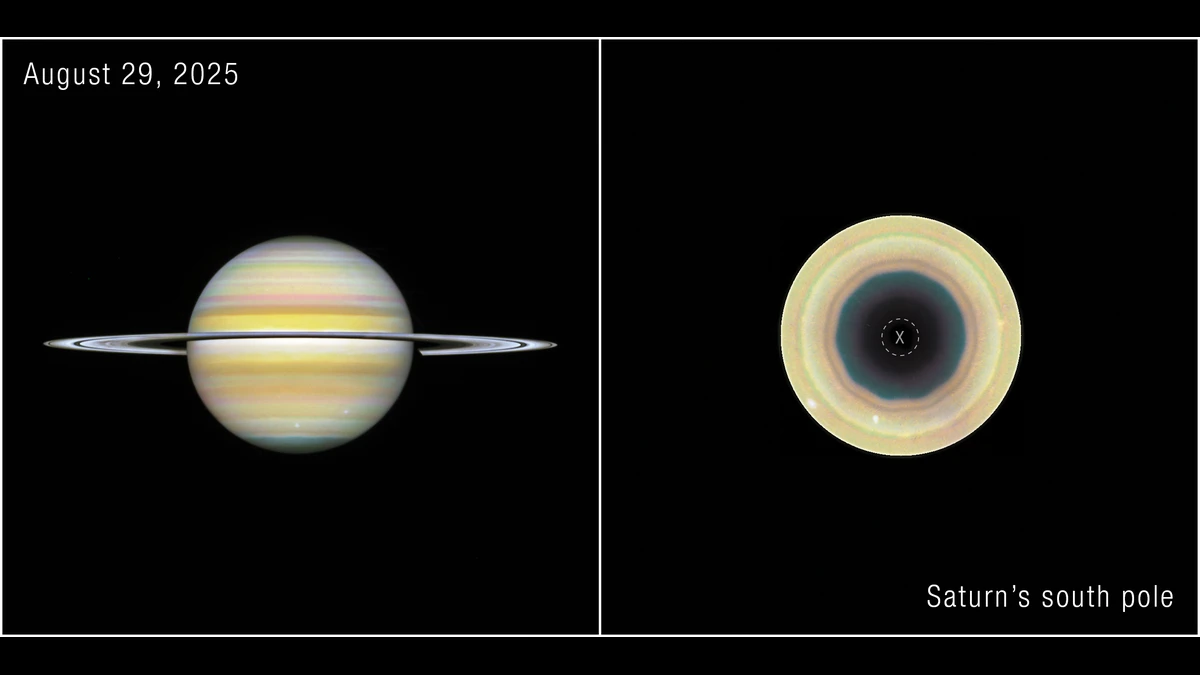
"We've never seen anything quite like this in Saturn's southern hemisphere," said Simon, who also runs Hubble's yearly outer-planet survey. "The northern hexagon has been there every time we've looked for more than 40 years. This feature is different. It appears to be strengthening, giving us the rare opportunity to watch a giant atmospheric pattern develop."
That last point is what makes this more than a curiosity. The hexagon was already fully formed when Voyager photographed it in 1980. The decagon is being caught in the act.
Saturn's Hexagon vs the Decagon: How They Compare
Saturn's hexagon was found in 1988, when scientists went back through images from the two Voyager flybys of 1980 and 1981. It is about 32,000 km across, sits at roughly 78° north, and has kept its six straight sides through every observation since, including the thirteen years the Cassini spacecraft spent in orbit. It is, as far as anyone can tell, permanent.
The decagon is a different animal.
| Northern hexagon | Southern decagon | |
|---|---|---|
| Sides | 6 | 10 |
| Latitude | About 78° N | About 60° S |
| Size | About 32,000 km across | Sides of about 16,800 km; loop of about 168,000 km |
| First seen | 1980–81 (Voyager), identified 1988 | 2023 (Hubble), hints from amateurs in 2024 |
| Stability | Unchanged for over 40 years | Still forming, sides vary in darkness |
| Drift | Locked to Saturn's rotation | One circuit of the pole every ~800 days |
The most telling difference is in the last two rows. The hexagon's sides and corners are all equally dark, and always have been. The decagon's are not. Some sides are more strongly marked than others, which is exactly what you would expect from a pattern that has not yet settled into a stable shape.
"It tells us that the hexagon is not a unique, singular feature, as was previously thought," Sánchez-Lavega told Space.com.
How Amateur Astronomers Helped Find Saturn's Decagon
This is the part of the story that deserves more attention than it has had.
The reason nobody saw the decagon forming is simple: from 2012 to 2023, Saturn's tilt kept its southern hemisphere hidden from Earth. As the planet moved through its long seasons, the south pole slowly rotated back into view. Hubble's Outer Planet Atmospheres Legacy programme, which has photographed the giant planets every year for more than a decade, picked up the first subtle signs in its 2023 images.
But the first people to notice something odd were not looking through Hubble at all.
Sánchez-Lavega's university runs a website called the Planetary Virtual Observatory Laboratory, which collects images of the planets from amateur astronomers around the world. In 2024, while going through those uploads, he and two amateur imagers, Trevor Barry and Jean-Paul Oger, noticed a faint undulating band running around Saturn's southern pole. More ground-based images through 2025 strengthened the case. Hubble, with its view above the smearing effect of Earth's atmosphere and its ability to follow Saturn through full rotations, then confirmed the pattern and traced it back to 2023.
So a pattern larger than several Earths was flagged by people photographing Saturn from their gardens, then nailed down by a 36-year-old space telescope. Anyone who thinks amateur observing stopped mattering when the big observatories arrived should have a look at this one. Hubble is still producing this kind of science well into its fourth decade, and it works best when it has a global network of backyard cameras telling it where to look.
What Causes Saturn's Decagon?
The short answer is a wave stuck in a jet stream.
Saturn's atmosphere is arranged in fast east-west jets, a bit like Earth's polar jet streams but far stronger and far more orderly. The leading explanation for the northern hexagon is that a jet flowing eastward around the pole gets nudged by neighbouring currents, and those small nudges make it meander. Under the right conditions the meanders lock into a stable wave with a fixed number of bends. Six bends, and you get a hexagon.
The team ran computer simulations of currents in shallow water and found the same kind of process could produce the decagon: a meandering wave trapped by a curving jet at 60° south. Ten bends instead of six, because the jet sits at a different latitude with different speeds and a different circumference.
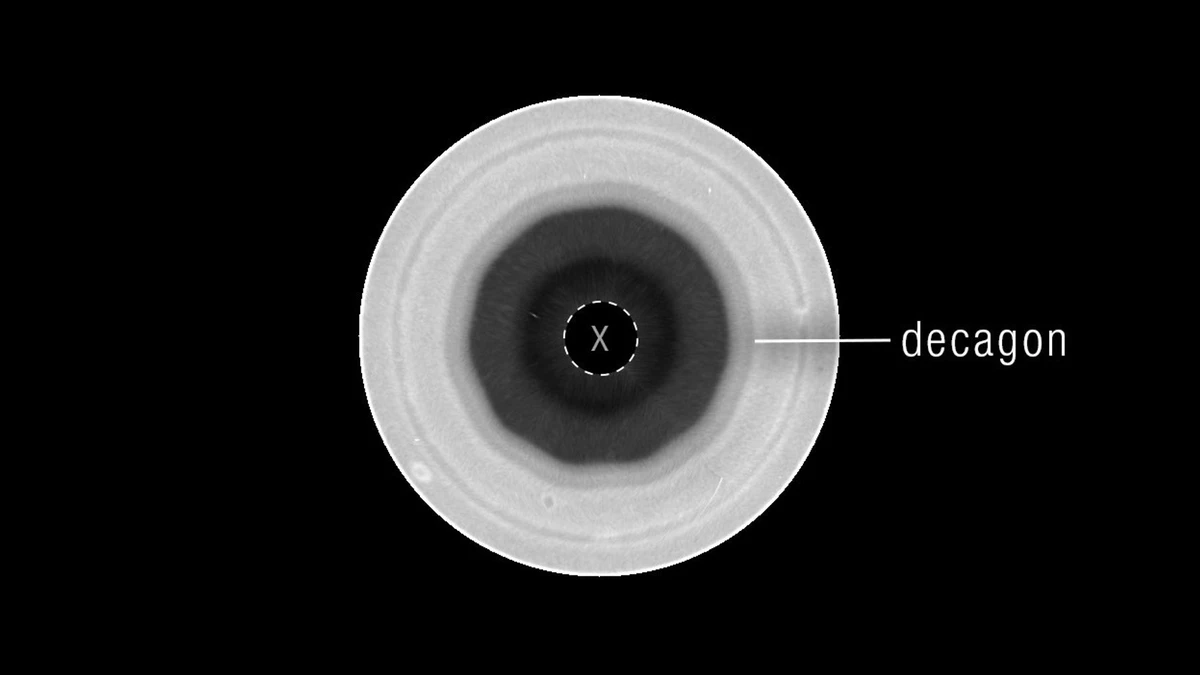
What Hubble adds is depth. By imaging Saturn through several filters, each of which sees to a different altitude, the team found the decagon's outline shifts slightly from one to the next. That means it is not just a pattern in the cloud tops. It runs down through multiple layers of the atmosphere, a vertically extended structure rather than a surface effect.
Why Saturn's Decagon Formed Now, and What Happens Next
"The most intriguing part to me is that this seems to have just formed recently," said Simon. "The question is, why did it suddenly form now when we haven't seen one before?"
Nobody has a firm answer. Cassini orbited Saturn from 2004 to 2017 and saw nothing like it in the south, and Sánchez-Lavega's group has been checking Hubble images for a southern polygon since 1990. Whatever triggered the decagon happened during the years the south pole was out of sight.
One clue may be the seasons. Saturn takes 29.5 years to orbit the Sun, so each season lasts over seven years. The south is now moving into its summer, and sunlight at 60° south will keep increasing until it peaks in 2032. The team wants to find out whether the extra heating makes the decagon more stable, as the hexagon appears to be, or whether it becomes unstable and breaks apart.
That means more Hubble observations, time on the James Webb Space Telescope, and better three-dimensional models of the clouds, hazes, winds and temperatures inside the wave. It also means more amateur images, because the ground-based network is what fills the gaps between Hubble's visits.
Two more planets in the outer solar system, Uranus and Neptune, have polar regions that are barely studied at all. If polygonal jets turn out to be common on giant planets rather than a one-off quirk of Saturn's north, that changes how we think about the weather on all of them.
Can You See Saturn's Decagon From the UK?
No. Be honest with yourself before you drag the telescope out.
The decagon sits at 60° south, which puts it close to the edge of Saturn's disc as we see it, and the contrast between the pattern and its surroundings is far too faint for the eye. Hubble needed years of stacked observations and specific filters to confirm it. The amateurs who caught hints of it were using large telescopes and high-speed planetary cameras, stacking thousands of video frames, and even then they saw a subtle band rather than a clean shape.
What you can do is see Saturn itself, and right now is the best time of the year to do it.
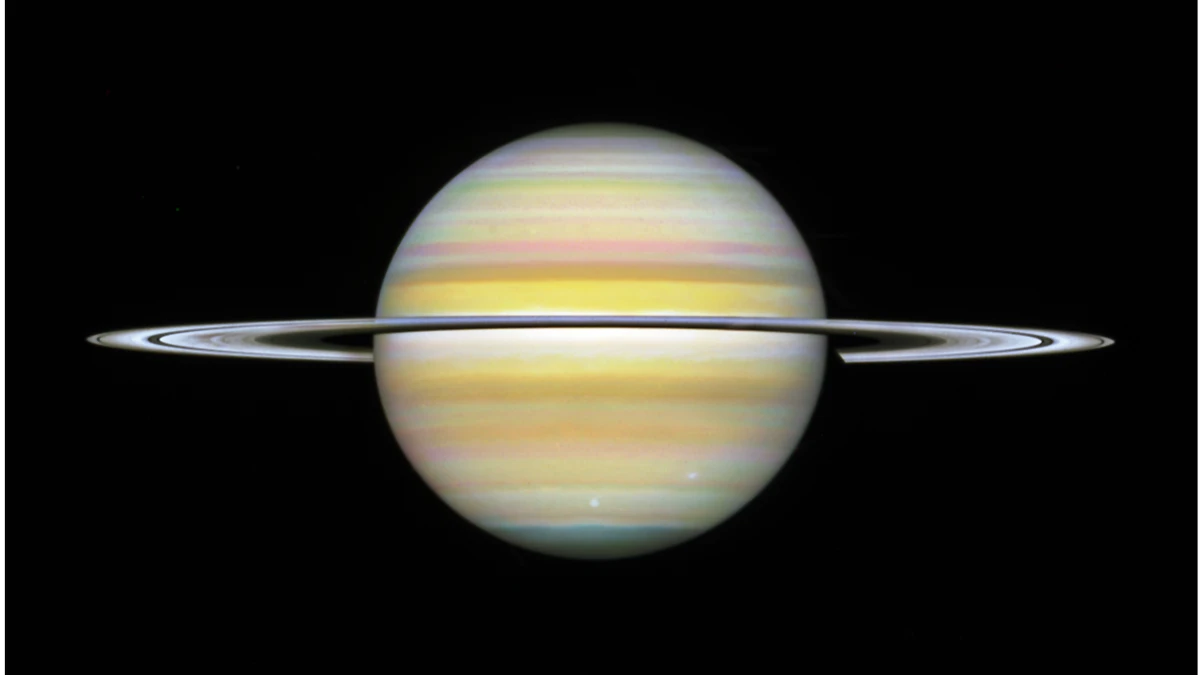
Saturn reaches opposition on 4 October 2026, when Earth passes directly between it and the Sun. It is closest, brightest and up all night. From the UK it already rises around 8pm in mid-September and sits well placed in the south by midnight. The rings, which were edge-on and almost invisible in 2025, have opened to a tilt of about 7.5° and are showing their southern face. That is the same hemisphere the decagon lives in, even if you cannot see the pattern itself.
Our guide to seeing Saturn in 2026 has the month-by-month detail, and if you have never pointed a telescope at a planet before, our guide on how to use a telescope will get you from the box to the eyepiece. Saturn also makes a handy signpost for Neptune, which reaches its own opposition on 26 September, just 8° away.
Before you go out, check what you can see in the sky tonight for the current conditions, and the astronomy events calendar for the rest of the autumn. Everything else worth seeing this month is in our September night sky guide.
The decagon will still be there, forming slowly, for years to come. Saturn at its best is only here for a few weeks.
See Saturn for yourself this autumn
Kit we've tested and reviewed in full
You will not spot the decagon, but Saturn's rings are back on show after being edge-on last year, and the planet is at its best for 2026 from late September. A telescope, not binoculars, is what makes the rings appear.
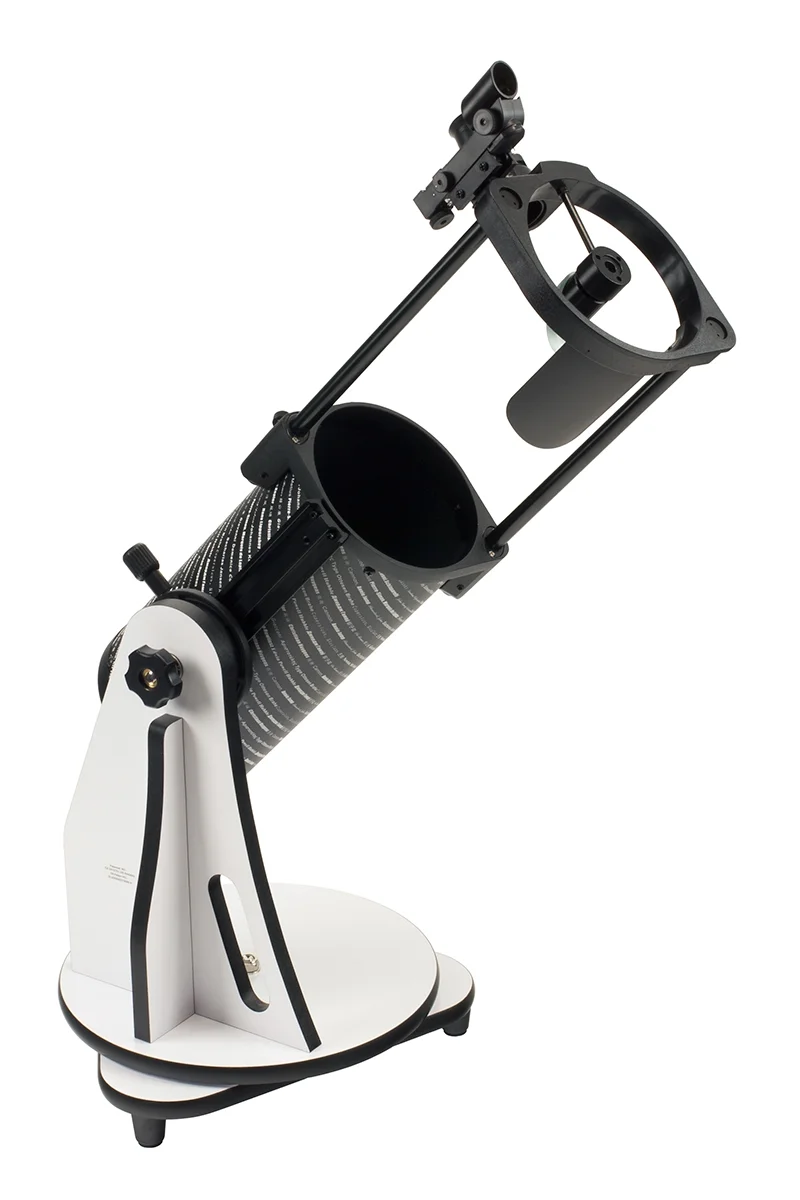
The most affordable telescope that shows Saturn's rings as a proper, separate ring rather than a bulge. At around 100× on a steady night the gap between ring and planet is obvious, and Titan sits alongside as a small yellow star.
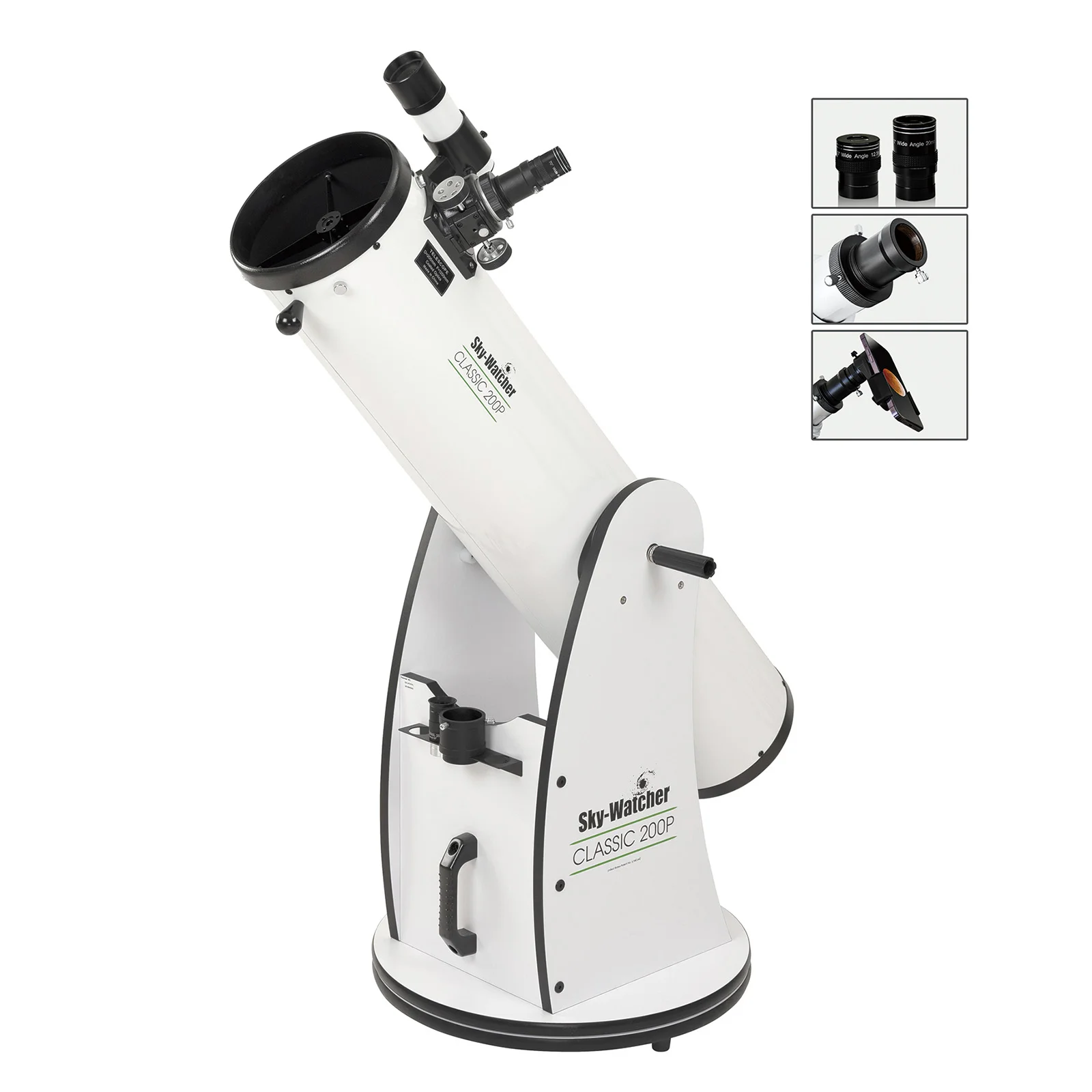
With the rings tilted 7.5° this autumn, 200mm of aperture is what brings the dark Cassini Division back within reach. You also get cloud belts on the disc and up to four or five moons on a good night.
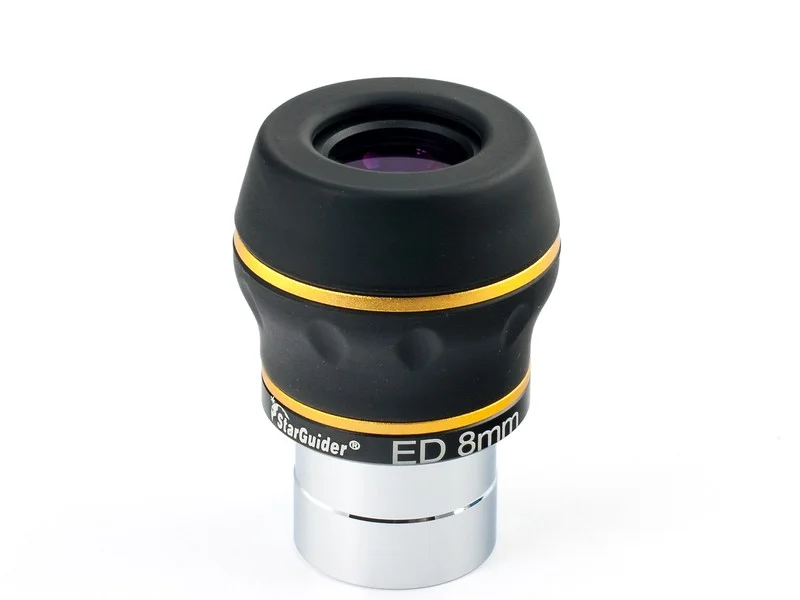
BST StarGuider 60° 8mm ED
Saturn rewards high power, but only if the eyepiece is comfortable to use. This 8mm gives about 150× in a 200P with decent eye relief, which is the range where ring detail starts to show.
Affiliate links: you pay the same price, we earn a small commission that helps keep WatchTheStars free.
Sources:
- NASA's Hubble Tracks New Decagon Encircling Saturn's South Pole · NASA Science
- Astronomers discover mysterious 10-sided cloud structure at Saturn's south pole · Space.com
- Something weird's going on at Saturn · BBC Sky at Night Magazine
- Sánchez-Lavega et al., Science Advances, 2 September 2026
Frequently Asked Questions
Equipment guides
Related topics
Ian ClaytonAmateur astronomer and founder of WatchTheStars.co.uk, dedicated to helping others explore the wonders of our universe. Full profile →