Key takeaways
- A MUFON report filed on 19 August 2026 describes lights in formation seen from an Aeroméxico flight near the Aleutians at 38,000 ft: it is one unverified witness account, and a Starlink train fits it well
- JAL Flight 1628 is the strongest Alaska case on record: a 747 freighter crew tracked lights for about 50 minutes on 17 November 1986, and the FAA confirmed the crew were sober, professional and rational
- The FAA's 1987 review concluded the extra radar returns were probably split images of the 747 itself, and Captain Terauchi was later described in the file as a 'UFO repeater'
- Three objects were shot down over Alaska, the Yukon and Lake Huron in February 2023. None of the debris was ever recovered, and one is thought to have been a hobbyist's £10 pico balloon
- The 2026 Pentagon PURSUE releases contain Alaska material, though not the case most people expect: a 1948 Air Force order naming Alaska as one of only two regions told to report sightings direct to Wright-Patterson
Jump to section 7 sections
- Aeroméxico UFO Video Near the Aleutians: What the MUFON Report Says
- JAL Flight 1628: The 1986 Alaska UFO Encounter in Full
- JAL 1628 Radar Evidence: What the FAA Actually Found
- Objects Shot Down Over Alaska in 2023 and Never Recovered
- Pentagon UFO Files 2026: The Alaska Material in the PURSUE Releases
- Why Alaska? Great Circle Routes, NORAD Radar and Empty Airspace
- Alaska UFO Sightings: The Pattern Nobody Has Explained
Alaska keeps turning up in this subject. A Japanese cargo crew tracked something for the best part of an hour there in 1986. Three objects were shot out of the sky over Alaska and the Canadian north in a single week in 2023, and not one of them was ever picked up off the ground. The Pentagon's own 1948 paperwork singles the territory out by name. And this month somebody filed a report about lights seen from an airliner near the Aleutians.
Most of these have ordinary answers, or at least an ordinary answer that fits comfortably. What makes Alaska interesting is not that the state is unusually haunted. It is that Alaska is where a lot of aircraft, a lot of radar and almost no people all overlap, and that combination produces reports and then makes them very hard to close.
Aeroméxico UFO Video Near the Aleutians: What the MUFON Report Says
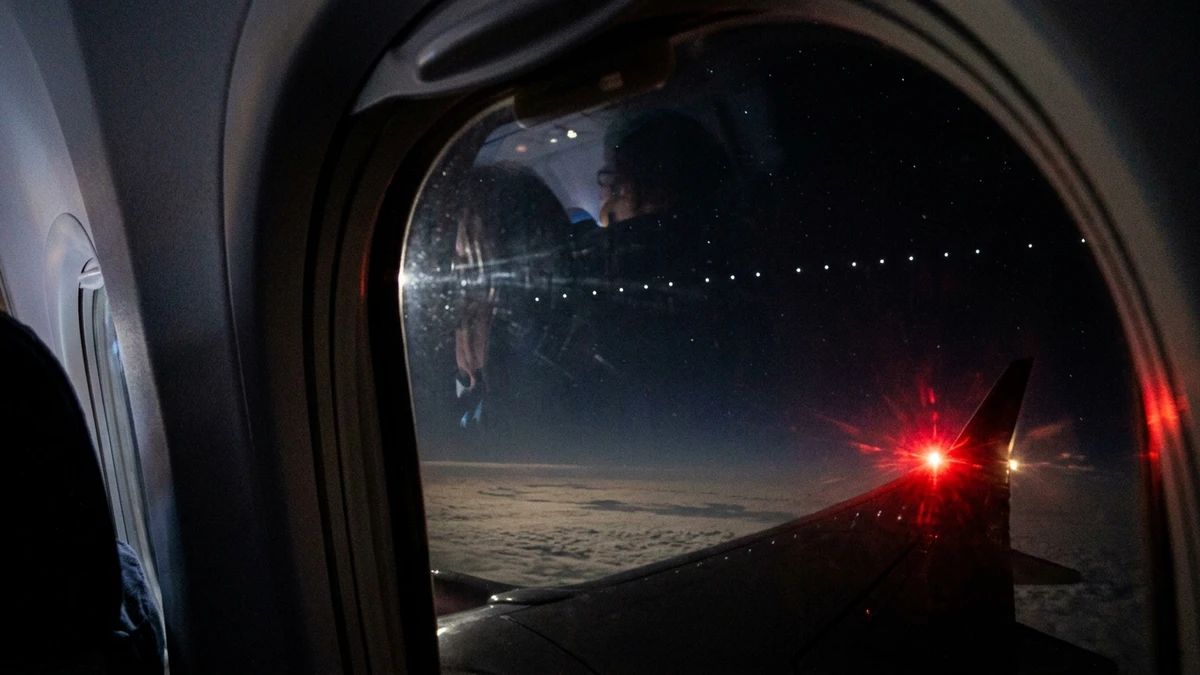
The reason this is in the news at all is a clip submitted to the Mutual UFO Network, logged as case 148648 and dated 19 August 2026. According to the report, a passenger aboard Aeroméxico flight AM90 filmed a group of lights holding formation off the aircraft while it was cruising at 38,000 ft on the North Pacific leg of the route, in the general area of the Aleutian chain.
Take that at what it is. MUFON's case database is a public reporting channel, not an investigation. Anyone can file, cases get numbers before anyone has looked at them, and a case number is not a finding. There is no radar corroboration, no second aircraft, no confirmed timestamp published, and at the time of writing nothing from the airline. One person, one phone, one window.
The description also has an obvious candidate. Evenly spaced lights, holding a line, seen at night from a cruising aircraft is a near-textbook description of a Starlink train: a batch of satellites still bunched together in the weeks after launch, catching sunlight while the observer sits in darkness. Those trains have generated thousands of sighting reports since 2019, and they look genuinely strange the first time you see one. Our piece on the singer who filmed orbs following her plane for 45 minutes ran into the same problem: a compelling video from a cabin window is one of the hardest things to analyse, because you cannot establish range, and without range you cannot establish size or speed.
So this is not the story. It is the hook that sends people looking up Alaska, and what they find when they get there is a much older and considerably better-documented case.
JAL Flight 1628: The 1986 Alaska UFO Encounter in Full
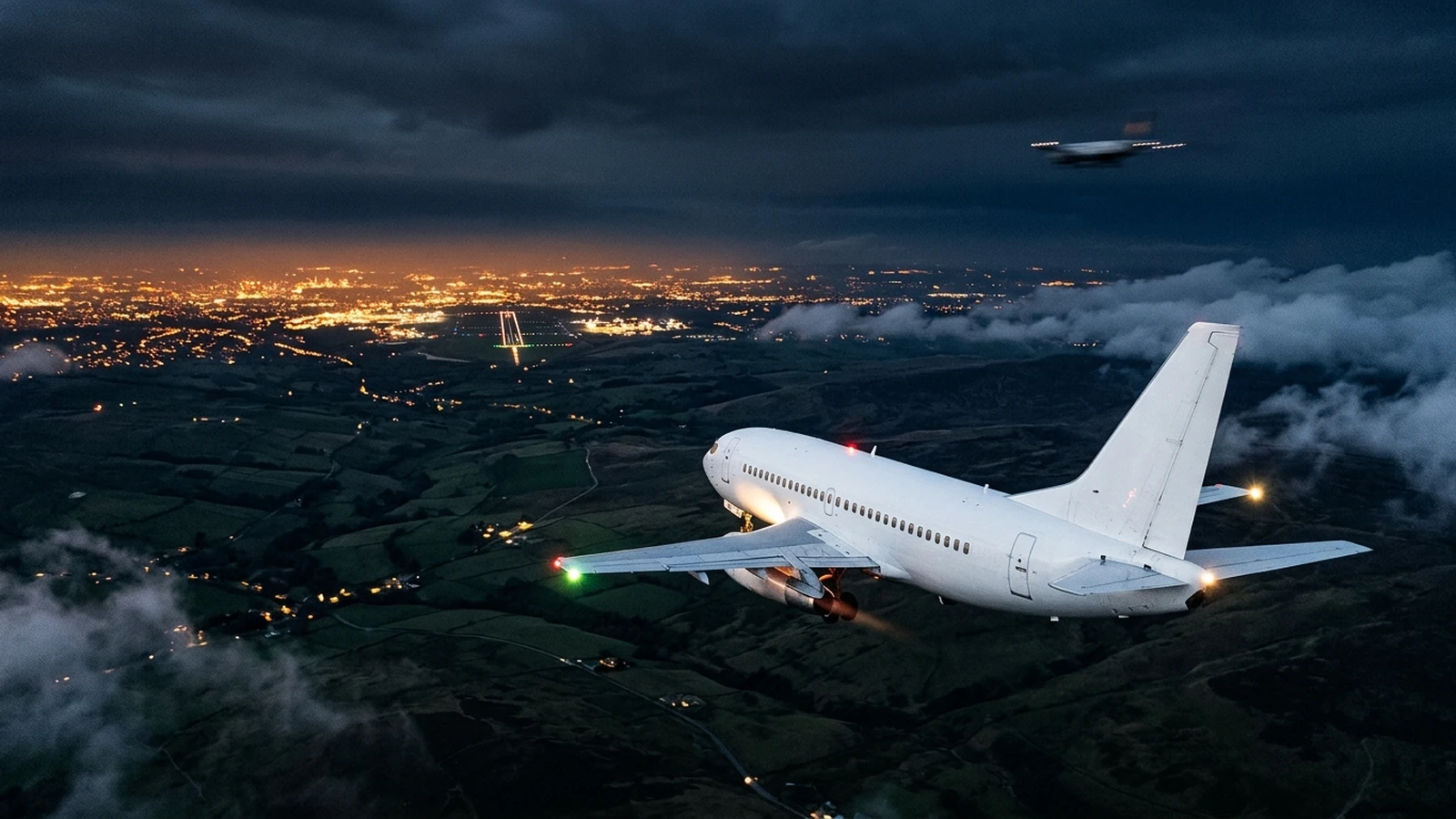
On 17 November 1986, Japan Air Lines Flight 1628 was flying Paris to Tokyo via Reykjavik and Anchorage. The aircraft was a Boeing 747-200 freighter, the cargo was Beaujolais Nouveau, and there were three men aboard: Captain Kenju Terauchi, First Officer Takanori Tamefuji and Flight Engineer Yoshio Tsukuba. Terauchi had around 29 years of flying behind him.
At roughly 17:11 local time, cruising at 35,000 ft over eastern Alaska, the crew noticed lights off to their left that were not behaving like other traffic. Over the next three quarters of an hour the lights stayed with them across something like 400 miles of the interior.
Terauchi's account, which he wrote up afterwards and repeated for years, described two smaller objects and a much larger one. The two small ones, he said, moved in front of the 747 and held there.
"Most unexpectedly, two space ships stopped in front of our face, shooting off lights. The inside cockpit shined brightly and I felt warm in the face."
That quote survives in a newspaper clipping that ended up inside the Pentagon's own document release, which we will come back to. The larger object he described as enormous, at one point comparing it to an aircraft carrier and calling it a mothership. Anchorage centre gave the crew clearance to manoeuvre. Terauchi requested and was granted a descent and a 360-degree turn to try to shake it. He reported it was still there afterwards.
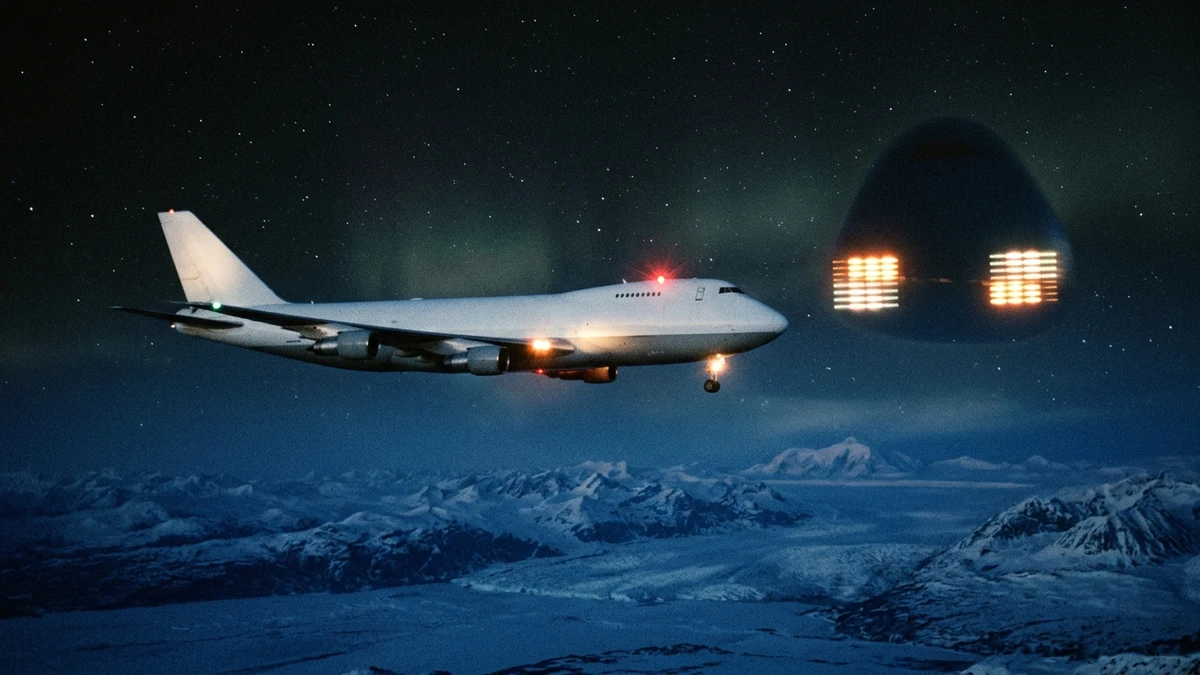
The crew were not the only people in the sky. Anchorage put a United Airlines flight and a US Air Force C-130 into the area. Neither saw anything, and neither picked anything up. That matters, and any honest account of this case has to say so early rather than bury it.
What the FAA did next is the part that made the case famous. Investigators interviewed the crew and concluded they were normal, professional and rational, with no drink or drugs involved. Nobody in an official position has ever suggested the three men invented it. Whatever they were looking at, they believed what they were reporting, which is the same conclusion the Civil Aviation Authority reached about the crew in the Manchester Airport near miss of 1995, the closest British equivalent.
JAL 1628 Radar Evidence: What the FAA Actually Found
This is where JAL 1628 usually gets oversold, so it is worth being careful.
In the days after the flight, the FAA's Anchorage office told reporters that controllers had seen an unidentified return near the 747. That statement is real and it is on the record. UPI ran it at the end of December 1986. It is the source of every "radar confirmed it" claim you will read.
The FAA's own review, published in March 1987, walked most of that back. Going through the recorded data properly, the agency concluded the extra return was most likely a split image of Flight 1628 itself, an artefact that primary radar produces when a strong target is processed twice, or ground return. Separate military radar contacts were assessed as clutter. Fairbanks controllers, looking at the same airspace, had only ever seen the 747.
The report also recorded something less flattering. Terauchi was described as a "UFO repeater": he had filed sightings before November 1986, and filed two more in January 1987 in the same stretch of Alaskan sky. Those January reports were traced to village lights diffused through high ice crystal cloud. He was taken off international routes and put behind a desk for a period, which is the detail that turned him, for a lot of people, from a witness into a martyr.
Then there is the other half of the story, the one that keeps the case alive. John Callahan, who ran the FAA's Accidents and Investigations Division at the time, has said publicly and repeatedly that he took the radar data and the tapes to a briefing in Washington in January 1987 attended by the FBI, the CIA and staff from President Reagan's scientific team, and that at the end of it he was told the meeting had never happened, the material was classified, and everyone present was sworn to secrecy. He says he kept a personal copy.
There is no way to check that from the outside. What can be said is that Callahan held the job he says he held, that his account has not changed in the decades he has been telling it, and that the FAA's paper record does not contain the briefing he describes. Believe what you like about the reason for that. It is one man's testimony, unsupported by documents, and it should be weighed the same way you would weigh anyone else's.
Strip it all back and JAL 1628 comes to this. Three credible aviators saw something for the better part of an hour and did not know what it was. The radar case for a solid object does not hold. The sceptical explanation, favoured by Philip Klass, is that Jupiter and Mars were both low in that part of the sky that evening, with Jupiter about 10 degrees above the horizon and blazing. That accounts for lights that pace an aircraft and never close, and planets have fooled far more pilots than anyone likes to admit. It accounts less well for 50 minutes of a crew describing shapes and movement, and it does not explain the large object at all.
Learn what normal looks like overhead
Kit we've tested and reviewed in full
Nearly every strange light over Alaska, or over Britain, turns out to be a satellite, a planet or an aircraft. Binoculars are the fastest way to tell which, and they are the one bit of kit that makes you better at ruling things out. Our guide to binocular astronomy covers how to start.
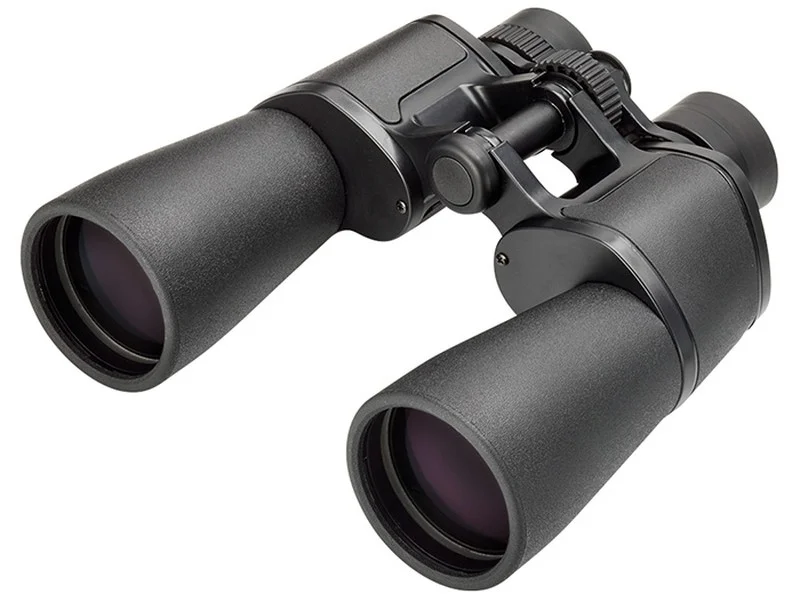
Wide field and bright 50mm lenses, so you can swing onto a moving light and follow it before it's gone. The pair we point most UK beginners to first.
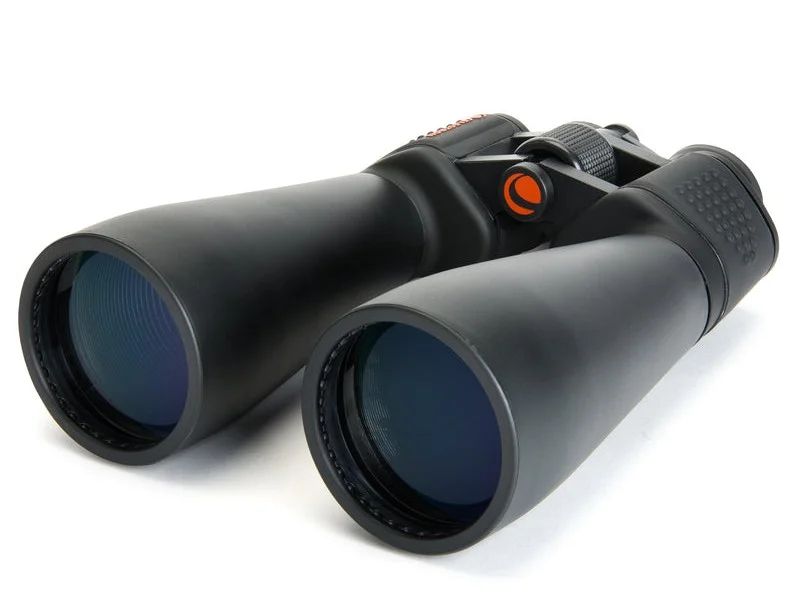
15x magnification turns a distant point of light into something with a shape. Big enough to want a tripod, and the best pick for anything low down.
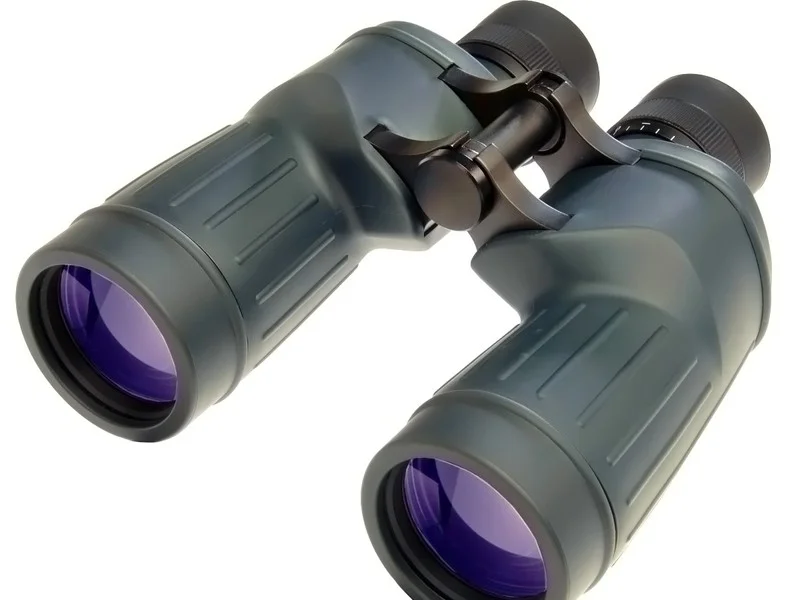
Cleaner contrast and tighter star points than budget pairs, which is exactly what you need when you're trying to separate a satellite from an aircraft.
Affiliate links: you pay the same price, we earn a small commission that helps keep WatchTheStars free.
Objects Shot Down Over Alaska in 2023 and Never Recovered
Skip forward 37 years. In eight days in February 2023, the United States shot down four things over North America, and three of them were in or near Alaskan and Canadian northern airspace.
It started with the Chinese surveillance balloon, which crossed into US airspace over the Aleutian Islands on 28 January 2023 before drifting across Canada and the continental United States. It was brought down off South Carolina on 4 February. That one was identified, recovered from shallow water, and taken apart. It is the only one of the four with a clear answer.
The other three were not.
| Date (2023) | Where | Altitude | Description | Recovered? |
|---|---|---|---|---|
| 10 February | Beaufort Sea, off northern Alaska | ~40,000 ft | Size of a small car | No, search abandoned |
| 11 February | Yukon, Canada | ~40,000 ft | Small, cylindrical | No, search called off |
| 12 February | Lake Huron | ~20,000 ft | Octagonal, with strings | No |
Every one of those searches was called off within a week. The Alaska object fell onto sea ice and into water in February conditions above the Arctic Circle. The Yukon object went into snow in mountainous, roadless country. Nothing was brought back.
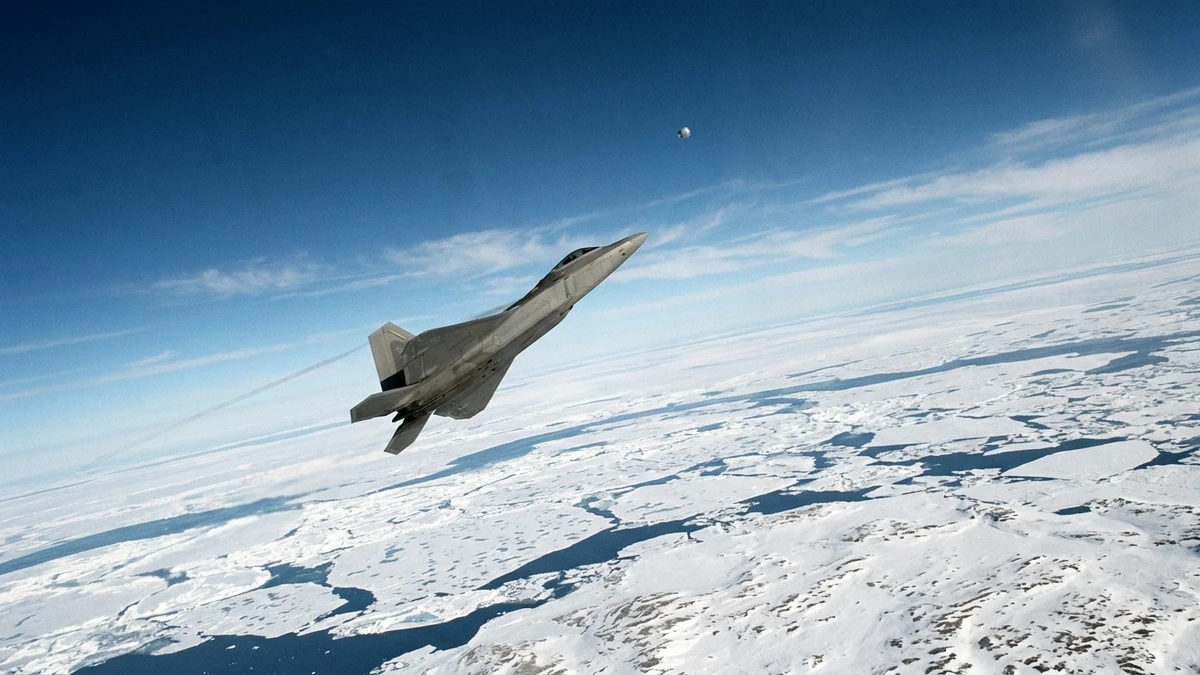
On 16 February, President Biden said the assessment was that the three objects were most likely benign: balloons tied to private companies, recreational flyers or research bodies. That was not a hedge, and later reporting has broadly supported it.
The best candidate for the Yukon object is genuinely funny, and genuinely instructive. The Northern Illinois Bottlecap Balloon Brigade, an amateur radio club, had a pico balloon aloft called K9YO-15: a 32-inch silvered party balloon carrying about 10 grams of tracker, solar panel and aerial. It had been up for 123 days and was on its seventh lap of the planet. Its last position report, on 11 February 2023, put it near Hagemeister Island off south-west Alaska, on a track and at an altitude consistent with the object an F-22 shot down over the Yukon hours later. The club noticed, said so publicly, and has been careful to say it cannot be proved. It cannot, because nobody recovered the wreckage.
The reason this matters is not the punchline. It is what happened to NORAD's radar. General Glen VanHerck, then commanding NORTHCOM and NORAD, explained afterwards that the Chinese balloon had not been picked up sooner because the radar was set to ignore that kind of target: "We were not looking for a high-altitude balloon at that time, 65,000 feet, very slow. Our radars are capable of seeing it, but we were filtering out that data." After the balloon, the filters were widened. Within days, the same radars started finding slow high-altitude objects that had presumably been drifting past for years, and the country shot three of them down.
That is a very tidy demonstration of something people forget when reading sighting statistics. A jump in unknowns often means the sensor changed, not the sky. The same caveat sits underneath the case counts in the Pentagon's 2026 UAP annual report, where a large part of the rise comes from more people being told to report.
Pentagon UFO Files 2026: The Alaska Material in the PURSUE Releases
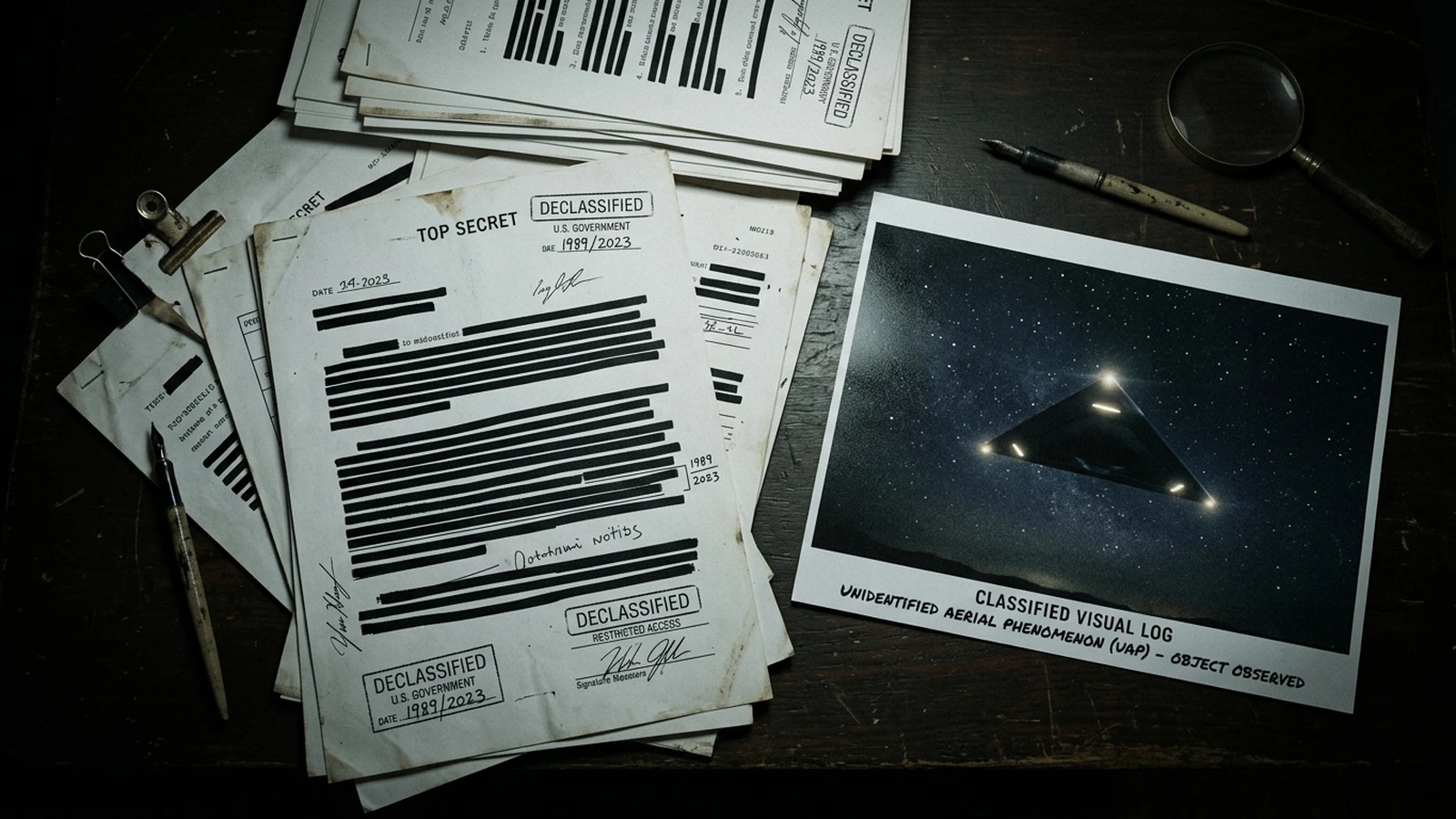
We have been through every batch of the Department of War's PURSUE releases as they have landed, and they are all indexed in our declassified UAP document archive. Alaska is in them, but not in the way people expect. There is no JAL 1628 file. There is no shoot-down forensics. What there is falls into two piles.
The first is the oldest paperwork in the whole release. The Air Materiel Command papers of 1947–48, in the fifth batch, contain the order that set up the American UFO reporting chain in the first place, and it names Alaska explicitly:
"All Air Force installations within and outside Zone of Interior and Alaska have been instructed to report all sightings, or information concerning sightings which comes to their attention, direct to the Commanding General, Air Materiel Command, Wright-Patterson Air Force Base, Dayton, Ohio."
Two regions are singled out by name in that instruction: the continental United States, and Alaska. A follow-up staff note in the same bundle repeats it, adding that overseas commands should now be told to do the same because "Air Commands within the ZI and Alaska have already been instructed" to report direct. Alaska was inside the reporting system from the very first week, before Project SIGN had properly started work. That is not evidence of anything landing there. It is evidence of where the Air Force was watching in 1948, and the answer is the polar approach.
The second pile is odder. Bundled into the Release 1 documents, appended to the scanned French COMETA report, is a set of newspaper clippings, including a Leslie Kean article from The Providence Journal dated May 2001. It is where the Terauchi quote earlier in this piece comes from, and it also carries the line that "despite the Federal Aviation Administration's determination that he and his crew were stable, competent and professional, he was grounded for speaking out". The same page trails Callahan's National Press Club appearance to disclose what he says happened to the Alaska file.
So the Pentagon has published a press cutting about JAL 1628, while publishing nothing of its own about it. That is worth understanding properly rather than getting excited about. These releases include material the agencies held, and holding a newspaper article is not the same as holding a case file. It is the sort of thing that gets misreported within hours as "the Pentagon files confirm JAL 1628", and it does nothing of the kind. Our walkthrough of the fifth PURSUE release has more on how to read this archive without falling into that trap.
Why Alaska? Great Circle Routes, NORAD Radar and Empty Airspace
Four things stack up over that one corner of the map, and between them they explain most of the pattern without needing anything exotic.
The traffic is there. The shortest route between East Asia and North America is a great circle that arcs far north, over the Aleutians and the Gulf of Alaska. That is why AM90 from Monterrey to Seoul is up there at all, and it is why Flight 1628 was over the interior on its way from Paris to Tokyo. Hundreds of long-haul aircraft a day pass through, each with a trained crew looking out of the window in the dark. Professional observers in quantity produce professional reports in quantity.
The radar is there. Alaska is the most heavily monitored airspace in North America, because it is where anything coming over the pole arrives first. The North Warning System, the fighter wings at Elmendorf-Richardson and Eielson, and NORAD's Alaskan region exist to see things early. More sensors means more contacts, including more contacts nobody can attribute.
Russia is 55 miles away. At the narrowest point of the Bering Strait, Russian and American territory are a few miles apart. Russian long-range aircraft probe the Alaskan air defence identification zone routinely, and are intercepted routinely. Military traffic that nobody outside the operation is briefed on is a permanent background feature of that sky.
And there is nobody underneath. Alaska is roughly seven times the size of the United Kingdom with about a tenth of Yorkshire's population. If something falls, it lands on ice, tundra, forest or open sea. There is rarely a second witness on the ground and there is almost never a recovery. That single fact is why the 2023 objects are permanently unidentified and why the 1986 case has no physical evidence attached to it.
Add darkness. In November, when JAL 1628 flew, the Alaskan interior gets a few hours of usable daylight. Long nights are why the northern lights are an Alaskan speciality, and they are also why anything luminous up there gets seen, and why atmospheric optics, ice crystal haloes and distant village lights refracting through cold air all get a chance to fool people.
Alaska UFO Sightings: The Pattern Nobody Has Explained
Line the cases up and there is a pattern, but it is not the one the headlines run.
The pattern is that Alaska produces well-witnessed reports that then cannot be closed. Terauchi's crew were interviewed and found credible, and the case still ends in a shrug. Three objects were engaged by fighter aircraft with military radar tracking them and a missile fired at each, and all three are still officially unidentified because nobody could reach the wreckage. The Pentagon's earliest reporting order names Alaska, and 78 years later the files it produced contain a newspaper clipping about the state's most famous incident.
Look at that from a distance and it stops being spooky and starts being structural. Alaska is very good at generating observations and very bad at generating evidence. Those are different things, and the gap between them is where this entire subject lives. It is the same gap that keeps the Nimitz encounter arguing after twenty years, and the same one that runs through the Navy's swarm reports off Virginia: good witnesses, decent sensors, nothing in a box at the end.
None of which makes the honest answer "aliens", and none of it makes the honest answer "nothing happened". A useful position on Alaska is roughly this. JAL 1628 is a real unexplained sighting by credible people with a weak physical case and a plausible mundane explanation that does not cover everything. The 2023 shoot-downs are very probably balloons, and the reason we cannot say so definitively is a recovery problem, not a mystery. The PURSUE Alaska material is genuine and interesting and much less dramatic than it will be reported as. And the Aeroméxico clip is one unverified report that most likely shows satellites.
That is a duller set of conclusions than the subject usually gets, and it is the one the evidence actually supports. If you want to see how we apply the same standard to other cases, our UAP research hub sets out the method, and the sightings clustered around nuclear sites are where the pattern argument is at its strongest.
The practical version, meanwhile, costs nothing. Learn the sky you already have. Know when satellites and the ISS go over, know which bright object low in the south is a planet, and check what should be up tonight before you decide something shouldn't be. Nearly everything resolves. The handful that doesn't is worth taking seriously precisely because you have ruled out the rest.
Sources:
- Japan Air Lines Cargo Flight 1628 · overview, FAA March 1987 findings, Klass planetary explanation
- Controller confirms UFO sighting · UPI Archives, 30 December 1986
- Testimony of John Callahan, former FAA Division Chief · Disclosure Project
- "Pilot encounters with UFOs: Study challenges secrecy (and denial)", Leslie Kean, The Providence Journal, May 2001 · clipping reproduced within "UFOs and Defense: What Should We Prepare For?", PURSUE Release 1, war.gov/ufo
- Air Materiel Command report on UFOs, 1947–1948 (DOW-UAP-D100) · PURSUE Release 5, war.gov/ufo
- 2023 Alaska high-altitude object and 2023 Yukon high-altitude object
- A statement from the NIBBB on current events · Northern Illinois Bottlecap Balloon Brigade, 17 February 2023
- U.S. could have shot down Illinois group's pico balloon over Yukon · The Washington Post
- Chinese surveillance balloon passes over Alaska, Montana · Alaska Public Media
- MUFON case 148648, filed 19 August 2026 · Mutual UFO Network case management system
Frequently Asked Questions
Equipment guides
Related topics

Ian ClaytonAmateur astronomer and founder of WatchTheStars.co.uk, dedicated to helping others explore the wonders of our universe. Full profile →