Key takeaways
- On 12 January 2007 two US Air Force F-15Cs from RAF Lakenheath tracked and saw a small black object at about 17,000 feet
- The lead pilot told the Pentagon's contractor BAASS in 2009 that the object was 'most likely a weather balloon'
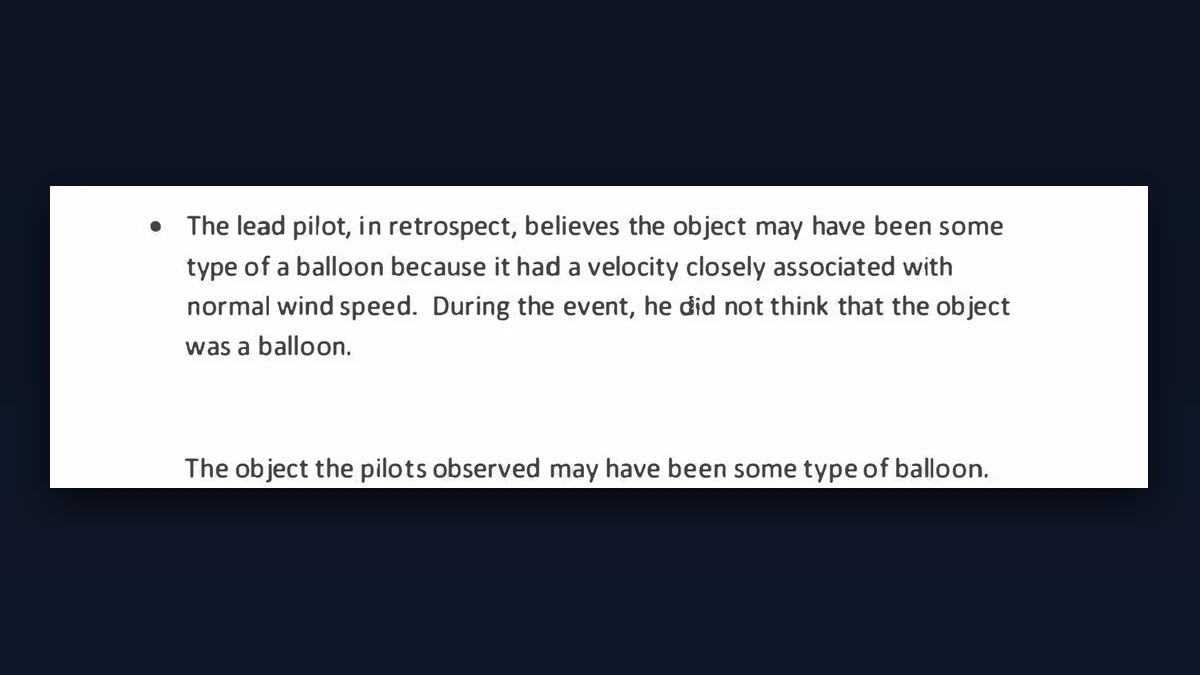
- BAASS's own summary agrees: 'The object the pilots observed may have been some type of balloon'
- Every speed reading in the file, 30 to 80 knots, falls within the range of winds BAASS gives for the area
- Press reports that the F-15s were scrambled by London radar to intercept a UFO were wrong, BAASS found
Jump to section 6 sections
- RAF Lakenheath UFO 2007: Probably a Balloon, Says the Pilot
- What the F-15 Pilots Saw Over Norfolk on 12 January 2007
- The Lakenheath UFO Recording: What the Radio Tape Says
- Was the Lakenheath Object a Weather Balloon?
- What the Press Got Wrong About the 2007 Lakenheath UFO
- How to Tell a Balloon, Plane or Satellite From the UK
Most people know RAF Lakenheath for its 1956 UFO case, when radar tracked unknown targets over Suffolk all night and an RAF Venom was sent up to intercept. There's a second Lakenheath UFO, from January 2007, and the Pentagon's UFO contractor investigated it. Its file is in the US Department of War's eighth UFO release, published on 20 November 2026, inside the BAASS Ten-Month Report (DOW-UAP-D172, pp94 to 114).
It's a good case to read because it ends honestly. The pilot who chased it and the contractor who investigated it reached the same answer.
RAF Lakenheath UFO 2007: Probably a Balloon, Says the Pilot
The 2007 RAF Lakenheath UFO was probably a balloon. That's the view of the lead F-15 pilot, who "openly stated that he does not believe in UFOs" when investigators met him (p97). BAASS, short for Bigelow Aerospace Advanced Space Studies, was the company running the Defense Intelligence Agency's AAWSAP contract. It interviewed him face to face on 17 April 2009 and spoke to his former squadron commander by phone.
"[He] now believes that the object he observed was most likely a weather balloon. His belief is based on his understanding of the size of weather balloons and that the object appeared to be traveling with the wind, and no other logical explanation exists for the sighting." (p100)
BAASS's executive summary agrees: "The object the pilots observed may have been some type of balloon." It adds that even if more records turned up, "it is unlikely that any additional technological information will be acquired regarding the observed object" (pp95–96). The pilot was candid about one thing: "During the event, he did not think that the object was a balloon" (p95).
What the F-15 Pilots Saw Over Norfolk on 12 January 2007
The F-15 pilots saw a small black object at about 17,000 feet, north of RAF Lakenheath, on the afternoon of 12 January 2007. Two F-15Cs of the 493rd Fighter Squadron were on a routine training flight in the East Anglian military training airspace, "over land" and "just north of RAF Lakenheath" (p98).
As the two jets split up, the lead's radar locked onto something about 15 nautical miles ahead, moving at less than 60 knots. He took it for a false lock, "similar to chaff", and re-locked to check. The radar showed something at 17,700 feet (p98). He flew in close, keeping about 500 feet away, and saw it:
- "a single object with one main body and no discernible attachments"
- between "a softball and a watermelon" in size
- black, edges not smooth or symmetrical, possibly with "a red dot or some reddish discoloration"
- not very reflective, and like "a 'meteor rock'" (p98)
The pair made at least three more passes. The lead saw it on two of them and the wingman on one. Both jets locked it on radar several times, always between 17,000 and 18,000 feet (p99). The lead "did not believe the object reacted to their aircraft maneuvers", and told BAASS his main reason for following it was to make sure it left the airspace so they could get on with training (pp99, 104). He noticed no electromagnetic effects and no jamming (p104).
On the radio the lead gave its position from the base as "bullseye zero zero eight for twenty": 8° and 20 nautical miles from Lakenheath (pp105–106). By our calculation that puts it over west Norfolk, about 10 miles east of King's Lynn. One later call, bullseye 049 for 20, is close to Dereham. The file gives no clock time. Our Skyfield calculation shows the Sun low all afternoon, 16° up in the south at noon, moving round to the south-west and setting at 16:09 GMT, so a small dark object would have been seen against a bright sky.
The Lakenheath UFO Recording: What the Radio Tape Says
The Lakenheath UFO recording is a 4 minute 32 second clip of the two pilots talking on their private frequency, picked up by radio enthusiasts and posted on the Internet Archive. BAASS transcribed it (pp105–108). The lead's first call sets the tone:
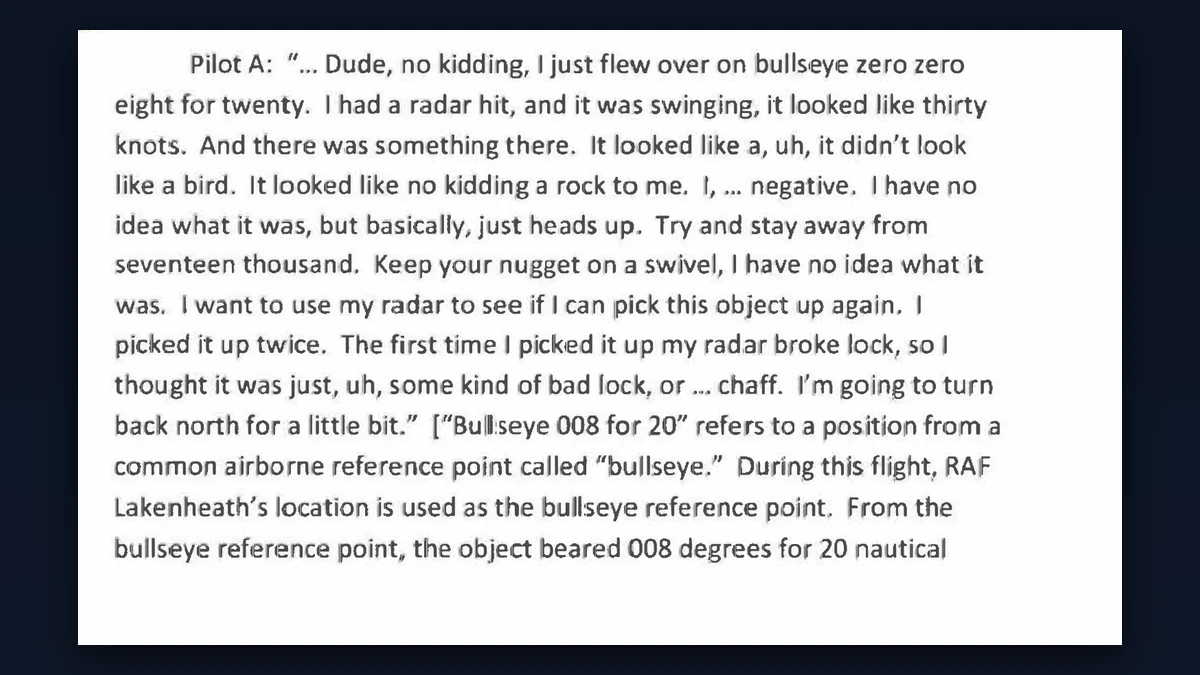
"It looked like a, uh, it didn't look like a bird. It looked like no kidding a rock to me ... I have no idea what it was, but basically, just heads up. Try and stay away from seventeen thousand." (p105)
Later in the clip he adds: "it went from seventeen the first time I saw it to seventeen seven, so it's not falling. I don't think it was a bird" (p106). The wingman eventually gets a look: "I saw it that time. I could not make out what it was" (p108).
BAASS was careful with the tape. It says the copy online "has been edited", since there's no gap where the lead could have been talking to the controller (pp99–100). It also notes where the pilot's memory two years later didn't match the recording. He remembered stable radar locks under 60 knots; the tape has search-mode hits, an erratic track, broken locks and the wingman calling "eighty knots". BAASS points out that all of this is normal for a very slow target and "does not necessarily indicate any unusual conditions, such as jamming" (p101). The jets' own cockpit tapes no longer exist: the lead "recorded over them using the same tapes on his next mission" (p99).
Was the Lakenheath Object a Weather Balloon?
A balloon fits most of what's in the file. The object was small, dark, steady and slow, and it drifted with the wind. Every speed reading in the file, 30 to 80 knots, falls within the range of winds BAASS gives for the area (usually 15 to 45 knots, at times 100 or more).
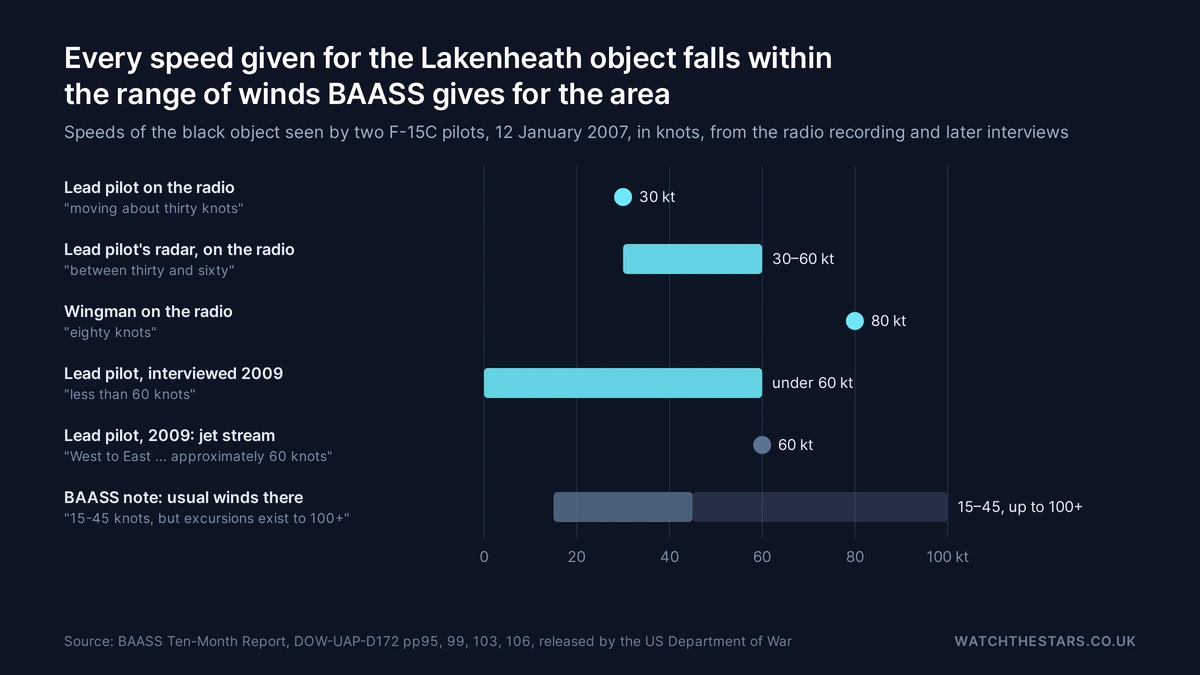
On the radio the lead said it was "moving about thirty knots" and his radar showed "between thirty and sixty" (p106). In 2009 he recalled "less than 60 knots", travelling west to east with the prevailing wind (p95), and described "a West to East jet stream at approximately 60 knots" that day (p103). BAASS adds a note that winds there are usually 15 to 45 knots, "but excursions exist to 100+ knots" (p99).
The heights don't help much. The pilot said it went from 17,000 to 17,700 feet, "so it's not falling", but later calls put it back at 17,000 and at 18,000, and BAASS says it always stayed between the two. A weather balloon on its way up climbs a few metres a second (context, not from the file), so it would have gained thousands of feet over the clip. Whatever it was, it held its height, and the file can't say what kind of balloon would do that.
What's missing is the check that would settle it. BAASS listed "trying to obtain records of weather balloon flights from British sources" as the next step (p95). Nothing in the file shows it was done.
What an F-15 pilot couldn't do at 300 knots
Kit we've reviewed in full
The lead pilot couldn't slow down enough to get a good look. From the ground you can take your time, and binoculars show a balloon, a plane or a planet for what it is.
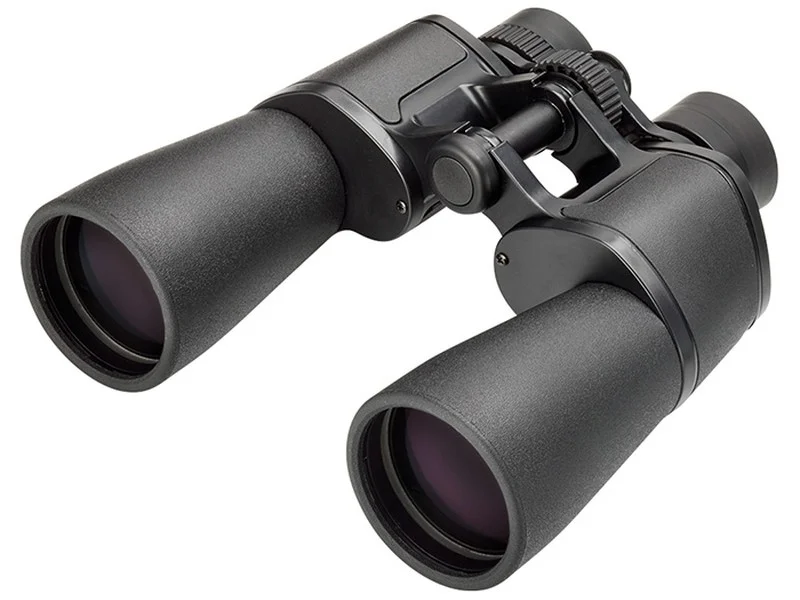
Wide, bright view that makes it easy to find and follow a small object drifting across the sky.
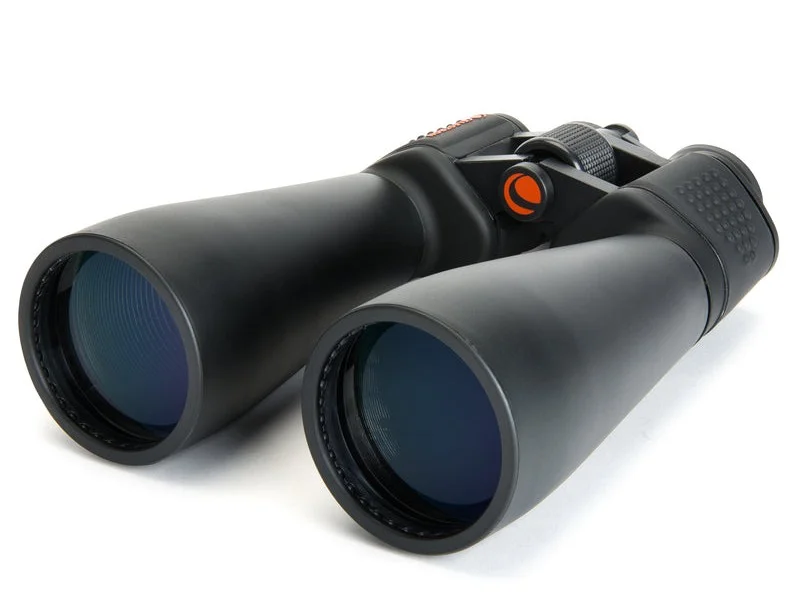
Enough magnification to see the shape of a high balloon in daylight. Use a tripod at 15×.
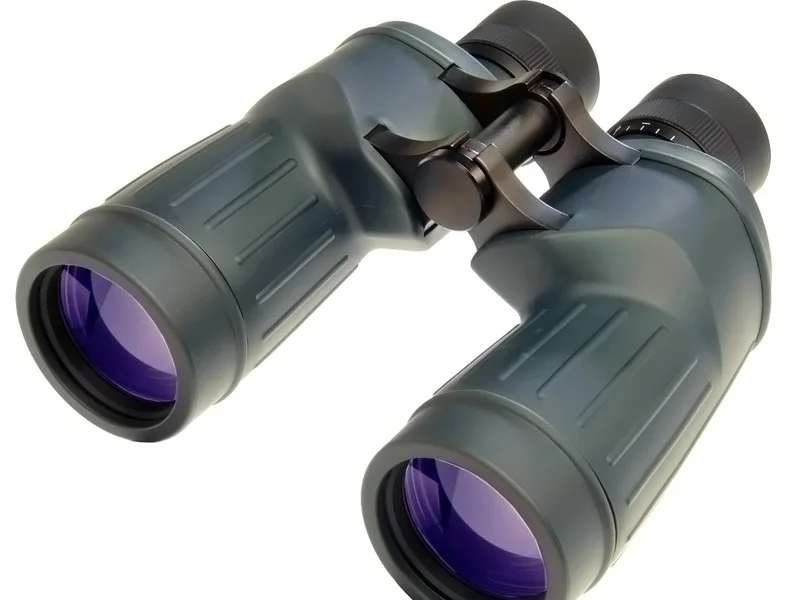
Good contrast against a bright sky, which helps you tell a smooth balloon from a ragged shape.
Affiliate links: you pay the same price, we earn a small commission that helps keep WatchTheStars free.
What the Press Got Wrong About the 2007 Lakenheath UFO
The 2007 Lakenheath UFO first hit the news on 27 March 2007, in the Bury Free Press, after UFO researchers obtained the recording. BAASS reprinted the article (p109). The story then was that London military air traffic control picked up a UFO on radar and called the F-15s in to intercept it (air traffic control denied it at the time). BAASS checked with the lead pilot and the former squadron commander and found that "this information is incorrect. The F-15Cs were the first to detect the unidentified object via their airborne radar" (p94).
The jets weren't scrambled either. They were already up on a training flight, and the pilots told the controller, who had only "intermittent" hits and "seemed disinterested" (p99). The Internet Archive address for the recording is titled "UsafF-15UfoInterceptionOverNorthSea", but the pilot told BAASS the flight was over land, north of the base (p98). Neither pilot reported the sighting when they landed. Their squadron found out when the local press ran the story, and the lead got "ridicule" and "teasing" for it (p100).
There was also a UK angle that never went anywhere. A British researcher had sent a request for information to the UK government. The lead pilot thought he might have been interviewed about it, but couldn't remember by whom (p100). Our guide to the UK MOD UFO files explains where British records of this kind ended up.
So why was the Pentagon's contractor looking at this at all? BAASS says that when it first looked at the 2007 Lakenheath case and the 2004 USS Nimitz Tic-Tac case, "both cases were deemed of potential national security interest" (p87). Lakenheath turned out to be a balloon. Compare that with the 1956 RAF Lakenheath UFO incident at the same base, which is still unexplained, or Suffolk's other famous case at Rendlesham Forest. Our map of UFO sightings in the UK has the rest.
How to Tell a Balloon, Plane or Satellite From the UK
A balloon drifts at the speed and direction of the wind, doesn't flash, and in daylight often looks dark or catches the Sun as a steady point. A plane has blinking lights and keeps a straight line. A satellite or the space station glides steadily across the sky at night and fades into Earth's shadow without blinking. You can check when the International Space Station is due on our ISS passes tonight page, and our guide on how to spot the ISS shows what one looks like.
If a light hangs still in the west at dusk or the east before dawn, it's very likely a planet. Check what you can see in the sky tonight or our UK night sky this week round-up. The rest of the eighth file release, including the contractor's hunt for the government's UFO archive, is in our Release 8 round-up.
Sources:
- US Department of War, PURSUE Release 8 (20 November 2026): DOW-UAP-D172, BAASS Ten-Month Report, 30 July 2009, "BAASS Investigation: Lakenheath" (pp87, 94–114). Original at war.gov/ufo
- Sun position and sunset for RAF Lakenheath (52.41°N, 0.56°E) on 12 January 2007, and the bullseye positions, computed by WatchTheStars with Skyfield and the JPL DE421 ephemeris
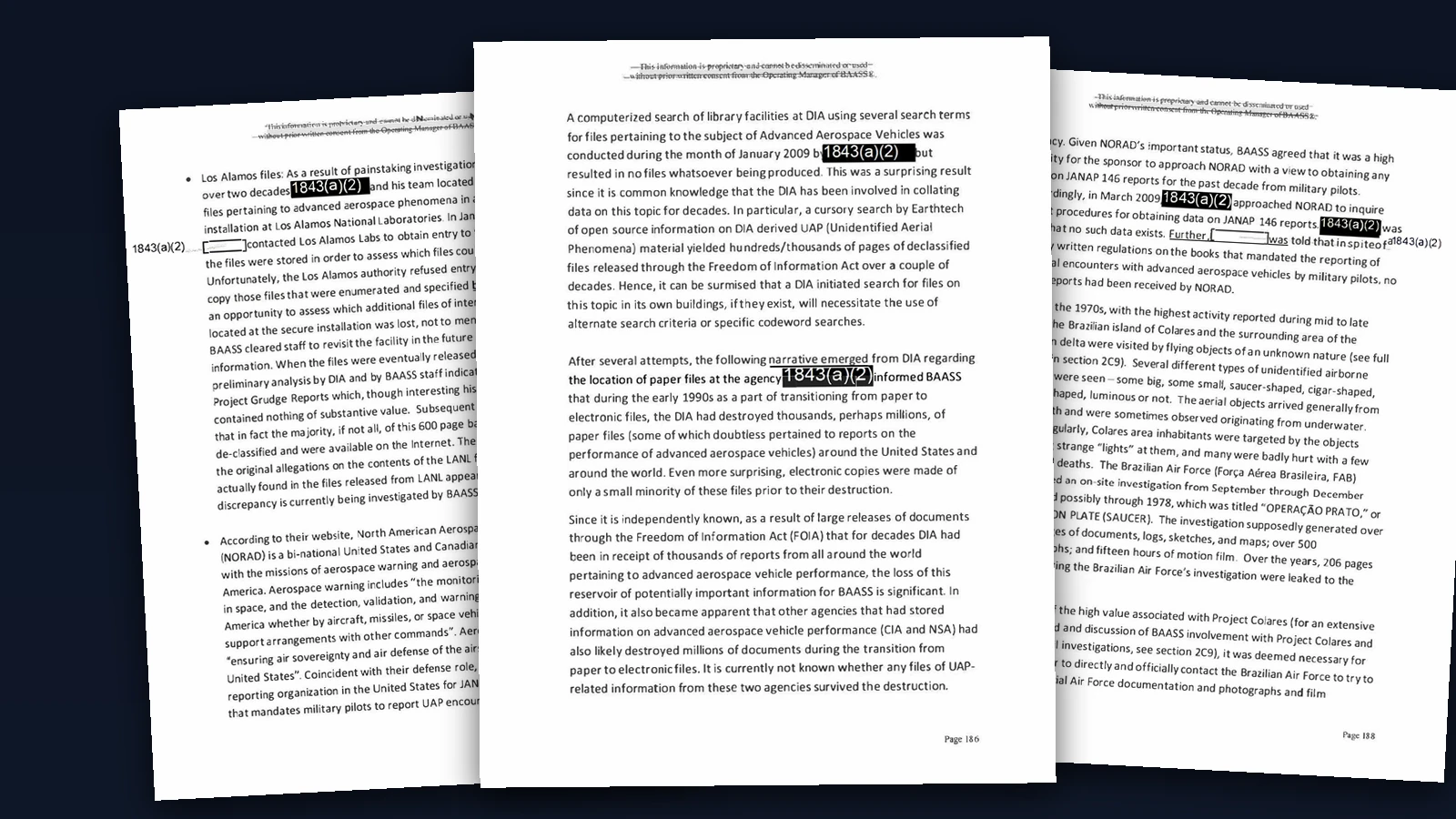
Header image: PDF pages 105, 94 and 100 (printed pages 99, 88 and 94) of the BAASS Ten-Month Report, DOW-UAP-D172, released by the US Department of War.
Frequently Asked Questions
Equipment guides
Related topics

Ian ClaytonAmateur astronomer and founder of WatchTheStars.co.uk, dedicated to helping others explore the wonders of our universe. Full profile →