Key takeaways
- The Pentagon's UFO office, AARO, is issuing a sole-source contract to the National UFO Historical Records Center (NUFOHRC) in Rio Rancho, New Mexico, for access to its pre-1990 UFO archives
- NUFOHRC holds North America's largest private UFO collection, including J. Allen Hynek's personal Project Blue Book files and the complete archives of APRO, NICAP and CUFOS
- A War Department official said no other organisation has the 'historical depth, volume of unique records, and specialized analytical expertise' the government needs
- AARO needs the files to finish its Congress-ordered history of US government UFO involvement since 1945. Volume 1 came out in March 2024; Volume 2 is still overdue
- The deal is a five-year data subscription (one base year plus four options). The Pentagon has not said what it will cost
Jump to section 6 sections
- Pentagon UFO Archive Deal: What DefenseScoop Found
- What Is the National UFO Historical Records Center?
- J. Allen Hynek's Blue Book Files: Why They Matter
- Why AARO Needs a Private UFO Archive to Finish Its History
- What the Pentagon UFO Archive Deal Could Actually Change
- UK UFO Files: Where Britain's Records Ended Up
The Pentagon UFO archive deal reported this week is a strange admission from a government that has spent 2026 releasing its own UFO files by the hundred. The All-domain Anomaly Resolution Office (AARO), the Pentagon's UAP office, wants to buy access to a private collection in New Mexico because, in its own words, nobody else has the records it needs.
DefenseScoop's Brandi Vincent broke the story on 2 September 2026 after spotting a contracting notice on SAM.gov, the US government's procurement site. The short version: AARO is going sole-source for a multi-year data subscription with the National UFO Historical Records Center (NUFOHRC), a non-profit founded by UFO historian David Marler. What AARO wants most is anything dated before 1990.
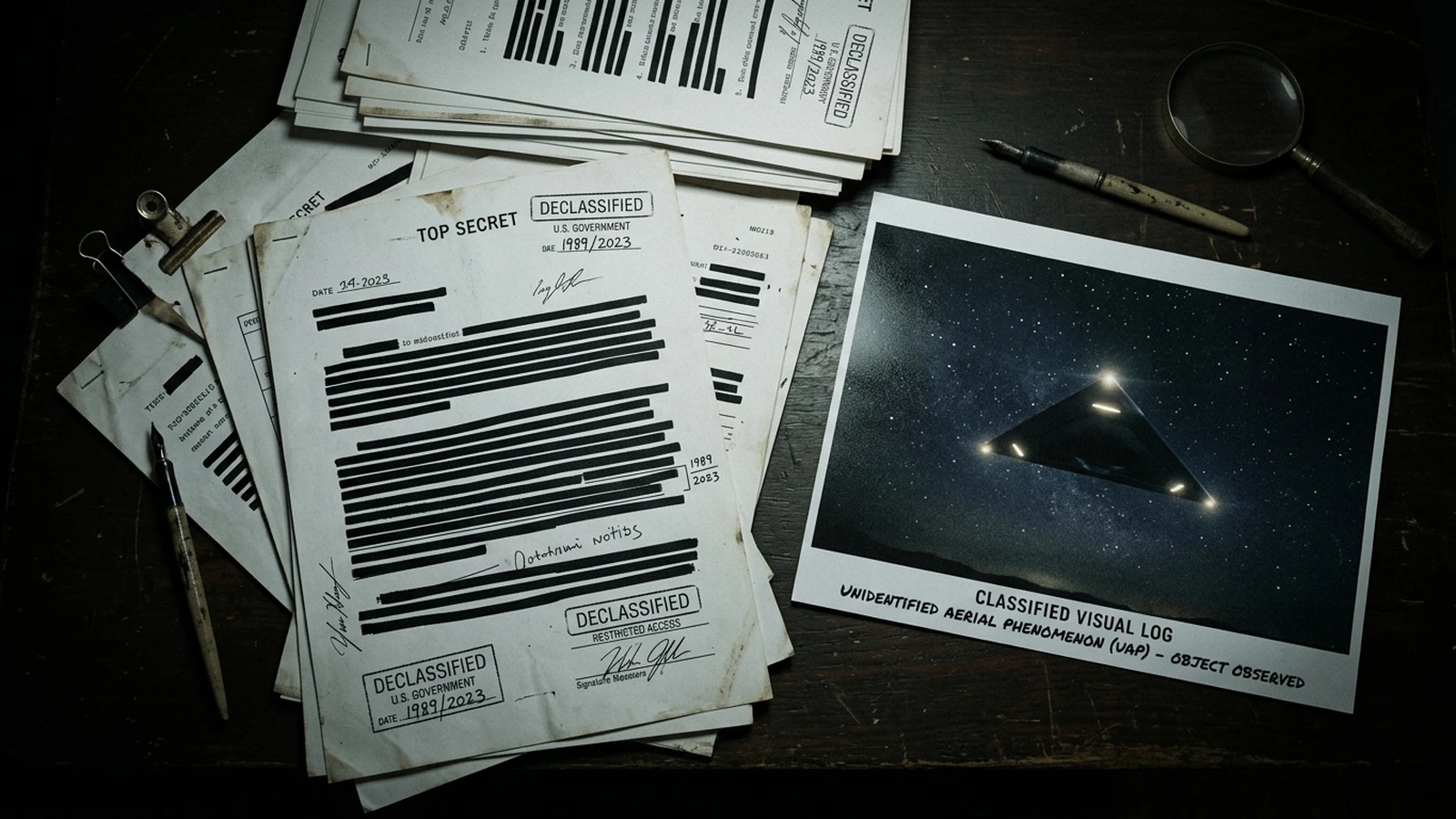
We have been tracking every batch of the Pentagon's PURSUE file releases in our declassified UAP document archive. This is the first time the flow has gone the other way, with the government paying to read what civilians kept.
Pentagon UFO Archive Deal: What DefenseScoop Found
The Pentagon UFO archive deal is a sole-source contract for a commercial data subscription. AARO gets digital access to NUFOHRC's proprietary data, metadata and analytical products. The contract has a one-year base period and four one-year options, so it could run to 2031. The Pentagon declined to say what it will cost.
Sole-source means AARO is not holding a competition. Under US procurement rules you can only do that if you can show nobody else can supply what you need. The justification, from a source DefenseScoop describes as a War Department official, was blunt:
"Market research conducted to date indicates that no other organization possesses the historical depth, volume of unique records, and specialized analytical expertise to meet the government's minimum needs."
The same official said NUFOHRC holds "hundreds of thousands of unique case files that exist exclusively within its archives and are not available in any other public or private repository." That is quite a claim from a department that has spent the year insisting it is opening its own vaults.
Two details worth flagging. First, the notice is explicit that this is for data, "not for professional labor or advisory services". AARO is not hiring Marler as a consultant. Second, the emphasis on pre-1990 material tells you exactly what AARO is missing. Its own records are decent from the 2000s onwards. It is the Cold War decades, the Blue Book years and the gap after Blue Book closed in 1969, where the official paper trail goes thin.
What Is the National UFO Historical Records Center?
The National UFO Historical Records Center is a non-profit archive in Rio Rancho, just outside Albuquerque, New Mexico. David Marler founded it after more than three decades of collecting, and for years the whole thing lived in an extension of his house. In October 2024 it opened a public facility in two portable classrooms on a Rio Rancho Public Schools site, on a five-year agreement with the school district.
What makes it unusual is not the size, though at roughly 150 bankers' boxes of deep-storage material plus the working collection it is large. It is provenance. Over the last six years Marler has taken custody of the archives of the big civilian research groups that did the field investigations the Air Force often did not:
- APRO, the Aerial Phenomena Research Organization, founded in 1952 and the earliest of the scientific civilian groups. Its files sat in a private house in Arizona for decades. They include photographs, original artwork and physical evidence, including the burnt clothing and a soil sample from the 1967 Falcon Lake case in Manitoba.
- NICAP, the National Investigations Committee on Aerial Phenomena, founded in 1956 and for two decades the most politically connected of the civilian groups.
- CUFOS, the Center for UFO Studies, which J. Allen Hynek founded in 1973 after leaving the Air Force's employ.
- Hynek's own personal Project Blue Book files, plus the private collections of researchers including Philip Mantle, Antonio Huneeus and Lou Farish.
Mantle's name will mean something to UK readers. He was a long-time BUFORA investigator, so British cases are in there too.
J. Allen Hynek's Blue Book Files: Why They Matter
J. Allen Hynek was the astronomer the US Air Force hired in 1948 to explain UFO reports away. He did that job, on and off, for 21 years across Project Sign, Project Grudge and Project Blue Book. He was good at it. Most reports were Venus, balloons, aircraft, meteors or the green fireballs that worried Los Alamos. He famously suggested a 1966 wave of sightings in Michigan might be "swamp gas", and never fully lived it down.
But Hynek kept his own copies of the cases that did not resolve, and by the time Blue Book closed in December 1969 he had changed his mind about the subject. Of the 12,618 reports Blue Book logged, 701 were still listed as unidentified when the project shut. Hynek thought the Air Force had stopped investigating and started filing. He set up CUFOS to carry on the work, and his personal Blue Book papers went with him.
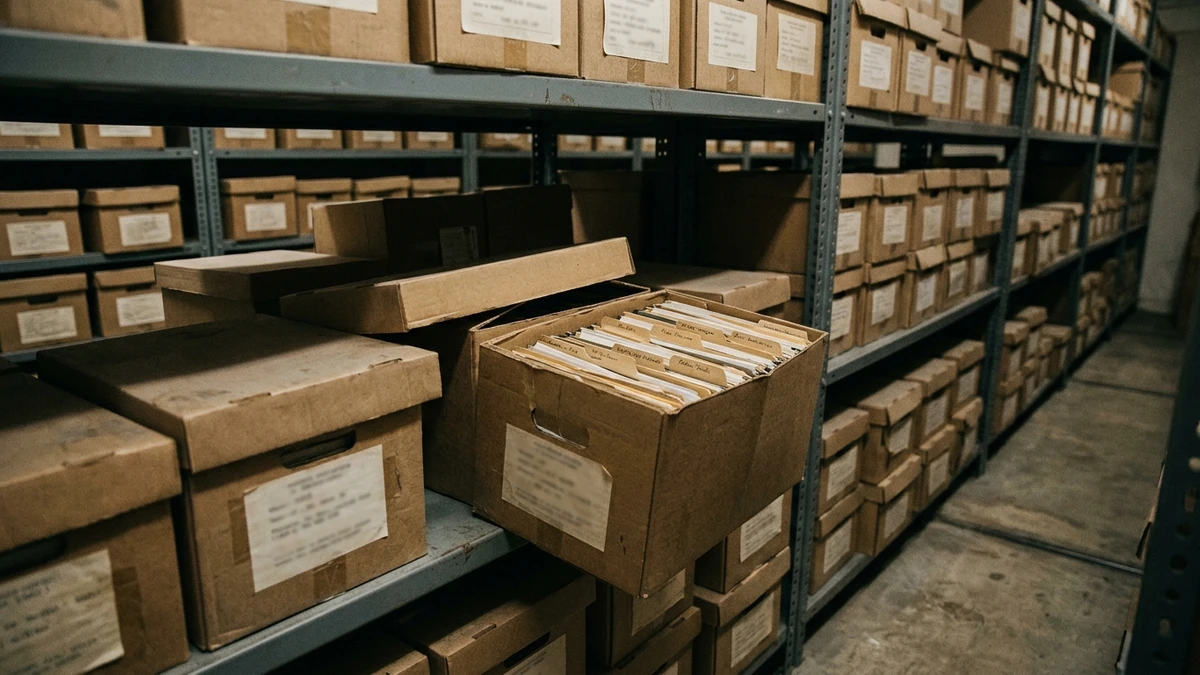
That is why AARO wants them. The official Blue Book files exist on microfilm at the US National Archives, but they are the Air Force's version. Hynek's copies carry his marginal notes, his correspondence with witnesses and the internal arguments about which cases got closed and why. If you are trying to reconstruct what the government actually knew in 1952 or 1957, the consultant's own files are better evidence than the tidy official summary.
We have seen this pattern already in the PURSUE releases. The 1948 Air Force files that used the phrase "vehicles from another planet" only surfaced because someone kept a copy the official system had lost.
Hynek's first rule: look properly before you file a report
Kit we've tested and reviewed in full
Hynek spent 20 years sorting genuine puzzles from Venus, weather balloons and aircraft. Most of that sorting came down to a good look through decent optics. If you see something odd, check ISS passes tonight and what you can see in the sky tonight first, then get the binoculars on it. New to them? Start with our guide to binocular astronomy.
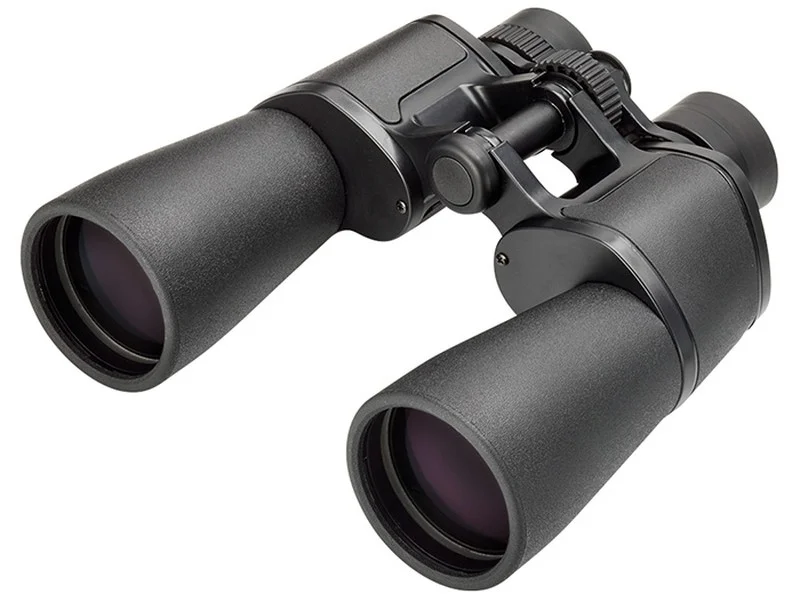
Wide, bright view and quick to aim. The fastest way to turn a strange light into a plane, a satellite or a planet.
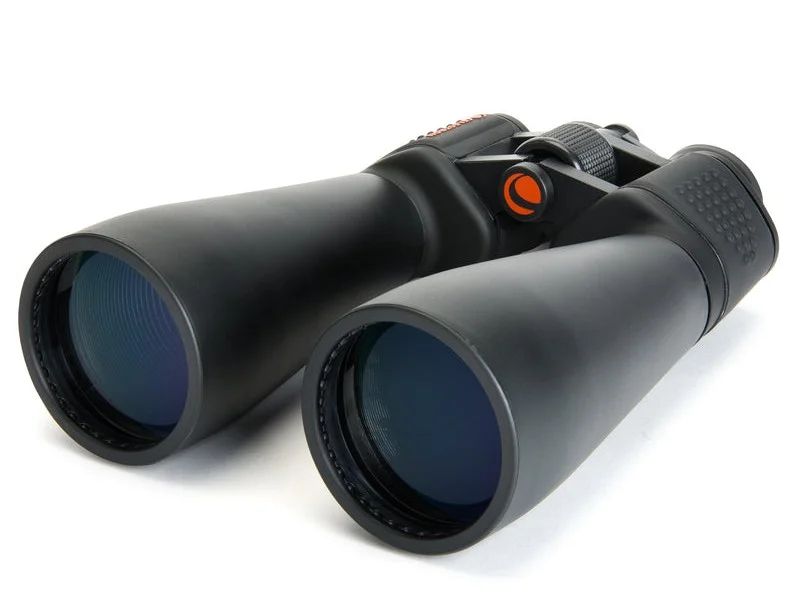
Heavier, but 15x is enough to show the shape of a high balloon or the strobe on an aircraft.
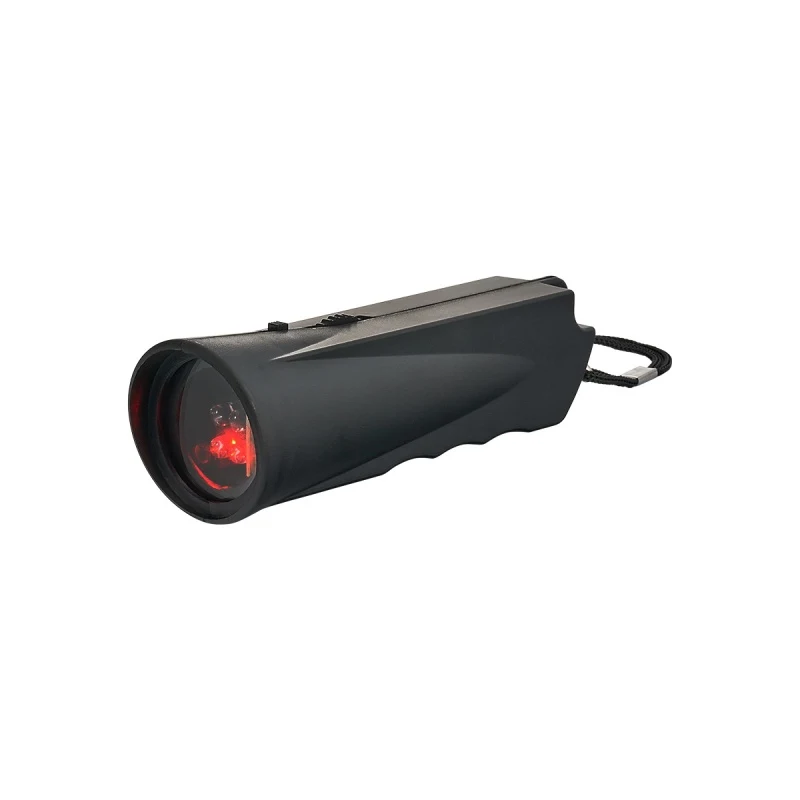
Astro Essentials Red Light Torch
A red torch lets you note the time and direction without wrecking your dark adaptation. Hynek would approve.
Affiliate links: you pay the same price, we earn a small commission that helps keep WatchTheStars free.
Why AARO Needs a Private UFO Archive to Finish Its History
AARO needs a private UFO archive because Congress gave it a homework assignment it cannot complete from its own filing cabinets. The 2023 National Defense Authorization Act ordered AARO to produce a full historical record of US government involvement with UAP from 1945 to the present. Volume 1 arrived in March 2024. It concluded there was no evidence of alien technology or a cover-up, and it was widely criticised for thin sourcing on the early decades.
Volume 2 was meant to follow. As of this spring it still had not appeared, and neither had AARO's annual UAP report for fiscal 2025, which eventually landed in July with 191 unresolved cases.
Then the pressure went up. In February 2026 President Trump ordered the release of government UFO files. The PURSUE task force launched on 1 May and has now put out five batches. The fiscal 2024 defence bill created a UAP Records Collection at the US National Archives and told every federal agency to send its UFO records there. Congressional investigators have subpoenaed defence contractors and asked MITRE for records going back to 1930.
All of that assumes the records exist somewhere in government. The NUFOHRC contract is AARO conceding that, for the pre-1990 period, a good chunk of them do not. As DefenseScoop put it, mid-century military records were "heavily hidden, decentralized, fragmented, or often preserved only by civilian researchers and private organizations after official projects concluded."

What the Pentagon UFO Archive Deal Could Actually Change
Three things, realistically.
Volume 2 might finally get written properly. If AARO cross-references its own thin 1950s and 1960s holdings against Hynek's notes and the APRO and NICAP case files, the second volume of the history should be a good deal more substantial than the first. Whether it reaches a different conclusion is another matter. AARO's position, repeated in every report, is that nothing it has reviewed points to an extraterrestrial origin.
Some "lost" government documents may resurface. Civilian groups routinely obtained copies of Air Force and FBI paperwork through witnesses, sympathetic officers and later through Freedom of Information requests. Some of those originals were subsequently destroyed or misfiled. If a copy in Rio Rancho matches a gap in the official record, it can be reindexed and, in theory, released through PURSUE.
The relationship between the Pentagon and civilian researchers changes. For 75 years the government line was that the civilian groups were enthusiasts and the Air Force had the real files. This notice says the opposite in writing. That matters for cases like Roswell, where the official 1994 and 1997 Air Force reports leaned entirely on government paperwork, and for the RB-47 encounter of 1957, where the best surviving analysis came from a civilian physicist working from Blue Book copies.
What it will not do is settle anything quickly. This is a subscription to read old paper. The reading takes years.
UK UFO Files: Where Britain's Records Ended Up
Britain went through a smaller version of this a decade ago. The Ministry of Defence closed its UFO desk in December 2009 and transferred its files to The National Archives at Kew between 2008 and 2013. The last tranche was released in 2017. Those files are public and we hold copies in our archive, including the Rendlesham Forest papers and the Lakenheath-Bentwaters radar case of 1956.
The difference is that the MoD never claimed to have investigated the subject scientifically, so there was no British Hynek and no British Blue Book. What the UK has instead is the same thing New Mexico has: decades of civilian case files, held by groups like BUFORA and individual researchers, that were never in a government filing cabinet at all. Some of them are now in Rio Rancho. Whether anyone in Whitehall will ever want to read them is a different question.
If you do see something you cannot explain from a UK garden, do what Hynek did first. Note the time, the direction and how long it lasted. Check the UK aurora forecast if it was a glow rather than a point of light, and check whether Venus was above the horizon, because it is still the most reported UFO in history. Then send it to us. We will not put it in a bankers' box.
Sources:
- Pentagon seeks access to vast private UFO records collection · DefenseScoop, 2 September 2026
- National UFO Historical Records Center Opens New Facility · The Debrief, October 2024
- National UFO Historical Records Center finds a home in Rio Rancho · Sandoval Signpost
- AARO Historical Record Report, Volume 1 · US Department of Defense, March 2024
- Hegseth doubles-down on Trump's UAP disclosure promise as AARO's caseload exceeds 2,000 · DefenseScoop, February 2026
- UAP Records Collection · US National Archives
Frequently Asked Questions
Equipment guides
Related topics
Ian ClaytonAmateur astronomer and founder of WatchTheStars.co.uk, dedicated to helping others explore the wonders of our universe. Full profile →