Key takeaways
- China postponed the Chang'e 7 launch on Sunday 23 August 2026 as tropical storm Narra approached the Wenchang launch site on Hainan island
- The China Manned Space Agency says the probe 'does not meet launch conditions' and the launch cannot happen in the planned window, which ran from 24 to 31 August
- No new date has been announced. Some reports suggest September, others say the Earth-Moon alignment means it may slip to 2027
- Chang'e 7 carries an orbiter, a lander, a rover and a six-legged hopping robot designed to jump into permanently shadowed craters and drill for water ice
- The landing target is thought to be the rim of Shackleton Crater at the lunar south pole, the same region NASA's Artemis programme is aiming for
Jump to section 6 sections
Chang'e 7 Launch Postponed: What Happened
China's Chang'e 7 mission, billed by one Brown University Moon scientist as "the most ambitious, comprehensive, and complex robotic lunar mission ever attempted by any nation", is staying on the ground for now. The China Manned Space Agency announced on Sunday evening, 23 August, that the probe "does not meet launch conditions" and that lift-off cannot happen during the planned window.
The culprit is the weather. The Long March 5 rocket carrying Chang'e 7 rolled out to its pad at the Wenchang Space Launch Site on Hainan island on 19 August, with launch set for the early hours of Monday 24 August local time. Then tropical storm Narra began brewing in the Gulf of Tonkin, just west of the island. Officials slipped the launch by a day, took another look at the forecast, and stood the mission down.
The agency said the decision followed "the principle of prudence, reliability and absolute mission success". Hard to argue. A Long March 5 is China's biggest operational rocket, and this one is carrying a spacecraft the country has spent years building for a mission to the Moon's least-explored region.
When Will Chang'e 7 Launch? September, or 2027
The short answer: nobody outside China knows, and China isn't saying.
A Moon launch can't simply go as soon as the skies clear. Chang'e 7 needs Earth and the Moon lined up correctly, and the planned window ran from 24 to 31 August. With Narra parked next door, that window is gone. Some reports suggest the next workable alignment could come as soon as September. Others, including the state news agency Xinhua, phrase the delay as running past the end of the year, which would push the launch into 2027.
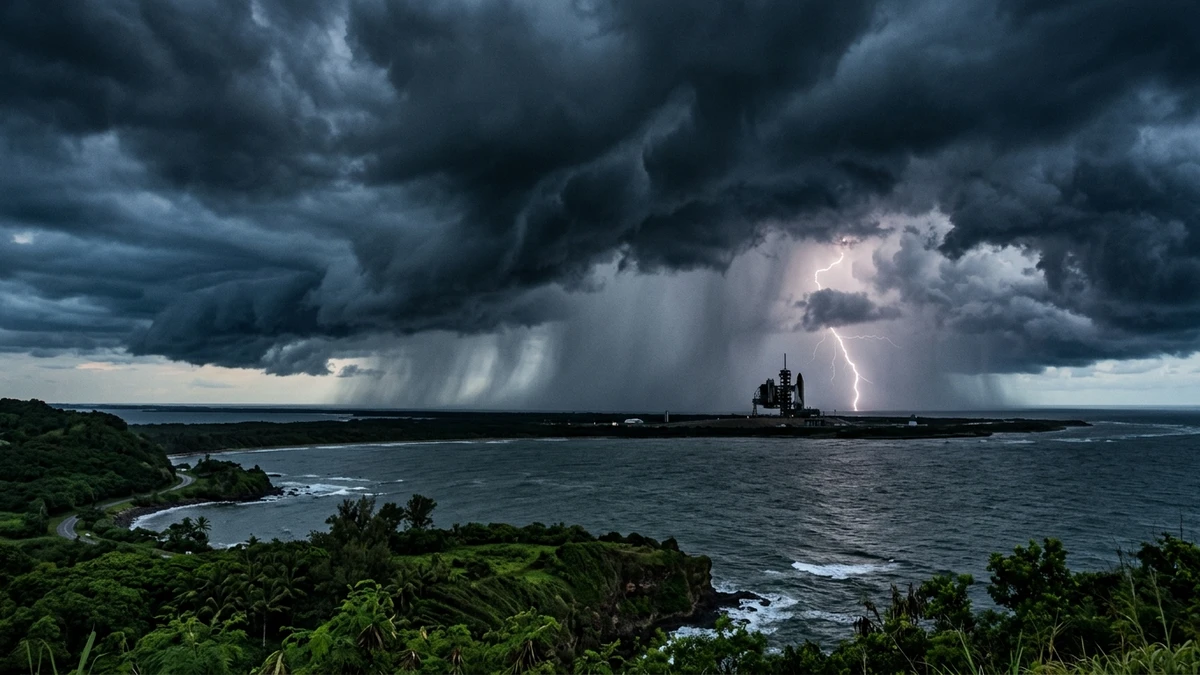
China tends to keep its space plans close to its chest, so the honest position is this: the mission is healthy, the rocket is fine, and the delay is about weather and orbital timing rather than any fault with the spacecraft. When a new date appears, we'll cover it here.
What Is the Chang'e 7 Mission?
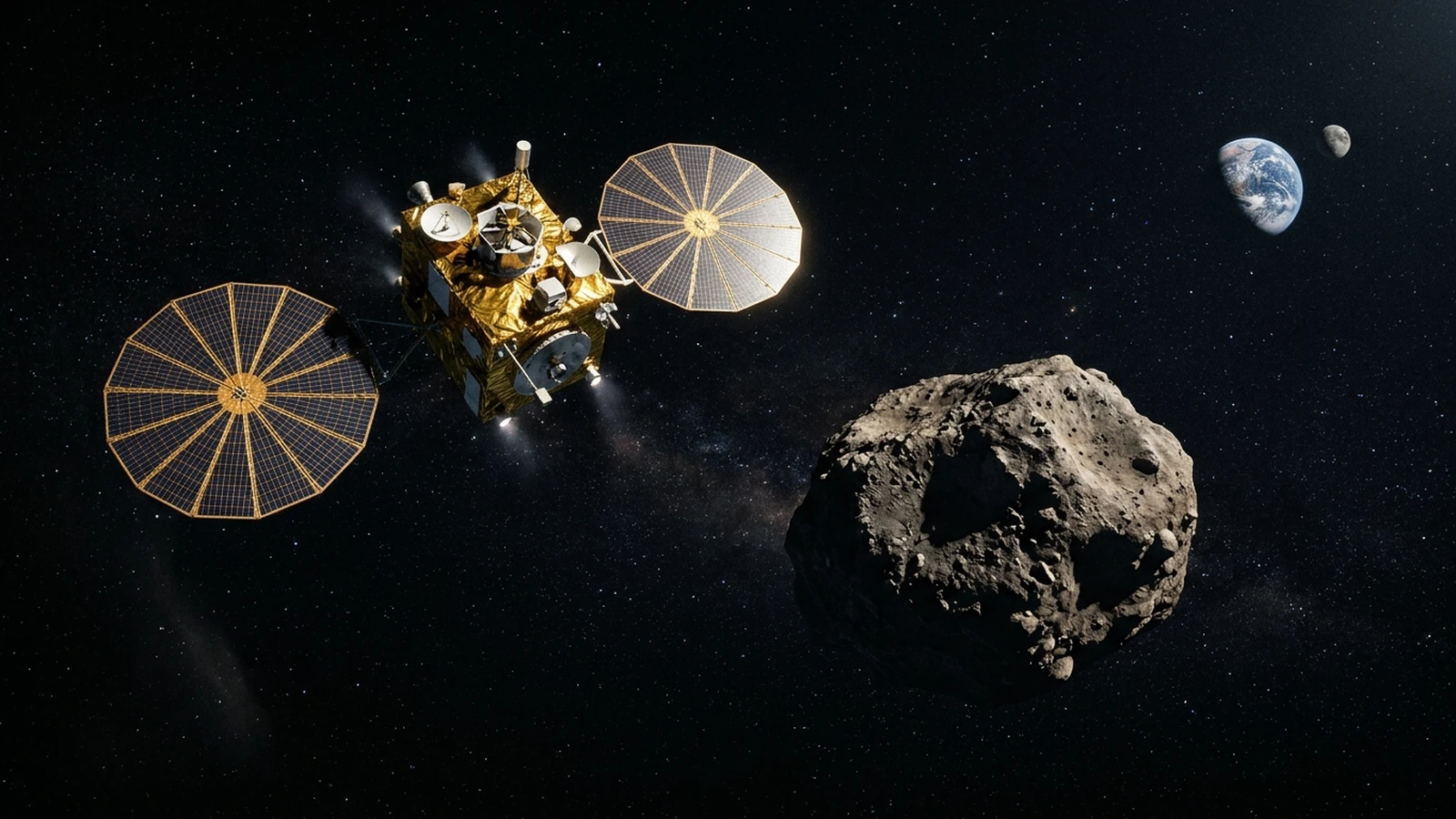
Chang'e 7 is a four-in-one spacecraft: an orbiter, a lander, a rover and a hopping robot, all travelling together. The plan was to spend up to six days getting to lunar orbit, survey the landing zone for about two months, then touch down in November.
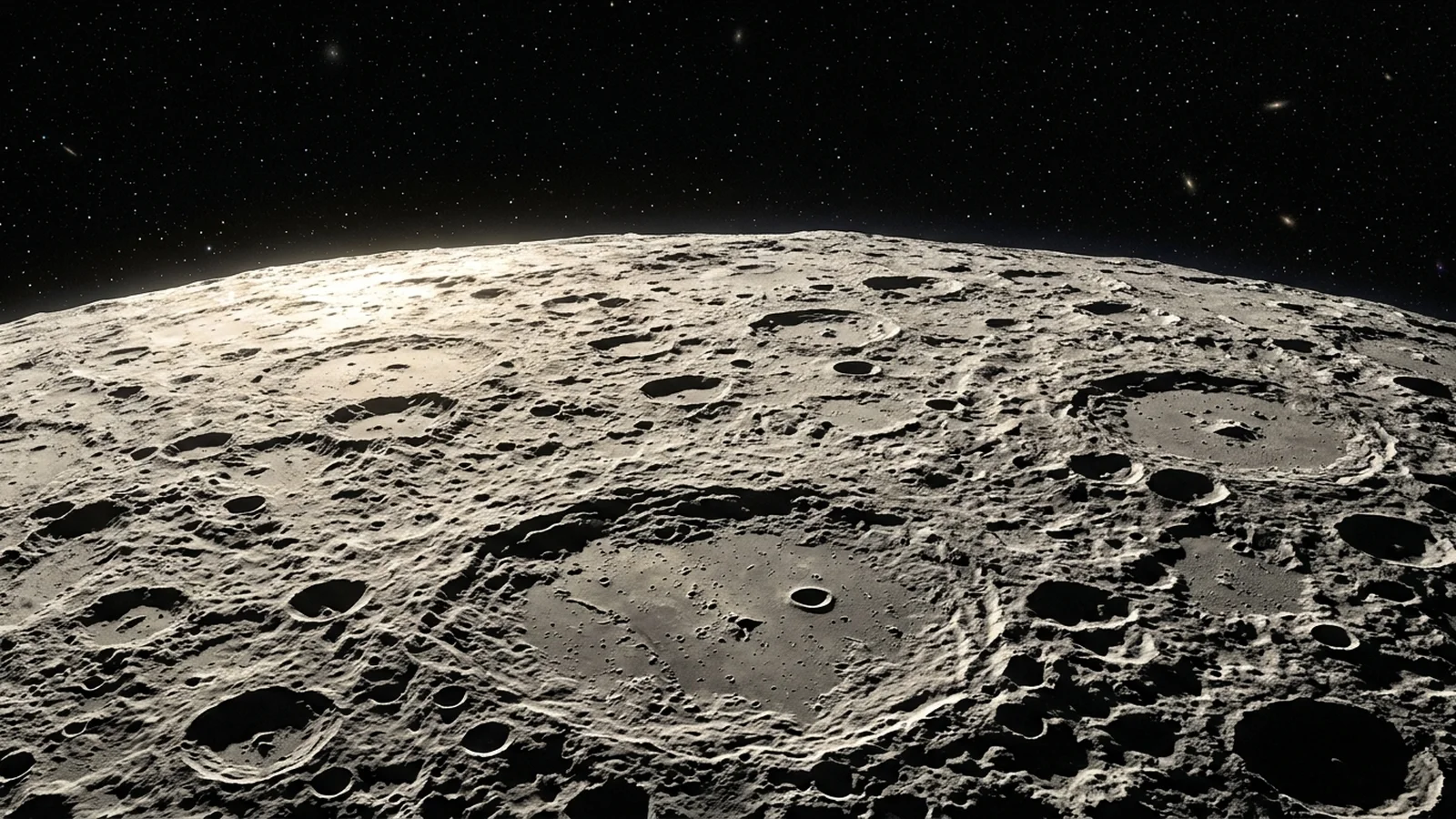
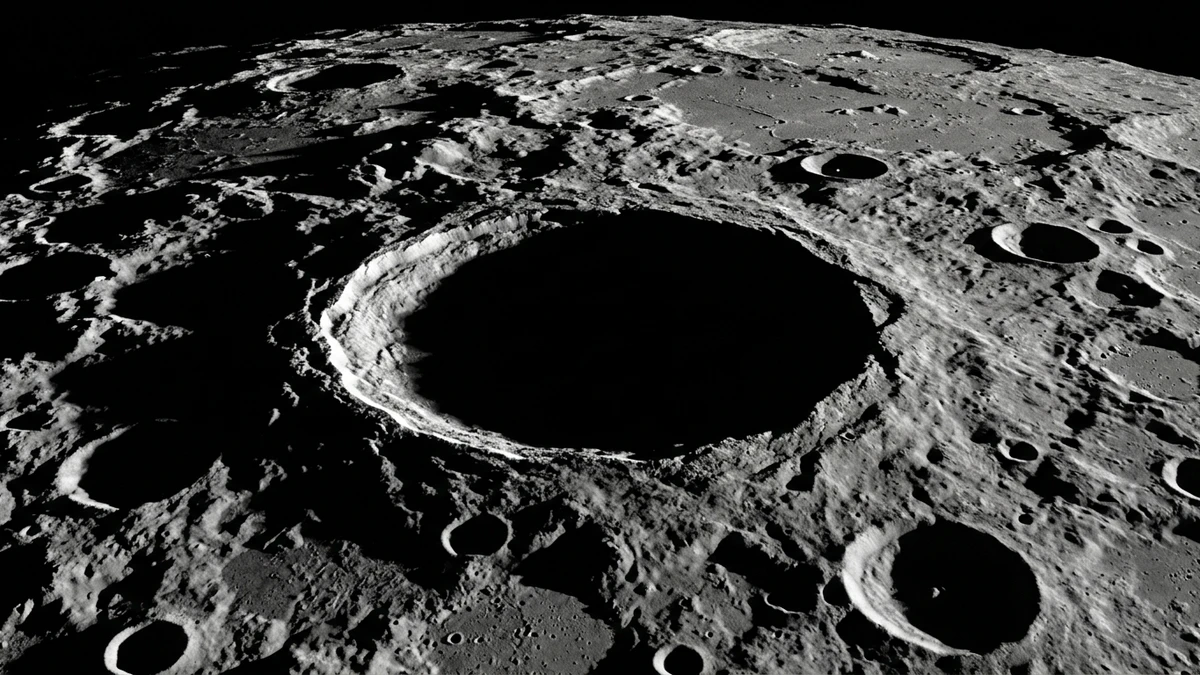
The target is thought to be the rim of Shackleton Crater, a 21km-wide pit whose edge sits almost exactly at the lunar south pole. China hasn't officially confirmed the site, but Shackleton's rim is the prize spot on the whole Moon. Thanks to the Moon's slight tilt, parts of the rim sit in sunlight almost year-round, perfect for solar power, while the crater floors nearby haven't seen the Sun for billions of years.
Those permanently dark floors are what scientists call cold traps. At only a few dozen degrees above absolute zero, any water that has ever drifted in, whether delivered by comets or formed by the solar wind, stays frozen essentially forever. Orbiters have detected strong hints of ice there for years. Nobody has ever touched it.
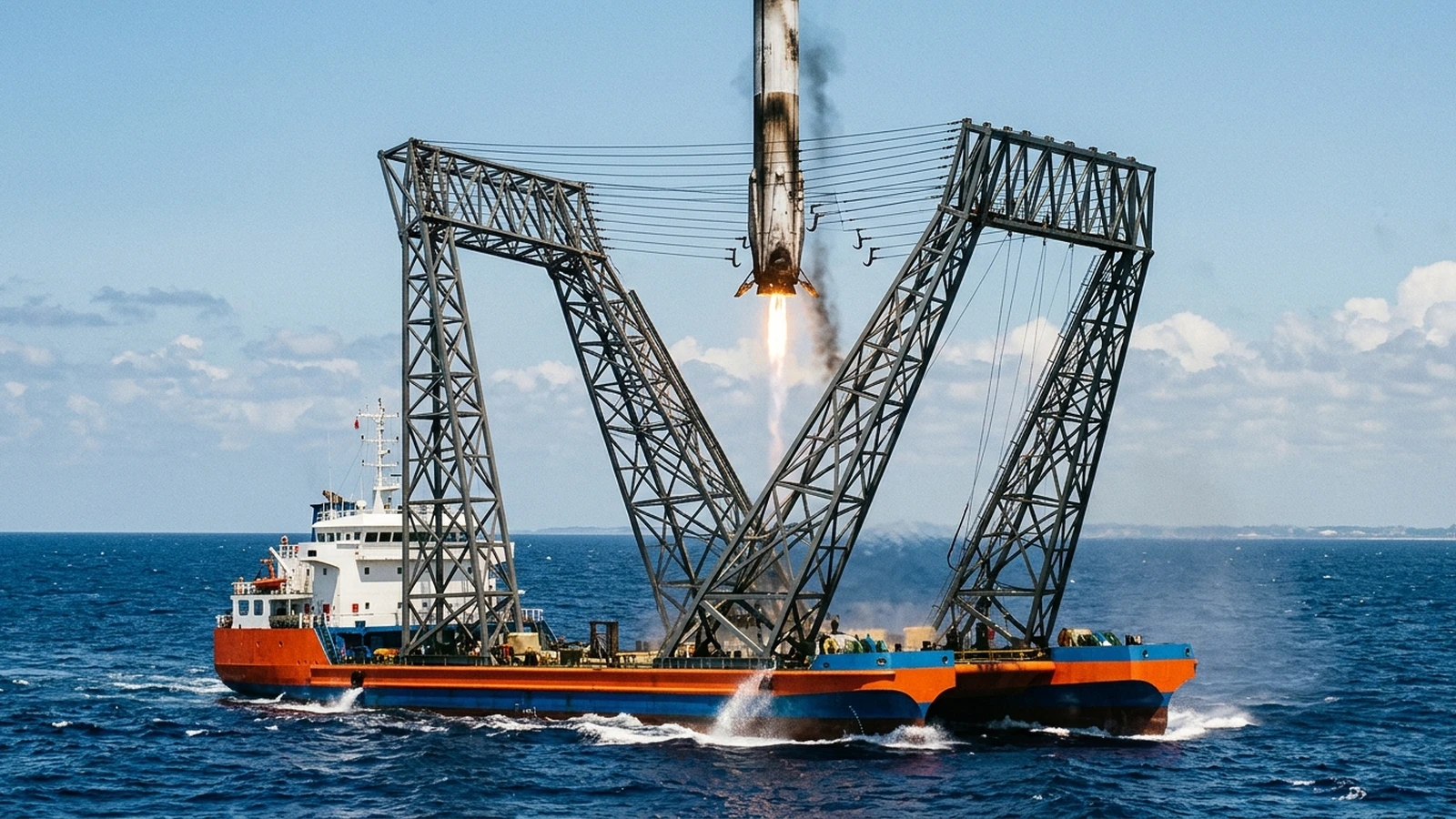
This is China's next step in a run of lunar successes. Chang'e 6 brought back the first samples from the Moon's far side, and its rocks are already rewriting lunar history. Meanwhile Tianwen-2 reached Earth's quasi-moon Kamo'oalewa in July, and China landed its first reusable rocket booster the same month. The pace is relentless.
The Moon's south pole, from your garden
Kit we've reviewed in full
You can see the region Chang'e 7 is aiming for tonight. The Moon's southern edge is a jumble of crater rims and mountain shadows, and it looks superb through even modest kit. Our 2026 Moon calendar lists the best nights to look.

Steady 10× views show the rugged southern limb where the great polar craters crowd together, plus the seas and rays across the rest of the disc.
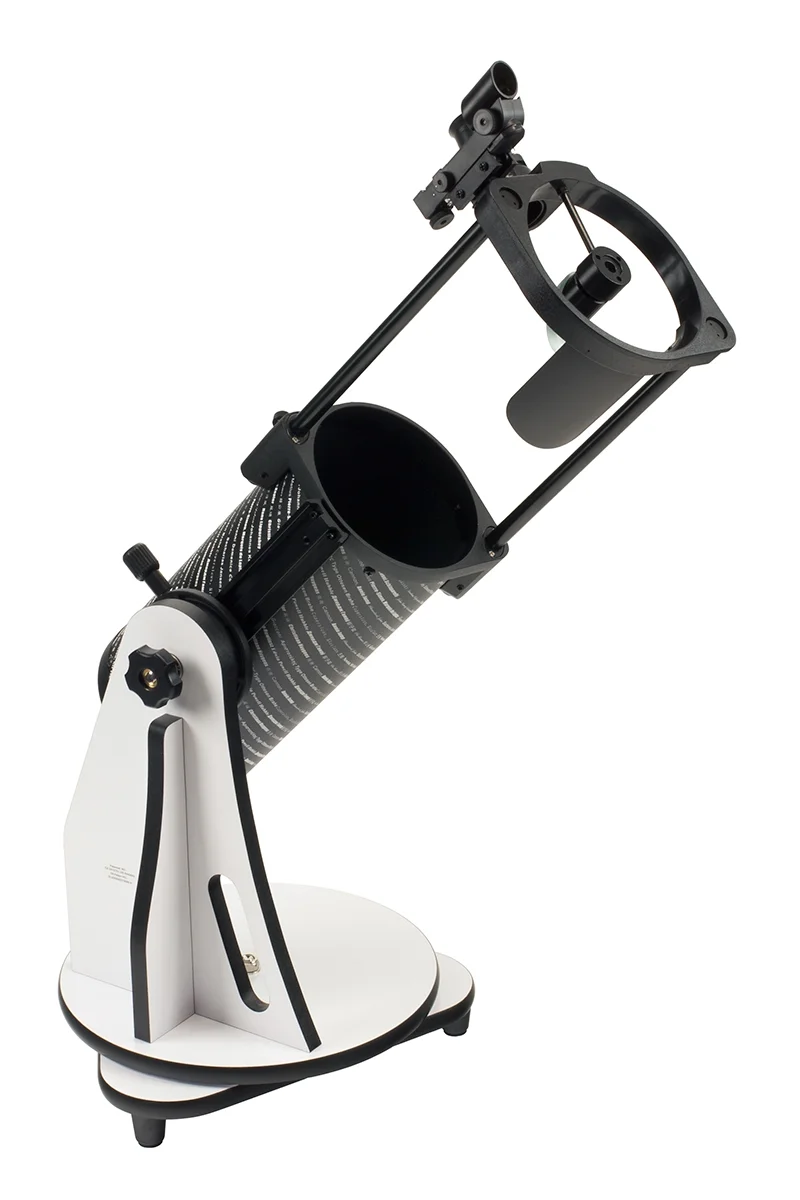
Enough aperture to pick out individual peaks and crater walls along the southern edge, the same sunlit high ground Chang'e 7 wants to land on.
Affiliate links: you pay the same price, we earn a small commission that helps keep WatchTheStars free.
Chang'e 7's Hopping Robot: Jumping Into the Dark
The hopper is the piece of hardware everyone will be watching. Wheeled rovers are no use in the polar craters: the slopes are steep, the floors are pitch dark, and anything solar-powered dies within days. So Chinese engineers built a six-legged robot that flies.
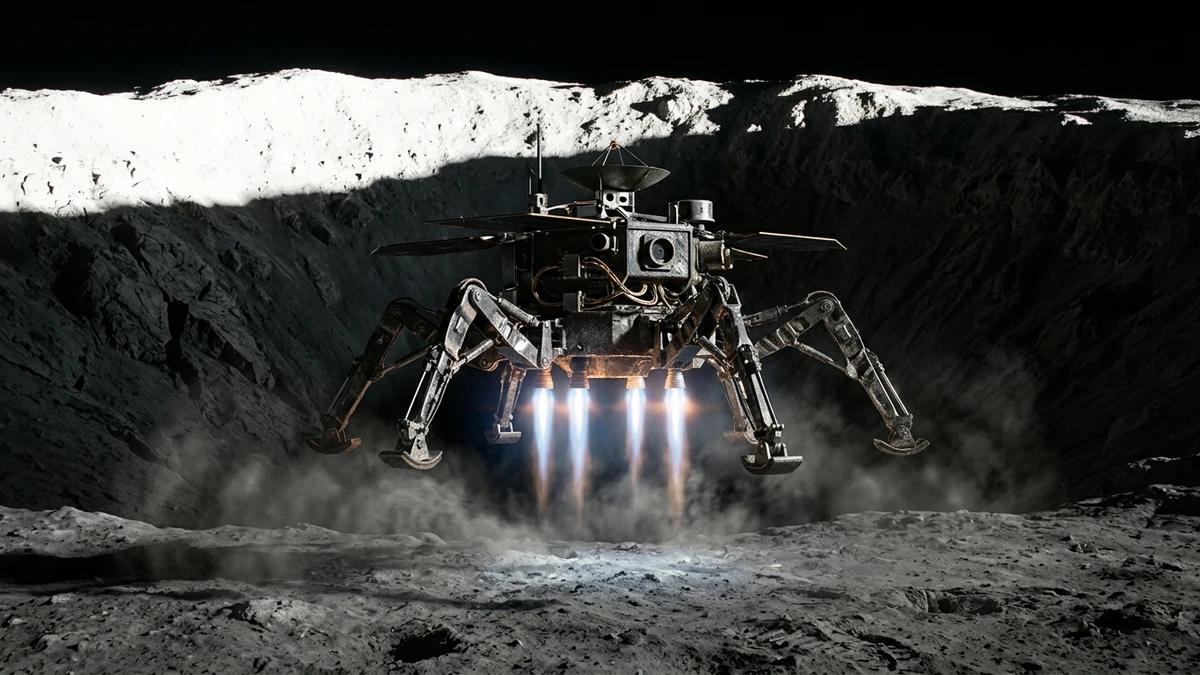
The routine goes like this. The hopper fires its small thrusters and leaps from the sunlit rim down into a shadowed crater, landing on six articulated legs with active shock absorption to cope with the slopes. It then crawls a short distance to soil its own rocket plume hasn't disturbed, drills in, and feeds the sample to an onboard water molecule analyser. Job done, it hops back up to the sunlight to recharge before the cold can kill it.
If that sequence works even once, Chang'e 7 becomes the first mission in history to directly analyse water on the Moon. Not infer it from orbit. Actually dig it up and measure it.
Why Water Ice at the Moon's South Pole Matters
Water is the most valuable substance on the Moon. Melt it and you can drink it. Split it with electricity and you get oxygen to breathe and hydrogen to burn as rocket fuel. Every kilogram found on the Moon is a kilogram nobody has to haul up from Earth at eye-watering cost.
That's why the answers Chang'e 7 was built to deliver matter so much: how much ice is down there, how deep it sits, and how hard it is to get out. If the deposits are rich and reachable, the lunar south pole becomes prime real estate for a permanent base. Chang'e 7 is the scouting trip for exactly that. Together with Chang'e 8, planned for around 2029, it lays the groundwork for the International Lunar Research Station that China intends to build with Russia and other partners in the 2030s.
China vs NASA: The Race to the Lunar South Pole
Chang'e 7 isn't flying in a vacuum, politically speaking. NASA is aiming its own crewed programme at the same patch of the Moon, and the Artemis III crew has already been named for a landing planned near the south pole in 2028. NASA's Moon base plans lean on the same polar ice that China wants to sample first. American officials talk openly about winning this race so the US can set the rules for living and working on the Moon.
A weather delay doesn't change the big picture. Whether Chang'e 7 flies in September or slips to 2027, both nations are converging on the same few kilometres of sunlit crater rim, and the first direct measurement of lunar ice will be a genuine moment in the history of exploration, whoever makes it.
While we wait, the Moon itself is putting on a show this week: a partial lunar eclipse is visible from the UK on 28 August, and our weekly night sky guide has the rest of what's worth seeing. If you fancy a closer look at Chang'e 7's destination, point anything you have at the Moon's southern edge. The mission may be grounded, but the target is right there in the sky.
Sources:
- China's Chang'e-7 launch will not proceed in planned window this year · Xinhua
- Bad weather delays launch of China's historic Chang'e 7 mission to moon's south pole · Space.com
- China postpones launch of unprecedented water-hunting moon mission amid space race · CNN
- China's Chang'e-7 lunar ice-hunting mission set for Sunday launch · SpaceNews
- China's Chang'e 7 moonshot will seek water ice at the lunar south pole · Scientific American
- China's new moon mission could unlock secret of lunar ice: Why that matters · Al Jazeera
Frequently Asked Questions
Equipment guides
Related topics

Ian ClaytonAmateur astronomer and founder of WatchTheStars.co.uk, dedicated to helping others explore the wonders of our universe. Full profile →