Key takeaways
- ESA's Hera spacecraft has photographed the asteroids Didymos and Dimorphos as two separate objects for the first time, from 1,280 km away
- Dimorphos is the 151-metre asteroid that NASA's DART spacecraft deliberately crashed into in September 2022, shortening its orbit by about 33 minutes
- Hera's job is to measure what DART actually did: the mass of Dimorphos, the shape of the crater and whether the asteroid is solid or a loose rubble pile
- ESA will release Hera's first detailed close-up images of Dimorphos on 25 November 2026
- Didymos and Dimorphos pose no danger to Earth, and they are far too faint to see with any backyard telescope
Jump to section 6 sections
Europe's asteroid detective has its first proper look at the crime scene. ESA's Hera spacecraft has photographed Didymos and its small moon Dimorphos as two separate objects for the first time. Until now they had shown up in its camera as a single dot.
Dimorphos is the asteroid NASA deliberately crashed a spacecraft into four years ago, to see whether we could push a space rock off course. That worked. Hera has gone to find out exactly how well, and why, which is the part that matters if we ever need to do it for real.
Hera Mission First Image: Two Asteroids, Not One
ESA released the image on 27 October. Hera took it with its Asteroid Framing Camera, the main "eye" of the mission, from 1,280 km away. The asteroids themselves are about 197 million km from Earth, out beyond the orbit of Mars.
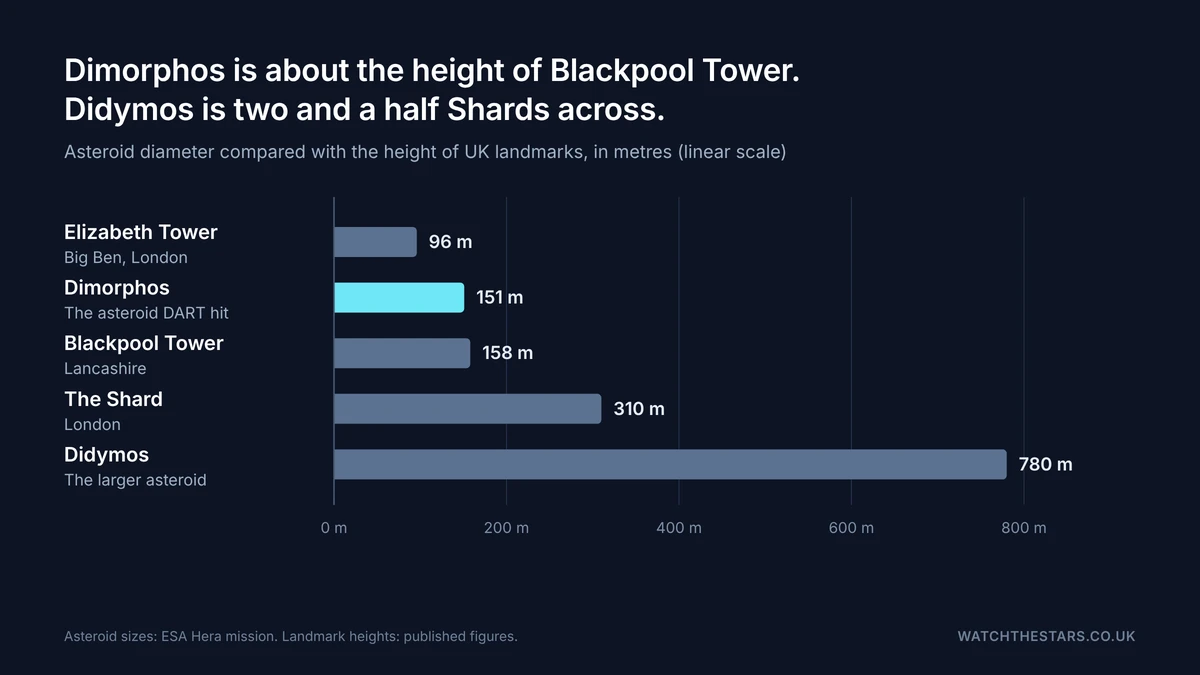
It isn't much to look at yet. Dimorphos covers roughly one pixel. But it's clearly separate from its parent, which is the first time Hera has seen the system for what it is: a 780-metre asteroid with a 151-metre moon going round it.
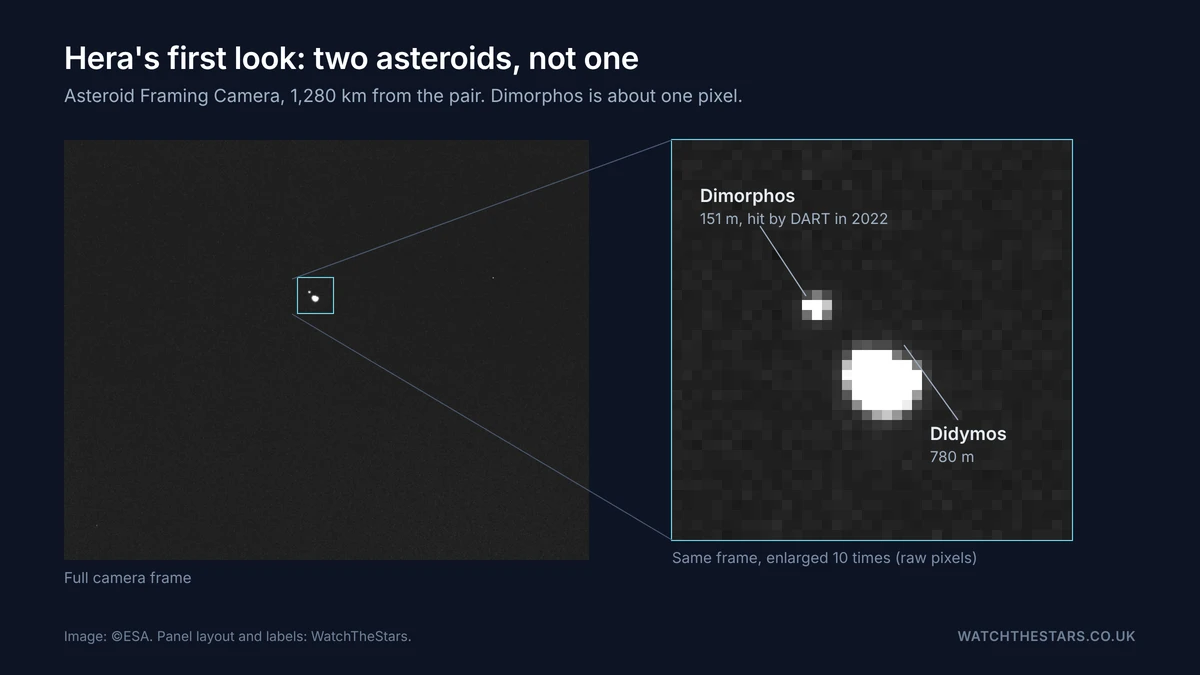
"With this image the smaller Dimorphos asteroid becomes visible for the first time," said ESA's Michael Küppers. "Before this acquisition the spacecraft was still resolving the Didymos system as a single dot."
The picture came straight after the hardest flying of Hera's two-year trip. It had been travelling at more than 12 km per second relative to Earth, so it fired its thrusters in two long braking burns a week apart in October. That slowed it to just 20 metres per second relative to the asteroids, roughly the speed of a car on a town road, so it can now creep closer step by step.
DART Asteroid Impact: What NASA Did to Dimorphos in 2022
To see why Hera matters, go back to 26 September 2022. Just after midnight UK time, NASA's Double Asteroid Redirection Test, DART, flew straight into Dimorphos at 6.1 km per second. The spacecraft weighed about half a tonne, roughly the size of a vending machine. It was destroyed on impact, and that was the whole point.
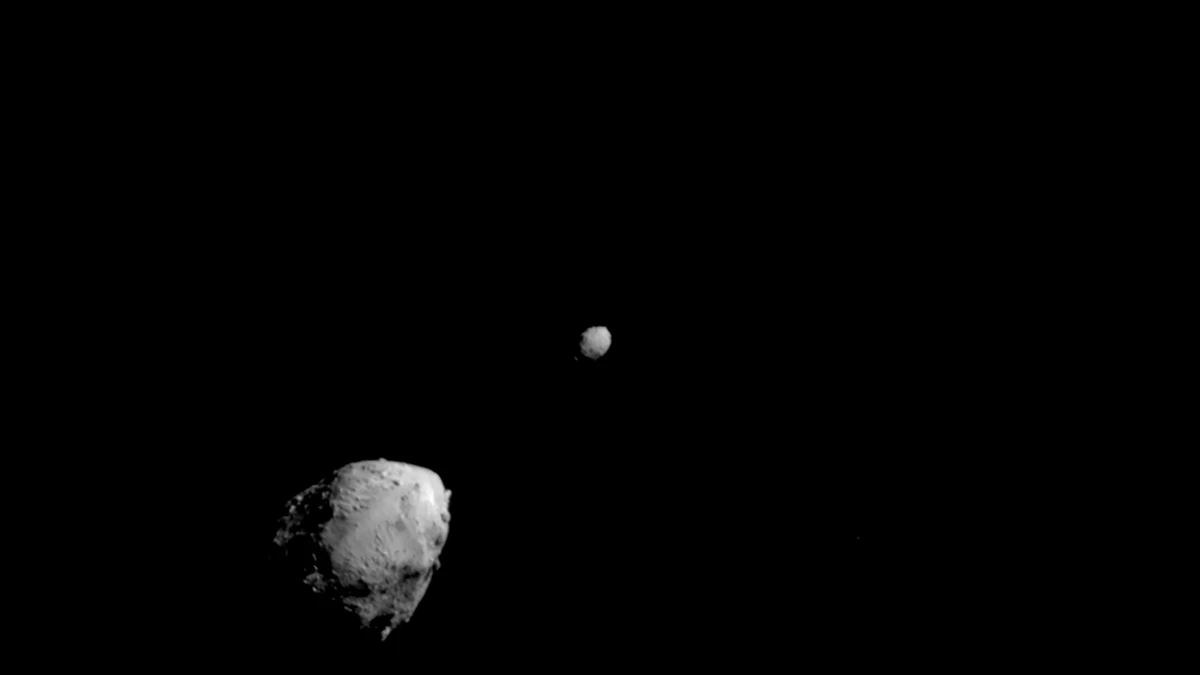
Before the crash, Dimorphos took 11 hours 55 minutes to go once round Didymos. Afterwards, telescopes on Earth measured the orbit as about 33 minutes shorter. That made Dimorphos the first natural object in the Solar System whose motion humans have measurably changed.
The impact also blasted out far more debris than anyone expected. The plume stretched more than 10,000 km into space and lasted for months, and 37 boulders a metre or more across were thrown clear. That extra debris acted like a rocket exhaust and gave Dimorphos a bigger shove than the spacecraft alone could have done. It's good news for planetary defence, but nobody can say exactly how big that bonus was without knowing what Dimorphos weighs and what it's made of. Hera is there to find out.
Hera Spacecraft: What It Will Find Out
ESA calls Hera's job a "crash scene investigation". The questions it needs to answer are simple to ask and very hard to measure from 197 million km away:
- How heavy is Dimorphos? Without its mass, you can't work out how much push DART actually delivered. Hera will measure it by tracking the tiny wobble Dimorphos causes in its parent, using boulders on Didymos as markers.
- What did the crater look like? DART may have left a neat crater, or it may have reshaped the whole asteroid. ESA's modelling says the scar stays fresh for about four years, so Hera should see it close to how DART left it.
- Is Dimorphos solid or a rubble pile? A loose heap of boulders held together by its own weak gravity reacts very differently to a solid lump. That changes how you would deflect a real threat.
Hera has help. It carries two shoebox-sized CubeSats, the first ESA has sent beyond Earth orbit. Milani will map what Dimorphos is made of and sample the dust around it. Juventas carries the smallest radar ever flown in space and will look up to 100 metres inside the asteroid, the first time anyone has seen inside one. Both are due to finish by landing on Dimorphos. Hera itself is planned to end its mission with a final descent onto Didymos once its fuel runs low.
This is what turns DART from a one-off stunt into a technique. The asteroid that hit Earth with seven hours' warning last month, 2026 RW1, was tiny and harmless. The one that wiped out the dinosaurs, which scientists have finally identified, was not. If we ever spot something big early enough, Hera's numbers tell us how hard to hit it.
See the Solar System's impact scars for yourself
Kit we've reviewed in full
You can't see Didymos from your garden, but you can see what millions of years of asteroid strikes look like. Every crater on the Moon is an impact, and even binoculars show hundreds of them along the line between day and night.
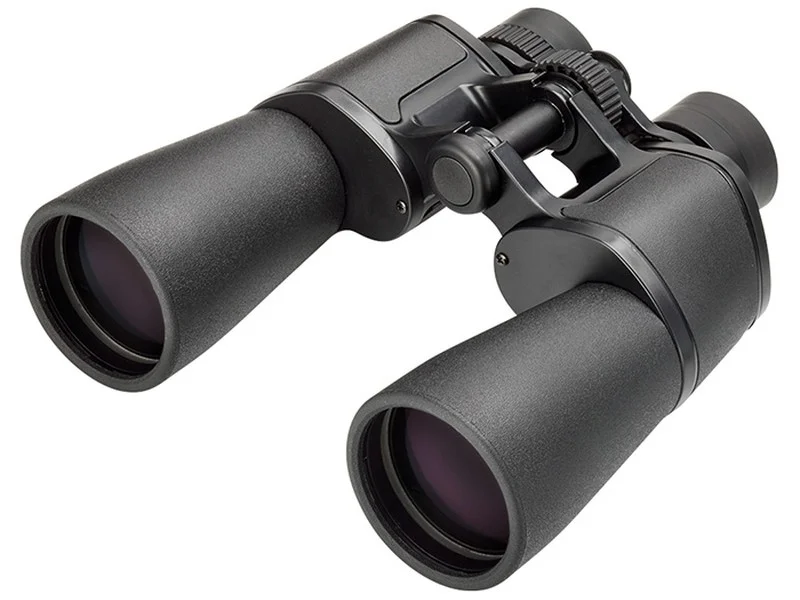
Bright 10x50s that show the Moon's biggest craters and the dark lava plains. Light enough to hold steady and easy to take anywhere.
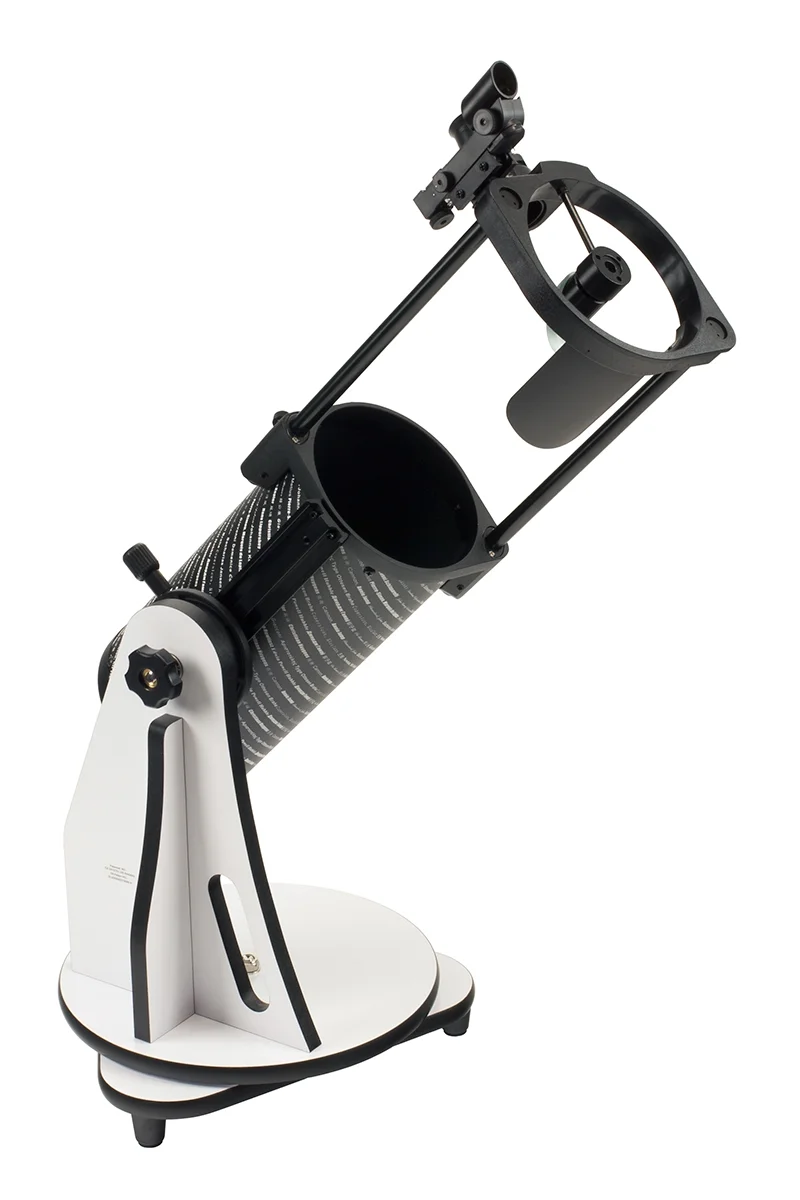
Enough aperture to pick out central peaks, crater chains and rays of ejecta, the same kind of debris DART threw off Dimorphos.
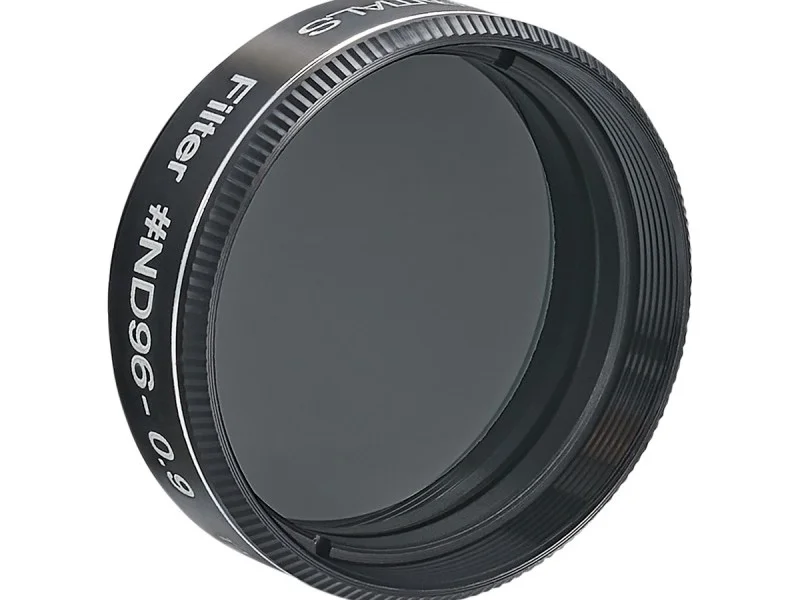
Astro Essentials ND96 Moon Filter
Screws into a 1.25-inch eyepiece and dims a bright Moon so crater detail stops washing out.
Affiliate links: you pay the same price, we earn a small commission that helps keep WatchTheStars free.
Hera Mission Timeline: Launch to Close-Ups
| Date | What happened |
|---|---|
| 26 September 2022 | NASA's DART hits Dimorphos |
| 7 October 2024 | Hera launches on a SpaceX Falcon 9 from Cape Canaveral, Florida |
| March 2025 | Flyby of Mars, with close-up images of its small moon Deimos |
| 7 October 2026 | Hera's first glimpse of Didymos, a single dot 236,500 km away |
| October 2026 | Two braking burns slow Hera to 20 m/s relative to the asteroids |
| 27 October 2026 | ESA releases the first image showing Didymos and Dimorphos separately |
| 25 November 2026 | First detailed images of Dimorphos due from ESA |
| Following months | CubeSats deployed, close survey of the crater, landings on Dimorphos, then Hera's own descent onto Didymos |
ESA puts the whole mission at €363 million at 2022 prices, including the launch. We'll update this post when the 25 November images arrive; it's in our astronomy events calendar too.
Can You See Didymos From the UK?
Sadly not. Didymos is under a kilometre wide and about 197 million km away, so it's far too faint for binoculars or any backyard telescope. You'll be following this one through ESA's pictures.
What you can see is plenty of evidence of what asteroids do. Every shooting star is a grain of rock or dust burning up in our atmosphere, and the next meteor shower in the UK is never far off. The craters on the Moon are a 4-billion-year record of impacts, and a pair of binoculars shows them beautifully. If you're new to this, our guide to stargazing for beginners is the place to start, and the UK night sky this week page lists what's worth going out for.
For anything happening right now, from planets to passing satellites, check what you can see in the sky tonight.
The Bottom Line
Hera's first image is two bright pixels on a dark background. But they're two pixels nobody has seen from up close before, and they mark the start of the first proper inspection of an asteroid humans have moved on purpose. DART showed we can nudge a space rock. Hera will show how hard we pushed, which is the number we'd need if a dangerous one ever turns up. The real pictures arrive on 25 November.
Sources:
- First light: Hera resolves two asteroids instead of one, ESA, 27 October 2026
- Braking news! Time for ESA's Hera asteroid mission to go slow, ESA, 7 October 2026
- Destination sighted: Hera's first glimpse of Didymos, ESA
- Hera mission overview, Hera's CubeSats and Hera FAQ, ESA
- Didymos and Dimorphos seen by DART, NASA/Johns Hopkins APL
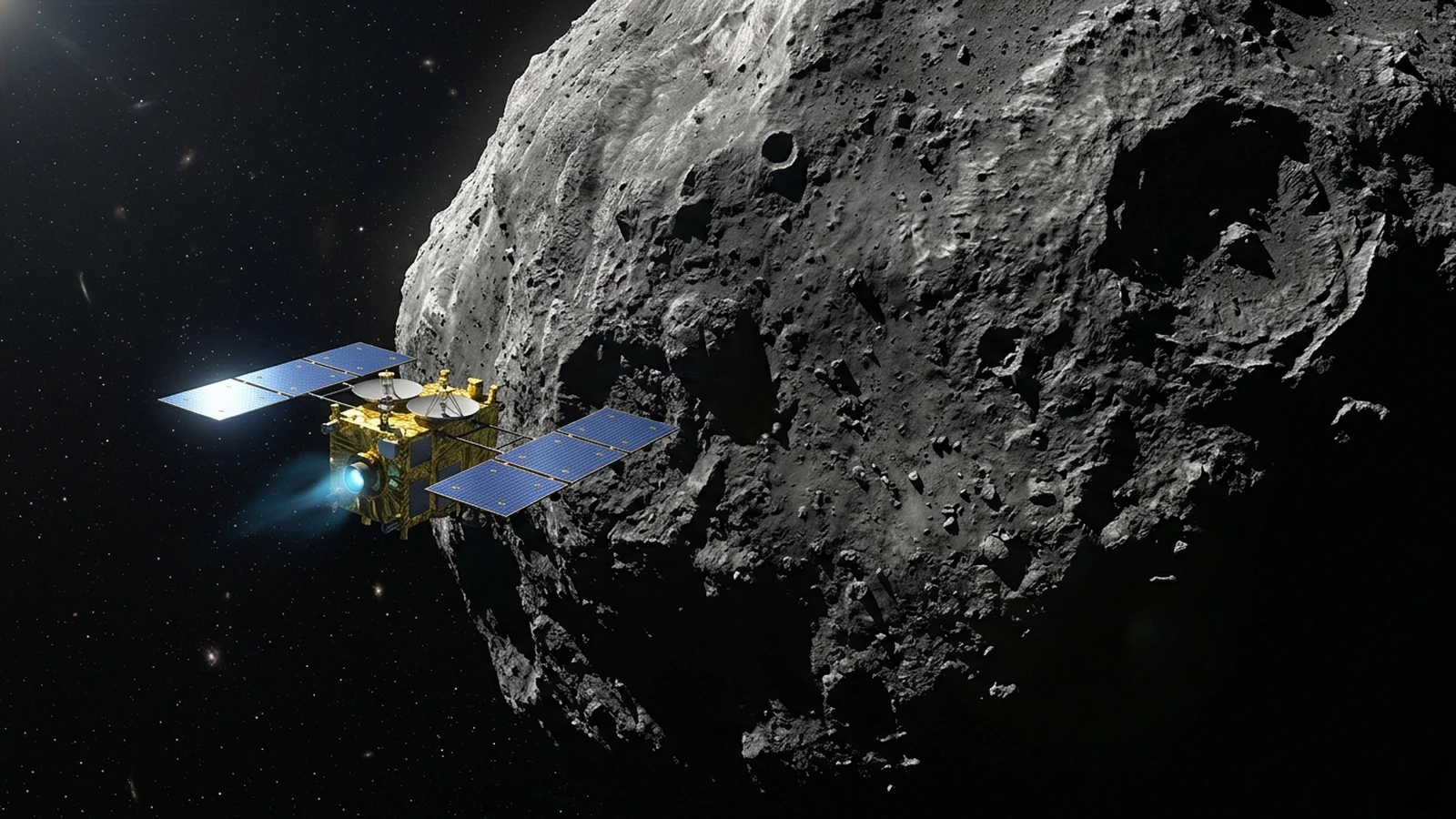
Header image: artist's impression of Hera approaching Dimorphos, ESA-Science Office, CC BY-SA 3.0 IGO.
Frequently Asked Questions
Equipment guides
Related topics
Ian ClaytonAmateur astronomer and founder of WatchTheStars.co.uk, dedicated to helping others explore the wonders of our universe. Full profile →