Key takeaways
- The DIA's UFO injury paper (AAWSAP DIRD D128, March 2010) opens with three people hurt in an 'aerospace-related event'. They were antenna engineers in a radio-frequency accident, written up in a medical journal in 1997
- The paper then says there are 'no significant differences' between the engineers' injuries and those of the Cash-Landrum UFO witnesses
- The engineers' source was known: broadband radio energy centred at about 785 MHz, from metres away. No UFO case in the paper has a measured field or a known source
- The Cash-Landrum medical data behind the comparison are cited as unpublished, privacy-protected files, so readers can't check it
- The Department of War's own summary says the paper 'does not establish a direct causal link between the reported injuries and any specific source'
Jump to section 8 sections
- What Is the Pentagon UFO Injury Report?
- Who Were the Three Antenna Engineers in the UFO Injury Study?
- How Does the DIA Injury Paper Introduce the Engineers?
- UFO Injuries and Cash-Landrum: The 'No Significant Differences' Claim
- Does the Injury Paper Prove UFOs Cause Injuries?
- Can Anyone Check the Cash-Landrum Medical Data?
- What Does the Pentagon Itself Say About the Injury Paper?
- How to Read the DIA UFO Injury Paper Yourself
The most talked-about paper in the Pentagon's sixth UFO file release is the DIA's UFO injury paper. Headlines picked out "radiation burns" and "unaccounted-for pregnancies". But the case the whole paper is built on isn't a UFO case at all. It's three antenna engineers who were hurt at work, and whose accident was written up in a medical journal in 1997.
This post follows that one thread: how the paper introduces the engineers, how it sets them beside the Cash-Landrum witnesses, and why that comparison can't carry the weight put on it. For the full chapter-by-chapter account, see our guide to the DIA's UFO injury study.
What Is the Pentagon UFO Injury Report?
The Pentagon UFO injury report is a 2010 Defense Intelligence Agency research paper called "Anomalous Acute and Subacute Field Effects on Human Biological Tissues". It was written for AAWSAP, the DIA's Advanced Aerospace Weapon System Applications Program, and published in full on 18 September 2026 as document DOW-UAP-D128.
It's one of 37 AAWSAP research papers in the Pentagon's sixth UFO file release, and one of only two that talk about unidentified craft in their own words. Its aim is stated on page 17: "to argue that data exists to 'reverse engineer' propulsion systems of anomalous aerospace vehicles, independent of origin, based on biology". In other words, work out how a UFO is powered from what it did to the people standing near it. Our AAWSAP programme guide rates all 37 papers, and the AAWSAP contract file shows what the DIA paid for them.
Who Were the Three Antenna Engineers in the UFO Injury Study?
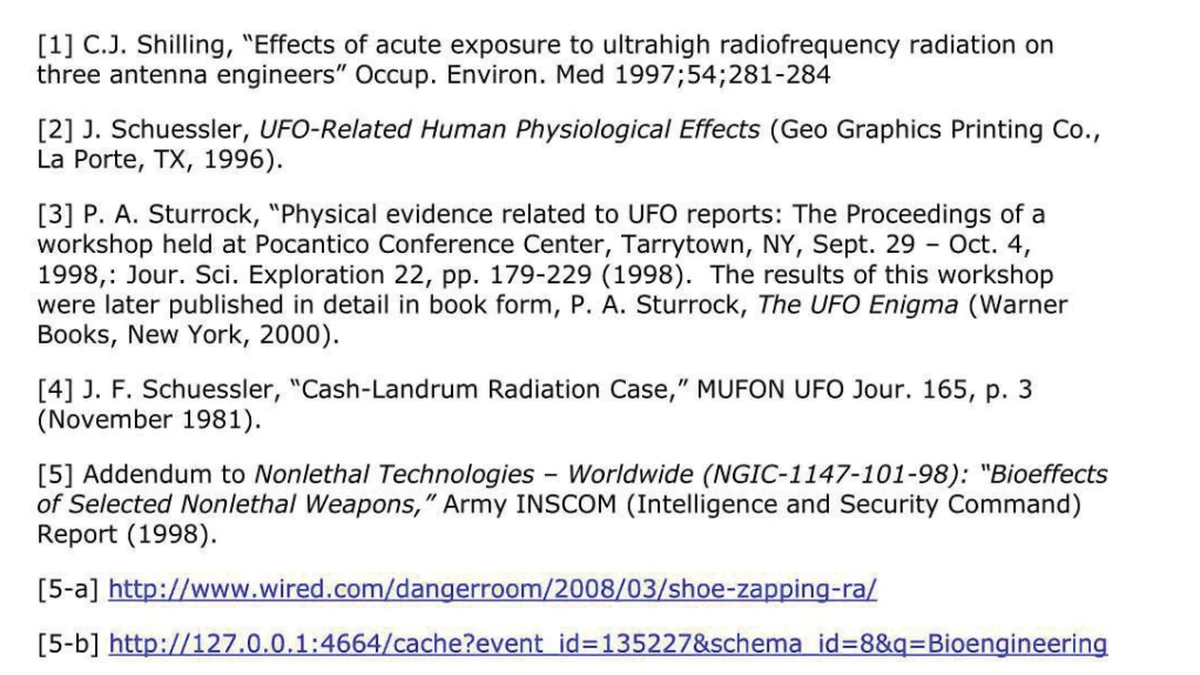
The three antenna engineers were people injured in an industrial radio-frequency accident. Their case was published in 1997 in the journal Occupational and Environmental Medicine, by C.J. Schilling (spelt "Shilling" in the DIA paper), under the title "Effects of acute exposure to ultrahigh radiofrequency radiation on three antenna engineers". It is reference [1], the very first source the paper cites.
According to the DIA paper, the three were exposed "in the near-field [meters] to a broad-band ultrahigh radiofrequency mixed radiation", "centered at about 785 MHz". Within 72 hours they had redness and heat over exposed skin, fever, pain, headaches, numbness, diarrhoea, hair loss and skin eruptions, followed by long-term headaches, poor sleep and anxiety. Two had sore, bloodshot eyes and light sensitivity. One developed a blood disorder and "signs of radiation illness", and over several years "signs of malignant transformations".
These were real people, really hurt. The key point is that everyone knew what had hurt them: a transmitter, at a known frequency, a few metres away.
How Does the DIA Injury Paper Introduce the Engineers?
The paper introduces the engineers as if they might be UFO witnesses, and only later says they were in an accident. Its preface begins: "Several years ago three previous fit and active individuals experienced an anomalous" event, with "anomalous" glossed in brackets as "irregular, incongruous and inconsistent with their domain", followed by the words "aerospace-related event".
Only after the full list of symptoms does it say what happened: "These three persons were antennae engineers subjected to an anomalous 'accident'". The quote marks around accident are the paper's own.
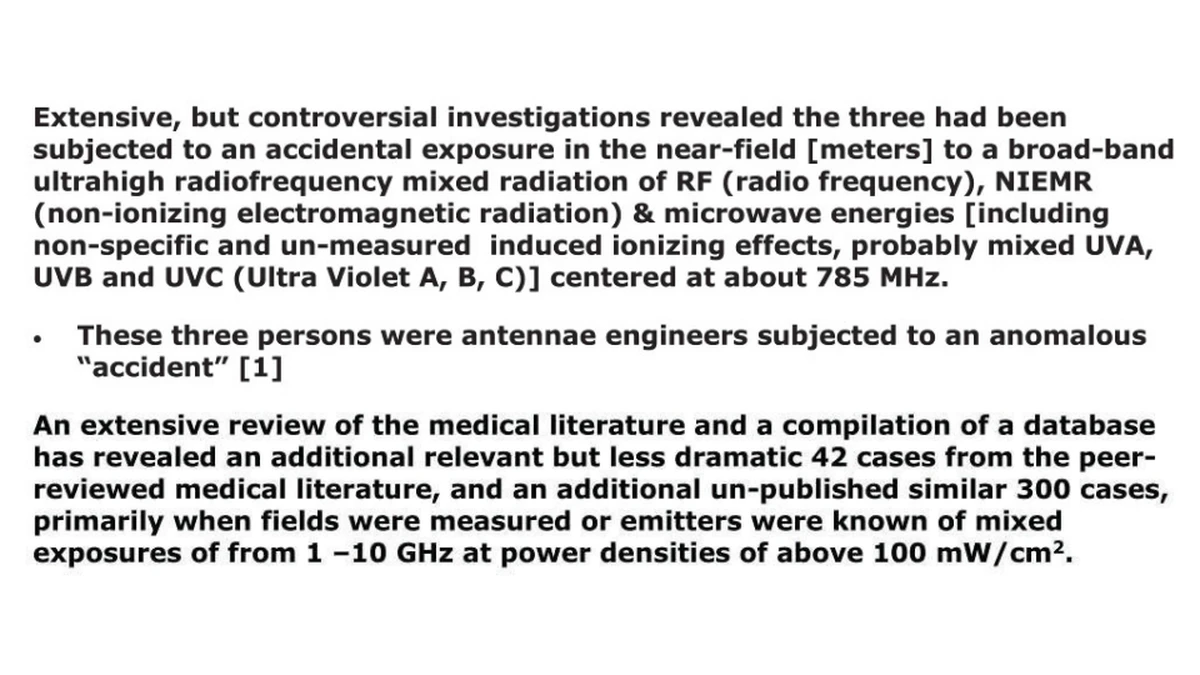
The same page adds that a wider search found 42 "less dramatic" cases in the medical literature and 300 unpublished ones, "primarily when fields were measured or emitters were known". So the medical evidence the paper leans on comes, by its own description, mostly from cases with known sources. The unpublished 300 aren't shown anywhere in the document.
Most odd lights have an answer you can see
Kit we've tested and reviewed in full
Not one UFO case in this paper came with a measured field or a known source. If you see something strange yourself, a decent pair of binoculars usually tells you in seconds whether it's a planet, a satellite or an aircraft. Our guide to the best binoculars for stargazing has the full comparison.
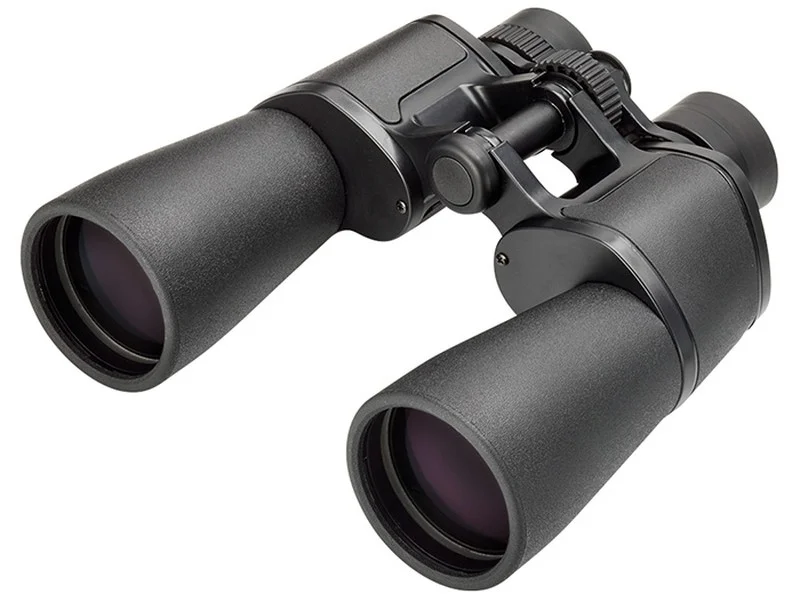
Bright and quick to aim, so you can get onto a moving light before it's gone.
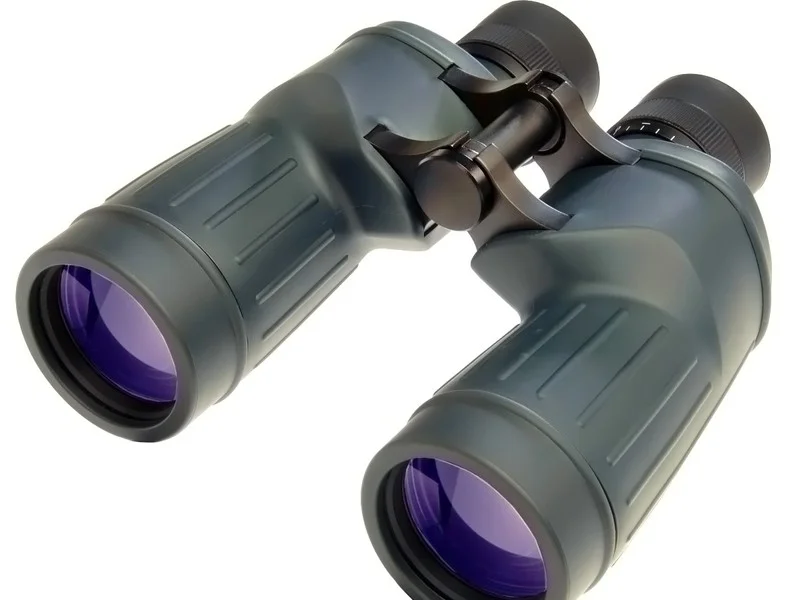
Built for long, damp nights outdoors, which is when most sightings happen.
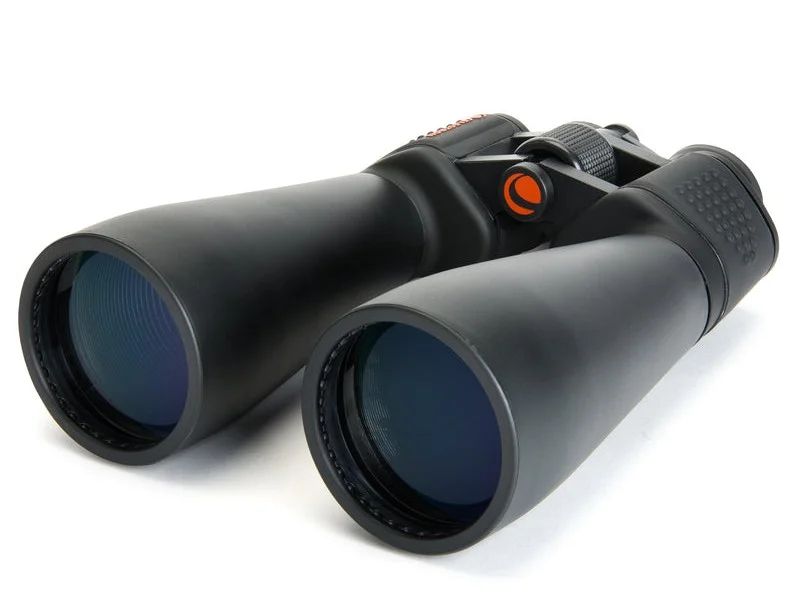
The extra aperture picks out navigation lights on a far-off aircraft. Best on a tripod.
Affiliate links: you pay the same price, we earn a small commission that helps keep WatchTheStars free.
UFO Injuries and Cash-Landrum: The "No Significant Differences" Claim
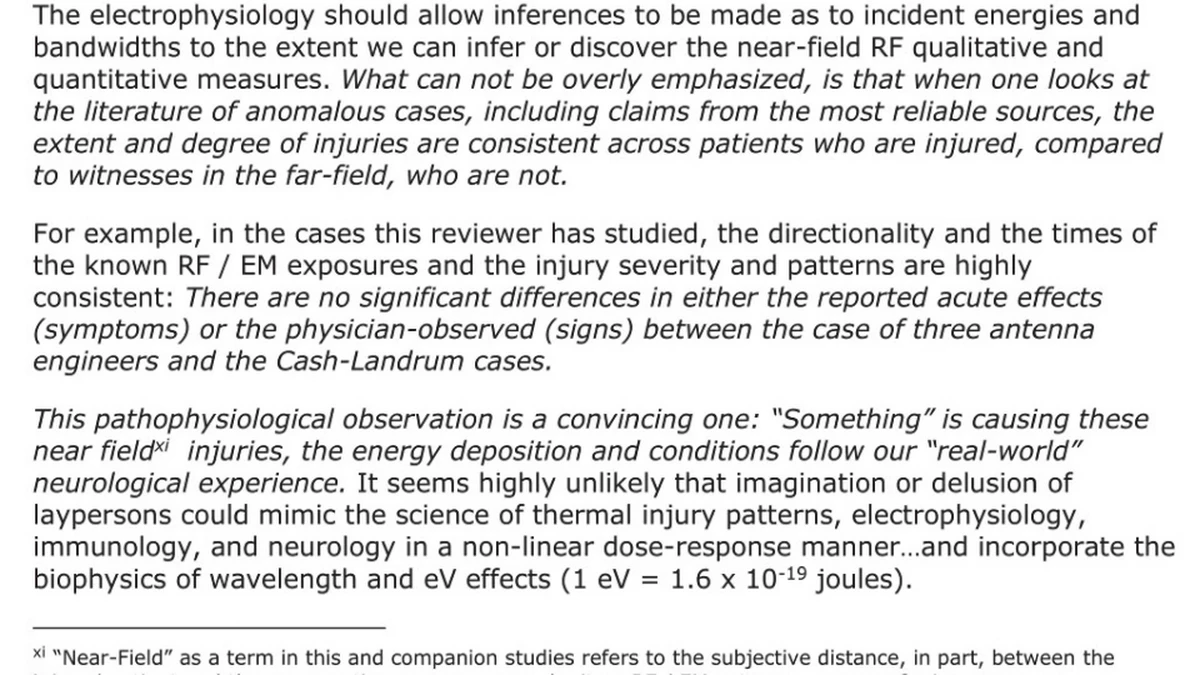
The paper's central claim is that the engineers and the Cash-Landrum witnesses can't be told apart medically. On page 12, in the author's own italics, it says:
"There are no significant differences in either the reported acute effects (symptoms) or the physician-observed (signs) between the case of three antenna engineers and the Cash-Landrum cases."
It follows that straight away with: "'Something' is causing these near field injuries". And then: "It seems highly unlikely that imagination or delusion of laypersons could mimic the science of thermal injury patterns, electrophysiology, immunology, and neurology in a non-linear dose-response manner."
Later the paper goes a step further. It cites a lab study in which skin cells exposed to 849 MHz radiation weren't damaged, and concludes that radio-frequency heating explains the Cash-Landrum burns but not the blood disorder and later illness: "one assumes the cells DNA damage was secondary to ionizing radiation". So, on the paper's reading, whatever the Cash-Landrum witnesses met gave off a mix of radio-frequency and ionising radiation.
Does the Injury Paper Prove UFOs Cause Injuries?
No. The DIA injury paper shows that the engineers and the Cash-Landrum witnesses had similar symptoms, and a match in symptoms tells you two groups of people suffered similar injuries. It doesn't tell you what caused them. The engineers' case is useful precisely because the source was known. Putting it beside a case where the source is unknown doesn't transfer that knowledge across.
Think of it this way. If two people turn up at A&E with the same burns, and one of them leant on a hot oven, that doesn't tell you what burned the other one. It tells you the other one probably touched something hot.
The paper's own argument against imagination cuts the same way. It says laypeople couldn't invent symptoms that fit real injury patterns so neatly. That's fair. But the simplest explanation for a real injury pattern is a real source of energy, and the paper offers no measured field, no identified emitter and no physical trace for any of its UFO cases. Even its definition of "near-field", in a footnote on page 12, calls it the "subjective distance" between the patient and the presumed source, whether that's an antenna, a microwave source or an unidentified object.
Can Anyone Check the Cash-Landrum Medical Data?
Not from the DIA injury paper. It never sets out the Cash-Landrum medical records. The comparison rests on two sources: reference [4], John Schuessler's article "Cash-Landrum Radiation Case" in the MUFON UFO Journal of November 1981, and reference [40], listed simply as "Green, CC 2001, 2009 Unpublished HIPPA files".
The paper says the clinical data in it are "HIPAA - protected", meaning covered by US medical privacy law. That's a proper reason to keep patient records private. It also means the one claim the whole argument hangs on can't be checked by anyone reading it. The author, redacted as "AAP Person 81", cites those files as their own. We don't name the author: the release doesn't.
The paper's other UFO material is of the same kind. Appendix A reproduces Schuessler's 1996 MUFON catalogue of 356 reported cases, where burns sit in a tally with abductions and telepathy. It also points readers to Brazilian Air Force papers on the 1977 Colares sightings, which we covered in our post on Brazil's secret service file on Colares.
What Does the Pentagon Itself Say About the Injury Paper?
The Department of War's own catalogue is much more cautious than the paper. It says the paper attempts "to draw tentative parallels" between claimed symptoms and known radio-frequency injuries, and that it "does not establish a direct causal link between the reported injuries and any specific source".
It goes on to say the findings "rely heavily on case comparisons lacking physical examinations, untestable exposure conditions, and a mix of established science and more controversial literature". That's about as plain as an official summary gets.
None of this makes the paper worthless. Its chapters on how radio-frequency energy heats the body are mainstream science, and the companion paper on high-power microwave sources (DIRD D121) covers the engineering soberly. The weak point is one specific step: from "these injuries look like radio-frequency injuries" to "so an advanced craft caused them".
How to Read the DIA UFO Injury Paper Yourself
The paper is public domain. Open it in our PURSUE files browser under D128, which links to a download from our own mirror. The UAP document archive lists every collection we've catalogued, and the UAP research hub gathers all our case work in one place.
And if you see something odd overhead yourself, check the ordinary answers first. Most bright moving lights turn out to be satellites or the space station, so look up ISS passes tonight for your area, and see what you can see in the sky tonight for the bright planets. If you're just starting out, our guide to stargazing for beginners covers the usual suspects.
Sources:
- DOW-UAP-D128, "Anomalous Acute and Subacute Field Effects on Human Biological Tissues", AAWSAP DIRD, 11 March 2010, US Department of War, PURSUE Release 06, 18 September 2026
- Department of War records catalogue entry for DOW-UAP-D128, PURSUE Release 06
- DOW-UAP-D121, "Pulsed High-Power Microwave Source Technology", AAWSAP DIRD, 28 January 2010, PURSUE Release 06
Header image: an illustration generated with Google Gemini, not a photograph of any site in the paper. Document pages: DOW-UAP-D128, US Department of War, public domain.
Frequently Asked Questions
Equipment guides
Related topics

Ian ClaytonAmateur astronomer and founder of WatchTheStars.co.uk, dedicated to helping others explore the wonders of our universe. Full profile →