Key takeaways
- Astronomers watched a star of about 0.7 solar masses spiral into a supergiant in the Andromeda Galaxy and merge with it, an event NASA calls a first of its kind.
- The Andromeda star merger, nicknamed Bao (AT 2025abao), took only about seven orbits, or seven years, once the two stars touched.
- James Webb observed Bao on 24 December 2025, 47 days after the eruption peaked, the earliest follow-up of an event like this.
- The Andromeda Galaxy never sets from the UK and is almost overhead at about 9pm GMT in late November, magnitude 3.4.
Jump to section 5 sections
Andromeda Galaxy Star Merger: What NASA Announced
Astronomers have watched one star swallow another in the Andromeda Galaxy, and for the first time they followed the whole thing from start to finish.
NASA announced the result on 18 November 2026, alongside a paper in Nature led by Viraj Karambelkar, a NASA Hubble Fellow at Columbia University in New York. A star slightly less massive than the Sun spiralled into a bloated supergiant on the outskirts of Andromeda, and the two became one. The team nicknamed the system Bao. Its official name is AT 2025abao.
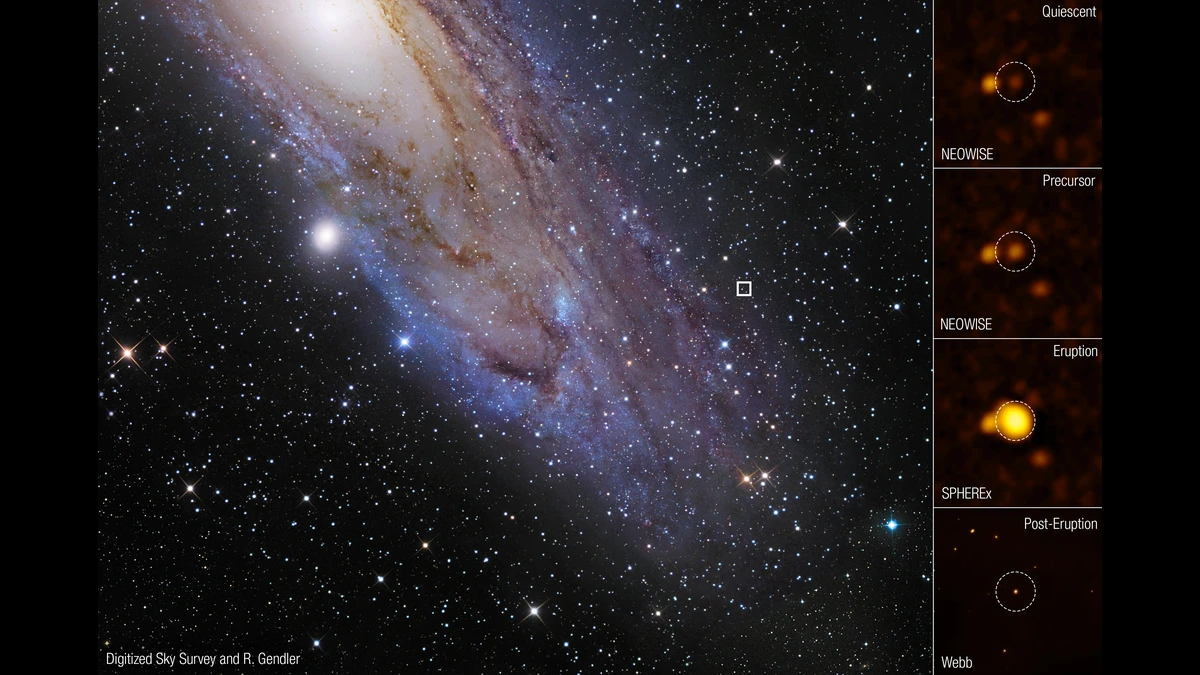
NASA calls it "a first of its kind". Mergers between stars have been spotted before, but usually after the fact, with astronomers working backwards from the wreckage. Bao was caught early. The team noticed something odd in 2023, kept watching, and had several telescopes on it when it erupted in October 2025.
"Stellar mergers are very, very difficult to observe in real time because they are hard to predict," Karambelkar said.
Stellar Merger Explained: Big Bao and Little Bao
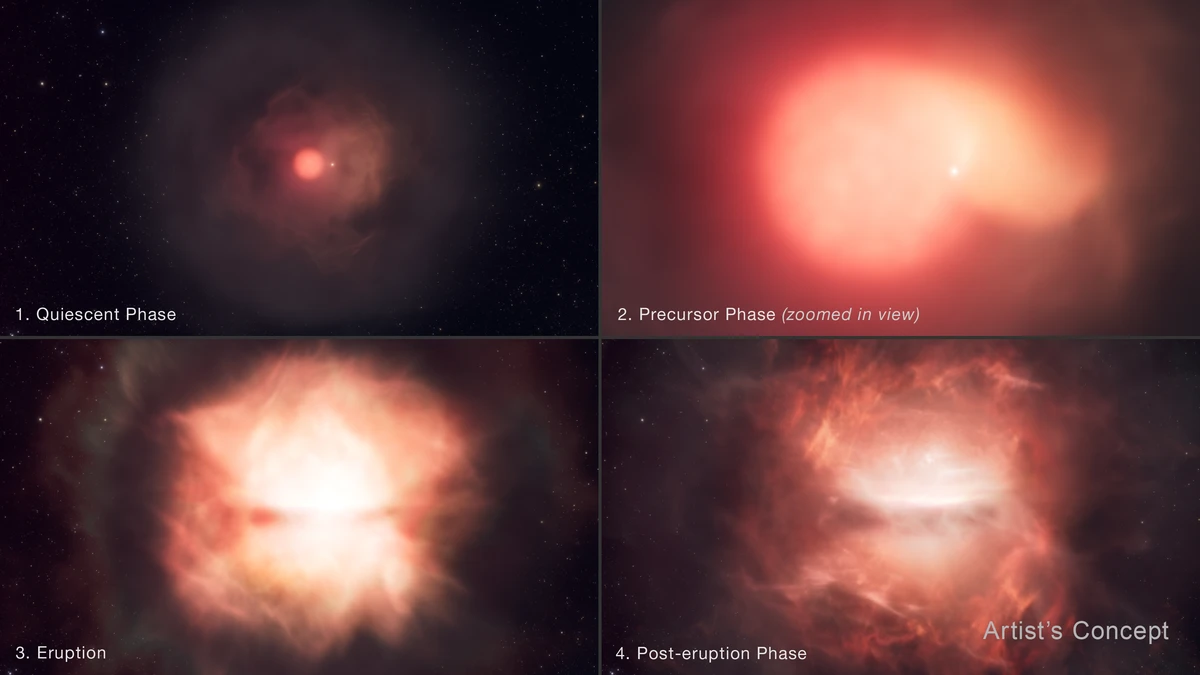
Before the merger, Bao was a binary: two stars orbiting each other, as many stars do. You may remember Betelgeuse's companion star being imaged this summer. Most pairs like that live quietly side by side.
Bao's pair didn't. The bigger star, which the team calls Big Bao, was a giant. Compared with the Sun it was seven times as massive, 350 times as wide and 18,000 times as bright. Co-author Karel Temmink of Radboud University, who ran the simulations, called it "an absolute beast of a star".
Little Bao was about 0.7 times the mass of the Sun, a touch smaller and fainter. The team's models gave the first estimate of its mass.
As big stars age they swell. Once Big Bao's outer layers reached its partner, Little Bao began ploughing through them and stripping gas away. Astronomers call this stage a common envelope, because the gas around the pair is shared. The drag robbed Little Bao of orbital energy and it spiralled inwards.
The surprise was the speed. Once the stars touched, the merger took only about seven orbits, roughly seven years. Other known mergers between smaller stars took thousands of orbits. "One day, its brightness started rising and within a week, it peaked!" said co-author Nadia Blagorodnova of the University of Barcelona.
The simulations suggested Little Bao might have had enough energy left to escape. It didn't. It was dragged all the way into Big Bao's core, which Kishalay De of Columbia described as "almost like a bomb exploding inside a living star". What's left is a single star, now simply called Bao. Nobody yet knows how it will settle down.
James Webb's Part: Bao 47 Days After the Peak
Several telescopes took part, and the timeline shows how long the team watched before anything dramatic happened:
- February 2023: NASA's NEOWISE spots an unusual variable star. Before 2018 it had been steady.
- September 2024: the WINTER infrared telescope shows it brightening and throwing off dust.
- July 2025: NASA's SPHEREx sees it fade in visible light and brighten in infrared.
- 17 October 2025: the Zwicky Transient Facility catches the eruption.
- November 2025: NASA's Swift and the Gemini North telescope in Hawaii follow up.
- 24 December 2025: the James Webb Space Telescope observes it.
"Webb observed Bao only 47 days after the stars' eruption peaked, the earliest ever follow-up of an event like this," Karambelkar said. Webb's mid-infrared data measured the dust Big Bao had shed over centuries. That let the team pick the simulation that matched and work out how much mass was thrown off, and how efficiently the common envelope did its job.
In other systems, both stars survive the common envelope and end up in a tight orbit. Over time, pairs like that can become neutron stars and black holes, explode as supernovae like the one we tracked in NGC 7331, or send out gravitational waves. Knowing how efficient the envelope stage is feeds into all of them.
How to See the Andromeda Galaxy From the UK
You won't see Bao itself. It's a single star 2.5 million light-years away. But the galaxy it lives in is one of the best sights of the British winter, and right now it is almost straight overhead.
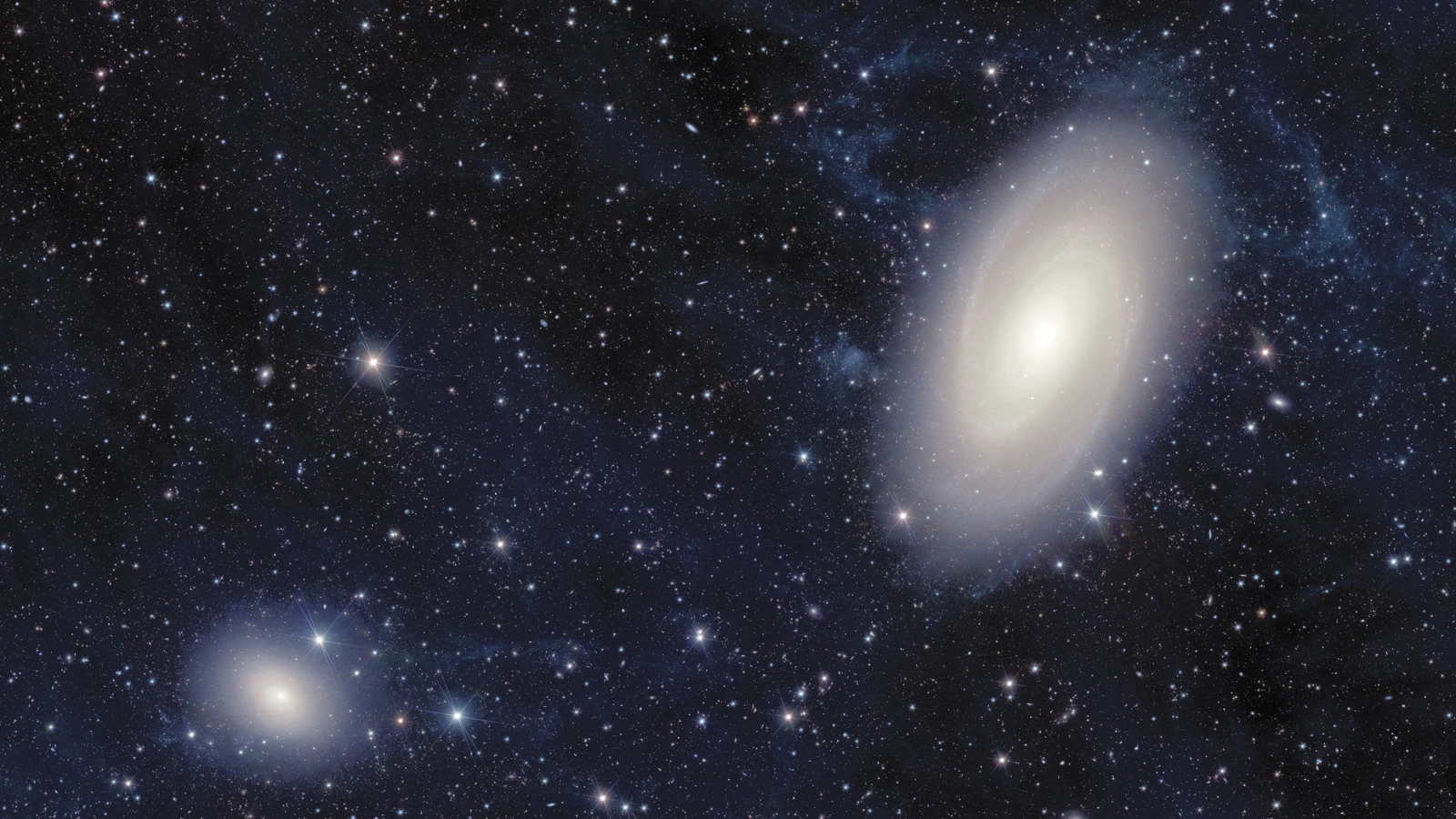
The Andromeda Galaxy never sets from anywhere in the UK. In late November it is high in the east as it gets dark and climbs to its highest, almost overhead in the south, at about 9pm GMT. Tonight (Thursday 19 November) it reaches 78° up from Birmingham at 8:56pm, 81° from Plymouth and 75° from Edinburgh. At magnitude 3.4 it's visible to the naked eye from a dark site as a faint, elongated smudge.
The Moon is the problem this week. It's 73% lit tonight and doesn't set until about 2am, and Full Moon is on Tuesday 24 November. You can still find Andromeda through moonlight with binoculars, but for the naked eye wait for darker skies. From about 28 November the Moon rises after 8pm. From 1 to 12 December it's out of the evening sky altogether, and that's the best time to look. Check is it a full moon tonight before you head out, and see what you can see in the sky tonight for your postcode.
To find it, start at the Square of Pegasus. From its top-left corner star, Alpheratz, follow the line of stars to the left to Mirach. From Mirach, turn up to the fainter Mu Andromedae, then go the same distance again. Andromeda sits just past Nu Andromedae. If you know Cassiopeia, the galaxy lies about 15° from Schedar, the brightest star in the W, on the side towards the Square of Pegasus.
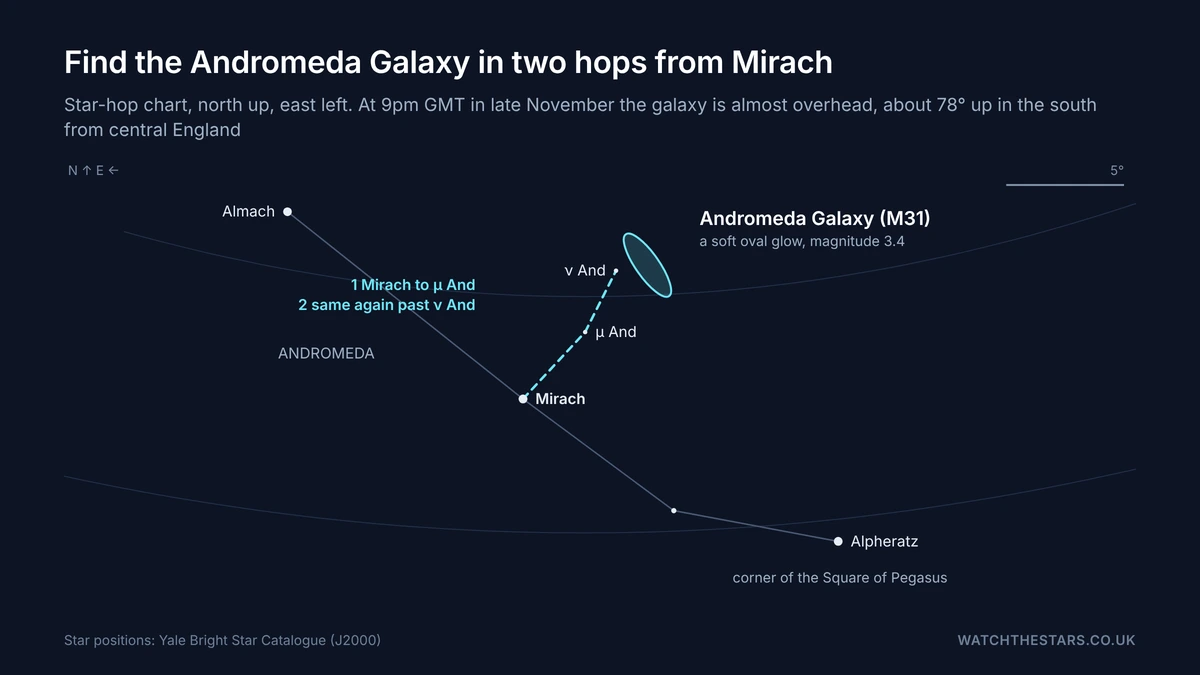
Binoculars are the easiest way in, and our guide to binocular astronomy covers how to hold them steady for a target this high. In 10x50s the core shows as a bright oval, with a fainter glow stretching either side. Get away from streetlights if you can; our UK dark sky sites map shows the nearest properly dark spot. If you're new to all this, start with stargazing for beginners.
Find the Andromeda Galaxy yourself
Kit we've reviewed in full
You won't see Bao, but you can see the galaxy it lives in on any clear night this winter. Here's the kit we'd use, from a first look to a photo.
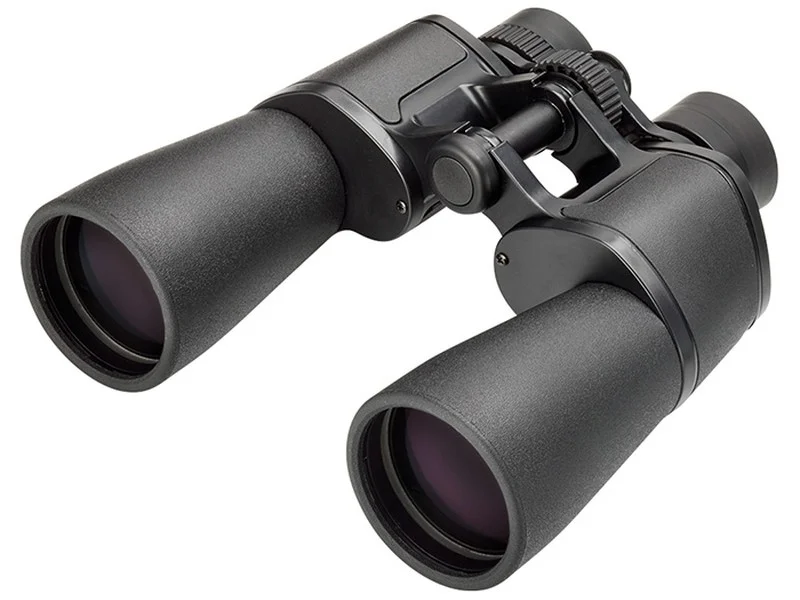
Turns Andromeda's faint smudge into a clear oval with a bright core, and its small companion galaxy M32 shows as a fuzzy star on a dark night.
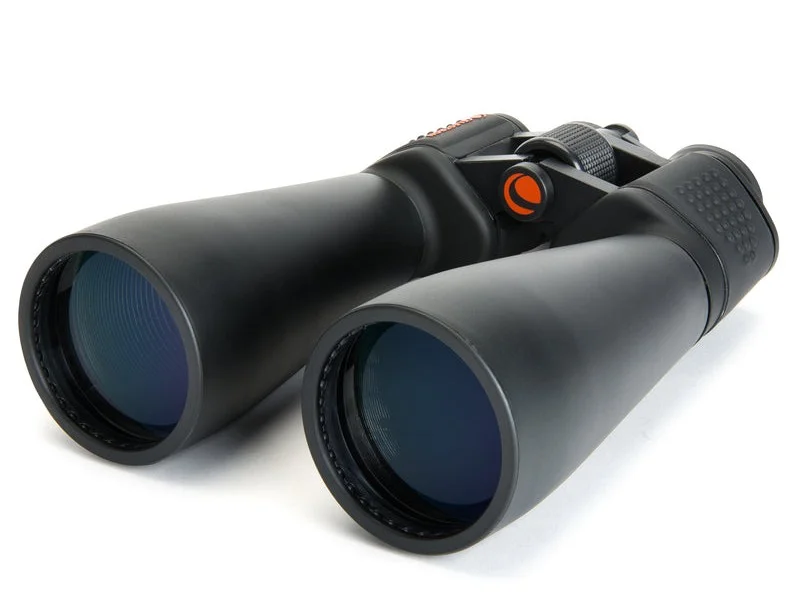
More light shows more of the galaxy's length, and from a dark site the fainter companion M110 joins M32 in the field. Use a tripod; Andromeda is high overhead and your arms will thank you.
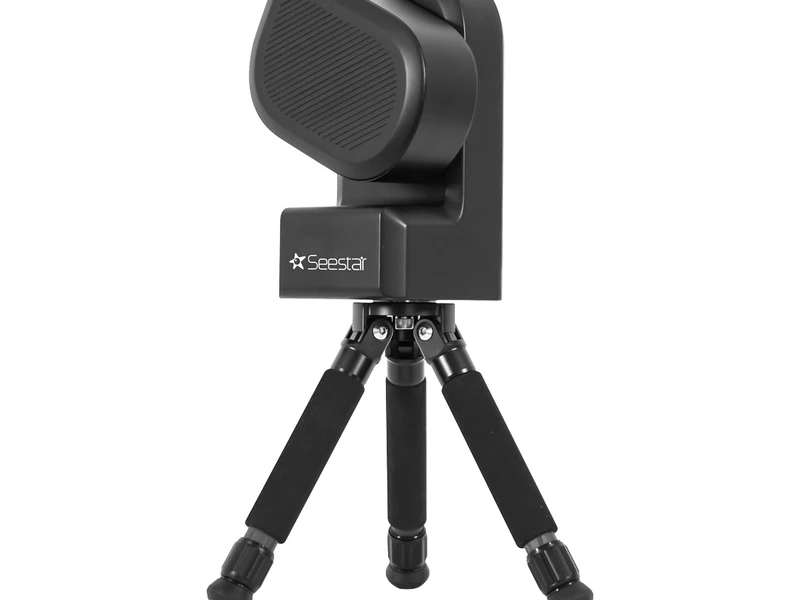
Andromeda is one of the best smart-telescope targets there is. Twenty minutes of stacking brings out the bright core and the dark dust lanes.
Affiliate links: you pay the same price, we earn a small commission that helps keep WatchTheStars free.
More Star Mergers to Come: What Roman Will Add
Bao probably won't stay unique for long. NASA's Nancy Grace Roman Space Telescope, launched this summer, is about to start its Galactic Bulge Time-Domain Survey. It will watch huge numbers of stars towards the centre of the Milky Way, over and over, and NASA expects it to turn up a flood of new transient events: things that brighten, flare or fade.
"There's going to be a large influx of similar discoveries just ahead," Karambelkar said. With luck, some of them will be caught early, as Bao was, and followed all the way through.
For the latest on Andromeda's place in the sky, and everything else up this week, see our UK night sky this week guide.
Sources:
- NASA Data Clinches First-of-Its-Kind Stellar Merger, NASA Webb Mission Team, 18 November 2026
- AT 2025abao in the Andromeda Galaxy and Andromeda Star Merger (Artist's Concept), NASA image pages
- Earlier paper on AT 2025abao's progenitor, The Astrophysical Journal, 2025
- Andromeda Galaxy positions and times computed with Skyfield (JPL DE421) for Birmingham, Plymouth and Edinburgh.
Header image: part of the Andromeda Galaxy with Bao marked. NASA, ESA, CSA, STScI, Viraj Karambelkar (Columbia), Kishalay De (Columbia); image processing Alyssa Pagan (STScI); acknowledgment DSS, Robert Gendler.
Frequently Asked Questions
Equipment guides
Related topics
Ian ClaytonAmateur astronomer and founder of WatchTheStars.co.uk, dedicated to helping others explore the wonders of our universe. Full profile →