Key takeaways
- Astronomers using ESO's Very Large Telescope have captured the clearest image yet of Betelgeuse B, a companion star orbiting Betelgeuse, ending a search that lasted around 100 years
- The companion, officially named Siwarha, is two to three times the mass of the Sun: much heavier than predicted, which is the only reason it was bright enough to photograph
- Siwarha orbits Betelgeuse roughly every six years at about 4 astronomical units, closer in than Jupiter sits to our Sun, and likely explains the supergiant's six-year brightness cycle
- One more observation is needed to confirm the discovery, when the companion swings round to the other side of Betelgeuse in late 2027
- Betelgeuse is still on course to explode as a supernova one day, and you can see it with the naked eye from the UK: it's returning to pre-dawn skies now
Jump to section 6 sections
Astronomers have finally photographed a companion star orbiting Betelgeuse, one of the most famous stars in the night sky. The team behind the discovery used the European Southern Observatory's Very Large Telescope in Chile, and their leader called the image "the conclusion of a century-long quest".
The idea that Betelgeuse might have a hidden partner was first floated about 100 years ago, to explain the red supergiant's odd habit of slowly brightening and fading. Generations of astronomers looked and found nothing. Now we know why: the companion spends most of its time buried in Betelgeuse's overwhelming glare, and only the sharpest instrument on Earth, pointed at exactly the right moment, could pick it out.
Betelgeuse Companion Star: What Have Astronomers Found?
The companion is called Betelgeuse B, and it has since been given an official name: Siwarha, from the Arabic for "her bracelet". It's a fitting partner for Betelgeuse, whose own name comes from an Arabic phrase usually translated as "the hand of the giant". Before the formal name arrived, astronomers had been affectionately calling it "Betelbuddy".
The team, led by Miguel Montargès of the Observatoire de Paris, published the result in the journal Astronomy & Astrophysics. And the star that turned up wasn't quite the star anyone expected. Predictions suggested a faint companion about the mass of the Sun. Siwarha turns out to be two to three times the Sun's mass, and brighter with it.
"Honestly, I thought we did not have the sensitivity to detect Betelgeuse B as it was predicted," Montargès said. "Because it is more massive than predicted, we see it! I jumped from my chair when I saw the processed images."
That extra heft is the whole reason the image exists. A Sun-like star would have stayed hidden.
Siwarha: The Star Hiding in Betelgeuse's Glare
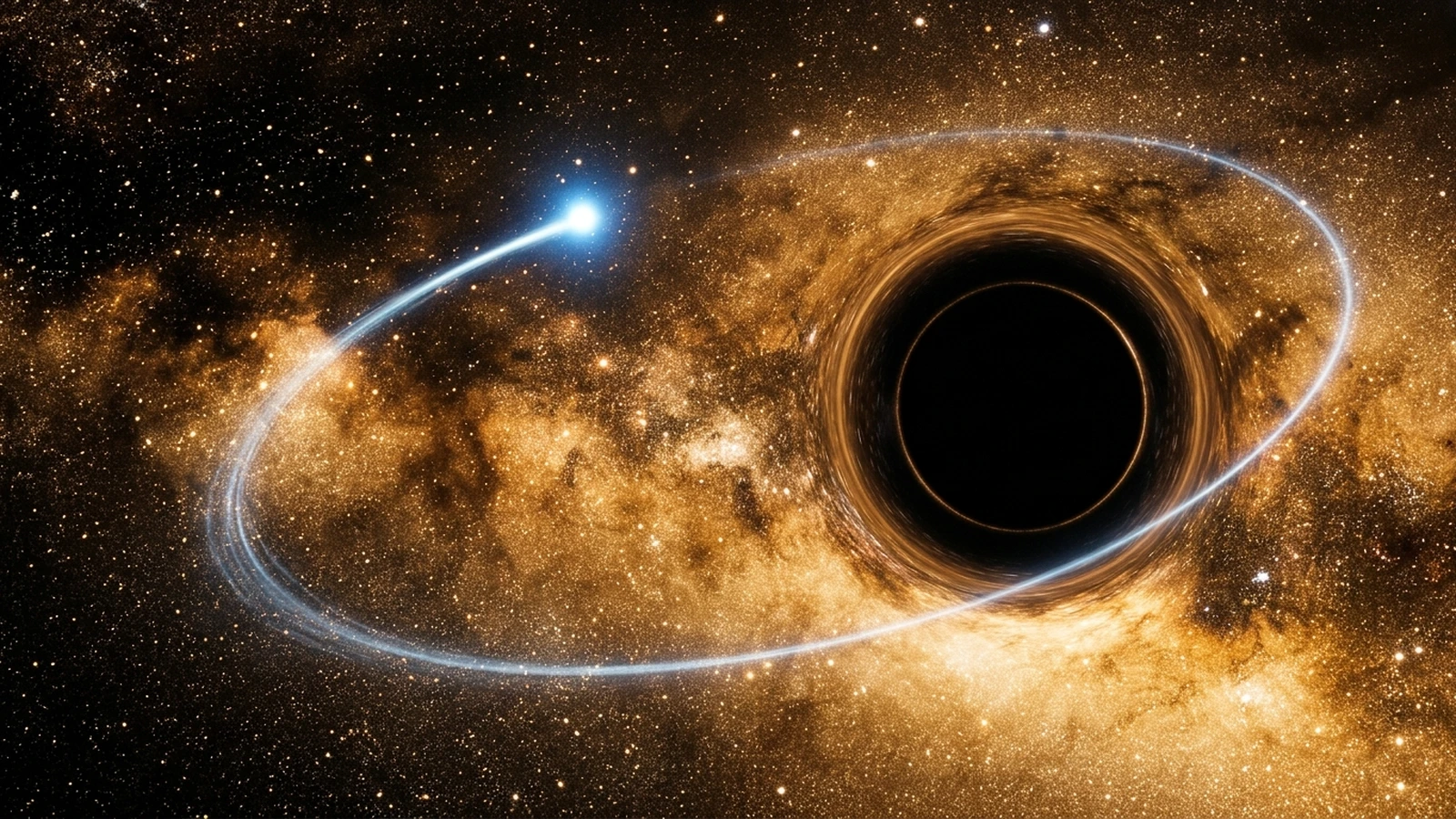
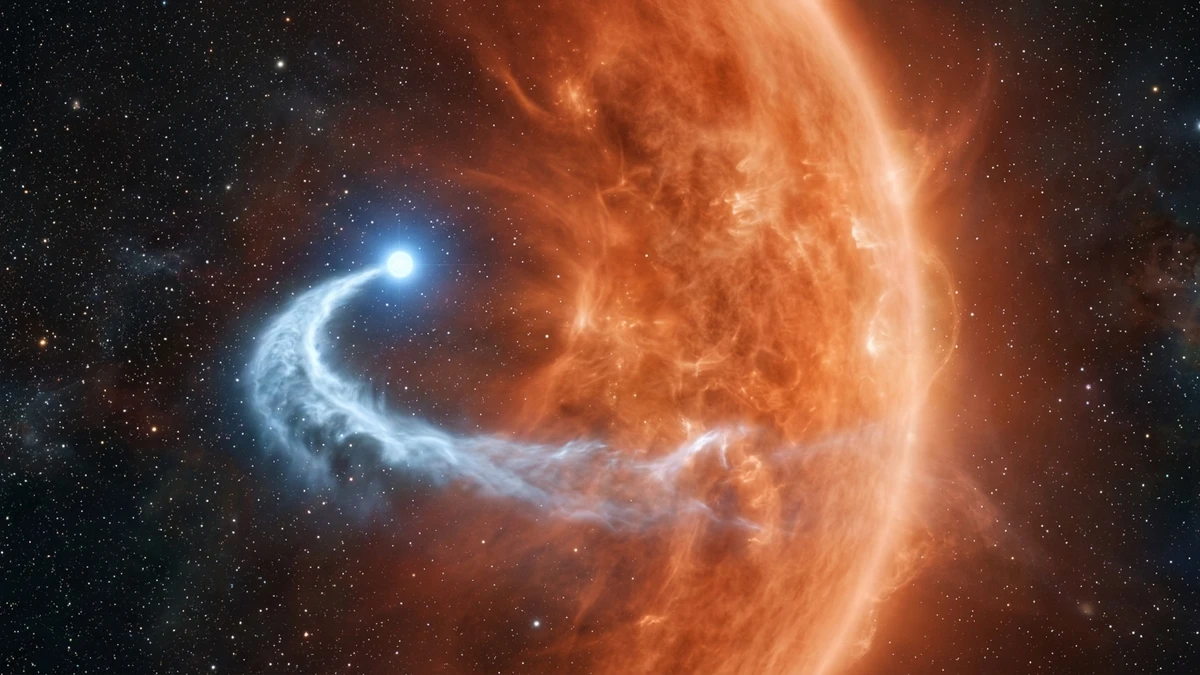
Siwarha orbits Betelgeuse roughly once every six years, at a distance of about 4 astronomical units. That's closer than Jupiter sits to our Sun. Around an ordinary star that would be unremarkable, but Betelgeuse is not an ordinary star. It's a red supergiant so bloated that if you dropped it where the Sun is, its surface would reach out towards Jupiter's orbit.
Which means Siwarha spends its whole orbit practically skimming the surface, ploughing through the supergiant's thin outer atmosphere on every lap. Earlier this year, Hubble observations spotted a dense trail of gas moving through Betelgeuse's outer layers: the wake left by the companion as it swims through.
It's an arrangement with a grim ending. Orbits that tight around a star that big don't last, and some astronomers expect Siwarha to eventually spiral into Betelgeuse and be swallowed whole. Not for thousands of years, though. No need to set an alarm.
How Was Betelgeuse B Photographed?
The photograph took a century of theory, two years of planning and several months of processing. Two studies published in 2024 predicted that in December of that year, Siwarha would reach its widest separation from Betelgeuse as seen from Earth, the one brief window when it might peek out of the glare.
Montargès and his team pointed the Very Large Telescope at Orion's shoulder on schedule, using an instrument called SPHERE that was originally built to photograph planets around other stars. SPHERE combines adaptive optics, which cancel out the blurring of Earth's atmosphere, with processing techniques designed to dig faint points of light out from beside blindingly bright ones. It found a star sitting exactly where the predictions said it should be.
"It is remarkable to see how SPHERE and advanced post-processing techniques, originally developed to find exoplanets, also excel at detecting a companion around a massive, evolved star like Betelgeuse," said co-author Anthony Boccaletti.
There's one box left to tick. "To be certain that the companion is really there, we still need to observe it in one year on the other side of the star," Montargès said, "but there is very little space left for doubt." That confirmation observation should come in late 2027, when Siwarha swings round to Betelgeuse's far side.
See Betelgeuse for yourself
Kit we've reviewed in full
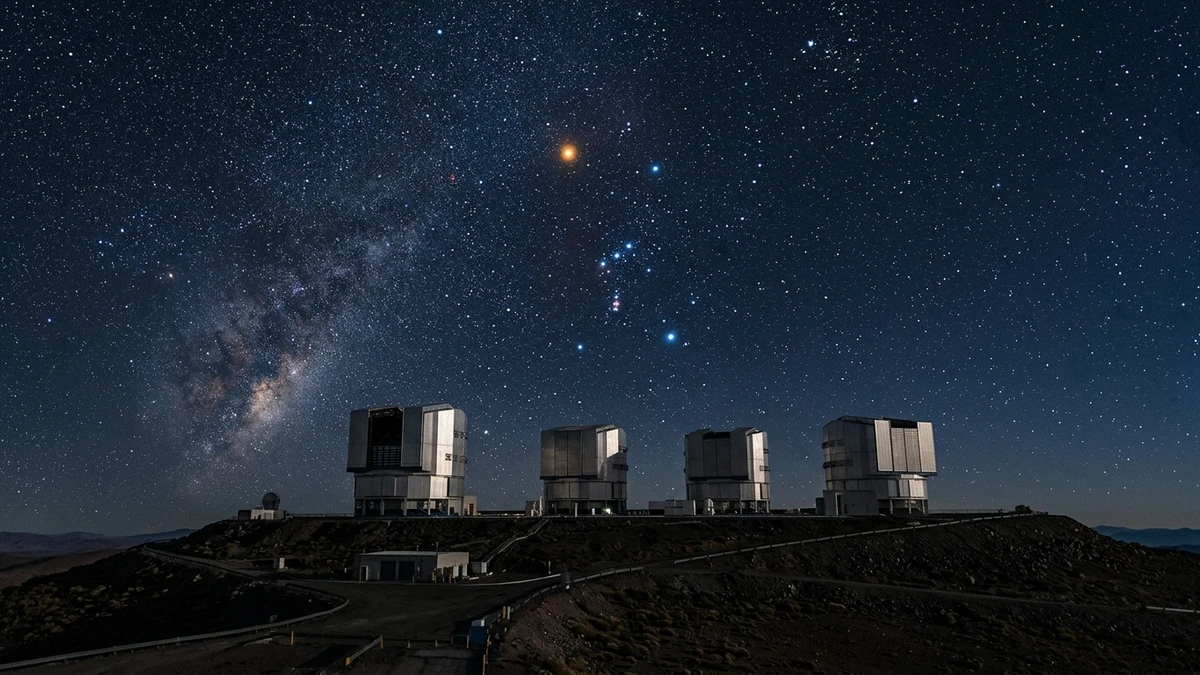
You won't split the companion with any amateur kit, but Betelgeuse itself is a glorious sight. Its orange glow is obvious to the naked eye and even richer through binoculars, with the Orion Nebula waiting just below.

Perfect for soaking up Betelgeuse's colour and sweeping down Orion's Belt to the nebula below. Light enough to grab for a quick pre-dawn look.
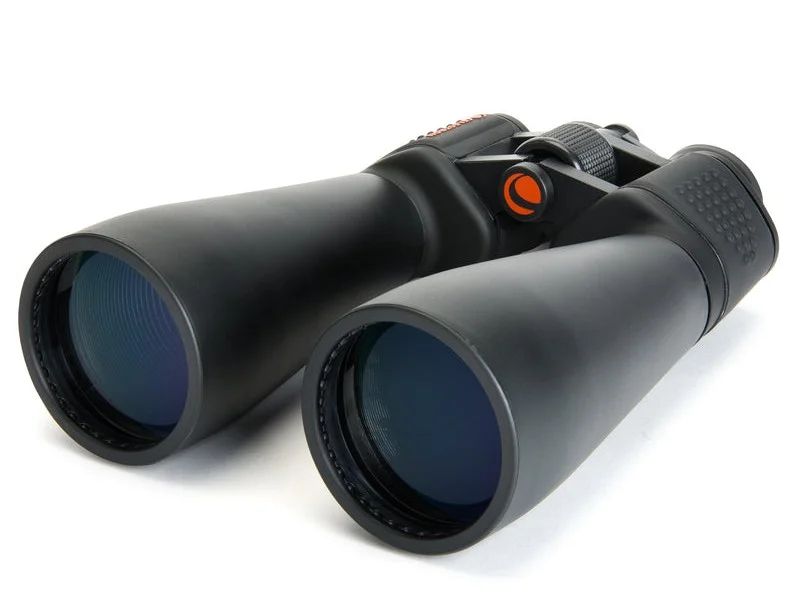
The extra aperture makes star colours more vivid, and Orion's star fields are some of the richest in the sky to sweep through.
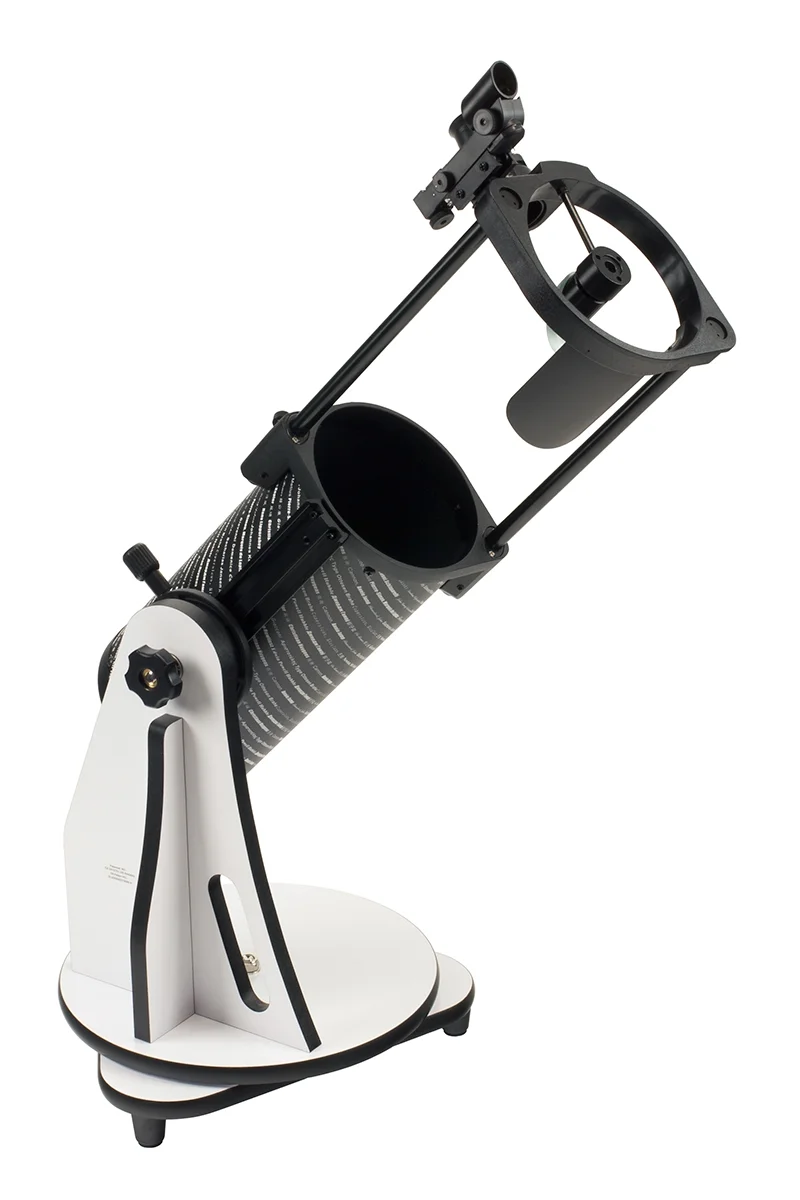
Enough aperture to show the Orion Nebula's wings and the Trapezium cluster at its heart once Orion returns to the evening sky.
Affiliate links: you pay the same price, we earn a small commission that helps keep WatchTheStars free.
Why Does Betelgeuse Change Brightness?
Betelgeuse has been watched for millennia, and its wobbling brightness has always been part of its character. There are two main rhythms. One is a cycle of roughly 400 days, caused by the star itself puffing up and shrinking back down. The other is a slower swell and fade over about six years, and that one has resisted explanation for a century.
Siwarha fits that six-year cycle almost perfectly. As the companion orbits, it stirs up the dusty gas that surrounds Betelgeuse, periodically sweeping our line of sight a little clearer or a little murkier. The star's brightness rises and falls with the traffic.
If you're thinking of the famous "Great Dimming" of 2019–20, when Betelgeuse faded so dramatically that some wondered if it was about to explode, that was a different event. Montargès led the team that solved that mystery too: the star had belched out a cloud of dust that temporarily blocked part of its light. Betelgeuse, it turns out, keeps generating new ways to confuse us.
When Will Betelgeuse Go Supernova?
Betelgeuse is still going to explode. It's a massive star near the end of its life, and sometime within the next 100,000 years or so it will collapse and blow itself apart as a supernova. From the UK it will briefly rival the full Moon, cast shadows at night and be visible in broad daylight. It will be the astronomical event of a lifetime, whenever it happens. Most likely long after all of us.
What the new discovery changes is the questions astronomers ask in the meantime. A companion of two to three solar masses, orbiting through the supergiant's outer layers, could plausibly affect how Betelgeuse loses mass in its final ages, and mass loss shapes how a star dies. "The question is truly opened whether this companion is going to have an impact on the evolution of the red supergiant," Montargès said.
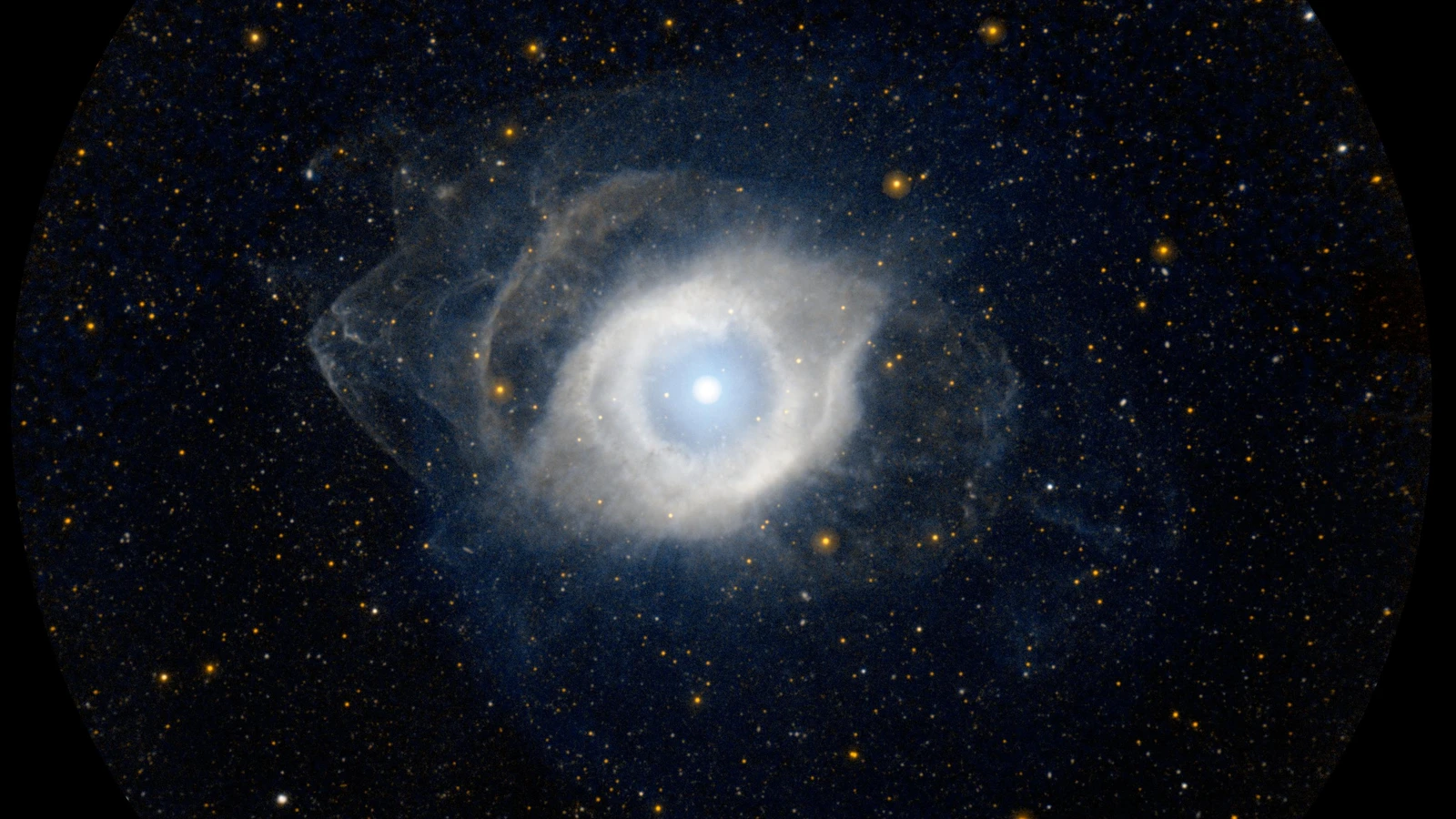
Massive stars like Betelgeuse go out in violence. Smaller stars like our Sun end far more gently, shrugging off their outer layers into glowing shells, something astronomers watched in beautiful detail this month in the Helix Nebula. Betelgeuse gets the louder exit.
How to See Betelgeuse From the UK
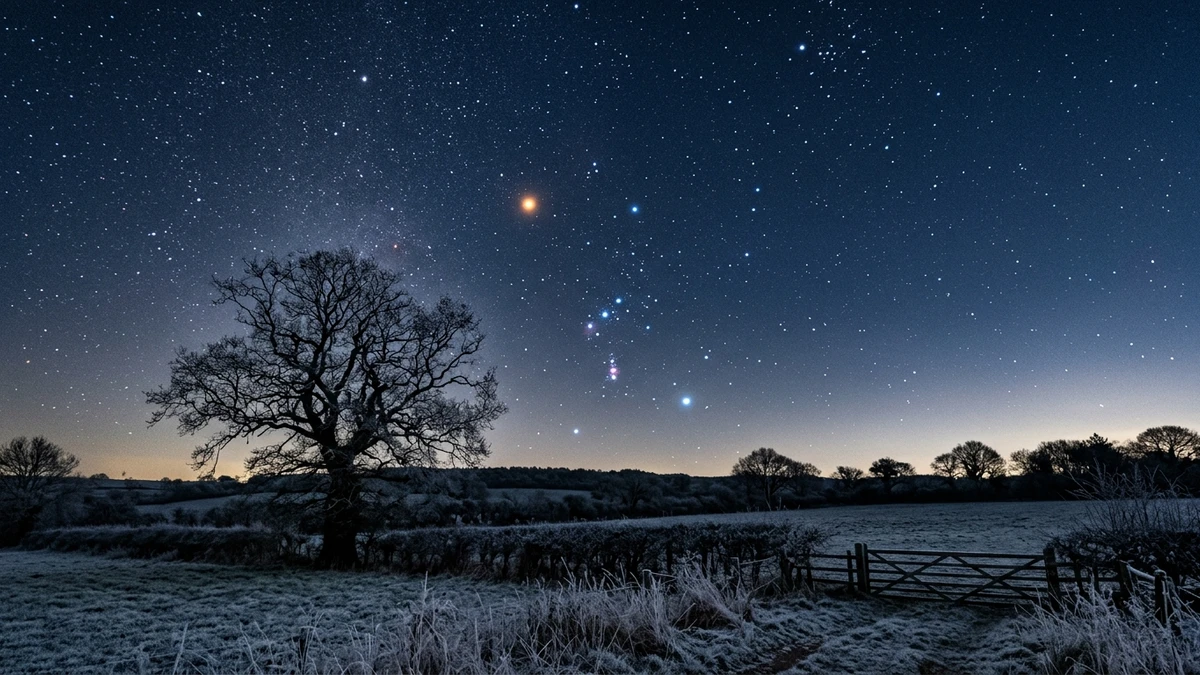
You can't see Siwarha, but Betelgeuse itself is one of the easiest stars in the sky, and its timing is rather good. Orion is just now returning to UK skies after its summer break. From late August, look east around 4am and you'll find the hunter climbing back into the pre-dawn darkness, with Betelgeuse glowing orange at his shoulder.
The view only improves from here. By November Orion rises in the mid-evening, and through the winter it owns the southern sky, the centrepiece of the best stargazing season of the year. Compare Betelgeuse's warm orange with the icy blue-white of Rigel at the hunter's opposite corner, or with brilliant Sirius below. The colour difference is real: you're seeing a cool, dying supergiant beside hot young stars, no telescope required.
While you wait for Orion to reach a civilised hour, there's plenty happening in the meantime: this week alone brought a partial lunar eclipse, and the rest of the month's highlights are in our August night sky guide. You can also check what's worth seeing tonight before you head out.
And when you do finally catch Betelgeuse, take a moment. That orange point of light has a hidden partner that took humanity a hundred years to find.
Sources:
- Astronomers find strongest evidence yet that Betelgeuse has a companion · European Southern Observatory
- "I jumped from my chair": Astronomers spot Betelgeuse's hidden companion · ScienceDaily
- Betelgeuse, Betelgeuse! Astronomers capture clearest image yet of famous star's elusive companion · Space.com
- Hubble observations add evidence of elusive companion orbiting supergiant star Betelgeuse · CNN
Frequently Asked Questions
Equipment guides
Related topics
Ian ClaytonAmateur astronomer and founder of WatchTheStars.co.uk, dedicated to helping others explore the wonders of our universe. Full profile →