Key takeaways
- The Roman Space Telescope launched on Sunday 30 August 2026 at 12:26pm UK time (7:26am EDT) on a SpaceX Falcon Heavy from Kennedy Space Center
- It launched on schedule, so the Monday 31 August backup slot was never needed
- Both side boosters flew back to Cape Canaveral, and Roman separated from the upper stage 31 minutes into the flight
- The full launch broadcast is free to rewatch on NASA+ and NASA's YouTube channel
- Roman is now in commissioning for its survey work at the Sun-Earth L2 point, with NASA expecting first images by early 2027
Jump to section 6 sections
The Roman Space Telescope launched on Sunday 30 August 2026 at 12:26pm UK time, right on schedule. NASA's most powerful survey telescope rode a SpaceX Falcon Heavy from Kennedy Space Center in Florida, and if you missed it live you can still watch the whole thing for free.
This page started life as our UK viewing guide before the launch. It now covers what happened on the day, where to find the replay, and what Roman has been doing since. For the background, see how the launch date was announced in July and our launch day guide to what Roman will do.
When Did the Roman Space Telescope Launch? 12:26pm UK, 30 August 2026
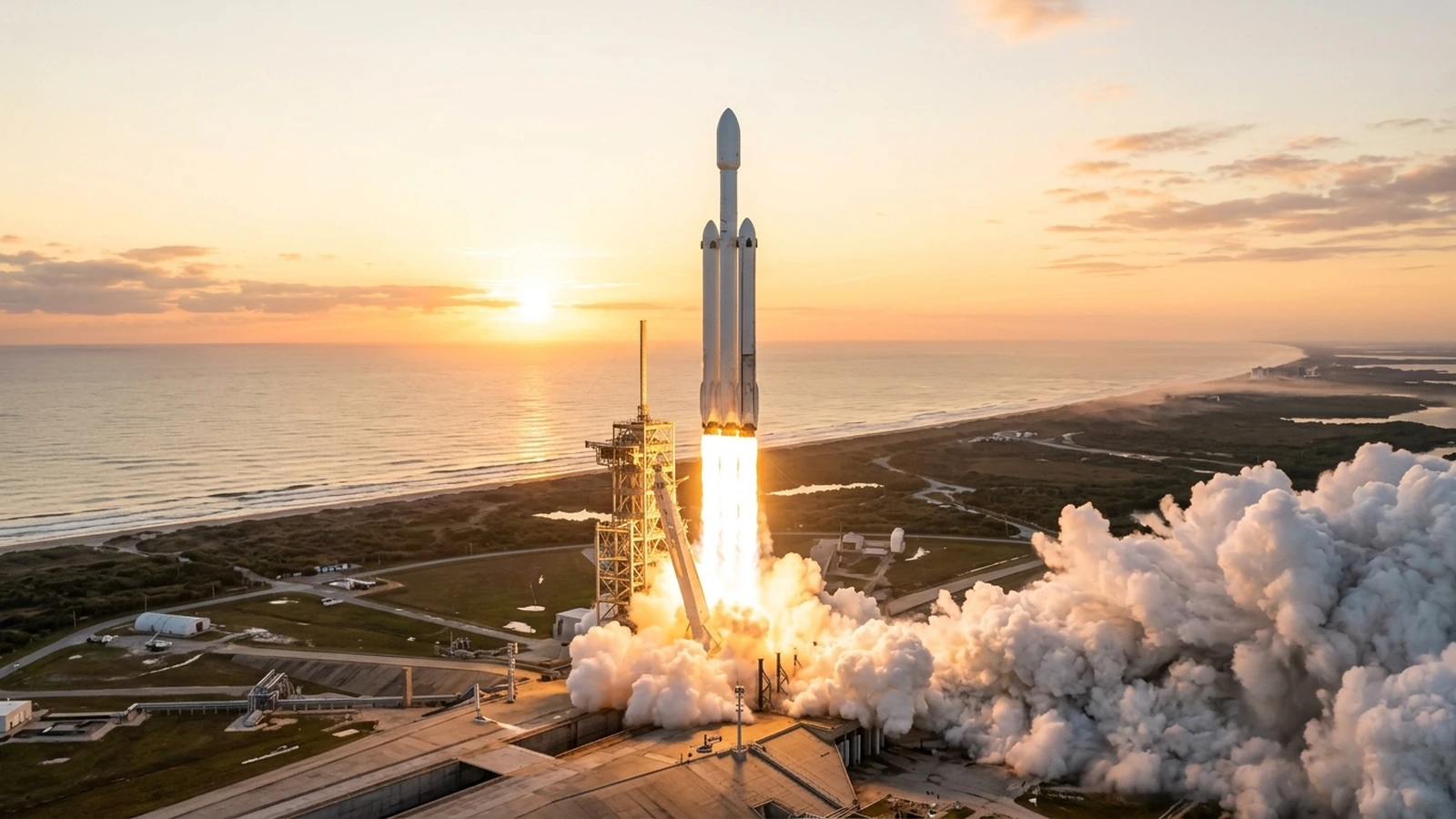
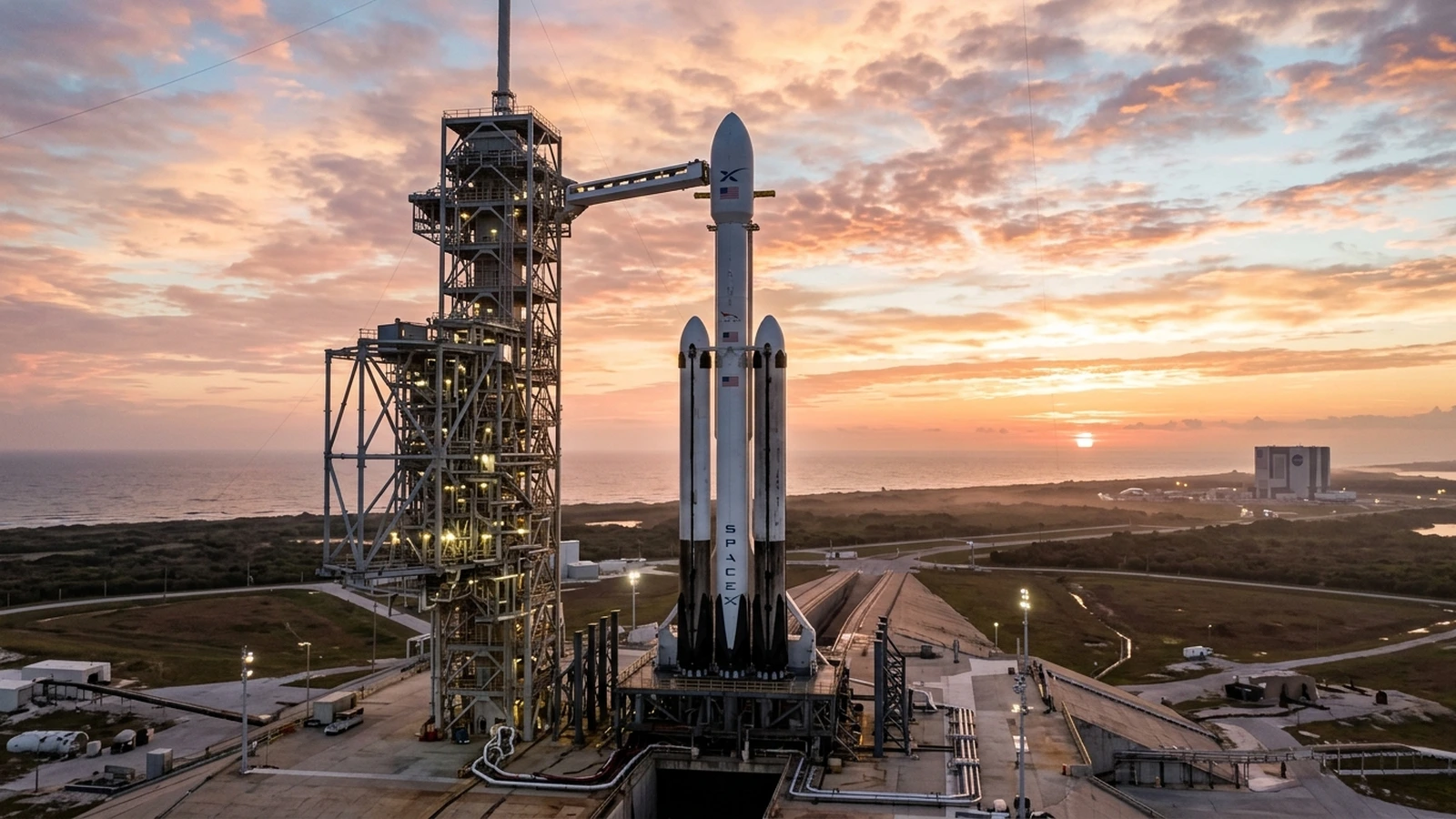
Liftoff came at 7:26am EDT on Sunday 30 August 2026, which was 12:26pm here in the UK. The Falcon Heavy flew from Launch Complex 39A at Kennedy Space Center, the pad that sent Apollo to the Moon.
For UK viewers the timing could hardly have been better. Big NASA launches usually mean bleary 3am streams. This one landed at Sunday lunchtime.
Late August is storm season on Florida's Space Coast, so a slip to the backup slot on Monday 31 August would not have been a surprise. It wasn't needed. Roman lifted off at its targeted time.
Here's how launch day unfolded, in UK time:
- 12:26pm: liftoff from Launch Complex 39A
- 12:57pm: Roman separated from the rocket's upper stage, 31 minutes into the flight
- 1:49pm: the solar arrays and lower instrument sunshade were deployed, an hour and 23 minutes after launch
How to Rewatch the Roman Space Telescope Launch
The replay is free and easy to find. NASA keeps its launch broadcasts online, so you can watch the full programme on:
- NASA+ at plus.nasa.gov (free, no sign-up)
- NASA's YouTube channel
No subscription, no account, no catch. If you've got a smart TV, the YouTube replay on a big screen is the way to do it. Falcon Heavy launches make spectacular television, and you can skip straight to the good bits.
What Happened on Launch Day: Liftoff, Booster Landings, Separation
A Falcon Heavy launch is worth watching even if you don't care what's on top. Twenty-seven engines light at once, producing more than 2,300 tonnes of thrust. It's the most powerful rocket SpaceX flies, and it only flies a couple of times a year.
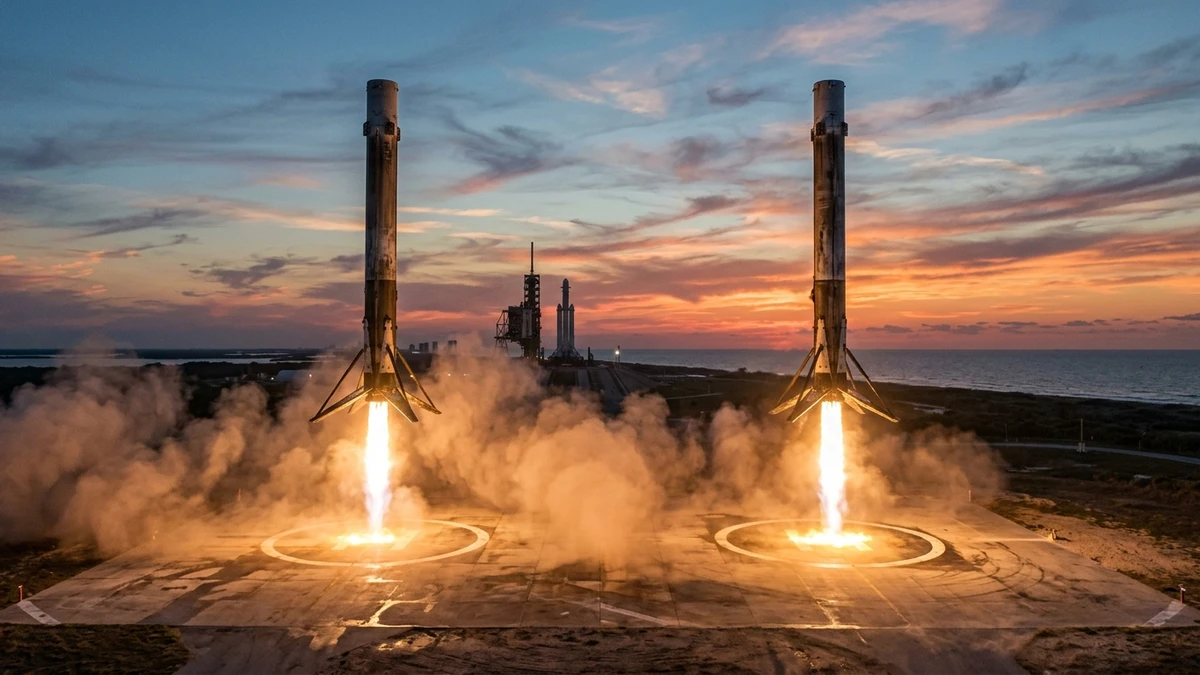
The part to look for in the replay comes a few minutes after liftoff. The two side boosters separated, flipped around and flew themselves back to Cape Canaveral. NASA confirmed both returned safely to the launch site for refurbishment. We saw the same trick on Falcon Heavy's return to flight in April, and it remains the best free show in spaceflight.
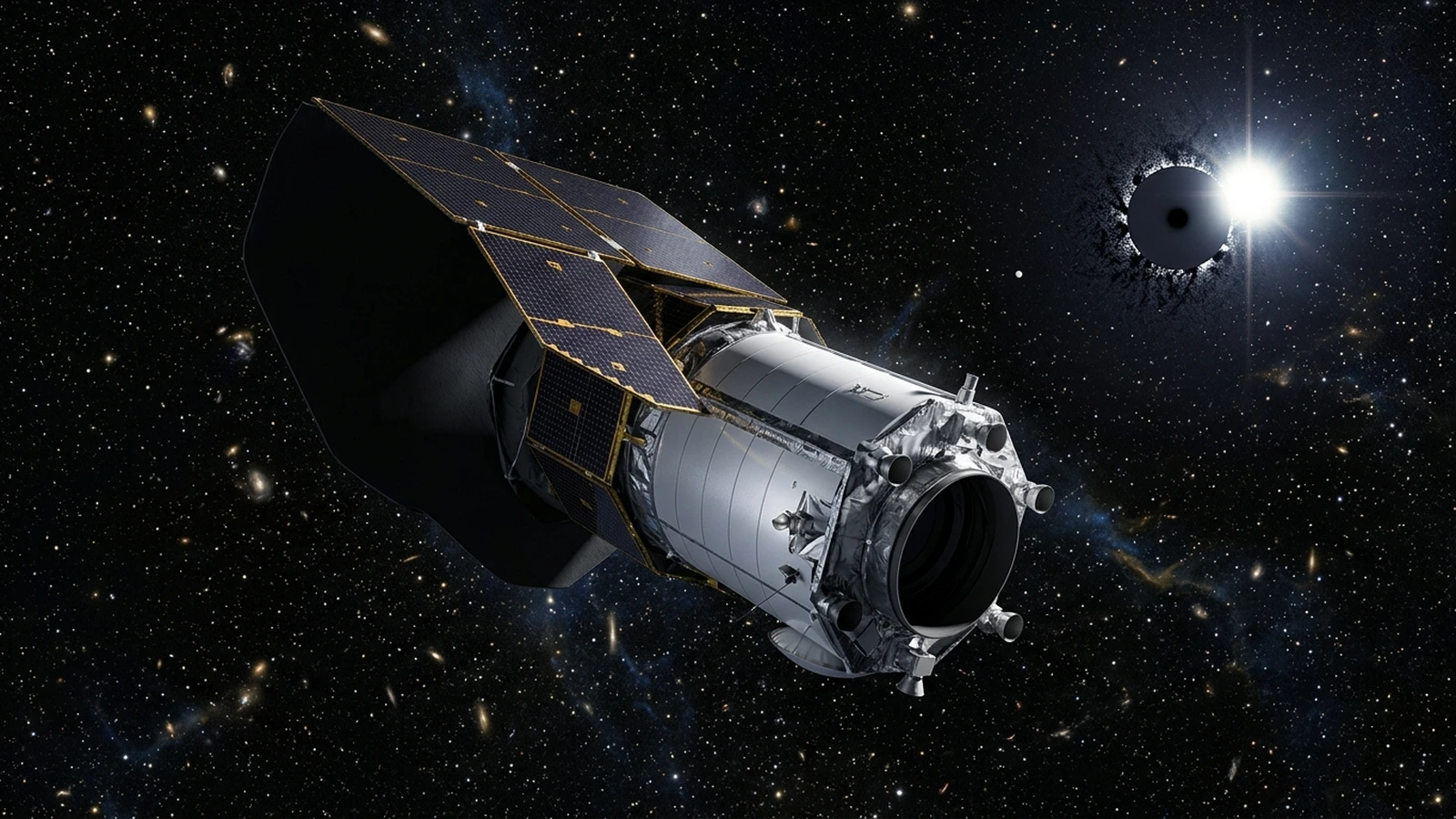
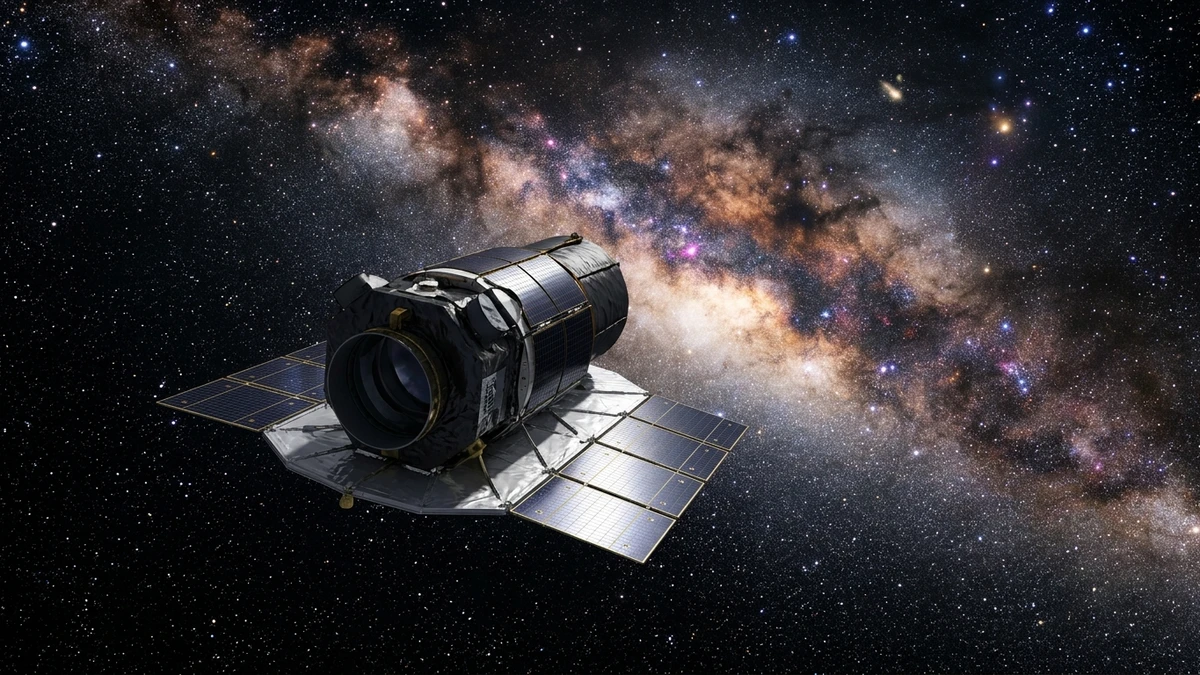
Roman itself separated from the upper stage 31 minutes into the flight. Its solar arrays and lower instrument sunshade opened an hour and 23 minutes after launch, and it set off for the Sun-Earth Lagrange point 2, some 1.5 million kilometres away. That's the same cold, stable region where the James Webb Space Telescope works.
Where Is the Roman Space Telescope Now?
Roman is in commissioning, the checkout every new observatory goes through before it does any science. NASA describes the trip to its final orbit at L2 as a three-month, million-mile journey, and the commissioning work runs alongside it.
The early milestones came quickly. On 1 September, two days after launch, the spacecraft deployed its high-gain antenna and the "visor" that shades its optics. The same day NASA switched on the Coronagraph Instrument, the planet imager that will try to photograph worlds around other stars. We covered that in Roman's coronagraph powers on.
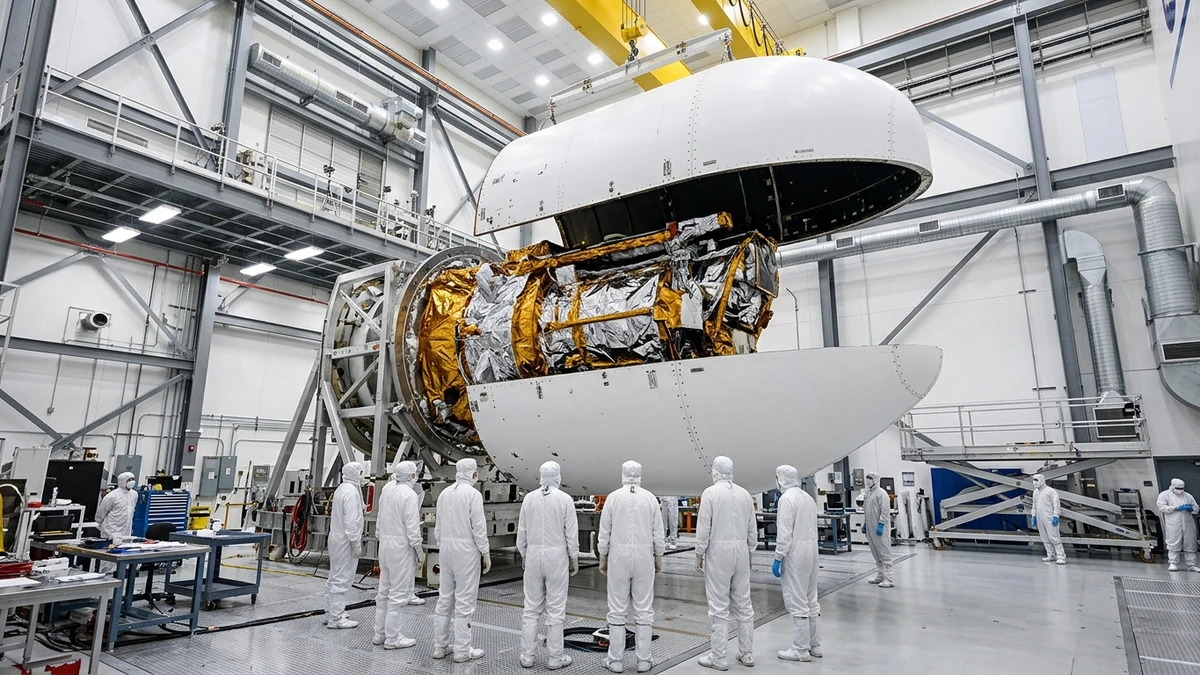
The rest is slower work: aligning the optics, checking out the 300-megapixel Wide Field Instrument and letting the detectors settle to their operating temperatures. NASA expects the first images by early 2027.
It's worth pausing on how unusual this mission has been. Roman launched nine months ahead of NASA's official May 2027 commitment, and under budget. Flagship telescopes are famous for doing the opposite. JWST ran over a decade late. This one was early.
What Will the Roman Space Telescope Discover?
Roman is a wide-field infrared survey telescope with the same size mirror as Hubble, but each exposure covers an area of sky 200 times larger than Hubble's infrared camera. A single image takes in more sky than the full Moon. Over its five-year primary mission it will photograph billions of galaxies and generate around 20 petabytes of data.
Two big questions drive the mission. The first is dark energy: by mapping how galaxies are scattered through space and time, Roman will test whether the force accelerating the universe's expansion has stayed constant, territory Europe's Euclid telescope has already begun to probe.
The second is planets. Roman will stare at around 200 million stars towards the heart of the Milky Way, watching for the brief brightening of gravitational microlensing, the light-bending effect TESS used to find a planet for the first time in July. NASA expects Roman to find as many as 100,000 new worlds, more than every previous planet hunter combined, including free-floating rogue planets nothing else can detect.
For the full mission rundown, from the reused spy-satellite mirror to the coronagraph that will photograph planets directly, see our deep dive from Roman's unveiling.
Got the urge to look up yourself?
Kit we've reviewed in full
Roman surveys the sky from 1.5 million kilometres away. You can make a decent start from the back garden with kit like this.
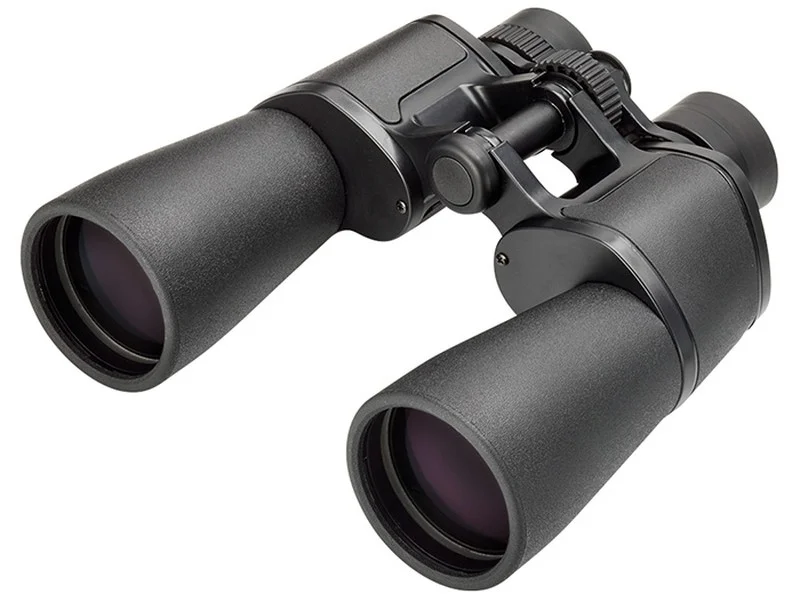
Light, sharp and wide-field. Ideal for the Moon, star clusters and sweeping along the Milky Way on a clear night.
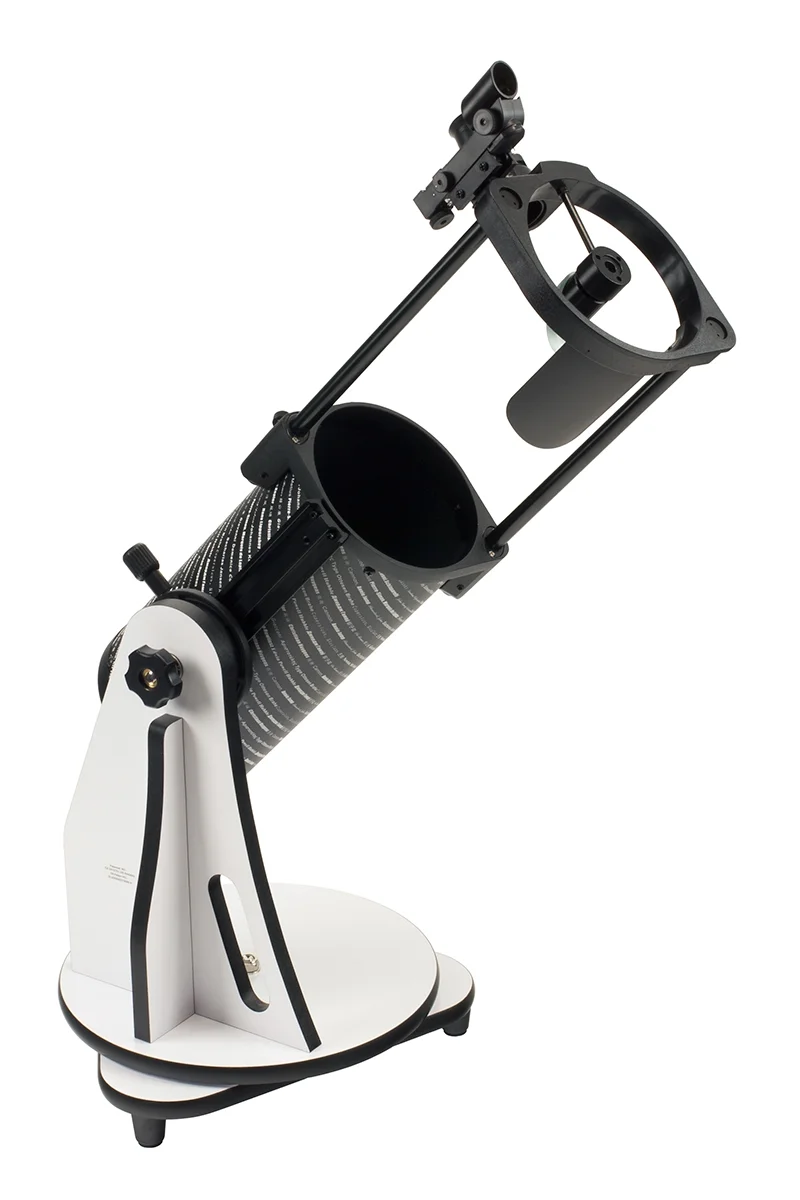
A superb-value 130mm reflector that shows craters on the Moon, Saturn's rings and bright galaxies from a UK garden.
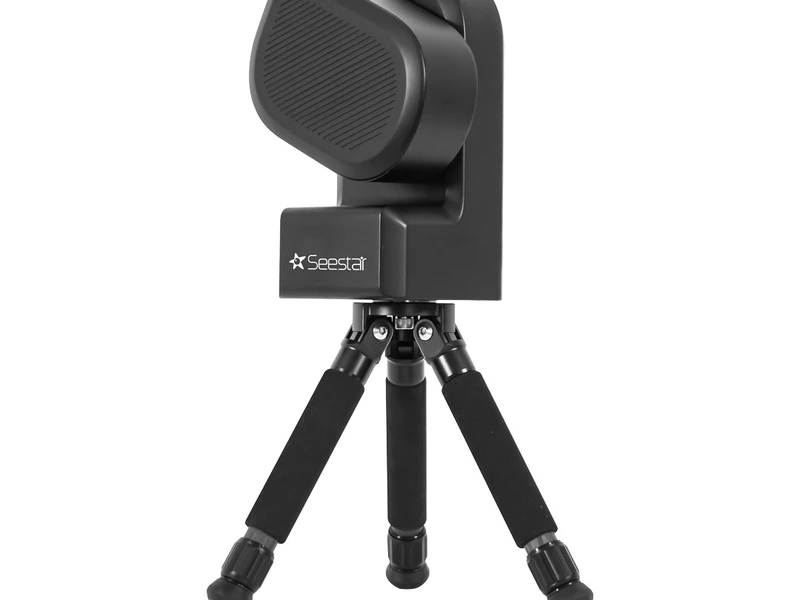
A smart telescope that photographs galaxies and nebulae while you watch on your phone. Back-garden Roman, in miniature.
Affiliate links: you pay the same price, we earn a small commission that helps keep WatchTheStars free.
The Bottom Line
The Roman Space Telescope launched on Sunday 30 August 2026 at 12:26pm UK time, right on schedule, and the replay is free on NASA+ and YouTube. It is now being commissioned for its survey work at L2, with first images expected by early 2027.
If a rocket launch has got you in the mood to look up more often, our astronomy events calendar lists everything else worth knowing about through 2026 and 2027, and our stargazing for beginners guide is the place to start if you're new to it. For something to see this evening, check what you can see in the sky tonight, look up ISS passes tonight for your local times, or read this week's UK night sky this week guide.
Sources:
- NASA's Dark Universe-Seeking Nancy Grace Roman Space Telescope Launches · NASA
- NASA Roman Space Telescope's Antenna, 'Visor' Deployed · NASA Science
- NASA Sets Coverage for Roman Space Telescope Launch from Florida · NASA
- Roman Space Telescope mission page · NASA Science
- Roman telescope fueled in preparation for Aug. 30 launch · Aerospace America
Frequently Asked Questions
Equipment guides
Related topics
Ian ClaytonAmateur astronomer and founder of WatchTheStars.co.uk, dedicated to helping others explore the wonders of our universe. Full profile →