Key takeaways
- Beta Pictoris b is the first planet outside the solar system with radio emission traced to the planet itself rather than its star
- The MeerKAT radio telescope in South Africa detected the Beta Pictoris b signal in all four sessions between February 2025 and May 2026
- The Beta Pictoris b radio signal comes from aurorae, the same process that makes Jupiter a strong radio source, not from aliens
- Beta Pictoris b has a magnetic field of at least 1,250 gauss, around 2,500 times Earth's, the first direct field measurement for any exoplanet
- The Beta Pictoris b result is a preprint and has not yet been peer-reviewed
Jump to section 9 sections
- First Radio Signal From an Exoplanet: What Was Found
- Is the Radio Signal From Aliens?
- What Is Beta Pictoris b?
- How Did Astronomers Know It Came From the Planet?
- How Strong Is Beta Pictoris b's Magnetic Field?
- Why Does an Exoplanet's Magnetic Field Matter?
- Has It Been Confirmed?
- Jupiter Does the Same Thing, and It's in the Morning Sky Now
- Can You See Beta Pictoris From the UK?
First Radio Signal From an Exoplanet: What Was Found
Astronomers have detected the first radio signal from a planet outside our solar system. The planet is Beta Pictoris b, a giant world 63 light-years away, and the signal was picked up by the MeerKAT radio telescope in South Africa. It is not a message. It is the radio glow of the planet's aurorae, and it reveals a magnetic field at least 2,500 times stronger than Earth's.
The team, Kevin Ortiz Ceballos, Edo Berger and Yvette Cendes, posted their paper on 15 September 2026. They observed the planet four times between February 2025 and May 2026, and every session picked up a signal. What they found was rapid, repeating bursts plus a steady background hum, between 0.85 and 3.5 GHz. The bursts are strongly circularly polarised, which is the fingerprint of aurorae on magnetised planets.
Radio has been seen from Jupiter, Saturn and Earth for decades. Until now, nobody had shown a radio signal definitely coming from a planet around another star.
Is the Radio Signal From Aliens?
No. The Beta Pictoris b signal is natural. Near a planet's magnetic poles, charged particles get pulled down the field lines and spiral as they fall. Spiralling electrons give off a narrow beam of radio waves. The same particles hitting the upper atmosphere make the light we see as aurora.
On Earth that light is the northern lights. You can check the UK aurora forecast for the next chance to see them from here. Our planet also sends out "auroral kilometric radiation", a radio roar that only satellites hear because the upper atmosphere blocks it from the ground. Beta Pictoris b is doing a much bigger version of the same thing.
What Is Beta Pictoris b?
Beta Pictoris b is a young gas giant of around 10 to 12 times the mass of Jupiter. It circles its star once every 23 years or so, at about the distance Saturn sits from the Sun. The system is only about 20 to 23 million years old. That is so young the planet is still glowing with heat left over from its formation.
It was one of the first exoplanets ever photographed directly. Astronomers found it in 2008 in images taken with ESO's Very Large Telescope in Chile in 2003, then caught it on the other side of its star in 2009. The star has at least two other planets. Beta Pictoris c was found in 2019, and this summer Webb found a third planet, Beta Pictoris d.
How Did Astronomers Know It Came From the Planet?
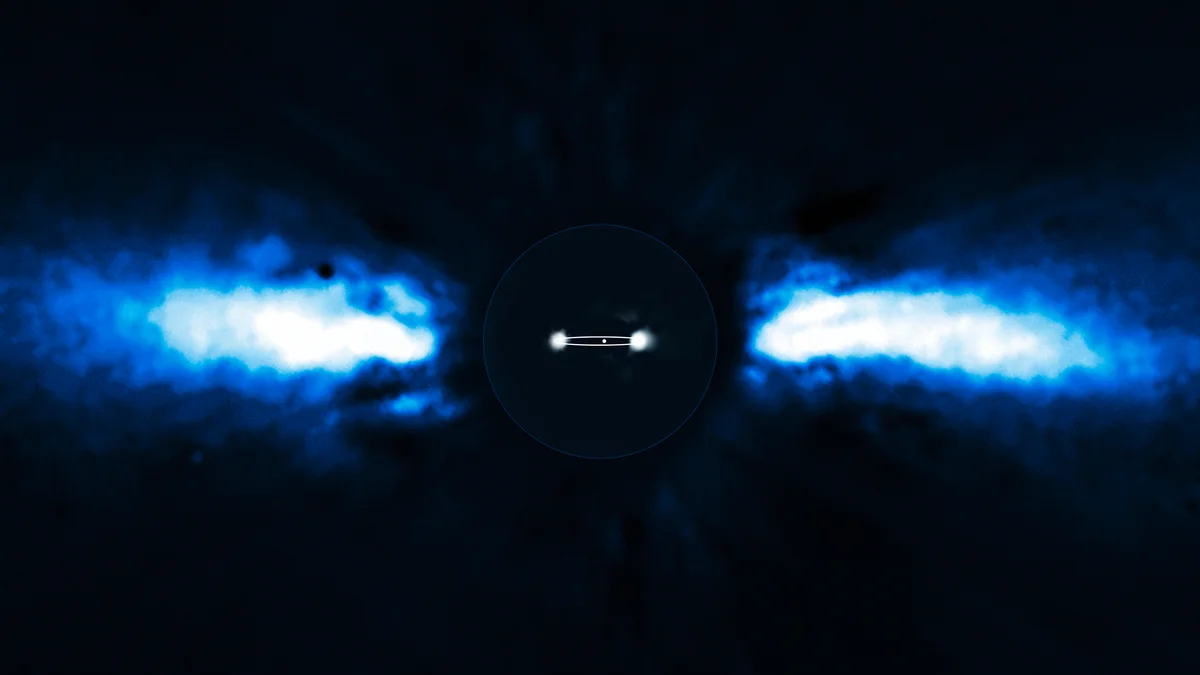
The team measured exactly where in the sky the radio source sits. Beta Pictoris b and its star are very close together as seen from Earth, so this was the hard part. They anchored their positions to nine distant quasars from the Gaia reference frame, which act like fixed survey markers.
The radio source matches the planet's known position within the measurement error. It sits 4.4 standard deviations away from the star and 4.8 away from the second planet, Beta Pictoris c. That is what earlier claims lacked. In 2020, the LOFAR array in Europe picked up a possible signal from the Tau Boötis system, but it could not rule out the star as the source, and follow-up searches have not confirmed it.
How Strong Is Beta Pictoris b's Magnetic Field?
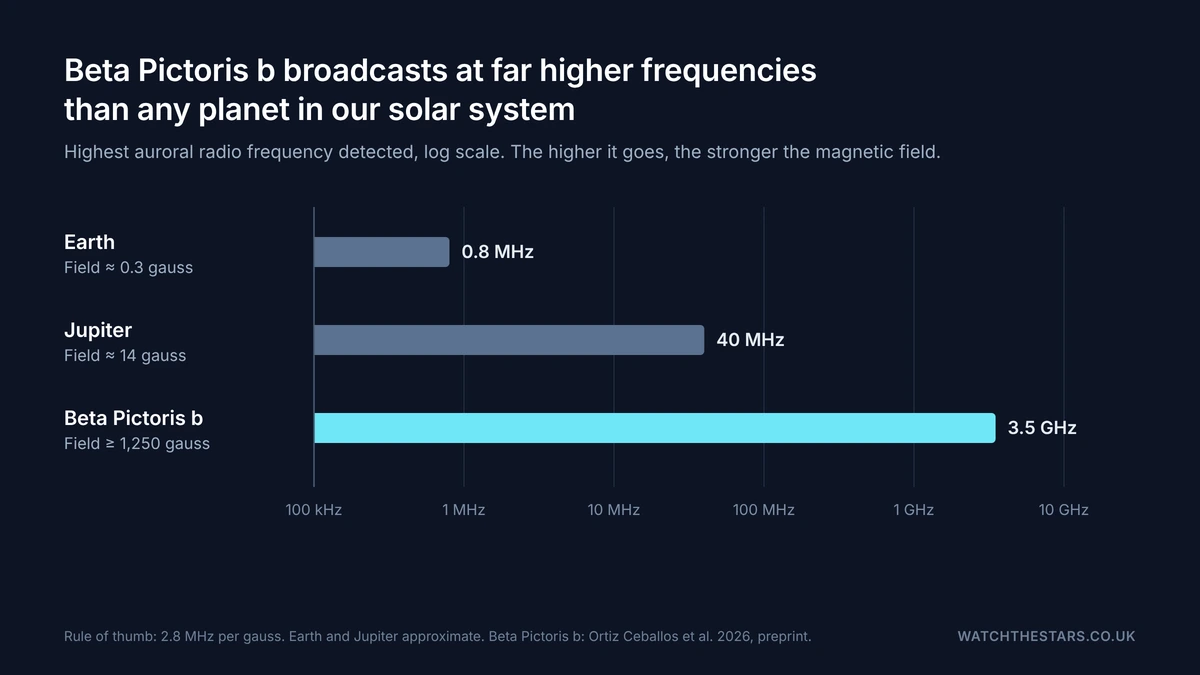
Beta Pictoris b's magnetic field is at least 1,250 gauss where the radio waves are made. Earth's surface field is about 0.5 gauss, so that is around 2,500 times stronger. It is also roughly 90 times the strongest field near Jupiter's poles.
The measurement works because this kind of radio emission has a built-in ruler. Each gauss of field strength lets the spiralling electrons broadcast about 2.8 megahertz higher. Jupiter's aurorae top out around 40 MHz, which matches a field of about 14 gauss. Beta Pictoris b reaches 3.5 GHz, which needs at least 1,250. "It's an incredibly, incredibly strong magnetic field, much stronger than anything in our solar system," Cendes said.
A field that strong fits what theory predicts for a young, massive planet. Beta Pictoris b is still hot inside, and the churning of that heat drives a powerful dynamo. The paper says the result "is consistent with dynamo-scaling predictions for a young, massive giant planet".
Why Does an Exoplanet's Magnetic Field Matter?
A magnetic field is one of the few clues to what goes on deep inside a planet, and until now nobody had a way to measure one around another star. Telescopes like Webb read an exoplanet's atmosphere from its light, as with the first atmosphere found on a rocky planet in the habitable zone. They cannot see a magnetic field. Radio can.
Fields also protect atmospheres. Earth's deflects the solar wind streaming off the Sun, which is part of why we kept our air and water. Mars lost its global field long ago and much of its atmosphere with it. For smaller, rocky worlds, a radio search like this may one day be the only way to tell whether a planet has that shield.
Beta Pictoris b is a giant and nothing could live on it. The result matters because it proves the method works on a real exoplanet.
Has It Been Confirmed?
Not yet. The paper is a preprint (arXiv 2609.16720), submitted to a journal but not yet peer-reviewed. Joe Callingham, a radio astronomer who was not involved in the study, called it compelling but said it still needs confirming. The strongest proof would be to catch the bursts repeating with the planet's rotation over many more observations, ideally with a second telescope.
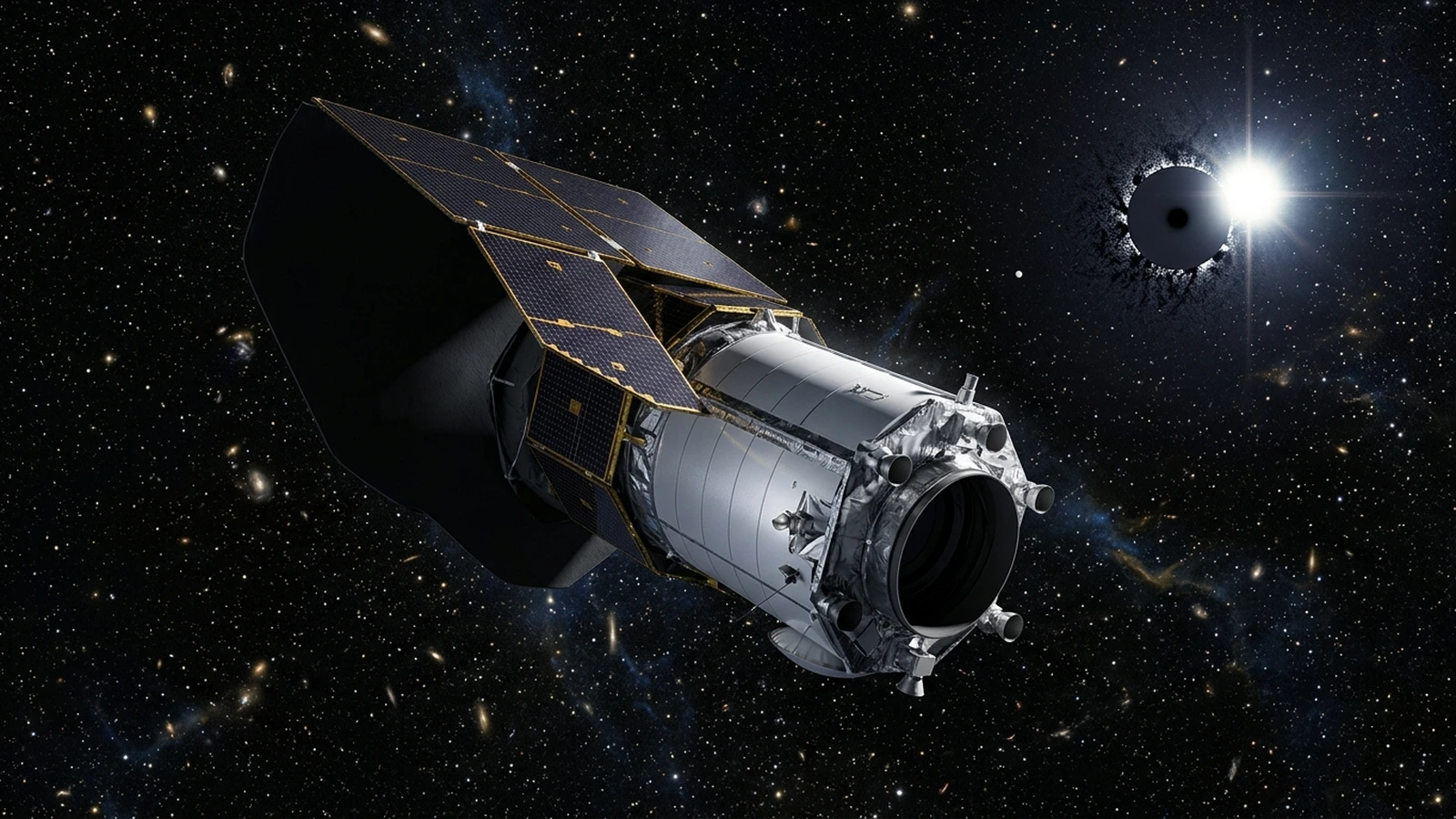
That second telescope is coming. MeerKAT's 64 dishes will become part of the Square Kilometre Array's SKA-Mid telescope in South Africa, run from the SKA Observatory's headquarters at Jodrell Bank in Cheshire. It will be far more sensitive. Meanwhile NASA's Roman telescope, whose coronagraph has just been switched on, will photograph giant planets like this one in visible light.
Jupiter Does the Same Thing, and It's in the Morning Sky Now
The nearest example of a radio-loud planet is Jupiter. Its aurorae are the most powerful in the solar system, and on the right nights its radio bursts are strong enough to hear on a home-made aerial tuned to around 20 MHz. They sound like waves crashing on a beach.
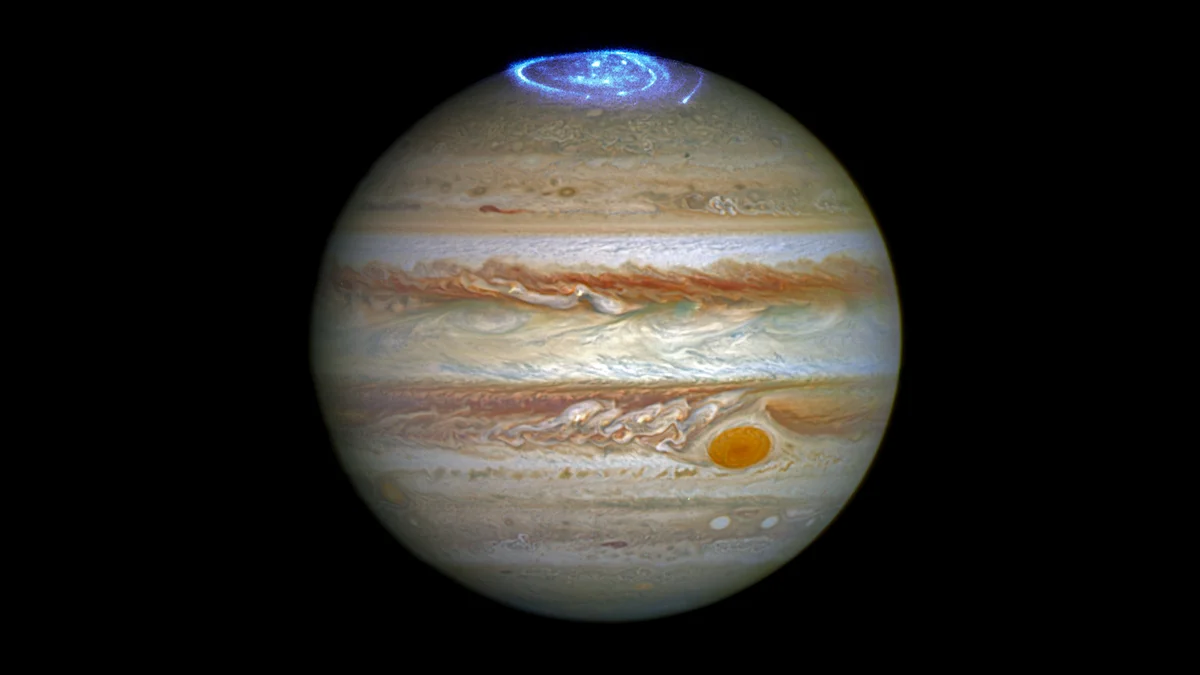
You can't see Jupiter's aurora through a telescope, but you can see the planet itself. In the first week of October, when this was published, Jupiter rose around 2:15am BST and stood about 33° up in the east-south-east by 6am. It rises a few minutes earlier each night: around 1:55am in mid-October and about 1:20am by the 24th, when it is some 40° up in the south-east at 6am, the brightest point in the morning sky. Check what you can see in the sky tonight for your exact times, and our night sky this week page has the rest.
You can't hear Jupiter's aurora through an eyepiece, but you can see its storms
Kit we've reviewed in full
Jupiter rises around 2:15am this week and stands about 33° up in the east-south-east by 6am. These show its cloud belts and four big moons, and the camera will record them.
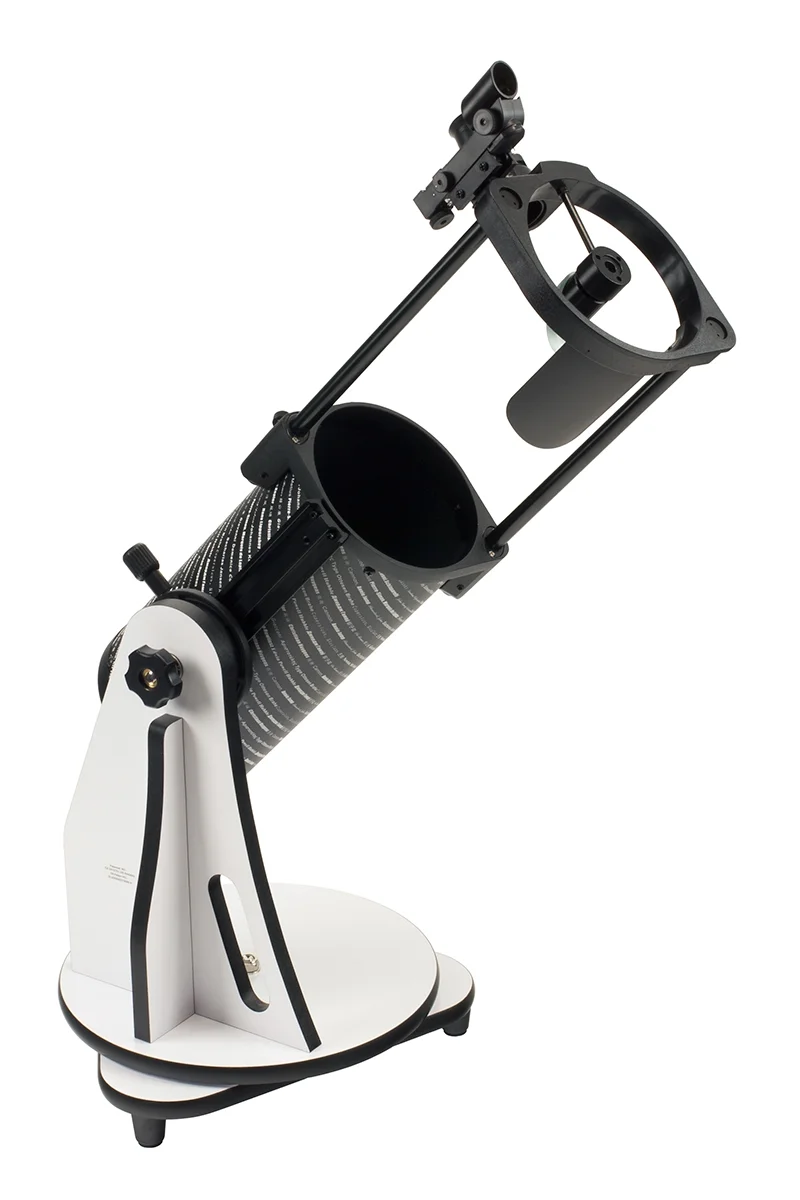
At 100x it shows Jupiter's two dark cloud belts and the four Galilean moons changing position from night to night.
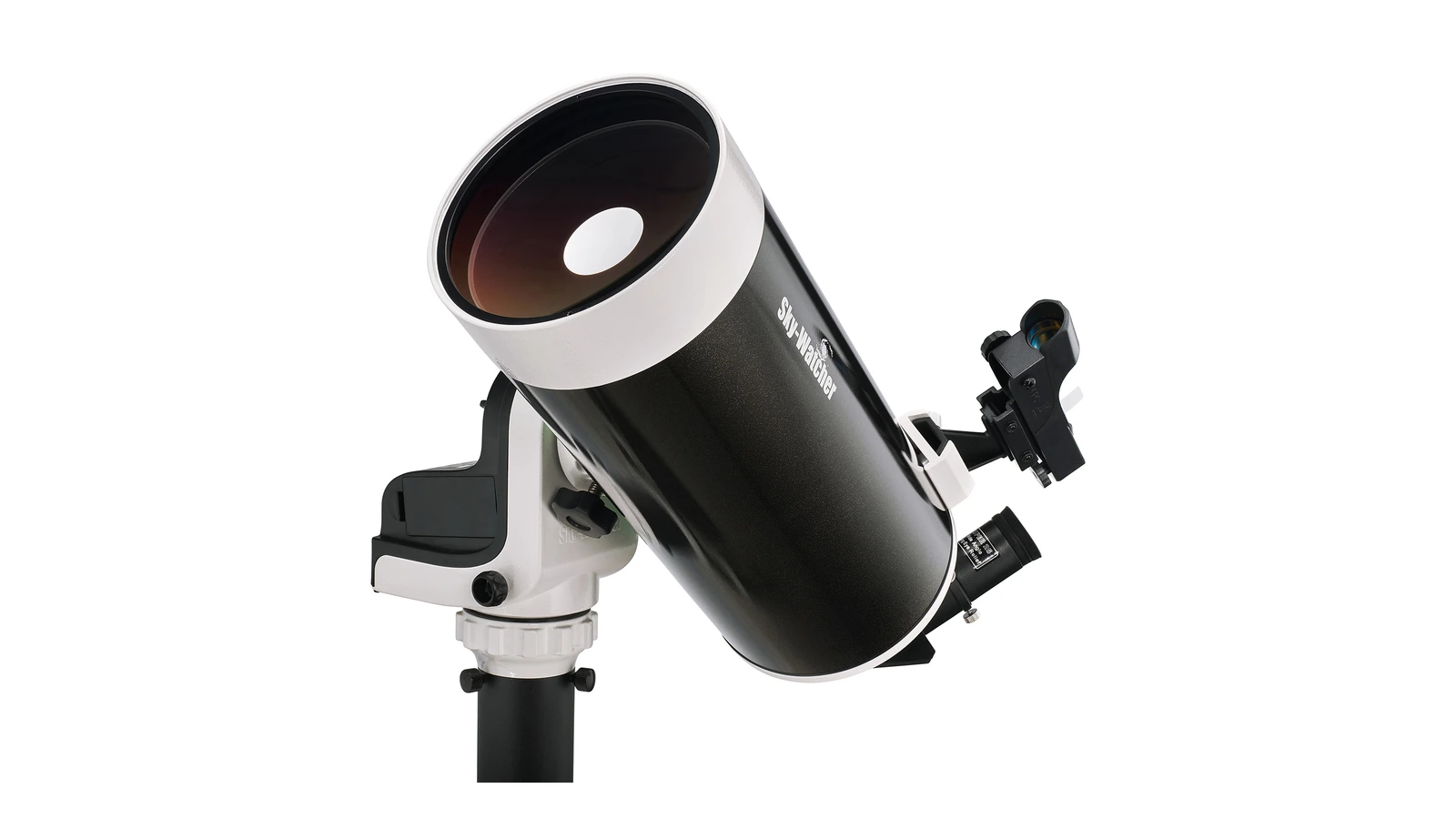
A long focal length suits planets, and the GoTo mount keeps Jupiter centred while you look for the Great Red Spot.

ZWO ASI662MC Colour Planetary Camera
A planetary camera that records short videos you stack into a sharp image of Jupiter's belts and storms.
Affiliate links: you pay the same price, we earn a small commission that helps keep WatchTheStars free.
Can You See Beta Pictoris From the UK?
No. Beta Pictoris sits about 51° south of the celestial equator in the small southern constellation Pictor, the Painter's Easel. It never rises from anywhere north of about 39° north. From Plymouth, the most southerly big city in Britain, it stays more than 11° below the horizon even at its highest. Like Alpha Centauri, it belongs to southern-hemisphere skies.
The aurora we can see is our own. Autumn is a good time of year for it, so keep an eye on northern lights tonight when the Sun is active. Beta Pictoris b's version is strong enough to be picked up from 63 light-years away.
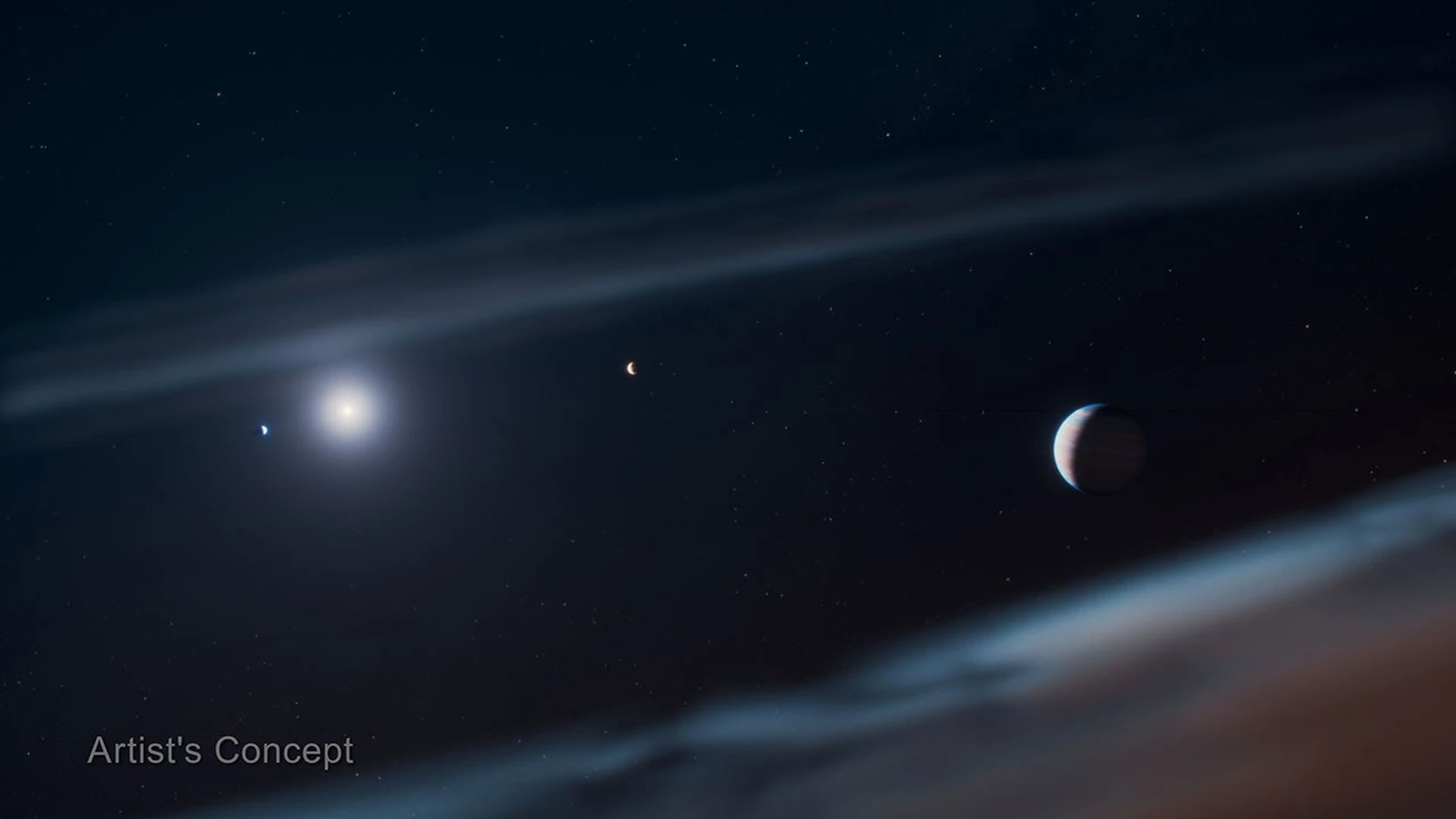
Header image: artist's impression of Beta Pictoris b and its star. Credit: ESO/L. Calçada/N. Risinger (skysurvey.org), CC BY 4.0.
Frequently Asked Questions
Equipment guides
Related topics
Ian ClaytonAmateur astronomer and founder of WatchTheStars.co.uk, dedicated to helping others explore the wonders of our universe. Full profile →