Key takeaways
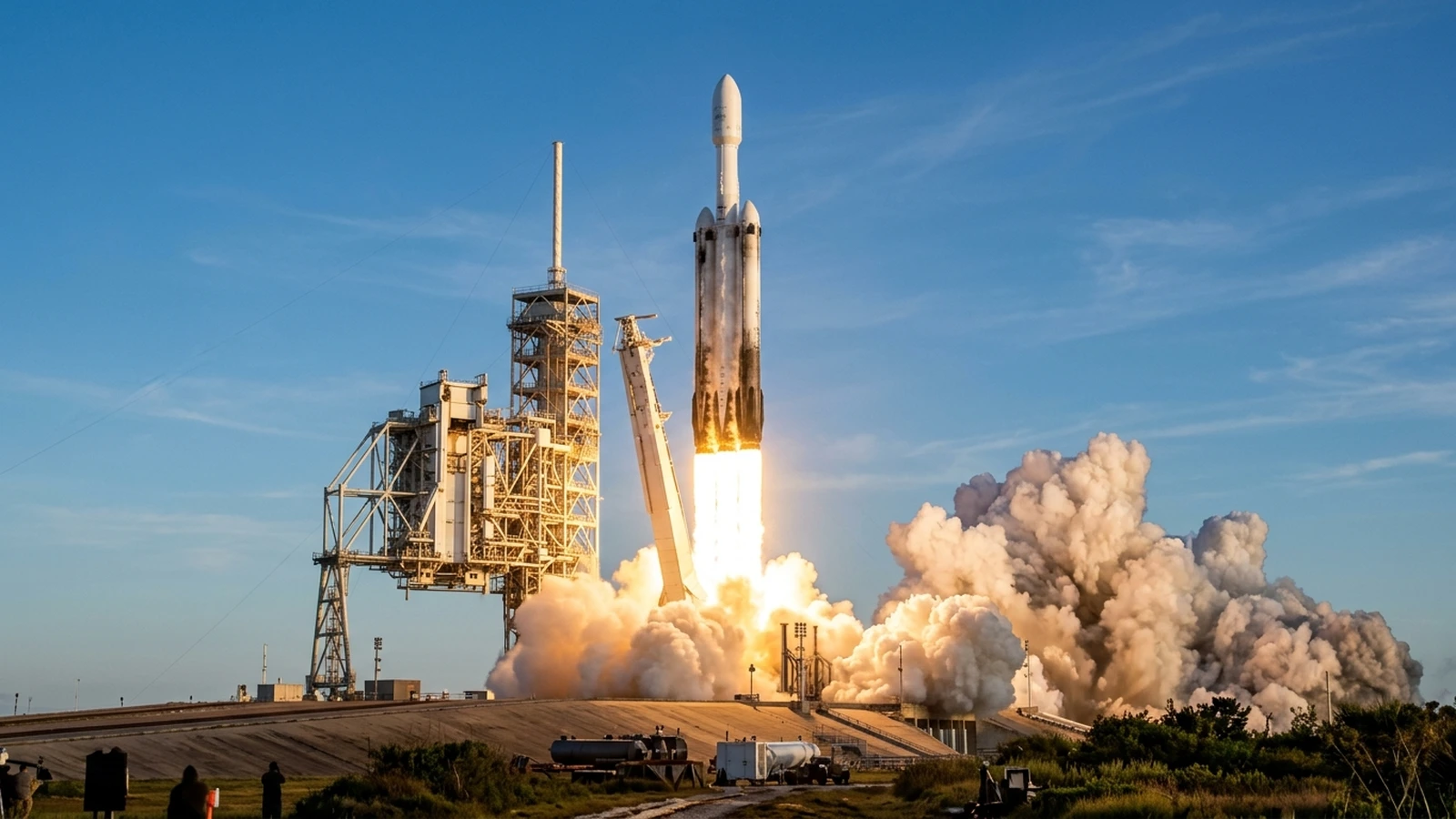
- The Nancy Grace Roman Space Telescope launched on Sunday 30 August 2026, at 12:26pm UK time (7:26am EDT) on a SpaceX Falcon Heavy from Kennedy Space Center
- NASA and SpaceX cleared the mission at the Launch Readiness Review on Friday 28 August, with a 60% chance of good weather at the pad
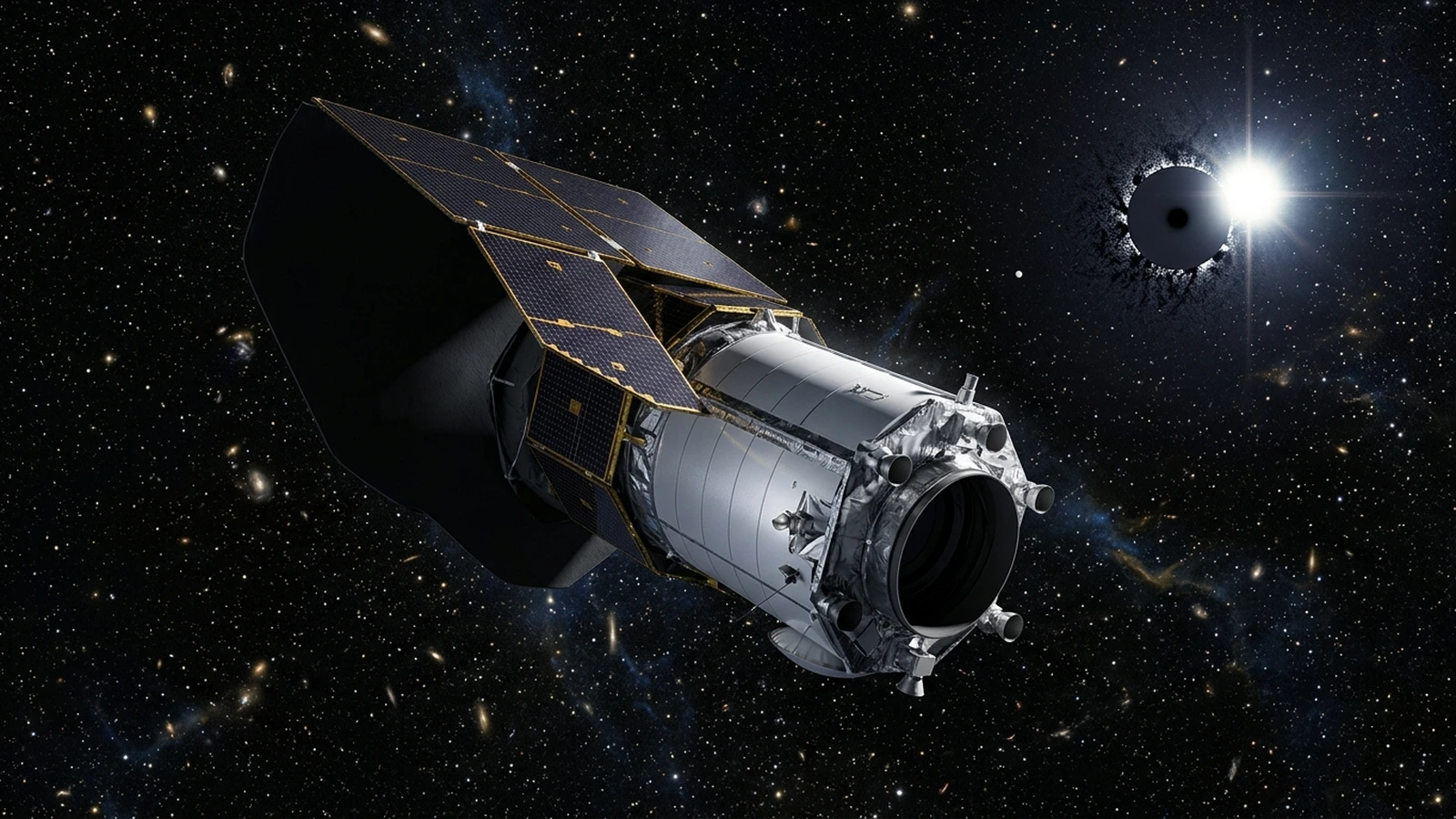
- Roman carries a Hubble-sized 2.4-metre mirror but sees a patch of sky about 100 times wider, thanks to a 300-megapixel infrared camera
- It should find around 100,000 new planets outside our solar system and map the effect of dark energy across billions of galaxies
- Commissioning runs roughly 90 to 100 days from launch, covering the cruise out to L2, with first images and survey science expected in early 2027
Jump to section 5 sections
NASA's Nancy Grace Roman Space Telescope launched on Sunday 30 August 2026. Liftoff was at 12:26pm UK time on a SpaceX Falcon Heavy from Kennedy Space Center in Florida, and if all goes to plan it is the start of a mission that will reshape what we know about planets outside our solar system and the strange force pulling the universe apart.
We'd been following this one for a while, from the first look at the finished observatory back in April to the launch date being confirmed in July. On 30 August it actually went.
Roman Space Telescope Launch, 30 August: What Was Happening
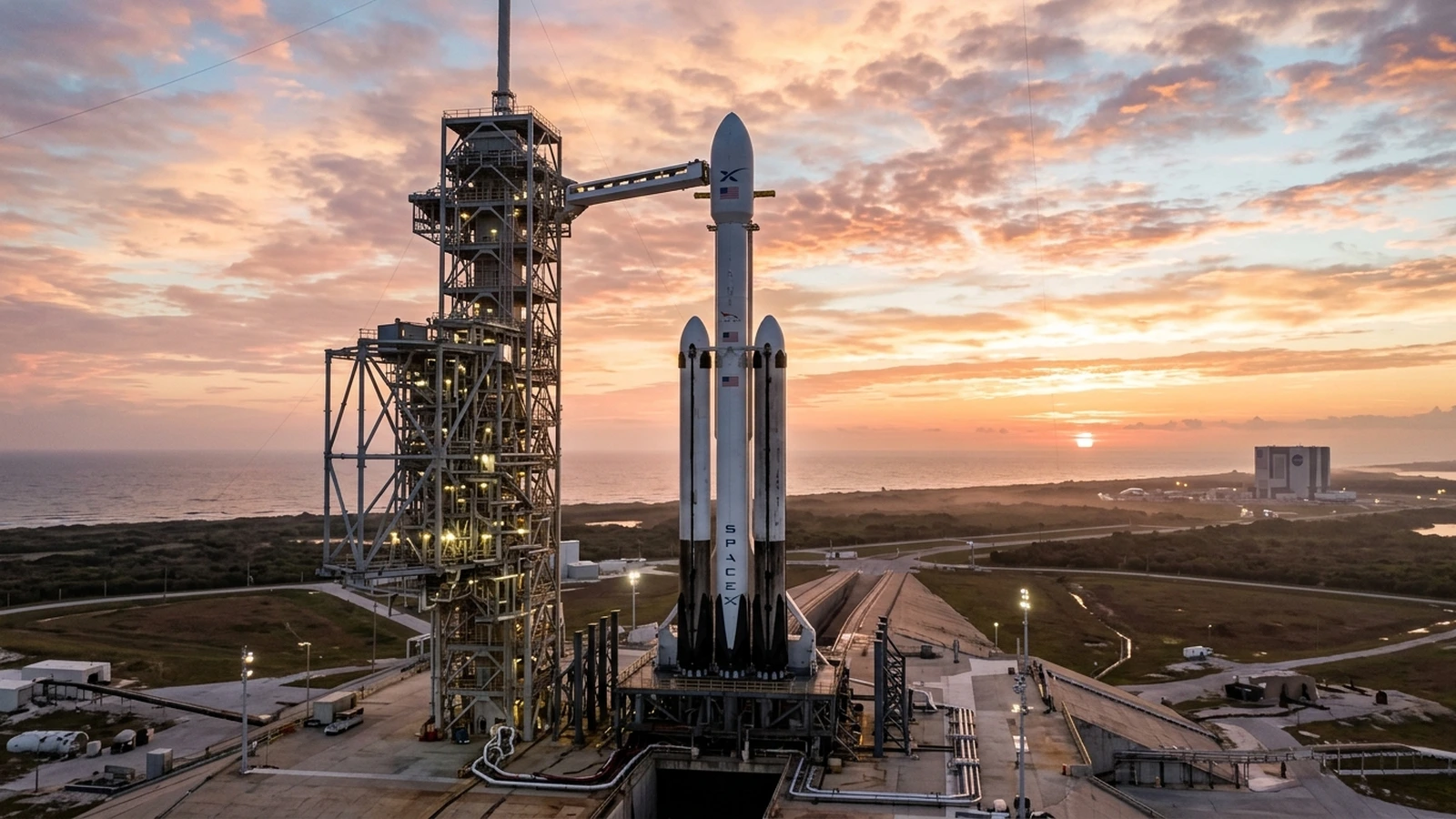
Roman was sitting inside the nose cone of a Falcon Heavy at Launch Complex 39A, the same pad that sent Apollo crews to the Moon. NASA and SpaceX ran the Launch Readiness Review on Friday 28 August and gave it a clean "go". Weather forecasters at the Space Force's 45th Weather Squadron were calling 60% odds of acceptable conditions, which was a fair bet for Florida at the end of August but not a certainty.
The window was instantaneous. There was no half-hour of wiggle room. Roman had to leave at 12:26pm UK time exactly, because the trajectory out to its parking spot beyond the Moon only works from that precise moment. Missing it would have rolled the launch to the backup attempt on Monday 31 August at 12:22pm UK time. It wasn't needed: Roman lifted off at its targeted time.
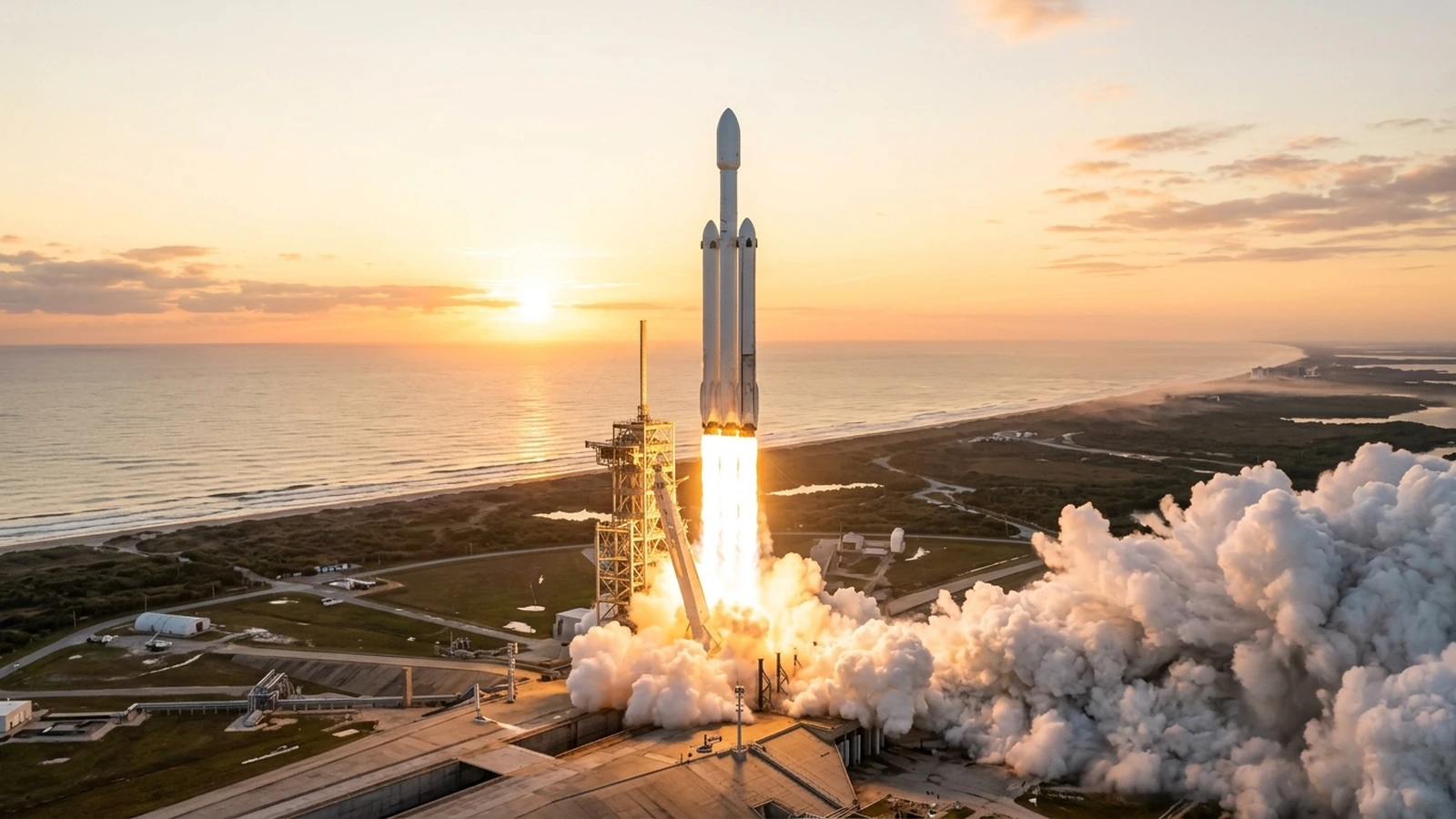
The rocket itself was worth watching for its own sake. Falcon Heavy is three Falcon 9 first stages strapped together, 27 engines lighting at once, and it flew because Roman is a heavy payload, a shade over 10 tonnes, going a long way out. The two side boosters peeled away about two and a half minutes in and flew themselves back to landing zones at Cape Canaveral, with touchdowns planned within seconds of each other. NASA confirmed both returned safely. That double landing is the bit that makes people gasp.
The centre core was not coming back. It was due to burn all the way to depletion to give Roman the extra push it needed, then fall into the Atlantic. NASA and SpaceX decided the performance was worth more than the booster.
How the Roman Launch Was Covered From the UK
You could watch the whole thing free. NASA's coverage started at 11:20am UK time, just over an hour before liftoff, and ran on NASA+, nasa.gov/live, and the NASA and SpaceX YouTube channels. There was no sign-up, no paywall and no need for the app, although the free NASA app would push you a notification if you'd rather not sit watching a countdown clock. If you missed it, the full launch broadcast is free to replay on NASA+ and NASA's YouTube channel.
We wrote a full UK viewing guide for this launch ahead of the day, with the stream links, the timings and what each milestone in the countdown actually meant. It has since been updated to cover what happened on the day, so if you want the detail, start there.
The short version of the flight timeline:
- 12:26pm: liftoff. All 27 engines, and a noise you could feel through a laptop speaker.
- T+2:24: the side boosters were due to shut down, separate and turn around.
- T+4:15: the fairing was due to split open and fall away, exposing Roman to space for the first time.
- T+7:40: the two side boosters were due to land back at Cape Canaveral, near enough together.
- T+31:31: Roman separated from the second stage and was on its own.
- Shortly after that: solar array deploy and first signal from the spacecraft, the moment the control room actually relaxes. The solar arrays and lower instrument sunshade were deployed at 1:49pm UK time, an hour and 23 minutes after launch.
One thing to be clear about: you couldn't see this from the UK. A daytime launch from Florida was invisible from here, and the trajectory headed east over the Atlantic well below our horizon. This one was a screen event. If you want something to actually look at with your own eyes, our August night sky guide has the targets.
Want to hunt deep sky objects yourself?
Kit we've tested and reviewed in full
Roman is on its way to map billions of galaxies. You can't do that from a UK back garden, but a decent telescope will show you galaxies, nebulae and star clusters with your own eyes. Here's where we'd start.
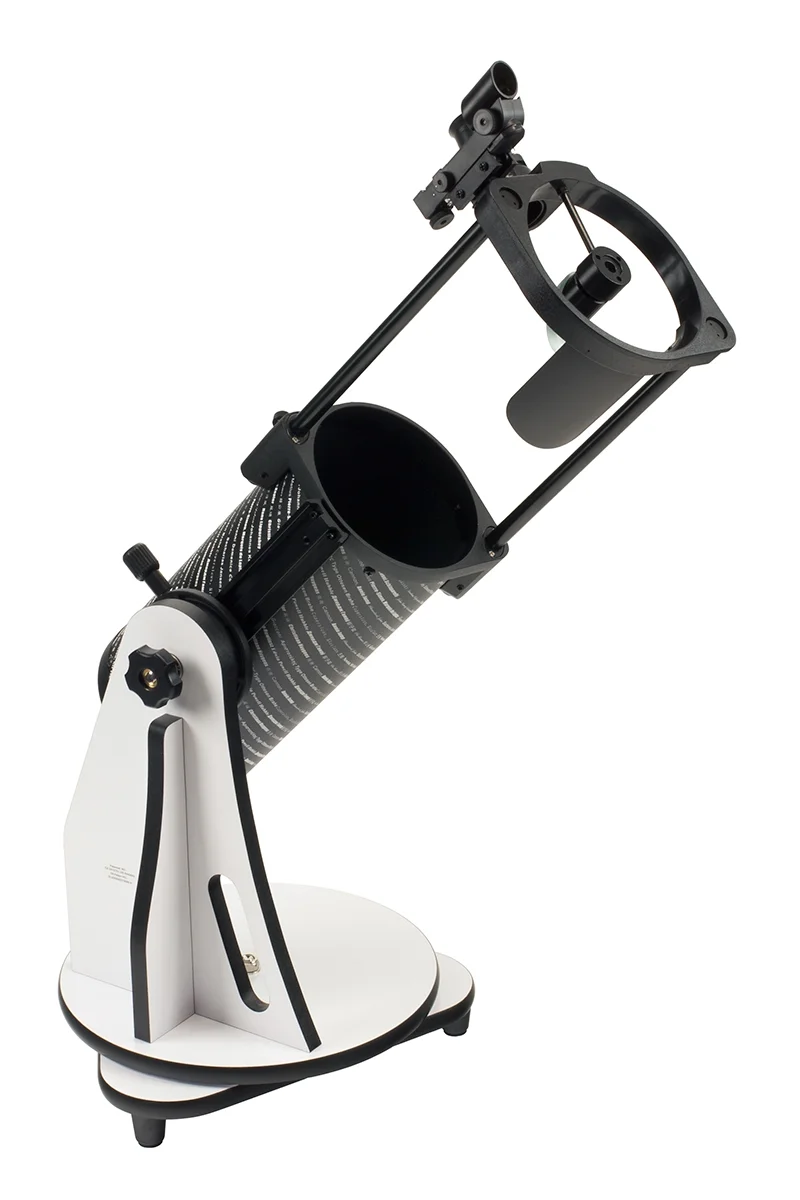
A 130mm reflector that gathers enough light for the Orion Nebula, the Andromeda Galaxy and the brighter globular clusters. Sits on a table, so no wobbly tripod to fight.
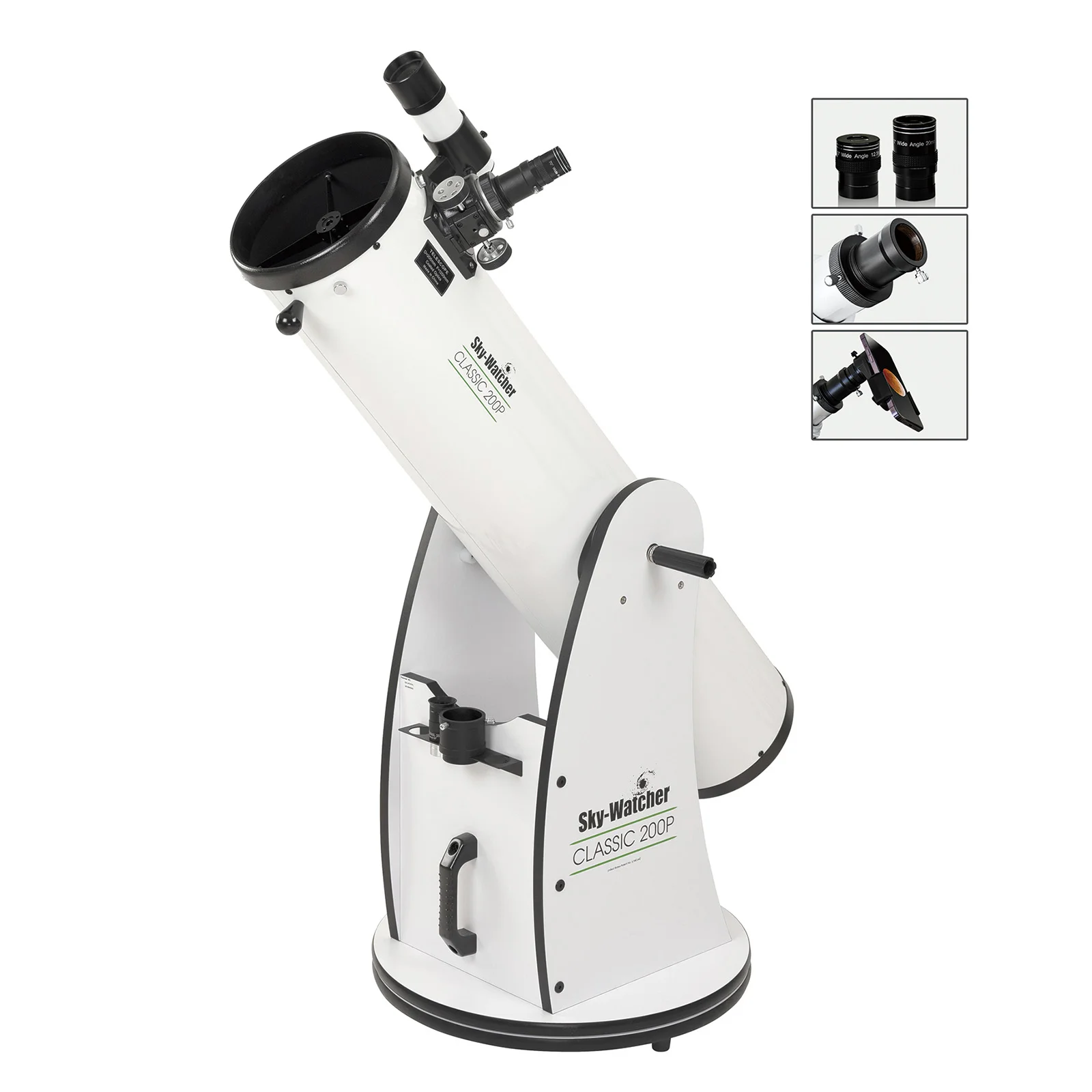
An 8-inch Dobsonian. Big enough to pull out spiral arms and faint fuzzies that smaller scopes only hint at, and simple to point.
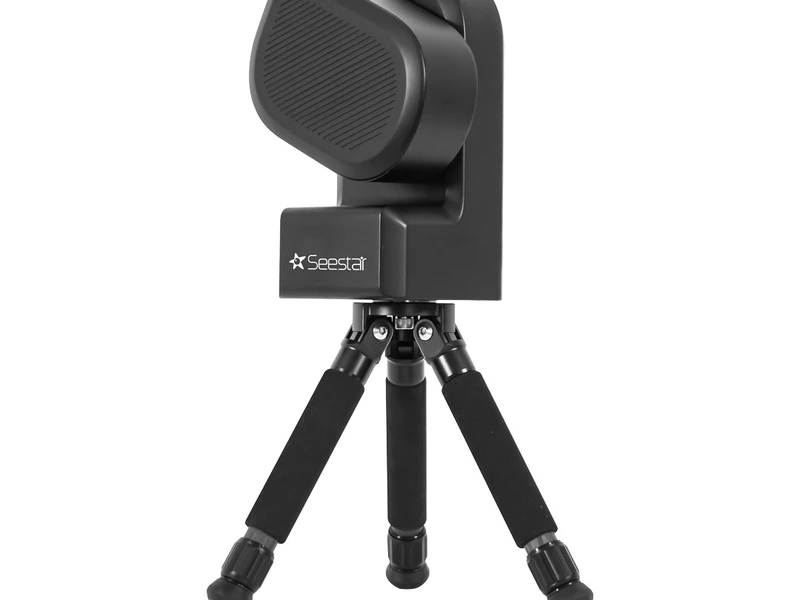
A smart telescope that stacks its own images of galaxies and nebulae while you watch on your phone. The closest thing to running your own little sky survey.
Affiliate links: you pay the same price, we earn a small commission that helps keep WatchTheStars free.
What the Roman Space Telescope Will Do
Here's the thing that makes Roman unusual. Its main mirror is 2.4 metres across, exactly the same as Hubble's. Same light-gathering power, same sharpness. But the camera behind it is enormous: the Wide Field Instrument packs 18 infrared detectors into a 300-megapixel array, and it takes in a patch of sky roughly 100 times bigger than Hubble's infrared camera in a single shot.
That's the whole point. Hubble and James Webb are built to stare hard at small things. Roman is built to sweep. An image that would take Hubble weeks of stitching, Roman gets in one exposure. It turns deep-space astronomy from a series of portraits into an actual survey.
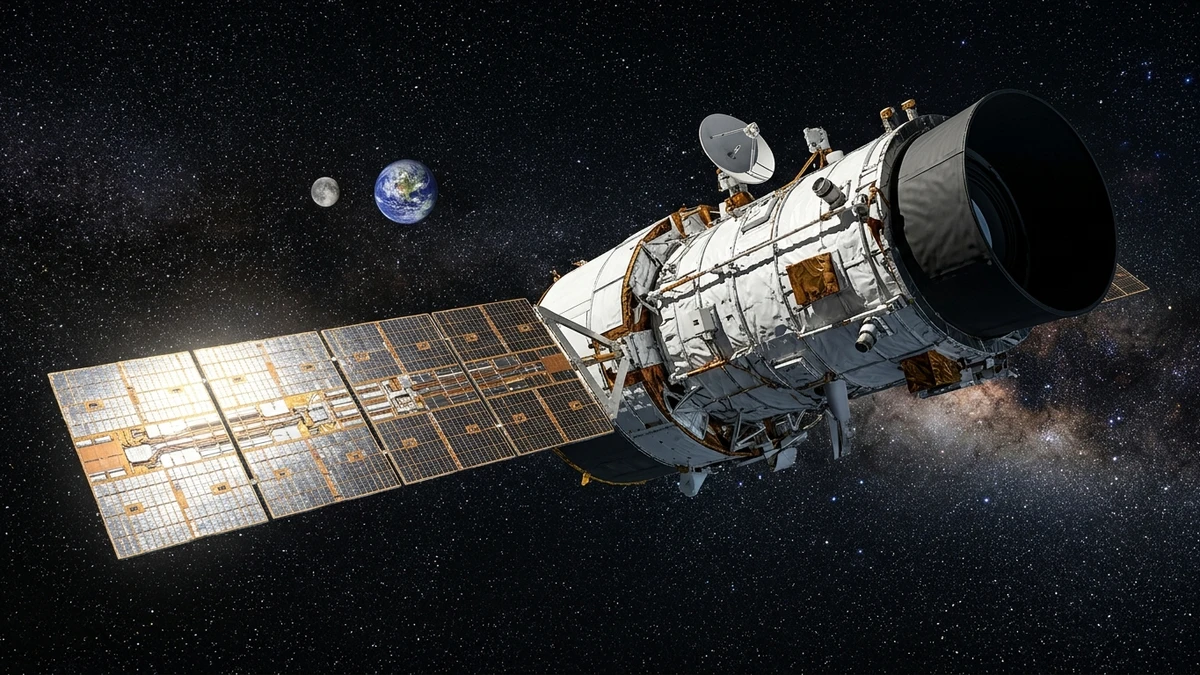
Mapping dark energy across billions of galaxies
The universe isn't just expanding, it's expanding faster and faster, and nobody knows why. We call the cause dark energy, which is really a label for our ignorance rather than an explanation.
Roman's approach is to measure it rather than theorise about it. It will survey billions of galaxies across huge areas of sky, measuring their distances and how they clump together at different points in cosmic history. If dark energy has been constant since the Big Bang, the pattern of that clumping will look one way. If its strength has changed over time, it'll look another. Euclid, Europe's telescope, is doing something similar from the same neighbourhood of space, and we covered its quasar haul in July. Between the two of them, this decade should finally give us a real answer.
The same survey data doubles as a dark matter map. Roman measures how the gravity of unseen mass bends light from galaxies behind it, which is the same technique behind our recent piece on the first stellar stream found beyond the Milky Way.
Finding around 100,000 new planets
We know of a few thousand planets around other stars. Roman is expected to add something like 100,000.
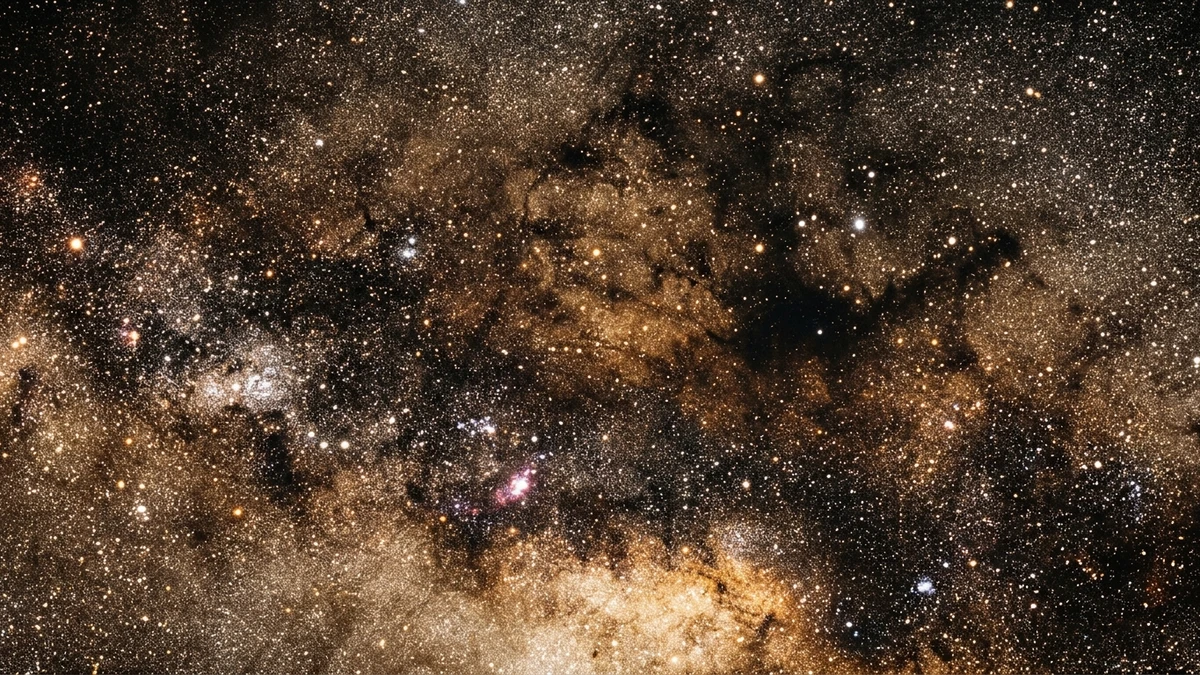
Most of those come from staring at the crowded heart of the Milky Way, out towards Sagittarius, and watching for the tiny dip in brightness when a planet crosses in front of its star. With hundreds of millions of stars in frame at once, the numbers add up fast.
The more interesting haul comes from gravitational microlensing. When one star drifts precisely in front of another, its gravity acts as a lens and briefly brightens the background star. If the foreground star has a planet, the planet adds its own little spike to that brightening. It's the only method that finds planets in wide orbits, far from their star, and it's the only one that can spot free-floating planets drifting through the galaxy with no star at all. Roman should turn up somewhere between 1,000 and 1,500 of these over six 72-day observing seasons. NASA's TESS pulled off its first microlensing detection in July, and that was one planet. Roman does it wholesale.
The coronagraph: blocking a star to see its planets
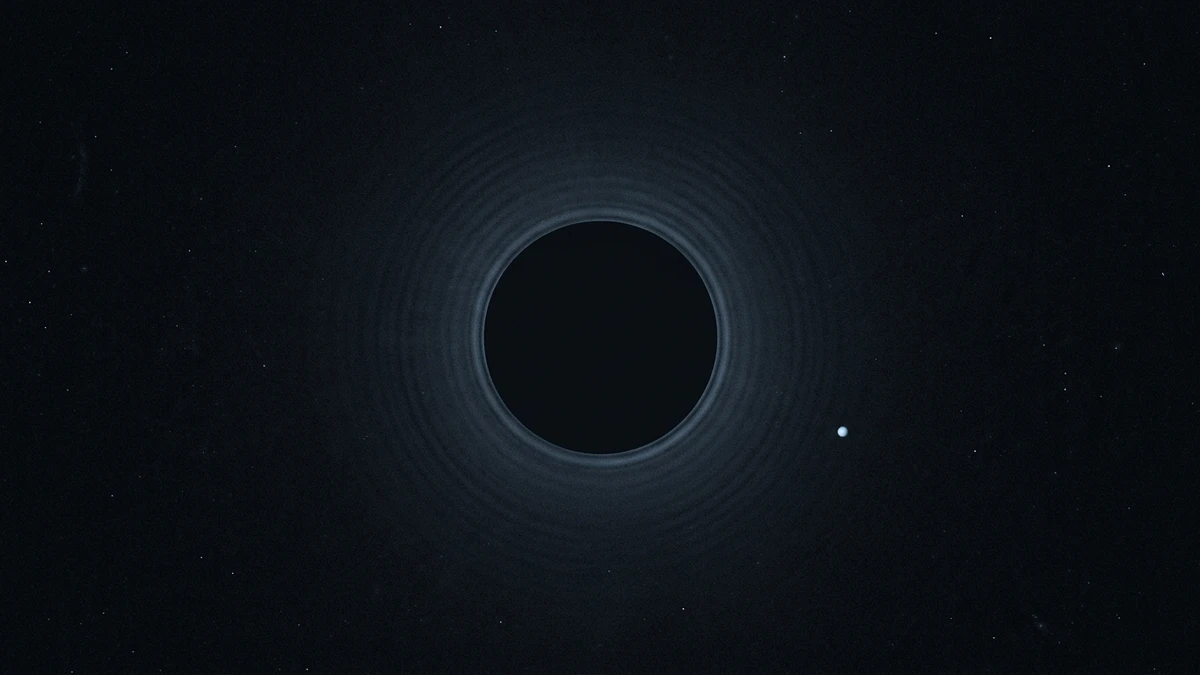
The third instrument is the one to keep an eye on long term. The Coronagraph Instrument is a technology demonstration, not a survey tool, and its job is to blot out the light of a star so precisely that a planet next to it becomes visible.
That's absurdly hard. A star is roughly a billion times brighter than the planet you're trying to see beside it, which is a bit like spotting a firefly next to a lighthouse from the next county. Roman's coronagraph is designed to suppress starlight two or three orders of magnitude better than anything flown before. If it works, it's the stepping stone to the telescope after this one, the mission that's meant to photograph an Earth-sized planet in another star's habitable zone and read its atmosphere. We're already sniffing at atmospheres on rocky worlds with indirect methods. Direct imaging is the next step up.
What Happens Next: L2, Commissioning and First Light
Launch was the loud bit. The next few months are quiet and slow.
The cruise to L2. Roman is heading for the Sun-Earth L2 point, roughly 1.5 million kilometres out on the far side of Earth from the Sun. It's a gravitational sweet spot where a spacecraft can hold station with barely any fuel, and it keeps the Sun, Earth and Moon all in the same direction so a single shield can block heat from all three. James Webb has been parked there since 2022.
Commissioning (about 90 to 100 days from launch). The cruise and the commissioning overlap. The coronagraph was switched on during the cruise, on 1 September, and the Wide Field Instrument was due to follow a few weeks later, while the observatory cools right down, aligns its optics and works through instrument calibration. Nothing can be rushed. Detectors this sensitive need to be genuinely cold and genuinely stable before the numbers coming off them mean anything.
First light, then real science. NASA expects to release the first images in early 2027, with survey observations starting around the same time. The primary mission runs five years, with the hardware built to last ten.
One detail worth flagging: Roman was originally scheduled for 2027. Getting to the pad on 30 August put it roughly eight months early, which almost never happens with a flagship observatory. Webb ran years late. This one turned up ahead of the bell.
There's another quiet consequence of the wide-field design. Roman's survey data goes into a public archive, and unlike a telescope that answers one question at a time, a sky survey answers questions nobody has thought to ask yet. Plenty of the discoveries that come out of Roman over the next decade will be made by people digging through the archive years from now, looking for something else entirely.
One last thing people always ask: no, you won't be able to see Roman from the ground once it's up there. At 1.5 million kilometres it's far too faint and far too small for amateur kit. If you want something real to watch move overhead, the ISS is your best bet, and our beginner's stargazing guide covers how to spot satellite passes.
The Bottom Line
The launch on 30 August was one of those days that only looks important in hindsight. There was a rocket, a plume, two boosters flying back to Cape Canaveral, and then a small silver cylinder heading off into the dark on its own. There's nothing much to see after that for about four months.
But if it works, the sky gets bigger. A hundred thousand new planets. A proper measurement of the thing that's pulling the universe apart. And a public archive that astronomers will still be mining in the 2040s.
Coverage started at 11:20am UK time and liftoff was at 12:26pm. It was worth an hour of anyone's Sunday, and the replay is free.
Sources:
- NASA's Roman Space Telescope 'Go' for Launch · NASA Science
- Roman Launch Countdown · NASA Science
- NASA's Roman Space Telescope is ready for launch aboard SpaceX Falcon Heavy rocket · Space.com
- Wide Field Instrument · NASA Science
- The Roman Coronagraph Instrument · NASA JPL
- Launch Preview: Falcon Heavy to launch Roman telescope · NASASpaceflight
Frequently Asked Questions
Equipment guides
Related topics
Ian ClaytonAmateur astronomer and founder of WatchTheStars.co.uk, dedicated to helping others explore the wonders of our universe. Full profile →