Key takeaways
- The phoenix planet is a candidate gas giant that may have formed from material thrown off by a dying star, not at the star's birth
- The phoenix planet orbits the white dwarf HS 0209+0832, about 270 light-years away in the constellation Cetus, every 4.4 days
- The clue to the phoenix planet is niobium, a metal heavier than iron that is made inside dying stars and had never been found in a white dwarf before
- The phoenix planet result was led by Jamie Williams at the University of Warwick and published in Nature Astronomy on 5 October 2026
- The phoenix planet is still a candidate: nobody has seen the planet directly, and follow-up observations are planned
Jump to section 7 sections
Phoenix Planet: What Astronomers Found
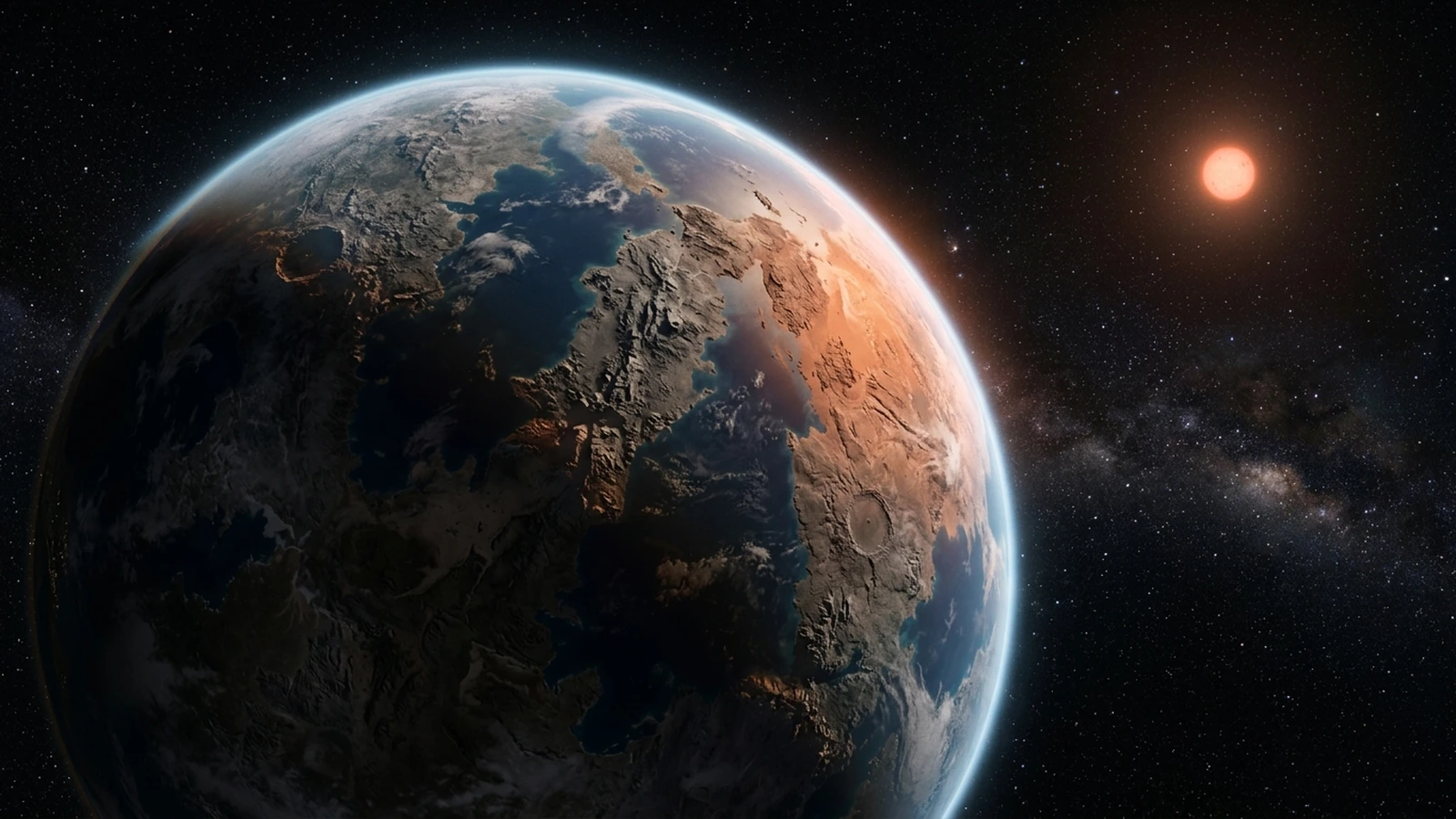
Astronomers think they have found a planet born from a dead star. The candidate, nicknamed the "phoenix planet", is a gas giant roughly the size of Jupiter circling the white dwarf HS 0209+0832, about 270 light-years away. If it holds up, it is the first planet shown by its chemistry to have formed from the leftovers of a dying star rather than at the star's birth.
The study was led by Jamie Williams, a PhD student at the University of Warwick, with Boris Gänsicke at Warwick and Nicholas Stone at the University of Wisconsin–Madison. It was published in Nature Astronomy on 5 October 2026 under the careful title "Discovery of a second-generation planet candidate accreting onto a white dwarf". The word that matters there is candidate.
The planet is very close to its star. It orbits about 6 million km out, roughly a tenth of Mercury's distance from the Sun, and goes round every 4.4 days. The white dwarf is still fiercely hot, about 35,800 K at the surface, more than six times hotter than the Sun. Its radiation is boiling the planet's atmosphere off into space, and some of that gas falls onto the white dwarf. That stream of gas is how the planet gave itself away.
See the phoenix planet's star for yourself
Kit we've reviewed in full
HS 0209+0832 is magnitude 14, a faint white dot that needs about 200 mm of aperture and a dark sky. These Dobsonians get you there, and they show plenty of brighter targets on the way.
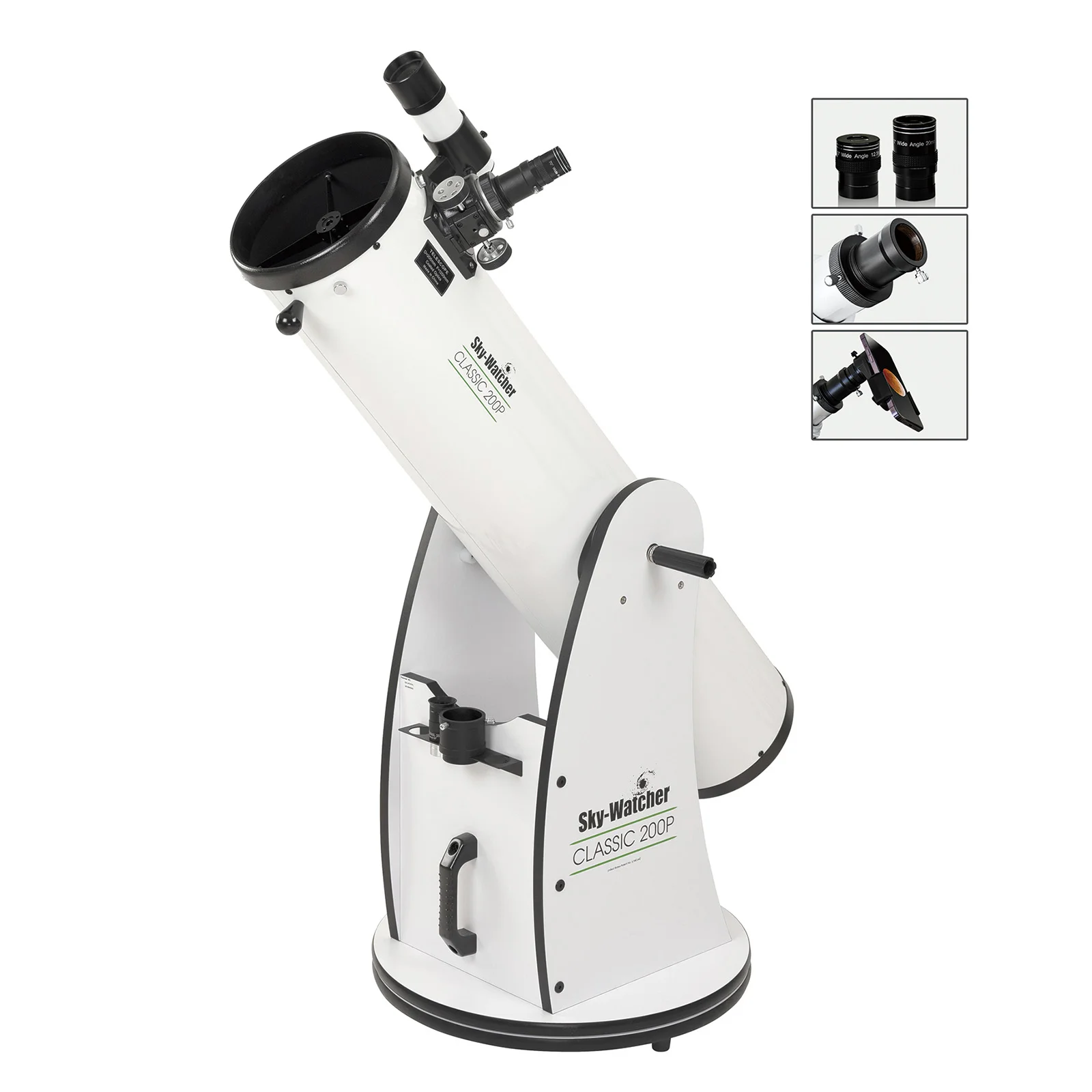
An 8-inch Dobsonian that reaches magnitude 14 on a dark, steady night. Simple to set up and great on galaxies and planets too.
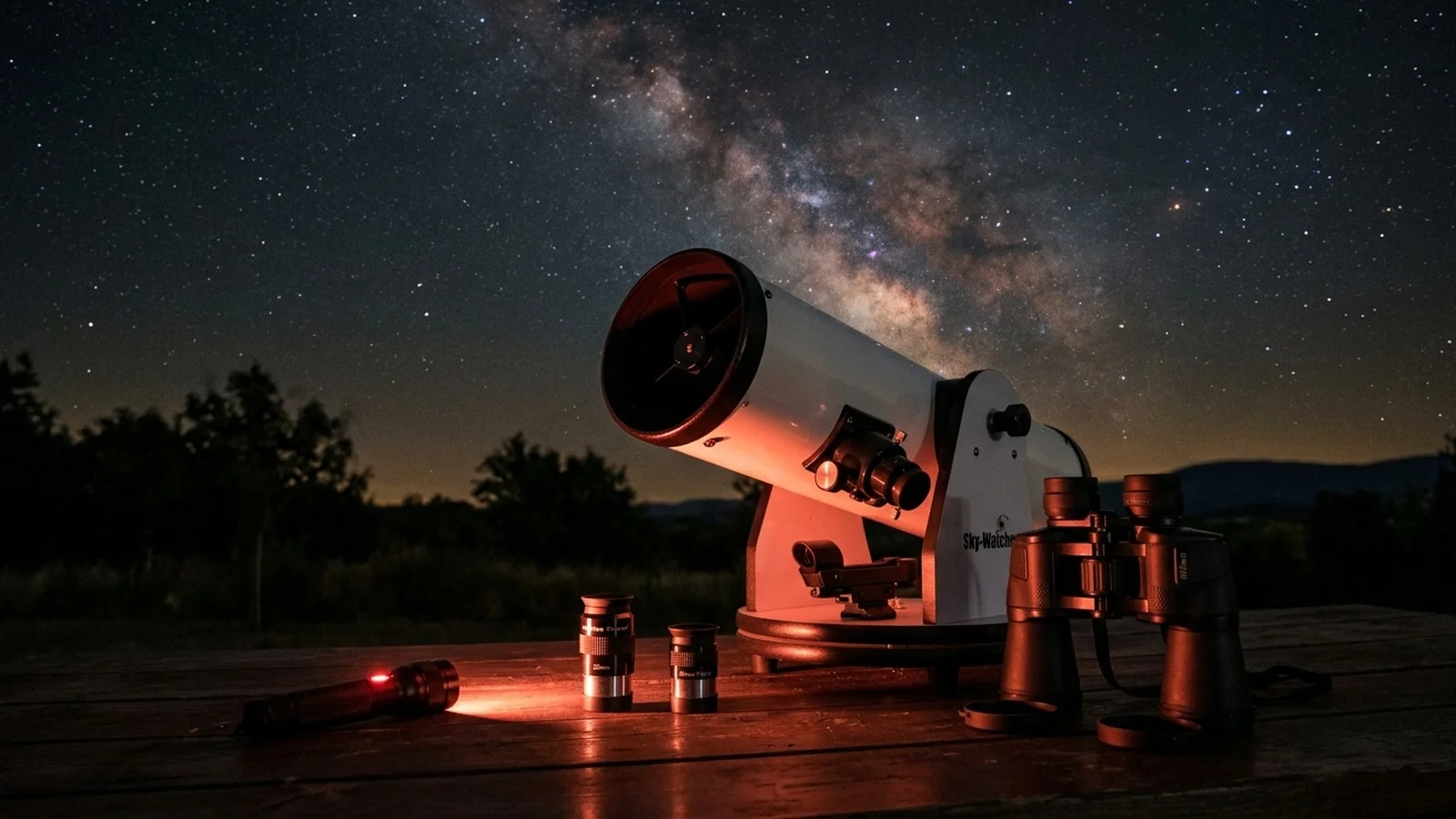
Same aperture with a few extras in the box, so it also reaches the white dwarf under a dark sky.

Sky-Watcher Skyliner 250PX FlexTube
A 10-inch mirror makes a magnitude 14 star much easier, especially from a suburban garden.
Affiliate links: you pay the same price, we earn a small commission that helps keep WatchTheStars free.
What Is a Second-Generation Planet?
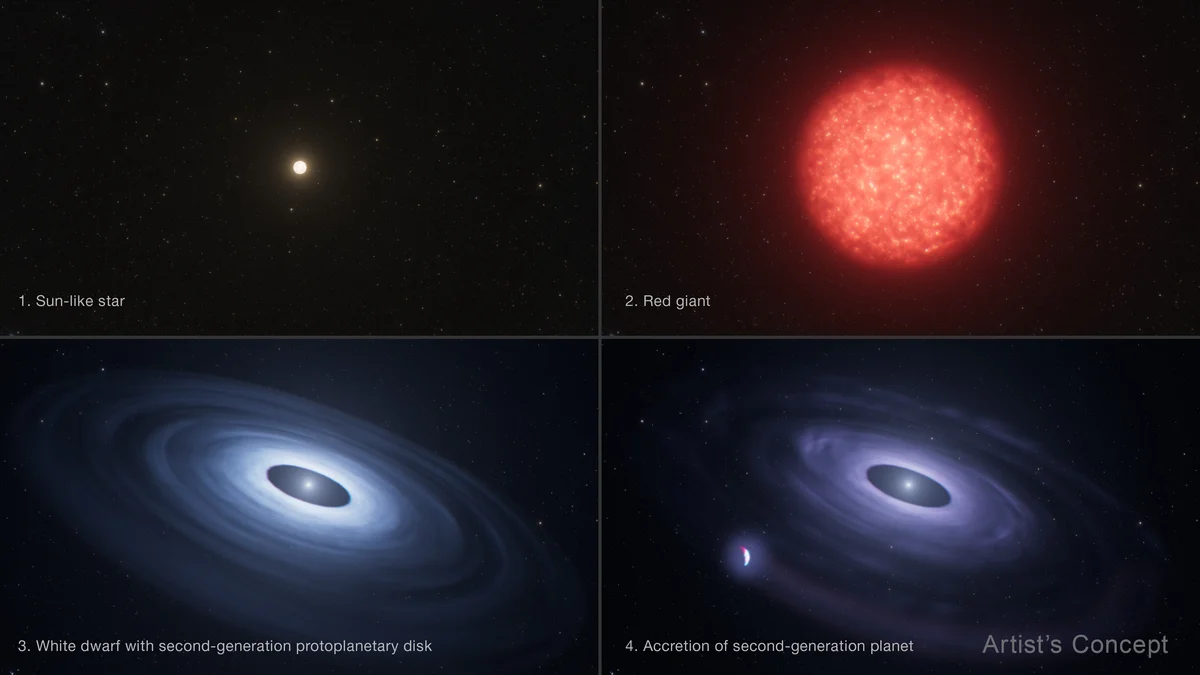
A second-generation planet is one that forms after its star has died, out of material the star threw off at the end of its life. Earth and the other planets of our solar system are first-generation. They formed at the same time as the Sun, from the disc of gas and dust left over when it was born.
A star like the Sun ends its life by swelling into a red giant and puffing its outer layers into space. What's left behind is a white dwarf: the bare core of the star, about the size of Earth but typically with around 60% of the Sun's mass. The nearest bright example is Sirius B, the faint companion of Sirius, the brightest star in the night sky.
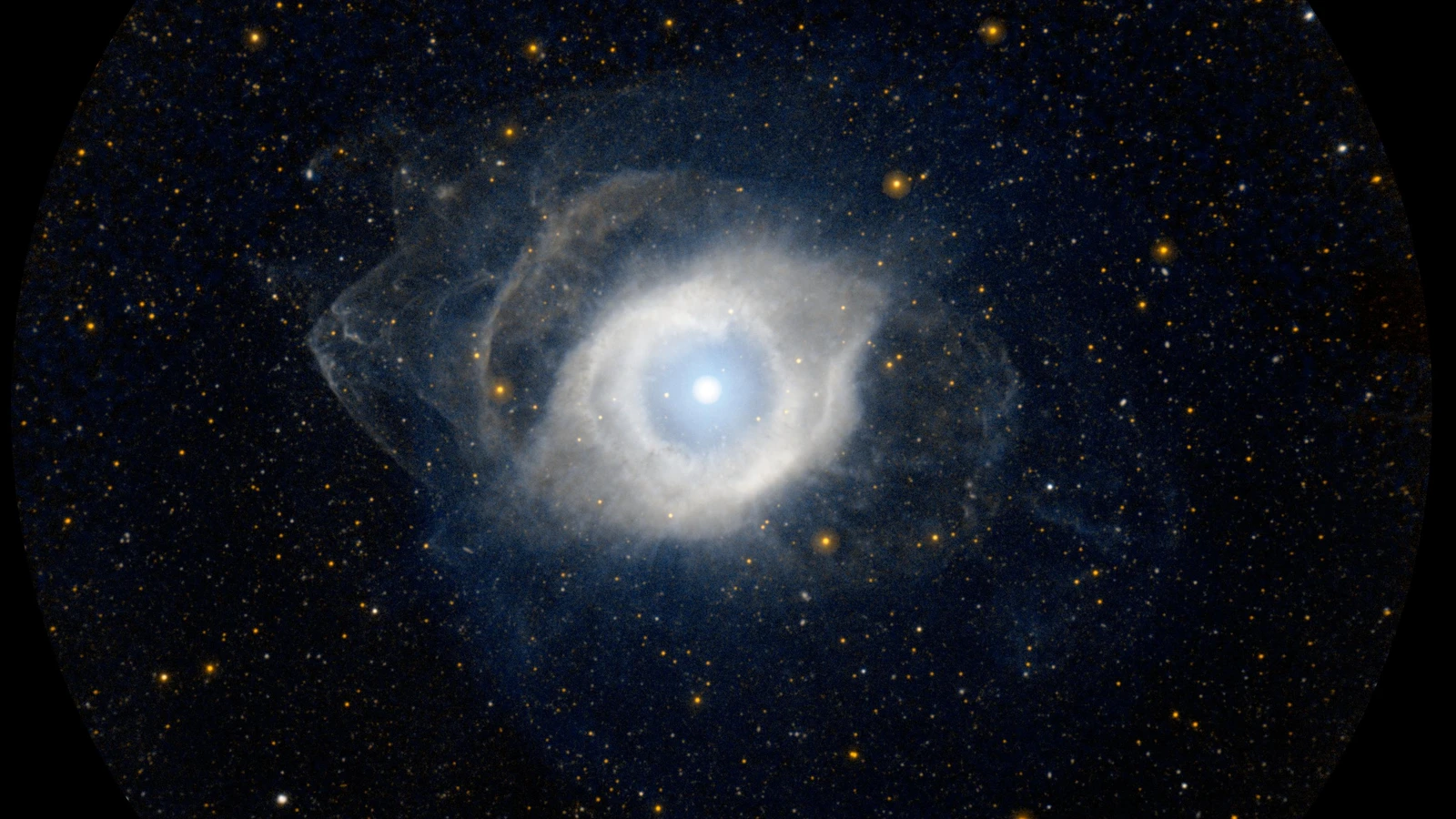
Most of the shed gas drifts off and forms a glowing shell, like the one in our post on the Helix Nebula, where a dying star's gas is being recycled. The idea behind this result is that some of it stays behind in a disc around the white dwarf, and a new planet can grow in that disc.
How Niobium Solved a 25-Year-Old Hubble Mystery
Hubble first looked at HS 0209+0832 in 1999. Its spectrum, the star's light split into its colours, showed around 100 dark lines that nobody could match to any element. The data sat in the archive for more than 25 years.
Williams went back to it with a newer database of atomic data and matched many of the mystery lines to niobium. Niobium is a metal heavier than iron, and it had never been found in any white dwarf before. "When Jamie asked me about niobium in relation to this study I was truly gobsmacked, as that element had not been reported in any other white dwarf analysed to date," Gänsicke said.
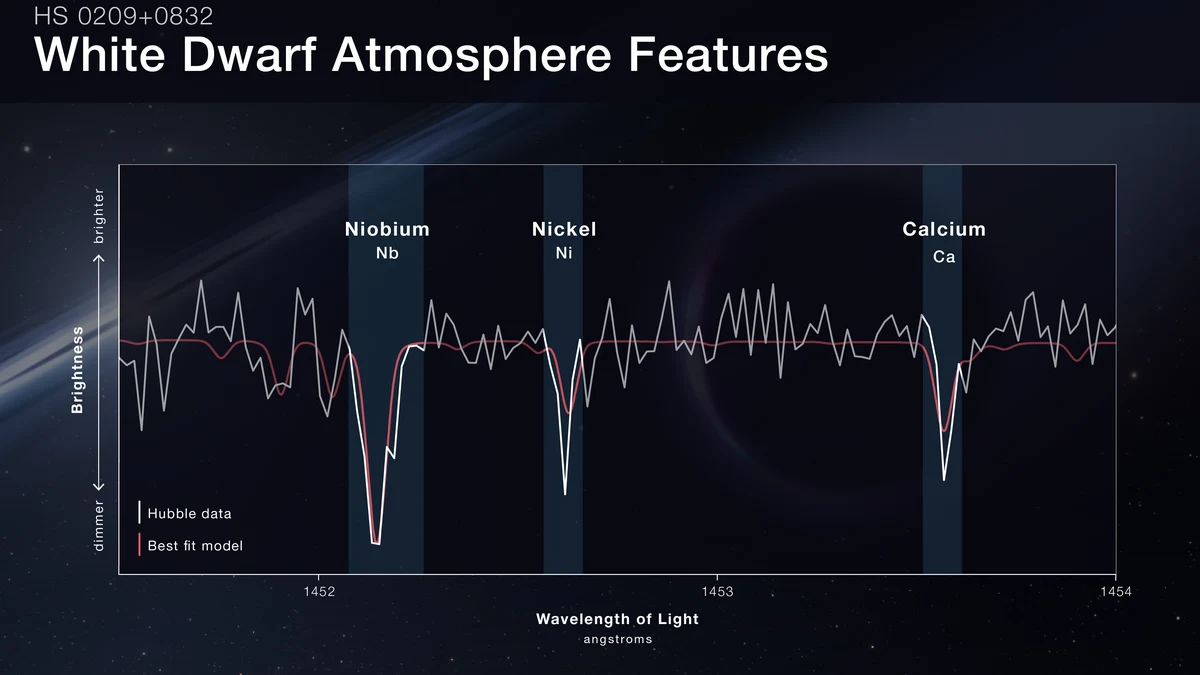
Niobium matters because of where it comes from. Elements up to iron are made by fusion in the cores of ordinary stars. Heavier ones like niobium are not. "Instead, these heavy elements can only be synthesised in the exotic conditions that briefly emerge inside dying stars," Stone said. Data from NASA's old FUSE ultraviolet satellite confirmed the niobium signature.
The rest of the chemistry fits too. The gas falling on the white dwarf is rich in zinc, copper and niobium but short of silicon and iron, the elements that build rocky planets and asteroids. It also contains helium. That is not what you'd get from a shredded asteroid, which is what most "polluted" white dwarfs are eating. It looks like the stripped atmosphere of a giant planet made from the dying star's own ashes.
How Do We Know There's a Planet There?
Nobody has seen the planet itself. The evidence is indirect. NASA's TESS satellite watched the white dwarf for four months and found it brightening and dimming by a tiny 0.12% every 4.399 days.
The team gives two possible reasons for that repeating signal. One is the planet's hot day side swinging in and out of view as it orbits. The other is a comet-like tail of escaping gas passing in front of the star. Either way it points to something big orbiting close in every 4.4 days. Together with the helium and the lack of rock-forming elements, the simplest explanation is an evaporating gas giant.
Is It the First Second-Generation Planet?
It is the first candidate around a white dwarf with chemical evidence for second-generation origin. That is a narrower claim than "the first second-generation planet ever", and the difference matters. The planets found around pulsar PSR B1257+12 in 1992 are also widely thought to have formed after their star died, in that case after a supernova.
Some headlines make the phoenix planet sound like a done deal. It isn't yet. ESA and NASA both describe it as a suspected or candidate planet, and so does the paper. Williams now plans a multi-year Hubble programme to look for more second-generation systems and find out how common they are. "Rather than the white dwarf stage being a kind of epilogue to the story of a star and its planets, this research points to the systems we are familiar with only being the first chapter of a potentially much longer tale," he said.
For another odd planet in the news this autumn, see the first radio signal from a planet outside our solar system.
What Does It Mean for the Sun's Future?
In about 5 billion years the Sun will go the same way. It will swell into a red giant, probably swallow Mercury and Venus, maybe Earth, then shrink to a white dwarf. Until now that was treated as the end of the story for a planetary system. This result suggests a dead star can start a new one.
The giant planet in the HS 0209+0832 system is no place for life. It is being roasted and stripped. But Williams thinks the planet, if it is there, will probably survive. Once the white dwarf has cooled and settled, it could sit in the star's stable habitable zone for millions of years. Whether rocky second-generation worlds can form is the next question.
Where Is HS 0209+0832 in the Sky?
HS 0209+0832 is in Cetus, the Whale, and it's well placed from the UK this month. It sits just 0.24° from the star Xi-1 Ceti (ξ¹ Ceti), under half the width of the full Moon. Xi-1 Ceti is magnitude 4.4, visible to the naked eye from a dark site, about 15° south of Hamal, the brightest star in Aries, and 13° west of Menkar.
In October the white dwarf rises in the east in the evening, is about 40° up in the south-east at midnight and is highest at around 2:15am BST: 49° up from Plymouth, 46° from Birmingham and 43° from Edinburgh. There's no Moon in the sky until after 4:30am this week, so these are good nights to try.
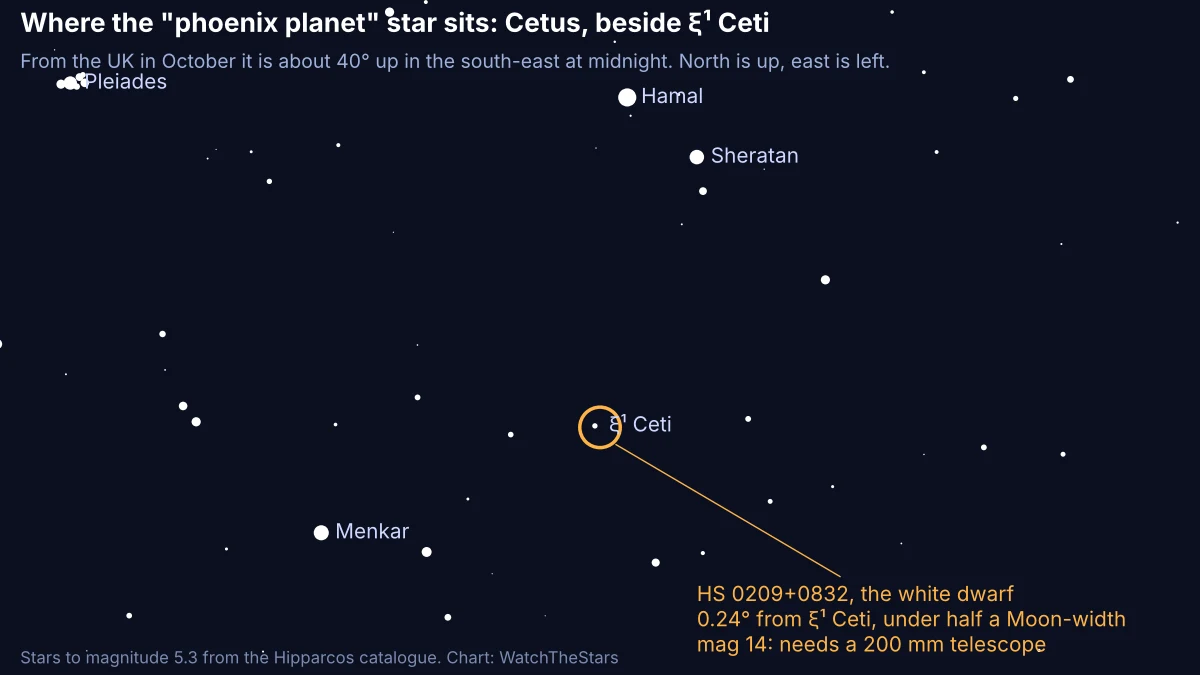
Be realistic about what you'll see. At magnitude 14 the white dwarf needs a telescope of around 200 mm and a properly dark site, so check our UK dark sky sites map for one near you. It will be a faint white point, and the planet is far beyond any telescope's reach. If you're new to star-hopping, our guide on how to use a telescope covers finding faint targets. For anything easier, see what you can see in the sky tonight and our UK night sky this week page.
Sources:
- Discovery of a second-generation planet candidate accreting onto a white dwarf, Williams et al., Nature Astronomy, 5 October 2026
- Suspected second-generation planet solves Hubble cold case, ESA/Hubble
- Suspected second-generation planet solves NASA Hubble cold case, NASA
- HS 0209+0832, SIMBAD (Gaia EDR3 parallax 12.10 mas)
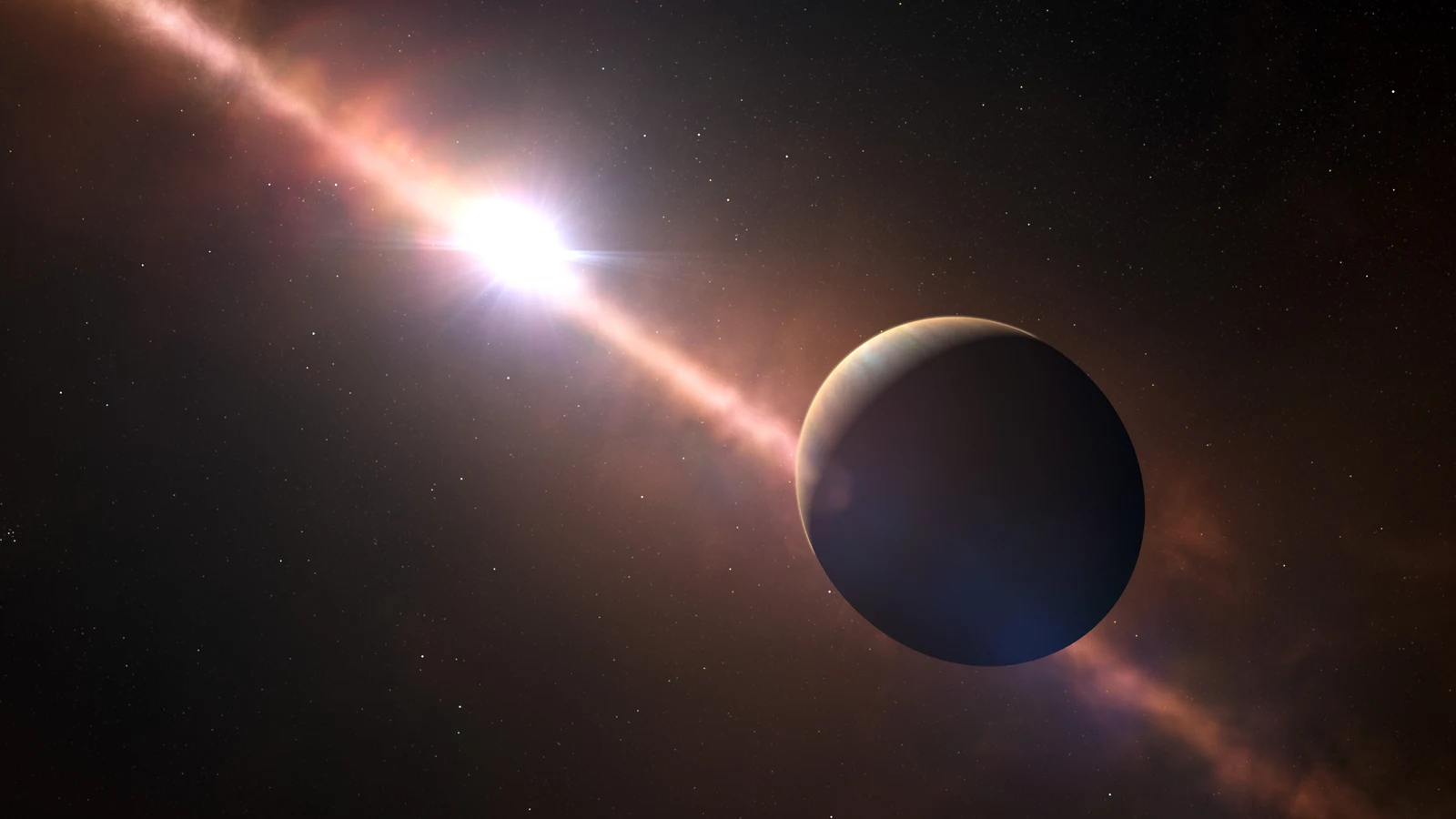
Header image: artist's impression of the HS 0209+0832 system, with the white dwarf and its disc on the left and the evaporating planet on the right. Credit: NASA, ESA, L. Hustak (STScI).
Frequently Asked Questions
Equipment guides
Related topics
Ian ClaytonAmateur astronomer and founder of WatchTheStars.co.uk, dedicated to helping others explore the wonders of our universe. Full profile →